


Luke 23:51
- οὗτοςhoutosheG3778D-NSMDemonstrative pronoun Nominative Singular Masculine
- οὐκouknotG3756PRT-NNegative Particle Negative
- ἦνēnwasG1510V-IAI-3SVerb Imperfect Active Indicative 3rd Singular
- συγκατατεθειμένοςsugkatatetheimenoshaving consentedG4784V-RNP-NSMVerb Perfect Middle Or Passive Deponent Participle Nominative Singular Masculine
- τῇtēato theG3588T-DSFDefinite article Dative Singular Feminine
- βουλῇboulēacounselG1012N-DSFNoun Dative Singular Feminine
- καὶkaiandG2532CONJConjunction
- τῇtēato theG3588T-DSFDefinite article Dative Singular Feminine
- πράξειpraxeideedG4234N-DSFNoun Dative Singular Feminine
- αὐτῶν·autōnof themG846P-GPMPersonal pronoun Genitive Plural Masculine
- ἀπὸapofromG575PREPPreposition
- ἉριμαθαίαςHarimathaiasArimatheaG707N-GSF-LNoun Genitive Singular Feminine Location
- πόλεωςpoleōsa cityG4172N-GSFNoun Genitive Singular Feminine
- τῶνtōnof theG3588T-GPMDefinite article Genitive Plural Masculine
- ἸουδαίωνIoudaiōnJewsG2453N-GPM-PGNoun Genitive Plural Masculine Person Gentilic
- ὃςhoswhoG3739R-NSMRelative pronoun Nominative Singular Masculine
- καὶkaiandG2532CONJConjunction
- προσεδέχετοprosedechetohe was waiting forG4327V-INI-3SVerb Imperfect Middle Or Passive Deponent Indicative 3rd Singular
- καὶkaiandG2532CONJConjunction
- αὐτὸςautoshimselfG846P-NSMPersonal pronoun Nominative Singular Masculine
- τὴνtēntheG3588T-ASFDefinite article Accusative Singular Feminine
- βασιλείανbasileiankingdomG932N-ASFNoun Accusative Singular Feminine
- τοῦtou<the>G3588T-GSMDefinite article Genitive Singular Masculine
- θεοῦtheouof GodG2316N-GSM-TNoun Genitive Singular Masculine Title
English is a literal word-by-word gloss of the Greek, not the KJV's wording. Why?
This is the original text the KJV's translators worked from — each Greek word with its own literal English meaning in this verse, prepared by scholars at Tyndale House, Cambridge. The KJV translates whole sentences, not word by word, so its wording differs: one Greek word can become several English words, and the KJV may choose “charity” where the gloss reads “love”. Both are faithful — they answer different questions. For the KJV's own rendering, switch to the KJV text.
Details
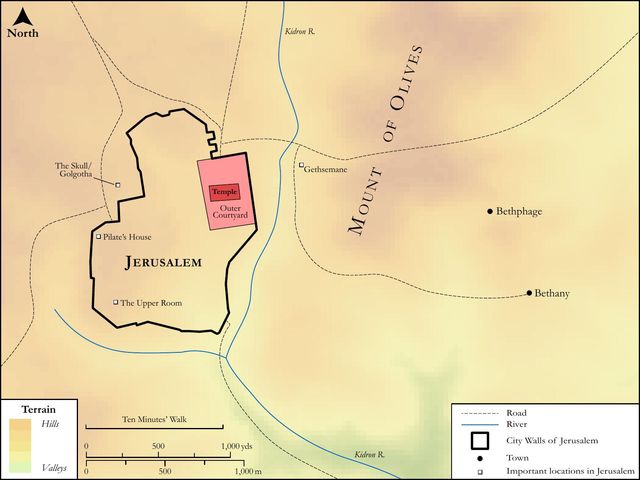
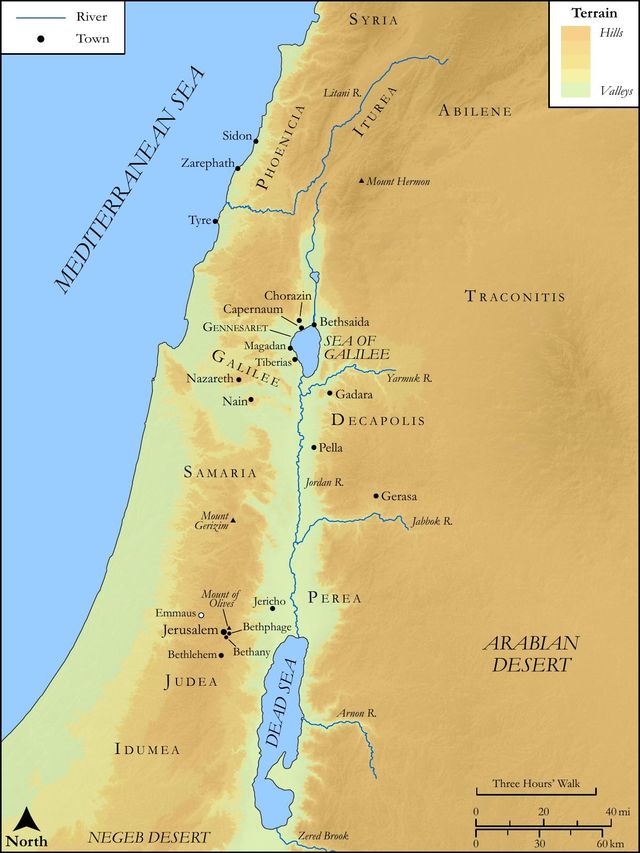
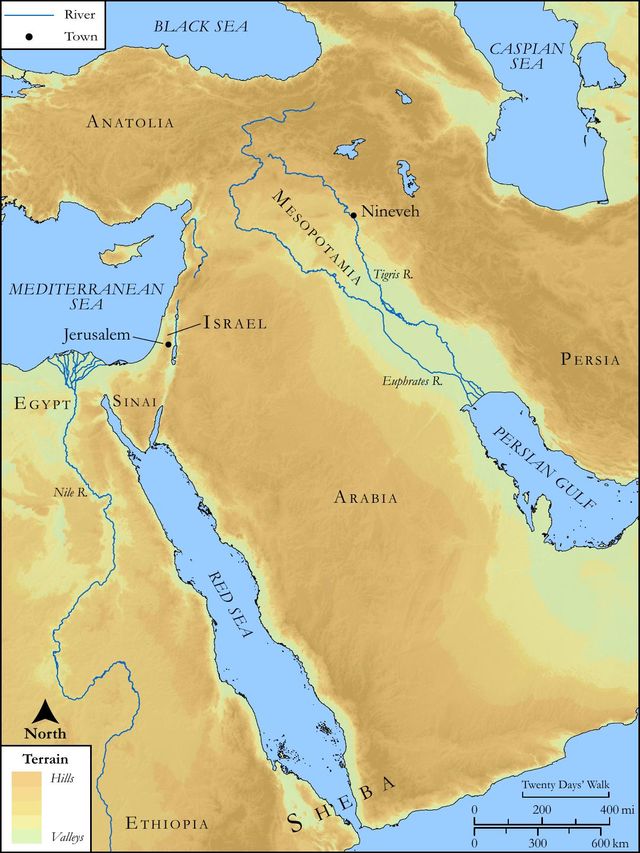
See on the biblical-era map
Study this verse
Public-domain commentary
Matthew Henry
From his Commentary on the Whole Bible. Henry comments on passages, not single verses — this entry covers Luke 23:50–56. His two-level outline is real structure in the source text, so it is rendered as structure.
We have here an account of Christ's burial; for he must be brought not only to death, but to the dust of death (Psa 22:15), according to the sentence (Gen 3:19), To the dust thou shalt return. Observe,
I.Who buried him.
His acquaintance stood afar off; they had neither money to bear the charge nor courage to bear the odium of burying him decently; but God raised up one that had both, a man named Joseph, Luk 23:50. His character is that he was a good man and a just, a man of unspotted reputation for virtue and piety, not only just to all, but good to all that needed him (and care to bury the dead, as becomes the hope of the resurrection of the dead, is one instance of goodness and beneficence); he was a person of quality, a counsellor, a senator, a member of the sanhedrim, one of the elders of the Jewish church. Having said this of him, it was necessary to add that, though he was of that body of men who had put Christ to death, yet he had not consented to their counsel and deed (Luk 23:51), though it was carried by the majority, yet he entered his protest against it, and followed not the multitude to do evil. Note, That evil counsel or deed to which we have not consented shall not be reckoned our act. Nay, he not only dissented openly from those that were enemies to Christ, but be consented secretly with those that were his friends: He himself waited for the kingdom of God; he believed the Old Testament prophecies of the Messiah and his kingdom, and expected the accomplishment of them. This was the man that appears upon this occasion to have had a true respect for the Lord Jesus. Note, There are many who are hearty in Christ's interests, how, though they do not make any show in their outward profession of it, yet will be more ready to do him a piece of real service, when there is occasion, than others who make a greater figure and noise.
II.What he did towards the burying of him.
1.He went to Pilate, the judge that condemned him, and begged the body of Jesus, for it was at his disposal; and, though he might have raised a party sufficient to have carried off the body by violence, yet he would take the regular course, and do it peaceably.
2.He took it down, it should seem, with his own hands, and wrapped it in linen. They tell us that it was the manner of the Jews to roll the bodies of the dead, as we do little children in their swaddling-clothes, and that the word here used signifies as much; so that the piece of fine linen, which he bought whole, he cut into many pieces for this purpose. It is said of Lazarus, He was bound hand and foot, Joh 11:44. Grave-clothes are to the saints as swaddling-clothes, which they shall out-grow and put off, when they come to the perfect man.
III.Where he was buried.
In a sepulchre that was hewn in stone, that the prison of the grave might be made strong, as the church, when she was brought into darkness, had her way enclosed with hewn stone, Lam 3:2, Lam 3:9. But it was a sepulchre in which never man before was laid, for he was buried on such an account as never any one before him was buried, only in order to his rising again the third day by his own power; and he was to triumph over the grave as never any man did.
IV.When he was buried.
On the day of the preparation, when the sabbath drew on, Luk 23:54. This is given as a reason why they made such haste with the funeral, because the sabbath drew on, which required their attendance to other work, preparing for the sabbath, and going forth to welcome it. Note, Weeping must not hinder sowing. Though they were in tears for the death of Christ, yet they must apply themselves to the sanctifying of the sabbath; and, when the sabbath draws on, there must be preparation. Our worldly affairs must be so ordered that they may not hinder us from our sabbath work, and our holy affections must be so excited that they may carry us on in it.
V.Who attended the funeral; not any of the disciples, but only the women that came with him from Galilee (Luk 23:55), who, as they staid by him while he hung on the cross, so they followed him, all in tears no doubt, and beheld the sepulchre where it was, which was the way to it, and how his body was laid in it. They were led to this, not by their curiosity, but by their affection to the Lord Jesus, which was strong as death and which many waters could not quench. Here was a silent funeral, and not a solemn one, and yet his rest was glorious.
VI.What preparation was made for the embalming of his body after he was buried (Luk 23:56):
They returned, and prepared spices and ointments, which was more an evidence of their love than of their faith; for had they remembered and believed what he had so often told them, that he should rise again the third day, they would have spared their cost and pains herein, as knowing that in a short time there would be a greater honour put upon his body, by the glory of his resurrection, than they could put upon it with their most precious ointments; but, busy as they were in this preparation, they rested on the sabbath day, and did none of this servile work thereon, not only according to the custom of their nation, but according to the commandments of their God, which, though the day be altered, is still in full force: Remember the sabbath day, to keep it holy.
Historical interpretation
Eleven Centuries of Reception
13 surviving comments on this verse. Each one is dated, so this reads as a timeline rather than a list.
Select a marker to jump to its quote. Markers stagger vertically where authors wrote within a few decades of each other.
The only shift left to the impudence of the heretics, is to admit that what remained there was the phantom of a phantom! But what if Joseph knew that it was a body which he treated with so much piety? That same Joseph "who had not consented" with the Jews in their crime? The "happy man who walked not in the counsel of the ungodly, nor stood in the way of sinners, nor sat in the seat of the scornful.
(in Vit. Ant. 90.) They also act absurdly who embalm the bodies of their dead, and do not bury them, even supposing them to be holy. For what can be more holy or greater than our Lord's body? And yet this was placed in a tomb until it rose again the third day. For it follows, And he laid it in a hewn sepulchre.
Mary stands for Eve, and Joseph stands for another Joseph. He who asked for his corpse was also named Joseph. The earlier Joseph was a righteous man who did not denounce Mary publicly. The other one was also a righteous man because he did not consent to the detractors. So that it might be clear that the Lord was entrusted at the beginning to one having this name when he was born, he further allowed one with this name to prepare him for burial when he was dead. This name receives the full reward for serving him at his birth in the cave and for having served his corpse at the tomb.
We seek to know exactly where he was buried. Was his tomb made with hands? Does it rise above the ground, like the tombs of kings? Was the sepulcher made of stones joined together? What is laid upon it? O prophets, tell us exactly about his tomb. Where is it? Where should we look for it? They answer, “Look at the solid rock that you have hewn.” Look and see. You have in the Gospels, “In a rock-hewn tomb.” What is next? What kind of door does the sepulcher have? Again, the prophet says, “They have ended my life in the pit, and they have laid a stone over me.” I am “the chief cornerstone, chosen, precious.” He that is “a stone of stumbling” to the Jews but of salvation to those that believe was for a while within a stone. The tree of life was planted in the earth, to bring blessing for the earth that was cursed and to bring release for the dead.
Now mystically, the just man buries the body of Christ. For the burial of Christ is such as to have no guile or wickedness in it. But rightly did Matthew call the man rich, for by carrying Him that was rich he knew not the poverty of faith. The just man covers the body of Christ with linen. Do thou also clothe the body of Christ with His own glory, that thou mayest be thyself just. And if thou believest it to be dead, still cover it with the fulness of His own divinity. But the Church also is clothed with the grace of innocence.
Nor without meaning has one Evangelist spoken of a new tomb, another of the tomb of Joseph. For the grave is prepared by those who are under the law of death; the Conqueror of death has no grave of His own. For what fellowship hath God with the grave. He alone is enclosed in this tomb, because the death of Christ, although it was common according to the nature of the body, yet was it peculiar in respect of power. But Christ is rightly buried in the tomb of the just, that He may rest in the habitation of justice. For this monument the just man hews out with the piercing word in the hearts of Gentile hardness, that the power of Christ might extend over the nations. And very rightly is there a stone rolled against the tomb; for whoever has in himself truly buried Christ, must diligently guard, lest he lose Him, or lest there be an entrance for unbelief.
(de Con. Ev. lib. iii. c. 22.) Now John says, that Joseph was a disciple of Jesus. Hence it is also here added, Who also himself waited for the kingdom of God. But it naturally causes surprise how he who for fear was a secret disciple should have dared to beg our Lord's body, which none of those who openly followed Him dared to do; for it is said, This man went unto Pilate, and begged the body of Jesus. We must understand then, that he did this from confidence in his rank, by which he might be privileged to enter familiarly into Pilate's presence. But in performing that last funeral rite, he seems to have eared less for the Jews, although it was his custom in hearing our Lord to avoid their hostility.
Someone might say of last Sunday’s sermon, in which we preached that there was no less glory in Joseph’s grave receiving the Lord than in holy Mary’s womb begetting him, “What comparison can there be between the womb and the grave, since the one brought forth a son from its innermost bowels while the other only gave him a place of burial?” But I say that Joseph’s love was no less than Mary’s, since she conceived the Lord in her womb and he did so in his heart. She offered the secret place of her inmost members to the Savior; he did not deny him the secret place for his own body. She wrapped the Lord in swaddling clothes when he was born; he wrapped him in linen cloths when he died. She anointed his blessed body with oil; he honored it with spices. Each one’s service is similar and each one’s love is similar; hence each one’s reward must also be similar. But there is this difference: an angel called Mary to her service, but righteousness alone persuaded Joseph.
Let us see, then, what happens to the Lord’s body after they take it down from the cross. Joseph of Arimathea, a righteous man, as the Evangelist says, took it and buried it in his new tomb in which no one had ever been laid. Blessed is the body of the Lord Christ, which in birth comes forth from a virgin’s womb and in death is placed in the grave of a righteous man! Clearly this body is blessed. Virginity brought it out, and righteousness held it! Joseph’s grave held him incorrupt, just as Mary’s womb preserved him inviolate. In the one, a man’s impurity does not touch him; in the other, death’s corruption does not hurt him. In every way, holiness and virginity are bestowed on that blessed body. A new womb conceived him, and a new grave enclosed him. The womb is the Lord’s womb. It is virginal. The tomb is virginal. Should I not rather say that the tomb itself is a womb? There is, in fact, a great similarity. Just as the Lord came out from his mother’s womb living, so also he rose living from Joseph’s tomb. Just as he was born from the womb in order to preach, so also now he has been reborn from the tomb in order to evangelize. The last birth is more glorious than the first. The first conceived a mortal body, but the last brought out an immortal one. After the first birth, he descends to hell, but after the last birth, he returns to the heavens. The last birth is more religious than the first. The first kept the Lord of the whole world locked in the womb for nine months, but the last held him in the belly of the grave for only three days. The first offered hope to all rather slowly, but the last raised salvation for all quite quickly.
Let us see why they placed the Savior in someone else’s grave instead of his own. They placed him in another person’s grave because he died for the salvation of others. They did not impose death on him. He endured death for us. Death did not just happen to him, but it benefited us. Why should he, who did not have his own death in himself, have his own grave? Why should he, whose dwelling remained in heaven, have a burial place on earth? Why should he have a grave? For only three days, he did not so much lie as one dead in a tomb as rest as one sleeping in a bed. The brief period of time itself certainly indicates sleep rather than death. A tomb is the dwelling of death. Christ who is life did not need a dwelling for death, nor did he who is always living require a habitation of the deceased. We have correctly laid up this life in our own tomb so that as he gives life to our death, we may rise with him from the dead.
A counsellor, or decurio, is so called because he is of the order of the curia or council, and administers the office of the curia. He is also wont to be called curialis, from his management of civil duties. Joseph then is said to have been of high rank in the world, but of still higher estimation before God; as it follows, A good man, and a just, of Arimathæa, a city of the Jews, &c. Arimathæa is the same as Ramatha, the city of Helcanah and Samuel.
So then being fitted by the righteousness of his works for the burial of our Lord's body, he was worthy by the dignity of his secular power to obtain it. Hence it follows, And he took it down, and wrapped it in linen. By the simple burial of our Lord, the pride of the rich is condemned, who not even in their graves can be without their wealth.
That is, hewn out of a rock, lest if it had been built of many stones, and the foundations of the tomb being dug up after the resurrection, the body should be said to have been stolen away. It is laid also in a new tomb, wherein never man before was laid, lest when the rest of the bodies remained after the resurrection, it might be suspected that some other had risen again. But because man was created on the sixth day, rightly being crucified on the sixth day our Lord fulfilled the secret of man's restitution. It follows, And it was the day of the παρασκευὴ, which means the preparation, the name by which they called the sixth day, because on that day they prepared the things which were necessary for the Sabbath. But because on the seventh day the Creator rested from His work, the Lord on the Sabbath rested in the grave. Hence it follows, And the Sabbath was dawning. Now we said above, that all His acquaintance stood afar off, and the women which followed Him. These then of His acquaintance, after His body was taken down, returned to their homes, but the women who more tenderly loved Him, following His funeral, desired to see the place where He was laid. For it follows, And the women also, which came with him from Galilee, followed after, and beheld the sepulchre, and how his body was laid, that in truth they might make the offerings of their devotion at the proper time.
He also wraps Jesus in clean linen, who has received Him with a pure mind.
Now that the Lord is crucified on the sixth day and rests on the seventh, signifies that in the sixth age of the world we must of necessity suffer for Christ, and as it were be crucified to the world. (Gal. 6:14.) But in the seventh age, that is, after death, our bodies indeed rest in the tombs, but our souls with the Lord. But even at the present time also holy women, (that is, humble souls,) fervent in love, diligently wait upon the Passion of Christ, and if perchance they may be able to imitate Him, with anxious carefulness ponder each step in order, by which this Passion is fulfilled. And having read, heard, and called to mind all these, they next apply themselves to make ready the works of virtue, by which Christ may be pleased, in order that having finished the preparation of this present life, in a blessed rest they may at the time of the resurrection meet Christ with the frankincence of spiritual actions.
From Arimathea, a city of Judea, who also awaited the kingdom of God. From Arimathea, the same is Ramathaim, the city of Elkanah and Samuel in the Thannite region near Diospolis.
But the race of women formerly cursed remains and sees all these things; for it follows, And the women which followed him from Galilee, seeing these things. And thus they are the first to be renewed by justification, or by the blessing which flows from His passion, as also from His resurrection.
For they had not yet sufficient faith, but prepared as if for a mere man spices and ointments, after the manner of the Jews, who performed such duties to their dead. Hence it follows, And they returned, and prepared spices. For our Lord being buried, they were occupied as long as it was lawful to work, (that is, until sun-set,) in preparing ointments. But it was commanded to keep silence on the Sabbath, that is, rest from evening to evening. For it follows, And rested the sabbath day according to the commandment.
(Photius.) Joseph had been at one time a secret disciple of Christ, but at length bursting through the bonds of fear, and become very zealous, he took down the body of our Lord, basely hanging on the cross; thus gaining a precious jewel by the meekness of His words. Hence it follows, And, behold, there was a man named Joseph, a counsellor.
Continue studying Luke 23:51 across the web’s major study libraries — every link below opens this exact verse, chapter, or book on the destination site.
Read & Compare
 BibleGatewayThis verse in more than 200 translations and 70 languages.
 Bible.comThe YouVersion reader — hundreds of translations, reading plans, and highlights.
 ESV.orgCrossway's official English Standard Version reader.
 NET BibleThe NET translation with 60,000+ translators' notes on every rendering decision.
 STEP BibleTyndale House's free study tool — original text, vocabulary, and scholarly resources.
 BibliaLogos Bible Software's free web reader.
 USCCBThe New American Bible (Revised Edition) with the U.S. bishops' study notes.
Commentaries
 BibleHub CommentariesDozens of classic commentaries on this verse, gathered on one page.
 StudyLightMore than 100 commentary sets — the largest collection on the web.
 BibleRefPlain-English commentary on what this verse means, verse by verse.
 Enduring WordDavid Guzik's free commentary on this chapter, widely used by Bible teachers.
 Bible Study ToolsVerse commentary alongside Greek and Hebrew study aids.
Original Language & Research
- BibleHub InterlinearThe verse word by word — original language, transliteration, and English.
- BibleHub LexiconEvery word's original-language definition and Strong's entry.
 Blue Letter BibleDeep-study tools — Strong's numbers, concordance, and word studies.
 CNTR CollationThe earliest Greek manuscripts of this verse, collated letter by letter.
Sermons, Hymns & Audio


TrulyRandomVerse is not affiliated with these sites and doesn’t control their content. They’re linked because they’re genuinely useful.
Summary
Luke 23:51 introduces Joseph of Arimathaea, a prominent member of the Jewish ruling council, the Sanhedrin, who notably dissented from their unjust condemnation of Jesus. Hailing from Arimathaea, a city in Judea, Joseph is characterized by his profound spiritual anticipation of the Kingdom of God, a defining trait that sets the stage for his courageous and pivotal role in the burial of Jesus.
Context
ShowHideLiterary Context
This verse immediately follows the account of Jesus' crucifixion and death, serving as an introduction to Joseph of Arimathaea, who will play a critical role in Jesus' burial. Luke 23:50 has already established Joseph as "a good man, and a just," and a member of the Sanhedrin, further highlighting the significance of his non-consent to their collective decision. Verse 51 clarifies his moral and spiritual standing, distinguishing him from the majority of the council who had condemned Jesus. This detail is crucial for understanding why he would then boldly approach Pilate to request Jesus' body, an act that would have been highly controversial and dangerous for a man of his standing. The narrative flow moves from the public spectacle of the crucifixion to the private, yet profoundly significant, act of burial, which Joseph facilitates.
Historical & Cultural Context
Joseph's position as a member of the Sanhedrin, the supreme Jewish judicial and legislative body, places him within the highest echelons of Jewish society during the Roman occupation. The Sanhedrin was largely responsible for religious and civil matters under Roman oversight, and their decision to condemn Jesus was a momentous one. For Joseph to "not consent to the counsel and deed of them" indicates a remarkable act of moral courage and integrity, as dissenting from such a powerful and unified body could have severe social and political repercussions. The phrase "a city of the Jews" for Arimathaea, while its exact location is debated, signifies its Jewish identity, rooting Joseph firmly within the Jewish community. The concept of "waiting for the kingdom of God" was a deeply held spiritual aspiration among many devout Jews, who longed for the promised Messiah to establish God's righteous rule and deliver Israel from foreign oppression. This expectation shaped their worldview and often fueled their actions.
Key Themes
ShowHideLuke 23:51 contributes to several key themes within the Gospel of Luke and the broader biblical narrative. It underscores the theme of Integrity Amidst Injustice, showcasing Joseph's moral fortitude in standing against the prevailing tide of injustice within his own esteemed council. His character provides a stark Contrast to the corrupt religious leadership that orchestrated Jesus' death. Furthermore, the verse highlights the theme of Divine Providence through Unexpected Individuals, as God uses a wealthy and influential member of the very body that condemned Jesus to ensure His proper burial, fulfilling prophecy (as seen in Isaiah 53:9). Finally, Joseph's active "waiting for the kingdom of God" connects him to other devout figures in Luke's Gospel, such as Simeon and Anna, emphasizing the importance of Spiritual Expectation and readiness for God's redemptive plan. This spiritual posture is what ultimately motivates his courageous actions.
Exposition and Analysis
ShowHideKey Word Analysis
ShowHideFrom σύν and κατατίθημι; to deposit (one's vote or opinion) in company with, i.e. (figuratively) to accord with. This word implies an active agreement or approval, suggesting that Joseph's non-consent was not merely passive abstention but a principled refusal to align himself with the Sanhedrin's decision. It highlights his deliberate moral stand against the prevailing consensus.
From βούλομαι; volition, i.e. (objectively) advice, or (by implication) purpose. Here, "counsel" refers specifically to the decision, deliberation, and collective purpose of the Sanhedrin regarding Jesus. Joseph's refusal to consent to their "counsel and deed" means he actively rejected both their deliberated plan and the execution of that plan to condemn Jesus.
From πρός and δέχομαι; to admit (to intercourse, hospitality, credence, or (figuratively) endurance); by implication, to await (with confidence or patience). This verb conveys a strong sense of active anticipation, expectation, and readiness. Joseph was not passively hoping, but eagerly and confidently looking forward to the arrival of God's sovereign rule, which would profoundly influence his actions and moral compass.
Verse Breakdown
ShowHide"(The same had not consented to the counsel and deed of them;)"
This parenthetical clause immediately establishes Joseph's moral integrity and distinguishes him from his colleagues in the Sanhedrin. Despite being a member of the Jewish ruling council, he did not agree with their decision to condemn Jesus, nor with the actions taken against Him. This highlights his personal conviction and courage in standing against the majority, even at risk to his own reputation or safety.
"[he was] of Arimathaea, a city of the Jews:"
This identifies Joseph's origin, grounding him geographically and culturally. Arimathaea, while its precise location is debated, is noted as a "city of the Jews," emphasizing his Jewish identity and perhaps his standing within the broader Jewish community beyond Jerusalem. This detail adds weight to his character as a respected figure.
"who also himself waited for the kingdom of God."
This is the most significant characterization of Joseph, revealing his deep spiritual posture. It indicates that he was a devout and righteous man, actively anticipating the fulfillment of God's promises—the establishment of His sovereign rule through the Messiah. This spiritual expectation provides the underlying motivation for his subsequent courageous actions, linking his inner faith to his outward deeds.
Literary Devices
ShowHideLuke's portrayal of Joseph of Arimathaea in this verse employs several effective literary devices. Contrast is paramount, as Joseph's moral integrity and dissent are set against the backdrop of the Sanhedrin's collective condemnation of Jesus, highlighting the corruption within the religious establishment. This creates a powerful juxtaposition between individual righteousness and institutional injustice. There is also an element of Irony in that a member of the very council that condemned Jesus is the one who steps forward to honor Him in death, providing a burial that fulfills prophetic expectations. Furthermore, the verse uses Characterization to quickly and effectively define Joseph's moral and spiritual standing. By describing him as one who "had not consented" and "waited for the kingdom of God," Luke immediately paints a picture of a righteous and devout individual, preparing the reader for his crucial role in the narrative.
Theological and Thematic Connections
ShowHideLuke 23:51 offers profound theological insights into God's sovereignty and the nature of true discipleship. It reveals that God often works through unexpected individuals and in surprising ways, even within systems seemingly opposed to His will. Joseph, a man of influence within the very body that condemned Jesus, becomes an instrument of God's providence, ensuring Jesus' proper burial and fulfilling ancient prophecy. His quiet integrity and active anticipation of God's kingdom demonstrate that genuine faith can exist and courageously manifest even in the darkest hours and most challenging environments. This verse underscores that true allegiance is to God's kingdom, not to human institutions or popular opinion, and that waiting for God's kingdom is not passive but an active, shaping force for righteous living and courageous action.
Reflection and Application
ShowHideJoseph of Arimathaea stands as a powerful example for believers today, demonstrating that integrity, courage, and faithfulness are paramount, especially when confronted with injustice or popular opposition. His refusal to consent to the Sanhedrin's verdict reminds us that our primary allegiance is to God's truth and righteousness, not to the prevailing opinions or actions of those in power, even within religious circles. His quiet but active waiting for the kingdom of God highlights the importance of a deep spiritual longing for God's reign to be fully realized, which then translates into tangible acts of faith and service. This passage challenges us to consider how our own spiritual expectations shape our daily lives and whether we are prepared to act boldly for what is right, even when it is costly or unpopular. Joseph's example encourages us to cultivate a faith that is not merely intellectual assent but a dynamic, active anticipation of God's kingdom that empowers us to stand for truth and serve Christ, even in the most challenging circumstances.
Questions for Reflection
ShowHideFAQ
ShowHideWho was Joseph of Arimathaea, and why is he significant?
ShowHideJoseph of Arimathaea was a wealthy and respected member of the Sanhedrin, the Jewish ruling council, who is primarily significant for his courageous act of providing a tomb for Jesus' body after the crucifixion. Luke 23:51 specifically highlights that he "had not consented to the counsel and deed of them," meaning he did not agree with the Sanhedrin's decision to condemn Jesus. His significance lies in his moral integrity, his hidden discipleship (as noted in John 19:38), and his crucial role in the fulfillment of prophecy regarding Jesus' burial in a rich man's tomb (Isaiah 53:9).
What does it mean that Joseph "waited for the kingdom of God"?
ShowHideTo "wait for the kingdom of God" signifies a deep spiritual longing and active anticipation for the establishment of God's sovereign rule on earth through the Messiah. This was a common expectation among devout Jews of that era, who looked forward to God's ultimate intervention to bring justice, peace, and deliverance. For Joseph, this was not a passive hope but an active spiritual posture that shaped his worldview and motivated his actions. It indicates his alignment with God's purposes and his readiness to receive and participate in God's redemptive plan, much like Simeon and Anna in Luke's Gospel.
Christ-Centered Fulfillment
ShowHideJoseph of Arimathaea's character and actions in Luke 23:51 find profound Christ-centered fulfillment, even though he is not explicitly a figure of prophecy. His quiet, yet resolute, non-consent to the Sanhedrin's unjust "counsel and deed" foreshadows the ultimate triumph of Christ's perfect righteousness over human corruption and injustice. Joseph's act of providing a tomb for Jesus' body, a seemingly small detail, was divinely orchestrated to ensure the fulfillment of the prophecy that the Messiah would be buried with the rich (Isaiah 53:9). His "waiting for the kingdom of God" is ultimately fulfilled in Jesus Christ Himself, who not only inaugurated the Kingdom of God through His ministry but fully established it through His death, resurrection, and ascension. Joseph's faith, though perhaps initially "secret for fear of the Jews" (John 19:38), became publicly evident at the most critical moment, demonstrating that true discipleship culminates in courageous action for the Lord, even in the face of immense risk. His role in the burial is essential for the subsequent narrative of the resurrection, which is the cornerstone of the Christian faith and the ultimate proof of Christ's victory over sin and death, bringing the fullness of the Kingdom to all who believe.