


Luke 22:1
Bible text: King James Version (1769 Blayney text) · Public domain
Bible text: Berean Standard Bible · Public domain
Bible text: American Standard Version (1901) · Public domain
Bible text: World English Bible, Messianic edition · Public domain
Bible text: Geneva Bible (1599) · Public domain
Bible text: Young's Literal Translation · Public domain
- ἬγγιζενĒngizenWas drawing nearG1448V-IAI-3SVerb Imperfect Active Indicative 3rd Singular
- δὲdenowG1161CONJConjunction
- ἡhētheG3588T-NSFDefinite article Nominative Singular Feminine
- ἑορτὴhe'ortēFeastG1859N-NSFNoun Nominative Singular Feminine
- τῶνtōn<the>G3588T-GPNDefinite article Genitive Plural Neuter
- ἀζύμωνazumōnof Unleavened [Bread]G106A-GPNAdjective Genitive Plural Neuter
- ἡhēwhichG3588T-NSFDefinite article Nominative Singular Feminine
- λεγομένηlegomenēis being namedG3004V-PPP-NSFVerb Present Passive Participle Nominative Singular Feminine
- πάσχαpaschaPassoverG3957N-NSN-TNoun Nominative Singular Neuter Title
English is a literal word-by-word gloss of the Greek, not the KJV's wording. Why?
This is the original text the KJV's translators worked from — each Greek word with its own literal English meaning in this verse, prepared by scholars at Tyndale House, Cambridge. The KJV translates whole sentences, not word by word, so its wording differs: one Greek word can become several English words, and the KJV may choose “charity” where the gloss reads “love”. Both are faithful — they answer different questions. For the KJV's own rendering, switch to the KJV text.
Details
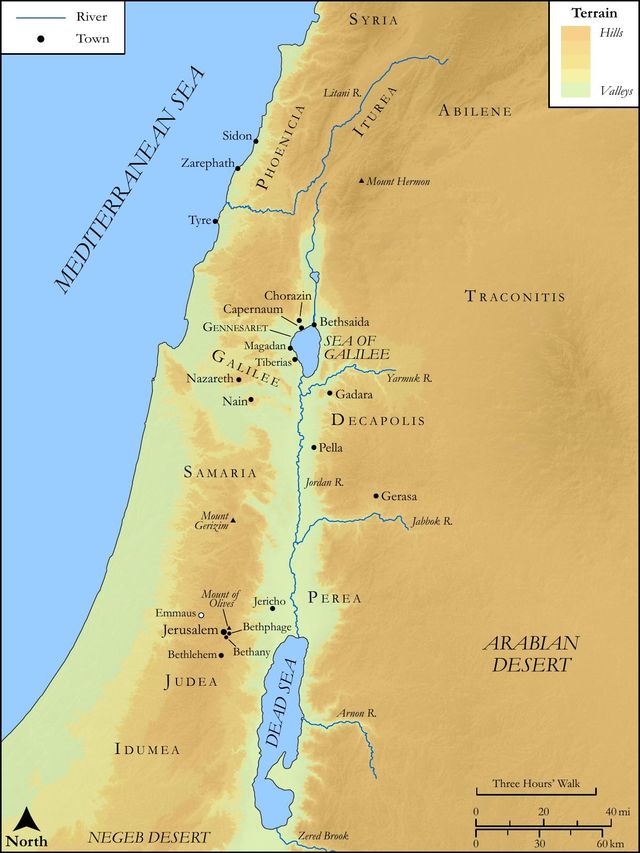
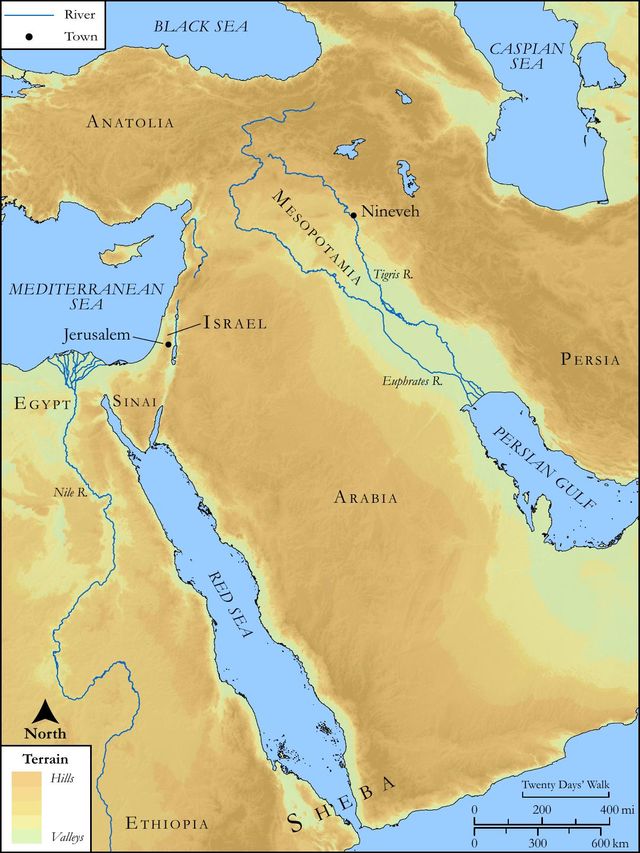
See on the biblical-era maps

Study this verse
Public-domain commentary
Matthew Henry
From his Commentary on the Whole Bible. Henry comments on passages, not single verses — this entry covers Luke 22:1–6. His two-level outline is real structure in the source text, so it is rendered as structure.
The year of the redeemed is now come, which had been from eternity fixed in the divine counsels, and long looked for by them that waited for the consolation of Israel. After the revolutions of many ages, it is at length come, Isa 63:4. And, it is observable, it is in the very first month of that year that the redemption is wrought out, so much in haste was the Redeemer to perform his undertaking, so was he straitened till it was accomplished. It was in the same month, and at the same time of the month (in the beginning of months, Exo 12:2), that God by Moses brought Israel out of Egypt, that the Antitype might answer the type. Christ is here delivered up, when the feast of unleavened bread drew nigh, Luk 22:1. About as long before that feast as they began to make preparation for it, here was preparation making for our Passover's being offered for us. Here we have,
I.His sworn enemies contriving it (Luk 22:2), the chief priests, men of sanctity, and the scribes, men of learning, seeking how they might kill him, either by force of fraud. Could they have had their will, it had been soon done, but they feared the people, and the more for what they now saw of their diligent attendance upon his preaching.
II.A treacherous disciple joining in with them, and coming to their assistance, Judas surnamed Iscariot.
He is here said to be of the number of the twelve, that dignified distinguished number. One would wonder that Christ, who knew all men, should take a traitor into that number, and that one of that number, who could not but know Christ, should be so base as to betray him; but Christ had wise and holy ends in taking Judas to be a disciple, and how he who knew Christ so well yet came to betray him we are here told: Satan entered into Judas, Luk 22:3. It was the devil's work, who thought hereby to ruin Christ's undertaking, to have broken his head; but it proved only the bruising of his heel. Whoever betrays Christ, or his truths or ways, it is Satan that puts them upon it. Judas knew how desirous the chief priests were to get Christ into their hands, and that they could not do it safely without the assistance of some that knew his retirements, as he did. He therefore went himself, and made the motion to them, Luk 22:4. Note, It is hard to say whether more mischief is done to Christ's kingdom by the power and policy of its open enemies, or by the treachery and self-seeking of its pretended friends: nay, without the latter its enemies could not gain their point as they do. When you see Judas communing with the chief priests, be sure some mischief is hatching; it is for no good that they are laying their heads together.
III.The issue of the treaty between them.
1.Judas must betray Christ to them, must bring them to a place where they might seize him without danger of tumult, and this they would be glad of.
2.They must give him a sum of money for doing it, and this he would be glad of (Luk 22:5): They covenanted to give him money. When the bargain was made, Judas sought opportunity to betray him. Probably, he slyly enquired of Peter and John, who were more intimate with their Master than he was, where he would be at such a time, and whither he would retire after the passover, and they were not sharp enough to suspect him. Somehow or other, in a little time he gained the advantage he sought, and fixed the time and place where it might be done, in the absence of the multitude, and without tumult.
Historical interpretation
Nine Centuries of Reception
5 surviving comments on this verse. Each one is dated, so this reads as a timeline rather than a list.
Select a marker to jump to its quote. Markers stagger vertically where authors wrote within a few decades of each other.
The actions of the Jews were a shadow of our own. Accordingly if you ask of a Jew concerning the Passover, and the feast of unleavened bread, he will tell you nothing momentous, mentioning the deliverance from Egypt; whereas should a man inquire of me he would not hear of Egypt or Pharaoh, but of freedom from sin and the darkness of Satan, not by Moses, but by the Son of God;
Chrys. Hom. 79. in Matt.) The Chief Priests set about their impious deed on the feast, as it follows, And the Chief Priests and Scribes, &c. Moses ordained only one Priest, at whose death another was to be appointed. But at that time, when the Jewish customs had begun to fall away, there were many made every year. These then wishing to kill Jesus, are not afraid of God, lest in truth the holy time should aggravate the pollution of their sin, but every where fear man. Hence it follows, For they feared the people.
Let us see the course of the devil's spite and the result of his crafty plans against Christ. The devil had implanted in the leaders of the Jewish synagogue envy against Christ, which even leads to murder. This disorder always leads, so to speak, to the guilt of murder. At least, this is the natural course of this vice. It was this way with Cain and Abel, and it clearly was so in the case of Joseph and his brothers. The divine Paul also very clearly makes these sins neighbors and relatives of one another. He spoke of some as full of envy and murder. The Jewish leaders sought to murder Jesus at the instigation of Satan, who had implanted this wickedness in them and who was their captain in their wicked projects. Satan is himself the inventor of murder, the root of sin and the fountain of all wickedness.
Now the feast of unleavened bread, which is called the Passover, was approaching. The Passover, which in Hebrew is called phase, is named not from suffering, as many suppose, but from the transition, because the destroyer, seeing the blood on the doors of the Israelites, passed over and did not strike them, or the Lord Himself, providing help to His people, walked above. The evangelist John, examining the mystery of this word more sublimely, says: "Knowing that Jesus' hour had come that He should pass out of this world to the Father" (John XIII). Here he clearly declares that by the law the day of this festival is mystically called transition because the Lamb of God, who takes away the sins of the world, would either himself be passing from this world on that day or would lead us in a healthful transition as if out of Egyptian bondage. Certainly, according to the letter of the Old Testament, there is this distinction between the Passover and the unleavened bread: the Passover is called the day alone on which the lamb was slain in the evening, that is, the fourteenth moon of the first month. On the fifteenth moon, when they went out of Egypt, the feast of unleavened bread followed. Its feast is established for seven days, that is, until the twenty-first day of the same month, in the evening. Indeed, the Scripture of the Gospel often uses the day of unleavened bread for the Passover and the days of unleavened bread in place of the Passover. For Luke says: "The feast of unleavened bread, which is called the Passover." Again John, when the matter occurred on the first day of unleavened bread, that is the fifteenth moon, says: "And they did not enter into the judgment hall, so that they would not be defiled but might eat the Passover" (John XVIII). Because indeed the day of Passover is commanded to be celebrated with unleavened bread, and we, as if making a perpetual Passover, are always commanded to pass from this world. For having slain the lamb in the evening on one particular day, seven consecutive days of unleavened bread follow. Because Christ Jesus, having once suffered in the flesh for us in the fullness of times, orders us to live through all the time of this age, which is done in seven days, in the unleavened bread of sincerity and truth: always fleeing with earnest effort the desires of the world, as if the snares of Egypt, and admonishing us to undertake a hidden solitude of virtues as if from worldly conversation.
Now the Passover, which is called in Hebrew "Phase," is not so named from the Passion, but from the passing over, because the destroying angel, seeing the blood on the doors of the Israelites, passed over them, and touched not their first-born. Or the Lord Himself, giving assistance to His people, walked over them. But herein is the difference between the Passover and the feast of unleavened bread, that by the Passover is meant that day alone on which the lamb was slain towards the evening, that is, on the fourteenth day of the first month, but on the fifteenth, when the Israelites went out of Egypt, followed the feast of unleavened bread for seven days, up to the twenty-first of the same month. Hence the writers of the Gospel substitute one indifferently for the other. As here it is said, The day of unleavened bread, which is called the Passover. But it is signified by a mystery, that Christ having suffered once for us, has commanded us through the whole time of this world which is passed in seven days, to live in the unleavened bread of sincerity and truth.
Not indeed that they apprehended sedition, but were afraid lest by the interference of the people He should be taken out of their hands. And these things Matthew reports to have taken place two days before the Passover, when they were assembled in the judgment hall of Caiaphas.
(non occ.) Whose Passion the Evangelist being about to relate, introduces the figure of it, saying, Now the feast of unleavened bread drew nigh, which is called the Passover.
Continue studying Luke 22:1 across the web’s major study libraries — every link below opens this exact verse, chapter, or book on the destination site.
Read & Compare
 BibleGatewayThis verse in more than 200 translations and 70 languages.
 Bible.comThe YouVersion reader — hundreds of translations, reading plans, and highlights.
 ESV.orgCrossway's official English Standard Version reader.
 NET BibleThe NET translation with 60,000+ translators' notes on every rendering decision.
 STEP BibleTyndale House's free study tool — original text, vocabulary, and scholarly resources.
 BibliaLogos Bible Software's free web reader.
 USCCBThe New American Bible (Revised Edition) with the U.S. bishops' study notes.
Commentaries
 BibleHub CommentariesDozens of classic commentaries on this verse, gathered on one page.
 StudyLightMore than 100 commentary sets — the largest collection on the web.
 BibleRefPlain-English commentary on what this verse means, verse by verse.
 Enduring WordDavid Guzik's free commentary on this chapter, widely used by Bible teachers.
 Bible Study ToolsVerse commentary alongside Greek and Hebrew study aids.
Original Language & Research
- BibleHub InterlinearThe verse word by word — original language, transliteration, and English.
- BibleHub LexiconEvery word's original-language definition and Strong's entry.
 Blue Letter BibleDeep-study tools — Strong's numbers, concordance, and word studies.
 CNTR CollationThe earliest Greek manuscripts of this verse, collated letter by letter.
Sermons, Hymns & Audio


TrulyRandomVerse is not affiliated with these sites and doesn’t control their content. They’re linked because they’re genuinely useful.
Summary
Luke 22:1 serves as a crucial chronological and theological marker, precisely situating the climactic events of Jesus' Passion within the context of the Jewish Passover and Feast of Unleavened Bread. This verse immediately signals the divine orchestration of God's redemptive plan, highlighting that Jesus' ultimate sacrifice was not a random occurrence but a preordained fulfillment tied to the most significant festival commemorating Israel's deliverance.
Context
ShowHideLiterary Context
Luke 22:1 marks a decisive transition in Luke's Gospel, moving from Jesus' public ministry and teachings (Luke 9-21) to the intensely focused Passion narrative. Prior to this verse, Jesus has been teaching in Jerusalem, confronting religious authorities, and delivering eschatological discourses. The preceding chapter, Luke 21, concludes with Jesus teaching daily in the temple, and the people coming early to hear Him. This verse abruptly shifts the focus, establishing the precise timing for the events that will unfold – the Last Supper, betrayal, trial, crucifixion, and resurrection – thereby underscoring their historical and theological significance as the culmination of Jesus' earthly mission.
Historical & Cultural Context
The Passover (Pesach) and the Feast of Unleavened Bread (Chag HaMatzot) were two distinct but intimately connected Jewish festivals. Passover, observed on the 14th of Nisan, commemorated the miraculous deliverance of Israel from slavery in Egypt, specifically the night the angel of death "passed over" the homes marked with the blood of the lamb (Exodus 12). Immediately following, from the 15th to the 21st of Nisan, was the Feast of Unleavened Bread, during which no leavened bread could be eaten, symbolizing the haste of the Exodus and the purity required for God's people. By the first century, these two festivals were often referred to interchangeably or as one extended eight-day celebration due to their close proximity and shared themes of liberation and purification. Jerusalem would have been teeming with pilgrims from across the Jewish world, creating a heightened atmosphere of religious fervor and, for the Roman authorities, potential unrest.
Key Themes
ShowHideThis introductory verse immediately introduces several profound themes that will permeate the Passion narrative. Firstly, it underscores Divine Timing and Sovereignty, demonstrating that Jesus' crucifixion was not an accident but the precise fulfillment of God's predetermined plan, aligning with the ancient Passover sacrifice. Secondly, it highlights the Fulfillment of Prophecy and Typology, subtly pointing to Jesus as the ultimate Passover Lamb, whose atoning sacrifice would achieve a greater deliverance than that from Egypt – liberation from sin and death. Finally, the mention of these feasts sets the stage for Sacrificial Atonement and Purity, as the rituals of Passover and Unleavened Bread, with their emphasis on blood sacrifice and the removal of leaven (often symbolizing sin), provide a rich backdrop for understanding the profound spiritual cleansing and new covenant Jesus would establish through His death.
Exposition and Analysis
ShowHideKey Word Analysis
ShowHideThis word denotes a festival or holy day, emphasizing the religious and communal significance of the occasion. In this context, it refers to a divinely ordained celebration with specific rituals and historical commemorations, setting a sacred stage for the unfolding events.
Literally meaning "without leaven," this term refers to the bread eaten during the festival that immediately followed Passover. Symbolically, leaven often represented corruption or sin in biblical thought, making "unleavened bread" a powerful symbol of purity, sincerity, and the putting away of sin, connecting to the spiritual cleansing Jesus would bring.
This verb signifies "to approach" or "to be at hand," conveying a sense of imminent arrival. Its use here is not merely a temporal marker but carries theological weight, suggesting the divinely appointed and unavoidable approach of the climax of God's redemptive plan.
A direct transliteration of the Hebrew Pesach, this word encompasses the entire festival, the sacrificial lamb, and the act of God "passing over" the homes of Israel in Egypt. Its inclusion here immediately evokes the themes of liberation, sacrifice, and covenant, foreshadowing Jesus' role as the ultimate sacrificial Lamb.
Verse Breakdown
ShowHide"Now the feast of unleavened bread drew nigh"
This opening clause immediately establishes the chronological setting for the Passion narrative. It indicates the approaching time of a major Jewish pilgrimage festival, signaling to the reader that the climactic events of Jesus' ministry are about to commence. The use of "drew nigh" (engízō) conveys a sense of divine appointment and the inevitability of the unfolding drama.
"which is called the Passover"
This explanatory clause clarifies that the Feast of Unleavened Bread was commonly identified with, or subsumed under the broader term of, the Passover. This highlights the intertwined nature of the two festivals in popular understanding and underscores the primary theological significance of the Passover as the central event, pointing directly to the themes of redemption, sacrifice, and deliverance that Jesus' death would embody.
Literary Devices
ShowHideLuke 22:1 employs several literary devices to set the tone and context for the Passion narrative. Chronological Marker is primary, as the verse precisely dates the beginning of the final sequence of events in Jesus' life. This temporal specificity lends historical weight and emphasizes the deliberate, divinely ordained timing of Christ's sacrifice. Foreshadowing is powerfully present; the mention of the Passover feast immediately evokes the original Exodus event, subtly hinting at Jesus' role as the ultimate deliverer and the Lamb whose blood would bring about a new and greater exodus from sin and death. Furthermore, Symbolism is at play, particularly with "unleavened bread," which, in Jewish tradition, symbolized purity and the removal of corruption, thereby prefiguring the spiritual purity and cleansing that Jesus' atoning work would achieve.
Theological and Thematic Connections
ShowHideLuke 22:1 is not merely a historical footnote but a profound theological statement. It firmly anchors the climactic events of Jesus' life and death within God's grand redemptive narrative, demonstrating that His sacrifice was not a tragic accident but the divinely orchestrated fulfillment of ancient prophecies and typologies. The timing of Jesus' crucifixion during the Passover feast underscores His identity as the true Paschal Lamb, whose blood inaugurates a new covenant and provides ultimate deliverance from sin, far surpassing the physical liberation from Egypt. This verse invites believers to marvel at the meticulous precision of God's plan and to recognize the deep continuity between the Old Testament shadows and the New Testament reality found in Christ.
Reflection and Application
ShowHideLuke 22:1 calls us to reflect deeply on the intentionality and sovereignty of God in orchestrating human history for His redemptive purposes. The fact that Jesus' ultimate sacrifice coincided with the Passover feast is a powerful reminder that God's plan is meticulously detailed and perfectly executed, even amidst human treachery and suffering. For us today, this means we can trust in a God who is in control, whose purposes will ultimately prevail. It encourages us to view our own lives and the challenges we face through the lens of His overarching plan, finding peace in His perfect timing. Furthermore, understanding Jesus as our Passover Lamb should lead us to profound gratitude for His sacrifice, prompting us to live lives that reflect the purity and newness of life we have received through His shed blood, striving to remove the "leaven" of sin from our hearts and homes.
Questions for Reflection
ShowHideFAQ
ShowHideWhy are "the feast of unleavened bread" and "the Passover" referred to in such close proximity, almost interchangeably?
ShowHideHistorically, the Passover feast (Pesach) was observed on the 14th day of Nisan, followed immediately by the seven-day Feast of Unleavened Bread (Chag HaMatzot) from the 15th to the 21st of Nisan. Due to their consecutive nature and shared themes of liberation from Egypt, by the first century, it was common practice to refer to the entire eight-day period collectively as "the Passover" or to speak of the "Feast of Unleavened Bread, which is called the Passover." Luke's phrasing reflects this common usage, emphasizing the overarching significance of the Passover event as the central focus of the combined festival period. This linguistic fluidity highlights the deep connection between the initial Passover sacrifice and the subsequent week of living out the implications of that deliverance, particularly the removal of leaven as a symbol of purification (Exodus 12:15).
What is the theological significance of Jesus' death occurring specifically during the Passover feast?
ShowHideThe timing of Jesus' death during the Passover feast is profoundly significant and not coincidental. It underscores Jesus' identity as the ultimate Passover Lamb foretold in the Old Testament. Just as the blood of the lamb protected the Israelites from death in Egypt (Exodus 12:13), Jesus' shed blood on the cross provides ultimate atonement and deliverance from sin and eternal death for all who believe. His sacrifice fulfills the Old Testament typology, inaugurating a new covenant and a greater exodus, not from physical slavery, but from spiritual bondage to sin (Hebrews 9:11-14). This divine orchestration highlights God's sovereignty and the meticulous precision of His redemptive plan.
Christ-Centered Fulfillment
ShowHideLuke 22:1, by setting the stage for the Passion narrative with the approach of the Passover, profoundly points to Jesus Christ as the ultimate fulfillment of this foundational Old Testament festival. He is the true Lamb of God who takes away the sin of the world, whose perfect, once-for-all sacrifice far surpasses the temporary atonement offered by the Passover lambs of old. Just as the original Passover marked Israel's liberation from slavery, Christ's death during this very feast inaugurates a new and eternal deliverance from the bondage of sin and death for all humanity. His blood, shed on the cross, establishes the new covenant, making purification and reconciliation with God possible. Through Him, the symbolism of the unleavened bread—purity and the putting away of sin—is realized, as believers are called to live a new life, made holy by His atoning work (1 Peter 1:18-19). Thus, Luke 22:1 is not merely a historical detail but a divine signpost, directing our gaze to the cross where the ancient shadows give way to the glorious reality of Christ, our Passover.