


Luke 18:17
Bible text: King James Version (1769 Blayney text) · Public domain
Bible text: King James Version with Strong's numbers · Public domain
Bible text: Berean Standard Bible · Public domain
Bible text: American Standard Version (1901) · Public domain
Bible text: World English Bible, Messianic edition · Public domain
Bible text: Geneva Bible (1599) · Public domain
Bible text: Young's Literal Translation · Public domain
- ἀμὴνamēnAmenG281INJ-HEBInterjection
- λέγωlegōI sayG3004V-PAI-1SVerb Present Active Indicative 1st Singular
- ὑμῖν·huminto youG4771P-2DPPersonal pronoun Dative 2nd Plural
- ὃςhoswho[ever]G3739R-NSMRelative pronoun Nominative Singular Masculine
- ἂνanmaybeG302PRTParticle or Disjunctive
- μὴmēnotG3361PRT-NNegative Particle Negative
- δέξηταιdexētaishall receiveG1209V-ADS-3SVerb Aorist Middle Deponent Subjunctive 3rd Singular
- τὴνtēntheG3588T-ASFDefinite article Accusative Singular Feminine
- βασιλείανbasileiankingdomG932N-ASFNoun Accusative Singular Feminine
- τοῦtou<the>G3588T-GSMDefinite article Genitive Singular Masculine
- θεοῦtheouof GodG2316N-GSM-TNoun Genitive Singular Masculine Title
- ὡςhōsasG5613PRTParticle or Disjunctive
- παιδίονpaidiona childG3813N-NSNNoun Nominative Singular Neuter
- οὐoucertainlyG3756PRT-NNegative Particle Negative
- μὴmēnotG3361PRT-NNegative Particle Negative
- εἰσέλθῃeiselthēshall enterG1525V-2AAS-3SVerb 2nd Aorist Active Subjunctive 3rd Singular
- εἰςeisintoG1519PREPPreposition
- αὐτήνautēnitG846P-ASFPersonal pronoun Accusative Singular Feminine
English is a literal word-by-word gloss of the Greek, not the KJV's wording. Why?
This is the original text the KJV's translators worked from — each Greek word with its own literal English meaning in this verse, prepared by scholars at Tyndale House, Cambridge. The KJV translates whole sentences, not word by word, so its wording differs: one Greek word can become several English words, and the KJV may choose “charity” where the gloss reads “love”. Both are faithful — they answer different questions. For the KJV's own rendering, switch to the KJV text.
Details
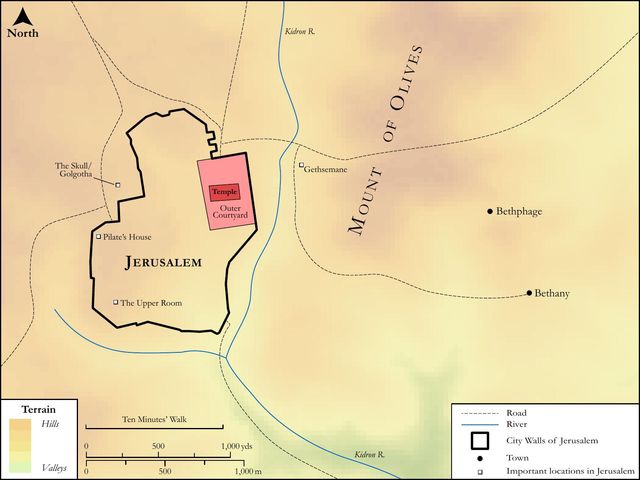
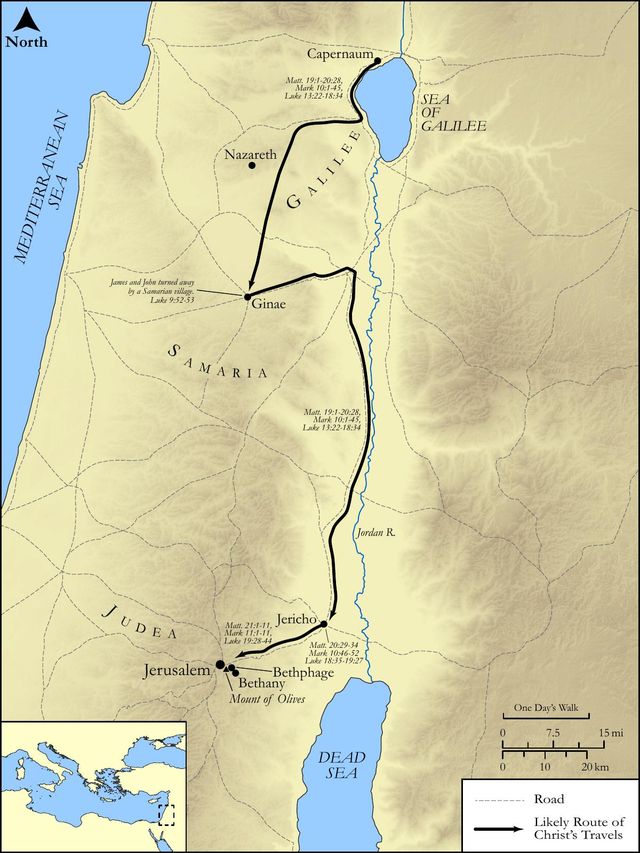
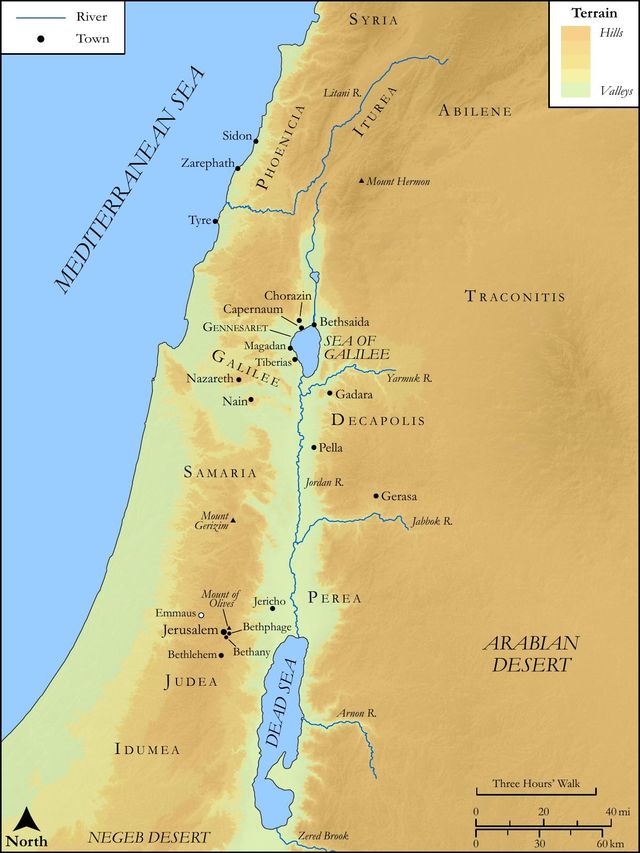
See on the biblical-era maps
Study this verse
Public-domain commentary
Matthew Henry
From his Commentary on the Whole Bible. Henry comments on passages, not single verses — this entry covers Luke 18:15–17.
This passage of story we had both in Matthew and Mark; it very fitly follows here after the story of the publican, as a confirmation of the truth which was to be illustrated by that parable, that those shall be accepted with God, and honoured, who humble themselves, and for them Christ has blessings in store, the choicest and best of blessings. Observe here, 1. Those who are themselves blessed in Christ should desire to have their children also blessed in him, and should hereby testify the true honour they have for Christ, by their making use of him, and the true love they have for their children, by their concern about their souls. They brought to him infants, very young, not able to go, sucking children, as some think. None are too little, too young, to bring to Christ, who knows how to show kindness to them that are not capable of doing service to him. 2. One gracious touch of Christ's will make our children happy. They brought infants to him, that he might touch them in token of the application of his grace and Spirit to them, for that always makes way for his blessing, which likewise they expected: see Isa 44:3. I will first pour my Spirit upon thy seed, and then my blessing upon thine offspring. 3. It is no strange thing for those who make their application to Jesus Christ, for themselves or for their children, to meet with discouragement, even from those who should countenance and encourage them: When the disciples saw it, they thought, if this were admitted, it would bring endless trouble upon their Master, and therefore they rebuked them, and frowned upon them. The spouse complained of the watchmen, Sol 3:3; Sol 5:7. 4. Many whom the disciples rebuke the Master invites: Jesus called them unto him, when, upon the disciples' check, they were retiring. They did not appeal from the disciples to the Master, but the Master took cognizance of their despised cause. 5. It is the mind of Christ that little children should be brought to him, and presented as living sacrifices to his honour: "Suffer little children to come to me, and forbid them not; let nothing be done to hinder them, for they shall be as welcome as any." The promise is to us, and to our seed; and therefore he that has the dispensing of promised blessings will bid them welcome to him with us. 6. The children of those who belong to the kingdom of God do likewise belong to that kingdom, as the children of freemen are freemen. If the parents be members of the visible church, the children are so too; for, if the root be holy, the branches are so. 7. So welcome are children to Christ that those grown people are most welcome to him who have in them most of the disposition of children (Luk 18:17): Whosoever shall not receive the kingdom of God as a little child, that is, receive the benefits of it with humility and thankfulness, not pretending to merit them as the Pharisee did, but gladly owning himself indebted to free grace for them, as the publican did; unless a man be brought to this self-denying frame he shall in no wise enter into that kingdom. They must receive the kingdom of God as children, receive their estates by descent and inheritance, not by purchase, and call it their Father's gift.
Historical interpretation
Seven Centuries of Reception
7 surviving comments on this verse. Each one is dated, so this reads as a timeline rather than a list.
Select a marker to jump to its quote. Markers stagger vertically where authors wrote within a few decades of each other.
(in Reg. Brev. ad int. 217.) We shall receive the kingdom of God as a child if we are disposed towards our Lord's teaching as a child under instruction, never contradicting nor disputing with his masters, but trustfully and teachably imbibing learning.
It may be thought strange by some that the disciples wished to prevent the little children from coming to our Lord, as it is said, when they saw it, they rebuked them. But we must understand in this either a mystery, or the effect of their love to Him. For they did it not from envy or harsh feeling towards the children, but they manifested a holy zeal in their Lord's service, that he might not be pressed by the crowds. Our own interest must be given up where an injury is threatened to God. But we may understand the mystery to be, that they desired the Jewish people to be first saved, of whom they were according to the flesh.
They knew indeed the mystery, that to both nations the call was to be made, (for they entreated for the Canaanitish woman,) but perhaps they were still ignorant of the order. It follows, But Jesus called them unto him, and said, Suffer little children, &c. One age is not preferred to another, else it were hurtful to grow up. But why does He say that children are fitter for the kingdom of heaven? It is because they are ignorant of guile, are incapable of theft, dare not return a blow, are unconscious of lust, have no desire for wealth, honours, or ambition. But to be ignorant of these things is not virtue, we must also despise them. For virtue consists not in our inability to sin, but in our unwillingness. Childhood then is not meant here, but that goodness which rivals the simplicity of childhood.
Lastly, our Saviour expressed this when He said, Verily I say unto you, Whosoever will not receive the kingdom of God as a little child, &c. What child were Christ's Apostles to imitate but Him of whom Esaias speaks, Unto us a Child is given? (Isai. 9:6.) Who when He was reviled, reviled not again. (1 Pet. 2.) So that there is in childhood a certain venerable antiquity, and in old age a childlike innocence.
Why does he say that children are fit for the kingdom of heaven? Perhaps it is because they do not know spitefulness, have not learned to deceive, dare not strike back, neglect to search for wealth, and do not work after honor and ambition.… Childhood is not meant, but rather goodness rivaling childlike simplicity. It is not a virtue to be unable to sin, but to be unwilling to do so and to retain perseverance of will, so that the will imitates childhood and the person imitates nature.
What is there in babies that is worthy of imitation? Is it their lack of firmness and intelligence? It is incredible to affirm or imagine anything like this. Christ, however, does not wish us to be without understanding but wants us perfectly to know everything that is useful and necessary for our salvation. Wisdom even promises that she will give cleverness to the simple and the beginning of sense and understanding to the young. … How someone might at once be both simple and clever, the Savior explains to us elsewhere, saying, "Be clever as serpents and simple as doves." Blessed Paul also writes, "My brothers, do not be children in your minds, but in wickedness be babies, and in your minds grown men."It is necessary to examine the meaning of being babies in wickedness and the way a person becomes a baby, but a grown person in mind. Knowing very little or nothing at all, a baby is correctly acquitted of the charge of depravity and wickedness. It is also our duty to attempt to be like them in the very same way. We must entirely put away from us habits of wickedness, that we also may be regarded as people who do not even know the path that leads to deception. Unconscious of spite and fraud, we must live in a simple and innocent manner, practicing gentleness and a priceless humility and readily avoiding wrath and spitefulness. These qualities are found in those who are still babies.
Truly I tell you, whoever does not receive the kingdom of God like a child will never enter it. Just as a child does not persist in anger, does not remember being hurt, does not take delight in a beautiful woman, does not think one thing and say another, so too, unless you have such innocence and purity of mind, you will not be able to enter the kingdom of heaven. Another interpretation: We are commanded to receive the kingdom of God, that is, the teaching of the Gospel, like a child, because a child neither contradicts teachers in learning, nor composes arguments and words to resist them, but faithfully accepts what is taught, and obeys and rests with respect.
Hence our Lord pointedly says, of such, not "of these," to show that to character, not to age, is the kingdom given, and to such as have a childlike innocence and simplicity is the promise of the reward.
After what He had said, our Lord teaches us a lesson of humility by His own example; He does not turn away the little children who are brought to Him, but graciously receives them.
The wise men of the Gentiles therefore who seek for wisdom in a mystery, which is the kingdom of God, and will not receive this without the evidence of logical proof, are rightly shut out from this kingdom.
Continue studying Luke 18:17 across the web’s major study libraries — every link below opens this exact verse, chapter, or book on the destination site.
Read & Compare
 BibleGatewayThis verse in more than 200 translations and 70 languages.
 Bible.comThe YouVersion reader — hundreds of translations, reading plans, and highlights.
 ESV.orgCrossway's official English Standard Version reader.
 NET BibleThe NET translation with 60,000+ translators' notes on every rendering decision.
 STEP BibleTyndale House's free study tool — original text, vocabulary, and scholarly resources.
 BibliaLogos Bible Software's free web reader.
 USCCBThe New American Bible (Revised Edition) with the U.S. bishops' study notes.
Commentaries
 BibleHub CommentariesDozens of classic commentaries on this verse, gathered on one page.
 StudyLightMore than 100 commentary sets — the largest collection on the web.
 BibleRefPlain-English commentary on what this verse means, verse by verse.
 Enduring WordDavid Guzik's free commentary on this chapter, widely used by Bible teachers.
 Bible Study ToolsVerse commentary alongside Greek and Hebrew study aids.
Original Language & Research
- BibleHub InterlinearThe verse word by word — original language, transliteration, and English.
- BibleHub LexiconEvery word's original-language definition and Strong's entry.
 Blue Letter BibleDeep-study tools — Strong's numbers, concordance, and word studies.
 CNTR CollationThe earliest Greek manuscripts of this verse, collated letter by letter.
Sermons, Hymns & Audio


TrulyRandomVerse is not affiliated with these sites and doesn’t control their content. They’re linked because they’re genuinely useful.
Summary
Luke 18:17 presents a profound and absolute declaration from Jesus Christ regarding the essential disposition required for entry into the Kingdom of God. Following an interaction where His disciples sought to prevent children from approaching Him, Jesus uses the inherent qualities of a child—such as dependence, humility, and unreserved trust—as a powerful metaphor, asserting that unless one embraces these characteristics, access to God's sovereign reign is impossible. This teaching underscores the radical nature of Kingdom values, which stand in stark contrast to human notions of merit, status, or self-sufficiency.
Context
ShowHideLiterary Context
This potent declaration immediately follows Jesus' tender interaction with little children (Luke 18:15-16), where He rebukes His disciples for hindering them and proclaims that "the kingdom of God belongs to such as these." Verse 17 then serves as an emphatic, explanatory statement, clarifying why the Kingdom belongs to those with a childlike disposition. It also acts as a crucial thematic bridge to the subsequent narrative of the rich young ruler, who embodies the very self-reliance and attachment to earthly status that stands in opposition to the humility Jesus champions. Parallels to this teaching are found in Matthew 18:3 and Mark 10:15, highlighting its significance across the Synoptic Gospels.
Historical & Cultural Context
Among the Greeks and Romans, and even among the Jews of Jesus' time, children held a relatively low social status. They possessed no legal rights, no independent standing, and were entirely dependent on adults. They were often seen as property or as incomplete adults, lacking wisdom, power, and influence. By elevating children as the paradigm for Kingdom entry, Jesus subverts conventional societal values. He challenges a hierarchical system that valued power, wealth, and status, instead pointing to a radical humility and dependence that was counter-cultural. This perspective would have been startling to His audience, particularly those who prided themselves on their religious knowledge, social standing, or material possessions.
Key Themes
ShowHideLuke 18:17 powerfully contributes to several overarching themes in Luke's Gospel and broader biblical theology. It highlights the theme of Radical Humility and Dependence, emphasizing that entry into God's Kingdom is not earned through human effort, intellectual achievement, or social standing, but is a gift received through a posture of utter reliance on God, much like a child depends entirely on its parents. This contrasts sharply with the self-sufficiency often prized by adults. Furthermore, the verse reinforces the Nature of the Kingdom of God as a realm of divine grace and sovereign rule, which is accessible only to those who humble themselves and are willing to be taught and led. Jesus consistently teaches that the Kingdom is for the "poor in spirit" (Matthew 5:3) and those who acknowledge their need, rather than the self-righteous. Finally, it underscores the Exclusivity of Kingdom Entry, with Jesus' emphatic "in no wise enter therein" demonstrating that this childlike disposition is not merely preferred but is an absolute, non-negotiable prerequisite for experiencing God's reign.
Exposition and Analysis
ShowHideKey Word Analysis
ShowHideOf Hebrew origin, this word properly means "firm" or "trustworthy." As an adverb, it signifies "surely" or "truly," often used by Jesus as an interjection, "so be it." Here, it functions as a solemn and emphatic affirmation, underscoring the absolute truth and certainty of the statement that follows. It signals a weighty and foundational teaching.
This verb, in the middle voice, means "to receive" in various applications, implying a welcoming, an acceptance, or taking something offered. It suggests a passive receptivity rather than an active acquisition or earning. In the context of the Kingdom of God, it highlights that the Kingdom is a gift to be welcomed and embraced, not a prize to be achieved through human merit or effort.
This is a neuter diminutive of the word for "child," referring to an infant or a half-grown boy or girl. Figuratively, it can refer to an immature Christian. In this context, it refers to the qualities inherent in a young child: complete dependence, unpretentious trust, lack of self-sufficiency, humility, and an open, receptive mind. It is not about childishness or immaturity, but about these specific virtues.
Verse Breakdown
ShowHide"Verily I say unto you,"
Jesus begins with a strong, authoritative affirmation, "Verily" (Amen), signaling the profound importance and absolute truth of His forthcoming statement. This phrase often introduces a crucial teaching or a divine truth.
"Whosoever shall not receive the kingdom of God"
This clause sets the condition for entry. The "kingdom of God" refers to God's sovereign rule and reign, both present and future, spiritual and ultimate. To "receive" it implies accepting it as a gift, welcoming its authority, and submitting to its principles, rather than earning or achieving it. The negative "shall not receive" establishes a barrier to entry.
"as a little child"
This is the critical comparative element. The "little child" serves as the paradigm for the required disposition. It is not about intellectual capacity or physical age, but about the inherent qualities of a child: dependence, humility, trust, lack of pretense, and a complete reliance on another (in this case, God). It means approaching God's reign with an open, trusting, and humble heart, devoid of adult pride or self-sufficiency.
"shall in no wise enter therein."
This is an absolute and emphatic denial of entry. The double negative "in no wise" (Greek: ou mḗ) strengthens the denial, meaning "not at all" or "by no means." It underscores the non-negotiable nature of the childlike disposition. Without this posture of humble receptivity, access to the Kingdom of God is utterly impossible.
Literary Devices
ShowHideLuke 18:17 is rich in literary devices that amplify its profound message. The most prominent is Metaphor, where Jesus uses the "little child" not literally, but as a symbolic representation of the spiritual qualities necessary for salvation and discipleship—namely, humility, dependence, and trust. This is further emphasized by Comparison, as the phrase "as a little child" directly likens the required spiritual posture to the natural disposition of a young child. There is also an element of Paradox, as Jesus elevates the least powerful and most dependent members of society (children) as the model for entering the most powerful and sovereign realm (the Kingdom of God), thereby subverting conventional wisdom that values strength and self-reliance. Finally, the use of Hyperbole or strong Emphasis is evident in the double negative "shall in no wise enter therein," which serves to underscore the absolute and non-negotiable nature of this requirement, leaving no room for alternative paths or exceptions.
Theological and Thematic Connections
ShowHideLuke 18:17 is a cornerstone passage for understanding the nature of salvation and the Kingdom of God. It profoundly teaches that entry into God's sovereign reign is not a matter of human achievement, intellectual prowess, social status, or religious merit, but rather a gift received through humble, dependent faith. This aligns with the biblical emphasis on grace, where salvation is God's unmerited favor, freely given and freely received. The "childlike" disposition highlights the spiritual bankruptcy and utter dependence on God that is foundational to true faith. It counters any notion of self-righteousness or earned righteousness, instead pointing to a posture of complete reliance on Christ's finished work and God's benevolent provision. This humility is not a weakness but the very strength that allows one to fully embrace God's transforming power and His Kingdom.
Reflection and Application
ShowHideLuke 18:17 serves as a powerful and enduring call to self-examination for every believer. It challenges us to critically assess the posture of our hearts before God. Are we approaching Him with the humble, trusting, and dependent spirit of a child, or are we clinging to our own perceived wisdom, strength, or accomplishments? To "receive the kingdom of God as a little child" means acknowledging our spiritual poverty and utter reliance on God's grace for everything—salvation, guidance, strength, and provision. It calls us to shed the pride, self-sufficiency, and skepticism that often characterize adult life, and instead cultivate an open, teachable, and trusting heart that readily accepts God's truth and His sovereign rule. This verse encourages a radical abandonment of self-reliance in favor of complete dependence on the Father, fostering a deep sense of humility and gratitude that allows us to truly experience the fullness of His Kingdom in our lives.
Questions for Reflection
ShowHideFAQ
ShowHideWhat does it mean to "receive the kingdom of God"?
ShowHideTo "receive the kingdom of God" means to accept and embrace God's sovereign rule and reign in one's life. It implies a willing submission to His authority, His will, and His values. It is not something one earns or achieves through effort, but rather a divine gift that is welcomed and appropriated by faith. This reception involves acknowledging one's need for God, trusting in His provision, and allowing His transforming power to govern one's heart and actions. It signifies a profound shift from self-rule to God's rule, entering into a relationship where God is King and one is His humble subject, benefiting from the blessings and responsibilities of His divine governance. This concept is central to Jesus' teaching, as seen in passages like Matthew 6:33.
What specific qualities of a little child is Jesus referring to in this verse?
ShowHideJesus is not advocating for childishness or immaturity. Rather, He is highlighting the positive, inherent qualities of a young child that are essential for Kingdom entry. These include: Dependence: A child is utterly dependent on its parents for provision, protection, and guidance, reflecting our complete reliance on God. Humility: Children generally lack the pride, pretense, and self-importance that adults often develop. They are open to learning and correction. Trust: A child typically places implicit trust in its caregivers, mirroring the unreserved faith required to trust God's promises and character. Receptivity: Children are naturally open to receiving, whether it's gifts, instruction, or love, without feeling the need to earn it or prove themselves worthy. These qualities stand in stark contrast to the self-sufficiency, pride, and skepticism that can hinder adults from truly embracing God's grace.
Is this verse about salvation or discipleship?
ShowHideLuke 18:17 speaks to both salvation and ongoing discipleship, though its primary emphasis is on the fundamental disposition required for initial entry into the Kingdom of God (salvation). The phrase "shall in no wise enter therein" points to a prerequisite for experiencing God's reign. This initial "receiving" of the Kingdom through humble faith is the gateway to salvation. However, the childlike disposition of humility, dependence, and trust is also crucial for continuous growth in discipleship. As believers, we are called to maintain this posture throughout our Christian walk, continually relying on God, remaining teachable, and submitting to His will. Therefore, while foundational for salvation, the principles of this verse extend to the entire journey of following Christ, as seen in how Jesus invites His followers to take His yoke upon them and learn from Him, for He is gentle and humble in heart.
Christ-Centered Fulfillment
ShowHideLuke 18:17 finds its ultimate fulfillment and perfect embodiment in Jesus Christ Himself. He is the quintessential example of one who "received the kingdom of God as a little child," not in the sense of needing salvation, but in His perfect humility and utter dependence on the Father. Though fully God, Christ "made himself of no reputation, and took upon him the form of a servant" (Philippians 2:7), demonstrating the ultimate act of humble submission and reliance on God's will, even to the point of death on a cross. He consistently lived in perfect dependence on the Father, stating, "The Son can do nothing of himself, but what he seeth the Father do" (John 5:19). Jesus is the door to the Kingdom, and He exemplifies the very posture required to enter it. His life of perfect humility, obedience, and trust in the Father provides the pattern for all who would follow Him and receive the Kingdom. Through His sacrificial death, He made it possible for us, who are spiritually poor and dependent, to be adopted as children of God (John 1:12), thereby entering into the Kingdom by grace through faith, mirroring the very childlike trust He taught and lived.