


Luke 18:16
Bible text: King James Version (1769 Blayney text) · Public domain
Bible text: King James Version with Strong's numbers · Public domain
Bible text: Berean Standard Bible · Public domain
Bible text: American Standard Version (1901) · Public domain
Bible text: World English Bible, Messianic edition · Public domain
Bible text: Geneva Bible (1599) · Public domain
Bible text: Young's Literal Translation · Public domain
- ὁho<the>G3588T-NSMDefinite article Nominative Singular Masculine
- δὲdeButG1161CONJConjunction
- ἸησοῦςIēsousJesusG2424N-NSM-PNoun Nominative Singular Masculine Individual
- προσεκαλέσατοprosekalesatocalledG4341V-ADI-3SVerb Aorist Middle Deponent Indicative 3rd Singular
- αὐτὰautathemG846P-APNPersonal pronoun Accusative Plural Neuter
- λέγων·legōnspeakingG3004V-PAP-NSMVerb Present Active Participle Nominative Singular Masculine
- ἄφετεaphetedo permitG863V-2AAM-2PVerb 2nd Aorist Active Imperative 2nd Plural
- τὰtatheG3588T-APNDefinite article Accusative Plural Neuter
- παιδίαpaidialittle childrenG3813N-APNNoun Accusative Plural Neuter
- ἔρχεσθαιerchesthaito comeG2064V-PNNVerb Present Middle Or Passive Deponent Infinitive
- πρόςprostoG4314PREPPreposition
- μεmeMeG3165P-1ASPersonal pronoun Accusative 1st Singular
- καὶkaiandG2532CONJConjunction
- μὴmēnotG3361PRT-NNegative Particle Negative
- κωλύετεkōluetedo forbidG2967V-PAM-2PVerb Present Active Imperative 2nd Plural
- αὐτά·autathemG846P-APNPersonal pronoun Accusative Plural Neuter
- τῶνtōn<the>G3588T-GPNDefinite article Genitive Plural Neuter
- γὰρgarforG1063CONJConjunction
- τοιούτωνtoioutōnof suchG5108D-GPNDemonstrative pronoun Genitive Plural Neuter
- ἐστὶνestinisG1510V-PAI-3SVerb Present Active Indicative 3rd Singular
- ἡhētheG3588T-NSFDefinite article Nominative Singular Feminine
- βασιλείαbasileiakingdomG932N-NSFNoun Nominative Singular Feminine
- τοῦtou<the>G3588T-GSMDefinite article Genitive Singular Masculine
- θεοῦtheouof GodG2316N-GSM-TNoun Genitive Singular Masculine Title
English is a literal word-by-word gloss of the Greek, not the KJV's wording. Why?
This is the original text the KJV's translators worked from — each Greek word with its own literal English meaning in this verse, prepared by scholars at Tyndale House, Cambridge. The KJV translates whole sentences, not word by word, so its wording differs: one Greek word can become several English words, and the KJV may choose “charity” where the gloss reads “love”. Both are faithful — they answer different questions. For the KJV's own rendering, switch to the KJV text.
Details
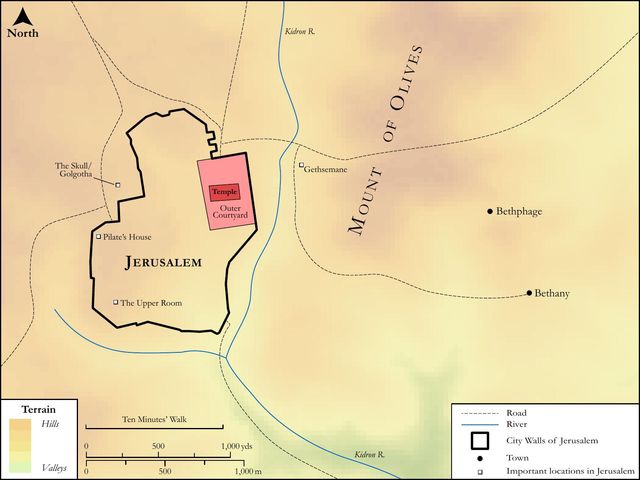
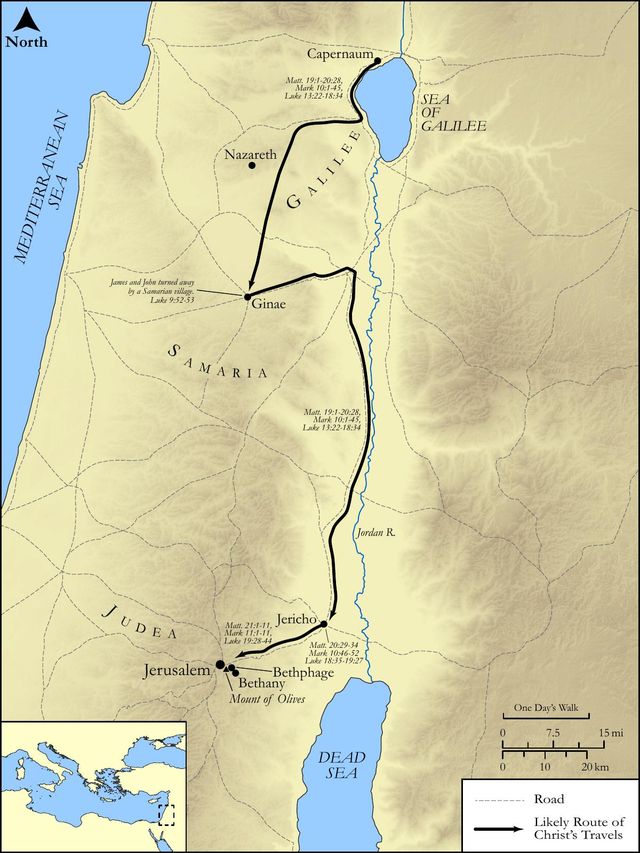
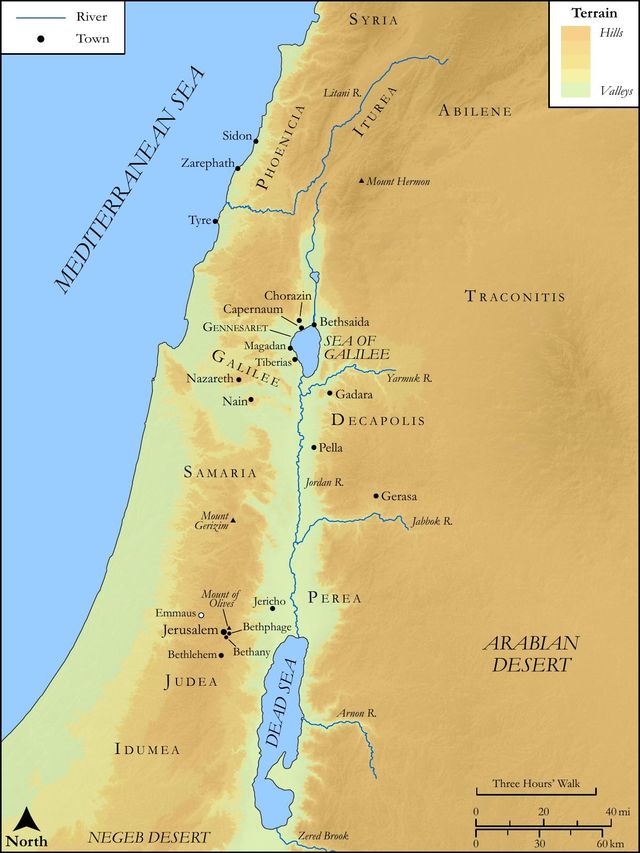
See on the biblical-era maps
Study this verse
Public-domain commentary
Matthew Henry
From his Commentary on the Whole Bible. Henry comments on passages, not single verses — this entry covers Luke 18:15–17.
This passage of story we had both in Matthew and Mark; it very fitly follows here after the story of the publican, as a confirmation of the truth which was to be illustrated by that parable, that those shall be accepted with God, and honoured, who humble themselves, and for them Christ has blessings in store, the choicest and best of blessings. Observe here, 1. Those who are themselves blessed in Christ should desire to have their children also blessed in him, and should hereby testify the true honour they have for Christ, by their making use of him, and the true love they have for their children, by their concern about their souls. They brought to him infants, very young, not able to go, sucking children, as some think. None are too little, too young, to bring to Christ, who knows how to show kindness to them that are not capable of doing service to him. 2. One gracious touch of Christ's will make our children happy. They brought infants to him, that he might touch them in token of the application of his grace and Spirit to them, for that always makes way for his blessing, which likewise they expected: see Isa 44:3. I will first pour my Spirit upon thy seed, and then my blessing upon thine offspring. 3. It is no strange thing for those who make their application to Jesus Christ, for themselves or for their children, to meet with discouragement, even from those who should countenance and encourage them: When the disciples saw it, they thought, if this were admitted, it would bring endless trouble upon their Master, and therefore they rebuked them, and frowned upon them. The spouse complained of the watchmen, Sol 3:3; Sol 5:7. 4. Many whom the disciples rebuke the Master invites: Jesus called them unto him, when, upon the disciples' check, they were retiring. They did not appeal from the disciples to the Master, but the Master took cognizance of their despised cause. 5. It is the mind of Christ that little children should be brought to him, and presented as living sacrifices to his honour: "Suffer little children to come to me, and forbid them not; let nothing be done to hinder them, for they shall be as welcome as any." The promise is to us, and to our seed; and therefore he that has the dispensing of promised blessings will bid them welcome to him with us. 6. The children of those who belong to the kingdom of God do likewise belong to that kingdom, as the children of freemen are freemen. If the parents be members of the visible church, the children are so too; for, if the root be holy, the branches are so. 7. So welcome are children to Christ that those grown people are most welcome to him who have in them most of the disposition of children (Luk 18:17): Whosoever shall not receive the kingdom of God as a little child, that is, receive the benefits of it with humility and thankfulness, not pretending to merit them as the Pharisee did, but gladly owning himself indebted to free grace for them, as the publican did; unless a man be brought to this self-denying frame he shall in no wise enter into that kingdom. They must receive the kingdom of God as children, receive their estates by descent and inheritance, not by purchase, and call it their Father's gift.
Historical interpretation
Nine Centuries of Reception
10 surviving comments on this verse. Each one is dated, so this reads as a timeline rather than a list.
Select a marker to jump to its quote. Markers stagger vertically where authors wrote within a few decades of each other.
For why is it necessary-if (baptism itself) is not so necessary -that the sponsors likewise should be thrust into danger? Who both themselves, by reason of mortality, may fail to fulfil their promises, and may be disappointed by the development of an evil disposition, in those for whom they stood? The Lord does indeed say, "Forbid them not to come unto me." Let them "come," then, while they are growing up; let them "come" while they are learning, while they are learning whither to come; let them become Christians when they have become able to know Christ.
(in Reg. Brev. ad int. 217.) We shall receive the kingdom of God as a child if we are disposed towards our Lord's teaching as a child under instruction, never contradicting nor disputing with his masters, but trustfully and teachably imbibing learning.
It may be thought strange by some that the disciples wished to prevent the little children from coming to our Lord, as it is said, when they saw it, they rebuked them. But we must understand in this either a mystery, or the effect of their love to Him. For they did it not from envy or harsh feeling towards the children, but they manifested a holy zeal in their Lord's service, that he might not be pressed by the crowds. Our own interest must be given up where an injury is threatened to God. But we may understand the mystery to be, that they desired the Jewish people to be first saved, of whom they were according to the flesh.
They knew indeed the mystery, that to both nations the call was to be made, (for they entreated for the Canaanitish woman,) but perhaps they were still ignorant of the order. It follows, But Jesus called them unto him, and said, Suffer little children, &c. One age is not preferred to another, else it were hurtful to grow up. But why does He say that children are fitter for the kingdom of heaven? It is because they are ignorant of guile, are incapable of theft, dare not return a blow, are unconscious of lust, have no desire for wealth, honours, or ambition. But to be ignorant of these things is not virtue, we must also despise them. For virtue consists not in our inability to sin, but in our unwillingness. Childhood then is not meant here, but that goodness which rivals the simplicity of childhood.
Lastly, our Saviour expressed this when He said, Verily I say unto you, Whosoever will not receive the kingdom of God as a little child, &c. What child were Christ's Apostles to imitate but Him of whom Esaias speaks, Unto us a Child is given? (Isai. 9:6.) Who when He was reviled, reviled not again. (1 Pet. 2.) So that there is in childhood a certain venerable antiquity, and in old age a childlike innocence.
Why does he say that children are fit for the kingdom of heaven? Perhaps it is because they do not know spitefulness, have not learned to deceive, dare not strike back, neglect to search for wealth, and do not work after honor and ambition.… Childhood is not meant, but rather goodness rivaling childlike simplicity. It is not a virtue to be unable to sin, but to be unwilling to do so and to retain perseverance of will, so that the will imitates childhood and the person imitates nature.
The other doctrine that your brotherhood claims they preach, that little children can attain the reward of eternal life without the grace of baptism, is very foolish. "Unless they eat of the flesh of the Son of man and drink his blood, they will not have life in them." It seems to me that those who claim this for them without regeneration want to nullify baptism, since they teach that these children have what they believe is not to be bestowed on them in baptism even by themselves. If they do not want anything to stand in their way, let them confess that there is no need of rebirth and that the sacred stream of regeneration has no effect. The Lord proclaims this to disarm the vicious doctrine of proud people by the swift reasoning of truth. He says, "Allow the little children, and do not forbid them to come to me."
(Serm. 115.) To whom are they brought to be touched, but to the Saviour? And as being the Saviour they are presented to Him to be saved, who came to save that which was lost. But with regard to these innocents, when were they lost? The Apostle says, By one man sin entered into the world. (Rom. 5:12.) Let then the little children come as the sick to a physician, the lost to their Redeemer.
Mothers brought their babes. They wanted his blessing and begged for their infants the touch of his holy hand. The blessed disciples rebuked them for doing this, not because they envied the babes; rather they were paying him due respect as their teacher and preventing him from getting unnecessarily tired. They placed much value on order.Even until now, infants are brought near and blessed by Christ by means of consecrated hands. The pattern of the act continues even until this day and descends to us from the custom of Christ as its fountain. Only now, the bringing of infants does not take place in an unbecoming or disorderly manner but with proper order, solemnity and reverence.
Hence our Lord pointedly says, of such, not "of these," to show that to character, not to age, is the kingdom given, and to such as have a childlike innocence and simplicity is the promise of the reward.
But Jesus, calling them, said: Let the children come to me, and do not hinder them. For of such is the kingdom of God. He significantly said "of such," not "of these ones," to show that it is not age that reigns, but manners, and that the reward is promised to those who have similar innocence and simplicity. The Apostle also agrees with this sentiment: Brothers, do not be children in understanding, but be infants in malice. In understanding, however, be perfect.
After what He had said, our Lord teaches us a lesson of humility by His own example; He does not turn away the little children who are brought to Him, but graciously receives them.
The wise men of the Gentiles therefore who seek for wisdom in a mystery, which is the kingdom of God, and will not receive this without the evidence of logical proof, are rightly shut out from this kingdom.
Continue studying Luke 18:16 across the web’s major study libraries — every link below opens this exact verse, chapter, or book on the destination site.
Read & Compare
 BibleGatewayThis verse in more than 200 translations and 70 languages.
 Bible.comThe YouVersion reader — hundreds of translations, reading plans, and highlights.
 ESV.orgCrossway's official English Standard Version reader.
 NET BibleThe NET translation with 60,000+ translators' notes on every rendering decision.
 STEP BibleTyndale House's free study tool — original text, vocabulary, and scholarly resources.
 BibliaLogos Bible Software's free web reader.
 USCCBThe New American Bible (Revised Edition) with the U.S. bishops' study notes.
Commentaries
 BibleHub CommentariesDozens of classic commentaries on this verse, gathered on one page.
 StudyLightMore than 100 commentary sets — the largest collection on the web.
 BibleRefPlain-English commentary on what this verse means, verse by verse.
 Enduring WordDavid Guzik's free commentary on this chapter, widely used by Bible teachers.
 Bible Study ToolsVerse commentary alongside Greek and Hebrew study aids.
Original Language & Research
- BibleHub InterlinearThe verse word by word — original language, transliteration, and English.
- BibleHub LexiconEvery word's original-language definition and Strong's entry.
 Blue Letter BibleDeep-study tools — Strong's numbers, concordance, and word studies.
 CNTR CollationThe earliest Greek manuscripts of this verse, collated letter by letter.
Sermons, Hymns & Audio


TrulyRandomVerse is not affiliated with these sites and doesn’t control their content. They’re linked because they’re genuinely useful.
Summary
Luke 18:16 captures Jesus' profound declaration regarding the nature of God's kingdom and the disposition required to enter it. In stark contrast to His disciples' attempts to dismiss them, Jesus calls for children to be brought to Him, unequivocally stating that the kingdom of God belongs to those who possess the humble, trusting, and dependent qualities exemplified by little children. This verse underscores Jesus' radical redefinition of greatness and His welcoming heart towards the vulnerable, revealing that God's reign is accessible to those who approach Him with simple faith and unadulterated receptivity.
Context
ShowHideLiterary Context
This pivotal interaction immediately follows two parables in Luke 18 that emphasize prayer and humility: the parable of the persistent widow and the unrighteous judge (Luke 18:1-8) and the parable of the Pharisee and the tax collector (Luke 18:9-14). Both parables highlight the importance of humble, persistent prayer and the danger of self-righteousness. The bringing of children to Jesus, and the disciples' subsequent rebuke mentioned in Luke 18:15, sets the stage for Jesus' direct teaching on the character required for kingdom entry, serving as a practical illustration of the humility He just advocated. This episode also foreshadows His later teachings on servanthood and the valuing of the "least among you."
Historical & Cultural Context
Among the Greeks, the Romans and the Jews of Jesus' time, children generally held a low social status. They were not considered significant members of society, often viewed as property or dependents rather than individuals with inherent worth or rights. Their testimony was not admissible in court, and they lacked social standing. Rabbis typically focused their teaching on adult men. The disciples' attempt to turn the children away (Luke 18:15) reflects this prevailing cultural attitude, where children were seen as a distraction or an inconvenience to important matters. Jesus' embrace of the children, therefore, was a profoundly counter-cultural act, subverting societal norms and challenging His disciples' conventional understanding of status and importance within God's economy.
Key Themes
ShowHideThis verse powerfully contributes to several overarching themes in Luke's Gospel and Jesus' ministry. Firstly, it reinforces the theme of God's Kingdom and its Accessibility, emphasizing that entry into God's reign is not based on worldly status, power, or self-achieved righteousness, but on a humble, receptive heart. This aligns with Jesus' consistent ministry to the lowly and overlooked, such as tax collectors and sinners. Secondly, it highlights Humility and Dependence as essential virtues, contrasting sharply with the pride exemplified by the Pharisee in the preceding parable (Luke 18:9-14). The children embody the very qualities of dependence and trust that adults must recover to genuinely receive the kingdom. Finally, it underscores Jesus' Compassion and Universal reach, demonstrating His profound love and value for all people, especially those considered insignificant by society, a theme consistently woven throughout Luke's Gospel.
Exposition and Analysis
ShowHideKey Word Analysis
ShowHideThis verb, often translated as "suffer" in older English versions, means "to allow," "permit," or "let go." It signifies Jesus' explicit command to remove any hindrance or objection to the children approaching Him. It's a strong directive, dismantling the disciples' protective actions and asserting the children's right to access Jesus. The term implies a release from restriction, emphasizing Jesus' desire for unhindered access.
This diminutive noun refers to a "childling," an infant, or a young child, emphasizing their tender age and inherent vulnerability. While it can figuratively refer to an immature Christian, in this context, it clearly denotes actual young children. Their smallness, dependence, and lack of worldly sophistication are central to Jesus' teaching, making them a perfect illustration of the qualities required for kingdom entry.
This demonstrative pronoun means "of this sort" or "of this kind." It is crucial because Jesus is not merely saying the kingdom belongs to literal children, but to those who are like children in their disposition. It points to the character, qualities, and spiritual posture exemplified by children—namely, humility, dependence, trust, and a lack of self-sufficiency.
Verse Breakdown
ShowHide"But Jesus called them [unto him], and said,"
This opening clause highlights Jesus' decisive and authoritative action. The conjunction "But" (G1161, dé) indicates a contrast to the disciples' previous action of rebuking those who brought children. Jesus actively summons the children, demonstrating His intentionality and overturning the prevailing social hierarchy and His disciples' misguided judgment. His call is a direct invitation, asserting His authority over the situation.
"Suffer little children to come unto me, and forbid them not:"
This is Jesus' direct command, a double imperative that is both positive ("Suffer little children to come unto me") and negative ("and forbid them not"). The repetition emphasizes the urgency and importance of His instruction. He desires unhindered access for the children, directly countering the disciples' attempts to block them. This command reveals Jesus' welcoming nature and His deep concern for those often overlooked.
"for of such is the kingdom of God."
This crucial explanatory clause provides the reason for Jesus' command, introduced by "for" (G1063, gár). It reveals the profound theological truth at the heart of the passage. The phrase "of such" (G5108, toioûtos) clarifies that the kingdom of God does not belong exclusively to literal children, but to those who possess the qualities exemplified by children: humility, dependence, trust, and a lack of self-righteousness or worldly pretensions. It is a radical redefinition of who is truly great in God's eyes and who is fit to enter His sovereign reign.
Literary Devices
ShowHideLuke 18:16 masterfully employs several literary devices to convey its profound message. Contrast is central, immediately evident in Jesus' actions and words standing in stark opposition to the disciples' behavior in the preceding verse. While the disciples rebuke those bringing children, Jesus calls them, explicitly commanding "Suffer... and forbid them not." This highlights a fundamental difference in values and understanding of God's kingdom. The children themselves serve as a powerful Symbolism or Metaphor for the spiritual qualities necessary for kingdom entry. They are not merely recipients of blessing, but living illustrations of humility, dependence, and receptivity—qualities often lost in adulthood. This leads to an inherent Paradox or Inversion: those considered least important in society (children) are declared to embody the very essence of what it means to belong to God's kingdom. Jesus consistently uses such inversions (e.g., the last shall be first) to challenge conventional wisdom and reveal God's upside-down economy.
Theological and Thematic Connections
ShowHideLuke 18:16 stands as a foundational text for understanding the nature of God's kingdom and the disposition required for its reception. It dismantles human-centric notions of worthiness, earned status, or intellectual prowess as prerequisites for entering God's sovereign rule. Instead, Jesus elevates the qualities inherent in children—humility, utter dependence, trust, and a lack of pretense—as the essential characteristics of those who truly belong to God's kingdom. This teaching profoundly challenges any form of self-righteousness or pride, echoing the themes of the preceding parables in Luke 18 and reinforcing the truth that God's grace is received, not earned. The kingdom is open to all who approach God with the simple, unadulterated faith of a child.
Reflection and Application
ShowHideLuke 18:16 serves as a timeless mirror, inviting us to critically examine the posture of our own hearts before God. In a world that often values self-sufficiency, achievement, and outward status, Jesus calls us back to a radical simplicity. Are we approaching God with the humble, trusting dependence of a child, or are we burdened by our own perceived accomplishments, wisdom, or self-righteousness? This verse challenges us to shed the adult pretenses that hinder genuine relationship with our Creator, reminding us that true spiritual maturity often involves recovering a childlike faith—a willingness to receive grace, to trust implicitly, and to acknowledge our complete reliance on God. Furthermore, Jesus' welcome of the children compels us to extend that same universal reach to others, ensuring that we never, by our attitudes or actions, become a barrier to anyone seeking to come to Christ, especially the vulnerable and overlooked in our communities.
Questions for Reflection
ShowHideFAQ
ShowHideWhat does "suffer" mean in "Suffer little children to come unto me"?
ShowHideIn this context, the King James Version's use of "suffer" (from the Greek G863, aphíēmi) means "allow," "permit," or "let." It is not referring to enduring hardship or pain. Jesus is giving a direct command to His disciples to stop preventing the children from coming to Him and to instead allow them unhindered access. This highlights His welcoming nature and His desire for all, especially the vulnerable, to approach Him freely.
Does this verse mean that only literal children can enter the kingdom of God?
ShowHideNo, Jesus is not stating that only literal children are eligible for the kingdom. The phrase "for of such is the kingdom of God" (from the Greek G5108, toioûtos, meaning "of this sort") indicates that the kingdom belongs to those who possess the qualities exemplified by children. These qualities include humility, dependence, trust, innocence, and a lack of self-importance or pride. As Jesus states in Matthew 18:3, "Except ye be converted, and become as little children, ye shall not enter into the kingdom of heaven." It's about the spiritual posture, not the biological age.
Why were the disciples trying to prevent the children from coming to Jesus?
ShowHideAs mentioned in Luke 18:15, the disciples were "rebuking" those who brought the children. This likely stemmed from a combination of cultural norms and a misunderstanding of Jesus' priorities. In that society, children held low social status and were often considered insignificant or a nuisance. The disciples might have seen them as a distraction from Jesus' more "important" ministry to adults, or they might have been trying to protect Jesus from being bothered. Their actions reveal a conventional, worldly view of importance, which Jesus immediately corrected.
Christ-Centered Fulfillment
ShowHideLuke 18:16, with its profound declaration that "of such is the kingdom of God," finds its ultimate fulfillment and deepest meaning in Christ Himself. Jesus, the King of this very kingdom, perfectly embodies the childlike qualities He commends. His entire earthly life was characterized by profound humility, utter dependence on the Father, and complete receptivity to God's will, even to the point of death on a cross (Philippians 2:5-8). He did not come to be served, but to serve (Mark 10:45), demonstrating the ultimate humble posture. Furthermore, the kingdom of God, which Jesus declares belongs to the childlike, is not entered by human effort or merit, but by grace through faith in Him. He is the door (John 10:9) and the way (John 14:6) into this kingdom. To "come unto me" as a child is to come in simple faith, acknowledging one's need and trusting entirely in Jesus' finished work on the cross for salvation and entry into God's reign (Ephesians 2:8-9). Thus, the childlike heart is one that receives Christ as Lord and Savior, for in Him, the kingdom of God has drawn near and is fully realized.