


Luke 11:44
Bible text: King James Version (1769 Blayney text) · Public domain
Bible text: King James Version with Strong's numbers · Public domain
Bible text: Berean Standard Bible · Public domain
Bible text: American Standard Version (1901) · Public domain
Bible text: World English Bible, Messianic edition · Public domain
Bible text: Geneva Bible (1599) · Public domain
Bible text: Young's Literal Translation · Public domain
- ΟὐαὶOuaiWoeG3759INJInterjection
- ὑμῖνhuminto youG4771P-2DPPersonal pronoun Dative 2nd Plural
- γραμματεῖςgrammateisscribesG1122N-VPMNoun Vocative Plural Masculine
- καὶkaiandG2532CONJConjunction
- ΦαρισαῖοιPharisaioiPhariseesG5330N-VPM-TNoun Vocative Plural Masculine Title
- ὑποκριταίhupokritaihypocritesG5273N-VPMNoun Vocative Plural Masculine
- ὅτιhotiforG3754CONJConjunction
- ἐστὲesteyou areG1510V-PAI-2PVerb Present Active Indicative 2nd Plural
- ὡςhōslikeG5613PRTParticle or Disjunctive
- τὰta<the>G3588T-NPNDefinite article Nominative Plural Neuter
- μνημεῖαmnēmeiagravesG3419N-NPNNoun Nominative Plural Neuter
- τὰta<the>G3588T-NPNDefinite article Nominative Plural Neuter
- ἄδηλαadēlaunmarkedG82A-NPNAdjective Nominative Plural Neuter
- καὶkaiandG2532CONJConjunction
- οἱhoitheG3588T-NPMDefinite article Nominative Plural Masculine
- ἄνθρωποιanthrōpoimenG444N-NPMNoun Nominative Plural Masculine
- οἱhoiwhoG3588T-NPMDefinite article Nominative Plural Masculine
- περιπατοῦντεςperipatountesare walkingG4043V-PAP-NPMVerb Present Active Participle Nominative Plural Masculine
- ἐπάνωepanōaboveG1883PREPPreposition
- οὐκouknotG3756PRT-NNegative Particle Negative
- οἴδασινoidasindo know [it]G1492V-RAI-3PVerb Perfect Active Indicative 3rd Plural
English is a literal word-by-word gloss of the Greek, not the KJV's wording. Why?
This is the original text the KJV's translators worked from — each Greek word with its own literal English meaning in this verse, prepared by scholars at Tyndale House, Cambridge. The KJV translates whole sentences, not word by word, so its wording differs: one Greek word can become several English words, and the KJV may choose “charity” where the gloss reads “love”. Both are faithful — they answer different questions. For the KJV's own rendering, switch to the KJV text.
Details
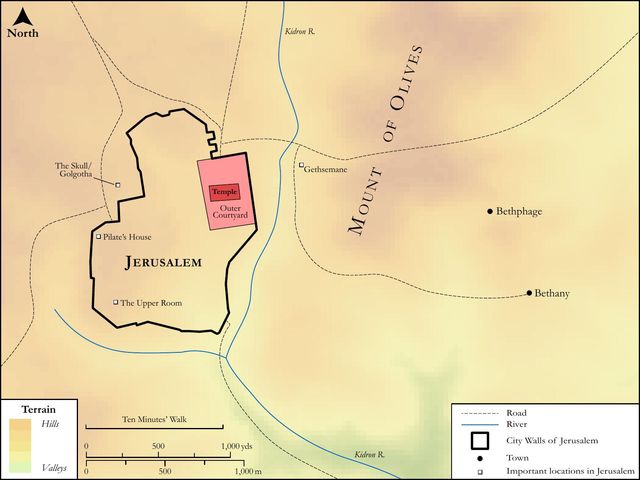
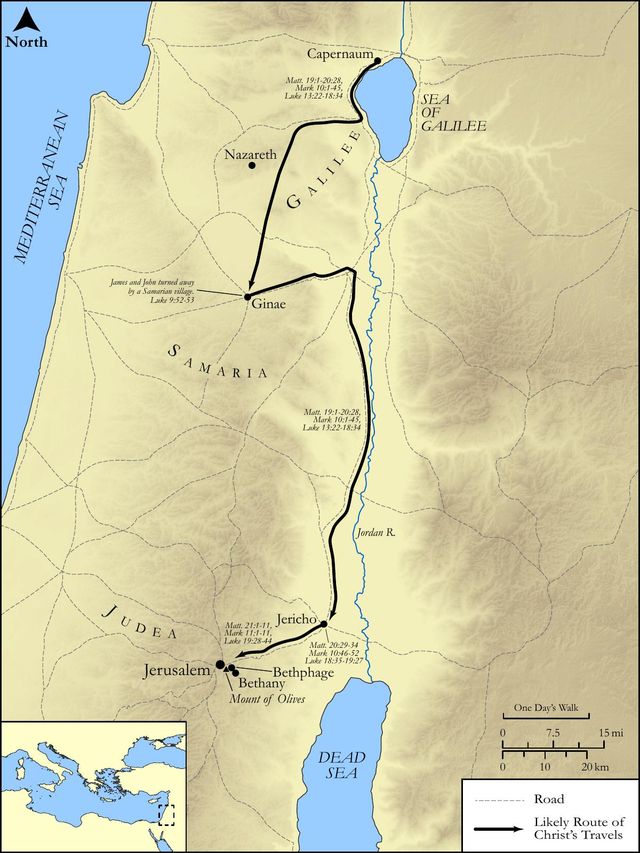
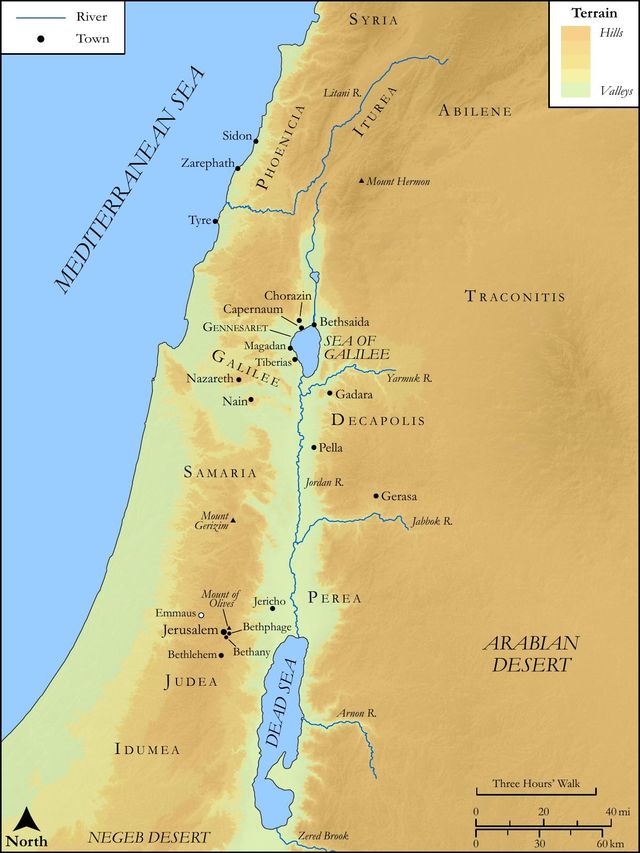
See on the biblical-era maps
Study this verse
Public-domain commentary
Matthew Henry
From his Commentary on the Whole Bible. Henry comments on passages, not single verses — this entry covers Luke 11:37–54. His four-level outline is real structure in the source text, so it is rendered as structure.
Christ here says many of those things to a Pharisee and his guests, in a private conversation at table, which he afterwards said in a public discourse in the temple (Mt. 23); for what he said in public and private was of a piece. He would not say that in a corner which he durst not repeat and stand to in the great congregation; nor would he give those reproofs to any sort of sinners in general which he durst not apply to them in particular as he met with them; for he was, and is, the faithful Witness. Here is,
I.Christ's going to dine with a Pharisee that very civilly invited him to his house (Luk 11:37); As he spoke, even while he was speaking, a certain Pharisee interrupted him with a request to him to come and dine with him, to come forthwith, for it was dinner-time. We are willing to hope that the Pharisee was so well pleased with his discourse that he was willing to show him respect, and desirous to have more of his company, and therefore gave him this invitation and bade him truly welcome; and yet we have some cause to suspect that it was with an ill design, to break off his discourse to the people, and to have an opportunity of ensnaring him and getting something out of him which might serve for matter of accusation or reproach, Luk 11:53, Luk 11:54. We know not the mind of this Pharisee; but, whatever it was, Christ knew it: if he meant ill, he shall know Christ does not fear him; if well, he shall know Christ is willing to do him good: so he went in, and sat down to meat. Note, Christ's disciples must learn of him to be conversable, and not morose. Though we have need to be cautious what company we keep, yet we need not be rigid, nor must we therefore go out of the world.
II.The offence which the Pharisee took at Christ, as those of that sort had sometimes done at the disciples of Christ, for not washing before dinner, Luk 11:38. He wondered that a man of his sanctity, a prophet, a man of so much devotion, and such a strict conversation, should sit down to meat, and not first wash his hands, especially being newly come out of a mixed company, and there being in the Pharisee's dining-room, no doubt, all accommodations set ready for it, so that he need not fear being troublesome; and the Pharisee himself and all his guests, no doubt, washing, so that he could not be singular; what, and yet not wash? What harm had it been if he had washed? Was it not strictly commanded by the canons of their church? It was so, and therefore Christ would not do it, because he would witness against their assuming a power to impose that as a matter of religion which God commanded them not. The ceremonial law consisted in divers washings, but this was none of them, and therefore Christ would not practise it, no not in complaisance to the Pharisee who invited him, nor though he knew that offence would be taken at his omitting it.
III.The sharp reproof which Christ, upon this occasion, gave to the Pharisees, without begging pardon even of the Pharisee whose guest he now was; for we must not flatter our best friends in any evil thing.
1.He reproves them for placing religion so much in those instances of it which are only external, and fall under the eye of man, while those were not only postponed, but quite expunged, which respect the soul, and fall under the eye of God, Luk 11:39, Luk 11:40. Now observe here,
(1.)The absurdity they were guilty of: "You Pharisees make clean the outside only, you wash your hands with water, but do not wash your hearts from wickedness; these are full of covetousness and malice, covetousness of men's goods, and malice against good men." Those can never be reckoned cleanly servants that wash only the outside of the cup out of which their master drinks, or the platter out of which he eats, and take no care to make clean the inside, the filth of which immediately affects the meat or drink. The frame or temper of the mind in every religious service is as the inside of the cup and platter; the impurity of this infects the services, and therefore to keep ourselves free from scandalous enormities, and yet to live under the dominion of spiritual wickedness, is as great an affront to God as it would be for a servant to give the cup into his master's hand, clean wiped from all the dust on the outside, but within full of cobwebs and spiders. Ravening and wickedness, that is, reigning worldliness and reigning spitefulness, which men think they can find some cloak and cover for, are the dangerous damning sins of many who have made the outside of the cup clean from the more gross, and scandalous, and inexcusable sins of whoredom and drunkenness.
(2.)A particular instance of the absurdity of it: "Ye fools, did not he that made that which is without make that which is within also? Luk 11:40. Did not that God who in the law of Moses appointed divers ceremonial washings, with which you justify yourselves in these practices and impositions, appoint also that you should cleanse and purify your hearts? He who made laws for that which is without, did not he even in those laws further intend something within, and by other laws show how little he regarded the purifying of the flesh, and the putting away of the filth of that, if the heart be not made clean?" Or, it may have regard to God not only as a Lawgiver, but (which the words seem rather to import) as a Creator. Did not God, who made us these bodies (and they are fearfully and wonderfully made), make us these souls also, which are more fearfully and wonderfully made? Now, if he made both, he justly expects we should take care of both; and therefore not only wash the body, which he is the former of, and make the hands clean in honour of his work, but wash the spirit, which he is the Father of, and get the leprosy in the heart cleansed.
To this he subjoins a rule for making our creature-comforts clean to us (Luk 11:41): "Instead of washing your hands before you go to meat, give alms of such things as you have" (ta enonta - of such things as are set before you, and present with you); "let the poor have their share out of them, and then all things are clean to you, and you may use them comfortably." Here is a plain allusion to the law of Moses, by which it was provided that certain portions of the increase of their land should be given to the Levite, the stranger, the fatherless, and the widow; and, when that was done, what was reserved for their own use was clean to them, and they could in faith pray for a blessing upon it, Deu 26:12-15. Then we can with comfort enjoy the gifts of God's bounty ourselves when we send portions to them for whom nothing is prepared, Neh 8:10. Job ate not his morsel alone, but the fatherless ate thereof, and so it was clean to him (Job 31:17); clean, that is, permitted and allowed to be used, and then only can it be used comfortably. Note, What we have is not our own, unless God have his dues out of it; and it is by liberality to the poor that we clear up to ourselves our liberty to make use of our creature-comforts.
2.He reproves them for laying stress upon trifles, and neglecting the weighty matters of the law, Luk 11:42.
(1.)Those laws which related only to the means of religion they were very exact in the observance of, as particularly those concerning the maintenance of the priests: Ye pay tithe of mint and rue, pay it in kind and to the full, and will not put off the priests with a modus decimandi or compound for it. By this they would gain reputation with the people as strict observers of the law, and would make an interest in the priests, in whose power it was many a time to do them a kindness; and no wonder if the priests and the Pharisees contrived how to strengthen one another's hands. Now Christ does not condemn them for being so exact in paying tithes (these things ought ye to have done), but to think that this would atone for the neglect of their greater duties; for,
(2.)Those laws which relate to the essentials of religion they made nothing of: You pass over judgment and the love of God, you make no conscience of giving men their dues and God your hearts.
3.He reproves them for their pride and vanity, and affectations of precedency and praise of men (Luk 11:43): "Ye love the uppermost seats in the synagogues" (or consistories where the elders met for government); "if you have not those seats, you are ambitious of them; if you have, you are proud of them; and you love greetings in the markets, to be complimented by the people and to have their cap and knee." It is not sitting uppermost, or being greeted, that is reproved, but loving it.
4.He reproves them for their hypocrisy, and their colouring over the wickedness of their hearts and lives with specious pretences (Luk 11:44): "You are as graves overgrown with grass, which therefore appear not, and the men that walk over them are not aware of them, and so they contract the ceremonial pollution which by the law arose from the touch of a grave." These Pharisees were within full of abominations, as a grave of putrefaction; full of covetousness, envy, and malice; and yet they concealed it so artfully with a profession of devotion, that it did not appear, so that they who conversed with them, and followed their doctrine, were defiled with sin, infected with their corruptions and ill morals, and yet, they making a show of piety, suspected no danger by them. The contagion insinuated itself, and was insensibly caught, and those that caught it thought themselves never the worse.
IV.The testimony which he bore also against the lawyers or scribes, who made it their business to expound the law according to the tradition of the elders, as the Pharisees did to observe the law according to that tradition.
1.There was one of that profession who resented what he said against the Pharisees (Luk 11:45): "Master, thus saying thou reproachest us also, for we are scribes; and we are therefore hypocrites?" Note, It is a common thing for unhumbled sinners to call and count reproofs reproaches. It is the wisdom of those who desire to have their sin mortified to make a good use of reproaches that come from ill will, and to turn them into reproofs. If we can in this way hear of our faults, and amend them, it is well: but it is the folly of those who are wedded to their sins, and resolved not to part with them, to make an ill use of the faithful and friendly admonitions given them, which come from love, and to have their passions provoked by them as if they were intended for reproaches, and therefore fly in the face of their reprovers, and justify themselves in rejecting the reproof. Thus the prophet complained (Jer 6:10): The word of the Lord is to them a reproach; they have no delight in it. This lawyer espoused the Pharisee's cause, and so made himself partaker of his sins.
2.Our Lord Jesus thereupon took them to task (Luk 11:46): Woe unto you also, ye lawyers; and again (Luk 11:52): Woe unto you lawyers. They blessed themselves in the reputation they had among the people, who thought them happy men, because they studied the law, and were always conversant with that, and had the honour of instructing the people in the knowledge of that; but Christ denounced woes against them, for he sees not as man sees. This was just upon him for taking the Pharisee's part, and quarrelling with Christ because he reproved them. Note, Those who quarrel with the reproofs of others, and suspect them to be reproaches to them, do but get woes of their own by so doing.
(1.)The lawyers are reproved for making the services of religion more burdensome to others, but more easy to themselves, than God had made them (Luk 11:46): "You lade men with burdens grievous to be borne, by your traditions, which bind them out from many liberties God has allowed them, and bind them up to many slaveries which God never enjoined them, to show your authority, and to keep people in awe; but you yourselves touch them not with one of your fingers;" that is, [1.] "You will not burden yourselves with them, nor be yourselves bound by those restraints with which you hamper others." They would seem, by the hedges they pretended to make about the law, to be very strict for the observance of the law; but, if you could see their practices, you would find that they not only make nothing of those hedges themselves, but make nothing of the law itself neither: thus the confessors of the Romish church are said to do with their penitents. [2.] "You will not lighten them to those you have power over; you will not touch them, that is, either to repeal them or to dispense with them when you find them to be burdensome and grievous to the people." They would come in with both hands to dispense with a command of God, but not with a finger to mitigate the rigour of any of the traditions of the elders.
(2.)They are reproved for pretending a veneration for the memory of the prophets whom their fathers killed, when yet they hated and persecuted those in their own day who were sent to them on the same errand, to call them to repentance, and direct them to Christ, Luk 11:47-49.
[1.]These hypocrites, among other pretences of piety, built the sepulchres of the prophets; that is, they erected monuments over their graves, in honour of them, probably with large inscriptions containing high encomiums of them. They were not so superstitious as to enshrine their relics, or to think their devotions the more acceptable to God for being offered at the tombs of the martyrs; they did not burn incense or pray to them, or plead their merits with God; they did not add that iniquity to their hypocrisy; but, as if they owned themselves the children of the prophets, their heirs and executors, they repaired and beautified the monuments sacred to their pious memory.
[2.]Notwithstanding this, they had an inveterate enmity to those in their own day that came to them in the spirit and power of those prophets; and, though they had not yet had an opportunity of carrying it far, yet they would soon do it, for the Wisdom of God said, that is, Christ himself would so order it, and did now foretel it, that they would slay and persecute the prophets and apostles that should be sent them. The Wisdom of God would thus make trial of them, and discover their odious hypocrisy, by sending them prophets, to reprove them for their sins and warn them of the judgments of God. Those prophets should prove themselves apostles, or messengers sent from heaven, by signs, and wonders, and gifts of the Holy Ghost. Or, "I will send them prophets under the style and title of apostles, who yet shall produce as good an authority as any of the old prophets did; and these they shall not only contradict and oppose, but slay and persecute, and put to death." Christ foresaw this, and yet did not otherwise than as became the Wisdom of God in sending them, for he knew how to bring glory to himself in the issue, by the recompences reserved both for the persecutors and the persecuted in the future state.
[3.]That therefore God will justly put another construction upon their building the tombs of the prophets than what they would be thought to intend, and it shall be interpreted their allowing the deeds of their fathers (Luk 11:45); for, since by their present actions it appeared that they had no true value for their prophets, the building of their sepulchres shall have this sense put upon it, that they resolved to keep them in their graves whom their fathers had hurried thither. Josiah, who had a real value for prophets, thought it enough not to disturb the grave of the man of God at Bethel: Let no man move his bones, Kg2 23:17, Kg2 23:18. If these lawyers will carry the matter further, and will build their sepulchres, it is such a piece of over-doing as gives cause to suspect an ill design in it, and that it is meant as a cover for some design against prophecy itself, like the kiss of a traitor, as he that blesseth his friend with a loud voice, rising early in the morning, it shall be counted a curse to him, Pro 27:14.
[4.]That they must expect no other than to be reckoned with, as the fillers up of the measure of persecution, Luk 11:50, Luk 11:51. They keep up the trade as it were in succession, and therefore are responsible for the debts of the company, even those it has been contracting all along from the blood of Abel, when the world began, to that of Zacharias, and so forward to the end of the Jewish state; it shall all be required of this generation, this last generation of the Jews, whose sin in persecuting Christ's apostles would exceed any of the sins of that kind that their fathers were guilty of, and so would bring wrath upon them to the uttermost, Th1 2:15, Th1 2:16. Their destruction by the Romans was so terrible that it might well be reckoned the completing of God's vengeance upon that persecuting nation.
(3.)They are reproved for opposing the gospel of Christ, and doing all they could to obstruct the progress and success of it, Luk 11:52.
[1.]They had not, according to the duty of their place, faithfully expounded to the people those scriptures of the Old Testament which pointed at the Messiah, which if they had been led into the right understanding of by the lawyers, they would readily have embraced him and his doctrine: but, instead of that, they had perverted those texts, and had cast a mist before the eyes of the people, by their corrupt glosses upon them, and this is called taking away the key of knowledge; instead of using that key for the people, and helping them to use it aright, they hid it from them; this is called, in Matthew, shutting up the kingdom of heaven against men, Mat 23:13. Note, those who take away the key of knowledge shut up the kingdom of heaven.
[2.]They themselves did not embrace the gospel of Christ, though by their acquaintance with the Old Testament they could not but know that the time was fulfilled, and the kingdom of God was at hand; they saw the prophecies accomplished in that kingdom which our Lord Jesus was about to set up, and yet would not themselves enter into it. Nay,
[3.]Them that without any guidance or assistance of theirs were entering in they did all they could to hinder and discourage, by threatening to cast them out of the synagogue, and otherwise terrifying them. It is bad for people to be averse to revelation, but much worse to be adverse to it.
Lastly, In the close of the chapter we are told how spitefully and maliciously the scribes and Pharisees contrived to draw him into a snare, Luk 11:53, Luk 11:54. They could not bear those cutting reproofs which they must own to be just; but what he had said against them in particular would not bear an action, nor could they ground upon it any criminal accusation, and therefore, as if, because his reproofs were warm, they hoped to stir him up to some intemperate heat and passion, so as to put him off his guard, they began to urge him vehemently, to be very fierce upon him, and to provoke him to speak of many things, to propose dangerous questions to him, laying wait for something which might serve the design they had of making him either odious to the people, or obnoxious to the government, or both. Thus did they seek occasion against him, like David's enemies that did every day wrest his words, Psa 56:5. Evil men dig up mischief. Note, Faithful reprovers of sin must expect to have many enemies, and have need to set a watch before the door of their lips, because of their observers that watch for their halting. The prophet complains of those in his time who make a man an offender for a word, and lay a snare for him that reproveth in the gate, Isa 29:21. That we may bear trials of this kind with patience, and get through them with prudence, let us consider him who endured such contradiction of sinners against himself.
Historical interpretation
Eight Centuries of Reception
9 surviving comments on this verse. Each one is dated, so this reads as a timeline rather than a list.
Select a marker to jump to its quote. Markers stagger vertically where authors wrote within a few decades of each other.
(de Op. et Eleem.) The Merciful bids us to show mercy; and because He seeks to save those whom He has redeemed at a great price, He teaches that they who have been defiled after the grace of baptism may again be made clean.
However, he briefly exposes their many sins who devote all their effort to contributing the tithes of cheaper fruits: they have no fear of the future judgment or any love for God, since their works are worthless without faith; for they disregard the judgment and love of God: the judgment, because they do not bring everything they do under judgment; the love, because they do not love God out of devotion.
But so that it does not make us diligent in faith, neglectful of works, he concludes the perfection of a faithful man with a short discourse; so that he may be approved both by faith and works, saying: These things you ought to do, and not leave the others undone.
He also criticizes the arrogance and boasting of the Jews, as they seek the places of honor at banquets. The sentence of condemnation is also pronounced against those who deceive others with a false appearance, like hidden tombs that are not visible and deceive by their outward beauty; they promise good things on the outside, but inside they are full of decayed bones. This is what many teachers do, demanding things from others that they themselves cannot accomplish. And therefore these are their monuments, as it is also said elsewhere: Their sepulcher is open throat.
And like graves which appear not, they deceive by their outside beauty, and by their look impose upon the passers by; as it follows, And the men that walk over them are not aware of them; so much that in truth, though they give outward promise of what is beautiful, inwardly they enclose all manner of pollution.
(Hom. 72. in Joan.) Now He says, give alms, not injury. For almsgiving is that which is free from all injury. It makes all things clean, and is more excellent than fasting; which though it be the more painful, the other is the more profitable. It enlightens the soul, enriches it, and makes it good and beautiful, He who resolves to have compassion on the needy, will sooner cease from sin. For as the physician who is in the habit of healing the diseased is easily grieved by the misfortunes of others; so we, if we have devoted ourselves to the relief of others, shall easily despise things present, and be raised up to heaven. The unction of almsgiving then is no slight good, since it is capable of being applied to every wound.
(Hom. 73. in Matt.) Where indeed the subject treated was the Jewish cleansing, He altogether passed it by, but as the tithe is a kind of almsgiving, and the time was not yet come for absolutely destroying the customs of the law, therefore He says, these ought ye to have done.
(Hom. 73.) But that the Pharisees were so, cannot be wondered at. But if we who are counted worthy to be the temples of God suddenly become graves full only of corruption, this is indeed the lowest wretchedness.
By means of those things for which He blames us He makes us better. For He would have us be free from ambition, and not desire after vain show rather than the reality, which the Pharisees were then doing. For the greetings of men, and the rule over them, do not move us to be really useful, for these things fall to men though they be not good men. Therefore he adds, Woe unto you, who are as graves which appear not. For in wishing to receive greetings from men and to exercise authority over them, that they might be accounted great, they differ not from hidden graves, which glitter indeed with outward ornaments, but within are full of all uncleanness.
(con. Julian. lib. 10.) Now here the apostate Julian says, that we must avoid graves which Christ says are unclean; but he knew not the force of our Saviour's words, for He did not command us to depart from the graves, but likened to them the hypocritical people of the Pharisees.
Those who desire to be greeted by everyone in the marketplace and anxiously consider it a great matter to have the foremost seats in the synagogue do not differ in any way from graves that do not appear as graves. On the outside, they are beautifully decorated but are full of all impurity. See here, I pray that hypocrisy is utterly blamed. It is a hateful malady toward God and humanity. The hypocrite is not whatever he seems to be and is thought to be. He borrows the reputation of goodness and conceals his real shame. He will not practice the very thing that he praises and admires. It is impossible for you to hide your hypocrisy for long. Just as the figures painted in pictures fall off as time dries up the colors, so also hypocrisies, after escaping observation for a very little time, are soon convicted of being really nothing.
Luke expressly says, And as he spake these things, to show that He had not quite finished what He had purposed to say, but was somewhat interrupted by the Pharisee asking Him to dine.
Accordingly, after that it was told Him that His mother and brethren stood without, and He said, For he that doeth the will of God, the same is my brother, and sister, and mother, we are given to understand that He by the request of the Pharisee went to the dinner.
As if He says, He who made both natures of man, will have each to be cleansed. This is against the Manicheans, who think the soul only was created by God, but the flesh by the devil. It is also against those who abominate the sins of the flesh, such as fornication, theft, and the like; while those of the Spirit, which are no less condemned by the Apostle, they disregard as trifling.
(quod superest.) He speaks of "what is over and above" our necessary food and clothing. For you are not commanded to give alms so as to consume yourself by want, but that after satisfying your wants, you should supply the poor to the utmost of your power. Or it must be taken in this way. Do that which remains within your power, that is, which is the only remedy remaining to those who have been hitherto engaged in so much wickedness; give alms. Which word applies to every thing which is done with profitable compassion. For not he alone gives alms who gives food to the hungry and things of that kind, but he also who gives pardon to the sinner, and prays for him, and reproves him, visiting him with some correcting punishment.
Woe to you who are like unseen tombs, and men walking over them do not know it. And this challenges the hypocrisy of the Pharisees, who outwardly present an appearance of correct doctrine, but within conceal what filth they carry, like tombs which, while showing the common surface of the earth outwardly, are filled within with the stench of rotting corpses. Of these the Psalmist said: Their throat is an open sepulcher (Psalm 5); and he immediately clarified what he said by adding: They dealt deceitfully with their tongues.
Or He means, "That which is uppermost." For wealth rules the covetous man's heart.
For because they despised God, treating sacred things with indifference, He commands them to have love to God; but by judgment He implies the love of our neighbour. For when a man judges his neighbour justly, it proceeds from his love to him.
Continue studying Luke 11:44 across the web’s major study libraries — every link below opens this exact verse, chapter, or book on the destination site.
Read & Compare
 BibleGatewayThis verse in more than 200 translations and 70 languages.
 Bible.comThe YouVersion reader — hundreds of translations, reading plans, and highlights.
 ESV.orgCrossway's official English Standard Version reader.
 NET BibleThe NET translation with 60,000+ translators' notes on every rendering decision.
 STEP BibleTyndale House's free study tool — original text, vocabulary, and scholarly resources.
 BibliaLogos Bible Software's free web reader.
 USCCBThe New American Bible (Revised Edition) with the U.S. bishops' study notes.
Commentaries
 BibleHub CommentariesDozens of classic commentaries on this verse, gathered on one page.
 StudyLightMore than 100 commentary sets — the largest collection on the web.
 BibleRefPlain-English commentary on what this verse means, verse by verse.
 Enduring WordDavid Guzik's free commentary on this chapter, widely used by Bible teachers.
 Bible Study ToolsVerse commentary alongside Greek and Hebrew study aids.
Original Language & Research
- BibleHub InterlinearThe verse word by word — original language, transliteration, and English.
- BibleHub LexiconEvery word's original-language definition and Strong's entry.
 Blue Letter BibleDeep-study tools — Strong's numbers, concordance, and word studies.
 CNTR CollationThe earliest Greek manuscripts of this verse, collated letter by letter.
Sermons, Hymns & Audio


TrulyRandomVerse is not affiliated with these sites and doesn’t control their content. They’re linked because they’re genuinely useful.
Summary
In Jesus pronounces a severe condemnation upon the scribes and Pharisees, exposing their profound hypocrisy. He likens them to unmarked graves, which, though unseen, render ritually unclean anyone who inadvertently walks over them. This powerful metaphor reveals that despite their outward show of piety, these religious leaders were inwardly corrupt and spiritually defiling, misleading and contaminating the people without their knowledge.
Context
ShowHideLiterary Context
This verse is part of a series of "woes" Jesus pronounces against the religious leaders, specifically the Pharisees and legal experts, recorded in Luke 11:37-54. The immediate setting is a dinner invitation from a Pharisee, which Jesus uses as an opportunity to confront their superficial religiosity. Prior to Luke 11:44, Jesus has already rebuked them for their obsession with external ritual cleansing while neglecting inner righteousness (Luke 11:39-41), their meticulous tithing of minor herbs while "passing over judgment and the love of God" (Luke 11:42), and their desire for prominent social recognition (Luke 11:43). This particular woe builds upon the theme of hidden corruption, emphasizing its defiling effect on others.
Historical & Cultural Context
The scribes and Pharisees were influential religious groups in first-century Judaism. The Pharisees were known for their strict adherence to the Mosaic Law and oral traditions, often emphasizing outward displays of piety. Scribes (or lawyers) were experts in the Law, responsible for its interpretation and teaching. Central to Jewish life was the concept of ritual purity, deeply rooted in the Mosaic Law. According to Numbers 19:16, anyone who touched a dead body or a grave became ritually unclean for seven days. To prevent accidental defilement, graves were often whitewashed annually, especially before Passover, to make them visible. Jesus' comparison to "graves which appear not" would have been particularly shocking and offensive, implying that these respected religious leaders were not only spiritually dead but also a hidden source of defilement, contaminating those who interacted with them without realizing it.
Key Themes
ShowHideThis verse powerfully contributes to several overarching themes in Luke's Gospel and Jesus' ministry. The primary theme is Hypocrisy Unmasked, where Jesus consistently exposes the chasm between outward religious performance and inner spiritual reality. The Pharisees' "unmarked graves" represent a deceptive facade that conceals spiritual decay, aligning with Jesus' broader critique in Matthew 23, particularly Matthew 23:27-28. Another crucial theme is Hidden Defilement and Spiritual Danger. Unlike visible sin, the spiritual corruption of the Pharisees was insidious because it was concealed by a veneer of righteousness, making them dangerous spiritual guides who unknowingly led people into ritual and spiritual impurity. This highlights Jesus' emphasis on the Purity of the Heart over mere external observance, a foundational principle of the new covenant that contrasts sharply with the legalistic traditions of the day.
Exposition and Analysis
ShowHideKey Word Analysis
ShowHideFrom a word meaning "an actor under an assumed character (stage-player)." This term perfectly encapsulates Jesus' accusation that the scribes and Pharisees presented a false outward persona of piety and righteousness, while their inner character and motives were corrupt and contrary to God's will. They wore a mask of holiness.
Refers to a "cenotaph (place of interment)" or tomb. In this context, it specifically denotes burial places, which, according to Mosaic Law, were sources of ritual impurity. The use of "graves" here metaphorically represents spiritual death and defilement.
A primary verb meaning "to see (literally or figuratively); by implication, (in the perfect tense only) to know." In this verse, it speaks to the lack of knowledge or perception on the part of the people. They were "not aware" that the religious leaders, whom they respected, were actually defiling them through their hidden spiritual corruption.
Verse Breakdown
ShowHide"Woe unto you, scribes and Pharisees, hypocrites!"
Jesus begins with a solemn pronouncement of judgment ("Woe," Greek ouai), which is not merely an expression of sorrow but a severe condemnation carrying a warning of impending doom. He directly addresses the "scribes and Pharisees," the religious and legal authorities of His day, labeling them "hypocrites." This accusation cuts to the core of their being, asserting that their outward religious performance is a deceptive facade covering an unrighteous inner state.
"for ye are as graves which appear not,"
The conjunction "for" (Greek hóti) introduces the reason for the "woe." Jesus employs a powerful metaphor, comparing them to "graves which appear not." This refers to unmarked or hidden tombs. In a culture deeply concerned with ritual purity, contact with a grave, even accidental, rendered a person unclean. By being "unseen," these graves posed a particular danger, as people could unknowingly become defiled. This implies that the scribes and Pharisees, despite their visible religious standing, were inwardly full of spiritual death and corruption.
"and the men that walk over [them] are not aware [of them]."
This clause completes the metaphor, highlighting the insidious nature of their hypocrisy. Just as someone might unknowingly step on an unmarked grave and become ritually unclean, so too did the common people interact with the scribes and Pharisees, unaware that these leaders, through their hidden corruption and false teaching, were spiritually defiling them. Their dangerous influence lay precisely in their deceptive appearance of godliness, which concealed their true, defiling nature.
Literary Devices
ShowHideJesus employs several potent literary devices in Luke 11:44. The most prominent is Metaphor, where He directly compares the scribes and Pharisees to "graves which appear not." This comparison is not merely descriptive but deeply condemnatory, as graves were sources of ritual impurity under Mosaic Law. The "unseen" aspect of these graves underscores the Irony of the situation: those who meticulously observed outward purity laws were themselves hidden sources of defilement. This also implies Symbolism, where the graves symbolize spiritual death, corruption, and the defiling nature of hypocrisy. Furthermore, the direct address "Woe unto you" is an example of Apostrophe, a rhetorical device where a speaker directly addresses someone or something not present or an abstract idea, though here it is a direct and forceful address to those present, emphasizing the severity of the condemnation.
Theological and Thematic Connections
ShowHideLuke 11:44 profoundly underscores the biblical emphasis on inner righteousness over mere external observance. Jesus consistently challenged the notion that religious acts alone could atone for a corrupt heart. The scribes and Pharisees, by focusing on outward purity rituals and public displays of piety, neglected the weightier matters of justice, mercy, and faithfulness, as Jesus states in Matthew 23:23. Their hypocrisy was not just a personal failing but a public danger, as their spiritual "defilement" spread unknowingly to those who followed their teachings or emulated their practices. This passage serves as a timeless warning against any form of religious pretense that prioritizes appearance over genuine transformation, reminding us that God looks beyond the surface to the true condition of the heart.
Reflection and Application
ShowHideLuke 11:44 serves as a piercing mirror for all who claim spiritual authority or seek to live a life pleasing to God. It challenges us to move beyond superficial religiosity and to examine the true condition of our hearts. Are there areas in our lives where we present one image outwardly, while inwardly harboring attitudes, motives, or practices that are contrary to God's will? Jesus' condemnation of the Pharisees reminds us that hidden sin is not benign; it can subtly defile us and, more dangerously, those around us who are influenced by our lives, even if they are unaware of our inner inconsistencies. True spiritual integrity demands a relentless pursuit of inner purity, a heart fully devoted to God, where our private lives align with our public profession. This verse calls us to genuine repentance, inviting us to allow the Holy Spirit to expose and cleanse any "unmarked graves" within, ensuring that our lives are sources of life and purity, not hidden defilement.
Questions for Reflection
ShowHideFAQ
ShowHideWhy did Jesus use such harsh language, comparing the Pharisees to unmarked graves?
ShowHideJesus' language was intentionally provocative and severe because the spiritual danger posed by the Pharisees' hypocrisy was profound. The comparison to "unmarked graves" was a powerful metaphor understood by His Jewish audience. Under Mosaic Law (Numbers 19:16), touching a dead body or a grave rendered a person ritually unclean. Unmarked graves were particularly dangerous because people could inadvertently step on them and become defiled without knowing it. By using this imagery, Jesus was not merely insulting them; He was exposing the insidious nature of their hypocrisy. Their outward show of piety concealed an inner spiritual deadness and corruption that, like an unseen grave, unknowingly defiled those who came into contact with their teachings and influence. Jesus' "woes" were not expressions of personal anger but prophetic pronouncements of divine judgment against those who misled God's people and hindered their access to true righteousness.
What was the cultural significance of unmarked graves in Jesus' time?
ShowHideIn ancient Israel, graves were considered sources of ritual impurity. To prevent people from accidentally becoming unclean, it was customary to mark graves, often by whitewashing them, especially before major festivals like Passover. This practice made them visible and avoidable. An "unmarked grave" was therefore a hidden danger, a source of defilement that could contaminate someone without their knowledge. Jesus' use of this imagery in Luke 11:44 would have immediately resonated with His listeners, conveying the idea of a hidden, insidious defilement that was all the more dangerous because it was concealed under a veneer of respectability.
How does this verse apply to believers today?
ShowHideLuke 11:44 is a timeless warning against hypocrisy and a call to genuine inner purity. For believers today, it emphasizes that God values the condition of our hearts far more than our outward religious performance or reputation. We are challenged to examine our own lives for any "unmarked graves"—hidden sins, unconfessed attitudes, or areas of spiritual compromise that might be subtly defiling us or others. It reminds us that true spiritual influence flows from integrity and authenticity, not from a deceptive facade. The verse calls us to live lives where our private walk with God aligns with our public profession, ensuring that we are sources of life and truth, not hidden defilement, to those around us.
Christ-Centered Fulfillment
ShowHideLuke 11:44 finds its ultimate fulfillment in the person and work of Jesus Christ, who stands in stark contrast to the hypocritical leaders He condemns. While the scribes and Pharisees were "unmarked graves" spreading unseen defilement, Jesus is the very embodiment of purity and life, the one who came to cleanse. He is the true Temple, the source of living water, and His presence brings not defilement, but purification. Unlike the Pharisees who, by their very being, made people unclean, Jesus touched the unclean and made them clean (Mark 1:40-42). His sacrifice on the cross, as the spotless Lamb of God, provides the ultimate cleansing for sin, removing the spiritual defilement that separates humanity from God (Hebrews 9:14). Through faith in Him, believers are not merely outwardly cleansed but are given a new heart and a new spirit (Ezekiel 36:26-27), enabling them to walk in genuine righteousness and truth, free from the hypocrisy and spiritual death that Jesus so vehemently condemned. He is the visible, life-giving source of purity, inviting all to come and be made truly clean, inside and out.