


Joshua 22:31
- וַיֹּאמֶרvai·Yo·merand he saidH559Conj-w ¦ V-Qal-ConsecImperf-3msVerb Qal Consecutive Imperfect 3rd Singular Masculineוַandיֹּאמֶרhe said
- פִּינְחָסpin·ChasPhinehasH6372N-proper-mNoun Proper Masculine
- בֶּןben[the] son ofH1121N-mscNoun Singular Masculine Construct
- אֶלְעָזָר'el·'a·ZarEleazarH499N-proper-mNoun Proper Masculine
- הַכֹּהֵןha·ko·Henthe priestH3548Art ¦ N-msNoun Singular Masculine Absoluteהַtheכֹּהֵןpriest
- אֶל'eltoH413PrepPreposition
- בְּנֵיbe·nei[the] descendants ofH1121N-mpcNoun Plural Masculine Construct
- רְאוּבֵןre·'u·VenReubenH7205N-proper-mNoun Proper Masculine
- וְאֶלve·'eland toH413Conj-w ¦ PrepPrepositionוְandאֶלto
- בְּנֵיbe·nei[the] descendants ofH1121N-mpcNoun Plural Masculine Construct
- גָדgadGadH1410N-proper-mNoun Proper Masculine
- וְאֶלve·'eland toH413Conj-w ¦ PrepPrepositionוְandאֶלto
- בְּנֵיbe·Nei[the] descendants ofH1121N-mpcNoun Plural Masculine Construct
- מְנַשֶּׁהme·na·ShehManassehH4519N-proper-mNoun Proper Masculine
- הַיּוֹםhai·Yomthis dayH3117Art ¦ N-msNoun Singular Masculine Absoluteהַthisיּוֹםday
- יָדַעְנוּya·Da'·nuwe knowH3045V-Qal-Perf-1cpVerb Qal Perfect 1st Plural common gender
- כִּיkithatH3588PrtParticle Conditional
- בְתוֹכֵנוּve·to·Khe·nu[is] among midst of usH8432Prep-b ¦ N-msc ¦ 1cpNoun Singular Masculine Constructבְ[is] amongתוֹכֵmidst ofנוּus
- יְהוָהYah·wehYahwehH3068N-properNoun Proper Title
- אֲשֶׁר'a·SherthatH834RelParticle Relative
- לֹאlo'notH3808NegParticle Negative
- מְעַלְתֶּםme·'al·Temyou have acted unfaithfullyH4603V-Qal-Perf-2mpVerb Qal Perfect 2nd Plural Masculine
- בַּיהוָהba·Yah·wehagainst YahwehH3068Prep-b ¦ N-properNoun Proper TitleבַּagainstיהוָהYahweh
- הַמַּעַלha·Ma·'althe unfaithfulnessH4604Art ¦ N-msNoun Singular Masculine Absoluteהַtheמַּעַלunfaithfulness
- הַזֶּהha·Zeh<the> thisH2088Art ¦ PrtParticle Demonstrativeהַ<the>זֶּהthis
- אָז'AzthenH227AdvAdverb
- הִצַּלְתֶּםhi·tzal·Temyou have deliveredH5337V-Hiphil-Perf-2mpVerb Hiphil Perfect 2nd Plural Masculine
- אֶת'et<obj.>H853DirObjMParticle Object Indicator
- בְּנֵיbe·Nei[the] people ofH1121N-mpcNoun Plural Masculine Construct
- יִשְׂרָאֵלYis·ra·'ElIsraelH3478N-properNoun Proper Location
- מִיַּדmi·Yadfrom [the] hand ofH3027Prep-m ¦ N-cscNoun Singular common gender Constructמִfromיַּד[the] hand of
- יְהוָהYah·wehYahwehH3068N-properNoun Proper Title
English is a literal word-by-word gloss of the Hebrew, not the KJV's wording. Why?
This is the original text the KJV's translators worked from — each Hebrew word with its own literal English meaning in this verse, prepared by scholars at Tyndale House, Cambridge. The KJV translates whole sentences, not word by word, so its wording differs: one Hebrew word can become several English words, and the KJV may choose “the LORD” where the gloss reads “Yahweh”. Both are faithful — they answer different questions. For the KJV's own rendering, switch to the KJV text.
Details
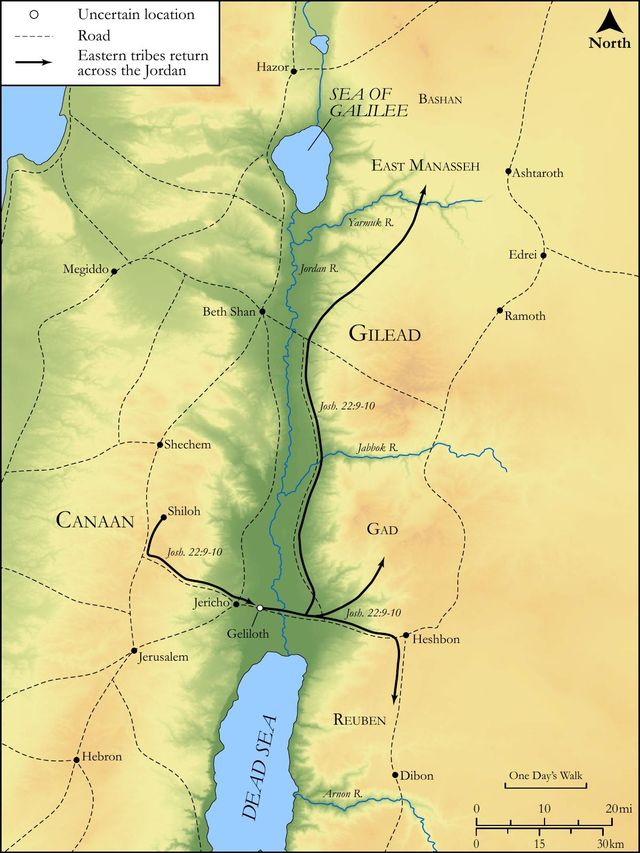
See on the biblical-era map
Study this verse
Continue studying Joshua 22:31 across the web’s major study libraries — every link below opens this exact verse, chapter, or book on the destination site.
Read & Compare
 BibleGatewayThis verse in more than 200 translations and 70 languages.
 Bible.comThe YouVersion reader — hundreds of translations, reading plans, and highlights.
 ESV.orgCrossway's official English Standard Version reader.
 NET BibleThe NET translation with 60,000+ translators' notes on every rendering decision.
 STEP BibleTyndale House's free study tool — original text, vocabulary, and scholarly resources.
 BibliaLogos Bible Software's free web reader.
 USCCBThe New American Bible (Revised Edition) with the U.S. bishops' study notes.
Commentaries
 BibleHub CommentariesDozens of classic commentaries on this verse, gathered on one page.
 StudyLightMore than 100 commentary sets — the largest collection on the web.
 BibleRefPlain-English commentary on what this verse means, verse by verse.
 Enduring WordDavid Guzik's free commentary on this chapter, widely used by Bible teachers.
 Bible Study ToolsVerse commentary alongside Greek and Hebrew study aids.
Original Language & Research
- BibleHub InterlinearThe verse word by word — original language, transliteration, and English.
- BibleHub LexiconEvery word's original-language definition and Strong's entry.
 Blue Letter BibleDeep-study tools — Strong's numbers, concordance, and word studies.
 SefariaThe Hebrew text with Rashi and centuries of Jewish commentary.
Sermons, Hymns & Audio


TrulyRandomVerse is not affiliated with these sites and doesn’t control their content. They’re linked because they’re genuinely useful.
Summary
Joshua 22:31 marks the climactic resolution of a grave misunderstanding between the Transjordanian and Cisjordanian tribes of Israel, averting a potential civil war. Phinehas, representing the western tribes, declares with profound relief and spiritual discernment that the LORD's presence remains among them. This assurance comes as the eastern tribes (Reuben, Gad, and half-Manasseh) successfully explain that the large altar they built was not for illicit sacrifice or rebellion, but as a faithful witness to their shared covenant identity and a reminder of their right to worship the LORD at the central sanctuary. Phinehas's declaration signifies that no "trespass" was committed, thus preserving national unity and delivering the entire nation from the imminent threat of divine judgment.
Context
ShowHideLiterary Context
This verse serves as the pivotal turning point and resolution of the intense conflict described in Joshua 22. The chapter begins with Joshua's commendation and dismissal of the Transjordanian tribes who had faithfully assisted their brethren in the conquest of Canaan. Upon their return, their construction of a prominent altar by the Jordan River is immediately misinterpreted by the western tribes as an act of apostasy and a direct violation of the Mosaic Law, which mandated a single, central place of worship (Deuteronomy 12:5-14). The western tribes' reaction is swift and severe, preparing for war to prevent corporate divine judgment. Phinehas, renowned for his zeal for the LORD (as seen in Numbers 25:7-13), leads a delegation to confront the eastern tribes. Joshua 22:31 records Phinehas's joyous and authoritative declaration after the Transjordanian tribes explain their altar's true purpose: a "witness" (Hebrew: 'ed) to their shared heritage and a sign of their allegiance to the LORD, not a rival place of sacrifice. This explanation defuses the crisis, confirming God's continued presence and averting a catastrophic civil war.
Historical & Cultural Context
Ancient Israel operated as a theocracy, where the nation's well-being and prosperity were inextricably linked to its covenant obedience. The command to worship exclusively at a single, central sanctuary was a cornerstone of Israelite monotheism, designed to prevent syncretism with the polytheistic practices of surrounding nations and to maintain the purity of their faith. Any perceived deviation from this command, particularly an act of idolatry or sacrilege, was viewed as a corporate sin that could provoke immediate and severe divine wrath upon the entire nation. Historical precedents, such as the devastating plague following the incident at Baal Peor or the military defeat at Ai due to Achan's sin, were vivid memories that fueled the western tribes' zealous and aggressive response. The construction of a large altar, typically associated with sacrificial worship, was thus a highly provocative act in this context, demanding immediate and thorough clarification to prevent a national catastrophe.
Key Themes
ShowHideJoshua 22:31 significantly contributes to several profound themes within the book of Joshua and the broader Old Testament narrative. Central to this verse is the theme of Divine Presence and Covenant Fidelity. Phinehas's declaration, "we perceive that the LORD is among us," is the ultimate assurance that God's covenantal presence, the source of Israel's strength and blessing, had not been withdrawn. This is directly contingent upon the eastern tribes' demonstrated Fidelity to the Covenant, as their explanation of the altar's purpose—a "witness" to their shared identity with the tribes west of the Jordan—proved their unwavering commitment to the Mosaic Law and their desire to maintain their connection to the central worship of Israel. The entire episode powerfully underscores the Importance of Communication and Unity within the community of faith. The near-civil war highlights the critical necessity of clear, open dialogue to prevent misunderstanding and conflict, emphasizing that hasty judgment based on incomplete information can lead to severe and destructive consequences. Finally, the profound relief expressed by Phinehas and the western tribes illustrates the theme of Deliverance from Corporate Judgment, as the eastern tribes' innocence averted the "hand of the LORD," which would have brought divine wrath upon the entire nation for perceived idolatry.
Exposition and Analysis
ShowHideKey Word Analysis
ShowHideThe verb יָדַע (yâdaʻ) signifies "to know," "to understand," "to recognize," or "to perceive." In Joshua 22:31, it conveys a deep, experiential understanding or conviction that goes beyond mere intellectual assent. Phinehas and the delegation have moved from suspicion and fear to a profound spiritual discernment and assurance. Their "perception" is a realization based on the revealed truth of the eastern tribes' intentions, confirming that God's favor and presence remain with Israel because the feared sin was not committed. It implies a shift from a state of anxious uncertainty to one of settled relief and conviction.
The noun מַעַל (maʻal) denotes an act of unfaithfulness, treachery, or sacrilege against God or a sacred trust. It refers specifically to a violation of covenant obligations, often involving a breach of trust or an act of disloyalty. In the Old Testament's legal and theological framework, maʻal was a gravely serious offense, particularly when it involved sacred things or direct commands from the LORD. The western tribes feared the eastern tribes had committed maʻal by constructing an illicit altar, which would have been a direct affront to God's exclusive worship and a betrayal of the covenant. Phinehas's statement confirms that this severe "trespass" was indeed not committed, thereby averting the dire consequences associated with such a breach.
This is a potent and frequently used idiom in the Old Testament, referring to God's active power, authority, and intervention. The "hand of the LORD" can signify both divine judgment (e.g., plague, punishment, military defeat) and divine deliverance or blessing. In Joshua 22:31, "out of the hand of the LORD" specifically refers to being spared from the potential divine wrath or punitive action that would have been unleashed upon Israel had the Transjordanian tribes indeed committed idolatry. Phinehas's words underscore the immense gravity of the situation and the profound relief that the nation had been "delivered" or rescued from the imminent threat of God's judgment, which was perceived to be "in His hand" ready to strike.
Verse Breakdown
ShowHide"And Phinehas the son of Eleazar the priest said unto the children of Reuben, and to the children of Gad, and to the children of Manasseh,"
This opening clause establishes the speaker's identity and authority. Phinehas, as the son of Eleazar and grandson of Aaron, holds a significant priestly office, lending immense weight to his words. His direct address to the specific Transjordanian tribes (Reuben, Gad, and half-Manasseh) underscores the formal and crucial nature of this reconciliation, highlighting the gravity of the misunderstanding and the importance of its resolution for national unity.
"This day we perceive that the LORD [is] among us,"
This is the central declaration of relief and divine affirmation. "This day" emphasizes the immediate and tangible nature of their profound realization and the sudden shift from dread to assurance. The phrase "the LORD is among us" is a foundational theological statement for Israel, signifying God's continued presence, favor, and covenant blessing upon the entire nation. It means that the spiritual integrity and unity of the community have been preserved, and God has not withdrawn His protective and guiding presence due to perceived sin.
"because ye have not committed this trespass against the LORD:"
This clause provides the crucial reason for Phinehas's joyous declaration. The absence of the "trespass" (maʻal)—the feared act of idolatry or disloyalty to Yahweh—is the foundational basis for the assurance of God's presence. It confirms that the eastern tribes' intentions were pure and their actions were not a violation of the covenant, thereby validating their explanation of the altar's purpose as a witness rather than a rival sanctuary.
"now ye have delivered the children of Israel out of the hand of the LORD."
This final clause articulates the immense, national consequence of the eastern tribes' innocence and faithful explanation. Their integrity and clear communication effectively "delivered" or rescued the entire nation from the impending "hand of the LORD," which represents divine judgment and wrath. Had the trespass been real, God's wrath would have fallen upon all Israel, as seen in previous corporate judgments. Thus, the eastern tribes, by their faithfulness and integrity, became instruments of national salvation from divine punishment.
Literary Devices
ShowHideJoshua 22:31 prominently features Dialogue, as the entire verse is a direct quotation of Phinehas's pronouncement. This direct speech immediately conveys the emotional intensity and theological significance of the moment, allowing the reader to experience the profound relief and understanding. The verse also employs a powerful Idiom in the phrase "out of the hand of the LORD," which vividly personifies God's active power and authority, specifically His potential for bringing judgment. This idiom underscores the gravity of the averted crisis and the perceived proximity of divine wrath. Furthermore, Phinehas's statement functions as a profound Theological Affirmation, articulating a core tenet of Israelite faith: God's continued presence and favor are contingent upon covenant fidelity, and the absence of corporate sin ensures His protection and blessing.
Theological and Thematic Connections
ShowHideJoshua 22:31 powerfully illustrates the Old Testament principle that God's presence among His people is contingent upon their covenant fidelity and obedience. The profound fear of God's withdrawal, prompted by the perceived "trespass," highlights the immense value placed on maintaining a right and exclusive relationship with Yahweh. The resolution, however, emphasizes God's graciousness in allowing for clarification and His readiness to remain among a people who genuinely seek to honor Him and maintain the integrity of His covenant. This episode serves as a vital reminder that unity within the community of faith is not merely a social ideal but a theological imperative, safeguarded by clear communication, mutual trust, and unwavering commitment to the one true God. The deliverance from the "hand of the LORD" prefigures a greater deliverance, pointing to God's consistent character as both righteous judge and merciful redeemer.
Reflection and Application
ShowHideJoshua 22:31 offers timeless and critical lessons for individuals and communities of faith today. It serves as a potent reminder of the destructive power of misunderstanding and the redemptive power of humble, open communication. In our relationships, both within the church and in broader society, we are often quick to assume the worst intentions or to judge based on incomplete information, leading to division and conflict. This passage challenges us to pause, to seek clarification with grace, and to extend the benefit of the doubt, prioritizing unity and understanding over hasty condemnation. It also underscores the profound significance of God's presence in our lives and communities. Just as Phinehas rejoiced that the LORD was still "among us," we too should cherish and guard the presence of the Holy Spirit, living in a manner that honors God and fosters genuine fellowship and purity. Our fidelity to Christ and His Word ensures His continued blessing and protection, delivering us from the spiritual consequences of sin and division, and empowering us to live as His unified body.
Questions for Reflection
ShowHideFAQ
ShowHideWhy were the western tribes so quick to assume the worst and prepare for war?
ShowHideThe western tribes' extreme reaction stemmed from a deep-seated fear of corporate divine judgment, a recurring and painful theme in Israel's history. They understood that the entire nation could suffer for the sin of a few, as exemplified by the devastating plague after the incident at Baal Peor or the military defeat at Ai due to Achan's sin. The command for a single, central place of worship was paramount to Israel's covenant with Yahweh (Deuteronomy 12:5-14), designed to prevent idolatry and syncretism with pagan practices. An unauthorized altar was seen as a direct violation of this command, a "trespass" (maʻal) that could provoke God's wrath and lead to the withdrawal of His presence, which was absolutely essential for their survival and blessing in the Promised Land. Their zeal, though initially misdirected, reflected a genuine and profound concern for the purity of their faith and the spiritual well-being of the entire nation.
Christ-Centered Fulfillment
ShowHideJoshua 22:31, with its profound themes of averted judgment, restored unity, and the assurance of God's abiding presence, finds its ultimate and glorious fulfillment in Jesus Christ. The "trespass" that the eastern tribes were accused of, and from which Israel was "delivered out of the hand of the LORD," powerfully foreshadows the far greater trespass of humanity against a holy God. Humanity's sin incurred divine wrath and resulted in separation from God's life-giving presence. However, through Christ, the ultimate Deliverer, we are truly rescued from the "hand of the LORD's" righteous judgment. Jesus, as the Lamb of God who takes away the sin of the world, bore the full weight of God's wrath on the cross, becoming the perfect and singular sacrifice that atones for our sins, thereby delivering us from the condemnation we justly deserved (Romans 5:8-9). Furthermore, the assurance that "the LORD is among us" is gloriously realized in the New Covenant. Through the indwelling Holy Spirit, Christ makes God's presence a permanent and intimate reality within every believer and His church (John 14:16-17; Matthew 28:20). He is the true altar, the ultimate witness to God's covenant faithfulness (Hebrews 13:10), and the unifier who breaks down all dividing walls, reconciling all believers into one body in Him (Ephesians 2:14-16). Thus, the temporary relief and unity experienced in Joshua 22:31 are but a shadow of the eternal deliverance, perfect unity, and abiding presence of God found in Christ, our Lord and Savior.