


John 9:9
- ἄλλοιalloiSomeG243A-NPMAdjective Nominative Plural Masculine
- ἔλεγονelegonwere sayingG3004V-IAI-3PVerb Imperfect Active Indicative 3rd Plural
- ὅτιhotithatG3754CONJConjunction
- οὗτόςhoutosHeG3778D-NSMDemonstrative pronoun Nominative Singular Masculine
- ἐστινestinit isG1510V-PAI-3SVerb Present Active Indicative 3rd Singular
- ἄλλοιalloibut othersG243A-NPMAdjective Nominative Plural Masculine
- ἔλεγον·elegonwere sayingG3004V-IAI-3PVerb Imperfect Active Indicative 3rd Plural
- ἀλλ᾽all᾽butG235CONJConjunction
- ὅτιhotithatG3754CONJConjunction
- ὅμοιοςhomoioslikeG3664A-NSMAdjective Nominative Singular Masculine
- αὐτῷautōas himG846P-DSMPersonal pronoun Dative Singular Masculine
- ἐστινestinhe isG1510V-PAI-3SVerb Present Active Indicative 3rd Singular
- ἐκεῖνοςekeinosHeG1565D-NSMDemonstrative pronoun Nominative Singular Masculine
- ἔλεγενelegenwas sayingG3004V-IAI-3SVerb Imperfect Active Indicative 3rd Singular
- ὅτιhotithatG3754CONJConjunction
- ἐγώegōI myselfG1473P-1NSPersonal pronoun Nominative 1st Singular
- εἰμιeimiam [he]G1510V-PAI-1SVerb Present Active Indicative 1st Singular
English is a literal word-by-word gloss of the Greek, not the KJV's wording. Why?
This is the original text the KJV's translators worked from — each Greek word with its own literal English meaning in this verse, prepared by scholars at Tyndale House, Cambridge. The KJV translates whole sentences, not word by word, so its wording differs: one Greek word can become several English words, and the KJV may choose “charity” where the gloss reads “love”. Both are faithful — they answer different questions. For the KJV's own rendering, switch to the KJV text.
Details
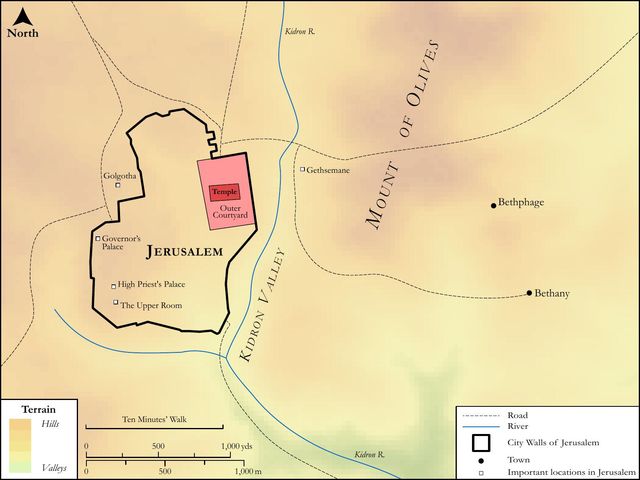
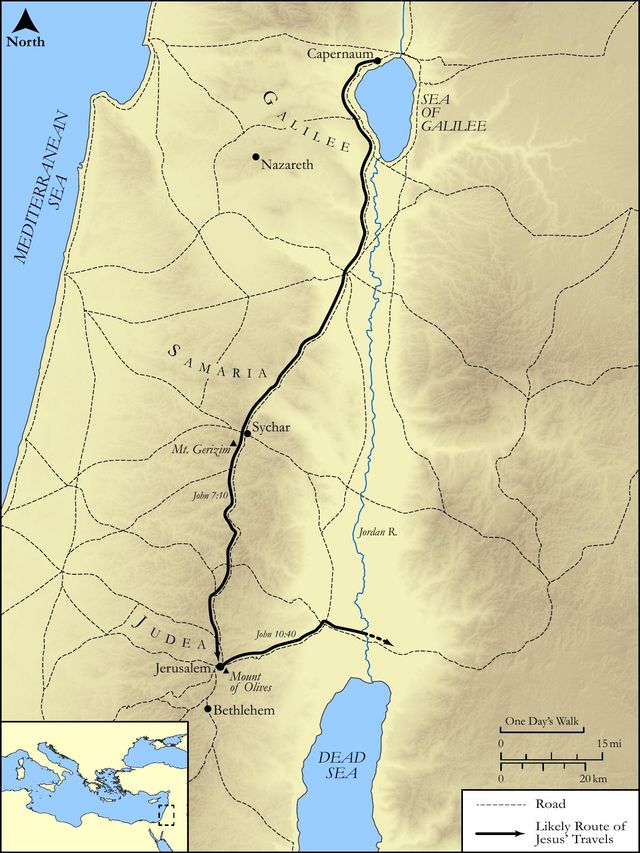
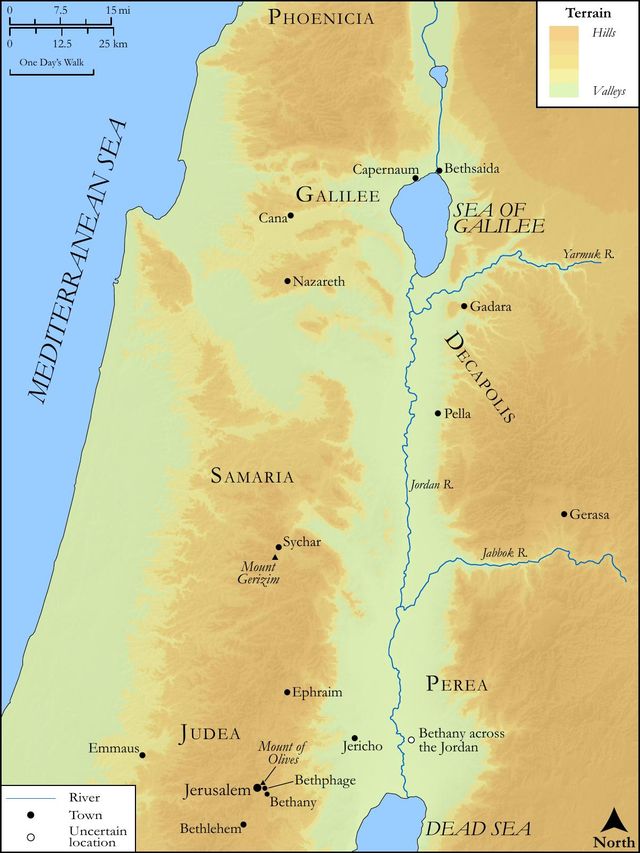
See on the biblical-era map
Study this verse
Public-domain commentary
Matthew Henry
From his Commentary on the Whole Bible. Henry comments on passages, not single verses — this entry covers John 9:8–12. His four-level outline is real structure in the source text, so it is rendered as structure.
Such a wonderful event as the giving of sight to a man born blind could not but be the talk of the town, and many heeded it no more than they do other town-talk, that is but nine days' wonder; but here we are told what the neighbours said of it, for the confirmation of the matter of fact. That which at first was not believed without scrutiny may afterwards be admitted without scruple. Two things are debated in this conference about it: -
I.Whether this was the same man that had before been blind, Joh 9:8.
1.The neighbours that lived near the place where he was born and bred, and knew that he had been blind, could not but be amazed when they saw that he had his eye-sight, had it on a sudden, and perfectly; and they said, Is not this he that sat and begged? It seems, this blind man was a common beggar, being disabled to work for his living; and so discharged from the obligation of the law, that if any would not work, neither should he eat. When he could not go about, he sat; if we cannot work for God, we must sit still quietly for him. When he could not labour, his parents not being able to maintain him, he begged. Note, Those who cannot otherwise subsist must not, like the unjust steward, be ashamed to beg; let no man be ashamed of anything but sin. There are some common beggars that are objects of charity, that should be distinguished; and we must not let the bees starve for the sake of the drones or wasps that are among them. As to this man,
(1.)It was well ordered by Providence that he on whom this miracle was wrought should be a common beggar, and so generally known and remarkable, by which means the truth of the miracle was better attested, and there were more to witness against those infidel Jews who would not believe that he had been blind than if he had been maintained in his father's house.
(2.)It was the greater instance of Christ's condescension that he seemed (as I may say) to take more pains about the cure of a common beggar than of others. When it was for the advantage of his miracles that they should be wrought on those that were remarkable, he pitched upon those that were made so by their poverty and misery; not by their dignity.
2.In answer to this inquiry,
(1.)Some said, This is he, the very same man; and these are witnesses to the truth of the miracle, for they had long known him stone-blind.
(2.)Others, who could not think it possible that a man born blind should thus on a sudden receive his sight, for that reason, and no other, said, He is not he, but is like him, and so, by their confession, if it be he, it is a great miracle that is wrought upon him. Hence we may take occasion to think,
[1.]Of the wisdom and power of Providence in ordering such a universal variety of the faces of men and women, so that no two are so alike but that they may be distinguished, which is necessary to society, and commerce, and the administration of justice. And,
[2.]Of the wonderful change which the converting grace of God makes upon some who before were very wicked and vile, but are thereby so universally and visibly altered that one would not take them to be the same persons.
3.This controversy was soon decided by the man himself: He said, I am he, the very man that so lately sat and begged; "I am he that was blind, and was an object of the charity of men, but now see, and am a monument of the mercy and grace of God." We do not find that the neighbours appealed to him in this matter, but he, hearing the debate, interposed, and put an end to it. It is a piece of justice we owe to our neighbours to rectify their mistakes, and to set things before them, as far as we are able, in a true light. Applying it spiritually, it teaches us that those who are savingly enlightened by the grace of God should be ready to own what they were before that blessed change was wrought, Ti1 1:13, Ti1 1:14.
II.How he came to have his eyes opened, Joh 9:10-12.
They will now turn aside, and see this great sight, and enquire further concerning it. He did not sound a trumpet when he did these alms, nor perform his cures upon a stage; and yet, like a city upon a hill, they could not be hid. Two things these neighbours enquire after: -
1.The manner of the cure: How were thine eyes opened? The works of the Lord being great, they ought to be sought out, Psa 111:2. It is good to observe the way and method of God's works, and they will appear the more wonderful. We may apply it spiritually; it is strange that blind eyes should be opened, but more strange when we consider how they are opened; how weak the means are that are used, and how strong the opposition that is conquered. In answer to this enquiry the poor man gives them a plain and full account of the matter: A man that is called Jesus made clay, - and I received sight. Joh 9:11. Note, Those who have experienced special instances of God's power and goodness, in temporal or spiritual things, should be ready upon all occasions to communicate their experiences, for the glory of God and the instruction and encouragement of others. See David's collection of his experiences, his own and others', Psa 34:4-6. It is a debt we owe to our benefactor, and to our brethren. God's favours are lost upon us, when they are lost with us, and go no further.
2.The author of it (Joh 9:12): Where is he? Some perhaps asked this question out of curiosity. "Where is he, that we may see him?" A man that did such cures as these might well be a show, which one would go a good way for the sight of. Others, perhaps, asked out of ill-will. "Where is he, that we may seize him?" There was a proclamation out for the discovering and apprehending of him (Joh 11:57); and the unthinking crowd, in spite of all reason and equity, will have ill thoughts of those that are put into an ill name. Some, we hope, asked this question out of good-will. "Where is he, that we may be acquainted with him? Where is he, that we may come to him, and share in the favours he is so free of?" In answer to this, he could say nothing: I know not. As soon as Christ had sent him to the pool of Siloam, it should seem, he withdrew immediately (as he did, Joh 5:13), and did not stay till the man returned, as if he either doubted of the effect or waited for the man's thanks. Humble souls take more pleasure in doing good than in hearing of it again; it will be time enough to hear of it in the resurrection of the just. The man had never seen Jesus, for by the time that he had gained his sight he had lost his Physician; and he asked, it is probable, Where is he? None of all the new and surprising objects that presented themselves could be so grateful to him as one sight of Christ, but as yet he knew no more of him than that he was called, and rightly called, Jesus - a Saviour. Thus in the work of grace wrought upon the soul we see the change, but see not the hand that makes it; for the way of the Spirit is like that of the wind, which thou hearest the sound of, but canst not tell whence it comes nor whither it goes.
Historical interpretation
Three Centuries of Reception
7 surviving comments on this verse. Each one is dated, so this reads as a timeline rather than a list.
Select a marker to jump to its quote. Markers stagger vertically where authors wrote within a few decades of each other.
Then, also, if any had their eyes blinded in the deepest darkness, He restored them to their former sight. He also loosened the tongues of the dumb, so that they discoursed and spoke eloquently. He also opened the ears of the deaf, and caused them to hear; He cleansed the polluted and the blemished. And He performed all these things not by His hands, or the application of any remedy, but by His word and command, as also the Sibyl had foretold: "Doing all things by His word, and healing every disease."
(Hom. lvii. s. 1) The suddenness of the miracle made men incredulous: The neighbours therefore, and they which had seen him that he was blind, said, Is not this he that sat and begged? Wonderful clemency and condescension of God! Even the beggars He heals with so great considerateness: thus stopping the mouths of the Jews; in that He made not the great, illustrious, and noble, but the poorest and meanest, the objects of His providence. Indeed He had come for the salvation of all. Some said, This is he. The blind man having been clearly recognised in the course of his long walk to the pool; the more so, as people's attention was drawn by the strangeness of the event; men could no longer say, This is not he; Others said, Nay, but he is like him.
The strangeness of what had been brought to pass led them even to unbelief, though so much had been contrived that they might not disbelieve. They said, "Is not this he that sat and begged?" O the lovingkindness of God! Whither did He descend, when with great kindness He healed even beggars, and so silenced the Jews, because He deemed not the illustrious, nor the distinguished, nor the rulers, but men of no mark to be fit objects of the same Providence. For He came for the salvation of all.
And what happened in the case of the paralytic, happened also with this man, for neither did the one or the other know who it was that healed him. And this was caused by the retirement of Christ, for Jesus when He healed always retired, that all suspicion might be removed from the miracles. Since how could they who knew not who He was flatter Him, or join in contriving what had been done? Neither was this man one of those who went about, but of those who sat at the doors of the Temple. Now when all were doubting concerning him, what saith he? "I am he." He was not ashamed of his former blindness, nor did he fear the wrath of the people, nor did he decline showing himself that he might proclaim his Benefactor.
(Tr. xliv. 8) His eyes being opened had altered his look. But he said, I am he. He spoke gratefully; a denial would have convicted Him of ingratitude.
"The neighbors therefore, and those who saw him previously, for he was a beggar, said, Is not this he who sat and begged? Some said, It is he: others, No; but he is like him." The opening of his eyes had altered his countenance. "He said, I am he." His voice utters its gratitude, that it might not be condemned as ungrateful. "Therefore said they unto him, How were thine eyes opened? He answered, The man who is called Jesus made clay, and anointed mine eyes, and said unto me, Go to the pool of Siloam, and wash: and I went and washed, and saw." See, he is become the herald of grace; see, he preaches the gospel; endowed with sight, he becomes a confessor. That blind man makes confession, and the heart of the wicked was troubled; for they had not in their heart what he had now in his countenance.
Hard indeed to be believed are such surpassing wonders, and that [which exceeds man's experience], from whatever source it comes, finds the intellect to be intolerant of it, and is scarcely treated with honour when convincingly forced upon people's minds. For the attempt to investigate what is beyond the grasp of reason indicates a state of mind akin to insanity. Hence, I think, the unbelief of some who had previously known the blind man haunting the cross-roads, and who were astonished afterwards when they beheld him unexpectedly able to discern objects with clear vision. And they are divided, from uncertainty regarding the event, and some who consider more carefully the greatness of the deed say that it is not the same man, but one remarkably like him whom they had known. For indeed it really is not strange that this opinion should be expressed by some, who by rejecting the truth were compelled through the greatness of the miracle to adopt an involuntary falsehood. Others again keep their minds free from obvious objections, and in reverence and fear they recognise the wonder, and say that it is the same man. But he who was healed quickly settled the question, by making his own statement, most worthy of credit as concerning himself. For no man can be ignorant of his own identity, even though very ill in delirium. Thus in every way the marvellous deed, discredited on account of the unusual degree of power it displayed, testifies that the Wonder-worker is to be reckoned among the great.
(viii. Moral. c. xxx. [49.]) Or thus: By His spittle understand the savour of inward contemplation. It runs down from the head into the mouth, and gives us the taste of revelation from the Divine splendour even in this life. The mixture of His spittle with clay is the mixture of supernatural grace, even the contemplation of Himself with our carnal knowledge, to the soul's enlightenment, and restoration of the human understanding from its original blindness.
Continue studying John 9:9 across the web’s major study libraries — every link below opens this exact verse, chapter, or book on the destination site.
Read & Compare
 BibleGatewayThis verse in more than 200 translations and 70 languages.
 Bible.comThe YouVersion reader — hundreds of translations, reading plans, and highlights.
 ESV.orgCrossway's official English Standard Version reader.
 NET BibleThe NET translation with 60,000+ translators' notes on every rendering decision.
 STEP BibleTyndale House's free study tool — original text, vocabulary, and scholarly resources.
 BibliaLogos Bible Software's free web reader.
 USCCBThe New American Bible (Revised Edition) with the U.S. bishops' study notes.
Commentaries
 BibleHub CommentariesDozens of classic commentaries on this verse, gathered on one page.
 StudyLightMore than 100 commentary sets — the largest collection on the web.
 BibleRefPlain-English commentary on what this verse means, verse by verse.
 Enduring WordDavid Guzik's free commentary on this chapter, widely used by Bible teachers.
 Bible Study ToolsVerse commentary alongside Greek and Hebrew study aids.
Original Language & Research
- BibleHub InterlinearThe verse word by word — original language, transliteration, and English.
- BibleHub LexiconEvery word's original-language definition and Strong's entry.
 Blue Letter BibleDeep-study tools — Strong's numbers, concordance, and word studies.
 CNTR CollationThe earliest Greek manuscripts of this verse, collated letter by letter.
Sermons, Hymns & Audio


TrulyRandomVerse is not affiliated with these sites and doesn’t control their content. They’re linked because they’re genuinely useful.
Summary
John 9:9 captures the immediate aftermath of Jesus' miraculous healing of a man born blind, detailing the public's bewildered reactions and the man's unequivocal affirmation of his own identity. This pivotal verse highlights the profound transformation wrought by divine intervention, forcing those who knew the man to grapple with the undeniable evidence of God's work, even as they struggled to reconcile it with their preconceived notions.
Context
ShowHideLiterary Context
This verse is situated within the broader narrative of John 9, which recounts Jesus' encounter with a man born blind, His unique method of healing involving clay and the Pool of Siloam, and the subsequent intense scrutiny by the man's neighbors, the Pharisees, and his parents. The preceding verses (John 9:8) describe the initial confusion among those who had known him as a beggar, setting the stage for the debate over his identity that culminates in this verse. The ensuing dialogue in John 9:10-12 further develops the man's testimony and the escalating inquiry into the miracle.
Historical & Cultural Context
In first-century Judea, congenital blindness was often attributed to sin, either of the individual or their parents, as evidenced by the disciples' question in John 9:2. Begging was a common means of survival for the disabled, and the man's familiar presence at the temple gate would have made him a recognizable figure. The dramatic change in his appearance—no longer blind, no longer begging—would naturally provoke astonishment and disbelief among his community. The Sabbath context of the healing (John 9:14) also sets the stage for the later conflict with the Pharisees, who prioritized their interpretation of the Law over the compassion of the miracle.
Key Themes
ShowHideThe passage in John 9 profoundly explores themes of physical and spiritual sight. The man's physical healing serves as a powerful metaphor for spiritual enlightenment, contrasting with the spiritual blindness of the religious authorities who refuse to acknowledge Jesus' divine power. The theme of identity is central, both for the healed man and for Jesus Himself, whose identity as the "light of the world" (as declared in John 9:5) is vividly demonstrated. The narrative also highlights the nature of true witness and the consequences of encountering divine truth, as the man's simple, unwavering testimony stands in stark contrast to the complex, often cynical, reactions of others.
Exposition and Analysis
ShowHideKey Word Analysis
ShowHideThis word (G243) signifies "another of a different kind" or "another, but distinct." Here, it emphasizes the division of opinion among the onlookers. Some believed he was the same person, while "others" were so struck by his transformation that they thought he was merely "like him," suggesting a distinct, yet similar, individual. This highlights the profound nature of the change.
Derived from the base of "homou" (together), this term (G3664) means "similar in appearance or character." The use of "like him" by some neighbors underscores their inability to fully reconcile the familiar beggar with the now-seeing man. It implies a resemblance, but not an absolute identity, reflecting their struggle to comprehend such a radical transformation.
This is the emphatic first-person singular pronoun (G1473), "I." When used, it stresses the subject's personal involvement or identity. In this context, the man's "I" is a direct, assertive declaration of his personal identity, cutting through the public's speculation with unshakeable self-awareness.
This verb (G1510) is the first person singular present indicative of the verb "to be," meaning "I exist." While Jesus uses this verb in divine "I AM" statements (e.g., John 8:58), here, in conjunction with "egō," it functions as a powerful, emphatic affirmation of the man's personal identity: "I, myself, truly am that person." It is a statement of factual existence and self-identification.
Verse Breakdown
ShowHide"Some said, This is he"
This clause reveals that a segment of the onlookers recognized the man despite his profound transformation. Their statement reflects a direct and accurate identification, acknowledging the continuity of his personhood even after the miracle. It suggests a willingness to accept the reality before them.
"others [said], He is like him"
This contrasting clause highlights the skepticism and disbelief of another group. The phrase "like him" indicates that while they saw a strong resemblance, they could not fully believe that this seeing man was the same person who had been born blind and had begged for so long. This reaction underscores the radical nature of the healing and the human tendency to doubt extraordinary change.
"[but] he said, I am [he]."
This is the climactic declaration of the verse. The conjunction "but" (G1161, dé) emphasizes the contrast between the public's confusion and the man's absolute certainty. His simple yet profound statement, "I am he" (Greek: egō eimi), is an emphatic self-identification. It cuts through all speculation, serving as an undeniable personal testimony to his identity and, by extension, to the reality of the miracle performed upon him.
Literary Devices
ShowHideThe verse effectively employs Dialogue to showcase the contrasting opinions of the crowd, creating a sense of immediate, unfolding drama. This is further heightened by the use of Contrast, as the differing views ("This is he" vs. "He is like him") are sharply juxtaposed against the man's definitive, unwavering declaration, "I am he." This contrast not only highlights the public's confusion but also underscores the clarity and certainty of the one who experienced the miracle. There is also an element of Dramatic Irony, as the physically blind man (now seeing) possesses a clear understanding of his own identity and the truth of what happened, while the sighted onlookers are "blind" to the obvious reality before them, struggling to comprehend the divine work. The man's simple "I am" statement, while not a divine claim in this context, subtly echoes Jesus' own "I AM" declarations, reinforcing the idea that the man's transformed identity is intrinsically linked to the transformative power of God.
Theological and Thematic Connections
ShowHideJohn 9:9 powerfully illustrates the theme of new creation and radical transformation through divine intervention. Just as the man's physical identity was debated due to the profound change in his circumstances, so too does spiritual transformation in Christ often lead to a new identity that may challenge the perceptions of those who knew us before. This verse underscores the importance of personal testimony in the face of skepticism, affirming that the experience of God's grace is the most compelling evidence of His power. It also subtly introduces the concept that God's work is often so profound that it elicits diverse reactions, from recognition and belief to doubt and denial.
Reflection and Application
ShowHideThe man's simple, resolute declaration, "I am he," serves as a profound model for believers today. When God works a transformative miracle in our lives—whether it's the miracle of salvation, healing, or spiritual growth—it often leads to a new identity in Christ that may not be immediately recognized or understood by others. We are called to embrace this new identity and to confidently bear witness to the work God has done, even when faced with skepticism or confusion. Our testimony, rooted in personal experience, cuts through doubt and points to the undeniable reality of God's power. This passage encourages us to stand firm in our truth, to articulate what God has done, and to anticipate that divine transformation may indeed provoke diverse reactions, from wonder to disbelief, among those around us.
Questions for Reflection
ShowHideFAQ
ShowHideWhy did some people struggle to recognize the man after he was healed?
ShowHidePeople struggled to recognize the man primarily because his physical condition and social role had been so dramatically altered. For years, he was known only as "the blind beggar." His sight being restored meant he no longer looked like a blind person, and he was no longer in his customary place begging. This profound transformation challenged their established mental image of him, leading to disbelief and the assumption that he must be someone "like him" but not actually the same person. It highlights how deeply we can be defined by our circumstances and how difficult it can be for others to accept radical change.
Is the man's statement "I am he" a divine claim, similar to Jesus' "I AM" statements?
ShowHideNo, the man's statement "I am he" (Greek: egō eimi) in John 9:9 is not a divine claim. While the Greek phrase egō eimi is indeed used by Jesus in His powerful, divine "I AM" declarations (e.g., John 8:58), here it functions as a simple, emphatic affirmation of personal identity. The context clearly indicates the man is asserting, "I am that person you knew, the one who was blind." The KJV's addition of "[he]" in brackets correctly clarifies this meaning, distinguishing it from Jesus' claims of divine self-existence.
Christ-Centered Fulfillment
ShowHideThe narrative of the man born blind and his emphatic declaration in John 9:9 finds profound Christ-centered fulfillment in several ways. Jesus, who declared Himself to be the Light of the World, physically opened the eyes of the blind man, symbolizing His ultimate power to open the eyes of those spiritually blind to the truth of God. The man's transformed identity, so radical that his neighbors questioned who he was, foreshadows the new identity believers receive in Christ. Just as the man could confidently say, "I am he," so too can believers declare, "I am a new creation" (2 Corinthians 5:17), for they are no longer defined by their former spiritual blindness or sin but by their union with Christ. This miracle, and the man's subsequent testimony and worship of Jesus (John 9:38), illustrates that Jesus came not only to heal physical ailments but to bring spiritual sight and a transformed life, leading to a clear recognition of who He is and who we are in Him. He is the one who gives us the very ability to say, with conviction, "I am His!" (Romans 14:8).