


John 8:1
Bible text: King James Version (1769 Blayney text) · Public domain
Bible text: Berean Standard Bible · Public domain
Bible text: American Standard Version (1901) · Public domain
Bible text: World English Bible, Messianic edition · Public domain
Bible text: Geneva Bible (1599) · Public domain
Bible text: Young's Literal Translation · Public domain
- ἸησοῦςIēsousJesusG2424N-NSM-PNoun Nominative Singular Masculine Individual
- δὲdehoweverG1161CONJConjunction
- ἐπορεύθηeporeuthēwentG4198V-AOI-3SVerb Aorist Passive Deponent Indicative 3rd Singular
- εἰςeistoG1519PREPPreposition
- τὸtotheG3588T-ASNDefinite article Accusative Singular Neuter
- ὄροςorosMountG3735N-ASN-LNoun Accusative Singular Neuter Location
- τῶνtōn<the>G3588T-GPFDefinite article Genitive Plural Feminine
- ἐλαιῶνelaiōnof OlivesG1638N-GPF-LNoun Genitive Plural Feminine Location
English is a literal word-by-word gloss of the Greek, not the KJV's wording. Why?
This is the original text the KJV's translators worked from — each Greek word with its own literal English meaning in this verse, prepared by scholars at Tyndale House, Cambridge. The KJV translates whole sentences, not word by word, so its wording differs: one Greek word can become several English words, and the KJV may choose “charity” where the gloss reads “love”. Both are faithful — they answer different questions. For the KJV's own rendering, switch to the KJV text.
Details
See on the biblical-era maps
Study this verse
Public-domain commentary
Matthew Henry
From his Commentary on the Whole Bible. Henry comments on passages, not single verses — this entry covers John 8:1–11. His four-level outline is real structure in the source text, so it is rendered as structure.
Though Christ was basely abused in the foregoing chapter, both by the rulers and by the people, yet here we have him still at Jerusalem, still in the temple. How often would he have gathered them! Observe,
I.His retirement in the evening out of the town (Joh 8:1):
He went unto the mount of olives; whether to some friend's house, or to some booth pitched there, now at the feast of tabernacles, is not certain; whether he rested there, or, as some think, continued all night in prayer to God, we are not told. But he went out of Jerusalem, perhaps because he had no friend there that had either kindness or courage enough to give him a night's lodging; while his persecutors had houses of their own to go to (Joh 7:53), he could not so much as borrow a place to lay his head on, but what he must go a mile or two out of town for. He retired (as some think) because he would not expose himself to the peril of a popular tumult in the night. It is prudent to go out of the way of danger whenever we can do it without going out of the way of duty. In the day-time, when he had work to do in the temple, he willingly exposed himself, and was under special protection, Isa 49:2. But in the night, when he had not work to do, he withdrew into the country, and sheltered himself there.
II.His return in the morning to the temple, and to his work there, Joh 8:2. Observe,
1.What a diligent preacher Christ was: Early in the morning he came again, and taught. Though he had been teaching the day before, he taught again today. Christ was a constant preacher, in season and out of season. Three things were taken notice of here concerning Christ's preaching.
(1.)The time: Early in the morning. Though he lodged out of town, and perhaps had spent much of the night in secret prayer, yet he came early. When a day's work is to be done for God and souls it is good to begin betimes, and take the day before us.
(2.)The place: In the temple; not so much because it was a consecrated place (for then he would have chosen it at other times) as because it was now a place of concourse; and he would hereby countenance solemn assemblies for religious worship, and encourage people to come up to the temple, for he had not yet left it desolate.
(3.)His posture: He sat down, and taught, as one having authority, and as one that intended to abide by it for some time.
2.How diligently his preaching was attended upon: All the people came unto him; and perhaps many of them were the country-people, who were this day to return home from the feast, and were desirous to hear one sermon more from the mouth of Christ before they returned. They came to him, though he came early. They that seek him early shall find him. Though the rulers were displeased at those that came to hear him, yet they would come; and he taught them, though they were angry at him too. Though there were few or none among them that were persons of any figure, yet Christ bade them welcome, and taught them.
III.His dealing with those that brought to him the woman taken in adultery, tempting him.
The scribes and Pharisees would not only not hear Christ patiently themselves, but they disturbed him when the people were attending on him. Observe here,
1.The case proposed to him by the scribes and Pharisees, who herein contrived to pick a quarrel with him, and bring him into a snare, Joh 8:3-6.
(1.)They set the prisoner to the bar (Joh 8:3): they brought him a woman taken in adultery, perhaps now lately taken, during the time of the feast of tabernacles, when, it may be, their dwelling in booths, and their feasting and joy, might, by wicked minds, which corrupt the best things, be made occasions of sin. Those that were taken in adultery were by the Jewish law to be put to death, which the Roman powers allowed them the execution of, and therefore she was brought before the ecclesiastical court. Observe, She was taken in her adultery. Though adultery is a work of darkness, which the criminals commonly take all the care they can to conceal, yet sometimes it is strangely brought to light. Those that promise themselves secrecy in sin deceive themselves. The scribes and Pharisees bring her to Christ, and set her in the midst of the assembly, as if they would leave her wholly to the judgment of Christ, he having sat down, as a judge upon the bench.
(2.)They prefer an indictment against her: Master, this woman was taken in adultery, Joh 8:4. Here they call him Master whom but the day before they had called a deceiver, in hopes with their flatteries to have ensnared him, as those, Luk 20:20. But, though men may be imposed upon with compliments, he that searches the heart cannot.
[1.]The crime for which the prisoner stands indicted is no less than adultery, which even in the patriarchal age, before the law of Moses, was looked upon as an iniquity to be punished by the judges, Job 31:9-11; Gen 38:24. The Pharisees, by their vigorous prosecution of this offender, seemed to have a great zeal against the sin, when it appeared afterwards that they themselves were not free from it; nay, they were within full of all uncleanness, Mat 23:27, Mat 23:28. Note, It is common for those that are indulgent to their own sin to be severe against the sins of others.
[2.]The proof of the crime was from the notorious evidence of the fact, an incontestable proof; she was taken in the act, so that there was no room left to plead not guilty. Had she not been taken in this act, she might have gone on to another, till her heart had been perfectly hardened; but sometimes it proves a mercy to sinners to have their sin brought to light, that they may do no more presumptuously. Better our sin should shame us than damn us, and be set in order before us for our conviction than for our condemnation.
(3.)They produce the statute in this case made and provided, and upon which she was indicted, Joh 8:5. Moses in the law commanded that such should be stoned. Moses commanded that they should be put to death (Lev 20:10; Deu 22:22), but not that they should be stoned, unless the adulteress was espoused, not married, or was a priest's daughter, Deu 22:21. Note, Adultery is an exceedingly sinful sin, for it is the rebellion of a vile lust, not only against the command, but against the covenant, of our God. It is the violation of a divine institution in innocency, by the indulgence of one of the basest lusts of man in his degeneracy.
(4.)They pray his judgment in the case: "But what sayest thou, who pretendest to be a teacher come from God to repeal old laws and enact new ones? What hast thou to say in this case?" If they had asked this question in sincerity, with a humble desire to know his mind, it had been very commendable. Those that are entrusted with the administration of justice should look up to Christ for direction; but this they said tempting him, that they might have to accuse him, Joh 8:6.
[1.]If he should confirm the sentence of the law, and let it take its course, they would censure him as inconsistent with himself (he having received publicans and harlots) and with the character of the Messiah, who should be meek, and have salvation, and proclaim a year of release; and perhaps they would accuse him to the Roman governor, for countenancing the Jews in the exercise of a judicial power. But,
[2.]If he should acquit her, and give his opinion that the sentence should not be executed (as they expected he would), they would represent him, First, As an enemy to the law of Moses, and as one that usurped an authority to correct and control it, and would confirm that prejudice against him which his enemies were so industrious to propagate, that he came to destroy the law and the prophets. Secondly, As a friend to sinners, and, consequently, a favourer of sin; if he should seem to connive at such wickedness, and let it go unpunished, they would represent him as countenancing it, and being a patron of offences, if he was a protector of offenders, than which no reflection could be more invidious upon one that professed the strictness, purity, and business of a prophet.
2.The method he took to resolve this case, and so to break this snare.
(1.)He seemed to slight it, and turned a deaf ear to it: He stooped down, and wrote on the ground. It is impossible to tell, and therefore needless to ask, what he wrote; but this is the only mention made in the gospels of Christ's writing. Eusebius indeed speaks of his writing to Abgarus, king of Edessa. Some think they have a liberty of conjecture as to what he wrote here. Grotius says, It was some grave weighty saying, and that it was usual for wise men, when they were very thoughtful concerning any thing, to do so. Jerome and Ambrose suppose he wrote, Let the names of these wicked men be written in the dust. Others this, The earth accuses the earth, but the judgment is mine. Christ by this teaches us to be slow to speak when difficult cases are proposed to us, not quickly to shoot our bolt; and when provocations are given us, or we are bantered, to pause and consider before we reply; think twice before we speak once: The heart of the wise studies to answer. Our translation from some Greek copies, which add, mē prospoioumenos (though most copies have it not), give this account of the reason of his writing on the ground, as though he heard them not. He did as it were look another way, to show that he was not willing to take notice of their address, saying, in effect, Who made me a judge or a divider? It is safe in many cases to be deaf to that which it is not safe to answer, Psa 38:13. Christ would not have his ministers to be entangled in secular affairs. Let them rather employ themselves in any lawful studies, and fill up their time in writing on the ground (which nobody will heed), than busy themselves in that which does not belong to them. But, when Christ seemed as though he heard them not, he made it appear that he not only heard their words, but knew their thoughts.
(2.)When they importunately, or rather impertinently, pressed him for an answer, he turned the conviction of the prisoner upon the prosecutors, Joh 8:7.
[1.]They continued asking him, and his seeming not to take notice of them made them the more vehement; for now they thought sure enough that they had run him aground, and that he could not avoid the imputation of contradicting either the law of Moses, if he should acquit the prisoner, or his own doctrine of mercy and pardon, if he should condemn her; and therefore they pushed on their appeal to him with vigour; whereas they should have construed his disregard of them as a check to their design, and an intimation to them to desist, as they tendered their own reputation.
[2.]At last he put them all to shame and silence with one word: He lifted up himself, awaking as one out of sleep (Psa 78:65), and said unto them, He that is without sin among you, let him first cast a stone at her.
First, Here Christ avoided the snare which they had laid for him, and effectually saved his own reputation. He neither reflected upon the law nor excused the prisoner's guilt, nor did he on the other hand encourage the prosecution or countenance their heat; see the good effect of consideration. When we cannot make our point by steering a direct course, it is good to fetch a compass.
Secondly, In the net which they spread is their own foot taken. They came with design to accuse him, but they were forced to accuse themselves. Christ owns it was fit the prisoner should be prosecuted, but appeals to their consciences whether they were fit to be the prosecutors.
a.He here refers to that rule which the law of Moses prescribed in the execution of criminals, that the hand of the witnesses must be first upon them (Deu 17:7), as in the stoning of Stephen, Act 7:58. The scribes and Pharisees were the witnesses against this woman. Now Christ puts it to them whether, according to their own law, they would dare to be the executioners. Durst they take away that life with their hands which they were now taking away with their tongues? would not their own consciences fly in their faces if they did?
b.He builds upon an uncontested maxim in morality, that it is very absurd for men to be zealous in punishing the offences of others, while they are every whit as guilty themselves, and they are not better than self-condemned who judge others, and yet themselves do the same thing: "If there be any of you who is without sin, without sin of this nature, that has not some time or other been guilty of fornication or adultery, let him cast the first stone at her." Not that magistrates, who are conscious of guilt themselves, should therefore connive at others' guilt. But therefore, (a.) Whenever we find fault with others, we ought to reflect upon ourselves, and to be more severe against sin in ourselves than in others. (b.) We ought to be favourable, though not to the sins, yet to the persons, of those that offend, and to restore them with a spirit of meekness, considering ourselves and our own corrupt nature. Aut sumus, aut fuimus, vel possumus esse quod hic est - We either are, or have been, or may be, what he is. Let this restrain us from throwing stones at our brethren, and proclaiming their faults. Let him that is without sin begin such discourse as this, and then those that are truly humbled for their own sins will blush at it, and be glad to let it drop. (c.) Those that are any way obliged to animadvert upon the faults of others are concerned to look well to themselves, and keep themselves pure (Mat 7:5), Qui alterum incusat probri, ipsum se intueri oportet. The snuffers of the tabernacle were of pure gold.
c.Perhaps he refers to the trial of the suspected wife by the jealous husband with the waters of jealousy. The man was to bring her to the priest (Num 5:15), as the scribes and Pharisees brought this woman to Christ. Now it was a received opinion among the Jews, and confirmed by experience, that if the husband who brought his wife to that trial had himself been at any time guilty of adultery, Aquae non explorant ejus uxorem - The bitter water had no effect upon the wife. "Come then," saith Christ, "according to your own tradition will I judge you; if you are without sin, stand to the charge, and let the adulteress be executed; but if not, though she be guilty, while you that present her are equally so, according to your own rule she shall be free."
d.In this he attended to the great work which he came into the world about, and that was to bring sinners to repentance; not to destroy, but to save. He aimed to bring, not only the prisoner to repentance, by showing her his mercy, but the prosecutors too, by showing them their sins. They sought to ensnare him; he sought to convince and convert them. Thus the blood-thirsty hate the upright, but the just seek his soul.
[3.]Having given them this startling word, he left them to consider of it, and again stooped down, and wrote on the ground, Joh 8:8. As when they made their address he seemed to slight their question, so now that he had given them an answer he slighted their resentment of it, not caring what they said to it; nay, they needed not to make any reply; the matter was lodged in their own breasts, let them make the best of it there. Or, he would not seem to wait for an answer, lest they should on a sudden justify themselves, and then think themselves bound in honour to persist in it; but gives them time to pause, and to commune with their own hearts. God saith, I hearkened and heard, Jer 8:6. Some Greek copies here read, He wrote on the ground, enos hekastou autōn tas hamartias - the sins of every one of them; this he could do, for he sets our iniquities before him; and this he will do, for he will set them in order before us too; he seals up our transgressions, Job 14:17. But he does not write men's sins in the sand; no, they are written as with a pen of iron and the point of a diamond (Jer 17:1), never to be forgotten till they are forgiven.
[4.]The scribes and Pharisees were so strangely thunderstruck with the words of Christ that they let fall their persecution of Christ, whom they durst no further tempt, and their prosecution of the woman, whom they durst no longer accuse (Joh 8:9): They went out one by one.
First, Perhaps his writing on the ground frightened them, as the hand-writing on the wall frightened Belshazzar. They concluded he was writing bitter things against them, writing their doom. Happy they who have no reason to be afraid of Christ's writing!
Secondly, What he said frightened them by sending them to their own consciences; he had shown them to themselves, and they were afraid if they should stay till he lifted up himself again his next word would show them to the world, and shame them before men, and therefore they thought it best to withdraw. They went out one by one, that they might go out softly, and not by a noisy flight disturb Christ; they went away by stealth, as people being ashamed steal away when they flee in battle, Sa2 19:3. The order of their departure is taken notice of, beginning at the eldest, either because they were most guilty, or first aware of the danger they were in of being put to the blush; and if the eldest quit the field, and retreat ingloriously, no marvel if the younger follow them. Now see here, 1. The force of the word of Christ for the conviction of sinners: They who heard it were convicted by their own consciences. Conscience is God's deputy in the soul, and one word from him will set it on work, Heb 4:12. Those that had been old in adulteries, and long fixed in a proud opinion of themselves, were here, even the oldest of them, startled by the word of Christ; even scribes and Pharisees, who were most conceited of themselves, are by the power of Christ's word made to retire with shame. 2. The folly of sinners under these convictions, which appears in these scribes and Pharisees. (1.) It is folly for those that are under convictions to make it their principal care to avoid shame, as Judah (Gen 38:23), lest we be shamed. Our care should be more to save our souls than to save our credit. Saul evidenced his hypocrisy when he said, I have sinned, yet now honour me, I pray thee. There is no way to get the honour and comfort of penitents, but by taking the shame of penitents. (2.) It is folly for those that are under convictions to contrive how to shift off their convictions, and to get rid of them. The scribes and Pharisees had the wound opened, and now they should have been desirous to have it searched, and then it might have been healed, but this was the thing they dreaded and declined. (3.) It is folly for those that are under convictions to get away from Jesus Christ, as these here did, for he is the only one that can heal the wounds of conscience, and speak peace to us. Those that are convicted by their consciences will be condemned by their Judge, if they be not justified by their Redeemer; and will they then go from him? To whom will they go?
[5.]When the self-conceited prosecutors quitted the field, and fled for the same, the self-condemned prisoner stood her ground, with a resolution to abide by the judgment of our Lord Jesus: Jesus was left alone from the company of the scribes and Pharisees, free from their molestations, and the woman standing in the midst of the assembly that were attending on Christ's preaching, where they set her, Joh 8:3. She did not seek to make her escape, though she had opportunity for it; but her prosecutors had appealed unto Jesus, and to him she would go, on him she would wait for her doom. Note, Those whose cause is brought before our Lord Jesus will never have occasion to remove it into any other court, for he is the refuge of penitents. The law which accuses us, and calls for judgment against us, is by the gospel of Christ made to withdraw; its demands are answered, and its clamours silenced, by the blood of Jesus. Our cause is lodged in the gospel court; we are left with Jesus alone, it is with him only that we have now to deal, for to him all judgment is committed; let us therefore secure our interest in him, and we are made for ever. Let his gospel rule us, and it will infallibly save us.
[6.]Here is the conclusion of the trial, and the issue it was brought to: Jesus lifted up himself, and he saw none but the woman, Joh 8:10, Joh 8:11. Though Christ may seem to take no notice of what is said and done, but leave it to the contending sons of men to deal it out among themselves, yet, when the hour of his judgment is come, he will no longer keep silence. When David had appealed to God, he prayed, Lift up thyself, Psa 7:6, and Psa 94:2. The woman, it is likely, stood trembling at the bar, as one doubtful of the issue. Christ was without sin, and might cast the first stone; but though none more severe than he against sin, for he is infinitely just and holy, none more compassionate than he to sinners, for he is infinitely gracious and merciful, and this poor malefactor finds him so, now that she stands upon her deliverance. Here is the method of courts of judicature observed.
First, The prosecutors are called: Where are those thine accusers? Hath no man condemned thee? Not but that Christ knew where they were; but he asked, that he might shame them, who declined his judgment, and encourage her who resolved to abide by it. St. Paul's challenge is like this, Who shall lay any thing to the charge of God's elect? Where are those their accusers? The accuser of the brethren shall be fairly cast out, and all indictments legally and regularly quashed.
Secondly, They do not appear when the question is asked: Hath no man condemned thee? She said, No man, Lord. She speaks respectfully to Christ, calls him Lord, but is silent concerning her prosecutors, says nothing in answer to that question which concerned them, Where are those thine accusers? She does not triumph in their retreat nor insult over them as witnesses against themselves, not against her. If we hope to be forgiven by our Judge, we must forgive our accusers; and if their accusations, how invidious soever, were the happy occasion of awakening our consciences, we may easily forgive them this wrong. But she answered the question which concerned herself, Has no man condemned thee? True penitents find it enough to give an account of themselves to God, and will not undertake to give an account of other people.
Thirdly, The prisoner is therefore discharged: Neither do I condemn thee; go, and sin no more. Consider this,
(a.)As her discharge from the temporal punishment: "If they do not condemn thee to be stoned to death, neither do I." Not that Christ came to disarm the magistrate of his sword of justice, nor that it is his will that capital punishments should not be inflicted on malefactors; so far from this, the administration of public justice is established by the gospel, and made subservient to Christ's kingdom: By me kings reign. But Christ would not condemn this woman, (a.) Because it was none of his business; he was no judge nor divider, and therefore would not intermeddle in secular affairs. His kingdom was not of this world. Tractent fabrilia fabri - Let every one act in his own province. (b.) Because she was prosecuted by those that were more guilty than she and could not for shame insist upon their demand of justice against her. The law appointed the hands of the witnesses to be first upon the criminal, and afterwards the hands of all the people, so that if they fly off, and do not condemn her, the prosecution drops. The justice of God, in inflicting temporal judgments, sometimes takes notice of a comparative righteousness, and spares those who are otherwise obnoxious when the punishing of them would gratify those that are worse than they, Deu 32:26, Deu 32:27. But, when Christ dismissed her, it was with this caution, Go, and sin no more. Impunity emboldens malefactors, and therefore those who are guilty, and yet have found means to escape the edge of the law, need to double their watch, lest Satan get advantage; for the fairer the escape was, the fairer the warning was to go and sin no more. Those who help to save the life of a criminal should, as Christ here, help to save the soul with this caution.
(b.)As her discharge from the eternal punishment. For Christ to say, I do not condemn thee is, in effect, to say, I do forgive thee; and the Son of man had power on earth to forgive sins, and could upon good grounds give this absolution; for as he knew the hardness and impenitent hearts of the prosecutors, and therefore said that which would confound them, so he knew the tenderness and sincere repentance of the prisoner, and therefore said that which would comfort her, as he did to that woman who was a sinner, such a sinner as this, who was likewise looked upon with disdain by a Pharisee (Luk 7:48, Luk 7:50): Thy sins are forgiven thee, go in peace. So here, Neither do I condemn thee. Note, (a.) Those are truly happy whom Christ doth not condemn, for his discharge is a sufficient answer to all other challenges; they are all coram non judice - before an unauthorized judge. (b.) Christ will not condemn those who, though they have sinned, will go and sin no more, Psa 85:8; Isa 55:7. he will not take the advantage he has against us for our former rebellions, if we will but lay down our arms and return to our allegiance. (c.) Christ's favour to us in the remission of the sins that are past should be a prevailing argument with us to go and sin no more, Rom 6:1, Rom 6:2. Will not Christ condemn thee? Go then and sin no more.
Historical interpretation
Eight Centuries of Reception
11 surviving comments on this verse. Each one is dated, so this reads as a timeline rather than a list.
Select a marker to jump to its quote. Markers stagger vertically where authors wrote within a few decades of each other.
And he [Papias] relates another story of a woman, who was accused of many sins before the Lord, which is contained in the Gospel according to the Hebrews. These things we have thought it necessary to observe in addition to what has been already stated.
And there was at that time in Hierapolis a distinguished master [Papias] who had many treatises, and he wrote five treatises on the Gospel. And he mentions in his treatise on the Gospel of John, that in the book of John the Evangelist, he speaks of a woman who was adulterous, so when they presented her to Christ our Lord, to whom be glory, He told the Jews who brought her to Him, “Whoever of you knows that he is innocent of what she has done, let him testify against her with what he has.” So when He told them that, none of them responded with anything and they left.
And he [Papias] relates another story of a woman, who was accused of many sins before the Lord, which is contained in the Gospel according to the Hebrews. These things we have thought it necessary to observe in addition to what has been already stated.
In the Gospel, according to John, there is found in many of both the Greek as well as the Latin copies, the story of the adulteress who was accused before the Lord.
(Tract. xxxiii. 3) And where ought Christ to teach, except on the mount of Olives; on the mount of ointment, on the mount of chrism. For the name Christ is from chrism, chrism being the Greek word for unction. He has anointed us, for wrestling with the devil.
"Thence Jesus went unto the mount;" namely, to mount "Olivet,"-unto the fruitful mount, unto the mount of ointment, unto the mount of chrism. For the name of Christ is from chrism; in the Greek, is called in Latin unctio, an anointing. And He has anointed us for this reason, because He has made us wrestlers against the devil. "And early in the morning He came again into the temple, and all the people came unto Him; and He sat down and taught them." And He was not taken, for He did not yet deign to suffer.
Some men of slight faith, or, rather, some hostile to true faith, fearing, as I believe, that liberty to sin with impunity is granted their wives, remove from their scriptural texts the account of our Lord’s pardon of the adulteress, as though he who said, “From now on, sin no more,” granted permission to sin, or as though the woman should not have been cured by the divine physician by the remission of that sin in order not to offend others who are equally unclean.
For he who judges not himself first, cannot know how to judge correctly in the case of another. For though He know what the offence is, from being told, yet He cannot judge of another's deserts, who supposing himself innocent, will not apply the rule of justice to himself.
The Mount of Olives designates the height of the Lord’s benevolence and mercy, for in Greek “mercy” is called oleos, and an olive plantation is called oleon, and also because anointing with oil usually soothes weary and aching limbs. But oil is preeminent in power and purity too, and it tends to make its way up and float on the top of any liquid that you choose to pour into it. This fact not inappropriately suggests the grace of heavenly mercy.…Let us come then with all our concentration of mind to him who has his place on the invisible Mount of Olives. God, his God, has anointed him with the oil of gladness above his companions in order that he may deign to make us also companions of that anointing of his, that is, sharers of spiritual grace.
Our Lord at the time of His passion used to spend the day in Jerusalem, preaching in the temple, and performing miracles, and return in the evening to Bethany, where He lodged with the sisters of Lazarus. Thus on the last day of the feast, having, according to His wont, preached the whole day in the temple, in the evening He went to the mount of Olives.
And there was at that time in Hierapolis a distinguished master [Papias] who had many treatises, and he wrote five treatises on the Gospel. And he mentions in his treatise on the Gospel of John, that in the book of John the Evangelist, he speaks of a woman who was adulterous, so when they presented her to Christ our Lord, to whom be glory, He told the Jews who brought her to Him, “Whoever of you knows that he is innocent of what she has done, let him testify against her with what he has.” So when He told them that, none of them responded with anything and they left.
Continue studying John 8:1 across the web’s major study libraries — every link below opens this exact verse, chapter, or book on the destination site.
Read & Compare
 BibleGatewayThis verse in more than 200 translations and 70 languages.
 Bible.comThe YouVersion reader — hundreds of translations, reading plans, and highlights.
 ESV.orgCrossway's official English Standard Version reader.
 NET BibleThe NET translation with 60,000+ translators' notes on every rendering decision.
 STEP BibleTyndale House's free study tool — original text, vocabulary, and scholarly resources.
 BibliaLogos Bible Software's free web reader.
 USCCBThe New American Bible (Revised Edition) with the U.S. bishops' study notes.
Commentaries
 BibleHub CommentariesDozens of classic commentaries on this verse, gathered on one page.
 StudyLightMore than 100 commentary sets — the largest collection on the web.
 BibleRefPlain-English commentary on what this verse means, verse by verse.
 Enduring WordDavid Guzik's free commentary on this chapter, widely used by Bible teachers.
 Bible Study ToolsVerse commentary alongside Greek and Hebrew study aids.
Original Language & Research
- BibleHub InterlinearThe verse word by word — original language, transliteration, and English.
- BibleHub LexiconEvery word's original-language definition and Strong's entry.
 Blue Letter BibleDeep-study tools — Strong's numbers, concordance, and word studies.
 CNTR CollationThe earliest Greek manuscripts of this verse, collated letter by letter.
Sermons, Hymns & Audio


TrulyRandomVerse is not affiliated with these sites and doesn’t control their content. They’re linked because they’re genuinely useful.
Summary
John 8:1 serves as a pivotal transitional verse, marking Jesus' withdrawal from the intense public confrontations of the Feast of Tabernacles in Jerusalem to the quiet solitude of the Mount of Olives. This brief statement highlights Jesus' humanity and His consistent practice of seeking respite and communion with the Father, setting the stage for the dramatic events and profound teachings that would unfold the following morning back in the Temple courts.
Context
ShowHideLiterary Context
This verse immediately follows the tumultuous events of John 7, where Jesus engaged in heated debates with the Jewish authorities during the Feast of Tabernacles. The chapter concludes with the Temple guards, sent to arrest Jesus, returning empty-handed, profoundly impacted by His teaching (John 7:46). Furthermore, the Sanhedrin's division and Nicodemus's defense of Jesus (John 7:47-52) underscore the escalating tension. While John 7:53 (often considered a later addition but reflecting the narrative flow) states that "every man went unto his own house," Jesus departs from this norm, choosing the Mount of Olives as His destination. This deliberate choice of location sets a distinct scene for the subsequent narrative, particularly the encounter with the woman caught in adultery in John 8:2-11.
Historical & Cultural Context
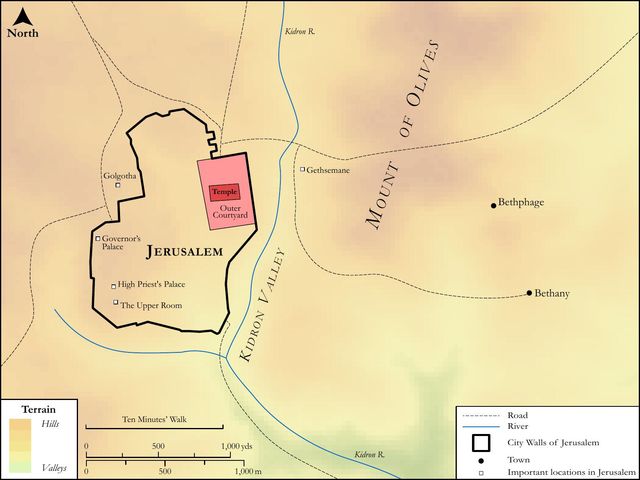
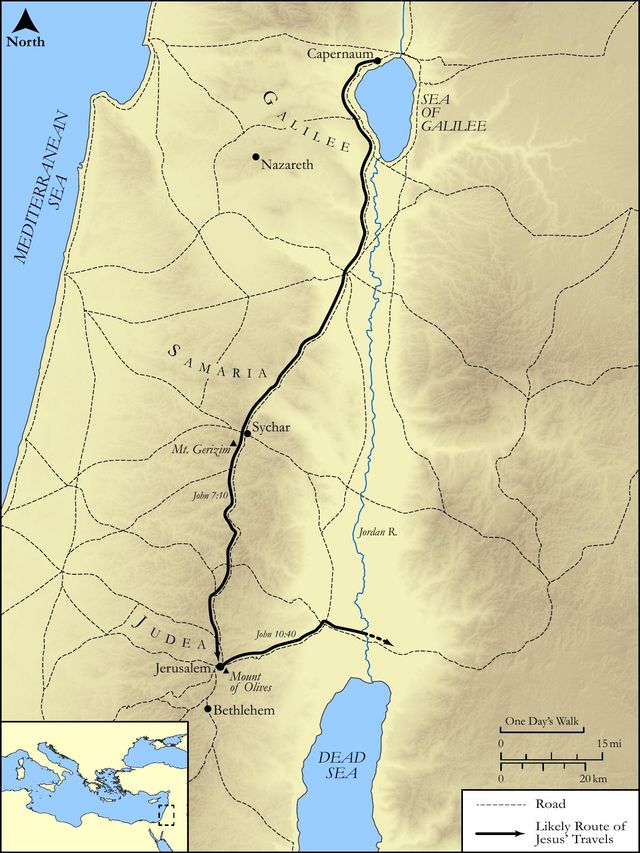
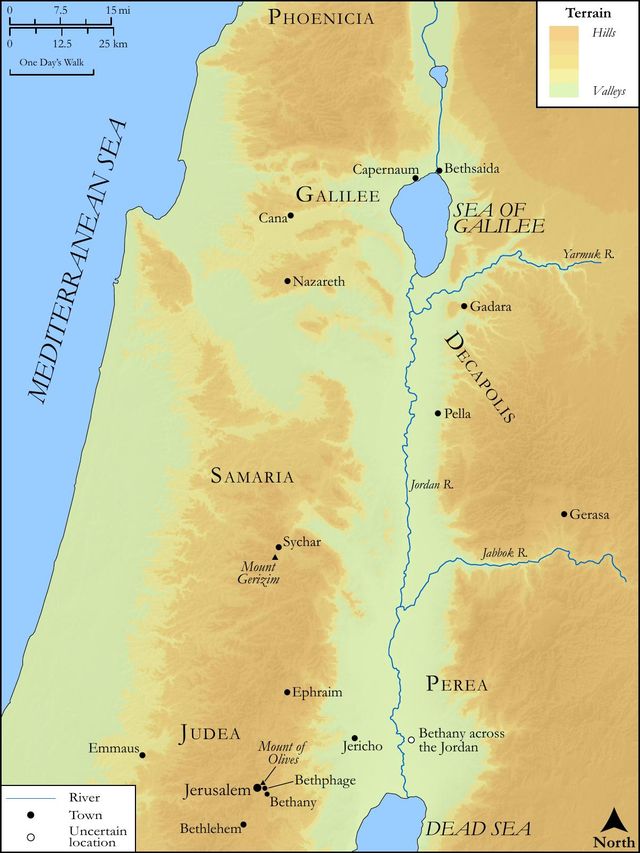
The Feast of Tabernacles (Sukkot) was one of the three major pilgrimage festivals, drawing vast crowds to Jerusalem. The city would have been bustling, noisy, and religiously charged. The Mount of Olives, situated directly east of Jerusalem across the Kidron Valley, offered a stark contrast. It was a serene, elevated ridge known for its olive groves, providing a quiet retreat from the city's clamor. For a pilgrim, it was a common place to camp during festivals when city accommodations were scarce or expensive. Historically, the Mount of Olives was a significant location, often associated with prophets and future messianic events, even serving as a place of refuge or departure from Jerusalem (e.g., 2 Samuel 15:30).
Key Themes
ShowHideJohn 8:1 contributes to several key themes within the Gospel of John and the broader biblical narrative. Firstly, it highlights Jesus' Humanity and Need for Solitude, demonstrating that even the Son of God, after intense public ministry and confrontation, sought quiet for rest and spiritual replenishment. This practice is consistent throughout the Gospels (e.g., Mark 1:35, Luke 5:16). Secondly, the choice of the Mount of Olives underscores its Prophetic and Symbolic Significance. It was a familiar place for Jesus, where He would later teach His disciples about the end times (Matthew 24:3), pray in agony (Mark 14:32), and from which He would ascend to heaven (Acts 1:12). Its mention here subtly foreshadows these future events, grounding Jesus' earthly ministry in a place with deep eschatological resonance, particularly the prophecy in Zechariah 14:4.
Exposition and Analysis
ShowHideKey Word Analysis
ShowHideThis is the proper name of our Lord, derived from the Hebrew "Yeshua" or "Yehoshua," meaning "Yahweh saves" or "Yahweh is salvation." Its presence here identifies the subject of the action, emphasizing that it is the Son of God, the Messiah, who performs this act of withdrawal.
This verb signifies to "traverse," "travel," or "go forth." It implies a deliberate movement, often with a specific destination or purpose in mind. In this context, it highlights Jesus' intentional departure from the city's chaos to a place of quiet, rather than a casual stroll.
This word refers to a "mountain" or "hill," indicating an elevated landform. The use of "mount" rather than simply "hill" can subtly convey a sense of significance or prominence, aligning with the Mount of Olives' spiritual and prophetic importance.
Verse Breakdown
ShowHide"¶ Jesus went"
This clause establishes the subject, Jesus, and His action of departing. The KJV's paragraph marker "¶" indicates a new section or thought, emphasizing the transition from the previous day's events. Jesus' deliberate movement signifies His autonomy and purposeful navigation through His ministry, choosing His own pace and place for rest and engagement.
"unto the mount of Olives"
This phrase specifies Jesus' destination. The "mount of Olives" is a particular and well-known geographical landmark near Jerusalem. This detail is crucial for setting the scene, indicating a move from the crowded, contentious urban environment to a more serene, natural setting, often associated with prayer and solitude for Jesus.
Literary Devices
ShowHideJohn 8:1 is rich in subtle literary techniques. The most prominent is Transition, as the verse functions as a narrative bridge, moving the reader from the high-tension debates of John 7 to the pivotal encounter in John 8. This transition is marked by a shift in Setting, from the bustling Temple courts to the quiet, elevated slopes of the Mount of Olives. This change in scenery is not merely geographical but also thematic, preparing the audience for a different kind of interaction and teaching. Furthermore, the mention of the Mount of Olives carries a strong element of Foreshadowing. For readers familiar with the broader biblical narrative, this location is deeply symbolic, recalling David's flight from Absalom (2 Samuel 15:30) and, more significantly, anticipating Jesus' future agony in Gethsemane (Mark 14:32) and His ascension from this very spot (Acts 1:12), as well as its prophetic role in the Lord's return (Zechariah 14:4).
Theological and Thematic Connections
ShowHideThis seemingly simple verse holds profound theological weight, underscoring Jesus' full humanity and His reliance on the Father. Despite His divine nature and the pressing demands of His ministry, Jesus consistently modeled the necessity of withdrawing for rest, prayer, and spiritual replenishment. His choice of the Mount of Olives, a place of solitude and natural beauty, reflects a deliberate act of self-care and communion with God, essential for sustaining Himself amidst constant opposition and the weight of His redemptive mission. This practice reveals a pattern of spiritual discipline that is both exemplary and deeply instructive for all who follow Him.
Reflection and Application
ShowHideJohn 8:1 offers a powerful, yet often overlooked, lesson for contemporary believers. In a world that constantly demands our attention and energy, Jesus' deliberate withdrawal to the Mount of Olives serves as a profound example of prioritizing spiritual rest and communion with God. It reminds us that even the Son of God, with His infinite power and divine purpose, recognized the vital need to step away from the clamor of public life and the intensity of ministry to recharge and reconnect with His heavenly Father. This is not a sign of weakness, but of profound wisdom and dependence. For us, it highlights the importance of creating our own "Mount of Olives" moments—dedicated times and spaces for prayer, meditation, scripture reading, and quiet reflection, away from the distractions and demands of daily life. Such intentional solitude is not merely a luxury but a spiritual necessity, enabling us to maintain our spiritual health, gain perspective, and be better equipped to face the challenges and fulfill the callings God has placed upon us. It teaches us that true strength and effectiveness in ministry and life flow from a vibrant, sustained relationship with God, nurtured in quiet dependence.
Questions for Reflection
ShowHideFAQ
ShowHideWhy did Jesus go to the Mount of Olives specifically, and what is its significance?
ShowHideJesus went to the Mount of Olives for several reasons, both practical and symbolic. Practically, it was a quiet, elevated location just outside Jerusalem, separated by the Kidron Valley. During major festivals like the Feast of Tabernacles, the city would have been overcrowded, and the Mount of Olives provided a serene escape for rest and prayer, often serving as a camping ground for pilgrims. Symbolically, the Mount of Olives held deep spiritual significance. It was a place Jesus frequently visited for teaching (Matthew 24:3), prayer (Luke 22:39), and profound moments like His agony in Gethsemane (Mark 14:32). It is also prophetically significant as the location from which the Lord will return (Zechariah 14:4). Thus, Jesus' choice of this location underscores His consistent practice of seeking solitude and connects His earthly ministry to deeper eschatological themes.
Christ-Centered Fulfillment
ShowHideJohn 8:1, while seemingly a simple geographical detail, subtly points to the Christ-centered narrative by highlighting Jesus' deliberate and purposeful actions, which consistently align with His redemptive mission. His withdrawal to the Mount of Olives, a place of solitude and prayer, foreshadows His ultimate reliance on the Father in the face of the cross, most acutely demonstrated in His agony in Gethsemane, also on the Mount of Olives (Mark 14:32-36). This act of seeking quiet communion with God reveals the perfect humanity of the Son, who, though fully divine, embraced the full scope of human experience, including the need for spiritual replenishment and dependence on the Father, a dependence that would empower Him to fulfill His role as the atoning Lamb of God. Furthermore, the Mount of Olives is the very place from which Jesus ascended to heaven after His resurrection (Acts 1:12), signifying the completion of His earthly work and His enthronement as Lord. It is also prophesied as the site of His glorious return (Zechariah 14:4), thus connecting this simple act of withdrawal to the grand narrative of Christ's past, present, and future reign. In His every movement, even to a quiet hillside, Jesus is revealed as the Christ, the Son of God, perfectly fulfilling the Father's will and drawing all things to Himself.