


Job 24:24
Bible text: King James Version (1769 Blayney text) · Public domain
Bible text: Berean Standard Bible · Public domain
Bible text: American Standard Version (1901) · Public domain
Bible text: World English Bible, Messianic edition · Public domain
Bible text: Geneva Bible (1599) · Public domain
Bible text: Young's Literal Translation · Public domain
- רוֹמּוּRo·muthey are exaltedH7426V-Qal-Perf-3cpVerb Qal Perfect 3rd Plural common gender
- מְּעַטme·'Ata littleH4592N-msNoun Singular Masculine Absolute
- וְאֵינֶנּוּve·'ei·Ne·nuand there not [is] heH369Conj-w ¦ N-msc ¦ 3msNoun Singular Masculine Constructוְandאֵינֶthere not [is]נּוּhe
- וְהֻמְּכוּve·hu·me·Khuand they are brought lowH4355Conj-w ¦ V-Hophal-ConsecPerf-3cpVerb Hophal Consecutive Perfect 3rd Plural common genderוְandהֻמְּכוּthey are brought low
- כַּכֹּלka·Kollike <the> everyoneH3605Prep-k ¦ N-msNoun Singular Masculine Absoluteכַּlike <the>כֹּלeveryone
- יִקָּפְצוּןyi·ka·fe·Tzunthey are contracted !H7092V-Niphal-Imperf-3mp ¦ SfxVerb Niphal Imperfect 3rd Plural Masculineיִקָּפְצוּthey are contractedן!
- וּכְרֹאשׁu·khe·Roshand like a head ofH7218Conj-w ¦ Prep-k ¦ N-mscNoun Singular Masculine Constructוּandכְlikeרֹאשׁa head of
- שִׁבֹּלֶתshi·Bo·letgrainH7641N-fsNoun Singular Feminine Absolute
- יִמָּלוּyi·Ma·luthey witherH5243V-Niphal-Imperf-3mpVerb Niphal Imperfect 3rd Plural Masculine
English is a literal word-by-word gloss of the Hebrew, not the KJV's wording. Why?
This is the original text the KJV's translators worked from — each Hebrew word with its own literal English meaning in this verse, prepared by scholars at Tyndale House, Cambridge. The KJV translates whole sentences, not word by word, so its wording differs: one Hebrew word can become several English words, and the KJV may choose “the LORD” where the gloss reads “Yahweh”. Both are faithful — they answer different questions. For the KJV's own rendering, switch to the KJV text.
Details
See on the biblical-era map
Study this verse
Public-domain commentary
Matthew Henry
From his Commentary on the Whole Bible. Henry comments on passages, not single verses — this entry covers Job 24:18–25. His two-level outline is real structure in the source text, so it is rendered as structure.
Job here, in the conclusion of his discourse,
I.Gives some further instances of the wickedness of these cruel bloody men.
1.Some are pirates and robbers at sea. To this many learned interpreters apply those difficult expressions (Job 24:18), He is swift upon the waters. Privateers choose those ships that are the best sailors. In these swift ships they cruise from one channel to another, to pick up prizes; and this brings them in so much wealth that their portion is cursed in the earth, and they behold not the way of the vineyards, that is (as bishop Patrick explains it), they despise the employment of those who till the ground and plant vineyards as poor and unprofitable. But others make this a further description of the conduct of those sinners that are afraid of the light: if they be discovered, they get away as fast as they can, and choose to lurk, not in the vineyards, for fear of being discovered, but in some cursed portion, a lonely and desolate place, which nobody looks after.
2.Some are abusive to those that are in trouble, and add affliction to the afflicted. Barrenness was looked upon as a great reproach, and those that fall under that affliction they upbraid with it, as Peninnah did Hannah, on purpose to vex them and make them to fret, which is a barbarous thing. This is evil entreating the barren that beareth not (Job 24:21), or those that are childless, and so want the arrows others have in their quiver, which enable them to deal with their enemy in the gate, Psa 127:5. They take that advantage against and are oppressive to them. As the fatherless, so the childless, are in some degree helpless. For the same reason it is a cruel thing to hurt the widow, to whom we ought to do good; and not doing good, when it is in our power, is doing hurt.
3.There are those who, by inuring themselves to cruelty, come at last to be so exceedingly boisterous that they are the terror of the mighty in the land of the living (Job 24:22): "He draws the mighty into a snare with his power; even the greatest are not able to stand before him when he is in his mad fits: he rises up in his passion, and lays about him with so much fury that no man is sure of his life; nor can he at the same time be sure of his own, for his hand is against every man and every man's hand against him," Gen 16:12. One would wonder how any man can take pleasure in making all about him afraid of him, yet there are those that do.
II.He shows that these daring sinners prosper, and are at ease for a while, nay, and often end their days in peace, as Ishmael, who, though he was a man of such a character as is here given, yet both lived and died in the presence of all his brethren, as we are told, Gen 16:12; Gen 25:18 : Of these sinners here it is said,
1.That it is given them to be in safety, Job 24:23. They seem to be under the special protection of the divine Providence; and one would wonder how they escape with life through so many dangers as they run themselves into.
2.That they rest upon this, that is, they rely upon this as sufficient to warrant all their violences. Because sentence against their evil works is not executed speedily they think that there is no great evil in them, and that God is not displeased with them, nor will ever call them to an account. Their prosperity is their security.
3.That they are exalted for a while. They seem to be the favourites of heaven, and value themselves as making the best figure on earth. They are set up in honour, set up (as they think) out of the reach of danger, and lifted up in the pride of their own spirits.
4.That, at length, they are carried out of the world very silently and gently, and without any remarkable disgrace or terror. "They go down to the grave as easily as snow-water sinks into the dry ground when it is melted by the sun;" so bishop Patrick explains Job 24:19. To the same purport he paraphrases Job 24:20, The womb shall forget him, etc. "God sets no such mark of his displeasure upon him but that his mother may soon forget him. The hand of justice does not hang him on a gibbet for the birds to feed on; but he is carried to his grave like other men, to be the sweet food of worms. There he lies quietly, and neither he nor his wickedness is any more remembered than a tree which is broken to shivers." And Job 24:24, They are taken out of the way as all others, that is, "they are shut up in their graves like all other men; nay, they die as easily (without those tedious pains which some endure) as an ear of corn is cropped with your hand." Compare this with Solomon's observation (Ecc 8:10), I saw the wicked buried, who had come and gone from the place of the holy, and they were forgotten.
III.He foresees their fall however, and that their death, though they die in ease and honour, will be their ruin.
God's eyes are upon their ways, Job 24:23. Though he keep silence, and seem to connive at them, yet he takes notice, and keeps account of all their wickedness, and will make it to appear shortly that their most secret sins, which they thought no eye should see (Job 24:15), were under his eye and will be called over again. Here is no mention of the punishment of these sinners in the other world, but it is intimated in the particular notice taken of the consequences of their death.
1.The consumption of the body in the grave, though common to all, yet to them is in the nature of a punishment for their sin. The grave shall consume those that have sinned; that land of darkness will be the lot of those that love darkness rather than light. The bodies they pampered shall be a feast for worms, which shall feed as sweetly on them as ever they fed on the pleasures and gains of their sins.
2.Though they thought to make themselves a great name by their wealth, and power, and mighty achievements, yet their memorial perished with them, Psa 9:6. He that made himself so much talked of shall, when he is dead, be no more remembered with honour; his name shall rot, Pro 10:7. Those that durst not give him his due character while he lived shall not spare him when he is dead; so that the womb that bore him, his own mother, shall forget him, that is, shall avoid making mention of him, and shall think that the greatest kindness she can do him, since no good can be said of him. That honour which is got by sin will soon turn into shame.
3.The wickedness they thought to establish in their families shall be broken as a tree; all their wicked projects shall be blasted, and all their wicked hopes dashed and buried with them.
4.Their pride shall be brought down and laid in the dust (Job 24:24); and, in mercy to the world, they shall be taken out of the way, and all their power and prosperity shall be cut off. You may seek them, and they shall not be found. Job owns that wicked people will be miserable at last, miserable on the other side death, but utterly denies what his friends asserted, that ordinarily they are miserable in this life.
IV.He concludes with a bold challenge to all that were present to disprove what he had said if they could (Job 24:25):
"If it be not so now, as I have declared, and if it do not thence follow that I am unjustly condemned and censured, let those that can undertake to prove that my discourse is either,
1.False in itself, and then they prove me a liar; or,
2.Foreign, and nothing to the purpose, and then they prove my speech frivolous and nothing worth." That indeed which is false is nothing worth; where there is not truth, how can there be goodness? But those that speak the words of truth and soberness need not fear having what they say brought to the test, but can cheerfully submit it to a fair examination, as Job does here.
Historical interpretation
Historical reception
2 surviving comments on this verse. Each one is dated, so this reads as a timeline rather than a list.
Select a marker to jump to its quote. Markers stagger vertically where authors wrote within a few decades of each other.
“Therefore when he has risen, he will not feel secure of his own life.” For these reasons the impious, after rising every day not really believing that he will live, remains in fear and is frightened. As the wise Solomon stated, “Fear, indeed, is nothing other than the abandonment of the supports offered by reason.” “When he has fallen sick, let him not hope to recover, but let him perish by disease.” The diseases of the body, in fact, often occur because of sin. “Let him not hope,” that is, the lack of hope is due to the consciousness of his sins. “Let him perish” by disease, that is, by the blows of calamity. “For his exaltation has hurt many.”For this reason, “let him perish,” because his exaltation has hurt many. “But he has withered as mallows in the heat or as an ear of corn falling off of itself from the stalk.” Other examples [from the Greek Bible] read “like grass.” In a similar way, the psalmist also says, “Quick as the grass they wither, fading like the green in the field.” And he rightly says, “falling off of itself,” indeed, for everybody sin itself becomes a punisher.
10. The glory of bad men, whilst it is for the most part extended into a multitude of years, is by the minds of the weak reckoned to be long and as it were stable; but when an instantaneous end cuts it off, surely it proves to its face that it was short, because the end by putting a limit makes it known that that which was capable of passing away was little. And so ‘they are exalted for a little while, and do not hold on,’ because from the mere circumstance that they seek to appear high, they are by self-exalting made far removed from the true essence of God. For they are not able to hold on, because they are severed from the solid basis of the Eternal Essence, and they undergo this first ruining, that by glorying in self they fall in themselves. For hence it is said by the Psalmist, Thou castedst them down, when they were lifted up [Ps. 73, 18]; because they are brought down within, in proportion as they arise wrongly without. Regarding this shortness of temporal glory, he saith again; I have seen the wicked above measure exalted, and lifted up like a cedar of Libanus; I passed by, and lo, he was gone. [Ps. 37, 35] Hence again he saith, For yet a little while, and the wicked shall not be. [ib. 10] Hence James says, For what is Your life? it is even a vapour that appeareth for a little time. Hence the Prophet reflecting on the shortness of carnal glory, tells it forth, saying, All flesh is grass, and all the goodliness thereof is as the flower of hay. [Is. 40, 6] For the power of the wicked is likened to the ‘flower of hay,’ because the glory of the flesh, whilst it shines bright, it falls, whilst it is exalted in itself, cut off by a sudden end it is brought to a close. For in the same way by the blowing of breezes the stubble is caught on high, but by an instantaneous fall it is brought back to earth below. Thus the smoke is lifted up to the clouds, but suddenly whilst swelling out it is scattered to nought. Thus the vapour from beneath thickening lifts itself on high, but the ray of the sun when risen clears it away, as though it had not been. Thus on the surface of the herbs the moisture of the dew of night is sprinkled, but by the sudden heat of the light of day it is dried away. Thus the foamy bubbles of water, raised on showers beginning, come forth racing from within, but being burst asunder they come to nought the more quickly in proportion as being inflated they are raised higher, and when they grow to a head, so as to appear, in growing they make it that they should ‘not hold on.’ Therefore concerning the wicked that are swoln with the exaltation of temporal glory, and yet not enduring with any stedfastness in this glory, let it be rightly said, they are exalted for a little while, but they shall not hold on. Of whom it is yet further added;
And they shall be brought low as all things, and shall be taken away.
11. Such should be the advancement of contemplation, that it should be carried off from few things to the taking a view of many, from many to taking a view of all things, so that being led forth step by step it should advance; and whilst judging all things transitory should by comprehending itself grow forth well nigh incomprehensibly. Hence the holy man, whilst he was sifting the glory and the failing of the wicked, stretched to ‘all things’ presently the eye of the mind, saying, they shall be brought low as all things, and shall be taken away; ‘all things’ earthly assuredly. As though he said in plain words; ‘They cannot any way stand, because the very things flee away as well whereon they rest for support, and while they are in love with things temporal, along with these by the currency of time they run to an end.’ But it may be asked, whereas it is said by Solomon, One generation passeth away, and another generation cometh; but the earth abideth for ever [Eccl. 1, 4]; why does blessed Job declare that all things ‘are brought low, and taken away?’ Yet this we easily sift out, if we keep distinct how earth and heaven either pass away or remain. For both these in respect of that figure which they now have pass away, yet in respect of their essence they are held in being without end. Hence it is said by Paul, For the fashion of this world passeth away. [1 Cor. 7, 31] Hence Truth saith by Itself, Heaven and earth shall pass away, but My words shall not pass away. [Mat. 24, 35] Hence it is told John by the voice of the Angel, There shall be a new heaven and a new earth. [Rev. 21, 1] Which indeed are not to be created other things, but these very same are renewed. And thus heaven and earth at once ‘pass away’ and ‘shall be,’ seeing that both by fire from that fashion which they now have they are clean wiped out, and yet in their own nature are ever preserved. Hence it is said by the Psalmist, Thou shalt change them, and they shall be changed. [Ps. 102, 26] Which same final changing of themselves they do now announce to us by those very successions, whereby for our services they unceasingly shift about. For the earth by the dryness; of winter falls off from its fashion, by the moisture of spring it is made green. Heaven is every day overlaid by the darkness of night, and renewed by the brightness of day. Hence, then, hence let every believer gather that these things both perish, and yet by renewal are restored, which it is plain are now perpetually as it were from decay being refitted. In the midst of all this then the holy man, whilst he beholds the course of the wicked, makes it known with what a visitation they are one day to come to nought, when he forthwith adds;
And as the tops of the ears of corn they shall be crushed.
12. For the tops of the ears of corn are the beards; now the beards come out joined in an ear of corn, but going on growing little by little they are separated from one another bristly and rough. Thus, verily, thus, as to this world’s glory do the evil-minded rich ones rise up. For by a fellowship of nature they are joined to one another, but going on increasing they are in turn divided against one another. For one looks down upon another, and a second is inflamed against a third with the torches of envy; they then who by the swelling of the mind separate themselves from the unity of charity, as it were after the way of beards stand bristling against one another. What then might I have called the evilminded rich ones of this world but a kind of beards of the human race, who while they are lifted high against one another, but with one consent press hard upon the life of the good, are indeed divided against themselves, yet with one accord bear down the grains beneath.
13. At this present time then the beards spring up on high, the grains lie hidden; because both the power of lost sinners towers high, and the glory of the Elect does not appear. The one show themselves off in the high estate of honours, the others lower themselves in humility. But the time of winnowing will arrive, which is calculated both to break the bristling of the beards, and not to bruise the solid grains. For then the pride of the wicked is broken in pieces, then the life of the Elect is shown to view, with what faultlessness it shines bright; in that while the unrighteous are undone, by this very crushing of the beard it is brought to pass that the grains should appear, which were holden out of sight; and when the beards are broken, the whiteness of the grains is made to appear, because upon the wicked falling into everlasting punishments, the righteousness of the Saints is manifested, with what truth it is shining white. Whence too it is rightly said by John, Whose fan is in His hand, and He will throughly purge His floor, and gather His wheat into the garner: but He will burn up the chaff with unquenchable fire. [Matt. 3, 12] So let blessed Job mark with what awful visitation the pride of bad men shall be broken, and comparing them to beards that perish, let him say, Like the tops of ears of corn they shall be crushed. Surely because the bristling of the proud is broken by the stress of the final winnowing, whereas now looking down upon the life of the Elect it is lifted up.
Continue studying Job 24:24 across the web’s major study libraries — every link below opens this exact verse, chapter, or book on the destination site.
Read & Compare
 BibleGatewayThis verse in more than 200 translations and 70 languages.
 Bible.comThe YouVersion reader — hundreds of translations, reading plans, and highlights.
 ESV.orgCrossway's official English Standard Version reader.
 NET BibleThe NET translation with 60,000+ translators' notes on every rendering decision.
 STEP BibleTyndale House's free study tool — original text, vocabulary, and scholarly resources.
 BibliaLogos Bible Software's free web reader.
 USCCBThe New American Bible (Revised Edition) with the U.S. bishops' study notes.
Commentaries
 BibleHub CommentariesDozens of classic commentaries on this verse, gathered on one page.
 StudyLightMore than 100 commentary sets — the largest collection on the web.
 BibleRefPlain-English commentary on what this verse means, verse by verse.
 Enduring WordDavid Guzik's free commentary on this chapter, widely used by Bible teachers.
 Bible Study ToolsVerse commentary alongside Greek and Hebrew study aids.
Original Language & Research
- BibleHub InterlinearThe verse word by word — original language, transliteration, and English.
- BibleHub LexiconEvery word's original-language definition and Strong's entry.
 Blue Letter BibleDeep-study tools — Strong's numbers, concordance, and word studies.
 SefariaThe Hebrew text with Rashi and centuries of Jewish commentary.
Sermons, Hymns & Audio


TrulyRandomVerse is not affiliated with these sites and doesn’t control their content. They’re linked because they’re genuinely useful.
Summary
Job 24:24 offers a profound theological insight into the transient nature of the wicked's apparent prosperity and their certain, inevitable downfall. Amidst Job's intense struggle with the perplexing reality of injustice, where the ungodly often seem to flourish without immediate consequence, this verse serves as his resolute declaration that their temporary elevation will culminate in a swift and decisive judgment, thereby affirming God's ultimate and unwavering justice, even if its manifestation is delayed from a human perspective.
Context
ShowHideLiterary Context
Job 24 continues Job's impassioned and deeply personal discourse, directly confronting the simplistic, retributive theology advocated by his friends—Eliphaz, Bildad, and Zophar. Throughout the preceding chapters, Job, despite his profound suffering, steadfastly maintains his innocence, leading him to question the apparent paradox of why the wicked frequently prosper and escape immediate divine judgment. In Job 24, he vividly portrays the pervasive acts of oppression, violence, and injustice perpetrated by the ungodly, who seem to operate with impunity, often "not knowing the light" (Job 24:13). Verse 24, however, introduces Job's own theological resolution to this perplexing observation. It acknowledges the reality of the wicked's temporary "exaltation" but immediately qualifies it as fleeting, asserting that their end is certain and swift. This verse is pivotal in demonstrating Job's unwavering, albeit challenged, faith in God's ultimate justice, even when its timing and methods remain inscrutable to human understanding.
Historical & Cultural Context
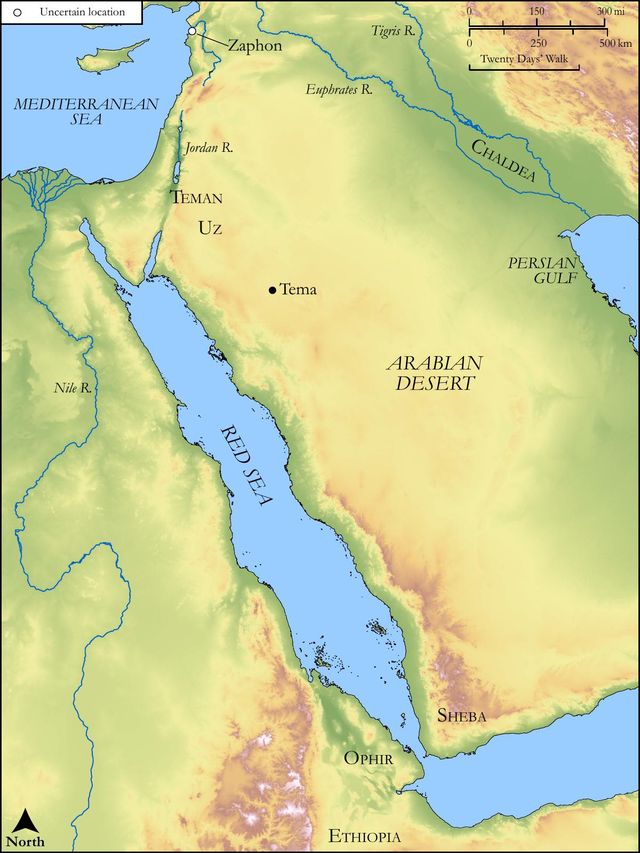
The book of Job is set within a patriarchal society, likely in the land of Uz, a region commonly associated with Edom or northern Arabia, reflecting the wisdom of the men of the east. In this cultural milieu, societal prosperity, longevity, and abundant offspring were widely interpreted as tangible signs of divine favor, while suffering was often seen as a direct consequence of sin. Job's profound challenge directly confronts this prevailing worldview, as he, a demonstrably righteous man, endures immense suffering, while the wicked frequently thrive. The vivid agricultural imagery employed in Job 24:24, specifically the reference to "ears of corn" (grain), is deeply rooted in an agrarian society where the annual harvest cycle was a fundamental aspect of life and a powerful metaphor. This imagery would have resonated profoundly with Job's audience, signifying a decisive, unavoidable, and final act of cutting down or removal, much like the conclusion of a growing season. It speaks to a shared understanding of life's cycles and ultimate accountability within their cultural framework.
Key Themes
ShowHideJob 24:24 encapsulates several pivotal themes central not only to the book of Job but also to broader biblical theology. Foremost among these is the problem of divine justice and the transience of wicked prosperity. Job grapples with the apparent contradiction of a just God allowing the wicked to flourish, yet this verse firmly asserts that their "exaltation" is merely "for a little while." This highlights the overarching theme of God's ultimate sovereignty and judgment, emphasizing that His justice operates on a timeline that often differs from human expectation. The verse underscores the certainty of the wicked's downfall, affirming that their seemingly unassailable position will inevitably be reversed. Furthermore, the phrase "taken out of the way as all [other]" speaks to the universal mortality that applies to all humanity, righteous and wicked alike, serving as the great equalizer. The vivid agricultural imagery of being "cut off as the tops of the ears of corn" powerfully conveys the sudden, decisive, and irreversible nature of this divine reckoning. This theme resonates deeply with other wisdom literature, such as Psalm 73, which similarly wrestles with the prosperity of the wicked before concluding on their ultimate destruction, and Psalm 37, which advises against fretting over evildoers.
Exposition and Analysis
ShowHideKey Word Analysis
ShowHideThis primitive root signifies "to rise (literally or figuratively); exalt, get (oneself) up, lift up (self), mount up." In this context, it describes the wicked achieving positions of power, prominence, or material success. The use of "for a little while" immediately qualifies this elevation, underscoring its fleeting and impermanent nature.
This primitive root means "to tumble (in ruins); figuratively, to perish; be brought low, decay." It stands in stark antithesis to "exalted," depicting a complete and devastating reversal of fortune. It implies a divine act of humiliation and degradation, stripping the wicked of their temporary power and status and leading to their ultimate demise.
This primitive root means "to become clipped or (specifically) circumcised; (branch to) be cut down (off), circumcise." In the context of plants, it specifically refers to being harvested or decisively removed. This vivid agricultural term emphasizes the sudden, decisive, and irreversible removal or destruction of the wicked, much like a farmer harvesting grain. It conveys finality and completeness.
Verse Breakdown
ShowHide"They are exalted for a little while"
This opening clause refers to the wicked, whose apparent success, power, and prosperity are explicitly stated to be temporary and short-lived. It acknowledges the perplexing reality of their flourishing, which Job observes, but immediately qualifies it as transient, setting the stage for their inevitable reversal. This temporary nature highlights the futility of their earthly gains.
"but are gone and brought low"
This phrase describes the certain and complete reversal of the wicked's fortunes. "Gone" signifies their disappearance or removal from their position of power and influence, while "brought low" emphasizes their humiliation, abasement, and loss of status. It speaks to a divine judgment that will humble them from their elevated state.
"they are taken out of the way as all [other]"
This clause underscores the universality of death and divine accountability. It means that even the most powerful or seemingly untouchable wicked individuals are subject to the same human mortality and ultimate judgment as every other person. Death is presented as the great equalizer, from which no one, regardless of their earthly status, is exempt.
"and cut off as the tops of the ears of corn"
This powerful simile provides a vivid agricultural metaphor for the wicked's demise. Just as a farmer decisively and completely harvests the mature heads of grain, so too are the wicked swiftly, summarily, and utterly removed from their position of power and influence. It conveys a sudden, decisive, and irreversible end, a finality that cannot be undone.
Literary Devices
ShowHideJob 24:24 is rich in literary artistry, employing several devices to convey its profound message. The most prominent is the Simile, particularly in the phrase "cut off as the tops of the ears of corn." This comparison draws a direct parallel between the sudden, decisive harvesting of grain and the swift, complete removal of the wicked from their position of power and life. This agricultural imagery is highly effective in an agrarian society, making the abstract concept of divine judgment tangible and relatable. The verse also utilizes Juxtaposition and Antithesis by contrasting "exalted for a little while" with "gone and brought low." This stark opposition highlights the dramatic reversal of fortune that awaits the wicked, emphasizing the fleeting nature of their earthly success against the certainty of their ultimate humiliation. Furthermore, there is a subtle layer of Irony in the wicked's temporary exaltation; despite their perceived power and impunity, their end is as certain and undignified as a harvested crop, highlighting the futility of their earthly gains in the face of divine reckoning.
Theological and Thematic Connections
ShowHideJob 24:24 stands as a profound theological statement within the larger biblical narrative concerning divine justice. It challenges the simplistic, immediate retribution theology often presented by Job's friends, acknowledging the perplexing reality of the wicked's temporary prosperity while firmly asserting God's ultimate sovereignty and the certainty of His delayed, yet inevitable, judgment. This verse teaches that God's justice operates on a timeline often beyond human comprehension, but it is never absent or forgotten. It underscores the transient nature of all earthly power, wealth, and status not rooted in God, contrasting it with the eternal and unshakeable nature of divine truth and righteousness. For believers, it offers solace and a call to patience, reminding them not to be dismayed by apparent injustices, but to trust in the Lord who sees all and will ultimately set all things right, bringing every hidden thing into the light.
Reflection and Application
ShowHideJob 24:24 offers a vital perspective for navigating a world where injustice often seems to prevail and the wicked appear to prosper. It encourages believers not to be disheartened or envious of the temporary success of those who disregard God's ways. Instead, it calls us to cultivate an eternal perspective, recognizing that earthly power and prosperity, when not aligned with God's will, are fleeting and ultimately meaningless. This verse challenges us to re-evaluate what constitutes true "exaltation" and lasting significance, reminding us that genuine security and lasting reward are found only in God's unwavering character and His eternal kingdom. It fosters patience and unwavering faith in God's perfect timing and His righteous judgment, urging us to trust that He will, in His appointed time, bring all things to account. Our call is to live righteously, knowing that our ultimate inheritance is not temporary earthly gain but an eternal standing with our just God, whose justice will prevail.
Questions for Reflection
ShowHideFAQ
ShowHideDoes this verse imply that all suffering is a result of sin?
ShowHideNo, the book of Job as a whole, and Job 24:24 specifically, does not imply that all suffering is a direct result of sin. The central message of Job is a profound refutation of the simplistic retribution theology held by Job's friends, who insisted that Job's immense suffering must be due to some hidden sin. Job himself is presented as a righteous man who suffers unjustly. This verse specifically addresses the wicked and their temporary exaltation, affirming that their ultimate downfall is certain due to their unrighteousness. The broader narrative of the book teaches that God's ways are often beyond human comprehension, and suffering can serve various purposes beyond punitive judgment, including testing faith or revealing God's glory.
How does this verse relate to the concept of delayed justice?
ShowHideJob 24:24 is a powerful statement on the concept of delayed justice. Job observes that the wicked often prosper "for a little while," indicating a period where divine judgment is not immediately visible or executed. This delay can be perplexing to human observers, leading to questions about God's active involvement or fairness. However, the phrases "gone and brought low" and "cut off" convey the absolute certainty and eventual swiftness of their demise. It reinforces the biblical principle that while God's justice may not always be immediate, it is always inevitable and perfectly timed. This truth is echoed in other scriptures, such as Ecclesiastes 8:11, which notes that "because sentence against an evil work is not executed speedily, therefore the heart of the sons of men is fully set in them to do evil." Job 24:24 serves as a divine assurance that the delay does not negate the certainty of ultimate judgment.
Christ-Centered Fulfillment
ShowHideJob 24:24, with its stark contrast between the fleeting exaltation of the wicked and their inevitable downfall, finds its ultimate Christ-centered fulfillment in the person and work of Jesus. While the wicked's "exaltation" is temporary and leads to being "cut off" in judgment, Christ, though truly "cut off" from the land of the living through His crucifixion (Isaiah 53:8), was not brought low permanently. Instead, His voluntary humiliation and suffering, culminating in His death and resurrection, led to His ultimate and eternal exaltation. Philippians 2:8-11 powerfully declares that because He humbled Himself, God "highly exalted Him and gave Him the name that is above every name, so that at the name of Jesus every knee should bow." Unlike the transient power of the wicked, Christ's kingdom is not of this world (John 18:36) and is eternal, never to be "brought low" or "cut off." Furthermore, the agricultural imagery of being "cut off as the tops of the ears of corn" foreshadows the ultimate harvest and judgment that Christ, as the Son of Man, will execute. He is the one who will separate the wheat from the weeds (Matthew 13:30) and preside over the final judgment where all, both righteous and wicked, will stand before Him (Revelation 20:11-15). Thus, Job's observation points forward to the definitive triumph of God's justice through Christ, where all temporary earthly power will yield to His eternal, righteous reign.