


Job 14:19
Bible text: King James Version (1769 Blayney text) · Public domain
Bible text: Berean Standard Bible · Public domain
Bible text: American Standard Version (1901) · Public domain
Bible text: World English Bible, Messianic edition · Public domain
Bible text: Geneva Bible (1599) · Public domain
Bible text: Young's Literal Translation · Public domain
- אֲבָנִים'a·va·NimstonesH68N-fpNoun Plural Feminine Absolute
- שָׁחֲקוּSha·cha·kuthey rub awayH7833V-Qal-Perf-3cpVerb Qal Perfect 3rd Plural common gender
- מַיִםMa·yimwatersH4325N-mpNoun Plural Masculine Absolute
- תִּשְׁטֹףtish·tofit washes offH7857V-Qal-Imperf-3fsVerb Qal Imperfect 3rd Singular Feminine
- סְפִיחֶיהָse·fi·Chei·haits overflowingsH5599N-mpc ¦ 3fsNoun Plural Masculine Constructסְפִיחֶיoverflowingsהָits
- עֲפַר'a·far[the] dust ofH6083N-mscNoun Singular Masculine Construct
- אָרֶץ'A·retz[the] earthH776N-fsNoun Singular Feminine Absolute
- וְתִקְוַתve·tik·Vatand [the] hope ofH8615Conj-w ¦ N-fscNoun Singular Feminine Constructוְandתִקְוַת[the] hope of
- אֱנוֹשׁ'e·No·oshhumankindH582N-msNoun Singular Masculine Absolute
- הֶאֱבַדְתָּhe·'e·Vad·tayou destroyH6V-Hiphil-Perf-2msVerb Hiphil Perfect 2nd Singular Masculine
English is a literal word-by-word gloss of the Hebrew, not the KJV's wording. Why?
This is the original text the KJV's translators worked from — each Hebrew word with its own literal English meaning in this verse, prepared by scholars at Tyndale House, Cambridge. The KJV translates whole sentences, not word by word, so its wording differs: one Hebrew word can become several English words, and the KJV may choose “the LORD” where the gloss reads “Yahweh”. Both are faithful — they answer different questions. For the KJV's own rendering, switch to the KJV text.
Details
See on the biblical-era map
Study this verse
Public-domain commentary
Matthew Henry
From his Commentary on the Whole Bible. Henry comments on passages, not single verses — this entry covers Job 14:16–22. His four-level outline is real structure in the source text, so it is rendered as structure.
Job here returns to his complaints; and, though he is not without hope of future bliss, he finds it very hard to get over his present grievances.
I.He complains of the particular hardships he apprehended himself under from the strictness of God's justice, Job 14:16, Job 14:17.
Therefore he longed to go hence to that world where God's wrath will be past, because now he was under the continual tokens of it, as a child, under the severe discipline of the rod, longs to be of age. "When shall my change come? For now thou seemest to me to number my steps, and watch over my sin, and seal it up in a bag, as bills of indictment are kept safely, to be produced against the prisoner." See Deu 32:34. "Thou takest all advantages against me; old scores are called over, every infirmity is animadverted upon, and no sooner is a false step taken than I am beaten for it." Now,
1.Job does right to the divine justice in owning that he smarted for his sins and transgressions, that he had done enough to deserve all that was laid upon him; for there was sin in all his steps, and he was guilty of transgression enough to bring all this ruin upon him, if it were strictly enquired into: he is far from saying that he perishes being innocent. But,
2.He does wrong to the divine goodness in suggesting that God was extreme to mark what he did amiss, and made the worst of every thing. He spoke to this purport, Job 13:27. It was unadvisedly said, and therefore we will not dwell too much upon it. God does indeed see all our sins; he sees sin in his own people; but he is not severe in reckoning with us, nor is the law ever stretched against us, but we are punished less than our iniquities deserve. God does indeed seal and sew up, against the day of wrath, the transgression of the impenitent, but the sins of his people he blots out as a cloud.
II.He complains of the wasting condition of mankind in general.
We live in a dying world. Who knows the power of God's anger, by which we are consumed and troubled, and in which all our days are passed away? See Psa 90:7-9, Psa 90:11. And who can bear up against his rebukes? Psa 39:11.
1.We see the decays of the earth itself.
(1.)Of the strongest parts of it, Job 14:18. Nothing will last always, for we see even mountains moulder and come to nought; they wither and fall as a leaf; rocks wax old and pass away by the continual beating of the sea against them. The waters wear the stones with constant dropping, non vi, sed saepe cadendo - not by the violence, but by the constancy with which they fall. On this earth every thing is the worse for the wearing. Tempus edax rerum - Time devours all things. It is not so with the heavenly bodies.
(2.)Of the natural products of it. The things which grow out of the earth, and seem to be firmly rooted in it, are sometimes by an excess of rain washed away, Job 14:19. Some think he pleads this for relief: "Lord, my patience will not hold out always; even rocks and mountains will fail at last; therefore cease the controversy."
2.No marvel then if we see the decays of man upon the earth, for he is of the earth, earthy. Job begins to think his case is not singular, and therefore he ought to reconcile himself to the common lot. We perceive by many instances,
(1.)How vain it is to expect much from the enjoyments of life: "Thou destroyest the hope of man," that is, "puttest an end to all the projects he had framed and all the prospects of satisfaction he had flattered himself with." Death will be the destruction of all those hopes which are built upon worldly confidences and confined to worldly comforts. Hope in Christ, and hope in heaven, death will consummate and not destroy.
(2.)How vain it is to struggle against the assaults of death (Job 14:20): Thou prevailest for ever against him. Note, Man is an unequal match for God. Whom God contends with he will certainly prevail against, prevail for ever against so that they shall never be able to make head again. Note further, The stroke of death is irresistible; it is to no purpose to dispute its summons. God prevails against man and he passes away, and lo he is not. Look upon a dying man, and see,
[1.]How his looks are altered: Thou changest his countenance, and this in two ways: - First, By the disease of his body. When a man has been a few days sick what a change is there in his countenance! How much more when he has been a few minutes dead! The countenance which was majestic and awful becomes mean and despicable - that was lovely and amiable becomes ghastly and frightful. Bury my dead out of my sight. Where then is the admired beauty? Death changes the countenance, and then sends us away out of this world, gives us one dismission hence, never to return. Secondly, By the discomposure of his mind. Note, The approach of death will make the strongest and stoutest to change countenance; it will make the most merry smiling countenance to look grave and serious, and the most bold daring countenance to look pale and timorous.
[2.]How little he is concerned in the affairs of his family, which once lay so near his heart. When he is in the hands of the harbingers of death, suppose struck with a palsy or apoplexy, or delirious in a fever, or in conflict with death, tell him then the most agreeable news, or the most painful, concerning his children, it is all alike, he knows it not, he perceives it not, Job 14:21. He is going to that world where he will be a perfect stranger to all those things which here filled and affected him. The consideration of this should moderate our cares concerning our children and families. God will know what comes of them when we are gone. To him therefore let us commit them, with him let us leave them, and not burden ourselves with needless fruitless cares concerning them.
[3.]How dreadful the agonies of death are (Job 14:22): While his flesh is upon him (so it may be read), that is, the body he is so loth to lay down,: it shall have pain; and while his soul is within him, that is, the spirit he is so loth to resign, it shall mourn. Note, Dying work is hard work; dying pangs are, commonly, sore pangs. It is folly therefore for men to defer their repentance to a death-bed, and to have that to do which is the one thing needful when they are really unfit to do any thing: but it is true wisdom by making our peace with God in Christ and keeping a good conscience, to treasure up comforts which will support and relieve us against the pains and sorrows of a dying hour.
Continue studying Job 14:19 across the web’s major study libraries — every link below opens this exact verse, chapter, or book on the destination site.
Read & Compare
 BibleGatewayThis verse in more than 200 translations and 70 languages.
 Bible.comThe YouVersion reader — hundreds of translations, reading plans, and highlights.
 ESV.orgCrossway's official English Standard Version reader.
 NET BibleThe NET translation with 60,000+ translators' notes on every rendering decision.
 STEP BibleTyndale House's free study tool — original text, vocabulary, and scholarly resources.
 BibliaLogos Bible Software's free web reader.
 USCCBThe New American Bible (Revised Edition) with the U.S. bishops' study notes.
Commentaries
 BibleHub CommentariesDozens of classic commentaries on this verse, gathered on one page.
 StudyLightMore than 100 commentary sets — the largest collection on the web.
 BibleRefPlain-English commentary on what this verse means, verse by verse.
 Enduring WordDavid Guzik's free commentary on this chapter, widely used by Bible teachers.
 Bible Study ToolsVerse commentary alongside Greek and Hebrew study aids.
Original Language & Research
- BibleHub InterlinearThe verse word by word — original language, transliteration, and English.
- BibleHub LexiconEvery word's original-language definition and Strong's entry.
 Blue Letter BibleDeep-study tools — Strong's numbers, concordance, and word studies.
 SefariaThe Hebrew text with Rashi and centuries of Jewish commentary.
Sermons, Hymns & Audio


TrulyRandomVerse is not affiliated with these sites and doesn’t control their content. They’re linked because they’re genuinely useful.
Summary
Job 14:19 serves as a deeply poignant expression of Job's profound despair and overwhelming sense of helplessness. Through vivid natural imagery of water's relentless erosion of stone and its swift washing away of vegetation, Job articulates his conviction that God, or the powerful forces under divine control, are systematically dismantling his life. Most devastatingly, he perceives this divine action as culminating in the utter destruction of his fundamental human hope for any future, restoration, or meaningful existence. This verse stands as a powerful and agonizing cry from a man who believes himself to be under a relentless, active assault from God, leading to the obliteration of his most cherished expectations.
Context
ShowHideLiterary Context
Job 14 is a significant part of Job's extended lament and monologue, following his intense and often confrontational dialogues with his friends. In this chapter, Job reflects on the inherent brevity and fragility of human life, drawing a stark contrast between humanity's fleeting existence and the surprising resilience found in the natural world. He poignantly observes that even a cut tree retains a possibility of sprouting anew, offering a glimmer of hope for regeneration, as he states in Job 14:7-9. Yet, for a human being, once fallen, there is no such natural resurgence; they "lie down and do not rise again," a despairing thought echoed in Job 14:10-12. Verse 19 intensifies this despair by explicitly portraying God as the active agent behind this relentless erosion and destruction of human existence and its associated hope. It functions as a climactic articulation of Job's argument that human life is ultimately powerless and vulnerable against divine decree, echoing his earlier cries of distress and his perception of God's overwhelming, even seemingly unjust, power, as first expressed in his profound lament in Job 3.
Historical & Cultural Context
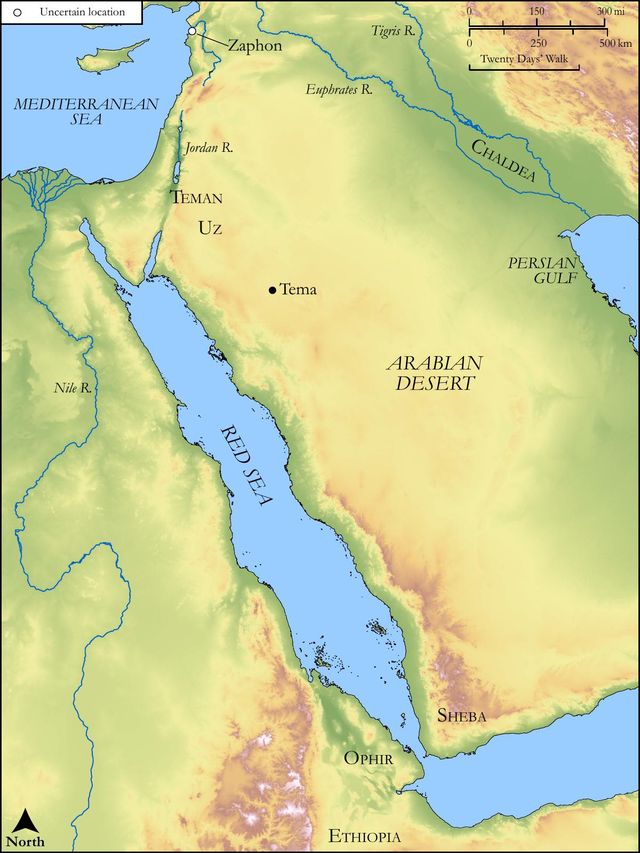
The Book of Job is set in the land of Uz, a setting often associated with the patriarchal era, though its precise dating remains a subject of scholarly debate. Within this cultural milieu, a prevalent theological framework, strongly advocated by Job's friends, directly linked suffering to sin. Job, however, vehemently challenges this direct correlation in his own case, asserting his innocence. The vivid imagery employed in Job 14:19 draws upon universal observations of the natural world: the slow, persistent, yet inexorable power of water to shape and erode landscapes, and the absolute dependence of vegetation on the earth, which can be swiftly swept away by sudden floods or torrents. This natural vulnerability serves as a powerful metaphor for the precariousness of human life and endeavors. In Job's theology, these natural forces are not random but are ultimately under the direct control and agency of God. The "hope of man" in this context would have encompassed not only future prosperity and well-being but also the deeply cherished values of an honorable legacy, the continuation of one's lineage through descendants, and the expectation of a peaceful, dignified end—all of which Job felt were being systematically and cruelly denied to him.
Key Themes
ShowHideJob 14:19 powerfully encapsulates several central theological and narrative themes that permeate the entire book. Firstly, it starkly underscores the Finitude and Frailty of Human Life, presenting humanity as utterly vulnerable to forces beyond its control, much like the transient nature of a vanishing shadow or a fleeting cloud, as Job laments in Job 7:6-7. Secondly, the verse highlights The Relentless Nature of Suffering and Destruction, depicted through the vivid imagery of erosion and washing away. This speaks to a slow, persistent, yet ultimately overwhelming destructive force that leaves nothing untouched, symbolizing the comprehensive assault Job feels his life is enduring. Thirdly, and perhaps most poignantly, the verse emphasizes The Destruction of Hope, which for Job, is the ultimate and most devastating consequence of his prolonged suffering and perceived divine antagonism. This theme of lost hope is a recurring motif for Job, who repeatedly feels that God has "cut off his hope," as expressed in Job 6:11. Finally, from Job's deeply personal and anguished perspective, the verse powerfully touches upon Divine Sovereignty and Apparent Indifference, as he directly attributes the active "wearing," "washing away," and "destroying" to God, portraying a deity who seems to be actively working against him rather than upholding justice or offering comfort.
Exposition and Analysis
ShowHideKey Word Analysis
ShowHideFrom the root H7833, meaning "to comminate (by trituration or attrition); beat, wear." This word conveys a sense of continuous, relentless, and slow but ultimately powerful process of disintegration. It describes a persistent, wearing-down action, like water perpetually dripping on stone, gradually shaping and destroying it. It implies an inexorable, grinding process rather than a sudden, violent impact.
From the root H7857, meaning "to gush; by implication, to inundate, cleanse; by analogy, to gallop, conquer; drown, (over-) flow(-whelm, rinse, run, rush, (throughly) wash (away)." This verb suggests a more sudden, overwhelming, and forceful removal, akin to a flash flood that sweeps away everything in its path. It implies a complete and irreversible removal of what was once rooted and growing, leaving nothing behind in its wake.
From the root H6, meaning "properly, to wander away, i.e. lose oneself; by implication to perish (causative, destroy); break, destroy(-uction), [phrase] not escape, fail, lose, (cause to, make) perish, spend, [idiom] and surely, take, be undone, [idiom] utterly, be void of, have no way to flee." This is a strong and emphatic term, signifying complete annihilation or utter ruin. Applied to "hope," it conveys the absolute obliteration of all expectation, future, and positive outlook, leaving a profound void of despair. It represents the devastating culmination of the previous two images, moving from physical erosion to existential ruin.
Verse Breakdown
ShowHide"The waters wear the stones:"
This opening clause establishes a powerful natural metaphor, immediately setting a tone of inexorable decay and the overwhelming power of natural forces. Water, seemingly soft and yielding, is depicted as having the capacity for immense, relentless power over time, capable of eroding even the hardest substances like stone. This image speaks to the gradual, persistent breakdown and disintegration of what seems most enduring, symbolizing the slow but certain decay that Job perceives in his own life and circumstances.
"thou washest away the things which grow [out] of the dust of the earth;"
The address here shifts directly to God ("thou"), explicitly implicating divine agency in the destructive processes Job experiences. The "things which grow out of the dust of the earth" refers to vegetation, symbolizing life, vitality, and human endeavors that spring from the earth and are sustained by it. The act of "washing away" suggests a sudden, overwhelming, and violent removal, much like a flood that uproots and sweeps away all growth. This signifies the active destruction of life's vitality, prosperity, and the very foundations upon which human existence and its endeavors are built.
"and thou destroyest the hope of man."
This climactic clause reveals the ultimate and most devastating consequence of the preceding natural metaphors. The physical erosion and sweeping away of life's foundations culminate in the spiritual and emotional devastation of hope. For Job, God's actions are not merely physical but directly target and annihilate his future expectations, his sense of purpose, and any possibility of restoration or well-being. This is the most profound loss, as hope is depicted as an essential element for human endurance, meaning, and the will to live.
Literary Devices
ShowHideJob 14:19 is profoundly rich in Imagery, drawing vivid and relatable pictures from the natural world: "waters," "stones," "dust of the earth," and "things which grow." These concrete images serve as powerful Metaphors for the abstract concepts of human suffering, vulnerability, and despair. The verse employs Personification by attributing active, destructive agency to "waters" (wearing stones) and, more explicitly and significantly, to God ("thou washest away," "thou destroyest"). This direct, accusatory address to God underscores Job's perception of divine involvement in his plight. The progression from the slow, persistent erosion of stone to the swift, overwhelming washing away of growth, culminating in the utter Annihilation of hope, creates a powerful sense of escalating despair and finality. The concluding phrase, "thou destroyest the hope of man," functions as a form of Hyperbole, expressing the complete and overwhelming nature of Job's despair, suggesting that not merely his hope, but all human hope, is vulnerable to such divine action. This verse is a quintessential example of Lament, a common biblical genre where an individual expresses profound sorrow, complaint, and petition to God in times of extreme distress, even when those expressions are fraught with accusations.
Theological and Thematic Connections
ShowHideJob 14:19 presents a stark and challenging theological statement, as Job attributes the relentless destruction of his life and hope directly to God. This perspective, born of profound and inexplicable suffering, grapples with the intense tension between God's absolute sovereignty and the human experience of injustice, pain, and despair. While Job's friends rigidly adhere to a cause-and-effect theology (suffering equals sin), Job's lament vehemently pushes against this simplistic framework, questioning God's justice and apparent indifference to his plight. The verse powerfully highlights the biblical theme of human finitude, transience, and the ephemeral nature of earthly life in the face of overwhelming divine power. However, it also sets the stage for the broader narrative arc of the Book of Job, where God eventually responds, affirming His own incomprehensible sovereignty but also revealing His character as far deeper and more complex than Job's limited, suffering-induced perception. The destruction of "hope" is particularly poignant in this context, as hope is a foundational element of biblical faith, often tied to God's covenant promises, future deliverance, and the expectation of His ultimate vindication.
Reflection and Application
ShowHideJob 14:19 resonates profoundly with the universal human experience of feeling overwhelmed by circumstances beyond our control, where the very foundations of life seem to erode and all hope appears to vanish. It gives voice to the raw, unfiltered anguish of despair, whether stemming from chronic illness, devastating loss, profound injustice, or pervasive pressures that slowly or suddenly dismantle one's sense of security, purpose, and future. In such moments, it is a deeply human and understandable response to feel that life itself, or even God, is actively working against us, washing away our dreams and destroying our expectations. This verse validates the reality of such profound human suffering and the legitimacy of expressing such desperate cries to God. For believers, while Job's perspective here is one of profound hopelessness, his lament reminds us that authentic faith does not preclude honest wrestling with God in the midst of pain and confusion. It challenges us to critically examine where our ultimate hope truly lies. Is it primarily in transient earthly circumstances, which are indeed subject to erosion and destruction, or in something far more enduring and transcendent? The very act of Job's lament, even in its despair and accusation, is paradoxically an act of engagement with God, a testament to a relationship that, though severely strained, is not utterly broken.
Questions for Reflection
ShowHideFAQ
ShowHideDoes Job 14:19 imply that God actively seeks to destroy human hope?
ShowHideFrom Job's perspective in this moment of intense suffering, he certainly perceives God as the active agent behind the destruction of his life and hope. The language "thou washest away" and "thou destroyest" directly attributes these actions to God. However, it's crucial to understand this within the context of Job's lament and the broader narrative of the book. Job is speaking from a place of profound pain, limited understanding, and a desire to provoke a response from God, not offering a comprehensive or definitive theological statement about God's general character or ultimate intentions. The book ultimately reveals that while God is indeed sovereign over all things, His purposes are far deeper, more complex, and ultimately redemptive than human suffering alone can explain. God allows suffering, but His ultimate intent is not to destroy hope but to refine faith, reveal His glory, and draw His people into a deeper relationship with Him, as seen in the book's conclusion where Job's hope is ultimately restored and deepened beyond his initial understanding, as described in Job 42:10-17.
How can believers maintain hope when everything seems lost, as Job describes?
ShowHideJob's lament serves as a powerful reminder of the inherent fragility of earthly life and the transient nature of human hopes rooted solely in temporal circumstances. For believers, the answer to maintaining hope in the face of such profound despair lies in shifting the foundation of hope from fleeting earthly circumstances to the unchanging character, unfailing faithfulness, and eternal promises of God, particularly as fully revealed in Jesus Christ. While Job did not have the full revelation of the New Testament, his eventual restoration points to God's ultimate faithfulness. In the New Testament, hope is often defined not as a mere wishful desire but as a confident, certain expectation rooted in God's faithfulness, His redemptive plan, and the historical reality of the resurrection of Jesus from the dead. This "living hope" (1 Peter 1:3) is described as an "anchor for the soul, firm and secure" (Hebrews 6:19), capable of holding steady even when the "waters wear the stones" of our lives and the floods of adversity threaten to wash everything away. It is a hope in a future resurrection, a new heaven and new earth, where God Himself will dwell with humanity and wipe away every tear (Revelation 21:1-4).
Christ-Centered Fulfillment
ShowHideJob's lament in Job 14:19, with its heart-wrenching cry of hope destroyed by seemingly relentless forces, finds its ultimate answer and profound fulfillment in the person and work of Jesus Christ. While Job, in his agony, perceived God as the one who "washes away" and "destroys the hope of man," Christ reveals a God who, in His infinite love, enters into the deepest human frailty and suffering, not to destroy hope, but to secure it eternally. The "waters wear the stones" of our mortal existence, and our earthly lives and the hopes we place in them are indeed transient, like "things which grow out of the dust of the earth" that can be swiftly swept away by life's inevitable storms. However, Jesus, as the resurrection and the life, conquered the ultimate destroyers of human hope: sin and death. Through His crucifixion, He bore the full weight of human despair, the curse of a fallen world, and the very consequences of the perceived divine antagonism that Job lamented. Through His glorious resurrection, He inaugurated a new creation where hope is no longer subject to erosion or destruction. The hope of man, which Job felt was obliterated, is now anchored in Christ's decisive victory, promising that even if our earthly tent is destroyed, we have an eternal dwelling from God, not made with hands (2 Corinthians 5:1). In Christ, the ultimate "hope of glory" (Colossians 1:27) is not washed away but stands firm, guaranteeing a future where God will indeed wipe away every tear and there will be no more death, mourning, crying, or pain, for the former things have passed away (Revelation 21:4).