


Jeremiah 32:34
Bible text: King James Version (1769 Blayney text) · Public domain
Bible text: Berean Standard Bible · Public domain
Bible text: American Standard Version (1901) · Public domain
Bible text: World English Bible, Messianic edition · Public domain
Bible text: Geneva Bible (1599) · Public domain
Bible text: Young's Literal Translation · Public domain
- וַיָּשִׂימוּvai·ya·Si·muand they putH7760Conj-w ¦ V-Qal-ConsecImperf-3mpVerb Qal Consecutive Imperfect 3rd Plural Masculineוַandיָּשִׂימוּthey put
- שִׁקּוּצֵיהֶםshi·ku·tzei·Hemtheir detestable thingsH8251N-mpc ¦ 3mpNoun Plural Masculine Constructשִׁקּוּצֵיdetestable thingsהֶםtheir
- בַּבַּיִתba·Ba·yitin the houseH1004Prep-b ¦ N-msNoun Singular Masculine Absoluteבַּin theבַּיִתhouse
- אֲשֶׁר'a·SherwhichH834RelParticle Relative
- נִקְרָאnik·ra'it was calledH7121V-Niphal-Perf-3msVerb Niphal Perfect 3rd Singular Masculine
- שְׁמִיshe·Mimy nameH8034N-msc ¦ 1csNoun Singular Masculine Constructשְׁמִnameיmy
- עָלָיו'a·Lavon itH5921Prep ¦ 3msPreposition Definiteעָלָיonוit
- לְטַמְּאוֹle·ta·me·'Oto make unclean itH2930Prep-l ¦ V-Piel-Inf ¦ 3msVerb Piel Infinitive Constructלְtoטַמְּאmake uncleanוֹit
English is a literal word-by-word gloss of the Hebrew, not the KJV's wording. Why?
This is the original text the KJV's translators worked from — each Hebrew word with its own literal English meaning in this verse, prepared by scholars at Tyndale House, Cambridge. The KJV translates whole sentences, not word by word, so its wording differs: one Hebrew word can become several English words, and the KJV may choose “the LORD” where the gloss reads “Yahweh”. Both are faithful — they answer different questions. For the KJV's own rendering, switch to the KJV text.
Details
See on the biblical-era map
Study this verse
Public-domain commentary
Matthew Henry
From his Commentary on the Whole Bible. Henry comments on passages, not single verses — this entry covers Jeremiah 32:26–44. His four-level outline is real structure in the source text, so it is rendered as structure.
We have here God's answer to Jeremiah's prayer, designed to quiet his mind and make him easy; and it is a full discovery of the purposes of God's wrath against the present generation and the purposes of his grace concerning the future generations. Jeremiah knew not how to sing both of mercy and judgment, but God here teaches to sing unto him of both. When we know not how to reconcile one word of God with another we may yet be sure that both are true, both are pure, both shall be made good, and not one iota or tittle of either shall fall to the ground. When Jeremiah was ordered to buy the field in Anathoth he was willing to hope that God was about to revoke the sentence of his wrath and to order the Chaldeans to raise the siege. "No," says God, "the execution of the sentence shall go on; Jerusalem shall be laid in ruins." Note, Assurances of future mercy must not be interpreted as securities from present troubles. But, lest Jeremiah should think that his being ordered to buy this field intimated that all the mercy God had in store for his people, after their return, was only that they should have the possession of their own land again, he further informs him that that was but a type and figure of those spiritual blessings which should then be abundantly bestowed upon them, unspeakably more valuable than fields and vineyards; so that in this word of the Lord, which came to Jeremiah, we have first as dreadful threatenings and then as precious promises as perhaps any we have in the Old Testament; life and death, good and evil, are here set before us; let us consider and choose wisely.
I.The ruin of Judah and Jerusalem is here pronounced. The decree has gone forth, and shall not be recalled.
1.God here asserts his own sovereignty and power (Jer 32:27): Behold, I am Jehovah, a self-existent self-sufficient being; I am that I am; I am the God of all flesh, that is, of all mankind, here called flesh because weak and unable to contend with God (Psa 56:4), and because wicked and corrupt and unapt to comply with God. God is the Creator of all, and makes what use he pleases of all. He that is the God of Israel is the God of all flesh and of the spirits of all flesh, and, if Israel were cast off, could raise up a people to his name out of some other nation. If he be the God of all flesh, he may well ask, Is any thing too hard for me? What cannot he do from whom all the powers of men are derived, on whom they depend, and by whom all their actions are directed and governed? Whatever he designs to do, whether in wrath or in mercy, nothing can hinder him nor defeat his designs.
2.He abides by that he had often said of the destruction of Jerusalem by the king of Babylon (Jer 32:28): I will give this city into his hand, now that he is grasping at it, and he shall take it and make a prey of it, Jer 32:29. The Chaldeans shall come and set fire to it, shall burn it and all the houses in it, God's house not excepted, nor the king's neither.
3.He assigns the reason for these severe proceedings against the city that had been so much in his favour. It is sin, it is that and nothing else, that ruins it.
(1.)They were impudent and daring in sin. They offered incense to Baal, not in corners, as men ashamed or afraid of being discovered, but upon the tops of their houses (Jer 32:29), in defiance of God's justice.
(2.)They designed an affront to God herein. They did it to provoke me to anger, Jer 32:29. They have only provoked me to anger with the works of their hands, Jer 32:30. They could not promise themselves any pleasure, profit, or honour out of it, but did it on purpose to offend God. And again (Jer 32:32), All the evil which they have done was to provoke me to anger. They knew he was a jealous God in the matters of his worship, and there they resolved to try his jealousy and dare him to his face. "Jerusalem has been to me a provocation of my anger and fury," Jer 32:31. Their conduct in every thing was provoking.
(3.)They began betimes, and had continued all along provoking to God: "They have done evil before me from their youth, ever since they were first formed into a people (Jer 32:30), witness their murmurings and rebellions in the wilderness." And as for Jerusalem, though it was the holy city, it has been a provocation to the holy God from the day that they built it, even to this day, Jer 32:31. O what reason have we to lament the little honour God has from this world, and the great dishonour that is done him, when even in Judah, where he is known and his name is great, and in Salem where his tabernacle is, there was always that found that was a provocation to him!
(4.)All orders and degrees of men contributed to the common guilt, and therefore were justly involved in the common ruin. Not only the children of Israel, that had revolted from the temple, but the children of Judah too, that still adhered to it - not only the common people, the men of Judah and inhabitants of Jerusalem, but those that should have reproved and restrained sin in others were themselves ringleaders in it, their kings and princes, their priests and prophets.
(5.)God had again and again called them to repentance, but they turned a deaf ear to his calls, and rudely turned their back on him that called them, though he was their master, to whom they were bound in duty, and their benefactor, to whom they were bound in gratitude and interest, Jer 32:33. "I taught them better manners, with as much care as ever any tender parent taught a child, rising up early, in teaching them, studying to adapt the teaching to their capacities, taking them betimes, when they might have been most pliable, but all in vain; they turned not the face to me, would not so much as look upon me, nay, they turned the back upon me," an expression of the highest contempt. As he called them, like froward children, so they went from him, Hos 11:2. They have not hearkened to receive instruction; they regarded not a word that was said to them, though it was designed for their own good.
(6.)There was in their idolatries an impious contempt of God; for (Jer 32:34) they set their abominations (their idols, which they knew to be in the highest degree abominable to God) in the house which is called by my name, to defile it. They had their idols not only in their high places and groves, but even in God's temple.
(7.)They were guilty of the most unnatural cruelty to their own children; for they sacrificed them to Moloch, Jer 32:35. Thus because they liked not to retain God in their knowledge, but changed his glory into shame, they were justly given up to vile affections and stripped of natural ones, and their glory was turned into shame. And,
(8.)What was the consequence of all this?
[1.]They caused Judah to sin, Jer 32:35. The whole country was infected with the contagious idolatries and iniquities of Jerusalem.
[2.]They brought ruin upon themselves. It was as if they had done it on purpose that God should remove them from before his face (Jer 32:31); they would throw themselves out of his favour.
II.The restoration of Judah and Jerusalem is here promised, Jer 32:36, etc.
God will in judgment remember mercy, and there will a time come, a set time, to favour Zion. Observe,
1.The despair to which this people were now at length brought. When the judgment was threatened at a distance they had no fear; when it attacked them they had no hope. They said concerning the city (Jer 32:36), It shall be delivered into the hand of the king of Babylon, not by any cowardice or ill conduct of ours, but by the sword, famine, and pestilence. Concerning the country they said, with vexation (Jer 32:43), It is desolate, without man or beast; there is no relief, there is no remedy. It is given into the hand of the Chaldeans. Note, Deep security commonly ends in deep despair; whereas those that keep up a holy fear at all times have a good hope to support them in the worst of times.
2.The hope that God gives them of mercy which he had in store for them hereafter. Though their carcases must fall in captivity, yet their children after them shall again see this good land and the goodness of God in it.
(1.)They shall be brought up from their captivity and shall come and settle again in this land, Jer 32:37. They had been under God's anger and fury, and great wrath; but now they shall partake of his grace, and love, and great favour. He had dispersed them, and driven them into all countries. Those that fled dispersed themselves; those that fell into the enemies; hands were dispersed by them, in policy, to prevent combinations among them. God's hand was in both. But now God will find them out, and gather them out of all the countries whither they were driven, as he promised in the law (Deu 30:3, Deu 30:4) and the saints had prayed, Psa 106:47; Neh 1:9. He had banished them, but he will bring them again to this place, which they could not but have an affection for. For many years past, while they were in their own land, they were continually exposed, and terrified with the alarms of war; but now I will cause them to dwell safely. Being reformed, and having returned to God, neither their own consciences within nor their enemies without shall be a terror to them. He promises (Jer 32:41): I will plant them in this land assuredly; not only I will certainly do it, but they shall here enjoy a holy a security and repose, and they shall take root here, shall be planted in stability, and not again be unfixed and shaken.
(2.)God will renew his covenant with them, a covenant of grace, the blessings of which are spiritual, and such as will work good things in them, to qualify them for the great things God intended to do for them. It is called an everlasting covenant (Jer 32:40), not only because God will be for ever faithful to it, but because the consequences of it will be everlasting. For, doubtless, here the promises look further than to Israel according to the flesh, and are sure to all believers, to every Israelite indeed. Good Christians may apply them to themselves and plead them with God, may claim the benefit of them and take the comfort of them.
[1.]God will own them for his, and make over himself to them to be theirs (Jer 32:38): They shall be my people. He will make them his by working in them all the characters and dispositions of his people, and then he will protect, and guide, and govern them as his people. "And, to make them truly, completely, and eternally happy, I will be their God." They shall serve and worship God as theirs and cleave to him only, and he will approve himself theirs. All he is, all he has, shall be engaged and employed for their good.
[2.]God will give them a heart to fear him, Jer 32:39. That which he requires of those whom he takes into covenant with him as his people is that they fear him, that they reverence his majesty, dread his wrath, stand in awe of his authority, pay homage to him, and give him the glory due unto his name. Now what God requires of them he here promises to work in them, pursuant to his choice of them as his people. Note, As it is God's prerogative to fashion men's hearts, so it is his promise to his people to fashion theirs aright; and a heart to fear God is indeed a good heart, and well fashioned. It is repeated (Jer 32:40): I will put my fear in their hearts, that is, work in them gracious principles and dispositions, that shall influence and govern their whole conversation. Teachers may put good things into our heads, but it is God only that can put them into our hearts, that can work in us both to will and to do.
[3.]He will give them one heart and one way. In order to their walking in one way, he will give them one heart: as the heart is, so will the way be, and both shall be one; that is First, They shall be each of them one with themselves. One heart is the same with a new heart, Eze 11:19. The heart is then one when it is fully determined for God and entirely devoted to God. When the eye is single and God's glory alone aimed at, when our hearts are fixed, trusting in God, and we are uniform and universal in our obedience to him, then the heart is one and way one; and, unless the heart be thus steady, the goings will not be stedfast. From this promise we may take direction and encouragement to pray, with David (Psa 86:11), Unite my heart to fear thy name; for God says, I will give them one heart, that they may fear me. Secondly, They shall be all of them one with each other. All good Christians shall be incorporated into one body; Jews and Gentiles shall become one sheep-fold; and they shall all, as far as they are sanctified, have a disposition to love one another, the gospel they profess having in it the strongest inducements to mutual love, and the Spirit that dwells in them being the Spirit of love. Though they may have different apprehensions about minor things, they shall be all one in the great things of God, being renewed after the same image. Though they may have many paths, they have but one way, that of serious godliness.
[4.]He will effectually provide for their perseverance in grace and the perpetuating of the covenant between himself and them. They would have been happy when there were first planted in Canaan, like Adam in paradise, if they had not departed from God. And therefore, now that they are restored to their happiness, they shall be confirmed in it by the preventing of their departures from God, and this will complete their bliss. First, God will never leave nor forsake them: I will not turn away from them to do them good. Earthly princes are fickle, and their greatest favourites have fallen under their frowns; but God's mercy endures for ever. Whom he loves he loves to the end. God may seem to turn from this people (Isa 54:8), but even then he does not turn from doing and designing them good. Secondly, They shall never leave nor forsake him; that is the thing we are in danger of. We have no reason to distrust God's fidelity and constancy, but our own; and therefore it is here promised that God will give them a heart to fear him for ever, all days, to be in his fear every day and all the day long (Pro 23:17), and to continue so to the end of their days. He will put such a principle into their hearts that they shall not depart from him. Even those who have given up their names to God, if they be left to themselves, will depart from him; but the fear of God ruling in the heart, will prevent their departure. That, and nothing else, will do it. If we continue close and faithful to God, it is owing purely to his almighty grace and not to any strength or resolution of our own.
[5.]He will entail a blessing upon their seed, will give them grace to fear him, for the good of them and of their children after them. As their departures from God had been to the prejudice of their children, so their adherence to God should be to the advantage of their children. We cannot better consult the good of posterity than by setting up, and keeping up, the fear and worship of God in our families.
[6.]He will take a pleasure in their prosperity and will do every thing to advance it (Jer 32:41): I will rejoice over them to do them good. God will certainly do them good because he rejoices over them. They are dear to him; he makes his boast of them, and therefore will not only do them good, but will delight in doing them good. When he punishes them it is with reluctance. How shall I give thee up, Ephraim? But, when he restores them, it is with satisfaction; he rejoices in doing them good. We ought therefore to serve him with pleasure and to rejoice in all opportunities of serving him. He is himself a cheerful giver, and therefore loves a cheerful servant. I will plant them (says God) with my whole heart and with my whole soul. He will be intent upon it, and take delight in it; he will make it the business of his providence to settle them again in Canaan, and the various dispensations of providence shall concur to it. All things shall appear at last so to have been working for the good of the church that it will be said, The governor of the world is entirely taken up with the care of his church.
[7.]These promises shall as surely be performed as the foregoing threatenings were; and the accomplishment of those, notwithstanding the security of the people, might confirm their expectation of the performance of these, notwithstanding their present despair (Jer 32:42): As I have brought all this great evil upon them, pursuant to the threatenings, and for the glory of divine justice, so I will bring upon them all this good, pursuant to the promise, and for the glory of divine mercy. He that is faithful to his threatenings will much more be so to his promises; and he will comfort his people according to the time that he has afflicted them. The churches shall have rest after the days of adversity.
[8.]As an earnest of all this, houses and lands shall again fetch a good price in Judah and Jerusalem, and, though now they are a drug, there shall again be a sufficient number of purchasers (Jer 32:43, Jer 32:44): Fields shall be bought in this land, and people will covet to have lands here rather than any where else. Lands, wherever they lie, will go off, not only in the places about Jerusalem, but in the cities of Judah and of Israel, too, whether they lie on mountains, or in valleys, or in the south, in all parts of the country, men shall buy fields, and subscribe evidences. Trade shall revive, for they shall have money enough to buy land with. Husbandry shall revive, for those that have money shall covet to lay it out upon lands. Laws shall again have their due course, for they shall subscribe evidences and seal them. This is mentioned to reconcile Jeremiah to his new purchase. Though he had bought a piece of ground and could not go to see it, yet he must believe that this was the pledge of many a purchase, and those but faint resemblances of the purchased possessions in the heavenly Canaan, reserved for all those who have God's fear in their hearts and do not depart from him.
Historical interpretation
Two Centuries of Reception
2 surviving comments on this verse. Each one is dated, so this reads as a timeline rather than a list.
Select a marker to jump to its quote. Markers stagger vertically where authors wrote within a few decades of each other.
Of course nothing is “too hard for the Lord.” But if we choose to apply this principle so extravagantly and harshly in our capricious imaginations, we may then make out God to have done anything we please, on the ground that it was not impossible for him to do it. We must not suppose, however, because he is able to do all things, that he has done what he has not done. But we must inquire whether he has really done it. God could, if he had liked, have furnished humankind with wings to fly with, just as he gave wings to kites. We must not, however, run to the conclusion that he did this because he was able to do it. He might also have extinguished Praxeas and all other heretics at once; it does not follow, however, that he did, simply because he was able. For it was necessary that there should be both kites and heretics; it was necessary also that the Father should be crucified. In one sense there will be something difficult even for God—namely, that which he has not done—not because he could not but because he would not do it. For with God, to be willing is to be able and to be unwilling is to be unable; all that he has willed, however, he has both been able to accomplish and has displayed his ability.
(Verse 34) And they placed their idols in the house where my name is invoked, to defile it. Not only in that time did Judas place in the Temple of God the statue of the idol, which we read about in the beginning of Ezekiel (Ezek. VIII): but even today in the house of God, which is interpreted as the Church, or in the hearts and souls of believers, an idol is placed when a new doctrine is established, and according to Deuteronomy it is worshipped in secret (Deut. IV): Do you not know that you are the temple of God, and that the Spirit of God dwells in you (1 Cor. III, 16).
Continue studying Jeremiah 32:34 across the web’s major study libraries — every link below opens this exact verse, chapter, or book on the destination site.
Read & Compare
 BibleGatewayThis verse in more than 200 translations and 70 languages.
 Bible.comThe YouVersion reader — hundreds of translations, reading plans, and highlights.
 ESV.orgCrossway's official English Standard Version reader.
 NET BibleThe NET translation with 60,000+ translators' notes on every rendering decision.
 STEP BibleTyndale House's free study tool — original text, vocabulary, and scholarly resources.
 BibliaLogos Bible Software's free web reader.
 USCCBThe New American Bible (Revised Edition) with the U.S. bishops' study notes.
Commentaries
 BibleHub CommentariesDozens of classic commentaries on this verse, gathered on one page.
 StudyLightMore than 100 commentary sets — the largest collection on the web.
 BibleRefPlain-English commentary on what this verse means, verse by verse.
 Enduring WordDavid Guzik's free commentary on this chapter, widely used by Bible teachers.
 Bible Study ToolsVerse commentary alongside Greek and Hebrew study aids.
Original Language & Research
- BibleHub InterlinearThe verse word by word — original language, transliteration, and English.
- BibleHub LexiconEvery word's original-language definition and Strong's entry.
 Blue Letter BibleDeep-study tools — Strong's numbers, concordance, and word studies.
 SefariaThe Hebrew text with Rashi and centuries of Jewish commentary.
Sermons, Hymns & Audio


TrulyRandomVerse is not affiliated with these sites and doesn’t control their content. They’re linked because they’re genuinely useful.
Summary
Jeremiah 32:34 encapsulates the profound spiritual rebellion of Judah, detailing their audacious act of placing detestable idolatrous objects and practices—"abominations"—directly within the sacred Temple in Jerusalem. This "house, which is called by my name," was God's designated dwelling place, and its defilement represented the pinnacle of the people's contempt for His holiness and exclusive claim to worship, serving as a primary justification for the impending divine judgment and exile.
Context
ShowHideLiterary Context
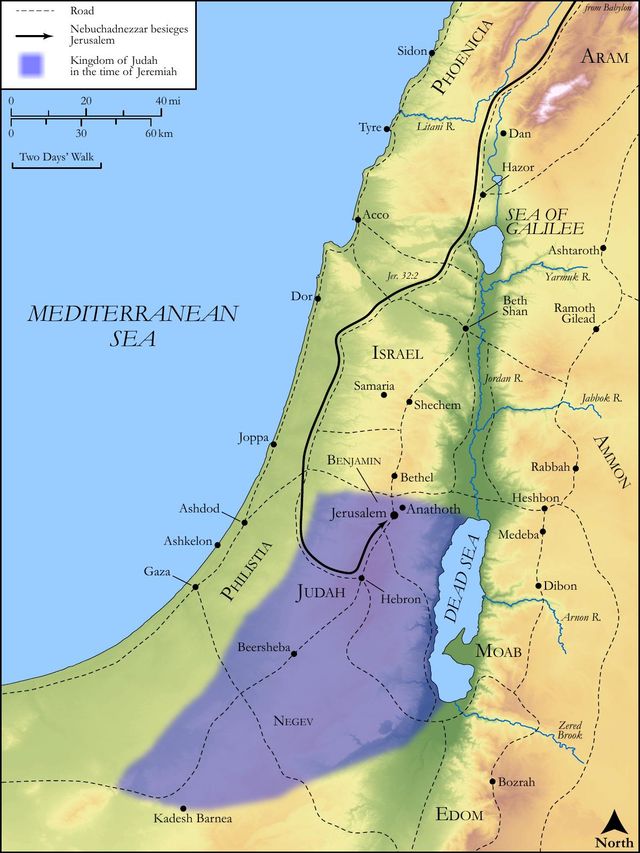
This verse is situated within a pivotal section of Jeremiah's prophecy, specifically during the Babylonian siege of Jerusalem (Jeremiah 32:1-2). While Jeremiah is imprisoned for his unwavering prophecies of doom, God commands him to buy a field in Anathoth (Jeremiah 32:6-15), an act that symbolically assures a future restoration and return from exile. However, before this promise of hope, God meticulously outlines the reasons for the impending judgment, recounting the persistent and egregious sins of both Israel and Judah. Verse 34 serves as a stark indictment, highlighting one of the most offensive acts of their apostasy, providing a direct rationale for the severity of the coming destruction and the seventy-year Babylonian captivity foretold in Jeremiah 25:11.
Historical & Cultural Context
The period leading up to the Babylonian exile was marked by centuries of syncretism and idolatry in Judah. Despite repeated warnings from prophets, the people continuously adopted the worship practices of surrounding pagan nations. This included the abhorrent worship of Baal, Molech, and the horrific practice of child sacrifice, often conducted in the Valley of Hinnom (Jeremiah 32:35). The Temple in Jerusalem, built by Solomon, was intended to be the exclusive dwelling place for the name of Yahweh, symbolizing His unique presence among His people. However, various kings, most notably King Manasseh, had actively desecrated it by erecting altars to foreign gods and even placing carved images within its sacred precincts, as documented in 2 Kings 21:4-7 and Jeremiah 7:30. Jeremiah 32:34 thus points to a long-standing pattern of spiritual adultery that culminated in the ultimate affront to God's holiness.
Key Themes
ShowHideJeremiah 32:34 powerfully contributes to several overarching themes within the book of Jeremiah and broader biblical theology. Firstly, it underscores the theme of Flagrant Idolatry and Defilement, revealing the depth of Judah's apostasy by detailing their willingness to introduce practices utterly detestable to God into His very sanctuary. This act of desecration directly challenged God's Holiness and Exclusive Claim to worship; the Temple was where God's "name" resided, signifying His unique ownership and sovereign presence. To defile it was to directly attack His honor and challenge His demand for undivided devotion. This persistent Spiritual Rebellion and its Consequences is a central motif in Jeremiah, demonstrating that Judah's actions were not mere mistakes but a deliberate rejection of the covenant. The verse highlights that such profound and persistent disobedience inevitably leads to severe divine judgment, culminating in the destruction of the Temple and the exile, as a consequence of profaning what is sacred to God and rejecting His repeated calls to repentance (e.g., Jeremiah 7:23-26).
Exposition and Analysis
ShowHideKey Word Analysis
ShowHideThis verb means "to put," "to place," or "to appoint." Its use here emphasizes the deliberate and intentional nature of Judah's actions. It wasn't an accidental or passive occurrence; they actively and purposefully "set" their abominations, indicating a willful act of defiance and a conscious decision to profane the sacred space that God had consecrated for Himself.
This term refers to something "disgusting," "filthy," or, specifically, an "idol" or "idolatrous thing." It carries a strong connotation of detestability in God's sight, often associated with the most vile forms of pagan worship, including cultic prostitution, child sacrifice, and the worship of foreign deities. Its presence in the Temple signifies the ultimate spiritual corruption and affront to Yahweh's purity and exclusive right to worship.
This primitive root means "to be foul," "to contaminate," or "to make unclean," especially in a ceremonial or moral sense. It speaks to the desecration of something holy, rendering it unfit for God's presence or service. The act of placing abominations in the Temple directly violated its sacred status, making it ritually and morally impure in God's eyes, necessitating His withdrawal.
Verse Breakdown
ShowHide"But they set their abominations"
This clause highlights the active and deliberate nature of Judah's sin. The people—or more specifically, their leaders and kings—did not merely tolerate idolatry; they actively introduced and established detestable practices and idols within the very heart of their worship. The term "abominations" (Hebrew: shiqqûwts) signifies objects and rites that are utterly repugnant to God, often involving pagan deities and their associated immoral rituals, directly violating the covenant.
"in the house, which is called by my name"
This phrase identifies the specific location of the desecration: the Temple in Jerusalem. The designation "which is called by my name" emphasizes God's unique ownership and presence within that sanctuary. It was not just a building, but the symbolic dwelling place where God had chosen to manifest His glory and establish His covenant relationship with Israel. To defile this particular place was a direct assault on God's honor and a rejection of His covenant.
"to defile it"
This final clause states the direct consequence and purpose of their actions from God's perspective. By introducing abominations, they rendered the holy place unclean (Hebrew: ṭâmêʼ), impure, and polluted. This defilement was not merely ritual; it was a profound moral and spiritual desecration that made the Temple unfit for God's holy presence, necessitating His withdrawal and ultimately, its destruction.
Literary Devices
ShowHideJeremiah 32:34 employs several potent literary devices to convey its message. Symbolism is paramount, with "the house" representing the Temple in Jerusalem, which in turn symbolizes God's unique presence and covenant relationship with His people. Its defilement is thus a symbolic act of spiritual adultery and rebellion against God Himself. The phrase "called by my name" is a form of Metonymy, where "name" stands for God's character, authority, and presence, emphasizing His ownership and the sanctity of the place. The entire verse functions as a powerful Accusation or Indictment, directly laying blame on the people for their actions and providing a clear justification for the impending divine judgment. There is also an implicit Contrast between God's absolute holiness and the people's profound profanity, highlighting the vast chasm between divine expectation and human disobedience.
Theological and Thematic Connections
ShowHideJeremiah 32:34 stands as a stark testament to God's absolute holiness and His demand for exclusive worship, a theme deeply woven throughout the biblical narrative. The deliberate defilement of His Temple—the very place designated for His presence—reveals the profound spiritual rebellion and covenant unfaithfulness of Judah. This act was not merely a ritual transgression but a direct assault on God's honor, demonstrating a heart utterly given over to idolatry and a rejection of His sovereign authority. The verse powerfully illustrates that persistent sin, especially the profaning of what is sacred to God, inevitably leads to severe divine judgment, underscoring the principle that God will not share His glory with idols and that His patience, though long-suffering, has limits.
Reflection and Application
ShowHideJeremiah 32:34, though rooted in ancient history, carries profound and enduring spiritual lessons for believers today. While we no longer have a physical Temple in Jerusalem where God's name dwells in the same way, the New Testament teaches that the bodies of individual believers are temples of the Holy Spirit, and the church collectively is God's dwelling place through the Spirit (Ephesians 2:21-22). This challenges us to critically examine our lives and our communities of faith: What "abominations"—anything that dishonors God—might we be allowing into the "house" of our personal lives or our churches? This could manifest as idolatry of possessions, power, comfort, or self; the pursuit of sinful practices that contradict God's holiness; or the embrace of worldly values that undermine biblical truth. The verse serves as a powerful reminder of God's unwavering jealousy for His holiness and His demand for genuine, undivided worship. It calls us to continually examine our hearts and lives, ensuring that our worship and conduct truly honor the Lord who has called us by His name and indwells us by His Spirit, maintaining the purity and sanctity of our spiritual "temple" and the corporate body of Christ.
Questions for Reflection
ShowHideFAQ
ShowHideWhat exactly were the "abominations" mentioned in Jeremiah 32:34?
ShowHideThe "abominations" (Hebrew: shiqqûwts) refer to practices and objects that were utterly detestable to the God of Israel, primarily associated with idolatry and pagan worship. This included the worship of foreign deities like Baal and Molech, often involving grotesque rituals such as child sacrifice in the Valley of Hinnom (Jeremiah 32:35). It also encompassed the erection of pagan altars and images within the sacred precincts of the Temple itself, as seen during the reign of King Manasseh (2 Kings 21:4-7). These acts were a direct violation of God's covenant and His command for exclusive worship.
Why was placing these abominations in the Temple such a serious offense to God?
ShowHideThe Temple in Jerusalem was not merely a building; it was the unique place God had chosen to put His "name" (Deuteronomy 12:5), signifying His special presence, ownership, and covenant relationship with Israel. It was consecrated as a holy space for pure worship and communion with Him. Placing idols and pagan altars within this sacred sanctuary was the ultimate act of defiance and spiritual adultery. It was a direct affront to God's holiness, a challenge to His exclusive claim on His people's worship, and a profound desecration of His dwelling place, effectively turning it into a den of paganism instead of a house of prayer (Jeremiah 7:11). This act symbolized the complete spiritual corruption of the people and directly provoked God's righteous judgment.
Christ-Centered Fulfillment
ShowHideJeremiah 32:34, with its lament over the defilement of God's physical Temple, finds its ultimate Christ-centered fulfillment in several profound ways. First, Jesus Himself confronted the defilement of the Temple in His day, cleansing it and declaring it a "house of prayer" rather than a "den of robbers" (Matthew 21:12-13). This act foreshadowed His mission to purify and restore true worship. More significantly, Jesus ultimately became the new and perfect Temple, declaring, "Destroy this temple, and in three days I will raise it up" (John 2:19), referring to His own body. Through His sacrificial death and resurrection, He established a new covenant, making it possible for God's presence to dwell not in a physical building, but in the hearts of believers by the Holy Spirit. The church, as the body of Christ, is now the spiritual Temple of God (Ephesians 2:21-22), where God's name truly resides. Thus, the warning against defiling the "house called by my name" transforms into a call for believers to live holy lives, recognizing their bodies as temples of the Holy Spirit, and for the church to maintain its purity and devotion to Christ, the true Lamb of God who takes away the sin of the world (John 1:29).