


Genesis 49:33
Bible text: King James Version (1769 Blayney text) · Public domain
Bible text: Berean Standard Bible · Public domain
Bible text: American Standard Version (1901) · Public domain
Bible text: World English Bible, Messianic edition · Public domain
Bible text: Geneva Bible (1599) · Public domain
Bible text: Young's Literal Translation · Public domain
- וַיְכַלvay·Khaland he finishedH3615Conj-w ¦ V-Piel-ConsecImperf-3msVerb Piel Consecutive Imperfect 3rd Singular Masculineוַandיְכַלhe finished
- יַעֲקֹבya·'a·KoJacobH3290N-proper-mNoun Proper Masculine
- לְצַוֹּתle·tza·Votto commandH6680Prep-l ¦ V-Piel-InfVerb Piel Infinitive Constructלְtoצַוֹּתcommand
- אֶת'et<obj.>H853DirObjMParticle Object Indicator
- בָּנָיוba·Navhis sonsH1121N-mpc ¦ 3msNoun Plural Masculine Constructבָּנָיsonsוhis
- וַיֶּאֱסֹףvai·ye·'e·Sofand he gatheredH622Conj-w ¦ V-Qal-ConsecImperf-3msVerb Qal Consecutive Imperfect 3rd Singular Masculineוַandיֶּאֱסֹףhe gathered
- רַגְלָיוrag·Lavhis feetH7272N-fdc ¦ 3msNoun Dual Feminine Constructרַגְלָיfeetוhis
- אֶל'elintoH413PrepPreposition
- הַמִּטָּהha·mi·Tahthe bedH4296Art ¦ N-fsNoun Singular Feminine Absoluteהַtheמִּטָּהbed
- וַיִּגְוַעvai·yig·Va'and he expiredH1478Conj-w ¦ V-Qal-ConsecImperf-3msVerb Qal Consecutive Imperfect 3rd Singular Masculineוַandיִּגְוַעhe expired
- וַיֵּאָסֶףvai·ye·'A·sefand he was gatheredH622Conj-w ¦ V-Niphal-ConsecImperf-3msVerb Niphal Consecutive Imperfect 3rd Singular Masculineוַandיֵּאָסֶףhe was gathered
- אֶל'eltoH413PrepPreposition
- עַמָּיו'a·Mavhis peoplesH5971N-mpc ¦ 3msNoun Plural Masculine Constructעַמָּיpeoplesוhis
English is a literal word-by-word gloss of the Hebrew, not the KJV's wording. Why?
This is the original text the KJV's translators worked from — each Hebrew word with its own literal English meaning in this verse, prepared by scholars at Tyndale House, Cambridge. The KJV translates whole sentences, not word by word, so its wording differs: one Hebrew word can become several English words, and the KJV may choose “the LORD” where the gloss reads “Yahweh”. Both are faithful — they answer different questions. For the KJV's own rendering, switch to the KJV text.
Details
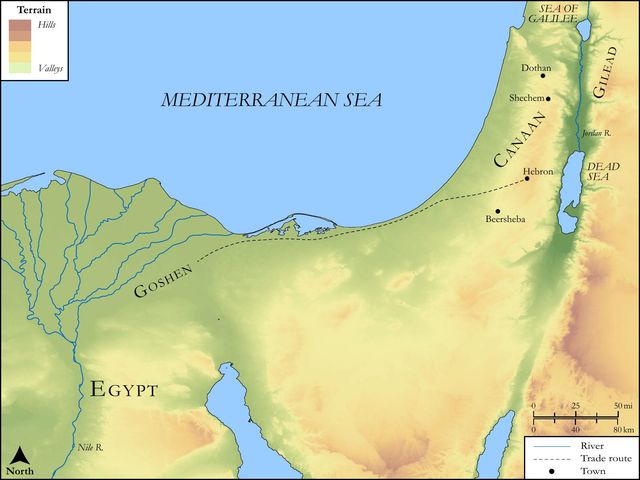
See on the biblical-era maps


Study this verse
Public-domain commentary
Matthew Henry
From his Commentary on the Whole Bible. Henry comments on passages, not single verses — this entry covers Genesis 49:28–33. His two-level outline is real structure in the source text, so it is rendered as structure.
Here is, I. The summing up of the blessings of Jacob's sons, Gen 49:28. Though Reuben, Simeon, and Levi were put under the marks of their father's displeasure, yet he is said to bless them every one according to his blessing; for none of them were rejected as Esau was. Note, Whatever rebukes of God's word or providence we are under at any time, yet, as long as we have an interest in God's covenant, a place and a name among his people, and good hopes of a share in the heavenly Canaan, we must account ourselves blessed.
II.The solemn charge Jacob gave them concerning his burial, which is a repetition of what he had before given to Joseph.
See how he speaks of death, now that he is dying: I am to be gathered unto my people, Gen 49:29. Note, It is good to represent death to ourselves under the most desirable images, that the terror of it may be taken off. Though it separates us from our children and our people in this world, it gathers us to our fathers and to our people in the other world. Perhaps Jacob uses this expression concerning death as a reason why his sons should bury him in Canaan; for, says he, "I am to be gathered unto my people, my soul must go to the spirits of just men made perfect: and therefore bury me with my fathers, Abraham and Isaac, and their wives," Gen 49:31. Observe,
1.His heart was very much upon it, not so much from a natural affection to his native soil as from a principle of faith in the promise of God, that Canaan should be the inheritance of his seed in due time. Thus he would keep up in his sons a remembrance of the promised land, and not only would have their acquaintance with it renewed by a journey thither on that occasion, but their desire towards it and their expectation of it preserved.
2.He is very particular in describing the place both by the situation of it and by the purchase Abraham had made of it for a burying-place, Gen 49:30, Gen 49:32. He was afraid lest his sons, after seventeen years' sojourning in Egypt, had forgotten Canaan, and even the burying-place of their ancestors there, or lest the Canaanites should dispute his title to it; and therefore he specifies it thus largely, and the purchase of it, even when he lies a-dying, not only to prevent mistakes, but to show how mindful he was of that country. Note, It is, and should be, a great pleasure to dying saints to fix their thoughts upon the heavenly Canaan, and the rest they hope for there after death.
III.The death of Jacob, Gen 49:33.
When he had finished both his blessing and his charge (both which are included in the commanding of his sons), and so had finished his testimony, he addressed himself to his dying work.
1.He put himself into a posture for dying; having before seated himself upon the bed-side, to bless his sons (the spirit of prophecy bringing fresh oil to his expiring lamp, Dan 10:19), when that work was done, he gathered up his feet into the bed, that he might lie along, not only as one patiently submitting to the stroke, but as one cheerfully composing himself to rest, now that he was weary. I will lay me down, and sleep.
2.He freely resigned his spirit into the hand of God, the Father of spirits: He yielded up the ghost.
3.His separated soul went to the assembly of the souls of the faithful, which, after they are delivered from the burden of the flesh, are in joy and felicity: he was gathered to his people. Note, If God's people be our people, death will gather us to them.
Continue studying Genesis 49:33 across the web’s major study libraries — every link below opens this exact verse, chapter, or book on the destination site.
Read & Compare
 BibleGatewayThis verse in more than 200 translations and 70 languages.
 Bible.comThe YouVersion reader — hundreds of translations, reading plans, and highlights.
 ESV.orgCrossway's official English Standard Version reader.
 NET BibleThe NET translation with 60,000+ translators' notes on every rendering decision.
 STEP BibleTyndale House's free study tool — original text, vocabulary, and scholarly resources.
 BibliaLogos Bible Software's free web reader.
 USCCBThe New American Bible (Revised Edition) with the U.S. bishops' study notes.
Commentaries
 BibleHub CommentariesDozens of classic commentaries on this verse, gathered on one page.
 StudyLightMore than 100 commentary sets — the largest collection on the web.
 BibleRefPlain-English commentary on what this verse means, verse by verse.
 Enduring WordDavid Guzik's free commentary on this chapter, widely used by Bible teachers.
 Bible Study ToolsVerse commentary alongside Greek and Hebrew study aids.
Original Language & Research
- BibleHub InterlinearThe verse word by word — original language, transliteration, and English.
- BibleHub LexiconEvery word's original-language definition and Strong's entry.
 Blue Letter BibleDeep-study tools — Strong's numbers, concordance, and word studies.
 SefariaThe Hebrew text with Rashi and centuries of Jewish commentary.
Sermons, Hymns & Audio


TrulyRandomVerse is not affiliated with these sites and doesn’t control their content. They’re linked because they’re genuinely useful.
Summary
Genesis 49:33 marks the solemn conclusion of Jacob's earthly life, immediately following his comprehensive prophetic blessings and final instructions to his twelve sons. This pivotal verse describes Jacob's deliberate preparation for death, his peaceful yielding of his spirit, and his symbolic reunion with his ancestors, signifying a profound transition from the patriarchal age to the unfolding of God's covenantal plan through the nascent nation of Israel.
Context
ShowHideLiterary Context
This verse serves as the powerful culmination of Jacob's final discourse, which began with his detailed blessings and prophecies concerning the future destinies of his twelve sons, foundational to the twelve tribes of Israel. This extended oracle, found in Genesis 49, is one of the longest and most significant speeches in Genesis, shaping the reader's understanding of the subsequent history of Israel. Immediately preceding his death, Jacob also meticulously instructed his sons regarding his burial, stipulating that he be interred in the ancestral cave of Machpelah in Canaan, alongside Abraham, Sarah, Isaac, and Rebekah, as detailed in Genesis 49:29-32. His organized and deliberate departure, after fulfilling his patriarchal responsibilities, underscores his profound faith and unwavering trust in God's covenantal promises.
Historical & Cultural Context
In the house of Jacob, the death of a patriarch was a moment of immense significance, often accompanied by final blessings, instructions, and the passing of authority. The act of "gathering up one's feet into the bed" (a posture of rest) and the concept of being "gathered to one's people" reflect cultural norms and beliefs surrounding death. Burial practices, particularly the desire to be interred with one's ancestors, were crucial as they affirmed lineage, identity, and a connection to the land. Jacob's insistence on burial in Canaan, despite dying in Egypt, highlights the deep cultural and theological importance of the promised land as the locus of God's covenant with his people, a theme that resonates throughout the Pentateuch.
Key Themes
ShowHideGenesis 49:33 encapsulates several key themes prevalent in the book of Genesis and the broader Pentateuch. It marks the culmination of the patriarchal narrative, closing the stories of Abraham, Isaac, and Jacob and transitioning to the formation of the nation of Israel. The verse emphasizes covenant continuity, as Jacob's death does not negate God's promises but rather sets the stage for their further unfolding through his descendants. It also touches upon the nature of biblical death, portraying it as a peaceful, deliberate transition for the righteous, often preceded by the fulfillment of one's life purpose, as seen in the deaths of Abraham (Genesis 25:8) and Isaac (Genesis 35:29). The phrase "gathered unto his people" hints at an early, nascent understanding of an afterlife or communal destiny beyond physical existence, a concept that would develop further in later biblical theology.
Exposition and Analysis
ShowHideGenesis 49:33 describes Jacob's peaceful and deliberate transition from life to death, using three distinct phrases that offer insight into ancient Israelite understanding of mortality.
Key Word Analysis
ShowHideA primitive root meaning "to end, whether intransitive (to cease, be finished, perish) or transited (to complete, prepare, consume)." In this context, it signifies Jacob's completion of his final patriarchal duties, specifically his detailed instructions and blessings to his sons. This verb emphasizes the deliberate and conclusive nature of his actions before his demise.
A primitive root meaning "to breathe out, i.e. (by implication) expire; die, be dead, give up the ghost, perish." This phrase is a common biblical idiom for the cessation of life, indicating the physical end of Jacob's earthly existence. It refers to the departure of the life-breath or spirit from the body.
A primitive root meaning "to gather for any purpose; hence, to receive, take away, i.e. remove (destroy, leave behind, put up, restore, etc.)." When used in the passive voice with "unto his people," as here, it forms a significant Old Testament euphemism for death, implying a reunion with one's ancestors in a shared realm of the dead.
Verse Breakdown
ShowHide"And when Jacob had made an end of commanding his sons"
This opening clause establishes the immediate context for Jacob's death. It highlights that his passing was not sudden or unexpected, but occurred only after he had fully discharged his final patriarchal duties, delivering his comprehensive blessings and instructions to each of his twelve sons. This emphasizes Jacob's intentionality and the completion of his life's work, particularly his role in shaping the future of the nascent nation of Israel.
"he gathered up his feet into the bed"
This vivid imagery portrays Jacob's conscious and composed acceptance of his impending death. Rather than a struggle, it depicts a deliberate act of arranging himself for his final rest. This posture signifies readiness, peace, and perhaps a final, intentional act of seeking repose, having completed all that was required of him. It underscores the dignity and control he maintained even in his final moments.
"and yielded up the ghost"
This phrase, translating the Hebrew yigva, is a direct and common biblical idiom for dying. It refers to the cessation of breathing and the departure of the life-breath or spirit from the body. It succinctly states the physical reality of Jacob's death, marking the end of his earthly existence.
"and was gathered unto his people"
This is a profound and frequently used Old Testament euphemism for death, implying a reunion with one's ancestors. It suggests more than just being buried in a common grave; it hints at a spiritual joining with those who have gone before, perhaps in a common realm of the dead (Sheol) or a continued family lineage beyond physical life. This idiom underscores the continuity of family and covenant even in death and is used for other patriarchs like Abraham and Isaac, signifying a shared destiny for the righteous deceased.
Literary Devices
ShowHideThe verse employs several significant Literary Devices. The phrase "he gathered up his feet into the bed" is a powerful piece of Imagery, painting a vivid picture of Jacob's deliberate and peaceful preparation for death, contrasting sharply with a chaotic or sudden end. The expressions "yielded up the ghost" and "was gathered unto his people" are both classic examples of Euphemism, softening the stark reality of death by using indirect, less harsh language. "Yielded up the ghost" refers to the cessation of life, while "gathered unto his people" suggests a reunion, implying a communal destiny beyond physical existence. This latter euphemism also carries a strong sense of Symbolism, representing not just physical burial with ancestors but also a spiritual rejoining with the collective body of the righteous who have passed on, reinforcing the continuity of lineage and covenant.
Theological and Thematic Connections
ShowHideJacob's death, as depicted in Genesis 49:33, serves as a crucial theological marker, concluding the patriarchal narratives and setting the stage for the next phase of God's redemptive plan. His peaceful and deliberate passing, after fulfilling his prophetic role, highlights the biblical understanding of a "good death" for the righteous, where one's life purpose is completed in alignment with God's will. The phrase "gathered unto his people" is particularly significant, hinting at an early Israelite belief in some form of communal existence or reunion beyond physical death, even if the full theological understanding of the afterlife was yet to be revealed. This continuity of fellowship, even in death, underscores the enduring nature of God's covenant with His chosen lineage.
Reflection and Application
ShowHideJacob's final moments offer profound lessons for believers today. His deliberate and peaceful acceptance of death, after ensuring his family's future and his burial wishes, teaches us the importance of living a life of purpose and preparing for our own departure, both practically and spiritually. It encourages us to live in such a way that we can face the end with peace, having fulfilled our God-given responsibilities and made peace with God and others. Jacob's unwavering faith in God's promises, even desiring to be buried in the promised land, challenges us to live with an eternal perspective, trusting God's faithfulness beyond our earthly lives. Furthermore, Jacob's enduring legacy through his twelve sons reminds us that our lives, when lived in covenant with God and in obedience to His call, can have a profound and lasting impact that extends far beyond our earthly existence, influencing generations to come for God's glory.
Questions for Reflection
ShowHideFAQ
ShowHideWhat does "gathered up his feet into the bed" signify?
ShowHideThis phrase signifies Jacob's deliberate and conscious action of preparing himself for death. It portrays a peaceful and composed acceptance, rather than a sudden or struggling end, suggesting he intentionally arranged himself for his final rest. It highlights his dignity and control in his last moments, having completed his earthly tasks.
What is the meaning of "yielded up the ghost" in this context?
ShowHide"Yielded up the ghost" is an archaic English translation of the Hebrew yigva (H1478), meaning "to expire" or "to breathe one's last." The word "ghost" here refers to the life-breath or spirit (ruach) that departs the body at the moment of death, not a spectral apparition. It simply means Jacob died, marking the cessation of his physical life.
What does it mean to be "gathered unto his people"?
ShowHideThis is a common Old Testament idiom for death, implying a reunion with one's ancestors. It suggests more than just being buried in the same grave; it hints at a communal destiny for the deceased, a joining with those who have gone before, either in a spiritual realm (Sheol) or a continued connection within the lineage. This concept is seen with other patriarchs like Abraham (Genesis 25:8) and Isaac (Genesis 35:29), underscoring the continuity of family and covenant beyond physical life.
Christ-Centered Fulfillment
ShowHideJacob's death, though marking the end of the patriarchal era, simultaneously ushers in the formation of the nation of Israel, through whom the Messiah would ultimately come. His "gathering unto his people" foreshadows the ultimate gathering of God's elect in Christ, where true and eternal reunion is found, not merely in a realm of the dead, but in the resurrection and everlasting life promised through faith in Jesus. While Jacob's peaceful death reflects a life lived in covenant with God, it is Christ's sacrificial death on the cross (Romans 5:8) and glorious resurrection (1 Corinthians 15:3-4) that truly conquer death, providing the ultimate peace (John 14:27), the definitive gathering of all believers into His body, the Church (Ephesians 1:22-23), and the fulfillment of all God's covenant promises (2 Corinthians 1:20). The hope offered through Christ far surpasses the ancient patriarchs' understanding of an afterlife, providing assurance of a glorious future with God for all who believe (John 11:25-26).