


Genesis 49:2
Bible text: King James Version (1769 Blayney text) · Public domain
Bible text: Berean Standard Bible · Public domain
Bible text: American Standard Version (1901) · Public domain
Bible text: World English Bible, Messianic edition · Public domain
Bible text: Geneva Bible (1599) · Public domain
Bible text: Young's Literal Translation · Public domain
- הִקָּבְצוּhi·ka·ve·TzuassembleH6908V-Niphal-Imp-2mpVerb Niphal Imperative 2nd Plural Masculine
- וְשִׁמְעוּve·shim·'Uand listenH8085Conj-w ¦ V-Qal-Imp-2mpVerb Qal Imperative 2nd Plural Masculineוְandשִׁמְעוּlisten
- בְּנֵיbe·NeiO sons ofH1121N-mpcNoun Plural Masculine Construct
- יַעֲקֹבya·'a·KoJacobH3290N-proper-mNoun Proper Masculine
- וְשִׁמְעוּve·shim·'Uand listenH8085Conj-w ¦ V-Qal-Imp-2mpVerb Qal Imperative 2nd Plural Masculineוְandשִׁמְעוּlisten
- אֶל'eltoH413PrepPreposition
- יִשְׂרָאֵלYis·ra·'ElIsraelH3478N-proper-mNoun Proper Masculine
- אֲבִיכֶם'a·vi·Khemyour fatherH1N-msc ¦ 2mpNoun Singular Masculine Constructאֲבִיfatherכֶםyour
English is a literal word-by-word gloss of the Hebrew, not the KJV's wording. Why?
This is the original text the KJV's translators worked from — each Hebrew word with its own literal English meaning in this verse, prepared by scholars at Tyndale House, Cambridge. The KJV translates whole sentences, not word by word, so its wording differs: one Hebrew word can become several English words, and the KJV may choose “the LORD” where the gloss reads “Yahweh”. Both are faithful — they answer different questions. For the KJV's own rendering, switch to the KJV text.
Details
See on the biblical-era maps


Study this verse
Public-domain commentary
Matthew Henry
From his Commentary on the Whole Bible. Henry comments on passages, not single verses — this entry covers Genesis 49:1–4. His three-level outline is real structure in the source text, so it is rendered as structure.
Here is, I. The preface to the prophecy, in which, 1. The congregation is called together (Gen 49:2): Gather yourselves together; let them all be sent for from their several employments, to see their father die, and to hear his dying words. It was a comfort to Jacob, now that he was dying, to see all his children about him, and none missing, though he had sometimes thought himself bereaved. It was of use to them to attend him in his last moments, that they might learn of him how to die, as well as how to live: what he said to each he said in the hearing of all the rest; for we may profit by the reproofs, counsels, and comforts, that are principally intended for others. His calling upon them once and again to gather together intimated both a precept to them to unite in love, (to keep together, not to mingle with the Egyptians, not to forsake the assembling of themselves together,) and a prediction that they should not be separated from each other, as Abraham's sons and Isaac's were, but should be incorporated, and all make one people. 2. A general idea is given of the intended discourse (Gen 49:1): That I may tell you that which shall befal you (not your persons, but your posterity) in the latter days; this prediction would be of use to those that came after them, for the confirming of their faith and the guiding of their way, on their return to Canaan, and their settlement there. We cannot tell our children what shall befal them or their families in this world; but we can tell them, from the word of God, what will befal them in the last day of all, according as they conduct themselves in this world. 3. Attention is demanded (Gen 49:2): "Hearken to Israel your father; let Israel, that has prevailed with God, prevail with you." Note, Children must diligently hearken to what their godly parents say, particularly when they are dying. Hear, you children, the instruction of a father, which carries with it both authority and affection, Pro 4:1.
II.The prophecy concerning Reuben.
He begins with him (Gen 49:3, Gen 49:4), for he was the firstborn; but by committing uncleanness with his father's wife, to the great reproach of the family to which he ought to have been an ornament, he forfeited the prerogatives of the birthright; and his dying father here solemnly degrades him, though he does not disown nor disinherit him: he shall have all the privileges of a son, but not of a firstborn. We have reason to think Reuben had repented of his sin, and it was pardoned; yet it was a necessary piece of justice, in detestation of the villany, and for warning to others, to put this mark of disgrace upon him. Now according to the method of degrading,
1.Jacob here puts upon him the ornaments of the birthright (Gen 49:3), that he and all his brethren might see what he had forfeited, and, in that, might see the evil of the sin: as the firstborn, he was his father's joy, almost his pride, being the beginning of his strength. How welcome he was to his parents his name bespeaks, Reuben, See a son. To him belonged the excellency of dignity above his brethren, and some power over them. Christ Jesus is the firstborn among many brethren, and to him, of right, belong the most excellent power and dignity: his church also, through him, is a church of firstborn.
2.He then strips him of these ornaments (Gen 49:4), lifts him up, that he may cast him down, by that one word, "Thou shalt not excel; a being thou shalt have as a tribe, but not an excellency." No judge, prophet, nor prince, is found of that tribe, nor any person of renown except Dathan and Abiram, who were noted for their impious rebellion against Moses. That tribe, as not aiming to excel, meanly chose a settlement on the other side Jordan. Reuben himself seems to have lost all that influence upon his brethren to which his birthright entitled him; for when he spoke unto them they would not hear, Gen 42:22. Those that have not understanding and spirit to support the honours and privileges of their birth will soon lose them, and retain only the name of them. The character fastened upon Reuben, for which he is laid under this mark of infamy, is that he was unstable as water.
(1.)His virtue was unstable; he had not the government of himself and his own appetites: sometimes he would be very regular and orderly, but at other times he deviated into the wildest courses. Note, Instability is the ruin of men's excellency. Men do not thrive because they do not fix.
(2.)His honour consequently was unstable; it departed from him, vanished into smoke, and became as water spilt upon the ground. Note, Those that throw away their virtue must not expect to save their reputation. Jacob charges him particularly with the sin for which he was thus disgraced: Thou went est up to thy father's bed. It was forty years ago that he had been guilty of this sin, yet now it is remembered against him. Note, As time will not of itself wear off the guilt of any sin from the conscience, so there are some sins whose stains it will not wipe off from the good name, especially seventh-commandment sins. Reuben's sin left an indelible mark of infamy upon his family, a dishonour that was a wound not to be healed without a scar, Pro 6:32, Pro 6:33. Let us never do evil, and then we need not fear being told of it.
Historical interpretation
Historical reception
1 surviving comment on this verse from the historical church.
See the good man’s shrewdness. Since he foresaw the moment of his death, he summoned his sons and said, “Gather around so that I may predict ahead of time what is in store for you at the end of your days. Come together, and listen to Israel your father.” Come along, he says, and learn from me, not the immediate future but what will happen in the last days. This I foretell to you not of myself but under the inspiration of the Spirit; hence I predict ahead of time what will occur after many generations. You see, as I am on the point of departing this life, I want to imprint it on the memory of each of you as if on some bronze pillar.Now consider how with his sons gathered together the good man follows the order of their birth and in this way bestows curse or blessing appropriate to each, showing by this procedure the extraordinary degree of his own virtue.
Continue studying Genesis 49:2 across the web’s major study libraries — every link below opens this exact verse, chapter, or book on the destination site.
Read & Compare
 BibleGatewayThis verse in more than 200 translations and 70 languages.
 Bible.comThe YouVersion reader — hundreds of translations, reading plans, and highlights.
 ESV.orgCrossway's official English Standard Version reader.
 NET BibleThe NET translation with 60,000+ translators' notes on every rendering decision.
 STEP BibleTyndale House's free study tool — original text, vocabulary, and scholarly resources.
 BibliaLogos Bible Software's free web reader.
 USCCBThe New American Bible (Revised Edition) with the U.S. bishops' study notes.
Commentaries
 BibleHub CommentariesDozens of classic commentaries on this verse, gathered on one page.
 StudyLightMore than 100 commentary sets — the largest collection on the web.
 BibleRefPlain-English commentary on what this verse means, verse by verse.
 Enduring WordDavid Guzik's free commentary on this chapter, widely used by Bible teachers.
 Bible Study ToolsVerse commentary alongside Greek and Hebrew study aids.
Original Language & Research
- BibleHub InterlinearThe verse word by word — original language, transliteration, and English.
- BibleHub LexiconEvery word's original-language definition and Strong's entry.
 Blue Letter BibleDeep-study tools — Strong's numbers, concordance, and word studies.
 SefariaThe Hebrew text with Rashi and centuries of Jewish commentary.
Sermons, Hymns & Audio


TrulyRandomVerse is not affiliated with these sites and doesn’t control their content. They’re linked because they’re genuinely useful.
Summary
Genesis 49:2 marks the solemn and authoritative commencement of Jacob's final prophetic address to his twelve sons before his death. This verse sets the stage for one of the Old Testament's most significant patriarchal blessings and prophecies, which would profoundly shape the future destinies of the tribes of Israel, laying foundational identity and purpose for the nascent nation.
Context
ShowHideLiterary Context
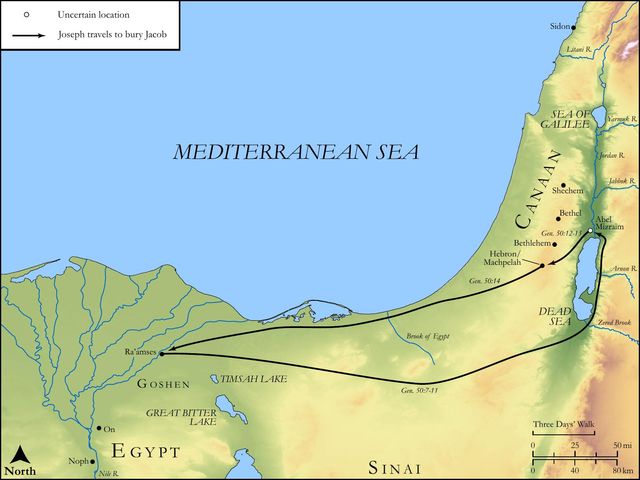
This verse serves as the immediate opening of Jacob's extensive deathbed prophecy, which spans the entirety of Genesis 49. It follows the account of Jacob's final instructions regarding his burial in Canaan, specifically in the cave of Machpelah, alongside his ancestors (Genesis 49:29-32). The summons in verse 2 directly precedes the individual pronouncements upon each son, beginning with Reuben in Genesis 49:3. This entire chapter functions as a pivotal transition point, moving from the patriarchal narratives to the foundational prophecies that would guide the formation and future history of the twelve tribes of Israel, culminating in Jacob's death in Genesis 49:33.
Historical & Cultural Context
In the house of Jacob, a patriarch's deathbed words carried immense weight, often functioning as a binding will, a legal testament, and a prophetic declaration. These pronouncements were believed to shape the destiny of the recipients, reflecting not merely human wishes but divine insight. Jacob, having lived a life marked by profound encounters with God and bearing the divinely given name "Israel," was understood to be speaking with a unique spiritual authority. The gathering of all sons before the dying patriarch was a customary and solemn ritual, ensuring that all heirs were present to hear the distribution of inheritance and, in this unique case, the prophetic future of their lineages. This event takes place in Egypt, where Jacob and his family had settled during the famine, underscoring their status as a distinct family unit poised to become a nation.
Key Themes
ShowHideGenesis 49:2 introduces several key themes that resonate throughout the chapter and the broader biblical narrative. The theme of divine sovereignty is paramount, as Jacob's ability to foresee and declare the future destinies of his sons points to God's ultimate control over history and the unfolding of His redemptive plan. The verse also highlights patriarchal authority, demonstrating Jacob's role as the chosen conduit for God's covenantal promises, transmitting them to the next generation, thus ensuring covenantal continuity from Abraham and Isaac. Furthermore, the summons to "gather" and "hearken" underscores the importance of unity and attentiveness within the family, a crucial prerequisite for receiving and understanding the weighty prophetic messages that would define the collective identity and future of the nation of Israel, a theme echoed in later calls for corporate obedience to God's law, such as in Deuteronomy 6:4.
Exposition and Analysis
ShowHideKey Word Analysis
ShowHideA primitive root meaning "to grasp, i.e. collect; assemble (selves), gather (bring) (together, selves together, up), heap, resort, [idiom] surely, take up." In this context, it is a direct command for Jacob's sons to physically assemble. It implies not just coming into one place, but a purposeful, unified gathering, essential for the solemnity and collective reception of the impending prophetic words.
A primitive root meaning "to hear intelligently (often with implication of attention, obedience, etc.; causatively, to tell, etc.); [idiom] attentively, call (gather) together, [idiom] carefully, [idiom] certainly, consent, consider, be content, declare, [idiom] diligently, discern, give ear, (cause to, let, make to) hear(-ken, tell), [idiom] indeed, listen, make (a) noise, (be) obedient, obey, perceive, (make a) proclaim(-ation), publish, regard, report, shew (forth), (make a) sound, [idiom] surely, tell, understand, whosoever (heareth), witness." This word is used twice, emphasizing different levels of listening. The initial "hear" is a call to immediate auditory attention, while "hearken" implies a deeper, more intentional, and obedient reception of the message, signifying not just perception but comprehension and readiness to respond.
Derived from שָׂרָה and אֵל, meaning "he will rule as God; Jisrael, a symbolical name of Jacob; also (typically) of his posterity; Israel." This name, divinely bestowed upon Jacob after his wrestling match at Peniel (Genesis 32:28), signifies his new identity as one who has struggled with God and prevailed, or as a "prince with God." Its use here elevates Jacob's authority from merely paternal to divinely sanctioned, indicating that the ensuing words carry prophetic weight and covenantal significance.
Verse Breakdown
ShowHide"Gather yourselves together"
This is the initial, imperative command from Jacob, demanding the physical assembly of all his sons. It sets a formal and solemn tone for the momentous occasion, emphasizing the need for their collective presence and unity before their dying patriarch.
"and hear, ye sons of Jacob"
Following the command to gather, Jacob calls for their immediate attention. By addressing them as "sons of Jacob," he appeals to their familial bond and his identity as their earthly father, the one they have known through his personal struggles and triumphs. The word "hear" here is a basic call to auditory reception.
"and hearken unto Israel your father"
This second command intensifies the call to listen. By invoking his divinely given name, "Israel," Jacob elevates the nature of his address from merely paternal advice to a divinely inspired prophetic utterance. "Hearken" implies not just passive hearing, but active, obedient listening that leads to understanding, acceptance, and action, recognizing the profound spiritual authority behind the words of "Israel your father."
Literary Devices
ShowHideThe verse employs several significant literary devices. Parallelism is evident in the dual commands ("Gather yourselves together, and hear" and "hearken") and the dual naming of the speaker ("Jacob" and "Israel"). This structural repetition emphasizes the gravity and dual nature of the summons—both a human father's final words and a divinely appointed patriarch's prophecy. Juxtaposition of "Jacob" and "Israel" highlights the speaker's multifaceted identity: "Jacob" represents his personal, earthly, and often struggling self, while "Israel" signifies his transformed, covenantal, and divinely empowered persona. This contrast underscores the immense weight and spiritual authority of the words about to be spoken. Furthermore, the entire scene functions as Foreshadowing, setting the stage for the detailed prophecies concerning the future tribes of Israel, hinting at their distinct destinies and the unfolding of God's plan.
Theological and Thematic Connections
ShowHideGenesis 49:2 serves as a profound theological statement on divine authority, covenantal transmission, and the nature of prophetic utterance. Jacob, standing at the threshold of eternity, acts as God's chosen vessel to impart words that are not merely human wisdom but divinely inspired declarations concerning the future of his descendants. This act underscores God's sovereign hand in history, guiding the destinies of nations through His chosen instruments. The dual address as "Jacob" and "Israel" signifies the fusion of human experience with divine anointing, making the patriarch's words both deeply personal and universally significant for the nascent nation. This moment is a crucial link in the chain of God's covenant with Abraham and Isaac, ensuring its continuity through the next generation and establishing the foundational identity of the twelve tribes.
Reflection and Application
ShowHideGenesis 49:2 offers timeless lessons for believers today. It powerfully reminds us of the profound value in heeding the wisdom and instruction of those who bear spiritual authority and have walked closely with God, particularly elders and spiritual mentors. The call to "gather" emphasizes the importance of unity within families, churches, and communities when receiving significant guidance or prophetic words. More deeply, the distinction between "hear" and "hearken" serves as a powerful call to diligently engage with God's Word. It's not enough to passively hear the Scriptures; we are called to "hearken"—to listen with an open heart, a discerning mind, and a readiness to understand, obey, and apply its timeless truths to our lives. This active listening leads to transformation, aligning our lives with God's divine purposes and enabling us to receive the blessings and guidance He has for us, just as Jacob's sons were called to receive their destinies.
Questions for Reflection
ShowHideFAQ
ShowHideWhy does Jacob use both "Jacob" and "Israel" to address his sons in the same verse?
ShowHideJacob uses both names to emphasize the dual nature of his authority and the profound significance of his words. "Jacob" refers to his personal identity as their earthly father, the one they have known intimately through his life's journey. "Israel," his divinely given name, signifies his transformed covenantal identity and spiritual authority, highlighting that the words he is about to speak are not merely personal wishes but divinely inspired prophecies. This dual naming underscores the immense weight and spiritual importance of his final address, ensuring his sons understand the divine backing of his pronouncements, much like God's self-revelation to Moses in Exodus 3:14.
What is the deeper meaning of "hearken" compared to "hear" in this context?
ShowHideWhile both "hear" and "hearken" translate the same Hebrew word, shama, their usage in this verse conveys different levels of engagement. "Hear" is a basic command for auditory reception, a call to attention. "Hearken," however, implies a deeper, more active form of listening that leads to understanding, acceptance, and ultimately, obedience. It suggests a readiness to internalize the message and act upon it, recognizing the divine authority behind the words spoken by "Israel your father." This distinction is crucial throughout Scripture, where "hearing" God's voice often demands a responsive "hearkening" or obedience, as seen in passages like Deuteronomy 28:1.
Christ-Centered Fulfillment
ShowHideJacob, as the patriarch and prophet, gathers his sons to declare their future destinies, acting as a profound type of the ultimate Father and Prophet, Jesus Christ. Just as Jacob, bearing the name "Israel" (one who strives with God and prevails), imparts covenantal blessings and prophecies, so Christ, the true Israel and Son of God, gathers His disciples to impart words of eternal life and reveal the Father's ultimate will. His teachings, such as those found in the Sermon on the Mount, are the ultimate call to "hearken" to divine truth, fulfilling all patriarchal prophecies and establishing the new covenant through His blood (Luke 22:20). Through Christ, the scattered "sons of Jacob"—both Jew and Gentile—are truly gathered into one body (Ephesians 2:14-16), hearing and obeying the voice of their divine Shepherd (John 10:27), finding their ultimate destiny and inheritance in Him, the true heir of all promises (Galatians 3:29).