


Genesis 19:3
Bible text: King James Version (1769 Blayney text) · Public domain
Bible text: King James Version with Strong's numbers · Public domain
Bible text: Berean Standard Bible · Public domain
Bible text: American Standard Version (1901) · Public domain
Bible text: World English Bible, Messianic edition · Public domain
Bible text: Geneva Bible (1599) · Public domain
Bible text: Young's Literal Translation · Public domain
- וַיִּפְצַרvai·yif·tzarand he urgedH6484Conj-w ¦ V-Qal-ConsecImperf-3msVerb Qal Consecutive Imperfect 3rd Singular Masculineוַandיִּפְצַרhe urged
- בָּםbam<in> <the> themPrep-b ¦ 3mpSuffix Personal 3rd Plural Masculineבָּ<in> <the>םthem
- מְאֹדme·'OdexceedinglyH3966Adj-msAdjective Numerical Singular Masculine Absolute
- וַיָּסֻרוּvai·ya·Su·ruand they turned asideH5493Conj-w ¦ V-Qal-ConsecImperf-3mpVerb Qal Consecutive Imperfect 3rd Plural Masculineוַandיָּסֻרוּthey turned aside
- אֵלָיו'e·Lavto himH413Prep ¦ 3msPreposition Definiteאֵלָיtoוhim
- וַיָּבֹאוּvai·ya·Vo·'uand they wentH935Conj-w ¦ V-Qal-ConsecImperf-3mpVerb Qal Consecutive Imperfect 3rd Plural Masculineוַandיָּבֹאוּthey went
- אֶל'elintoH413PrepPreposition
- בֵּיתוֹbei·Tohis houseH1004N-msc ¦ 3msNoun Singular Masculine Constructבֵּיתhouseוֹhis
- וַיַּעַשׂvai·Ya·'asand he preparedH6213Conj-w ¦ V-Qal-ConsecImperf-3msVerb Qal Consecutive Imperfect 3rd Singular Masculineוַandיַּעַשׂhe prepared
- לָהֶםla·Hemfor <the> themPrep-l ¦ 3mpSuffix Personal 3rd Plural Masculineלָfor <the>הֶםthem
- מִשְׁתֶּהmish·Teha feastH4960N-msNoun Singular Masculine Absolute
- וּמַצּוֹתu·ma·Tzotand unleavened bread<s>H4682Conj-w ¦ N-fpNoun Plural Feminine Absoluteוּandמַצּוֹתunleavened bread<s>
- אָפָה'a·Fahhe bakedH644V-Qal-Perf-3msVerb Qal Perfect 3rd Singular Masculine
- וַיֹּאכֵלוּvai·yo·Khe·luand they ateH398Conj-w ¦ V-Qal-ConsecImperf-3mpVerb Qal Consecutive Imperfect 3rd Plural Masculineוַandיֹּאכֵלוּthey ate
English is a literal word-by-word gloss of the Hebrew, not the KJV's wording. Why?
This is the original text the KJV's translators worked from — each Hebrew word with its own literal English meaning in this verse, prepared by scholars at Tyndale House, Cambridge. The KJV translates whole sentences, not word by word, so its wording differs: one Hebrew word can become several English words, and the KJV may choose “the LORD” where the gloss reads “Yahweh”. Both are faithful — they answer different questions. For the KJV's own rendering, switch to the KJV text.
Details
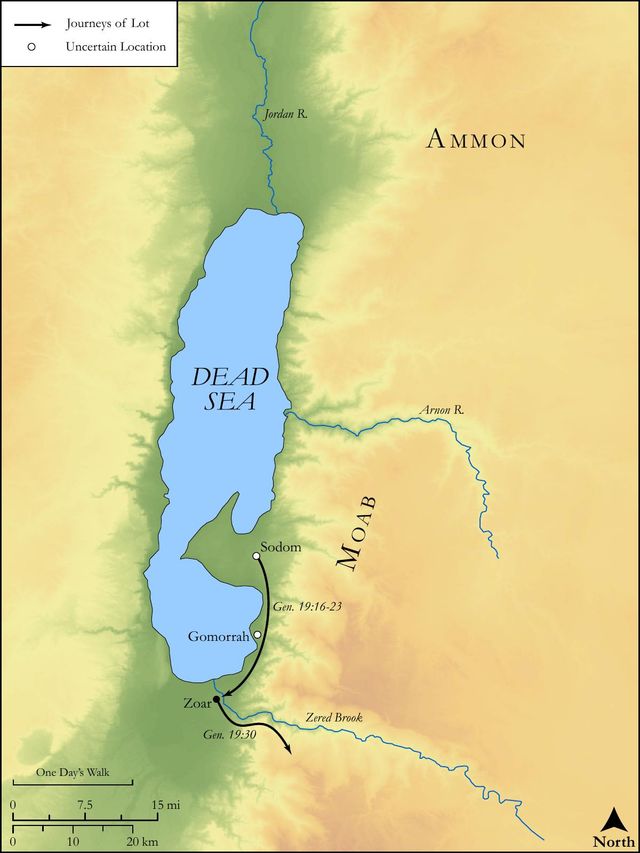
See on the biblical-era maps


Study this verse
Public-domain commentary
Matthew Henry
From his Commentary on the Whole Bible. Henry comments on passages, not single verses — this entry covers Genesis 19:1–3.
These angels, it is likely, were two of the three that had just before been with Abraham, the two created angels that were sent to execute God's purpose concerning Sodom. Observe here, 1. There was but one good man in Sodom, and these heavenly messengers soon found him out. Wherever we are, we should enquire out those of the place that live in the fear of God, and should choose to associate ourselves with them. Mat 10:11, Enquire who is worthy, and there abide. Those of the same country, when they are in a foreign country, love to be together. 2. Lot sufficiently distinguished himself from the rest of his neighbours, at this time, which plainly set a mark upon him. He that did not act like the rest must not fare like the rest. (1.) Lot sat in the gate of Sodom at even. When the rest, it is likely, were tippling and drinking, he sat alone, waiting for an opportunity to do good. (2.) He was extremely respectful to men whose mien and aspect were sober and serious, though they did not come in state. He bowed himself to the ground, when he met them, as if, upon the first view, he discerned something divine in them. (3.) He was hospitable, and very free and generous in his invitations and entertainments. He courted these strangers to his house, and to the best accommodations he had, and gave them all the evidences that he could of his sincerity; for, [1.] When the angels, to try whether he was hearty in the invitation, declined the acceptance of it, at first (which is the common usage of modesty, and no reproach at all to truth and honesty), their refusal did not make him more importunate; for he pressed upon them greatly (Gen 19:3), partly because he would be no means have them to expose themselves to the inconveniences and perils of lodging in the street of Sodom, and partly because he was desirous of their company and converse. He had not seen two such honest faces in Sodom this great while. Note, Those that live in bad places should know how to value the society of those that are wise and good, and earnestly desire it. [2.] When the angels accepted his invitation, he treated them nobly; he made a feast for them, and thought it well-bestowed on such guests. Note, Good people should be (with prudence) generous people.
Historical interpretation
Historical reception
1 surviving comment on this verse from the historical church.
When he saw them resisting and bent on resting in the street (the angels did this out of a wish to reveal more clearly the just man’s virtue and to teach us all the extent of his hospitality), then he in turn did not stop at making entreaty in words but also applied force. Hence Christ also said, “Men of violence seize the kingdom of heaven.” … “He compelled them,” the text says. It seems to me he drew them in against their will. Then when they saw the just man applying this effort and not desisting until he should achieve the object of his desire, “they turned aside to him and entered his house. He prepared a meal for them, cooking flat bread for them; they ate before lying down.” Do you see here as well hospitality manifested not in richness of fare but in generosity of attitude? I mean, when he succeeded in bringing them into his house, at once he gave evidence of the signs of hospitality. He occupied himself in attending on them, providing something to eat and giving evidence of respect and attention to the visitors in his belief that they were only human beings, travelers of some kind.
Continue studying Genesis 19:3 across the web’s major study libraries — every link below opens this exact verse, chapter, or book on the destination site.
Read & Compare
 BibleGatewayThis verse in more than 200 translations and 70 languages.
 Bible.comThe YouVersion reader — hundreds of translations, reading plans, and highlights.
 ESV.orgCrossway's official English Standard Version reader.
 NET BibleThe NET translation with 60,000+ translators' notes on every rendering decision.
 STEP BibleTyndale House's free study tool — original text, vocabulary, and scholarly resources.
 BibliaLogos Bible Software's free web reader.
 USCCBThe New American Bible (Revised Edition) with the U.S. bishops' study notes.
Commentaries
 BibleHub CommentariesDozens of classic commentaries on this verse, gathered on one page.
 StudyLightMore than 100 commentary sets — the largest collection on the web.
 BibleRefPlain-English commentary on what this verse means, verse by verse.
 Enduring WordDavid Guzik's free commentary on this chapter, widely used by Bible teachers.
 Bible Study ToolsVerse commentary alongside Greek and Hebrew study aids.
Original Language & Research
- BibleHub InterlinearThe verse word by word — original language, transliteration, and English.
- BibleHub LexiconEvery word's original-language definition and Strong's entry.
 Blue Letter BibleDeep-study tools — Strong's numbers, concordance, and word studies.
 SefariaThe Hebrew text with Rashi and centuries of Jewish commentary.
Sermons, Hymns & Audio


TrulyRandomVerse is not affiliated with these sites and doesn’t control their content. They’re linked because they’re genuinely useful.
Summary
Genesis 19:3 vividly portrays Lot's fervent and persistent hospitality toward two angelic visitors in Sodom, compelling them to accept refuge in his home. This act of urgent welcome and the hastily prepared meal of unleavened bread stand in stark contrast to the city's pervasive wickedness, serving as a crucial prelude to the imminent divine judgment about to befall Sodom.
Context
ShowHideLiterary Context
This verse immediately follows the arrival of two divine messengers, appearing as men, in the city of Sodom at evening. The preceding verses establish Lot's unique position at the city gate, a significant public space where legal, commercial, and social interactions occurred. His prompt recognition of the visitors' vulnerability and his urgent offer of shelter set the stage for the dramatic confrontation with the men of Sodom in the subsequent verses. Lot's actions here are pivotal, highlighting his moral distinction from the city's inhabitants and initiating the sequence of events that lead to Sodom's destruction and his family's deliverance.
Historical & Cultural Context
In the days of the patriarchs, hospitality was of immense importance, a sacred duty to protect and provide for travelers, especially in dangerous regions. The city gate was a public forum, but also a place where strangers might be vulnerable. Sodom, however, was notoriously depraved and hostile, known for its lack of hospitality and its violent, sexually perverse treatment of outsiders, as evidenced by the subsequent events in Genesis 19:4-5. Lot's "pressing" upon the visitors was not merely polite custom but a necessary and courageous act of protection in a deeply perilous environment, demonstrating a moral compass that was rare in his surroundings.
Key Themes
ShowHideGenesis 19:3 contributes significantly to several overarching themes within the book of Genesis and the broader biblical narrative. It underscores the theme of Divine Judgment against human wickedness, as Lot's hospitality contrasts sharply with Sodom's depravity, justifying the impending destruction. It also highlights the theme of Divine Protection and Deliverance for the righteous, even a flawed one like Lot, amidst overwhelming sin. Furthermore, Lot's exceptional hospitality echoes and reinforces the theme of Biblical Hospitality as a virtue, reminiscent of his uncle Abraham's welcome of divine visitors. This act of welcoming strangers, especially those who turn out to be divine, is a recurring motif in scripture, emphasizing God's care for the vulnerable and His expectation of human kindness.
Exposition and Analysis
ShowHideGenesis 19:3 describes Lot's compelling invitation and the subsequent actions: "And he pressed upon them greatly; and they turned in unto him, and entered into his house; and he made them a feast, and did bake unleavened bread, and they did eat."
Key Word Analysis
ShowHideThis verb signifies a forceful urging or compulsion, akin to "pecking at" or "stunning" someone with insistence. It conveys Lot's determined and unyielding effort to persuade the visitors. In the context of Sodom's dangers, this was not a casual invitation but a vital, insistent plea to ensure their safety and his adherence to the sacred duty of hospitality.
Derived from a root meaning "vehemence," this adverb intensifies the action of "pressing." It signifies that Lot's urging was done with utmost earnestness, might, and diligence. When combined with "pressed," it paints a picture of Lot's extraordinary and unwavering commitment to securing his guests' refuge, underscoring the urgency and the moral imperative he felt.
This term refers to bread prepared without yeast, which does not require time to rise. Its preparation is inherently quick and signifies haste or urgency. The choice of unleavened bread for this feast is highly symbolic, subtly foreshadowing the swiftness and suddenness of the divine judgment that was about to befall Sodom, leaving no time for leavening. It also hints at a meal prepared under duress or in preparation for an immediate departure.
Verse Breakdown
ShowHide"And he pressed upon them greatly"
This clause emphasizes Lot's extraordinary and forceful insistence. The angels initially seemed to decline his offer, perhaps testing his sincerity or providing an opportunity for him to demonstrate his character and commitment to hospitality in a morally corrupt city. Lot's persistence reveals his deep concern for their safety and his adherence to a higher moral code than that of his neighbors.
"and they turned in unto him, and entered into his house"
The angels' acceptance of Lot's urgent invitation signifies divine approval and the initiation of their protective mission. Their entry into his home marks a pivotal moment, setting the stage for the dramatic confrontation with the men of Sodom and the subsequent divine intervention. This acceptance underscores God's direct involvement in the unfolding events and His protection for Lot.
"and he made them a feast, and did bake unleavened bread"
The term "feast" (mishteh) indicates a significant meal, reflecting the honor and respect Lot intended to show his guests. The specific detail of "unleavened bread" is highly significant. Unlike leavened bread which takes time to rise, unleavened bread can be prepared quickly. This detail subtly foreshadows the swift and sudden judgment that was about to befall Sodom, indicating the urgency of the situation and the lack of time for leisurely preparation.
"and they did eat"
This simple statement confirms the completion of the act of hospitality and the shared meal. In Scripture, sharing a meal often signified peace, fellowship, and the establishment of a bond, as when Jacob and Laban ate bread together after their covenant, further highlighting the sacred nature of the guest-host relationship Lot initiated.
Literary Devices
ShowHideThe passage employs several significant literary devices. Contrast is paramount, as Lot's fervent hospitality stands in stark opposition to the depravity and hostility of the men of Sodom, immediately setting up the moral conflict that will define the rest of the chapter. Foreshadowing is subtly present through the detail of "unleavened bread," which, by its nature of being quickly prepared, hints at the sudden and urgent divine judgment that is about to befall the city. This detail evokes a sense of impending crisis. Furthermore, the narrative uses Symbolism, where Lot's house becomes a temporary sanctuary, a place of safety and righteousness, directly contrasting with the dangerous and sinful city outside its walls.
Theological and Thematic Connections
ShowHideLot's persistent urging and provision of shelter exemplify a profound commitment to the patriarchal customs of guest-host relationships, particularly the sacred duty to protect travelers. This act of hospitality sets Lot apart from the depraved inhabitants of Sodom, who later attempt to assault the visitors, highlighting the moral chasm between a person who fears God (however imperfectly) and a society steeped in depravity. The angels, whose ultimate mission was to deliver Lot and his family from the forthcoming destruction, accepted his invitation, signifying God's active intervention and protection for His righteous servant, even amidst overwhelming wickedness. The detail of baking unleavened bread subtly foreshadows the sudden and urgent nature of the impending divine judgment on Sodom, mirroring other biblical instances where unleavened bread signifies haste in the face of divine action.
Reflection and Application
ShowHideThis verse serves as a powerful reminder of the enduring importance of hospitality, particularly towards those who may be vulnerable, in need, or strangers. Lot's actions, despite his personal failings in other areas of his life, highlight a virtue that God values and commands of His people. It encourages believers to be discerning and to offer refuge and care, recognizing that we may sometimes be entertaining angels unawares or simply providing vital support to fellow human beings. Furthermore, it illustrates God's faithfulness to protect those who seek to honor Him, even in the midst of overwhelming wickedness, and calls us to cultivate a spirit of generosity that stands in opposition to the self-serving nature of the world. In a world often characterized by suspicion and self-preservation, Lot's example challenges us to extend grace and protection, reflecting God's own welcoming nature towards us.
Questions for Reflection
ShowHideFAQ
ShowHideWhy was Lot so insistent that the visitors stay with him?
ShowHideLot's insistence (he "pressed upon them greatly") was driven by a combination of patriarchal hospitality customs and a keen awareness of Sodom's extreme wickedness. As a resident of the city, Lot knew the dangers faced by strangers, especially at night, from the depraved men of Sodom. His urgent plea was an act of protection, demonstrating a moral compass that distinguished him from his neighbors and a profound commitment to the sacred duty of a host. He understood the peril they faced if left exposed in the city.
What is the significance of Lot baking "unleavened bread" for his guests?
ShowHideUnleavened bread (matstsâh) is traditionally prepared without yeast, meaning it doesn't require time to rise. Its preparation signifies haste or urgency. In this context, it subtly foreshadows the swift and sudden judgment that was about to befall Sodom, indicating that there was no time to spare. This detail underscores the immediate and impending nature of the crisis and serves as a powerful literary device to heighten the tension of the narrative. It also echoes the Passover meal, where unleavened bread was eaten in haste before the exodus from Egypt and God's judgment on the oppressors.
Were the visitors truly angels, and why did they appear as men?
ShowHideYes, the text explicitly identifies them as "two angels" in Genesis 19:1. They appeared as men to interact with humanity in a tangible way, as divine messengers often did in the Old Testament. This human appearance allowed them to be received by Lot, to experience the depravity of Sodom firsthand (as seen in the mob's actions), and to fulfill their mission of observation, warning, and judgment, making their presence relatable yet profoundly significant.
Christ-Centered Fulfillment
ShowHideLot's act of hospitality in Genesis 19:3, though imperfect, profoundly foreshadows the ultimate divine hospitality offered in Christ. Just as Lot provided urgent refuge to divine messengers from impending judgment, Christ Himself is the ultimate refuge and host, inviting all who are vulnerable and condemned by sin to "turn in unto Him" for salvation and protection from eternal judgment. He is the divine visitor who "pressed upon" humanity, not with compulsion, but with persistent love and grace, offering Himself as the Bread of Life, a feast of eternal sustenance that requires no leaven of human effort or delay. Furthermore, Christ's mission to seek and save the lost embodies the divine intervention and deliverance seen here, offering a safe haven for the righteous in a world under the shadow of judgment, ultimately fulfilling the promise of God's unwavering protection for His own. He is the one who prepares a table for us in the presence of our enemies, offering true fellowship and deliverance.