


Ezra 4:19
- וּמִנִּיu·mi·Niand from meH4481Conj-w ¦ Prep ¦ 1csPrepositionוּandמִנִּfromיme
- שִׂיםsimit was madeH7761V-Peil-Perf-3msVerb Peil Perfect 3rd Singular Masculine
- טְעֵםte·'Ema decreeH2942N-csNoun Singular common gender Absolute
- וּבַקַּרוּu·va·Ka·ruand they searchedH1240Conj-w ¦ V-Pael-Perf-3mpVerb Pael Perfect 3rd Plural Masculineוּandבַקַּרוּthey searched
- וְהַשְׁכַּחוּve·hash·Ka·chuand they foundH7912Conj-w ¦ V-Haphel-Perf-3mpVerb Haphel Perfect 3rd Plural Masculineוְandהַשְׁכַּחוּthey found
- דִּיdithatH1768ConjConjunction
- קִרְיְתָאkir·ye·Ta'city theH7149N-fs ¦ ArtNoun Singular Feminine Definiteקִרְיְתָcityאthe
- דָךְDakhthisH1791PrtParticle Demonstrative
- מִןminfromH4481PrepPreposition
- יוֹמָתyo·Mat[the] days ofH3118N-fpcNoun Plural Feminine Construct
- עָלְמָא'al·Ma'<the> antiquityH5957N-cs ¦ ArtNoun Singular common gender Definiteעָלְמָ<the>אantiquity
- עַל'alagainstH5922PrepPreposition
- מַלְכִיןmal·KhinkingsH4430N-mpNoun Plural Masculine Absolute
- מִתְנַשְּׂאָהmit·na·se·'Ah[was] rising upH5376V-Hitpaal-Prtcpl-fsVerb Hitpaal Participle Singular Feminine Absolute
- וּמְרַדu·me·Radand rebellionH4776Conj-w ¦ N-csNoun Singular common gender Absoluteוּandמְרַדrebellion
- וְאֶשְׁתַּדּוּרve·'esh·ta·Durand revoltH849Conj-w ¦ N-csNoun Singular common gender Absoluteוְandאֶשְׁתַּדּוּרrevolt
- מִתְעֲבֶדmit·'a·ved[have] been doneH5648V-Hitpael-Prtcpl-msVerb Hitpael Participle Singular Masculine Absolute
- בַּהּBahby itPrep-b ¦ 3fsSuffix Personal 3rd Singular Feminineבַּbyהּit
English is a literal word-by-word gloss of the Hebrew, not the KJV's wording. Why?
This is the original text the KJV's translators worked from — each Hebrew word with its own literal English meaning in this verse, prepared by scholars at Tyndale House, Cambridge. The KJV translates whole sentences, not word by word, so its wording differs: one Hebrew word can become several English words, and the KJV may choose “the LORD” where the gloss reads “Yahweh”. Both are faithful — they answer different questions. For the KJV's own rendering, switch to the KJV text.
Details
See on the biblical-era map
Study this verse
Public-domain commentary
Matthew Henry
From his Commentary on the Whole Bible. Henry comments on passages, not single verses — this entry covers Ezra 4:17–24. His two-level outline is real structure in the source text, so it is rendered as structure.
Here we have,
I.The orders which the king of Persia gave, in answer to the information sent him by the Samaritans against the Jews.
He suffered himself to be imposed upon by their fraud and falsehood, took no care to examine the allegations of their petition concerning that which the Jews were now doing, but took it for granted that the charge was true, and was very willing to gratify them with an order of council to stay proceedings.
1.He consulted the records concerning Jerusalem, and found that it had indeed rebelled against the king of Babylon, and therefore that it was, as they called it, a bad city (Ezr 4:19), and withal that in times past kings had reigned there, to whom all the countries on that side the river had been tributaries (Ezr 4:20), and that therefore there was danger that if ever they were able (which they were never likely to be) they would claim them again. Thus he says as they said, and pretends to give a reason for so doing. See the hard fate of princes, who must see and hear with other men's eyes and ears, and give judgment upon things as they are represented to them, though often represented falsely. God's judgment is always just because he sees things as they are, and it is according to truth.
2.He appointed these Samaritans to stop the building of the city immediately, till further orders should be given about it, Ezr 4:21, Ezr 4:22. Neither they, in their letter, nor he, in his order, make any mention of the temple, and the building of that, because both they and he knew that they had not only a permission, but a command, from Cyrus to rebuild that, which even these Samaritans had not the confidence to move for the repeal of. They spoke only of the city: "Let not that be built," that is, as a city with walls and gates; "whatever you do, prevent that, lest damage grow to the hurt of the kings:" he would not that the crown should lose by his wearing it.
II.The use which the enemies of the Jews made of these orders, so fraudulently obtained; upon the receipt of them they went up in haste to Jerusalem, Ezr 4:23. Their feet ran to evil, Pro 1:16. They were impatient till the builders were served with this prohibition, which they produced as their warrant to make them cease by force and power. As they abused the king in obtaining this order by their mis-informations, so they abused him in the execution of it; for the order was only to prevent the walling of the city, but, having force and power on their side, they construed it as relating to the temple, for it was that to which they had an ill will, and which they only wanted some colour to hinder the building of. There was indeed a general clause in the order, to cause these men to cease, which had reference to their complaint about building the walls; but they applied it to the building of the temple. See what need we have to pray, not only for kings, but for all in authority under them, and the governors sent by them, because the quietness and peaceableness of our lives, in all godliness and honesty, depend very much upon the integrity and wisdom of inferior magistrates, as well as the supreme. The consequence was that the work of the house of God ceased for a time, through the power and insolence of its enemies; and so, through the coldness and indifference of its friends, it stood still till the second year of Darius Hystaspes, for to me it seems clear by the thread of this sacred history that it was that Darius, Ezr 4:24. Though now a stop was put to it by the violence of the Samaritans, yet that they might soon after have gone on by connivance, if they had had a due affection to the work, appears by this, that before they had that express warrant from the king for doing it (ch. 6) they were reproved by the prophets for not doing it, Ezr 5:1, compared with Hag 1:1, etc. If they had taken due care to inform Cambyses of the truth of this case, perhaps he would have recalled his order; but, for aught I know, some of the builders were almost as willing it should cease as the adversaries themselves were. At some periods the church has suffered more by the coldness of its friends than by the heat of its enemies; but both together commonly make church-work slow work.
Historical interpretation
Historical reception
1 surviving comment on this verse from the historical church.
The Jews said, “This temple was built in forty-six years, and you will raise it up in three days?” They answered as they understood. But lest we too should perceive our Lord’s spiritual word in a carnal way, the Evangelist subsequently explained what temple it was of which he was speaking. As for their stating that the temple was built in forty-six years, they meant not its first but its second building. For Solomon, the first [builder], finished the temple very rapidly within seven years, during a time of great peace in his kingdom. It was destroyed by the Chaldeans, but after seventy years it began to be rebuilt, at the bidding of Cyrus the Persian, when the captivity was lightened. But the descendants of those who were deported were unable to finish the work that they were doing under the rulers Zerubbabel and Jeshua before forty-six years had passed, on account of the resistance of the neighboring nations.This number [forty-six] of years is also most apt for the perfecting of our Lord’s physical body. Writers on natural history tell us that the form of the human body is completed within this number of days. During the first six days after conception it has a likeness to milk; during the following nine days it is changed into blood; next, in twelve days, it becomes solid; during the remaining eighteen days it is formed into the perfect features of all its members; and after this, during the time remaining until birth, it increases in size. Six plus nine plus twelve plus eighteen makes forty-five. If to this we add one, that is, the day on which the body, divided into its separate members, begins to grow, we find the same number of days in the building up of our Lord’s body as there were years in the construction of the temple.
Continue studying Ezra 4:19 across the web’s major study libraries — every link below opens this exact verse, chapter, or book on the destination site.
Read & Compare
 BibleGatewayThis verse in more than 200 translations and 70 languages.
 Bible.comThe YouVersion reader — hundreds of translations, reading plans, and highlights.
 ESV.orgCrossway's official English Standard Version reader.
 NET BibleThe NET translation with 60,000+ translators' notes on every rendering decision.
 STEP BibleTyndale House's free study tool — original text, vocabulary, and scholarly resources.
 BibliaLogos Bible Software's free web reader.
 USCCBThe New American Bible (Revised Edition) with the U.S. bishops' study notes.
Commentaries
 BibleHub CommentariesDozens of classic commentaries on this verse, gathered on one page.
 StudyLightMore than 100 commentary sets — the largest collection on the web.
 BibleRefPlain-English commentary on what this verse means, verse by verse.
 Enduring WordDavid Guzik's free commentary on this chapter, widely used by Bible teachers.
 Bible Study ToolsVerse commentary alongside Greek and Hebrew study aids.
Original Language & Research
- BibleHub InterlinearThe verse word by word — original language, transliteration, and English.
- BibleHub LexiconEvery word's original-language definition and Strong's entry.
 Blue Letter BibleDeep-study tools — Strong's numbers, concordance, and word studies.
 SefariaThe Hebrew text with Rashi and centuries of Jewish commentary.
Sermons, Hymns & Audio


TrulyRandomVerse is not affiliated with these sites and doesn’t control their content. They’re linked because they’re genuinely useful.
Summary
Ezra 4:19 records King Artaxerxes' decisive response to accusations against the Jewish exiles rebuilding Jerusalem. Following a meticulous investigation of royal archives, the king's decree confirms Jerusalem's long-standing historical reputation for rebellion and insurrection against previous monarchs. This historical finding, though potentially exploited by adversaries, provided the Persian king with a legitimate basis to issue a command halting the reconstruction efforts, vividly illustrating the significant influence of past records on present political decisions and the persistent opposition faced by God's people in their divine commission.
Context
ShowHideLiterary Context
This verse is strategically placed within the larger narrative of Ezra (chapters 4-6), which chronicles the formidable opposition encountered by the returning Jewish exiles in their divinely mandated task of rebuilding the temple in Jerusalem. Specifically, Ezra 4:19 directly follows the adversaries' cunningly crafted letter of accusation to King Artaxerxes, penned by figures like Rehum the commanding officer and Shimshai the scribe Ezra 4:8-10. Their Aramaic-written missive falsely portrayed the Jewish community as rebellious and warned the king that a fully rebuilt Jerusalem would inevitably refuse tribute and undermine his imperial authority Ezra 4:12-16. Verses 17-18 detail Artaxerxes' reception and careful reading of this alarming correspondence. Consequently, verse 19 presents the king's immediate and authoritative command for an archival investigation into Jerusalem's past, which yields the damning historical findings that then serve as the justification for his subsequent decree to halt the building work Ezra 4:21-22. This precise literary sequencing underscores the direct cause-and-effect relationship between the adversaries' accusations, the king's diligent historical inquiry, and the resulting royal injunction that temporarily stifled God's work.
Historical & Cultural Context
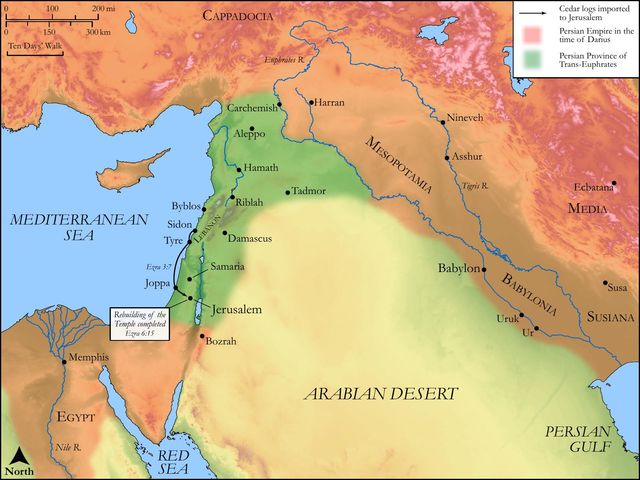
The events of Ezra 4:19 are set during the reign of Artaxerxes I Longimanus (465-424 BC), a powerful monarch of the vast Persian Empire. This empire was renowned for its sophisticated administration, which heavily relied on meticulously maintained official records and extensive archives. Major administrative centers, such as Babylon and Ecbatana (mentioned in Ezra 6:2), housed comprehensive historical documents that were routinely consulted for legal judgments, political decisions, and governance, as precisely demonstrated by Artaxerxes' command for a search. Jerusalem, despite its relatively small provincial status, possessed a long and often tumultuous history, particularly during the preceding Assyrian and Babylonian imperial periods, marked by numerous revolts against its overlords. These historical rebellions—such as Hezekiah's defiance against Sennacherib of Assyria or Zedekiah's rebellion against Nebuchadnezzar of Babylon—were meticulously documented by the conquering empires and would have been readily accessible within the Persian royal archives. The Samaritans and other peoples settled in the region, who were the primary accusers, were likely well aware of Jerusalem's past and shrewdly leveraged this historical truth to advance their own agenda of obstructing the Jewish rebuilding efforts.
Key Themes
ShowHideEzra 4:19 powerfully contributes to several overarching themes within the book of Ezra and the broader biblical narrative. Firstly, it vividly illustrates the persistent opposition to God's work and His chosen people. From the very inception of their return, the exiles faced multifaceted resistance, which escalated from subtle discouragement to direct, politically orchestrated interference. This highlights a recurring biblical truth: divine purposes often encounter formidable human and spiritual resistance, a theme powerfully echoed in the challenges faced by Nehemiah in rebuilding the wall of Jerusalem Nehemiah 4. Secondly, the verse underscores the power and double-edged nature of historical records and narratives. While such records are indispensable for effective governance and understanding the past, they can be selectively interpreted, manipulated, or even weaponized to construct damaging narratives, even when based on verifiable historical facts. The king's decision was rooted in "truth" derived from the archives, yet it served to impede God's immediate will. Lastly, and perhaps most profoundly, it subtly points to God's ultimate sovereignty, even when His plans appear to be temporarily thwarted by powerful human decrees. Though the work was halted, the overarching narrative of Ezra ultimately demonstrates that God would ensure the temple's completion, illustrating His providential control over the hearts of kings and the unfolding course of history, as profoundly articulated in the wisdom literature Proverbs 21:1.
Exposition and Analysis
ShowHideKey Word Analysis
ShowHideThis term, derived from a root meaning "to plough" or "break forth," signifies a thorough and diligent inspection or inquiry. In this context, it refers to the meticulous examination of official documents and historical records within the royal archives. The king's command for a "search" indicates a formal, bureaucratic process aimed at uncovering factual information, rather than a hasty or arbitrary decision.
From a root meaning "to lift" or "to raise," this word denotes the act of rising up in defiance or revolt against an established authority. When applied to a city, as here, it signifies a history of its inhabitants actively challenging and attempting to overthrow the ruling power. The discovery of Jerusalem's history of "insurrection" would have immediately signaled a significant threat to the stability of the Persian Empire.
This term directly signifies a state of revolt or mutiny, a deliberate and overt act of defiance against a superior power. Its use alongside "insurrection" emphasizes the deep-seated and persistent nature of Jerusalem's historical resistance to imperial rule. It paints a picture of a city not merely prone to unrest, but actively engaged in challenging the sovereignty of kings.
This word, derived from a root implying stirring up trouble, refers to the incitement of discontent or rebellion against a state. It suggests not just isolated acts of defiance but an ongoing propensity to foster unrest and instability within the kingdom. The cumulative weight of "insurrection," "rebellion," and "sedition" paints a comprehensive and damning historical portrait of Jerusalem in the eyes of Artaxerxes.
Verse Breakdown
ShowHide"And I commanded, and search hath been made"
This opening phrase underscores the king's direct and absolute authority. Upon receiving the accusations, Artaxerxes did not issue an immediate, prejudiced condemnation. Instead, he initiated a formal and systematic bureaucratic process: a thorough investigation of the royal archives. This highlights the administrative diligence and reliance on documented history characteristic of the Persian Empire's governance.
"and it is found that this city of old time hath made insurrection against kings"
This is the pivotal finding of the royal inquiry. The archival search confirmed that Jerusalem possessed a long-standing and consistent historical pattern of rebelling against various past monarchs, not merely an isolated incident. The phrase "of old time" emphasizes that this was not a recent or transient phenomenon but a deeply ingrained characteristic of the city's past, lending substantial credibility to the accusers' claims from a historical and political vantage point.
"and [that] rebellion and sedition have been made therein"
This concluding clause powerfully reiterates and amplifies the preceding statement, employing closely related synonymous terms to underscore the severity and consistency of Jerusalem's rebellious history. The accumulation of "insurrection," "rebellion," and "sedition" paints an exhaustive picture of a city historically renowned for its defiant spirit and its capacity to instigate political unrest. This comprehensive historical record provided the king with a robust justification for his subsequent decision to halt the rebuilding work, viewing it as a preventative measure against future instability.
Literary Devices
ShowHideThe language of Ezra 4:19 is characterized by a distinct Bureaucratic Tone and Legal Language, which are hallmarks of official royal decrees in the ancient Near East. The formal declaration, "And I commanded, and search hath been made, and it is found," establishes the absolute authority and legitimacy of the king's actions, presenting the findings as objective and irrefutable facts derived from official records. There is a clear element of Repetition and Emphasis achieved through the deliberate use of near-synonyms: "insurrection," "rebellion," and "sedition." This rhetorical device serves to underscore the gravity and historical consistency of Jerusalem's reputation for defiance, thereby justifying the king's decisive and seemingly reasonable response. Furthermore, a subtle Irony pervades the passage: Jerusalem, the very city chosen by God to bear His name and serve as the spiritual epicenter of His worship, is here depicted by human authorities as a persistent source of political unrest and defiance. This stark contrast highlights the inherent tension between divine purpose and human perception, a recurring and profound theme throughout biblical narratives.
Theological and Thematic Connections
ShowHideEzra 4:19 serves as a potent reminder that God's redemptive work often faces significant opposition, even from sources that appear legitimate or are rooted in historical facts. The adversaries skillfully leveraged Jerusalem's documented past rebellions to construct a compelling narrative designed to hinder the temple's reconstruction. This illustrates a crucial spiritual principle: truth, when selectively presented, taken out of its full redemptive context, or wielded with malicious intent, can be weaponized against righteous endeavors. The theological implication is that those engaged in God's kingdom work should anticipate such resistance, understanding that it is an inherent part of the spiritual battle against the forces that oppose divine purposes. However, the ultimate triumph of God's sovereign plans, despite temporary setbacks, remains a foundational truth of Scripture. This verse also implicitly highlights the complex identity of Jerusalem itself—a city uniquely chosen by God, yet tragically prone to human sin and rebellion against both earthly and heavenly kings.
Reflection and Application
ShowHideThe historical findings in Ezra 4:19, though factually accurate in isolation, were strategically employed by adversaries to halt a divinely ordained work. This situation offers a profound and timeless lesson for believers today: opposition to God's will can emerge from unexpected quarters, sometimes even cloaked in the guise of factual accuracy, legal procedure, or historical precedent. We are called to cultivate spiritual discernment, understanding that not every "truth" presented against us is intended for good, and that malicious intent can skillfully twist even legitimate information to serve unrighteous ends. When confronted with such challenges in our ministries, personal callings, or community endeavors, this passage compels us to embrace perseverance and an unwavering trust in God's ultimate sovereignty. Even when human authorities, political machinations, or seemingly insurmountable circumstances appear to block the path, we are powerfully reminded that God's overarching plans cannot ultimately be thwarted. Our appropriate response should be to earnestly pray for divine wisdom, to steadfastly continue seeking and obeying God's will, and to patiently wait for His perfect timing, confident in the knowledge that He sovereignly oversees all human affairs and orchestrates history for His glory.
Questions for Reflection
ShowHideFAQ
ShowHideWhy was Jerusalem considered rebellious by ancient kings?
ShowHideJerusalem had a long and extensively documented history of political insubordination and revolt against the various imperial powers that sought to control it. Throughout the Assyrian and Babylonian periods, its kings and people frequently rebelled against their overlords, often leading to devastating sieges, widespread destruction, and ultimately, exile. For instance, King Hezekiah's defiance against Sennacherib of Assyria 2 Kings 18:7 and King Zedekiah's rebellion against Nebuchadnezzar of Babylon 2 Kings 24:20 are prominent biblical examples. These historical precedents, meticulously recorded in imperial archives, made the accusations of the adversaries in Ezra 4:19 highly credible to King Artaxerxes, who would have viewed any potential resurgence of such rebellious behavior as a direct and existential threat to Persian imperial stability and control.
Did the king's findings truly justify stopping the rebuilding of the temple?
ShowHideFrom a purely legal and political perspective within the vast and organized Persian Empire, the historical findings of Jerusalem's rebellious past provided a legitimate and compelling basis for Artaxerxes' concern and his subsequent decision to halt the rebuilding of the city's walls and temple. The king was acting to protect the stability and integrity of his empire, based on the credible evidence presented to him from his own archives. However, from a divine and redemptive perspective, this was clearly a temporary setback to God's overarching plan for His people and the restoration of His worship. The Jewish exiles were not rebuilding in rebellion against Persian authority, but in direct obedience to God's command to restore His house in Jerusalem. While the historical facts presented were true, their application by the adversaries was undeniably malicious, strategically aimed at hindering God's work. Nevertheless, God's ultimate purpose prevailed, and the temple was indeed completed during the reign of Darius, as later recorded in the book of Ezra Ezra 6:14-15.
Christ-Centered Fulfillment
ShowHideEzra 4:19, with its stark depiction of Jerusalem's historical reputation for rebellion and the subsequent opposition faced by God's people in their rebuilding efforts, finds profound and multifaceted Christ-centered fulfillment. While the earthly Jerusalem was indeed a city prone to insurrection against human kings, it tragically became the very city that would ultimately reject its true and rightful King, Jesus Christ. He came not to lead a political rebellion against Rome, but to establish a spiritual kingdom, yet He was unjustly accused of sedition and treason against Caesar Luke 23:2. The persistent opposition faced by the returning exiles in Ezra powerfully foreshadows the far greater and more intense opposition Christ Himself and His nascent church would endure from both religious and political authorities John 15:20. However, unlike the earthly city whose history was tragically marred by rebellion and ultimate destruction, Christ inaugurates a new covenant and builds a spiritual temple—His church—against which "the gates of hell shall not prevail" Matthew 16:18. His kingdom is decidedly "not of this world" John 18:36, yet it is destined to triumph decisively over all earthly opposition, false accusations, and temporary setbacks. This divine victory culminates in the establishment of the New Jerusalem, a city of perfect peace, righteousness, and eternal worship, where "God himself will be with them and be their God" Revelation 21:3. Thus, the temporary halting of the temple work in Ezra points forward to the ultimate, eternal victory secured by the Lamb of God, who truly takes away the sin of the world, including humanity's deep-seated rebellion against its Creator.