


Ezekiel 25:17
Bible text: King James Version (1769 Blayney text) · Public domain
Bible text: Berean Standard Bible · Public domain
Bible text: American Standard Version (1901) · Public domain
Bible text: World English Bible, Messianic edition · Public domain
Bible text: Geneva Bible (1599) · Public domain
Bible text: Young's Literal Translation · Public domain
- וְעָשִׂיתִיve·'a·Si·tiand I will doH6213Conj-w ¦ V-Qal-ConsecPerf-1csVerb Qal Consecutive Perfect 1st Singular common genderוְandעָשִׂיתִיI will do
- בָםvamon themPrep-b ¦ 3mpSuffix Personal 3rd Plural Masculineבָonםthem
- נְקָמוֹתne·ka·Motvengeance<s>H5360N-fpNoun Plural Feminine Absolute
- גְּדֹלוֹתge·do·LotgreatH1419Adj-fpAdjective Plural Feminine Absolute
- בְּתוֹכְחוֹתbe·tokh·Chotwith rebukes ofH8433Prep-b ¦ N-fpcNoun Plural Feminine Constructבְּwithתוֹכְחוֹתrebukes of
- חֵמָהche·MahrageH2534N-fsNoun Singular Feminine Absolute
- וְיָדְעוּve·ya·de·'Uand they will knowH3045Conj-w ¦ V-Qal-ConsecPerf-3cpVerb Qal Consecutive Perfect 3rd Plural common genderוְandיָדְעוּthey will know
- כִּיkithatH3588PrtParticle Conditional
- אֲנִי'a·NiIH589Pro-1csPronoun Personal 1st Singular common gender
- יְהוָהYah·weh[am] YahwehH3068N-properNoun Proper Title
- בְּתִתִּיbe·ti·Tiwhen I have putH5414Prep-b ¦ V-Qal-Inf ¦ 1csVerb Qal Infinitive Constructבְּwhenתִתִּhave putיI
- אֶת'et<obj.>H853DirObjMParticle Object Indicator
- נִקְמָתִיnik·ma·Timy vengeanceH5360N-fsc ¦ 1csNoun Singular Feminine Constructנִקְמָתִvengeanceיmy
- בָּםBamon themPrep-b ¦ 3mpSuffix Personal 3rd Plural Masculineבָּonםthem
English is a literal word-by-word gloss of the Hebrew, not the KJV's wording. Why?
This is the original text the KJV's translators worked from — each Hebrew word with its own literal English meaning in this verse, prepared by scholars at Tyndale House, Cambridge. The KJV translates whole sentences, not word by word, so its wording differs: one Hebrew word can become several English words, and the KJV may choose “the LORD” where the gloss reads “Yahweh”. Both are faithful — they answer different questions. For the KJV's own rendering, switch to the KJV text.
Details
See on the biblical-era map
Study this verse
Public-domain commentary
Matthew Henry
From his Commentary on the Whole Bible. Henry comments on passages, not single verses — this entry covers Ezekiel 25:8–17. His three-level outline is real structure in the source text, so it is rendered as structure.
Three more of Israel's ill-natured neighbours are here arraigned, convicted, and condemned to destruction, for contributing to and triumphing in Jerusalem's fall.
I.The Moabites.
Seir, which was the seat of the Edomites, is joined with them (Eze 25:8), because they said the same as the Moabites; but they were afterwards reckoned with by themselves, Eze 25:12. Now observe,
1.What was the sin of the Moabites; they said, Behold, the house of Judah is like unto all the heathen. They triumphed,
(1.)In the apostasies of Israel, were please to see them forsake their God and worship idols, and hoped that in a while their religion would be quite lost and forgotten and the house of Judah would be like all the heathen, perfect idolaters. When those that profess religion walk unworthy of their profession they encourage the enemies of religion to hope that it will in time sink, and be run down, and quite abandoned; but let the Moabites know that, though there are those of the house of Judah who have made themselves like the heathen, yet there is a remnant that retain their integrity, the religion of the house of Judah shall recover itself, its peculiarities shall be preserved, it shall not lose itself among the heathen, but distinguish itself from them, till it deliver itself honourably into a better institution.
(2.)In the calamities of Israel. They said, "The house of Judah is like all the heathen, in as bad a state as they; their God is no more able to deliver them from this overflowing scourge of these parts of the world than the gods of the heathen are to deliver them. Where are the promises they gloried in and all the wonders which they and their fathers told us of? What the better are they for the covenant of peculiarity, upon which they so much valued themselves? Those that looked with so much scorn upon all the heathen are now set upon a level with them, or rather sunk below them." Note, Those who judge only by outward appearance are ready to conclude that the people of God have lost all their privileges when they have lost their worldly prosperity, which does not follow, for good men, even in affliction, in captivity among the heathen, have graces and comforts within sufficient to distinguish them from all the heathen. Though the event seem one to the righteous and wicked, yet indeed it is vastly different.
2.What should be the punishment of Moab for this sin; because they triumphed in the overthrow of Judah, their country shall be in like manner overthrown with that of the Ammonites, who were guilty of the same sin (Eze 25:9, Eze 25:10): "I will open the side of Moab, will uncover its shoulder, will take away all its defences, that it may become an easy prey to any that will make a prey of it." (1.) See here how it shall be exposed; the frontier-towns, that were its strength and guard, shall be demolished by the Chaldean forces, and laid open. Some of the cities are here named, which are said to be the glory of the country, which they trusted in, and boasted of as impregnable; these shall decay, be deserted, or betrayed, or fall into the enemies' hands, so that Moab shall lie exposed, and whoever will may penetrate into the heart of the country. Note, Those who glory in any other defence and protection than that of the divine power, providence, and promise, will sooner or later see cause to be ashamed of their glorying. (2.) See here to whom it shall be exposed: The men of the east, when they come to take possession of the country of the Ammonites, shall seize that of the Moabites too. God, the Lord of all lands, will give them that land; for the kingdoms of men he gives to whomsoever he will. The Arabians, who are shepherds, and live quietly, plain men dwelling in tents, shall by an overruling Providence be put in possession of the land of the Moabites, who are soldiers, men of war, and cunning hunters, that live turbulently. The Chaldeans shall get it by war, and the Arabians shall enjoy it in peace. Concerning the Ammonites it is said, They shall no more be remembered among the nations (Eze 25:10), for they had been accessory to the murder of Gedaliah, Jer 40:14. But of the Moabites it is said, I will execute judgments upon Moab; they shall feel the weight of God's displeasure, but perhaps not to that degree that the Ammonites shall; however, so far as that they shall know that I am the Lord, that the God of Israel is a God of power, and that his covenant with his people is not broken.
II.The Edomites, the posterity of Esau, between whom and Jacob there had been an old enmity. And here is,
1.The sin of the Edomites, Eze 25:12. They not only triumphed in the ruin of Judah and Jerusalem, as the Moabites and Ammonites had done, but they took advantage from the present distressed state to which the Jews were reduced to do them some real mischiefs, probably made inroads upon their frontiers and plundered their country: Edom has dealt against the house of Judah by taking vengeance. The Edomites had of old been tributaries to the Jews, according to the sentence that the elder should serve the younger. In Jehoram's time they revolted. Amaziah severely chastised them (Kg2 14:7), and for this they took vengeance. Now they would pay off all the old scores, and not only incensed the Babylonians against Jerusalem, crying, Rase it, rase it (Psa 137:7), but cut off those that escaped, as we find in the prophecy of Obadiah, which is wholly directed against Edom, Eze 25:11, Eze 25:12, etc. It is called here revenging a revenge, which intimates that they were not only eager upon it, but very cruel in it, and recompensed to the Jews more than double. "Herein he has greatly offended." Note, It is a great offence to God for us to revenge ourselves upon our brother; for God has said, Vengeance is mine. We are forbidden to revenge or to bear a grudge. Suppose Judah had been hard upon Edom formerly, it was a base thing for the Edomites now, in revenge for it, to smite them secretly. But the Jews had a divine warrant to reign over the Edomites, for that therefore they ought not to have made reprisals; and it was the more disingenuous for them to retain the old enmity when God had particularly commanded his people to forget it. Deu 23:7, Thou shalt not abhor an Edomite.
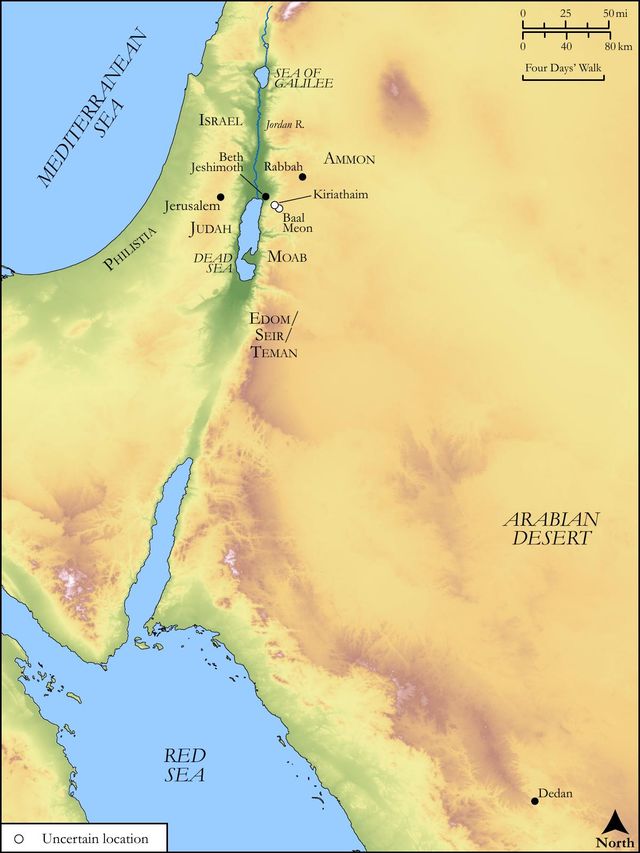
2.The judgments threatened against them for this sin. God will take them to task for it (Eze 25:13): I will stretch out my hand upon Edom Their country shall be desolate from Teman, which lay in the south part of it; and they shall fall by the sword unto Dedan, which lay north; the desolations of war should go through the nation.
(1.)They had taken vengeance, and therefore God will lay his vengeance upon them (Eze 25:14): They shall know my vengeance. Those that will not leave it to God to take vengeance for them may expect that he will take vengeance on them; and those that will not believe and fear his vengeance shall be made to know and feel his vengeance; they shall be dealt with according to God's anger and according to his fury, not according to the weakness of the instruments that are employed in it, but according to the strength of the arm that employs them.
(2.)They had taken vengeance on Israel, and God will lay his vengeance on them by the hand of his people Israel. They suffered much by the Chaldeans, which seems to be referred to, Jer 49:8. But besides that there were saviours to come upon Mount Zion, who should judge the mount of Esau (Oba 1:21), and Israel's Redeemer comes with dyed garments from Bozrah (Isa 63:1), this implies a promise that Israel should recover itself again to such a degree as to be in a capacity of curbing the insolence of its neighbours. And we find (1 Macc. 5:3) that Judas Maccabeus fought against the children of Esau in Idumea, gave them a great overthrow, abated their courage, and took their spoil; and Josephus says (Antiq. 13.257), that Hircanus made the Edomites tributaries to Israel. Note, The equity of God's judgments is to be observed when he not only avenges injuries upon those that did them, but by those against whom they were done.
III.The Philistines. And,
1.Their sin is much the same with that of the Edomites: They have dealt by revenge with the people of Israel, and have taken vengeance with a despiteful heart, not to disturb them only, but to destroy them, for the old hatred (Eze 25:15), the old grudge they bore them, or (as the margin reads it) with perpetual hatred, a hatred that began long since and which they resolved to continue. The anger was implacable: they dealt by revenge, traded in the acts of malice; it was their constant practice, and their heart, their spiteful heart, was upon it.
2.Their punishment likewise is much the same, Eze 25:16. Those that were for destroying God's people shall themselves be cut off and destroyed; and (Eze 25:17) those that were for avenging themselves shall find that God will execute great vengeance upon them. This was fulfilled when that country was wasted by the Chaldean army, not long after the destruction of Jerusalem, which is foretold, Jer 47:1-7. It was strange that these nations, which bordered upon the land of Israel, were not alarmed by the success of the Chaldean army, and made to tremble in the apprehension of their own danger; when their neighbour's house was on fire it was time to look to their own; but their impiety and malice made them forget their politics, till God by his judgments convinced them that the cup was going round, and they were the less safe for being secure.
Historical interpretation
Historical reception
2 surviving comments on this verse. Each one is dated, so this reads as a timeline rather than a list.
(Verse 35, 36, and following) And I will bring you into a desert of peoples, and there I will judge you face to face. Just as I contended with your fathers in the desert of the land of Egypt, so I will judge you, says the Lord. And I will subject you to my scepter, and I will bring you into the bonds of the covenant, and I will choose from among you the transgressors and the wicked: from their place of residence I will bring them out, and they will not enter the land of Israel, and you will know that I am the Lord. Thus says the Lord: I will do for you who are in Babylon, and now serve idols, what I did for your ancestors in Egypt. I will lead you into the desert of the peoples, and there I will judge you face to face, just as I contended with them in judgment when they came out of Egypt. And after I have judged you, I will subject you to my scepter and rule, and I will make a covenant with you and bring you into your land with the bonds of love, so that bound by my love, you will never be able to depart from me. But I will choose from among you the transgressors and the wicked, who persist in the hardness of their hearts in evil deeds, not for possession, but for rejection. And I will indeed bring them out of the land of their dwelling, so that when they are brought out, they will not enter the land of Israel; but they will perish in various regions. And by the distinction between good and evil, you shall know that I am the Lord, who judges all things. The rest of the discourse hastens, and we briefly go through each point, in order to provide only the meaning to the readers.
(Verse 27, 29 onwards) Therefore speak to the house of Israel, son of man, and tell them: Thus says the Lord God: Moreover, your fathers have blasphemed against me and have treated me with contempt, even as they spurned me. And I brought them into the land that I had lifted my hand to give them ((Vulgate adds: that land)): they saw every high hill and every leafy tree, and there they offered their sacrifices and presented there the irritation of their offerings, and they placed there the fragrance of their sweetness, and they poured out their ((Vulgate is silent on this)) libations there. And I said to them, 'What is the high place to which you are going?' And its name was called the High Place until this day. Therefore speak to the house of Israel, son of man, and say to them, 'Thus says the Lord God: As for your fathers, they have provoked Me to anger by their iniquities, by the fact that they have fallen away from Me. So I brought them into the land that I had lifted My hand in an oath to give them.' They saw every high hill and every leafy tree, and there they offered their sacrifices. They also presented there the provocation of their gifts, and they set there their pleasing aroma, and they poured out there their drink offerings. And I said to them: What is abbana, because you enter there? And they called its name abbana until this day. I wanted, he said, to scatter them in the wilderness, and to give them not good precepts, so that they would sacrifice to idols what they should have offered to me, and consecrate all their first-fruits to them by fire, so that I might kill them and destroy them. But when he says, I wanted, he shows that he did not do what he wanted. And that which follows: 'And they shall know that I am the Lord,' is not found in the Septuagint. For it did not seem fitting to them to know after their destruction that he himself is the Lord. But you, son of man, speak again to them, that is, to the elders of the house of Israel, who have come to inquire of you: Your fathers, from whom you have descended, have also blasphemed against me and held me in contempt; after I brought them into the land which I had given them to possess, they turned against me to provoke me. For when they saw every high hill and leafy tree, they would sacrifice on the mountains and in the groves and thickets, and offer victims to the idols, and pour out libations. And when I saw this, I said to them: What is this, Bama? for it is called high: or why do you enter into such a place which you have chosen for yourselves in all the hills, so that even today these places are called Bamoth, and the ancient error retains its original name? Regarding Bama, which we translate as excelsum, there is an error in the Septuagint edition, where it is written as ἀββανὰ, which does not resonate in the Hebrew language. Bama can mean 'in which' if the two syllables are divided into two words, but in the present context, that sense does not fit. However, wherever it is written in the Books of Kings and Chronicles: 'The people still sacrificed and offered incense on the high places,' Bama in the singular and Bamoth in the plural mean 'high places.'
Continue studying Ezekiel 25:17 across the web’s major study libraries — every link below opens this exact verse, chapter, or book on the destination site.
Read & Compare
 BibleGatewayThis verse in more than 200 translations and 70 languages.
 Bible.comThe YouVersion reader — hundreds of translations, reading plans, and highlights.
 ESV.orgCrossway's official English Standard Version reader.
 NET BibleThe NET translation with 60,000+ translators' notes on every rendering decision.
 STEP BibleTyndale House's free study tool — original text, vocabulary, and scholarly resources.
 BibliaLogos Bible Software's free web reader.
 USCCBThe New American Bible (Revised Edition) with the U.S. bishops' study notes.
Commentaries
 BibleHub CommentariesDozens of classic commentaries on this verse, gathered on one page.
 StudyLightMore than 100 commentary sets — the largest collection on the web.
 BibleRefPlain-English commentary on what this verse means, verse by verse.
 Enduring WordDavid Guzik's free commentary on this chapter, widely used by Bible teachers.
 Bible Study ToolsVerse commentary alongside Greek and Hebrew study aids.
Original Language & Research
- BibleHub InterlinearThe verse word by word — original language, transliteration, and English.
- BibleHub LexiconEvery word's original-language definition and Strong's entry.
 Blue Letter BibleDeep-study tools — Strong's numbers, concordance, and word studies.
 SefariaThe Hebrew text with Rashi and centuries of Jewish commentary.
Sermons, Hymns & Audio


TrulyRandomVerse is not affiliated with these sites and doesn’t control their content. They’re linked because they’re genuinely useful.
Summary
Ezekiel 25:17 delivers a powerful divine pronouncement of judgment against the Philistines, asserting that God Himself will execute decisive and overwhelming vengeance upon them, accompanied by furious rebukes. This climactic statement within the oracles against the nations is not merely a punitive act but a profound revelatory one. Its ultimate purpose is to ensure that through this undeniable divine intervention, the Philistines and all who witness it will be compelled to recognize the Lord's supreme authority, unique identity, and unwavering commitment to justly repay those who act with malicious intent against His covenant people.
Context
ShowHideLiterary Context
Ezekiel 25:17 serves as the climactic conclusion to a specific oracle against the Philistines (verses 15-17), which itself is part of a larger prophetic section (Ezekiel 25-32) detailing God's judgments against various surrounding nations. This chapter begins with pronouncements against Ammon, Moab, and Edom, establishing a pattern of divine retribution for their hostile actions and gloating over Judah's downfall. The Philistine oracle specifically condemns their "perpetual hatred" and "vengeful spirit" (Ezekiel 25:15) against Judah, culminating in the declaration of God's direct and severe intervention. The severity of the language in verse 17, particularly the emphasis on God's personal execution of vengeance, underscores the gravity of their historical animosity and recent exploitation of Judah's vulnerability. This entire section of oracles against the nations functions as a crucial theological bridge within Ezekiel, demonstrating God's universal sovereignty and His righteous governance over all peoples, before the prophetic focus shifts back to the restoration of Jerusalem and Israel in Ezekiel 33.
Historical & Cultural Context
The Philistines, originating from the Aegean Sea region (likely Caphtor/Crete) and settling on the southwestern coastal plain of Canaan, were ancient and persistent adversaries of Israel. Their history is replete with conflicts spanning from the period of the Judges (e.g., the narratives of Samson in Judges 13-16) through the United Monarchy (e.g., David and Goliath in 1 Samuel 17). By the time of Ezekiel's prophecy in the 6th century BCE, Judah had been severely weakened and ultimately conquered by Babylon, with Jerusalem and its temple destroyed in 586 BCE. Rather than showing compassion or neutrality, the Philistines seized upon Judah's calamity, expressing deep-seated animosity, encroaching on their territory, and possibly participating in the plunder. Their "perpetual hatred" (or "ancient enmity") reflects centuries of ingrained hostility and a desire for Israel's complete demise. This historical backdrop highlights that God's pronounced judgment is not arbitrary but a just and righteous response to a long history of malicious intent and active participation in the suffering of His covenant people.
Key Themes
ShowHideEzekiel 25:17 powerfully encapsulates several core themes that permeate the entire book of Ezekiel. Foremost is the theme of Divine Justice and Retribution, asserting God's unwavering commitment to righting wrongs and punishing those who maliciously oppose His purposes and harm His people. The "great vengeance" is presented as a righteous act, demonstrating God's unblemished moral character and His active involvement in the affairs of nations. Second, the recurring theological motif, "they shall know that I am the LORD," is central to the Revelation of God's Sovereignty and Identity. This phrase, appearing over 70 times in Ezekiel, signifies that God's actions, particularly His judgments and restorations, are ultimately designed to reveal His unique power, authority, and covenant faithfulness to both Israel and the surrounding nations (Ezekiel 6:7, Ezekiel 36:23). Through these decisive interventions, even hostile nations are compelled to acknowledge the Lord's supremacy. Finally, the passage underscores the Consequences of Malice and Hatred, serving as a stark warning that actions born of deep-seated animosity and vengeful spirits against God's chosen will inevitably incur divine wrath, as explicitly stated regarding the Philistines' "perpetual hatred" in Ezekiel 25:15.
Exposition and Analysis
ShowHideKey Word Analysis
ShowHideThis term refers to avengement or retribution, encompassing both the act and the passion of vengeance. In the context of divine action, it is crucial to understand that God's vengeance is not akin to human vindictiveness or uncontrolled rage. Instead, it is a righteous, just, and measured response to severe wrongdoing, particularly when His covenant people are harmed or His moral order is violated. It signifies God's commitment to upholding justice, restoring equilibrium, and demonstrating His holy character against persistent evil.
This word denotes heat, and figuratively, anger, or even poison. When paired with "rebukes" (tôwkêchâh), it intensifies the nature of God's chastisement. It indicates a strong, indignant, and passionate expression of divine wrath against deep-seated evil, persistent rebellion, and malicious intent. This word highlights the depth of God's righteous displeasure, emphasizing that His judgment is not detached or indifferent, but born of a holy indignation against injustice.
This primitive root signifies to know, properly to ascertain by seeing, but it is used in a vast variety of senses, including recognition, understanding, and experiential knowledge. In the phrase "they shall know that I am the LORD," it implies far more than mere intellectual assent. It refers to a forced, undeniable, and experiential recognition of God's power, authority, and unique identity, brought about through His decisive and often overwhelming actions. This "knowing" is an inescapable acknowledgment that comes through witnessing His sovereign hand at work in history, particularly through His judgments.
Verse Breakdown
ShowHide"And I will execute great vengeance upon them with furious rebukes"
This opening clause powerfully emphasizes God's direct, active, and intense involvement in the impending judgment. The combination of "execute" (from H6213 'âsâh, "to do/make") and "great vengeance" (H1419 gâdôwl "great" and H5360 nᵉqâmâh "vengeance") signifies a decisive, comprehensive, and overwhelming act of divine retribution. The addition of "with furious rebukes" (H2534 chêmâh "furious" and H8433 tôwkêchâh "rebukes/chastisement") further intensifies the divine response, portraying it as a severe, indignant, and authoritative chastisement. This is God's just and passionate response to the Philistines' long-standing "perpetual hatred" and malicious actions against Judah.
"and they shall know that I [am] the LORD, when I shall lay my vengeance upon them"
This second clause reveals the ultimate, revelatory purpose behind God's judgment. The phrase "they shall know that I am the LORD" (H3045 yâdaʻ "know" and H3068 Yᵉhôvâh "LORD") is a pivotal theological motif in Ezekiel, signifying that God's acts, whether of judgment or salvation, are ultimately designed to reveal His unique, sovereign identity and power. The Philistines, through the experience of God's decisive retribution, will be compelled to acknowledge His supremacy. The timing is explicitly stated: this experiential knowledge will come precisely "when I shall lay my vengeance upon them," underscoring that the judgment itself is the undeniable means by which God's identity and authority are unequivocally revealed to the nations.
Literary Devices
ShowHideEzekiel 25:17 employs several potent literary devices to convey its message with maximum impact. Anthropomorphism is evident in the depiction of God executing "great vengeance" and delivering "furious rebukes," attributing human-like actions and emotions (vengeance, fury) to God. This is not to suggest human imperfection, but rather to communicate the intensity, personal nature, and righteous indignation of His justice in terms comprehensible to human understanding. Repetition of the word "vengeance" ("great vengeance" and "lay my vengeance") serves to emphasize the certainty, totality, and divine origin of the retribution. This reiteration underscores that the judgment is not accidental or incidental, but a deliberate, measured, and inevitable act of divine justice. Furthermore, the verse functions as a powerful Theological Statement, particularly in the recurring phrase "they shall know that I am the LORD." This is a declarative assertion of God's ultimate sovereignty and the revelatory purpose behind His judgments, transforming punitive action into a profound demonstration of His unique identity, power, and authority to all who witness His work.
Theological and Thematic Connections
ShowHideEzekiel 25:17 profoundly articulates God's unwavering commitment to justice and His ultimate sovereignty over all nations. It reveals that divine judgment is not merely punitive but possesses a revelatory purpose, designed to make God's identity and authority known to both His people and the hostile nations. The "great vengeance" is a manifestation of His holiness and righteousness, demonstrating that He will not tolerate sustained malice, active opposition, or exploitation of His covenant people. This passage offers profound assurance to believers that God sees and will address wrongs, even when justice seems delayed or denied in the temporal realm. It serves as a powerful reminder that all nations, rulers, and individuals are ultimately accountable to the Creator. Crucially, it distinguishes divine vengeance from human vindictiveness, portraying God's actions as perfectly righteous, just, and aimed at restoring righteousness and revealing His glory, rather than being driven by petty emotion or disproportionate retaliation.
Reflection and Application
ShowHideEzekiel 25:17 challenges us to grapple with the awe-inspiring nature of divine justice and to critically examine our own responses to injustice in the world. While God's vengeance is a terrifying prospect for those who persistently oppose Him, for His people, it offers profound comfort, assurance, and a basis for hope. It reminds us that God is neither passive nor indifferent to the suffering of the innocent or the malicious actions of the wicked. In a world frequently marked by unpunished evil, pervasive injustice, and cries for retribution, this verse affirms that God is the ultimate arbiter, and His perfect justice will ultimately prevail. It calls us to cultivate a deep trust in His timing and His sovereign methods, rather than succumbing to the temptation of seeking personal retribution, remembering the New Testament injunction that "vengeance is mine, I will repay, says the Lord" (Romans 12:19). Furthermore, the revelatory aspect—"they shall know that I am the LORD"—invites us to consider how God's actions in our own lives, whether through discipline, deliverance, or the unfolding of His redemptive plan, are ultimately designed to deepen our experiential knowledge and worship of Him, and to equip us to bear faithful witness to His truth and character in a world desperately in need of knowing Him.
Questions for Reflection
ShowHideFAQ
ShowHideDoes God's "vengeance" imply He is vindictive like humans?
ShowHideNo, God's "vengeance" (Hebrew: nᵉqâmâh) is fundamentally and qualitatively different from human vindictiveness. While human vengeance is often driven by personal malice, uncontrolled emotion, or a desire for disproportionate retaliation, God's vengeance is a pure expression of His perfect righteousness, holiness, and justice. It is a measured, just, and necessary response to persistent evil, rebellion, and malicious actions against His moral order and His covenant people. It aims to uphold His righteous character, restore justice, and ultimately reveal His sovereignty, as explicitly stated in the phrase "they shall know that I am the LORD" (Ezekiel 25:17). It is a holy act of retribution, not an emotional outburst or a flaw in His character.
What does it mean for "them to know that I am the LORD"?
ShowHideThis recurring phrase in Ezekiel (found over 70 times) signifies a forced, undeniable, and experiential recognition of God's unique identity, power, and absolute authority. It is not merely intellectual knowledge or a theological concept, but a profound, undeniable awareness brought about through God's decisive and often overwhelming actions, particularly His judgments. When God "lays His vengeance" upon the Philistines, their destruction will be so clear, comprehensive, and undeniably divine that they, and all who witness it, will be compelled to acknowledge that the God of Israel, Yahweh, is the one true, sovereign God over all nations and all history. This revelation serves to glorify God and validate His prophetic word, demonstrating that He is faithful to His promises, both of blessing and judgment (Ezekiel 6:7).
Christ-Centered Fulfillment
ShowHideEzekiel 25:17, with its declaration of divine vengeance and the ultimate purpose that "they shall know that I am the LORD," finds its profound Christ-centered fulfillment in the person and redemptive work of Jesus Christ. While this Old Testament passage speaks of God's righteous judgment against nations for their historical malice, the New Testament reveals that all judgment has been committed to the Son (John 5:22). Jesus, who came first as the Lamb of God to take away the sin of the world (John 1:29), came initially not to condemn the world but to save it (John 3:17). However, His second coming will be marked by the execution of righteous judgment, where He will decisively administer divine justice upon all who have rejected Him and persistently opposed God's kingdom. The "furious rebukes" and "great vengeance" foreshadow the ultimate wrath of God poured out on unrepentant sin, a reality fully realized in the eschatological judgments described in the book of Revelation, where Christ is depicted as the Rider on the white horse, executing righteous judgment and waging war against His enemies (Revelation 19:11-16). Ultimately, it is through Christ that humanity truly "knows that I am the LORD," for He is the perfect and complete revelation of the Father (John 14:9). Every knee will one day bow and every tongue confess that Jesus Christ is Lord, to the glory of God the Father (Philippians 2:10-11), fulfilling the ultimate purpose of God's self-revelation through both His saving grace and His just judgment.