


Exodus 37:25
Bible text: King James Version (1769 Blayney text) · Public domain
Bible text: King James Version with Strong's numbers · Public domain
Bible text: Berean Standard Bible · Public domain
Bible text: American Standard Version (1901) · Public domain
Bible text: World English Bible, Messianic edition · Public domain
Bible text: Geneva Bible (1599) · Public domain
Bible text: Young's Literal Translation · Public domain
- וַיַּעַשׂvai·Ya·'asand he madeH6213Conj-w ¦ V-Qal-ConsecImperf-3msVerb Qal Consecutive Imperfect 3rd Singular Masculineוַandיַּעַשׂhe made
- אֶת'et<obj.>H853DirObjMParticle Object Indicator
- מִזְבַּחmiz·Bach[the] altar ofH4196N-mscNoun Singular Masculine Construct
- הַקְּטֹרֶתha·ke·To·ret<the> incenseH7004Art ¦ N-fsNoun Singular Feminine Absoluteהַ<the>קְּטֹרֶתincense
- עֲצֵי'a·Tzeiwood<s> ofH6086N-mpcNoun Plural Masculine Construct
- שִׁטִּיםshi·TimacaciaH7848N-mpNoun Plural Masculine Absolute
- אַמָּה'a·Mah[was] a cubitH520N-fsNoun Singular Feminine Absolute
- אָרְכּוֹ'a·re·Koits lengthH753N-msc ¦ 3msNoun Singular Masculine Constructאָרְכּlengthוֹits
- וְאַמָּהve·'a·Mahand [was] a cubitH520Conj-w ¦ N-fsNoun Singular Feminine Absoluteוְandאַמָּה[was] a cubit
- רָחְבּוֹra·che·Boits breadthH7341N-msc ¦ 3msNoun Singular Masculine Constructרָחְבּbreadthוֹits
- רָבוּעַra·Vu·a'squareH7251V-Qal-PassPrtcpl-msVerb Qal Participle Passive Singular Masculine Absolute
- וְאַמָּתַיִםve·'a·ma·Ta·yimand [was] two cubitsH520Conj-w ¦ N-fdNoun Dual Feminine Absoluteוְandאַמָּתַיִם[was] two cubits
- קֹמָתוֹko·ma·Toits heightH6967N-fsc ¦ 3msNoun Singular Feminine Constructקֹמָתheightוֹits
- מִמֶּנּוּmi·Me·nufrom itH4480Prep ¦ 3msPreposition Definiteמִמֶּfromנּוּit
- הָיוּha·Yuthey wereH1961V-Qal-Perf-3cpVerb Qal Perfect 3rd Plural common gender
- קַרְנֹתָיוkar·no·Tavits hornsH7161N-fpc ¦ 3msNoun Plural Feminine Constructקַרְנֹתָיhornsוits
English is a literal word-by-word gloss of the Hebrew, not the KJV's wording. Why?
This is the original text the KJV's translators worked from — each Hebrew word with its own literal English meaning in this verse, prepared by scholars at Tyndale House, Cambridge. The KJV translates whole sentences, not word by word, so its wording differs: one Hebrew word can become several English words, and the KJV may choose “the LORD” where the gloss reads “Yahweh”. Both are faithful — they answer different questions. For the KJV's own rendering, switch to the KJV text.
Details
See on the biblical-era maps

Study this verse
Public-domain commentary
Matthew Henry
From his Commentary on the Whole Bible. Henry comments on passages, not single verses — this entry covers Exodus 37:25–29.
Here is, 1. The making of the golden altar, on which incense was to be burnt daily, which signified both the prayers of saints and the intercession of Christ, to which are owing the acceptableness and success of those prayers. The rings and staves, and all the appurtenances of this altar, were overlaid with gold, as all the vessels of the table and candlestick were of gold, for these were used in the holy place. God is the best, and we must serve him with the best we have; but the best we can serve him with in his courts on earth is but as brass, compared with the gold, the sinless and spotless perfection, with which his saints shall serve him in his holy place above. 2. The preparing of the incense which was to be burnt upon this altar, and with it the holy anointing oil (Exo 37:29), according to the dispensatory, Exo 30:22, etc. God taught Bezaleel this art also; so that though he was not before acquainted with it yet he made up these things according to the work of the apothecary, as dexterously and exactly as if he had been bred up to the trade. Where God gives wisdom and grace, it will make the man of God perfect, thoroughly furnished to every good work.
Continue studying Exodus 37:25 across the web’s major study libraries — every link below opens this exact verse, chapter, or book on the destination site.
Read & Compare
 BibleGatewayThis verse in more than 200 translations and 70 languages.
 Bible.comThe YouVersion reader — hundreds of translations, reading plans, and highlights.
 ESV.orgCrossway's official English Standard Version reader.
 NET BibleThe NET translation with 60,000+ translators' notes on every rendering decision.
 STEP BibleTyndale House's free study tool — original text, vocabulary, and scholarly resources.
 BibliaLogos Bible Software's free web reader.
 USCCBThe New American Bible (Revised Edition) with the U.S. bishops' study notes.
Commentaries
 BibleHub CommentariesDozens of classic commentaries on this verse, gathered on one page.
 StudyLightMore than 100 commentary sets — the largest collection on the web.
 BibleRefPlain-English commentary on what this verse means, verse by verse.
 Enduring WordDavid Guzik's free commentary on this chapter, widely used by Bible teachers.
 Bible Study ToolsVerse commentary alongside Greek and Hebrew study aids.
Original Language & Research
- BibleHub InterlinearThe verse word by word — original language, transliteration, and English.
- BibleHub LexiconEvery word's original-language definition and Strong's entry.
 Blue Letter BibleDeep-study tools — Strong's numbers, concordance, and word studies.
 SefariaThe Hebrew text with Rashi and centuries of Jewish commentary.
Sermons, Hymns & Audio


TrulyRandomVerse is not affiliated with these sites and doesn’t control their content. They’re linked because they’re genuinely useful.
Summary
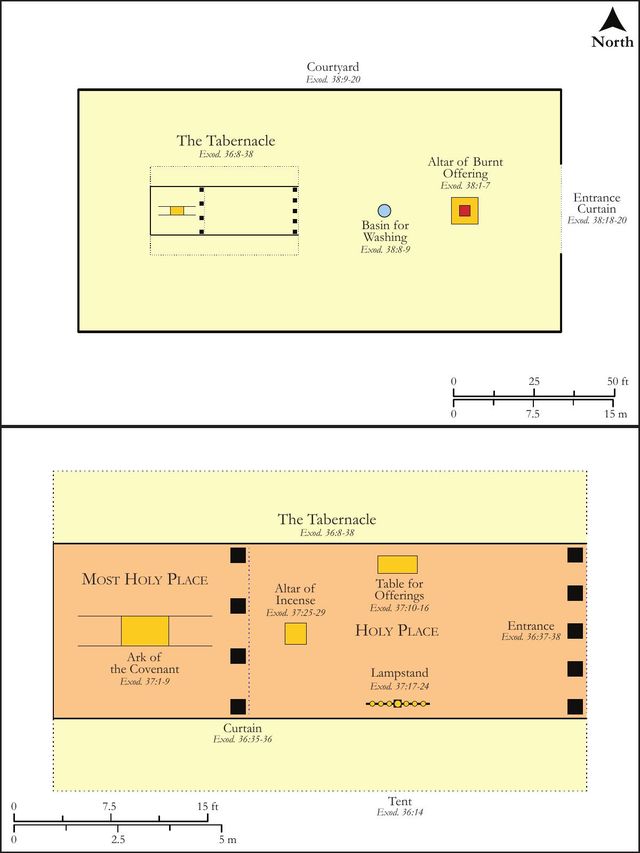
Exodus 37:25 provides a meticulous record of the construction of the incense altar, a vital furnishing for the Tabernacle, fashioned by Bezaleel according to precise divine specifications. This sacred altar, distinct from the brazen altar of burnt offering, was crafted from durable shittim wood, overlaid with pure gold, and dimensioned as a compact, foursquare structure with prominent horns at its corners. Its strategic placement within the Holy Place, directly before the veil separating it from the Most Holy Place, underscored its profound significance in the daily worship, prayer, and intercession of ancient Israel.
Context
ShowHideLiterary Context
Exodus 37:25 is situated within the latter portion of the book of Exodus, specifically in the detailed account of the Tabernacle's construction (chapters 35-40). This section serves as the fulfillment and faithful execution of the divine commands given to Moses on Mount Sinai, particularly those outlined in Exodus 25-31. Following the instructions for the Ark of the Covenant, the Table of Showbread, and the Lampstand, the specific blueprint for the incense altar was given in Exodus 30:1-10. Chapters 36-39 then describe the skilled artisans, led by Bezaleel and Aholiab, faithfully executing these divine blueprints, demonstrating Israel's obedience and the meticulous nature of God's design for worship. The construction account systematically moves from the most holy objects to the outer furnishings, emphasizing the centrality of God's presence and the progression of access to Him.
Historical & Cultural Context
The Tabernacle itself served as God's portable dwelling place among His people, symbolizing His immanent presence and establishing a divinely ordained means for humanity to approach a holy God. Altars were common features in religious worship, from the altars of the patriarchs to those the nations raised to their gods, often varying in size, material, and purpose. However, the Tabernacle's furnishings, including the incense altar, were unique in their precise divine specifications, distinguishing Israelite worship from pagan practices. The use of "shittim wood" (acacia) was practical for the desert environment due to its exceptional durability and resistance to decay, but it also held symbolic weight. The concept of horns on altars was prevalent in the region, typically signifying strength, power, and often serving as a place of refuge for those seeking asylum (1 Kings 1:50). For the incense altar, these horns were uniquely touched with the blood of the sin offering on the annual Day of Atonement, as prescribed in Exodus 30:10, signifying cleansing and the efficacy of atonement for the altar itself.
Key Themes
ShowHideThis verse contributes significantly to several major theological and narrative themes within Exodus and the Pentateuch. Firstly, it underscores the theme of Divine Revelation and Obedience, as the construction is a direct response to God's detailed instructions given to Moses on Mount Sinai, highlighting the importance of precise adherence to God's revealed will in worship. Secondly, it reinforces the theme of God's Presence Among His People, as the Tabernacle, with the incense altar as a key component, was designed as the dwelling place for God's glory, making Him accessible to Israel. Thirdly, the altar's function speaks to the theme of Worship and Atonement, particularly the role of prayer and intercession as a "sweet aroma" to the Lord (Exodus 30:7-8), and the necessity of atonement for sin to maintain communion with a holy God, as seen in the annual ritual for the altar on the Day of Atonement (Exodus 30:10). Finally, the meticulous craftsmanship and precious materials highlight the theme of Holiness and Sacred Space, emphasizing that God's dwelling and the means of approaching Him are set apart and consecrated.
Exposition and Analysis
ShowHideKey Word Analysis
ShowHideDerived from a root meaning "to fumigate," this term refers specifically to the fragrant mixture burned on the altar. It signifies a "sweet incense" or "perfume," highlighting the sensory aspect of worship intended to be pleasing to God. In a broader sense, it represents the prayers and intercessions of God's people ascending to Him.
This word refers to the acacia tree, known for its hard, durable, and decay-resistant wood, which was readily available in the desert environment. Its selection for the Tabernacle's most sacred furnishings, including the Ark and this altar, symbolizes permanence, incorruptibility, and the earthly yet resilient nature of the sanctuary's components.
This term, meaning "to be four-sided" or "quadrate," describes the altar's perfectly square base. In biblical symbolism, the number four often represents universality, completeness, or the earth (e.g., the four corners of the earth). A "foursquare" object thus conveys stability, perfection, and a comprehensive reach, suggesting that the prayers offered upon it were intended to encompass all aspects of life and reach the entirety of God's domain.
Verse Breakdown
ShowHide"¶ And he made the incense altar [of] shittim wood:"
This opening clause attributes the construction to Bezaleel, the chief artisan, acting under divine inspiration and supervision, emphasizing the faithfulness of the execution. The specific mention of "incense altar" immediately distinguishes its unique purpose, and "shittim wood" highlights the divinely prescribed material, chosen for its durability and symbolic significance in the desert environment.
"the length of it [was] a cubit, and the breadth of it a cubit; [it was] foursquare;"
These precise dimensions (approximately 18 inches or 45 cm on each side) emphasize the altar's compact nature, perfectly suited for its placement within the Holy Place. The description "foursquare" reiterates its perfect symmetry and stability, a design choice often associated with completeness, divine order, and comprehensiveness in sacred architecture.
"and two cubits [was] the height of it;"
At two cubits (approximately 36 inches or 90 cm), the altar stood at a convenient height for the priests to perform their daily duties. This height, double its length and breadth, gave it a distinct, elevated presence within the Holy Place, drawing attention to its sacred and elevated function in worship.
"the horns thereof were of the same."
The inclusion of "horns" on each corner, made of the same material (shittim wood overlaid with gold, as implied by the general description of the altar's finish in earlier instructions), signifies strength, power, and a point of contact for atonement rituals. These horns were integral to the altar's design and its ritualistic use, particularly on the Day of Atonement, where blood was applied to them.
Literary Devices
ShowHideExodus 37:25 employs several literary devices to convey its meaning and significance. Primarily, the entire description of the Tabernacle and its furnishings is rich in Symbolism, where physical objects convey profound spiritual truths. The "shittim wood" symbolizes incorruptibility, permanence, and the earthly yet divinely chosen nature of the Tabernacle's components, while the implied "pure gold overlay" (from earlier instructions for the altar in Exodus 30:3) symbolizes divine glory, purity, and holiness. The "foursquare" design is symbolic of stability, completeness, and the universal reach of God's presence and the prayers offered before Him. The "horns" symbolize strength, power, and the efficacy of atonement. Furthermore, the meticulous recounting of the construction, mirroring the earlier divine instructions (e.g., Exodus 30:1-5), is a powerful example of Repetition. This serves to emphasize the faithfulness of the builders to God's precise commands, underscoring the importance of obedience in worship and the divine origin of the Tabernacle's design. The detailed dimensions and materials also contribute to Verisimilitude, lending a sense of historical accuracy and tangible reality to the sacred space.
Theological and Thematic Connections
ShowHideThe construction of the incense altar underscores several profound theological and thematic truths. It highlights God's desire for a specific, divinely ordained form of worship, emphasizing that communion with a holy God must occur on His terms. The altar, strategically positioned before the veil to the Most Holy Place, signifies the paramount importance of prayer and intercession as a means of drawing near to God's immediate presence. The daily burning of incense was a perpetual act of worship, symbolizing the continuous ascent of the prayers of God's people, a "sweet aroma" to the Lord, and a tangible reminder of His constant availability to hear. This altar, therefore, is a powerful testament to God's gracious provision for His people to engage with Him in intimate and acceptable ways, bridging the gap between the earthly and the divine through consecrated means.
Reflection and Application
ShowHideThe incense altar, though a physical structure from ancient times, continues to offer profound insights for contemporary believers. It serves as a vivid reminder of the centrality, power, and necessity of prayer in our relationship with God. Just as the incense was a continuous offering, so too should our prayers be regular, persistent, and heartfelt—a constant communion with our Heavenly Father. This altar's placement, drawing near to God's presence, encourages us to approach God with reverence, humility, and expectation, knowing that He desires to hear from us and delights in our petitions. It reminds us that prayer is not merely a human endeavor but a divinely ordained means of access and intimacy, through which we can present our petitions, praises, and intercessions to the One who listens, responds, and sustains us. Our lives, offered in worship and consecrated service, can become a spiritual "incense," a pleasing aroma to God, rising continually before His throne.
Questions for Reflection
ShowHideFAQ
ShowHideWhat was the primary purpose of the incense altar in the Tabernacle?
ShowHideThe primary purpose of the incense altar was for the daily burning of sacred incense by the priests, typically in the morning and evening, before the Lord. This act, as prescribed in Exodus 30:7-8, symbolized the prayers of God's people ascending to Him, creating a perpetual offering of a "sweet aroma" in His presence. It was distinct from the brazen altar, which was used for animal sacrifices, and served as a focal point for communion and intercession.
Why was the incense altar made of shittim wood and overlaid with gold?
ShowHideThe use of shittim wood (acacia) was practical due to its exceptional durability and resistance to decay in the arid desert environment, ensuring the altar's longevity and portability. Symbolically, the wood represented the earthly or human element, the physical foundation of God's dwelling among His people. The overlay of pure gold, as described in Exodus 30:3, symbolized divine glory, purity, and holiness, signifying that while the altar was earthly in its construction, its function and purpose were entirely sacred and divine, connecting the human and divine realms in worship.
What is the significance of the "horns" on the incense altar?
ShowHideThe "horns" on the corners of the altar symbolized strength, power, and a consecrated point of contact. In the context of the incense altar, they also played a crucial role in the annual Day of Atonement. On this solemn day, the high priest would apply the blood of the sin offering to these horns, as commanded in Exodus 30:10, signifying the cleansing and atonement of the altar itself from any defilement. This ritual ensured the altar's continued efficacy in facilitating access to God's holy presence, highlighting the necessity of purification even for sacred objects.
Christ-Centered Fulfillment
ShowHideThe incense altar, with its precise construction and sacred function, finds its ultimate and glorious fulfillment in Jesus Christ. While the altar symbolized the ascending prayers of God's people, Christ Himself is our ultimate and perfect High Priest, who "always lives to intercede" for us (Hebrews 7:25). We no longer need a physical altar or an earthly priest to mediate our prayers; through Christ, we have direct, unhindered access to the Father, boldly approaching the "throne of grace" to receive mercy and find grace in time of need (Hebrews 4:16). The daily incense, a "sweet aroma" to God, foreshadows Christ's singular, perfect sacrifice on the cross, which was "a fragrant offering and sacrifice to God" (Ephesians 5:2). The shittim wood, representing incorruptible humanity, points to Christ's sinless human nature, while the gold overlay speaks of His inherent divine glory. The "foursquare" perfection of the altar speaks to the completeness and universality of Christ's redemptive work, reaching all corners of the earth to reconcile humanity to God. The horns, touched with atoning blood, find their reality in the precious blood of Christ, which cleanses us from all sin (1 John 1:7) and makes both our prayers and our very lives acceptable to God. He is the true and living Tabernacle, the very presence of God among us, through whom all our spiritual "incense"—our prayers, praises, and lives of worship—ascends to the Father (John 14:6).