


Exodus 37:26
Bible text: King James Version (1769 Blayney text) · Public domain
Bible text: King James Version with Strong's numbers · Public domain
Bible text: Berean Standard Bible · Public domain
Bible text: American Standard Version (1901) · Public domain
Bible text: World English Bible, Messianic edition · Public domain
Bible text: Geneva Bible (1599) · Public domain
Bible text: Young's Literal Translation · Public domain
- וַיְצַףvay·Tzafand he overlaidH6823Conj-w ¦ V-Piel-ConsecImperf-3msVerb Piel Consecutive Imperfect 3rd Singular Masculineוַandיְצַףhe overlaid
- אֹתוֹ'o·To<obj.> itH853DirObjM ¦ 3msParticle Object Indicatorאֹת<obj.>וֹit
- זָהָבza·HavgoldH2091N-msNoun Singular Masculine Absolute
- טָהוֹרta·HorpureH2889Adj-msAdjective Singular Masculine Absolute
- אֶת'et<obj.>H853DirObjMParticle Object Indicator
- גַּגּוֹga·Goits topH1406N-msc ¦ 3msNoun Singular Masculine Constructגַּגּtopוֹits
- וְאֶתve·'Etand <obj.>H853Conj-w ¦ DirObjMParticle Object Indicatorוְandאֶת<obj.>
- קִירֹתָיוki·ro·Tavits sidesH7023N-fpc ¦ 3msNoun Plural Feminine Constructקִירֹתָיsidesוits
- סָבִיבsa·Vivall aroundH5439N-csNoun Singular common gender Absolute
- וְאֶתve·'Etand <obj.>H853Conj-w ¦ DirObjMParticle Object Indicatorוְandאֶת<obj.>
- קַרְנֹתָיוkar·no·Tavits hornsH7161N-fpc ¦ 3msNoun Plural Feminine Constructקַרְנֹתָיhornsוits
- וַיַּעַשׂvai·Ya·'asand he madeH6213Conj-w ¦ V-Qal-ConsecImperf-3msVerb Qal Consecutive Imperfect 3rd Singular Masculineוַandיַּעַשׂhe made
- לוֹlofor <the> itPrep-l ¦ 3msSuffix Personal 3rd Singular Masculineלfor <the>וֹit
- זֵרzera molding ofH2213N-mscNoun Singular Masculine Construct
- זָהָבza·HavgoldH2091N-msNoun Singular Masculine Absolute
- סָבִיבsa·Vivall aroundH5439N-csNoun Singular common gender Absolute
English is a literal word-by-word gloss of the Hebrew, not the KJV's wording. Why?
This is the original text the KJV's translators worked from — each Hebrew word with its own literal English meaning in this verse, prepared by scholars at Tyndale House, Cambridge. The KJV translates whole sentences, not word by word, so its wording differs: one Hebrew word can become several English words, and the KJV may choose “the LORD” where the gloss reads “Yahweh”. Both are faithful — they answer different questions. For the KJV's own rendering, switch to the KJV text.
Details
See on the biblical-era maps

Study this verse
Public-domain commentary
Matthew Henry
From his Commentary on the Whole Bible. Henry comments on passages, not single verses — this entry covers Exodus 37:25–29.
Here is, 1. The making of the golden altar, on which incense was to be burnt daily, which signified both the prayers of saints and the intercession of Christ, to which are owing the acceptableness and success of those prayers. The rings and staves, and all the appurtenances of this altar, were overlaid with gold, as all the vessels of the table and candlestick were of gold, for these were used in the holy place. God is the best, and we must serve him with the best we have; but the best we can serve him with in his courts on earth is but as brass, compared with the gold, the sinless and spotless perfection, with which his saints shall serve him in his holy place above. 2. The preparing of the incense which was to be burnt upon this altar, and with it the holy anointing oil (Exo 37:29), according to the dispensatory, Exo 30:22, etc. God taught Bezaleel this art also; so that though he was not before acquainted with it yet he made up these things according to the work of the apothecary, as dexterously and exactly as if he had been bred up to the trade. Where God gives wisdom and grace, it will make the man of God perfect, thoroughly furnished to every good work.
Continue studying Exodus 37:26 across the web’s major study libraries — every link below opens this exact verse, chapter, or book on the destination site.
Read & Compare
 BibleGatewayThis verse in more than 200 translations and 70 languages.
 Bible.comThe YouVersion reader — hundreds of translations, reading plans, and highlights.
 ESV.orgCrossway's official English Standard Version reader.
 NET BibleThe NET translation with 60,000+ translators' notes on every rendering decision.
 STEP BibleTyndale House's free study tool — original text, vocabulary, and scholarly resources.
 BibliaLogos Bible Software's free web reader.
 USCCBThe New American Bible (Revised Edition) with the U.S. bishops' study notes.
Commentaries
 BibleHub CommentariesDozens of classic commentaries on this verse, gathered on one page.
 StudyLightMore than 100 commentary sets — the largest collection on the web.
 BibleRefPlain-English commentary on what this verse means, verse by verse.
 Enduring WordDavid Guzik's free commentary on this chapter, widely used by Bible teachers.
 Bible Study ToolsVerse commentary alongside Greek and Hebrew study aids.
Original Language & Research
- BibleHub InterlinearThe verse word by word — original language, transliteration, and English.
- BibleHub LexiconEvery word's original-language definition and Strong's entry.
 Blue Letter BibleDeep-study tools — Strong's numbers, concordance, and word studies.
 SefariaThe Hebrew text with Rashi and centuries of Jewish commentary.
Sermons, Hymns & Audio


TrulyRandomVerse is not affiliated with these sites and doesn’t control their content. They’re linked because they’re genuinely useful.
Summary
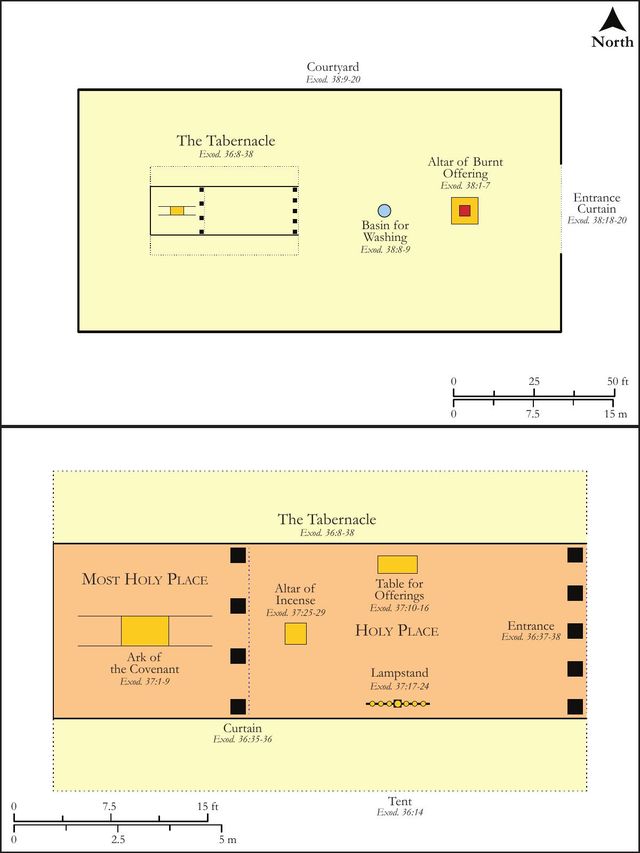
Exodus 37:26 meticulously details the final embellishment of the altar of incense, a sacred piece of Tabernacle furniture crafted by Bezaleel under divine instruction. This verse specifies that the entire structure—its top surface, all four sides, and the four prominent horns—was completely overlaid with pure gold, and a decorative crown of gold was fashioned and affixed around its upper perimeter. This exquisite craftsmanship underscored the altar's profound sanctity, its immense value, and its indispensable role in the daily rituals of worship and intercession within the Holy Place, symbolizing the purity and preciousness required in approaching God.
Context
ShowHideLiterary Context
This verse is situated within the comprehensive narrative of the Tabernacle's construction, spanning Exodus 35-40. This section meticulously recounts the fulfillment of God's precise architectural and material specifications, which were initially revealed to Moses on Mount Sinai in Exodus 25-31. Specifically, Exodus 37 focuses on Bezaleel's skilled execution of the plans for the most sacred furnishings: the ark of the covenant, the table of showbread, the golden lampstand, and, in this immediate context, the altar of incense. Verse 26 concludes the description of the altar of incense, building upon its initial construction from acacia wood described in Exodus 37:25. It is immediately followed by the preparation of the sacred anointing oil and the pure incense in Exodus 37:29, emphasizing the holistic and sequential nature of the Tabernacle's creation, where each component was vital and divinely ordained.
Historical & Cultural Context
The Tabernacle functioned as the portable sanctuary for the Israelites during their wilderness journey, serving as the tangible representation of God's dwelling presence among His chosen people. Its construction was not an arbitrary human endeavor but a direct divine mandate, with every material, dimension, and design element precisely dictated by God, as detailed in Exodus 25. Gold was recognized as the most precious metal, symbolizing divinity, royalty, purity, and immense wealth. Its pervasive use throughout the Tabernacle, particularly for the most sacred objects like the altar of incense, powerfully communicated the supreme holiness of Yahweh and the profound reverence required in His presence. The "horns" on altars were a common architectural feature of Israel's own altars, often associated with strength, power, or as a place of refuge for those seeking asylum, as seen in 1 Kings 1:50. The altar of incense itself was central to daily worship, used exclusively for burning specially prepared incense each morning and evening, a practice that symbolically represented the prayers of the saints ascending to God, as alluded to in Psalm 141:2.
Key Themes
ShowHideExodus 37:26 significantly contributes to several overarching themes within the book of Exodus and the broader Pentateuch. The most prominent theme is Divine Holiness and Purity, emphasized by the extensive use of "pure gold" for the altar, signifying God's absolute perfection and the unblemished nature required for objects consecrated to His service. This verse also highlights the theme of Divine Prescription and Human Obedience, as Bezaleel meticulously followed God's exact specifications, demonstrating that true worship adheres strictly to God's revealed will. Furthermore, the altar of incense, with its golden overlay, underscores the theme of Access to God and Intercession. Placed before the veil, it symbolized the pathway for the prayers of God's people to ascend to His throne, foreshadowing the ultimate access provided through a greater High Priest. Finally, the intricate detail reflects God's Glory and Majesty, as the beauty and preciousness of the Tabernacle furnishings were designed to reflect the splendor of the God who dwelt within.
Exposition and Analysis
ShowHideKey Word Analysis
ShowHideThis verb (H6823) signifies "to cover," "to plate," or "to sheet over," especially with metal. In this context, it denotes a complete and thorough covering, not merely a superficial coating. The use of this word implies that the acacia wood core of the altar was entirely enveloped by the gold, ensuring that every visible and touchable surface was of the highest, most sacred material. This speaks to the divine standard of perfection and the comprehensive nature of consecration required for objects used in God's worship, leaving no part unconsecrated.
This phrase combines H2889 (ṭâhôwr), meaning "pure (in a physical, chemical, ceremonial or moral sense)," with H2091 (zâhâb), meaning "gold." The repeated specification of "pure gold" throughout the Tabernacle's construction (e.g., for the lampstand in Exodus 37:22) emphasizes the highest quality and refinement of the metal, free from any alloy or impurity. This choice highlights the absolute holiness and perfection of God, and thus the corresponding purity and unblemished quality demanded in all that pertains to His service and presence. It starkly contrasts with common or impure materials, underscoring the divine standard for worship.
This term (H2213) refers to a border, molding, or rim, often decorative and protective, described as a "chaplet (as spread around the top)." In this context, it describes a raised golden molding around the top edge of the altar. This "crown" not only enhanced the altar's aesthetic beauty and regal appearance but also served a practical purpose, such as helping to contain the burning incense or marking the sacred boundary of the altar's surface. Symbolically, it signifies the altar's exalted status and its divine appointment for a sacred, set-apart purpose, much like a royal diadem.
Verse Breakdown
ShowHide"And he overlaid it with pure gold"
This opening clause establishes the primary material used for the exterior of the altar of incense. The pronoun "it" refers to the altar, which was initially constructed from durable acacia wood, a timber well-suited for the harsh wilderness environment. The act of overlaying it with "pure gold" immediately elevates the altar's status from a mere wooden object to one of immense sacred value and purity, visually and symbolically reflecting the holiness of the God whom it was designed to serve. This signifies the transformation of the common into the consecrated.
"[both] the top of it, and the sides thereof round about, and the horns of it"
This detailed enumeration specifies the comprehensive nature of the gold overlay. Every exposed surface of the altar—its flat top, all four vertical sides, and the four prominent horns at its corners—was meticulously covered. This thoroughness ensured that no part of the altar that was visible or touched during its sacred use was less than perfectly pure and consecrated. This reinforces the idea of holistic dedication and the divine demand for perfection in all aspects of worship, leaving no part unhallowed.
"also he made unto it a crown of gold round about"
This final clause describes an additional, significant feature: a decorative and possibly functional molding of gold that encircled the entire top perimeter of the altar. This "crown" would have added to the altar's regal and distinguished appearance, further setting it apart as a uniquely sacred object. Beyond aesthetics, it might have served as a physical border to define the precise space where the incense was offered, emphasizing the altar's specific and holy purpose as the point of intercession and communion with God.
Literary Devices
ShowHideThe description in Exodus 37:26 is rich with Symbolism. The most prominent symbol is the pure gold itself, which consistently represents divinity, holiness, immense value, and incorruptibility throughout the biblical narrative. Its application to the altar of incense underscores the sanctity of the altar's purpose and the preciousness of the prayers and intercession it facilitated. The horns on the altar, while having practical applications on the altar of burnt offering, here primarily symbolize strength, power, and perhaps the reach or efficacy of God's presence and the prayers offered. They also served as points for applying atoning blood on the Day of Atonement, linking the altar to themes of purification and expiation. The crown of gold further enhances the altar's symbolic weight, signifying its royal dignity and its set-apart status for divine service, much like a diadem on a king. There is also an element of Metonymy, where the physical altar stands in for the spiritual act of prayer and intercession, which was its primary function and purpose. The meticulous detail in the description itself serves as a Didactic device, instructing the Israelites (and subsequent generations) about God's demand for precision, excellence, and holiness in all aspects of worship and service.
Theological and Thematic Connections
ShowHideThe meticulous instructions for the altar of incense, particularly its pure gold overlay and crown, profoundly underscore the absolute holiness and perfection required in approaching God. This sacred object, strategically positioned before the veil separating the Holy Place from the Most Holy Place, was central to the daily ritual of prayer and intercession, symbolizing the constant communion between God and His people. The use of the finest and purest materials reflects the supreme value God places on worship that is offered according to His divine specifications, emphasizing that true worship is not merely an outward act but a reflection of an inward reverence, purity of heart, and unreserved dedication. This divine blueprint for the Tabernacle and its furnishings served as a tangible lesson for Israel, teaching them that God's presence is utterly holy and demands a consecrated approach, thereby foreshadowing the perfect and unhindered access granted to believers through the ultimate sacrifice and intercession of Jesus Christ.
Reflection and Application
ShowHideThe detailed description of the altar of incense in Exodus 37:26, with its emphasis on pure gold and meticulous craftsmanship, offers profound and enduring insights for our contemporary spiritual lives. While the physical Tabernacle no longer stands as God's dwelling place, the principles it embodies remain eternally relevant for how we approach and engage with God. The demand for "pure gold" reminds us that our worship, our prayers, and our service to God should never be half-hearted, impure, or perfunctory. Instead, they are to be offered with the highest sincerity, reverence, and dedication—a reflection of our deepest devotion. Just as the altar was meticulously crafted according to a divine blueprint, our lives of faith should be shaped by God's infallible Word, not by fleeting human preferences, cultural trends, or personal convenience. The rising incense symbolized the ascent of prayers, urging us to cultivate a consistent, fervent, and intentional prayer life, recognizing that our petitions are precious to God and ascend before His throne, made acceptable by Christ. This verse calls us to examine the "quality" of our spiritual offerings, prompting us to ensure they are truly "pure gold" in His sight, reflecting a heart wholly devoted to Him. It challenges us to consider if our approach to God is marked by the same intentionality, excellence, and consecration that God commanded for this sacred altar.
Questions for Reflection
ShowHideFAQ
ShowHideWhat was the purpose of the horns on the altar of incense?
ShowHideWhile horns on the altar of burnt offering often served practical purposes, such as binding sacrifices or providing a place of refuge (e.g., 1 Kings 1:50), on the altar of incense, their primary function was likely symbolic. They represented strength, power, and the sanctity of the altar itself. Crucially, the blood of sin offerings was applied to these horns on the Day of Atonement (Leviticus 16:18), signifying purification and atonement for the Holy Place and its furnishings. This ritual underscored that even the most sacred objects needed periodic purification to remain holy in God's presence, highlighting the pervasive nature of sin and the necessity of atonement.
Why was "pure gold" specified for the altar of incense?
ShowHideThe specification of "pure gold" for the altar of incense, as seen in Exodus 37:26, underscored the absolute holiness and divine nature of God, whom the altar served. Gold, being the most precious, incorruptible, and beautiful metal known, powerfully symbolized purity, divinity, royalty, and immense value. Its extensive use throughout the Tabernacle, especially on the altar of incense, emphasized that anything directly associated with God's presence and worship must be of the highest quality and free from blemish, reflecting His perfect character and the sanctity required in approaching Him. It visually communicated the immense value God places on true worship and the profound reverence due to Him.
Christ-Centered Fulfillment
ShowHideThe altar of incense, meticulously overlaid with pure gold and crowned, finds its ultimate and glorious fulfillment in the person and work of Jesus Christ. While the altar symbolized the prayers of the saints rising to God as a fragrant aroma, it was merely a shadow pointing to a greater, eternal reality. Jesus is our true and perfect High Priest, who not only receives and offers our prayers but is Himself the perfect intercessor, continually pleading on our behalf before the Father's throne in heaven (Hebrews 7:25). The "pure gold" of the altar eloquently speaks to Christ's divine nature and His sinless perfection, making Him the only one truly worthy to stand in God's holy presence and offer a perfectly fragrant sacrifice. Unlike the temporary and repeated incense offerings of the Old Covenant, Christ offered Himself as the ultimate, once-for-all sacrifice, a "fragrant offering and sacrifice to God" (Ephesians 5:2). Through His finished work on the cross, believers now have direct and confident access to the Father, and our prayers, offered in His name, ascend as a pleasing aroma, made acceptable by His perfect mediation and atoning blood (Hebrews 10:19-22). The crown of gold on the altar further foreshadows Christ's kingly authority and His exalted position as the crowned King of kings and Lord of lords, reigning in glory and eternally interceding for His redeemed people (Revelation 19:16).