


Exodus 23:8
Bible text: King James Version (1769 Blayney text) · Public domain
Bible text: Berean Standard Bible · Public domain
Bible text: American Standard Version (1901) · Public domain
Bible text: World English Bible, Messianic edition · Public domain
Bible text: Geneva Bible (1599) · Public domain
Bible text: Young's Literal Translation · Public domain
- וְשֹׁחַדve·Sho·chadand a bribeH7810Conj-w ¦ N-msNoun Singular Masculine Absoluteוְandשֹׁחַדa bribe
- לֹאlo'notH3808NegParticle Negative
- תִקָּחti·Kachyou must takeH3947V-Qal-Imperf-2msVerb Qal Imperfect 2nd Singular Masculine
- כִּיkiforH3588PrtParticle Conditional
- הַשֹּׁחַדha·Sho·chad<the> bribeH7810Art ¦ N-msNoun Singular Masculine Absoluteהַ<the>שֹּׁחַדbribe
- יְעַוֵּרye·'a·Verit makes blindH5786V-Piel-Imperf-3msVerb Piel Imperfect 3rd Singular Masculine
- פִּקְחִיםpik·Chimclear-sighted [people]H6493Adj-mpAdjective Plural Masculine Absolute
- וִיסַלֵּףvi·sa·Lefso it may pervertH5557Conj-w ¦ V-Piel-ConjImperf-3msVerb Piel Conjunction+Imperfect 3rd Singular Masculineוִsoיסַלֵּףit may pervert
- דִּבְרֵיdiv·Rei[the] words ofH1697N-mpcNoun Plural Masculine Construct
- צַדִּיקִיםtza·di·Kimrighteous [people]H6662Adj-mpAdjective Plural Masculine Absolute
English is a literal word-by-word gloss of the Hebrew, not the KJV's wording. Why?
This is the original text the KJV's translators worked from — each Hebrew word with its own literal English meaning in this verse, prepared by scholars at Tyndale House, Cambridge. The KJV translates whole sentences, not word by word, so its wording differs: one Hebrew word can become several English words, and the KJV may choose “the LORD” where the gloss reads “Yahweh”. Both are faithful — they answer different questions. For the KJV's own rendering, switch to the KJV text.
Details
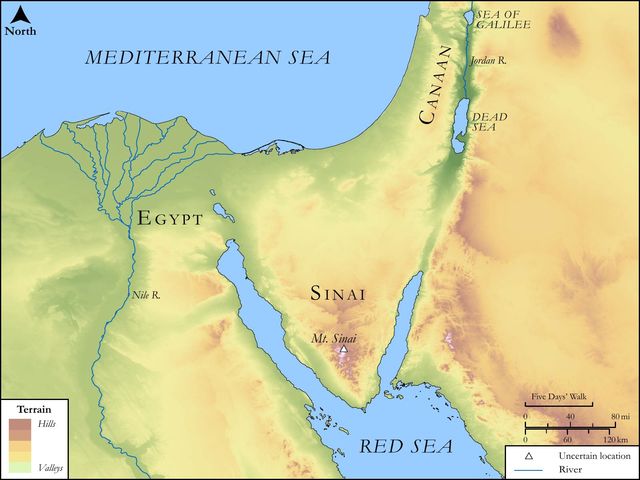
See on the biblical-era maps

Study this verse
Public-domain commentary
Matthew Henry
From his Commentary on the Whole Bible. Henry comments on passages, not single verses — this entry covers Exodus 23:1–9. His three-level outline is real structure in the source text, so it is rendered as structure.
Here are, I. Cautions concerning judicial proceedings; it was not enough that they had good laws, better than ever any nation had, but care must be taken for the due administration of justice according to those laws.
1.The witnesses are here cautioned that they neither occasion an innocent man to be indicted, by raising a false report of him and setting common fame against him, nor assist in the prosecution of an innocent man, or one whom they do not know to be guilty, by putting their hand in swearing as witnesses against him, Exo 23:1. Bearing false witness against a man, in a matter that touches his life, has in it all the guilty of lying, perjury, malice, theft, murder, with the additional stains of colouring all with a pretence of justice and involving many others in the same guilt. There is scarcely any one act of wickedness that a man can possibly be guilty of which has in it a greater complication of villanies than this has. Yet the former part of this caution is to be extended, not only to judicial proceedings, but to common conversation; so that slandering and backbiting are a species of falsewitness-bearing. A man's reputation lies as much at the mercy of every company as his estate or life does at the mercy of a judge or jury; so that he who raises, or knowingly spreads, a false report against his neighbour, especially if the report be made to wise and good men whose esteem one would desire to enjoy, sins as much against the laws of truth, justice, and charity, as a false witness does - with this further mischief, that he leaves it not in the power of the person injured to obtain redress. That which we translate, Thou shalt not raise, the margin reads, Thou shalt not receive a false report; for sometimes the receiver, in this case, is as bad as the thief; and a backbiting tongue would not do so much mischief as it does if it were not countenanced. Sometimes we cannot avoid hearing a false report, but we must not receive it, that is, we must not hear it with pleasure and delight as those that rejoice in iniquity, nor give credit to it as long as there remains any cause to question the truth of it. This is charity to our neighbour's good name, and doing as we would be done by.
2.The judges are here cautioned not to pervert judgment.
(1.)They must not be overruled, either by might or multitude, to go against their consciences in giving judgment, Exo 23:2. With the Jews causes were tried by a bench of justices, and judgment given according to the majority of votes, in which cause every particular justice must go according to truth, as it appeared to him upon the strictest and most impartial enquiry, though the multitude of the people, and their outcries, or, the sentence of the rabbim (we translate it many), the more ancient and honourable of the justices, went the other way. Therefore (as with us), among the Jews, the junior upon the bench voted first, that he might not be swayed nor overruled by the authority of the senior. Judges must not respect the persons either of the parties or of their fellow-judges. The former part of this verse also gives a general rule for all, as well as judges, not to follow a multitude to do evil. General usage will never excuse us in a bad practice; nor is the broad way ever the better or safer for its being tracked and crowded. We must enquire what we ought to do, not what the majority do; because we must be judged by our Master, not by our fellow-servants, and it is too great a compliment to be willing to go to hell for company.
(2.)They must not pervert judgment, no, not in favour of a poor man, v.
3.Right must in all cases take place and wrong must be punished, and justice never biassed nor injury connived at under pretence of charity and compassion. If a poor man be a bad man, and do a bad thing, it is foolish pity to let him fare the better for his poverty, Deu 1:16, Deu 1:17. (3.) Neither must they pervert judgment in prejudice to a poor man, nor suffer him to be wronged because he had not wherewithal to right himself; in such cases the judges themselves must become advocates for the poor, as far as their cause was good and honest (Exo 23:6): "Thou shalt not wrest the judgment of the poor; remember they are thy poor, bone of thy bone, thy poor neighbours, thy poor brethren; let them not therefore fare the worse for being poor." (4.) They must dread the thoughts of assisting or abetting a bad cause (Exo 23:7): "Keep thyself far from a false matter; do not only keep thyself free from it, nor think it enough to say thou art unconcerned in it, but keep far from it, dread it as a dangerous snare. The innocent and righteous thou wouldest not, for all the world, slay with thy own hands; keep far therefore from a false matter, for thou knowest not but it may end in that, and the righteous God will not leave such wickedness unpunished: I will not justify the wicked," that is, "I will condemn him that unjustly condemns others." Judges themselves are accountable to the great judge. (5.) They must not take bribes, v. 8. They must not only not be swayed by a gift to give an unjust judgment, to condemn the innocent, or acquit the guilty, or adjudge a man's right from him, but they must not so much as take a gift, lest it should have a bad influence upon them, and overrule them, contrary to their intentions; for it has a strange tendency to blind those that otherwise would do well. (6.) They must not oppress a stranger, v. 9. Though aliens might not inherit lands among them, yet they must have justice done them, must peaceably enjoy their own, and be redressed if they were wronged, though they were strangers to the commonwealth of Israel. It is an instance of the equity and goodness of our law, that, if an alien be tried for any crime except treason, the one half of his jury, if he desire it, shall be foreigners; they call it a trial per mediatatem linguae, a kind provision that strangers may not be oppressed. The reason here given is the same with that in ch. 22:21, You were strangers, which is here elegantly enforced, You know the heart of a stranger; you know something of the griefs and fears of a stranger by sad experience, and therefore, being delivered, can the more easily put your souls into their souls' stead.
II.Commands concerning neighbourly kindnesses.
We must be ready to do all good offices, as there is occasion, for any body, yea even for those that have done us ill offices, Exo 23:4, Exo 23:5. The command of loving our enemies, and doing good to those that hate us, is not only a new, but an old commandment, Pro 25:21, Pro 25:22. Infer hence,
1.If we must do this kindness for an enemy, much more for a friend, though an enemy only is mentioned, because it is supposed that a man would not be unneighbourly to any unless such as he had a particular spleen against.
2.If it be wrong not to prevent our enemy's loss and damage, how much worse is it to occasion harm and loss to him, or any thing he has.
3.If we must bring back our neighbours' cattle when they go astray, much more must we endeavour, by prudent admonitions and instructions, to bring back our neighbours themselves, when they go astray in any sinful path, see Jam 5:19, Jam 5:20. And, if we must endeavour to help up a fallen ass, much more should we endeavour, by comforts and encouragements, to help up a sinking spirit, saying to those that are of a fearful heart, Be strong. We must seek the relief and welfare of others as our own, Phi 2:4. If thou sayest, Behold, we know it not, doth not he that pondereth the heart consider it? See Pro 24:11, Pro 24:12.
Continue studying Exodus 23:8 across the web’s major study libraries — every link below opens this exact verse, chapter, or book on the destination site.
Read & Compare
 BibleGatewayThis verse in more than 200 translations and 70 languages.
 Bible.comThe YouVersion reader — hundreds of translations, reading plans, and highlights.
 ESV.orgCrossway's official English Standard Version reader.
 NET BibleThe NET translation with 60,000+ translators' notes on every rendering decision.
 STEP BibleTyndale House's free study tool — original text, vocabulary, and scholarly resources.
 BibliaLogos Bible Software's free web reader.
 USCCBThe New American Bible (Revised Edition) with the U.S. bishops' study notes.
Commentaries
 BibleHub CommentariesDozens of classic commentaries on this verse, gathered on one page.
 StudyLightMore than 100 commentary sets — the largest collection on the web.
 BibleRefPlain-English commentary on what this verse means, verse by verse.
 Enduring WordDavid Guzik's free commentary on this chapter, widely used by Bible teachers.
 Bible Study ToolsVerse commentary alongside Greek and Hebrew study aids.
Original Language & Research
- BibleHub InterlinearThe verse word by word — original language, transliteration, and English.
- BibleHub LexiconEvery word's original-language definition and Strong's entry.
 Blue Letter BibleDeep-study tools — Strong's numbers, concordance, and word studies.
 SefariaThe Hebrew text with Rashi and centuries of Jewish commentary.
Sermons, Hymns & Audio


TrulyRandomVerse is not affiliated with these sites and doesn’t control their content. They’re linked because they’re genuinely useful.
Summary
Exodus 23:8 issues a profound prohibition against the acceptance of bribes, articulating a foundational principle for maintaining integrity and justice within the Israelite community. This divine command underscores the insidious power of a "gift" to corrupt even the most discerning individual, distorting their judgment and twisting the very words of those committed to righteousness. It serves as a timeless warning against any influence that would compromise impartial truth and ethical conduct, particularly within judicial or leadership roles.
Context
ShowHideLiterary Context
Exodus 23:8 is situated within the "Book of the Covenant," a collection of statutes and ordinances delivered by God to Moses immediately following the Ten Commandments. This section, found primarily in Exodus 20:22-23:33, provides the practical application of the broader covenant principles for daily life in ancient Israel. Specifically, Exodus 23 focuses heavily on civil and social laws, emphasizing justice, fairness, and compassion, especially towards the vulnerable members of society. Verses preceding this one, such as Exodus 23:6, explicitly forbid perverting justice for the poor, setting the stage for the absolute condemnation of bribery as a direct threat to the integrity of the judicial system and the well-being of the community.
Historical & Cultural Context
In that day, the giving of "gifts" to officials or judges was a common practice, often blurring the lines between legitimate honorariums and outright bribes intended to sway judgment. God's command in Exodus 23:8 stands in stark contrast to this prevailing cultural norm, presenting a radical call for judicial purity and ethical governance. The Israelite legal system, unlike many of its contemporaries, was to be founded on divine righteousness and impartiality, reflecting the character of God Himself. Judges and elders, who administered justice at the city gates, were considered representatives of God's justice, making the prohibition against bribery paramount to maintaining the sanctity of the covenant community. This command was crucial for establishing a society where justice was accessible and equitable for all, not just for the wealthy or influential.
Key Themes
ShowHideThis verse contributes significantly to several key themes pervasive throughout the Book of Exodus and the Pentateuch. Foremost among them is the theme of Divine Justice and Righteousness, emphasizing that God's character demands an uncorrupted and impartial administration of justice among His people. It also reinforces the theme of Covenant Faithfulness, as obedience to such laws demonstrates Israel's commitment to reflecting God's holiness in their societal structures. Furthermore, the prohibition against bribery underscores the theme of Protection of the Vulnerable, as bribery disproportionately harms the poor and powerless who cannot afford to influence judicial outcomes, ensuring that the legal system serves all members of the community equitably.
Exposition and Analysis
ShowHideKey Word Analysis
ShowHideDerived from H7810, this word refers to a donation, which can be venal (a bribe) or redemptive (a present). In the context of this verse, particularly within judicial settings, it almost invariably signifies a bribe—an illicit payment or favor given to corrupt or influence a decision, thereby perverting justice.
This primitive root means "to blind." In this verse, it powerfully conveys the effect of the bribe, implying not merely a temporary obscuring of vision but a fundamental distortion of perception. It causes even those with inherent wisdom or discernment (H6493, piqqêach) to lose their ability to see truth and justice clearly, leading them astray from righteousness.
This primitive root means "to wrench" or "to subvert." It describes the active corruption or twisting of what is right and true. In the context of "the words (H1697, dâbâr) of the righteous (H6662, tsaddîyq)," it indicates that bribery can lead to false testimony, misrepresentation of facts, or unjust rulings, thereby undermining the very foundation of righteous judgment and fair legal proceedings.
Verse Breakdown
ShowHide"And thou shalt take no gift"
This is a direct, absolute prohibition. The command is clear and unequivocal, leaving no room for ambiguity regarding the acceptance of any form of shachad in the context of judgment or influence. It establishes a non-negotiable standard for judicial and administrative integrity within the Israelite community.
"for the gift blindeth the wise"
This clause explains the destructive power of the bribe. It asserts that even individuals possessing wisdom, discernment, and a strong moral compass are susceptible to its corrupting influence. The "gift" acts as a veil, obscuring their ability to perceive truth and render impartial judgment, leading them astray from righteousness and causing them to misinterpret facts or situations.
"and perverteth the words of the righteous"
This second consequence highlights the insidious impact of bribery on truth and justice itself. It implies that a bribe can cause those who are inherently righteous, or those who are meant to speak truth (e.g., witnesses, judges, or those giving counsel), to twist their testimony, misrepresent facts, or issue unjust rulings. This directly subverts the very purpose of a just legal system and undermines the integrity of true statements and ethical pronouncements.
Literary Devices
ShowHideExodus 23:8 employs several potent literary devices to convey its warning with impactful clarity. Metaphor is prominently used in the phrase "the gift blindeth the wise," where the bribe is not literally blinding but metaphorically obscures one's judgment and perception of truth, akin to physical blindness. This vivid image emphasizes the profound and deceptive power of corruption to distort internal moral vision. The verse also utilizes Parallelism through its two descriptive clauses: "blindeth the wise" and "perverteth the words of the righteous." These two phrases function in tandem, reinforcing the comprehensive destructive impact of bribery on both the individual's discernment and the objective standard of truth. The strong, concise language also lends an air of Aphorism, making the statement memorable and universally applicable as a fundamental principle of justice and integrity.
Theological and Thematic Connections
ShowHideThis verse profoundly reflects God's character as a God of perfect justice and righteousness, who cannot be bribed or swayed by human influence, as explicitly stated in Deuteronomy 10:17. It underscores the theological imperative for His people to mirror His integrity in their societal structures, particularly in the administration of justice. The prohibition against bribery is not merely a legalistic rule but a call to uphold the divine standard of impartiality, ensuring that human systems reflect God's own uncorrupted nature. It highlights the theme of integrity as central to covenant faithfulness, recognizing that corruption undermines the very fabric of a community built on truth and equity, and ultimately dishonors the holy character of God.
Reflection and Application
ShowHideExodus 23:8 serves as a timeless and urgent call to integrity, extending far beyond ancient judicial settings to every sphere of human interaction. It challenges us to examine our own hearts and the systems we operate within, asking whether truth and justice are truly paramount, or if they are subtly compromised by personal gain, favoritism, or external pressures. In a world where influence peddling and corruption remain pervasive, this verse reminds us that true wisdom and righteousness demand an unwavering commitment to impartiality. It compels individuals to resist temptations that would cloud their judgment or twist their words, and it calls societies to establish and uphold structures that safeguard against all forms of undue influence, ensuring that decisions are made based on truth and equity, not on the allure of a "gift." Upholding this principle is not just about avoiding legal infractions, but about preserving the moral fabric of our communities, fostering trust, and honoring the God who is perfectly just in all His ways.
Questions for Reflection
ShowHideFAQ
ShowHideWhy is bribery so strongly condemned in the Old Testament, and how does this apply beyond the judicial context?
ShowHideBribery is strongly condemned throughout the Old Testament because it directly undermines the foundational principles of God's character—justice, righteousness, and impartiality. For a people called to reflect God's holiness, corrupting the judicial system was an affront to His very nature. It created a society where the poor and vulnerable were exploited, and truth was subverted by self-interest, directly opposing God's command to care for the lowly, as seen in passages like Deuteronomy 27:19. Beyond the judicial context, this principle applies to any situation where decisions are made that impact others. This includes business dealings, political leadership, educational institutions, and even personal relationships. Any "gift" or favor that compromises one's ability to act truthfully, fairly, and impartially, whether in a formal or informal capacity, falls under the spirit of this prohibition. It calls for integrity in all forms of leadership and stewardship, ensuring that actions are driven by righteousness rather than personal gain or undue influence.
Christ-Centered Fulfillment
ShowHideExodus 23:8, with its stark warning against the corrupting power of bribes, finds its ultimate fulfillment and perfect embodiment in Jesus Christ. While the Old Testament law exposed the human propensity to pervert justice for gain, Christ perfectly upheld and lived out God's unblemished righteousness. He was the only one who could not be "blinded" or "perverted" by any earthly "gift" or temptation, even when offered all the kingdoms of the world by Satan, as recorded in Matthew 4:8-10. Unlike earthly judges who could be swayed, Jesus rendered perfect, impartial judgment, always speaking the truth and never compromising His Father's will. His entire ministry was characterized by an unwavering commitment to justice for the oppressed and vulnerable, culminating in His righteous sacrifice on the cross, where He bore the full weight of humanity's sin, not through a perverted judgment, but through perfect, divine justice and love, as explained in Romans 3:25-26. As the Lamb of God, He was the ultimate "gift" from God to humanity, but one given to redeem, not to corrupt, and His "words" are eternally righteous and true, never to be perverted, as affirmed in John 1:1-5 and John 14:6. In Him, we find the absolute standard of integrity and the power to live righteously, free from the blinding and perverting influence of the world's corrupting systems.