


Exodus 14:20
- וַיָּבֹאvai·ya·Vo'and it wentH935Conj-w ¦ V-Qal-ConsecImperf-3msVerb Qal Consecutive Imperfect 3rd Singular Masculineוַandיָּבֹאit went
- בֵּיןbeinbetweenH996Adj-mscAdjective Numerical Singular Masculine Construct
- מַחֲנֵהma·cha·Neh[the] camp ofH4264N-fscNoun Singular Feminine Construct
- מִצְרַיִםmitz·Ra·yimEgyptH4714N-properNoun Proper Location
- וּבֵיןu·Veinand betweenH996Conj-w ¦ Adj-mscAdjective Numerical Singular Masculine Constructוּandבֵיןbetween
- מַחֲנֵהma·cha·Neh[the] camp ofH4264N-fscNoun Singular Feminine Construct
- יִשְׂרָאֵלYis·ra·'ElIsraelH3478N-properNoun Proper Location
- וַיְהִיvay·Hiand it wasH1961Conj-w ¦ V-Qal-ConsecImperf-3msVerb Qal Consecutive Imperfect 3rd Singular Masculineוַandיְהִיit was
- הֶעָנָןhe·'a·Nanthe cloudH6051Art ¦ N-msNoun Singular Masculine Absoluteהֶtheעָנָןcloud
- וְהַחֹשֶׁךְve·ha·Cho·shekhand the darknessH2822Conj-w ¦ Art ¦ N-msNoun Singular Masculine Absoluteוְandהַtheחֹשֶׁךְdarkness
- וַיָּאֶרvai·Ya·'erand it lit upH215Conj-w ¦ V-Hiphil-ConsecImperf-3msVerb Hiphil Consecutive Imperfect 3rd Singular Masculineוַandיָּאֶרit lit up
- אֶת'et<obj.>H853DirObjMParticle Object Indicator
- הַלָּיְלָהha·La·ye·lahthe nightH3915Art ¦ N-msNoun Singular Masculine Absoluteהַtheלָּיְלָהnight
- וְלֹאve·lo'and notH3808Conj-w ¦ NegParticle Negativeוְandלֹאnot
- קָרַבka·Ravit drew nearH7126V-Qal-Perf-3msVerb Qal Perfect 3rd Singular Masculine
- זֶהzehthisH2088PrtParticle Demonstrative
- אֶל'eltoH413PrepPreposition
- זֶהzehthisH2088PrtParticle Demonstrative
- כָּלkolallH3605N-mscNoun Singular Masculine Construct
- הַלָּיְלָהha·La·ye·lahthe nightH3915Art ¦ N-msNoun Singular Masculine Absoluteהַtheלָּיְלָהnight
English is a literal word-by-word gloss of the Hebrew, not the KJV's wording. Why?
This is the original text the KJV's translators worked from — each Hebrew word with its own literal English meaning in this verse, prepared by scholars at Tyndale House, Cambridge. The KJV translates whole sentences, not word by word, so its wording differs: one Hebrew word can become several English words, and the KJV may choose “the LORD” where the gloss reads “Yahweh”. Both are faithful — they answer different questions. For the KJV's own rendering, switch to the KJV text.
Details
See on the biblical-era map

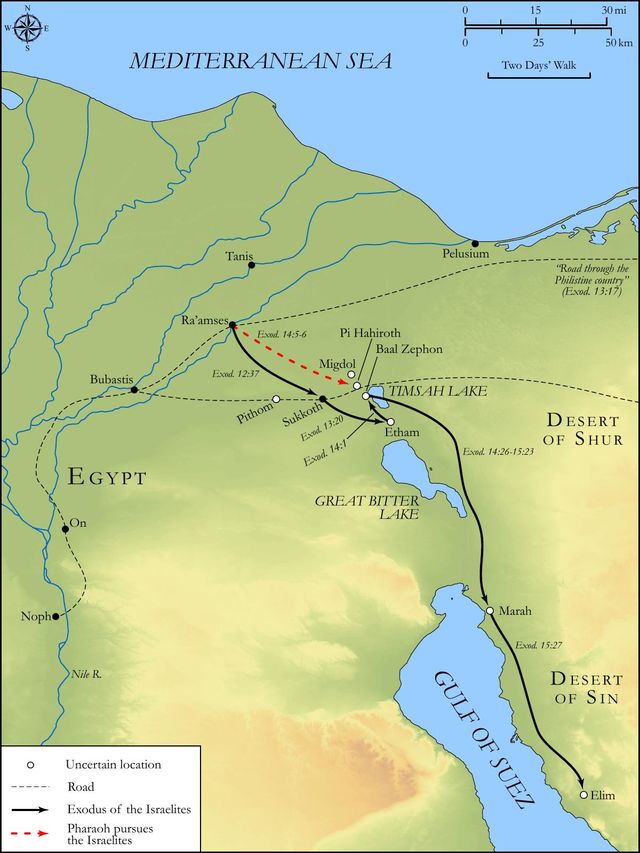
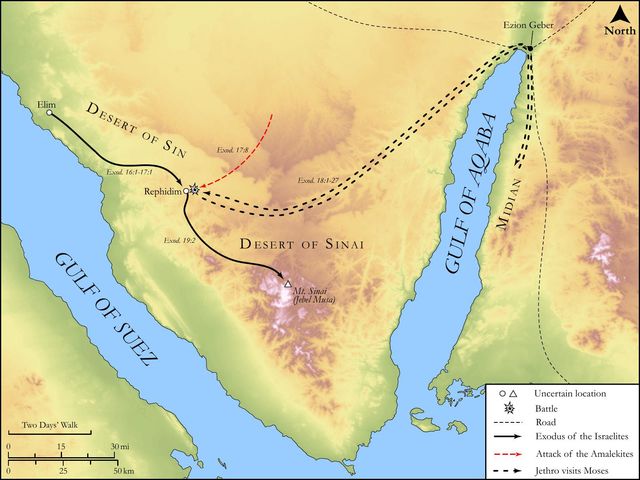
Study this verse
Public-domain commentary
Matthew Henry
From his Commentary on the Whole Bible. Henry comments on passages, not single verses — this entry covers Exodus 14:15–20. His three-level outline is real structure in the source text, so it is rendered as structure.
We have here,
I.Direction given to Israel's leader.
1.What he must do himself. He must, for the present, leave off praying, and apply himself to his business (Exo 14:15): Wherefore cryest thou unto me? Moses, though he was assured of a good issue to the present distress, yet did not neglect prayer. We read not of one word he said in prayer, but he lifted up to God his heart, the language of which God well understood and took notice of. Moses's silent prayers of faith prevailed more with God than Israel's loud outcries of fear, Exo 14:10. Note,
(1.)Praying, if of the right kind, is crying to God, which denotes it to be the language both of a natural and of an importunate desire.
(2.)To quicken his diligence. Moses had something else to do besides praying; he was to command the hosts of Israel, and it was now requisite that he should be at his post. Every thing is beautiful in its season.
2.What he must order Israel to do. Speak to them, that they go forward. Some think that Moses had prayed, not so much for their deliverance (he was assured of that) as for the pardon of heir murmurings, and that God's ordering them to go forward was an intimation of the pardon. There is no going forward with any comfort but in the sense of our reconciliation to God. Moses had bidden them stand still, and expect orders from God; and now orders are given. They thought they must have been directed either to the right hand or to the left. "No," says God, "speak to them to go forward, directly to the sea-side;" as if there had lain a fleet of transport-ships ready for them to embark in. Note, When we are in the way of our duty, though we met with difficulties, we must go forward, and not stand in mute astonishment; we must mind present work and then leave the even to God, use means and trust him with the issue.
3.What he might expect God to do. Let the children of Israel go as far as they can upon dry ground, and then God will divide the sea, and open a passage for them through it, Exo 14:16-18. God designs, not only to deliver the Israelites, but to destroy the Egyptians; and the plan of his counsels is accordingly.
(1.)He will show favour to Israel; the waters shall be divided for them to pass through, Exo 14:16. The same power could have congealed the waters for them to pass over; but Infinite Wisdom chose rather to divide the waters for them to pass through; for that way of salvation is always pitched upon which is most humbling. Thus it is said, with reference to this (Isa 63:13, Isa 63:14), He led them through the deep, as a beast goes down into the valley, and thus made himself a glorious name.
(2.)He will get him honour upon Pharaoh. If the due rent of honour be not paid to the great landlord, by and from whom we have and hold our beings and comforts, he will distrain for it, and recover it. God will be a loser by no man. In order to this, it is threatened: I, behold I, will harden Pharaoh's heart, Exo 14:17. The manner of expression is observable: I, behold I, will do it. "I, that may do it;" so it is the language of his sovereignty. We may not contribute to the hardening of any man's heart, nor withhold any thing that we can do towards the softening of it; but God's grace is his own, he hath mercy on whom he will have mercy, and whom he will be hardeneth. "I, that can do it;" so it is the language of his power; none but the Almighty can make the heart soft (Job 23:16), nor can any other being make it hard. "I, that will do it;" for it is the language of his justice; it is a righteous thing with God to put those under the impressions of his wrath who have long resisted the influences of his grace. It is spoken in a way of triumph over this obstinate and presumptuous rebel: "I even I, will take an effectual course to humble him; he shall break that would not bend." It is an expression like that (Isa 1:24), Ah, I will ease me of my adversaries.
II.A guard set upon Israel's camp where it now lay most exposed, which was in the rear, Exo 14:19, Exo 14:20.
The angel of God, whose ministry was made use of in the pillar of cloud and fire, went from before the camp of Israel, where they did not now need a guide (there was no danger of missing their way through the sea, nor needed they any other word of command than to go forward), and it came behind them, where now they needed a guard (the Egyptians being just ready to seize the hindmost of them), and so was a wall of partition between them. There it was of use to the Israelites, not only to protect them, but to light them through the sea, and, at the same time, it confounded the Egyptians, so that they lost sight of their prey just when they were ready to lay hands on it. The word and providence of God have a black and dark side towards sin and sinners, but a bright and pleasant side towards those that are Israelites indeed. That which is a savour of life unto life to some is a savour of death unto death to others. This was not the first time that he who in the beginning divided between light and darkness (Gen 1:4), and still forms both (Isa 45:7), had, at the same time, allotted darkness to the Egyptians and light to the Israelites, a specimen of the endless distinction which will be made between the inheritance of the saints in light and that utter darkness which for ever will be the portion of hypocrites. God will separate between the precious and the vile.
Historical interpretation
Fourteen Centuries of Reception
3 surviving comments on this verse. Each one is dated, so this reads as a timeline rather than a list.
Select a marker to jump to its quote. Markers stagger vertically where authors wrote within a few decades of each other.
Therefore this darkness of the body has been placed between us and God, like the cloud of old between the Egyptians and the Hebrews. This is perhaps what is meant by “He made darkness his separate place,” namely, our dullness, through which few can see even a little.
And it is written also in Exodus that when the ruler of the land of the Egyptians with his warriors was pursuing after the Israelites and was already upon the point of engaging with them in battle, the angel of God stood between the camp of the Israelites and of the Egyptians, and the one came not near the other all the night. There is therefore nothing unbefitting in supposing here also that the holy angel who was the guardian of the synagogue offered supplications in its behalf and prayed for a respite, if perchance yielding to better influence it might yet bring forth fruit.
A dark cloud, and enlightening the night: It was a dark cloud to the Egyptians; but enlightened the night to the Israelites by giving them a great light.
Continue studying Exodus 14:20 across the web’s major study libraries — every link below opens this exact verse, chapter, or book on the destination site.
Read & Compare
 BibleGatewayThis verse in more than 200 translations and 70 languages.
 Bible.comThe YouVersion reader — hundreds of translations, reading plans, and highlights.
 ESV.orgCrossway's official English Standard Version reader.
 NET BibleThe NET translation with 60,000+ translators' notes on every rendering decision.
 STEP BibleTyndale House's free study tool — original text, vocabulary, and scholarly resources.
 BibliaLogos Bible Software's free web reader.
 USCCBThe New American Bible (Revised Edition) with the U.S. bishops' study notes.
Commentaries
 BibleHub CommentariesDozens of classic commentaries on this verse, gathered on one page.
 StudyLightMore than 100 commentary sets — the largest collection on the web.
 BibleRefPlain-English commentary on what this verse means, verse by verse.
 Enduring WordDavid Guzik's free commentary on this chapter, widely used by Bible teachers.
 Bible Study ToolsVerse commentary alongside Greek and Hebrew study aids.
Original Language & Research
- BibleHub InterlinearThe verse word by word — original language, transliteration, and English.
- BibleHub LexiconEvery word's original-language definition and Strong's entry.
 Blue Letter BibleDeep-study tools — Strong's numbers, concordance, and word studies.
 SefariaThe Hebrew text with Rashi and centuries of Jewish commentary.
Sermons, Hymns & Audio


TrulyRandomVerse is not affiliated with these sites and doesn’t control their content. They’re linked because they’re genuinely useful.
Summary
Exodus 14:20 powerfully depicts God's miraculous and strategic intervention at the Red Sea, where the divine pillar of cloud and fire positioned itself as an impenetrable barrier between the pursuing Egyptian army and the fleeing Israelites. This single, supernatural manifestation simultaneously plunged the Egyptians into disorienting darkness and confusion while providing clear, guiding light and divine protection to His people, ensuring their safety and preventing any assault throughout the critical night, thereby setting the stage for their miraculous deliverance.
Context
ShowHideLiterary Context
This pivotal verse is situated at a moment of extreme tension and desperation for the Israelites. Immediately preceding it, Exodus 14:19 describes the dramatic repositioning of the "Angel of God" and the pillar of cloud from the front of the Israelite encampment to its rear. This strategic maneuver was a direct divine response to the imminent threat of Pharaoh's formidable army, which had finally caught up with the trapped Israelites, who were encamped by the Red Sea. Verse 20 then details the immediate, dual effect of this repositioned divine presence, serving as a critical buffer that bought time and prevented a night assault, directly leading into the miraculous parting of the Red Sea in Exodus 14:21-22. It underscores God's active role as protector and strategist in the unfolding narrative of redemption.
Historical & Cultural Context
The events of Exodus 14 unfold against the backdrop of ancient Near Eastern military practices, where night attacks were a common and often decisive tactic, particularly against a vulnerable, encamped, and largely unarmed populace like the Israelites. Pharaoh's army, especially its chariotry, represented the pinnacle of military technology and power in the ancient world. The Israelites, trapped between this overwhelming force and the impassable waters, were in an utterly defenseless position. The divine pillar's intervention was not merely symbolic; it was a literal, physical, and supernatural barrier that completely disrupted Egyptian military strategy, preventing a devastating night assault. This act resonated deeply with the ancient understanding of divine patronage, where a deity actively intervened to protect and fight for their chosen people, showcasing Yahweh's unparalleled power over all earthly forces.
Key Themes
ShowHideExodus 14:20 powerfully contributes to several overarching themes within the book of Exodus and the broader Pentateuch. Firstly, it highlights the theme of Divine Presence and Theophany, as God manifests Himself visibly to guide and protect His people, a constant feature throughout their wilderness journey (e.g., Exodus 13:21-22). Secondly, it underscores God's Sovereignty and Absolute Power over both creation and human affairs, demonstrating His ability to manipulate natural phenomena (cloud, light, darkness) and to thwart the plans of the most powerful earthly empire (Pharaoh's army). Thirdly, the verse vividly illustrates God's Discriminating Justice and Protection, where the same divine presence brings salvation and guidance to His covenant people, Israel, while simultaneously bringing confusion, judgment, and impediment to His enemies, the Egyptians. This dual effect foreshadows the ultimate separation between those who follow God and those who oppose Him, a theme evident throughout the biblical narrative, from the flood in Genesis to the final judgment.
Exposition and Analysis
ShowHideExodus 14:20 provides a concise yet profound description of the dual function of God's presence, manifested as a pillar of cloud and fire: "And it came between the camp of the Egyptians and the camp of Israel; and it was a cloud and darkness [to them], but it gave light by night [to these]: so that the one came not near the other all the night."
Key Word Analysis
ShowHideThis term refers to a visible manifestation of God's presence, often associated with theophany (divine appearance) and divine guidance, as seen throughout the wilderness wanderings (e.g., Exodus 13:21). Here, its typical nature as a guide is dramatically altered to serve a strategic, defensive purpose, becoming a barrier.
This word denotes profound obscurity, often carrying connotations of chaos, judgment, or the absence of God's favor. For the Egyptians, the divine cloud became an instrument of disorientation, incapacitation, and a tangible sign of divine opposition, hindering their vision and movements.
In stark contrast to chôshek, ʼôwr signifies illumination, guidance, and divine favor. For the Israelites, the very same cloud provided clarity, reassurance, and the ability to navigate, enabling them to see and prepare for the next stage of their miraculous deliverance. This highlights God's ability to use the same phenomenon for opposing effects.
Verse Breakdown
ShowHide"And it came between the camp of the Egyptians and the camp of Israel;"
This opening clause emphasizes the immediate, deliberate, and strategic intervention of the divine presence. The pillar, representing God Himself, physically moved to create a literal, impassable buffer zone, placing itself directly in the line of the Egyptian attack. This act of divine interposition was absolutely crucial for the survival of the Israelite multitude, who were otherwise defenseless.
"and it was a cloud and darkness [to them],"
To the pursuing Egyptian army, this divine presence manifested as an impenetrable, disorienting darkness. This was not merely the natural absence of light but an active, supernatural obscurity that profoundly hindered their vision, confused their movements, and completely prevented them from launching an effective night assault. It was a direct act of divine judgment and impediment against those who opposed God's will.
"but it gave light by night [to these]:"
In profound contrast, to the Israelites, the very same cloud provided clear, guiding light throughout the night. This demonstrates God's discriminating presence and favor: His presence brings judgment and confusion to His enemies, but guidance, comfort, and safety to His chosen people. This illumination allowed the Israelites to perceive their surroundings, maintain order, and prepare for the miraculous crossing of the Red Sea that was to follow.
"so that the one came not near the other all the night."
The ultimate and intended effect of this divine intervention was a complete and absolute standstill in the Egyptian pursuit. The Egyptians were utterly incapacitated by the supernatural darkness, unable to close the gap or engage the Israelites in battle. This critical delay was precisely what God intended, providing the necessary time for Moses to part the Red Sea and for the Israelites to begin their escape.
Literary Devices
ShowHideThe primary literary device employed in Exodus 14:20 is stark contrast (or antonymy), vividly highlighted by the opposing effects of "darkness" (chôshek) for the Egyptians and "light" (ʼôwr) for the Israelites. This emphasizes God's dual nature as both protector and judge, and His sovereign ability to use the same phenomenon to achieve diametrically opposed outcomes for different groups. Additionally, the phrase "it came between" suggests a degree of personification of the cloud, implying a deliberate, active, and intentional agent in the narrative, rather than a passive object. This active interposition underscores God's direct involvement in the unfolding drama.
Theological and Thematic Connections
ShowHideExodus 14:20 conveys profound theological truths about God's character, His unwavering commitment to His covenant people, and His absolute sovereignty. The verse unequivocally demonstrates God's active and personal involvement in the lives of His chosen, positioning Himself as their ultimate shield and defender. He is not a distant deity but an immanent, intervening God who directly orchestrates events, even manipulating natural phenomena, to accomplish His redemptive purposes and protect those He loves. This divine intervention showcases His perfect timing and strategic wisdom, ensuring that His people are safe and prepared for the next stage of His plan.
Reflection and Application
ShowHideExodus 14:20 offers a timeless and deeply comforting message of hope and reassurance for believers facing overwhelming challenges today. Just as God strategically positioned Himself as an impenetrable barrier between Israel and their formidable enemies, He continues to be our ultimate shield, defender, and guide in the midst of our own "Red Sea" moments. When we feel trapped, pursued by overwhelming odds, spiritual attacks, or seemingly insurmountable obstacles, this verse powerfully reminds us that God's presence is active, strategic, and discriminative. He has the power to turn our darkest moments into opportunities for His light to shine, guiding us through impossible situations and preventing the enemy from closing in. We are called to cultivate a deeper trust in His protective presence, even when we cannot see the way forward, knowing that He is actively working on our behalf, often in ways that are beyond our human comprehension, to ensure our ultimate deliverance and well-being.
Questions for Reflection
ShowHideFAQ
ShowHideHow could a single cloud provide both light and darkness simultaneously?
ShowHideThis phenomenon is presented in the biblical narrative as a supernatural act of God, not a natural meteorological event. The cloud was a visible manifestation of God's divine presence, often referred to as the Shekinah glory. Its ability to provide illuminating light to one side (Israel) and impenetrable darkness to the other (Egypt) demonstrates God's miraculous power and His absolute sovereign control over creation, bending natural laws to serve His specific, discriminating purposes for His people and His enemies. It is a divine miracle, a tangible sign of God's active intervention, rather than a scientific anomaly explainable by natural means.
Why did God need to create darkness? Couldn't He just make the Egyptians disappear?
ShowHideWhile God certainly possesses the omnipotent power to make the Egyptians disappear instantly, His methods often serve multiple profound purposes beyond mere immediate removal. The darkness served as a crucial strategic delay, preventing an immediate night attack by the Egyptians and thereby providing the necessary time for Moses to part the Red Sea and for the Israelites to begin their escape. Furthermore, this act served as a visible and undeniable sign of God's judgment on Egypt and His distinct favor toward Israel, reinforcing the theological themes of divine separation, discriminating presence, and God's active involvement in the battle on behalf of His people. It was a powerful, tangible demonstration of His active involvement in their deliverance and a public display of His justice against Pharaoh's hardened heart and persistent oppression.
Does this event imply that God plays favorites?
ShowHideThis event indeed highlights God's particular favor and covenant faithfulness towards Israel as His chosen people, whom He had delivered from slavery. However, this is not arbitrary favoritism but an act entirely consistent with His covenant promises made to Abraham, Isaac, and Jacob (e.g., Genesis 12:1-3). God's actions here demonstrate His justice and faithfulness to His word. While He shows particular favor to His chosen, His ultimate plan of salvation, which began with Israel, is for all humanity. The "darkness" for Egypt was a direct consequence of their persistent oppression of God's people and Pharaoh's repeated defiance of God's explicit command to "Let my people go!" (e.g., Exodus 5:1). Thus, it's an act of righteous judgment and covenant keeping, not capricious partiality.
Christ-Centered Fulfillment
ShowHideExodus 14:20, with its imagery of a divine presence acting as both a guiding light and an impenetrable darkness, finds profound Christ-centered fulfillment in the person and work of Jesus Christ. Jesus is the ultimate manifestation of God's presence among humanity, the Word made flesh who "dwelt among us" (John 1:14). Just as the pillar of cloud and fire protected Israel from their physical enemies, Jesus is the ultimate protector and Good Shepherd of His people, shielding them from spiritual enemies, the power of sin, and the ultimate consequences of death (John 10:28-29). He is our refuge and strength, a very present help in trouble.
Furthermore, Jesus Himself declared, "I am the light of the world. Whoever follows me will not walk in darkness, but will have the light of life" (John 8:12). He brings illumination, truth, and salvation to all who believe in Him, guiding them through the moral and spiritual darkness of this world. Yet, to those who reject Him, He becomes a "stone of stumbling and a rock of offense" (1 Peter 2:7-8), a source of judgment and spiritual blindness, much like the cloud brought darkness and confusion to the Egyptians. The cross, in particular, embodies this dual reality: it is the ultimate act of salvation and divine light for believers, providing forgiveness and eternal life, but it simultaneously exposes the profound darkness and sin of humanity for those who refuse to embrace its saving power. Thus, the discriminating presence of God, so vividly seen in the pillar at the Red Sea, is fully realized and perfected in the person and redemptive work of Jesus Christ, who divides humanity by their response to Him, bringing life to some and judgment to others.