


Exodus 12:44
Bible text: King James Version (1769 Blayney text) · Public domain
Bible text: Berean Standard Bible · Public domain
Bible text: American Standard Version (1901) · Public domain
Bible text: World English Bible, Messianic edition · Public domain
Bible text: Geneva Bible (1599) · Public domain
Bible text: Young's Literal Translation · Public domain
- וְכָלve·kholand everyH3605Conj-w ¦ N-mscNoun Singular Masculine Constructוְandכָלevery
- עֶבֶד'E·vedslave ofH5650N-mscNoun Singular Masculine Construct
- אִישׁ'ishanyoneH376N-msNoun Singular Masculine Absolute
- מִקְנַתmik·nat[the] purchase ofH4736N-fscNoun Singular Feminine Construct
- כָּסֶףKa·sefsilverH3701N-msNoun Singular Masculine Absolute
- וּמַלְתָּהu·mal·Tahand you will circumciseH4135Conj-w ¦ V-Qal-ConsecPerf-2msVerb Qal Consecutive Perfect 2nd Singular Masculineוּandמַלְתָּהyou will circumcise
- אֹתוֹ'o·To<obj.> himH853DirObjM ¦ 3msParticle Object Indicatorאֹת<obj.>וֹhim
- אָז'azthenH227AdvAdverb
- יֹאכַלYo·khalhe will eatH398V-Qal-Imperf-3msVerb Qal Imperfect 3rd Singular Masculine
- בּוֹboin <the> itPrep-b ¦ 3msSuffix Personal 3rd Singular Masculineבּin <the>וֹit
English is a literal word-by-word gloss of the Hebrew, not the KJV's wording. Why?
This is the original text the KJV's translators worked from — each Hebrew word with its own literal English meaning in this verse, prepared by scholars at Tyndale House, Cambridge. The KJV translates whole sentences, not word by word, so its wording differs: one Hebrew word can become several English words, and the KJV may choose “the LORD” where the gloss reads “Yahweh”. Both are faithful — they answer different questions. For the KJV's own rendering, switch to the KJV text.
Details
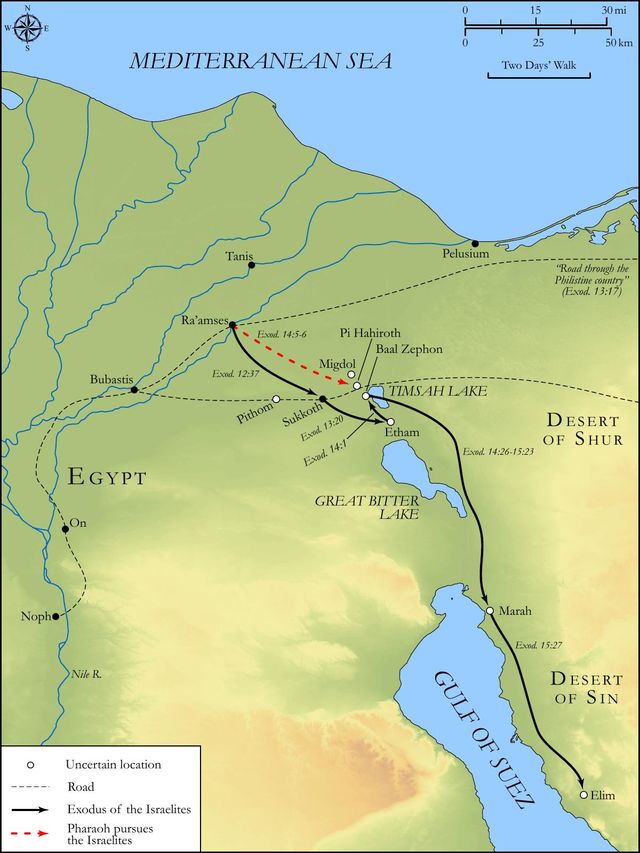
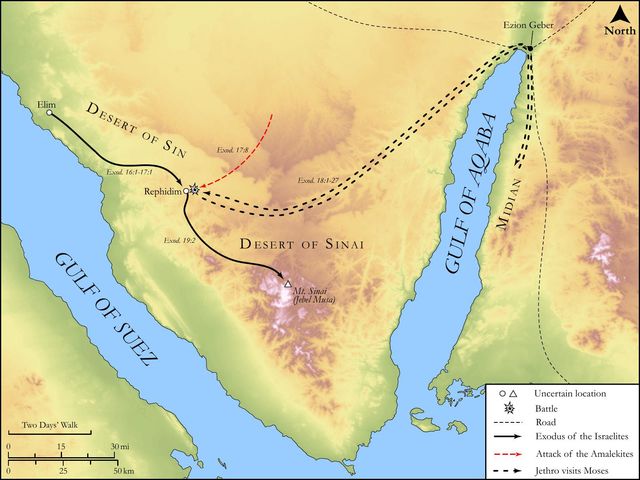
See on the biblical-era maps

Study this verse
Public-domain commentary
Matthew Henry
From his Commentary on the Whole Bible. Henry comments on passages, not single verses — this entry covers Exodus 12:43–51. His two-level outline is real structure in the source text, so it is rendered as structure.
Some further precepts are here given concerning the passover, as it should be observed in times to come.
I.All the congregation of Israel must keep it, Exo 12:47.
All that share in God's mercies should join in thankful praises for them. Though it was observed in families apart, yet it is looked upon as the act of the whole congregation; for the smaller communities constituted the greater. The New Testament passover, the Lord's supper, ought not to be neglected by any who are capable of celebrating it. He is unworthy the name of an Israelite that can contentedly neglect the commemoration of so great a deliverance.
1.No stranger that was uncircumcised might be admitted to eat of it, Exo 12:43, Exo 12:45, Exo 12:48. None might sit at the table but those that came in by the door; nor may any now approach to the improving ordinance of the Lord's supper who have not first submitted to the initiating ordinance of baptism. We must be born again by the word ere we can be nourished by it. Nor shall any partake of the benefit of Christ's sacrifice, or feast upon it, who are not first circumcised in heart, Col 2:11.
2.Any stranger that was circumcised might be welcome to eat of the passover, even servants, Exo 12:44. If, by circumcision, they would make themselves debtors to the law in its burdens, they were welcome to share in the joy of its solemn feasts, and not otherwise. Only it is intimated (Exo 12:48) that those who were masters of families must not only be circumcised themselves, but have all their males circumcised too. If in sincerity, and with that zeal which the thing required and deserves, we give up ourselves to God, we shall, with ourselves, give up all we have to him, and do our utmost that all ours may be his too. Here is an early indication of favour to the poor Gentiles, that the stranger, if circumcised, stands upon the same level with the home-born Israelite. One law for both, Exo 12:49. This was a mortification to the Jews, and taught them that it was their dedication to God, not their descent from Abraham, that entitled them to their privileges. A sincere proselyte was as welcome to the passover as a native Israelite, Isa 56:6, Isa 56:7.
II.In one house shall it be eaten (Exo 12:46), for good-fellowship sake, that they might rejoice together, and edify one another in the eating of it. None of it must be carried to another place, nor left to another time; for God would not have them so taken up with care about their departure as to be indisposed to take the comfort of it, but to leave Egypt, and enter upon a wilderness, with cheerfulness, and, in token of that, to eat a good hearty meal. The papists' carrying their consecrated host from house to house is not only superstitious in itself, but contrary to this typical law of the passover, which directed that no part of the lamb should be carried abroad.
The chapter concludes with a repetition of the whole matter, that the children of Israel did as they were bidden, and God did for them as he promised (Exo 12:50, Exo 12:51); for he will certainly be the author of salvation to those that obey him.
Continue studying Exodus 12:44 across the web’s major study libraries — every link below opens this exact verse, chapter, or book on the destination site.
Read & Compare
 BibleGatewayThis verse in more than 200 translations and 70 languages.
 Bible.comThe YouVersion reader — hundreds of translations, reading plans, and highlights.
 ESV.orgCrossway's official English Standard Version reader.
 NET BibleThe NET translation with 60,000+ translators' notes on every rendering decision.
 STEP BibleTyndale House's free study tool — original text, vocabulary, and scholarly resources.
 BibliaLogos Bible Software's free web reader.
 USCCBThe New American Bible (Revised Edition) with the U.S. bishops' study notes.
Commentaries
 BibleHub CommentariesDozens of classic commentaries on this verse, gathered on one page.
 StudyLightMore than 100 commentary sets — the largest collection on the web.
 BibleRefPlain-English commentary on what this verse means, verse by verse.
 Enduring WordDavid Guzik's free commentary on this chapter, widely used by Bible teachers.
 Bible Study ToolsVerse commentary alongside Greek and Hebrew study aids.
Original Language & Research
- BibleHub InterlinearThe verse word by word — original language, transliteration, and English.
- BibleHub LexiconEvery word's original-language definition and Strong's entry.
 Blue Letter BibleDeep-study tools — Strong's numbers, concordance, and word studies.
 SefariaThe Hebrew text with Rashi and centuries of Jewish commentary.
Sermons, Hymns & Audio


TrulyRandomVerse is not affiliated with these sites and doesn’t control their content. They’re linked because they’re genuinely useful.
Summary
Exodus 12:44 establishes a pivotal condition for non-Israelite male servants, acquired through purchase, to partake in the inaugural Passover meal: they must undergo circumcision. This divine directive underscores God's principle of covenantal inclusion, extending the sacred privileges and identity of His redeemed community beyond mere birthright to those who embrace the covenant sign, thereby integrating them into the spiritual heritage and redemptive history of Israel.
Context
ShowHideLiterary Context
This verse is intricately woven into God's precise instructions for the first Passover, delivered to Moses and Aaron just prior to the decisive tenth plague upon Egypt. The preceding verses (Exodus 12:1-20) meticulously detail the selection, preparation, and consumption of the Passover lamb, defining it as the foundational act of worship and remembrance that would forever shape Israel's identity as a people redeemed by God. Significantly, Exodus 12:43 explicitly declares, "No stranger shall eat thereof," establishing a general rule of exclusion for outsiders. Exodus 12:44 immediately follows, providing a crucial and specific qualification to this rule, outlining the conditions under which a particular category of non-Israelites—the purchased servant—could partake. This exception highlights God's pathway for inclusion into His covenant community, a theme further elaborated in Exodus 12:45-49, which distinguish between temporary hired hands and sojourners (who remain excluded) and the circumcised foreigner (who is included), emphasizing the profound significance of covenantal commitment over transient association.
Historical & Cultural Context
The instructions for the Passover were given in ancient Egypt, marking the precipice of Israel's liberation from centuries of slavery. The Passover was not merely a religious ritual but the defining event that forged Israel's national identity as a people set apart by God's redemptive power. The inclusion of "servants bought for money" reflects the households of Abraham and of Israel, where large households often comprised not only nuclear family members but also extended kin, foreign residents, and individuals acquired through purchase or debt. These "purchased servants" (often better understood as permanent household members rather than chattel slaves in the modern sense, with certain legal protections in Israelite law) were deeply integrated into the economic and social fabric of the household. God's directive here demonstrates His profound concern for the spiritual integration of all individuals within an Israelite household, extending the covenant privileges and responsibilities beyond ethnic Israelites to those who fully embraced the covenant sign, thereby emphasizing spiritual belonging over mere biological or social status.
Key Themes
ShowHideExodus 12:44 contributes significantly to several overarching themes within the book of Exodus and the broader Pentateuch. Foremost is the theme of Covenant Inclusion, demonstrating that while the covenant was primarily established with Abraham's descendants, God always provided a pathway for outsiders to join His people, contingent upon their embrace of the covenant terms. This principle foreshadows God's universal redemptive plan, which culminates in Christ's invitation to all nations (Isaiah 56:6-7). Secondly, the verse underscores the Centrality of the Covenant Sign, with circumcision serving as the indispensable physical marker of identity and commitment to God's covenant promises, a concept first introduced in Genesis 17:9-14. Participation in the Passover, the ultimate expression of Israel's redeemed identity, was inextricably linked to this visible sign. Finally, the verse subtly highlights the Spiritual Responsibility of the Household Head, placing the onus on the master to facilitate the spiritual well-being and integration of all within his domain, ensuring that those under his authority had the opportunity to partake in God's blessings if they chose to identify with His covenant. This responsibility extends beyond physical provision to spiritual nurture and guidance.
Exposition and Analysis
ShowHideKey Word Analysis
ShowHideThis term (H5650) refers to an individual bound to service, often a permanent household member. While sometimes translated as "slave," the broader context of the law of Moses and Israelite regulations suggests a more nuanced status, often involving a long-term, familial-like relationship within the household, distinct from temporary laborers. The inclusion of the ʻebed in the Passover, contingent on circumcision, highlights God's concern for the spiritual status of all within the Israelite household, regardless of their social origin.
This verb (H4135) signifies the act of cutting short, specifically the foreskin. It is the physical sign of the Abrahamic covenant (Genesis 17:10-14), representing a profound act of identification with God's chosen people and His covenant promises. For a non-Israelite servant, undergoing mûwl was a visible, irreversible commitment to the God of Israel and His ways, signifying their adoption into the covenant community and their separation unto God.
This primitive root (H398) means "to eat" literally or figuratively. In this context, it refers to partaking in the Passover meal, the most sacred ritual commemorating God's redemption of Israel from slavery. Permission to ʼâkal "thereof" (the Passover lamb) signifies full spiritual inclusion and access to the covenant blessings, marking the individual as a participant in God's redemptive history and a member of His redeemed people.
Verse Breakdown
ShowHideExodus 12:44 presents a clear conditional statement, outlining the specific criteria for participation in the Passover:
Literary Devices
ShowHideThe verse primarily employs a clear and direct conditional statement ("when...then...") to establish a precise legal and theological principle. This straightforward grammatical structure leaves no ambiguity regarding the necessary prerequisite for participation in the sacred Passover rite. Furthermore, there is an element of juxtaposition as this verse immediately follows the general exclusion of "strangers" in Exodus 12:43, highlighting the unique pathway of inclusion offered to the circumcised purchased servant. This contrast emphasizes the profound significance of the covenant sign as the sole gateway to sacred participation for those outside the direct lineage.
Theological and Thematic Connections
ShowHideExodus 12:44 unveils several profound theological truths. Firstly, it powerfully demonstrates God's inclusive nature even within the Old Covenant. While the covenant was primarily established with Abraham's descendants, God consistently provided a pathway for outsiders to join His people, provided they embraced the terms of the covenant. This reveals that belonging to God's people was never solely a matter of biological descent but fundamentally a matter of spiritual commitment and identification. Secondly, the verse underscores the centrality of the covenant sign (circumcision) as the visible and indispensable marker of identity and commitment to God. It served as the gateway to participating in the most sacred rituals and blessings of the community, signifying a cutting away of the old life and a dedication to God. Thirdly, it highlights the spiritual responsibility of the household head to facilitate the spiritual well-being and integration of all within his domain, reflecting God's concern for the spiritual state of every individual under an Israelite's care.
This theme of inclusion through covenant commitment resonates throughout the broader biblical narrative, foreshadowing God's expansive redemptive plan:
Reflection and Application
ShowHideExodus 12:44, though rooted in ancient practices, offers timeless principles for believers today, illuminating the nature of true participation in God's blessings and sacred community. It teaches us that genuine belonging requires a wholehearted commitment and identification with God's ways. Just as the ancient servant had to embrace the covenant sign of circumcision, so too must we, under the New Covenant, embrace faith in Jesus Christ, which is our spiritual circumcision—a cutting away of the old self and a new identity in Him. This verse encourages us to consider the depth of our own commitment and how we, as the church, reflect God's heart for inclusion.
Questions for Reflection
ShowHideFAQ
ShowHideWhy was physical circumcision required for participation in the Passover?
ShowHideCircumcision was the physical sign of the covenant God made with Abraham, signifying belonging to God's chosen people and being set apart for Him. For the Passover, which commemorated God's redemptive act for His covenant people, it was essential that participants identified with that covenant. It was a tangible mark of commitment and inclusion, distinguishing those who were fully aligned with Israel's God and His redemptive history from mere temporary residents or "strangers" (Exodus 12:43). This act demonstrated a willing submission to God's covenant and a desire to be counted among His people.
Does "bought for money" imply that God condoned slavery?
ShowHideThe term "servant bought for money" refers to a common practice in the households of the patriarchs and of Israel, which involved various forms of servitude, often as a means of debt repayment, economic stability, or even a form of adoption into a household. While the Bible operates within this cultural reality, it also introduces regulations that significantly mitigated the harshness of such systems, especially for fellow Israelites (Exodus 21:1-11), and provided protections for all servants, including foreigners (Deuteronomy 23:15-16). This verse, in particular, focuses not on the ethics of the institution itself, but on God's profound concern for the spiritual integration of all individuals within an Israelite household, demonstrating His desire for their participation in His covenant and redemptive acts, regardless of their social status.
What about women servants? Were they excluded from the Passover because they couldn't be circumcised?
ShowHideThe command for physical circumcision applied only to males. However, women were considered part of the covenant community and participants in its blessings through their male head of household (father or husband). Therefore, a woman servant "bought for money" would partake in the Passover meal if the male members of her household (e.g., her master and his sons, or her husband if married) were circumcised and thus part of the covenant. Her inclusion was through the covenant identity of her household, rather than individual circumcision, reflecting the patriarchal structure of ancient Israelite society where women's spiritual standing was often mediated through the covenant head of their family unit.
Christ-Centered Fulfillment
ShowHideExodus 12:44, with its emphasis on inclusion through a covenant sign for participation in a redemptive meal, finds its profound and ultimate fulfillment in the person and work of Jesus Christ. The Passover meal itself, into which circumcised servants were permitted to enter, prefigured Christ, who is our ultimate 1 Corinthians 5:7, whose sacrificial death delivers humanity from the bondage of sin and death, just as the original lamb delivered Israel from Egyptian slavery. The physical circumcision required for Old Covenant inclusion is transformed in the New Covenant, where true circumcision is now a matter of the heart, a spiritual transformation brought about by the Holy Spirit, not by human hands (Romans 2:29 and Colossians 2:11-12). This "circumcision of Christ" signifies the cutting away of the sinful nature, a spiritual act that marks one as belonging to God's new covenant people. Just as Exodus 12:44 provided a pathway for non-Israelites to join the covenant community, Christ's work radically expands this inclusion to all nations, so that Gentiles (non-Jews) are no longer "strangers and aliens" but "fellow citizens with the saints and members of the household of God" through faith in Him (Ephesians 2:19). The "bought for money" servant of the Old Testament finds their ultimate spiritual counterpart in all believers who are "bought with a price"—the precious blood of Christ (1 Corinthians 6:20 and 1 Peter 1:18-19). The Passover meal, into which the circumcised servant was welcomed, is fulfilled and superseded by the Lord's Supper (Communion), which is open to all who have put their faith in Christ and are spiritually circumcised by the Spirit, regardless of their ethnic or social background. Participation in the Lord's Supper signifies identification with Christ's death and resurrection, and belonging to His new covenant people, the Church. Thus, Exodus 12:44 powerfully foreshadows God's expansive plan of salvation, culminating in Christ, who provides the ultimate means of inclusion into God's family through faith, replacing physical rites with a spiritual transformation that unites all believers in Him.