


Exodus 12:36
Bible text: King James Version (1769 Blayney text) · Public domain
Bible text: Berean Standard Bible · Public domain
Bible text: American Standard Version (1901) · Public domain
Bible text: World English Bible, Messianic edition · Public domain
Bible text: Geneva Bible (1599) · Public domain
Bible text: Young's Literal Translation · Public domain
- וַיהוָהva·Yah·wehand YahwehH3068Conj-w ¦ N-properNoun Proper TitleוַandיהוָהYahweh
- נָתַןna·Tanhe gaveH5414V-Qal-Perf-3msVerb Qal Perfect 3rd Singular Masculine
- אֶת'et<obj.>H853DirObjMParticle Object Indicator
- חֵןchen[the] favor ofH2580N-mscNoun Singular Masculine Construct
- הָעָםha·'Amthe peopleH5971Art ¦ N-msNoun Singular Masculine Absoluteהָtheעָםpeople
- בְּעֵינֵיbe·'ei·Neiin [the] eyes ofH5869Prep-b ¦ N-fdcNoun Dual Feminine Constructבְּinעֵינֵי[the] eyes of
- מִצְרַיִםmitz·Ra·yimEgyptH4714N-properNoun Proper Location
- וַיַּשְׁאִלוּםvai·yash·'i·Lumand they granted [the] request themH7592Conj-w ¦ V-Hiphil-ConsecImperf-3mp ¦ 3mpVerb Hiphil Consecutive Imperfect 3rd Plural Masculineוַandיַּשְׁאִלוּthey granted [the] requestםthem
- וַיְנַצְּלוּvay·na·tze·Luand they plunderedH5337Conj-w ¦ V-Piel-ConsecImperf-3mpVerb Piel Consecutive Imperfect 3rd Plural Masculineוַandיְנַצְּלוּthey plundered
- אֶת'et<obj.>H853DirObjMParticle Object Indicator
- מִצְרָיִםmitz·Ra·yimEgyptH4714N-properNoun Proper Location
English is a literal word-by-word gloss of the Hebrew, not the KJV's wording. Why?
This is the original text the KJV's translators worked from — each Hebrew word with its own literal English meaning in this verse, prepared by scholars at Tyndale House, Cambridge. The KJV translates whole sentences, not word by word, so its wording differs: one Hebrew word can become several English words, and the KJV may choose “the LORD” where the gloss reads “Yahweh”. Both are faithful — they answer different questions. For the KJV's own rendering, switch to the KJV text.
Details
See on the biblical-era maps

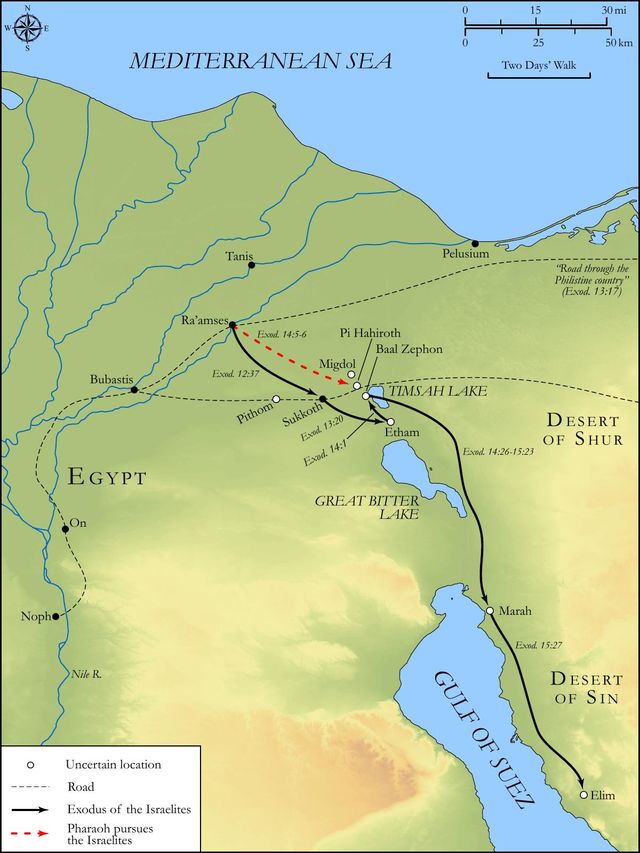
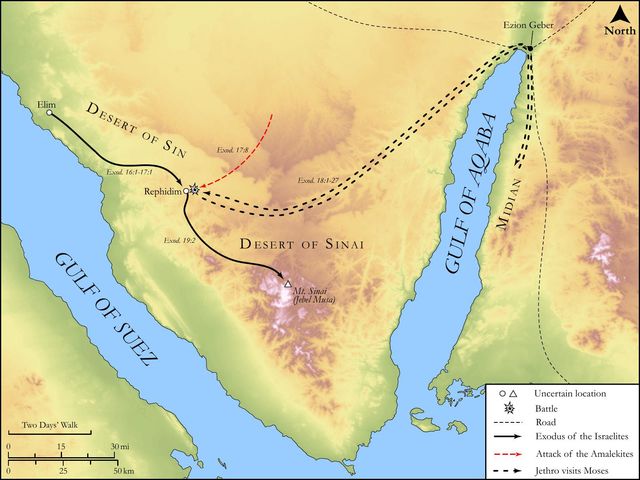
Study this verse
Public-domain commentary
Matthew Henry
From his Commentary on the Whole Bible. Henry comments on passages, not single verses — this entry covers Exodus 12:29–36. His four-level outline is real structure in the source text, so it is rendered as structure.
Here we have, I. The Egyptians' sons, even their first-born, slain, Exo 12:29, Exo 12:30. If Pharaoh would have taken the warning which was given him of this plague, and would thereupon have released Israel, what a great many dear and valuable lives might have been preserved! But see what obstinate infidelity brings upon men. Observe, 1. The time when this blow was given: It was at midnight, which added to the terror of it. The three preceding nights were made dreadful by the additional plague of darkness, which might be felt, and doubtless disturbed their repose; and now, when they hoped for one quiet night's rest, at midnight was the alarm given. When the destroying angel drew his sword against Jerusalem, it was in the day-time (Sa2 24:15), which made it the less frightful; but the destruction of Egypt was by a pestilence walking in darkness, Psa 91:6. Shortly there will be an alarming cry at midnight, Behold, the bridegroom cometh. 2. On whom the plague fastened - on their first-born, the joy and hope of their respective families. They had slain the Hebrews' children, and now God slew theirs. Thus he visits the iniquity of the fathers upon the children; and he is not unrighteous who taketh vengeance. 3. How far it reached - from the throne to the dungeon. Prince and peasant stand upon the same level before God's judgments, for there is no respect of persons with him; see Job 34:29, Job 34:20. Now the slain of the Lord were many; multitudes, multitudes, fall in this valley of decision, when the controversy between God and Pharaoh was to be determined. 4. What an outcry was made upon it: There was a great cry in Egypt, universal lamentation for their only son (with many), and with all for their first-born. If any be suddenly taken ill in the night, we are wont to call up neighbours; but the Egyptians could have no help, no comfort, from their neighbours, all being involved in the same calamity. Let us learn hence, (1.) To tremble before God, and to be afraid of his judgments, Psa 119:120. Who is able to stand before him, or dares resist him? (2.) To be thankful to God for the daily preservation of ourselves and our families: lying so much exposed, we have reason to say, "It is of the Lord's mercies that we are not consumed."
II.God's sons, even his first-born, released; this judgment conquered Pharaoh, and obliged him to surrender at discretion, without capitulating. Men had better come up to God's terms at first, for he will never come down to theirs, let them object as long as they will. Now Pharaoh's pride is abased, and he yields to all that Moses had insisted on: Serve the Lord as you have said (Exo 12:31), and take your flocks as you have said, Exo 12:32. Note, God's word will stand, and we shall get nothing by disputing it, or delaying to submit to it. Hitherto the Israelites were not permitted to depart, but now things had come to the last extremity, in consequence of which,
1.They are commanded to depart: Rise up, and get you forth, Exo 12:31. Pharaoh had told Moses he should see his face no more; but now he sent for him. Those will seek God early in their distress who before had set him at defiance. Such a fright he was now in that he gave orders by night for their discharge, fearing lest, if he delayed any longer, he himself should fall next; and that he sent them out, not as men hated (as the pagan historians have represented this matter), but as men feared, is plainly discovered by his humble request to them (Exo 12:32): "Bless me also; let me have your prayers, that I may not be plagued for what is past, when you are gone." Note, Those that are enemies to God's church are enemies to themselves, and, sooner or later, they will be made to see it.
2.They are hired to depart by the Egyptians; they cried out (Exo 12:33), We be all dead men. Note, When death comes into our houses, it is seasonable for us to think of our own mortality. Are our relations dead? It is easy to infer thence that we are dying, and, in effect, already dead men. Upon this consideration they were urgent with the Israelites to be gone, which gave great advantage to the Israelites in borrowing their jewels, Exo 12:35, Exo 12:36. When the Egyptians urged them to be gone, it was easy for the to say that the Egyptians had kept them poor, that they could not undertake such a journey with empty purses, but, that, if they would give them wherewithal to bear their charges, they would be gone. And this the divine Providence designed in suffering things to come to this extremity, that they, becoming formidable to the Egyptians, might have what they would, for asking; the Lord also, by the influence he has on the minds of people, inclined the hearts of the Egyptians to furnish them with what they desired, they probably intending thereby to make atonement, that the plagues might be stayed, as the Philistines, when they returned the ark, sent a present with it for a trespass-offering, having an eye to this precedent, Sa1 6:3, Sa1 6:6. The Israelites might receive and keep what they thus borrowed, or rather required, of the Egyptians,
(1.)As justly as servants receive wages from their masters for work done, and sue for it if it be detained.
(2.)As justly as conquerors take the spoils of their enemies whom they have subdued; Pharaoh was in rebellion against the God of the Hebrews, by which all that he had was forfeited.
(3.)As justly as subjects receive the estates granted to them by their prince. God is the sovereign proprietor of the earth, and the fulness thereof; and, if he take from one and give to another, who may say unto him, What doest thou? It was by God's special order and appointment that the Israelites did what they did, which was sufficient to justify them, and bear them out; but what they did will by no means authorize others (who cannot pretend to any such warrant) to do the same. Let us remember,
[1.]That the King of kings can do no wrong.
[2.]That he will do right to those whom men injure, Psa 146:7. Hence it is that the wealth of the sinner often proves to be laid up for the just, Pro 13:22; Job 27:16, Job 27:17.
Historical interpretation
Historical reception
1 surviving comment on this verse from the historical church.
The Egyptians not only had idols and crushing burdens which the people of Israel detested and from which they fled. They also had vessels and ornaments of gold and silver, and clothing, which the Israelites leaving Egypt secretly claimed for themselves as if for a better use. Not on their own authority did they make this appropriation, but by the command of God. Meanwhile, the Egyptians themselves, without realizing it, were supplying the things which they were not using properly. In the same way, all the teachings of the pagans have counterfeit and superstitious notions and oppressive burdens of useless labor. Any one of us, leaving the association of pagans with Christ as our leader, ought to abominate and shun them.
Continue studying Exodus 12:36 across the web’s major study libraries — every link below opens this exact verse, chapter, or book on the destination site.
Read & Compare
 BibleGatewayThis verse in more than 200 translations and 70 languages.
 Bible.comThe YouVersion reader — hundreds of translations, reading plans, and highlights.
 ESV.orgCrossway's official English Standard Version reader.
 NET BibleThe NET translation with 60,000+ translators' notes on every rendering decision.
 STEP BibleTyndale House's free study tool — original text, vocabulary, and scholarly resources.
 BibliaLogos Bible Software's free web reader.
 USCCBThe New American Bible (Revised Edition) with the U.S. bishops' study notes.
Commentaries
 BibleHub CommentariesDozens of classic commentaries on this verse, gathered on one page.
 StudyLightMore than 100 commentary sets — the largest collection on the web.
 BibleRefPlain-English commentary on what this verse means, verse by verse.
 Enduring WordDavid Guzik's free commentary on this chapter, widely used by Bible teachers.
 Bible Study ToolsVerse commentary alongside Greek and Hebrew study aids.
Original Language & Research
- BibleHub InterlinearThe verse word by word — original language, transliteration, and English.
- BibleHub LexiconEvery word's original-language definition and Strong's entry.
 Blue Letter BibleDeep-study tools — Strong's numbers, concordance, and word studies.
 SefariaThe Hebrew text with Rashi and centuries of Jewish commentary.
Sermons, Hymns & Audio


TrulyRandomVerse is not affiliated with these sites and doesn’t control their content. They’re linked because they’re genuinely useful.
Summary
Exodus 12:36 describes the climactic moment of Israel's departure from Egypt, where the Lord supernaturally influenced the Egyptians to willingly bestow their wealth upon the Israelites. This act, often termed "spoiling the Egyptians," served as divine recompense for centuries of forced labor, a powerful demonstration of God's sovereignty over human hearts, and a precise fulfillment of His ancient promises, equipping His people for their journey to freedom and future worship in the wilderness.
Context
ShowHideLiterary Context
This verse is the culmination of the Exodus narrative's initial phase, immediately following the devastating Tenth Plague, which finally broke Pharaoh's stubborn resistance. The death of the firstborn throughout Egypt led to Pharaoh's desperate command for the Israelites to leave immediately, even urging them to depart with a blessing (Exodus 12:31-33). The "spoiling" described here is not an isolated event but the fulfillment of a divinely orchestrated plan, previously revealed to Moses in Exodus 3:21-22 and reiterated in Exodus 11:2-3, ensuring Israel would not leave empty-handed. Following this act of divine provision and justice, the Israelites set out from Rameses, beginning their journey to the Promised Land (Exodus 12:37).
Historical & Cultural Context
Among the nations of that day, the concept of "spoils" was common in warfare, where the victorious party would take the possessions of the vanquished. However, this event is unique; it is not a military conquest but a divinely orchestrated "exodus" where an enslaved people are enriched by their former oppressors. This act can be understood as divine justice and recompense for over 400 years of brutal slavery and unpaid labor, as prophesied in Genesis 15:13-14. The Egyptians' willingness to "lend" or give valuable items was not an act of generosity but a desperate attempt to appease a God they now feared and to hasten the Israelites' departure, indicating a profound shift in power dynamics orchestrated by the Lord, demonstrating His supremacy over the gods of Egypt.
Key Themes
ShowHideExodus 12:36 contributes significantly to several major theological themes prevalent in the book of Exodus and the broader Pentateuch. It highlights God's sovereignty and omnipotence, demonstrating His absolute control over human hearts and historical events, even those of powerful nations like Egypt. It powerfully illustrates divine justice and recompense, showing God's active intervention to right the wrongs committed against His people, settling a four-century-old debt. Furthermore, it underscores God's faithfulness to His covenant promises, specifically the prophecy given to Abraham that his descendants would leave their place of affliction with "great possessions" (Genesis 15:14). Finally, it speaks to God's providence and provision, as the acquired wealth would later be instrumental in the construction of the Tabernacle, equipping His people for worship and their wilderness journey (Exodus 35:21-24).
Exposition and Analysis
ShowHideExodus 12:36 states, "And the LORD gave the people favour in the sight of the Egyptians, so that they lent unto them [such things as they required]. And they spoiled the Egyptians."
Key Word Analysis
ShowHideThis Hebrew word denotes grace, charm, or goodwill. In this context, its use emphasizes that the Egyptians' sudden willingness to part with their valuables was not a natural or spontaneous act of generosity but a supernatural influence exerted by God. It signifies divine intervention, turning the hearts of oppressors to exhibit benevolence towards their former slaves, a direct consequence of the terrifying plagues.
While translated "lent" in the KJV, this verb carries a broader semantic range, including "to ask for," "to demand," or "to borrow." Given the desperate context of the Egyptians urging Israel to leave, it implies that the Israelites "asked for" or "demanded" items, and the Egyptians, in their terror and eagerness for Israel's departure, readily gave whatever was requested. This was not a typical loan with an expectation of repayment, but a forced "lending" driven by fear and a desire for relief from divine judgment.
This verb can mean "to snatch away," "to deliver," "to rescue," "to strip," or "to plunder." In this context, it implies a legitimate taking of possessions, akin to dispossessing or reclaiming what was rightfully due. It was not illicit theft but a divinely sanctioned act of restitution and deliverance, a "plundering" of their oppressors as an act of justice for centuries of unpaid labor and oppression.
Verse Breakdown
ShowHide"And the LORD gave the people favour in the sight of the Egyptians"
This opening clause unequivocally establishes divine agency. It was not Israel's inherent charm or astute negotiation skills, but God's direct, supernatural intervention that softened the Egyptians' hearts. This "favor" was a profound consequence of the terrifying plagues, particularly the death of the firstborn, which instilled overwhelming fear and urgency in the Egyptians, compelling them to cooperate with Israel's requests.
"so that they lent unto them [such things as they required]"
This phrase describes the immediate outcome of God's favor. The Egyptians, desperate to see the Israelites depart, were so eager to comply that they readily gave whatever was asked, effectively "lending" or bestowing wealth upon them with no expectation of return. This was a forced "lending" driven by terror and a profound desire for relief from the divine judgments that had ravaged their land.
"And they spoiled the Egyptians"
This concluding phrase summarizes the ultimate outcome and divine intent. The Israelites, far from escaping as destitute refugees, left Egypt enriched by their former masters. This act was a direct fulfillment of God's ancient promise to Abraham (Genesis 15:14), serving as a profound form of divine recompense for centuries of forced labor, and a powerful judgment against Egypt for its oppression and defiance of God.
Literary Devices
ShowHideThe passage prominently employs divine passive ("the LORD gave... favour"), highlighting God's sovereign and active hand in orchestrating the events, rather than attributing the outcome to human effort or chance. There is also a strong sense of poetic justice or irony at play: the very people who enslaved Israel and grew rich from their forced labor were now stripped of their wealth, which was then given to their former slaves. This reversal of fortunes underscores God's power to humble the proud and exalt the oppressed.
Theological and Thematic Connections
ShowHideExodus 12:36 powerfully illustrates several core theological truths, demonstrating God's character and His interaction with humanity. It reveals God's absolute sovereignty over all creation, including the hearts of rulers and nations, showing His ability to bend the will of enemies to serve His divine purposes. This event is a profound demonstration of divine justice, where God acts as the righteous judge, settling the account for centuries of oppression and unpaid labor, providing recompense to His people while executing judgment on their oppressors. It also highlights God's unwavering faithfulness to His promises, as this act directly fulfills the ancient prophecy given to Abraham, assuring His people that His word will always come to pass. Finally, it showcases God's providence and provision, not only delivering His people but also equipping them with the necessary resources for their journey and for the establishment of His worship in the Tabernacle.
Reflection and Application
ShowHideExodus 12:36 offers profound lessons for believers today, reminding us that God is actively involved in the affairs of humanity, working out His purposes with precision and power. This verse assures us of God's unwavering faithfulness to His promises, no matter how long it takes or how impossible the circumstances may seem. We can rest in the knowledge that His Word will always come to pass, providing a steadfast anchor for our faith. When we witness or experience injustice, this passage reminds us that God sees, hears, and will, in His perfect timing, bring about justice and recompense. We are called to trust His timing and methods, even when they are unexpected or defy human logic. Moreover, it instills confidence in God's provision: even in seemingly dire or impossible situations, God can open doors, turn hearts, and provide for His people in unexpected ways. We are encouraged to trust in His provision, knowing He can use any means to meet our needs and equip us for His service, transforming adversity into triumph for His glory.
Questions for Reflection
ShowHideFAQ
ShowHideWas it ethical for the Israelites to "spoil" the Egyptians? Was it theft?
ShowHideFrom a biblical perspective, this was not theft but divine recompense and judgment. The Israelites were not sneaking in to steal; they were openly asking for items, and the Egyptians, under divine influence and out of desperation, willingly gave them. For centuries, the Egyptians had exploited Israel's labor without payment, enriching themselves at the Israelites' expense. This act was God's way of settling the account, providing a "just wage" for generations of servitude, and dispossessing their oppressors as a sign of judgment. It was a divinely sanctioned transfer of wealth, not illicit raiding. This is consistent with God's promise to Abraham in Genesis 15:14, where He declared that Abraham's descendants would come out with "great possessions."
Why did God command the Israelites to ask for valuables instead of just providing for them miraculously?
ShowHideGod often uses natural means in conjunction with supernatural intervention. Commanding them to ask for valuables served multiple purposes: it was a direct fulfillment of His prophecy to Abraham (Genesis 15:14), it demonstrated God's power to humble Egypt and turn the hearts of their oppressors, and it provided the necessary resources (gold, silver, fine linens) that would later be used for the construction of the Tabernacle (Exodus 35:21-24), equipping His people for worship and their journey. This method emphasized God's sovereignty over human will and resources.
How could the Egyptians "lend" items if they were being "spoiled"?
ShowHideThe Hebrew word sha'al (translated "lent" in KJV) can also mean "to ask for," "to demand," or "to borrow." In this context, it implies that the Israelites "asked for" or "demanded" items, and the Egyptians, in their terror and eagerness to be rid of them, effectively "lent" or gave these items without expectation of return. The act of "spoiling" (natsal) describes the outcome: the Israelites stripped the Egyptians of their wealth, legitimately taking it as reparations, even if the initial action was framed as a "request" or "borrowing" from the Egyptian perspective. The Egyptians' "lending" was compelled by divine judgment, making it a forced transfer of wealth that resulted in their being "spoiled."
Christ-Centered Fulfillment
ShowHideExodus 12:36, as an integral part of the Exodus narrative, profoundly foreshadows the greater spiritual liberation and abundant provision found in Jesus Christ. Just as God delivered Israel from the physical bondage of Egypt, Jesus delivers humanity from the far more profound bondage of sin, death, and the dominion of darkness. His atoning work on the cross is the ultimate "exodus," freeing us from a slavery that held eternal consequences. The "spoiling of the Egyptians" by Israel powerfully prefigures Christ's decisive victory over the spiritual powers of evil. Through His death and resurrection, Jesus "spoiled" or disarmed the principalities and powers, triumphing over them publicly (Colossians 2:15), plundering the kingdom of darkness and setting its captives free. The material wealth given to Israel for their journey and for the construction of the Tabernacle points to the immeasurable spiritual riches and grace bestowed upon believers in Christ. We are not merely freed from bondage but are "blessed with every spiritual blessing in the heavenly places in Christ" (Ephesians 1:3), enriched by His sacrifice and equipped for His service and worship as living stones in the "new temple" of the Holy Spirit (1 Peter 2:5). This new covenant provision transcends gold and silver, providing all that is needed for His people to worship Him "in spirit and truth" (John 4:24), through the indwelling Spirit and the transformative power of the gospel.