


Esther 6:7
Bible text: King James Version (1769 Blayney text) · Public domain
Bible text: Berean Standard Bible · Public domain
Bible text: American Standard Version (1901) · Public domain
Bible text: World English Bible, Messianic edition · Public domain
Bible text: Geneva Bible (1599) · Public domain
Bible text: Young's Literal Translation · Public domain
- וַיֹּאמֶרvai·Yo·merand he saidH559Conj-w ¦ V-Qal-ConsecImperf-3msVerb Qal Consecutive Imperfect 3rd Singular Masculineוַandיֹּאמֶרhe said
- הָמָןha·ManHamanH2001N-proper-mNoun Proper Masculine
- אֶל'eltoH413PrepPreposition
- הַמֶּלֶךְha·Me·lekhthe kingH4428Art ¦ N-msNoun Singular Masculine Absoluteהַtheמֶּלֶךְking
- אִישׁ'isha manH376N-msNoun Singular Masculine Absolute
- אֲשֶׁר'a·SherwhomH834RelParticle Relative
- הַמֶּלֶךְha·Me·lekhthe kingH4428Art ¦ N-msNoun Singular Masculine Absoluteהַtheמֶּלֶךְking
- חָפֵץcha·Fetzhe delightsH2654V-Qal-Perf-3msVerb Qal Perfect 3rd Singular Masculine
- בִּיקָרוֹbi·ka·Roin his honorH3366Prep-b ¦ N-msc ¦ 3msNoun Singular Masculine Constructבִּinיקָרhonorוֹhis
English is a literal word-by-word gloss of the Hebrew, not the KJV's wording. Why?
This is the original text the KJV's translators worked from — each Hebrew word with its own literal English meaning in this verse, prepared by scholars at Tyndale House, Cambridge. The KJV translates whole sentences, not word by word, so its wording differs: one Hebrew word can become several English words, and the KJV may choose “the LORD” where the gloss reads “Yahweh”. Both are faithful — they answer different questions. For the KJV's own rendering, switch to the KJV text.
Details
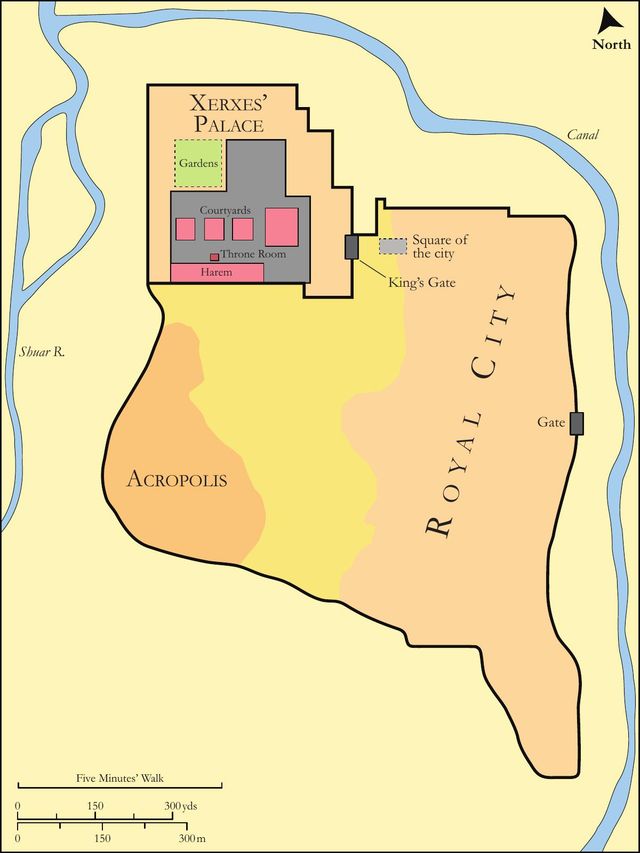
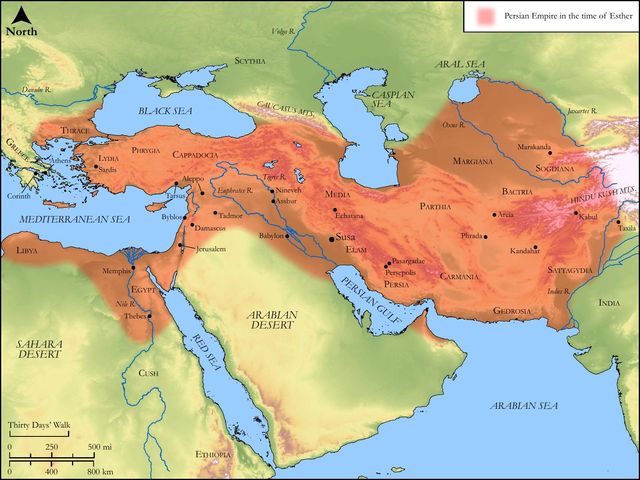
See on the biblical-era maps
Study this verse
Public-domain commentary
Matthew Henry
From his Commentary on the Whole Bible. Henry comments on passages, not single verses — this entry covers Esther 6:4–11. His two-level outline is real structure in the source text, so it is rendered as structure.
It is now morning, and people begin to stir.
I.Haman is so impatient to get Mordecai hanged that he comes early to court, to be ready at the king's levee, before any other business is brought before him, to get a warrant for his execution (Est 6:4), which he makes sure that he shall have at the first word. The king would gratify him in a greater thing than that; and he could tell the king that he was so confident of the justice of his request, and the king's favour to him in it, that he had got the gallows ready: one word from the king would complete his satisfaction.
II.The king is so impatient to have Mordecai honoured that he sends to know who is in the court that is fit to be employed in it.
Word is brought him that Haman is in the court, Est 6:5. Let him come in, says the king, the fittest man to be made use of both in directing and in dispensing the king's favour; and the king knew nothing of any quarrel he had with Mordecai. Haman is brought in immediately, proud of the honour done him in being admitted into the king's bed-chamber, as it should seem, before he was up; for let the king but give orders for the dignifying of Mordecai, and he will be easy in his mind and try to sleep. Now Haman thinks he has the fairest opportunity he can wish for to solicit against Mordecai; but the king's heart is as full as his, and it is fit he should speak first.
III.The king asks Haman how he should express his favour to one whom he had marked for a favourite:
What shall be done to the man whom the king delights to honour? Est 6:6. Note, It is a good property in kings, and other superiors, to delight in bestowing rewards and not to delight in punishing. Parents and masters should take a pleasure in commending and encouraging that which is good in those under their charge.
IV.Haman concludes that he himself is the favourite intended, and therefore prescribes the highest expressions of honour that could, for once, be bestowed upon a subject. His proud heart presently suggested, "To whom will the king delight to do honour more than to myself? No one deserves it so well as I," thinks Haman, "nor stands so fair for it." See how men's pride deceives them.
1.Haman had a better opinion of his merits than there was cause for: he thought none so worthy of honour as himself. It is a foolish thing for us thus to think ourselves the only deserving persons, or more deserving than any other. The deceitfulness of our own hearts appears in nothing so much as in the good conceit we have of ourselves and our own performances, against which we should therefore constantly watch and pray.
2.He had a better opinion of his interest than there was reason for. He thought the king loved and valued no one but himself, but he was deceived. We should suspect that the esteem which others profess for us is not so great as it seems to be or as we are sometimes willing to believe it is, that we may not think too well of ourselves nor place too much confidence in others. Now Haman thinks he is carving out honour for himself, and therefore does it very liberally, Est 6:8, Est 6:9. Nay, he does it presumptuously, prescribing honours too great to be conferred upon any subject, that he must be dressed in the royal robes, wear the royal crown, and ride on the king's own horse; in short, he must appear in all the pomp and grandeur of the king himself, only he must not carry the sceptre, the emblem of power. He must be attended by one of the king's most noble princes, who must be his lacquey, and all the people must be made to take notice of him and do him reverence; for he must ride in state through the streets, and it must be proclaimed before him, for his honour, and the encouragement of all to seek the ruler's favour, Thus shall it be done to the man whom the king delights to honour, which had the same intention with that which was proclaimed before Joseph, Bow the knee; for every good subject will honour those whom the king delights to honour. And shall not every good Christian then honour those whom the King of kings delights to honour and call the saints that are on the earth the excellent ones?
V.The king confounds him with a positive order that he should immediately go himself and put all this honour upon Mordecai the Jew, Est 6:10.
If the king had but said, as Haman expected, Thou art the man, what a fair opportunity would he have had to do the errand he came on, and to desire that, to grace the solemnity of his triumphs, Mordecai, his sworn enemy, might be hanged at the same time! But how is he thunderstruck when the king bids him not to order all this to be done, but to do it himself to Mordecai the Jew, the very man he hated above all men and whose ruin he was now designing! Now, it is to no purpose to think of moving any thing to the king against Mordecai when he is the man whom the king delights to honour. Solomon says, The heart of the king is unsearchable (Pro 25:3), but it is not unchangeable.
VI.Haman dares not dispute nor so much as seem to dislike the king's order, but, with the greatest regret and reluctance imaginable, brings it to Mordecai, who I suppose did no more cringe to Haman now than he had done, valuing his counterfeit respect no more than he had valued his concealed malice. The apparel is brought, Mordecai is dressed up, and rides in state through the city, recognized as the king's favourite, Est 6:11. It is hard to say which of the two put a greater force upon himself, proud Haman in putting this honour upon Mordecai, or humble Mordecai in accepting it: the king would have it so, and both must submit. Upon this account it was agreeable to Mordecai as it was an indication of the king's favour, and gave hope that Esther would prevail for the reversing of the edict against the Jews.
Historical interpretation
Five Centuries of Reception
3 surviving comments on this verse. Each one is dated, so this reads as a timeline rather than a list.
Select a marker to jump to its quote. Markers stagger vertically where authors wrote within a few decades of each other.
Mordecai was also persecuted as Jesus was persecuted. Mordecai was persecuted by the wicked Haman; and Jesus was persecuted by the rebellious people. Mordecai by his prayer delivered his people from the hands of Haman; and Jesus by his prayer delivered his people from the hands of Satan. Mordecai was delivered from the hands of his persecutor; and Jesus was rescued from the hands of his persecutors. Because Mordecai sat and clothed himself with sackcloth, he saved Esther and his people from the sword; and because Jesus clothed himself with a body and was illuminated, he saved the church and its children from death. Because of Mordecai, Esther was well pleasing to the king and went in and sat instead of Vashti, who did not do his will; and because of Jesus, the church is well pleasing to God and has gone in to the king, instead of the congregation that did not his will. Mordecai admonished Esther that she should fast with her maidens, that she and her people might be delivered from the hands of Haman; and Jesus admonished the church and its children [to fast], that it and its children might be delivered from the wrath. Mordecai received the honor of Haman, his persecutor; and Jesus received great glory from his Father, instead of his persecutors who were of the foolish people. Mordecai trod on the neck of Haman, his persecutor; and as for Jesus, his enemies shall be put under his feet. Before Mordecai, Haman proclaimed, “Thus shall it be done to the man, in honoring whom the king is pleased”; as for Jesus, his preachers came out of the people who persecuted him, and they said, “This is Jesus the Son of God.” The blood of Mordecai was required at the hand of Haman and his sons; and "the blood of Jesus,” his persecutors took “on themselves and on their children.”
Above all we should at least know that there are three origins of our thoughts, that is, from God, from the devil and from ourselves. They come from God when he deigns to visit us with the illumination of the Holy Spirit, lifting us up to a higher state of progress; or when we have made but little progress or through sloth have been overcome, he chastens us with most salutary compunction; or when he discloses to us heavenly mysteries or turns our purpose and will to better actions. This was the case of king Ahasuerus when, chastened by the Lord, he was prompted to ask for the books of the annals, by which he was reminded of the good deeds of Mordecai and promoted him to a position of the highest honor and at once recalled his most cruel sentence concerning the slaughter of the Jews.
What can the fact that the king spent a sleepless night mean but that which is written in the Psalm: “See, the one who guards Israel will not sleep or slumber” (Psalms 121). They read before him the histories and chronicles of earlier times in which are mentioned the loyalty and the good deeds of Mordecai, because the king of the saints and the prince of the kings of the earth—who remains the same within himself—comes to know with a single glance the course of all the ages and the actions of every individual; and nothing ever escapes his notice, rather everything lies open before him in his sight. Jeremiah tells us about this: “For it is he who has strengthened all things, and Israel is the staff of his inheritance; the Lord of hosts is his name” (Jeremiah 10). Hence the apostle also says: “For in Christ Jesus there is no ‘is’ and ‘was’, but in him there is always ‘is’.” And likewise: “Jesus Christ is the same yesterday and today, and for all time” (Hebrews 13).
So Mordecai’s actions are mentioned before this king, because the good deeds of the holy teachers never fade from his memory; rather it is as it is written: “The righteous will be in eternal memory, he will have no fear of bad tidings” (Psalms 112).
Continue studying Esther 6:7 across the web’s major study libraries — every link below opens this exact verse, chapter, or book on the destination site.
Read & Compare
 BibleGatewayThis verse in more than 200 translations and 70 languages.
 Bible.comThe YouVersion reader — hundreds of translations, reading plans, and highlights.
 ESV.orgCrossway's official English Standard Version reader.
 NET BibleThe NET translation with 60,000+ translators' notes on every rendering decision.
 STEP BibleTyndale House's free study tool — original text, vocabulary, and scholarly resources.
 BibliaLogos Bible Software's free web reader.
 USCCBThe New American Bible (Revised Edition) with the U.S. bishops' study notes.
Commentaries
 BibleHub CommentariesDozens of classic commentaries on this verse, gathered on one page.
 StudyLightMore than 100 commentary sets — the largest collection on the web.
 BibleRefPlain-English commentary on what this verse means, verse by verse.
 Enduring WordDavid Guzik's free commentary on this chapter, widely used by Bible teachers.
 Bible Study ToolsVerse commentary alongside Greek and Hebrew study aids.
Original Language & Research
- BibleHub InterlinearThe verse word by word — original language, transliteration, and English.
- BibleHub LexiconEvery word's original-language definition and Strong's entry.
 Blue Letter BibleDeep-study tools — Strong's numbers, concordance, and word studies.
 SefariaThe Hebrew text with Rashi and centuries of Jewish commentary.
Sermons, Hymns & Audio


TrulyRandomVerse is not affiliated with these sites and doesn’t control their content. They’re linked because they’re genuinely useful.
Summary
Esther 6:7 marks a pivotal moment of profound dramatic irony within the book of Esther, as Haman, consumed by his own pride, confidently begins to outline an elaborate plan for honoring a man whom King Ahasuerus delights in. Unbeknownst to Haman, the king's query refers not to him, but to Mordecai, the very individual Haman intends to execute. This verse initiates the dramatic reversal of fortunes, setting the stage for Haman's unwitting orchestration of his archenemy's public exaltation, thereby sealing his own impending humiliation and downfall.
Context
ShowHideLiterary Context
This verse immediately follows King Ahasuerus's crucial question in Esther 6:6, "What shall be done unto the man whom the king delighteth to honour?" The king's question arises from a sleepless night during which he commanded the royal chronicles to be read aloud. Through this reading, it was discovered that Mordecai had previously exposed a plot against the king, saving his life, yet had never been formally rewarded for his loyalty (Esther 2:21-23). In a remarkable display of divine timing, Haman, Mordecai's bitter enemy, arrived at the palace at that precise moment, intending to ask for royal permission to hang Mordecai on the towering gallows he had prepared. Haman, blinded by his immense pride and self-importance, immediately assumed the king's question referred to him, leading to the self-serving and ultimately ironic answer that begins in this verse and continues into Esther 6:8-9.
Historical & Cultural Context
The events of the book of Esther are set within the vast Persian Empire, specifically in the capital city of Susa, during the reign of King Ahasuerus (historically identified with Xerxes I, 486-465 BC). Persian court protocol was rigidly formalized, with the king holding absolute and unquestionable authority. Royal chronicles, known as the "Book of Records of the Chronicles," were meticulously kept records of significant events, decrees, and loyal service, serving as both a historical archive and a means to track unrewarded deeds. Public honor, especially when bestowed directly by the king, represented the supreme form of recognition and elevation of status. Such commendation often involved specific royal regalia, the king's own horse, and public processions, signifying immense favor and prestige within the highly stratified Persian society. Haman, as the king's chief minister (vizier), would have been intimately familiar with these customs and the immense power and prestige associated with such royal commendation. His immediate expectation of being the recipient of such honor vividly reflects his elevated position and inflated ego within this hierarchical system.
Key Themes
ShowHideThe passage in Esther 6:7 vividly illustrates several major themes central to the book of Esther. Dramatic Irony is paramount, as Haman's self-serving proposal for honor is unknowingly destined for his nemesis, Mordecai. This stark contrast between Haman's arrogant assumption and the unfolding reality underscores how the wicked often fall into the pit they dug for others. Furthermore, Divine Providence is powerfully at play; the king's insomnia, the specific timing of the reading of the royal chronicles, and Haman's perfectly timed arrival are not mere coincidences but divinely orchestrated events that meticulously set the stage for the deliverance of God's people. This highlights God's unseen hand guiding human affairs, even when His name is not explicitly mentioned, as seen in Proverbs 16:9. Finally, Haman's overwhelming Pride Before a Fall is on full display. His inability to conceive that anyone but himself could be worthy of such extraordinary honor ultimately sets him on a path to profound humiliation and destruction, a classic biblical principle powerfully articulated in Proverbs 16:18.
Exposition and Analysis
ShowHideKey Word Analysis
ShowHideThis verb (H2654) conveys a strong sense of desire, pleasure, and approval. It is not merely a casual liking but a deep satisfaction or favor. When applied to the king, it signifies that the man in question is not just someone the king wishes to acknowledge out of duty, but someone in whom the king takes genuine pleasure and finds great satisfaction, elevating the intended honor beyond mere obligation to heartfelt commendation and personal esteem.
This noun (H3366) denotes something precious, valuable, weighty, or splendid. It refers to a state of high esteem, dignity, and significant worth. In the context of royal honor, it implies a public display of the highest regard, often involving material wealth, prestigious attire, and ceremonial recognition that dramatically elevates the recipient's status and public perception within the kingdom.
Verse Breakdown
ShowHide"And Haman answered the king"
This opening clause immediately draws attention to Haman's swift, confident, and eager response. His readiness to answer without hesitation underscores his profound self-assuredness and the immediate, unshakeable assumption that the king's question could only pertain to him. The dramatic tension of the narrative is significantly heightened by the audience's full knowledge of the true recipient of the king's intended honor, which contrasts sharply with Haman's blissful and arrogant ignorance.
"For the man whom the king delighteth to honour"
Haman echoes the king's exact phrasing from Esther 6:6, but his internal monologue and the subsequent lavish suggestions he proposes reveal his profound and self-serving misinterpretation. He hears the words and, through the lens of his inflated ego, projects his own image onto the unnamed "man," demonstrating a deeply self-absorbed perspective that blinds him to any other possibility. This precise repetition of the king's phrase serves to powerfully emphasize the dramatic irony and Haman's colossal error in judgment, which will ultimately lead to his undoing.
Literary Devices
ShowHideThe primary literary device at play in Esther 6:7 is Dramatic Irony. The audience is fully aware that the "man whom the king delighteth to honour" is Mordecai, the very individual Haman despises, while Haman, the speaker, remains utterly convinced that the king is referring to himself. This creates a profound tension and anticipation, as Haman unwittingly describes the very honors that will soon be bestowed upon his mortal enemy, thereby setting the stage for his own public humiliation. Furthermore, the passage employs Foreshadowing, as Haman's elaborate suggestions for honor in the subsequent verses (Esther 6:8-9) subtly hint at the grand public spectacle that will soon unfold, though with a dramatically different recipient than he imagines. There is also a strong element of Juxtaposition, contrasting Haman's malicious intent (to hang Mordecai on the gallows he prepared) with his unwitting actions that directly lead to Mordecai's exaltation. This stark contrast powerfully highlights the unexpected reversal of fortunes, meticulously orchestrated by divine providence.
Theological and Thematic Connections
ShowHideEsther 6:7 powerfully illustrates the profound theological principle of divine reversal and the humbling of the proud. Haman's self-exaltation and malicious intent are met with an unexpected and dramatic turn of events, meticulously orchestrated by God's unseen hand. This passage underscores that human plans, even those meticulously crafted with ill intent and immense power, are ultimately subject to the sovereign will of God. What appears to be a mere coincidence—the king's insomnia, the timely reading of the chronicles, Haman's perfectly timed arrival—is revealed as a divinely orchestrated sequence designed to bring about justice, protect His covenant people, and demonstrate that true honor comes from God, not from self-promotion or human schemes. This serves as a powerful reminder that God is actively involved in the affairs of humanity, often working behind the scenes in ways that defy human expectation, to bring about His purposes and to humble the arrogant while faithfully exalting the humble.
Reflection and Application
ShowHideEsther 6:7 serves as a profound cautionary tale and a deep source of encouragement for believers today. Haman's story is a vivid and timeless illustration of the destructive nature of unchecked pride. His inability to see beyond himself, his self-importance, and his arrogant assumptions led him to profoundly misinterpret reality, blind him to the truth, and ultimately set him squarely on a path to his own catastrophic downfall. This narrative should prompt us to regularly and honestly examine our own hearts, diligently guarding against arrogance, self-importance, and the subtle, insidious ways pride can distort our perception of ourselves, our circumstances, and our relationships with others. Furthermore, this verse, embedded within the larger, unfolding narrative of Esther, powerfully encourages us to trust implicitly in God's perfect timing and His sovereign ability to turn seemingly dire, unjust, or chaotic circumstances around for His purposes. Even when God's direct presence or intervention is not explicitly mentioned in the text, His unseen hand is demonstrably at work, orchestrating events for the ultimate good of His people and the fulfillment of His divine purposes. We are powerfully reminded that God's justice, though sometimes delayed or unfolding in unexpected ways, will ultimately prevail, often using the very schemes and intentions of the wicked to bring about their undoing and to elevate the humble.
Questions for Reflection
ShowHideFAQ
ShowHideWhat is the significance of Haman's assumption that the king was referring to him?
ShowHideHaman's assumption is profoundly significant for several reasons, driving the narrative's central irony and foreshadowing. First, it vividly underscores his extreme pride and pervasive self-delusion. As the king's most powerful and favored official, Haman's ego was so inflated that he could not conceive of anyone else in the kingdom being worthy of such an extraordinary and public honor. This profound self-centeredness is absolutely crucial for the dramatic irony of the passage, as the audience is fully aware that the king is referring to Mordecai, not Haman. Second, this assumption directly sets up Haman's spectacular downfall. By confidently proposing the most lavish and public honors imaginable, Haman unwittingly creates the very scenario that will lead to his own public humiliation when he is forced to bestow these very honors upon his despised enemy, Mordecai. It is a classic and powerful biblical example of pride preceding destruction and God's sovereign ability to use the wicked's own schemes and arrogance against them to bring about justice and miraculous deliverance for His people.
Christ-Centered Fulfillment
ShowHideThe dramatic reversal of fortunes so vividly portrayed in Esther 6:7, where the proud are humbled and the humble are exalted, finds its ultimate and most profound fulfillment in the person and redemptive work of Jesus Christ. Haman, in his overwhelming self-exaltation and pursuit of personal glory, sought honor for himself, only to be brought low in spectacular fashion. In stark contrast, Jesus, though eternally "in the form of God, did not count equality with God a thing to be grasped, but emptied himself, by taking the form of a servant, being born in the likeness of men" (Philippians 2:6-7). He did not seek His own glory in a self-serving manner but rather humbled Himself completely, even to the point of obedient death on a cross, enduring its shame and suffering (Philippians 2:8). Yet, it is precisely because of this profound and unparalleled self-abasement and sacrificial obedience that God "highly exalted him and bestowed on him the name that is above every name" (Philippians 2:9). The one whom God truly "delighteth to honour" is His beloved Son, Jesus, who, unlike Haman, willingly laid down His life to secure eternal salvation and true honor for His people. The unexpected honor bestowed upon Mordecai, a type of deliverance for God's people, powerfully foreshadows the ultimate glory, honor, and dominion given to the Lamb of God who was slain, who is now "crowned with glory and honor" (Hebrews 2:9) and to whom every knee will ultimately bow and every tongue confess (Philippians 2:10).