


Esther 6:2
Bible text: King James Version (1769 Blayney text) · Public domain
Bible text: King James Version with Strong's numbers · Public domain
Bible text: Berean Standard Bible · Public domain
Bible text: American Standard Version (1901) · Public domain
Bible text: World English Bible, Messianic edition · Public domain
Bible text: Geneva Bible (1599) · Public domain
Bible text: Young's Literal Translation · Public domain
- וַיִּמָּצֵאvai·yi·ma·Tze'and it was foundH4672Conj-w ¦ V-Niphal-ConsecImperf-3msVerb Niphal Consecutive Imperfect 3rd Singular Masculineוַandיִּמָּצֵאit was found
- כָתוּבkha·TuvrecordedH3789V-Qal-PassPrtcpl-msVerb Qal Participle Passive Singular Masculine Absolute
- אֲשֶׁר'a·SherthatH834RelParticle Relative
- הִגִּידhi·Gidhe had toldH5046V-Hiphil-Perf-3msVerb Hiphil Perfect 3rd Singular Masculine
- מָרְדֳּכַיma·re·do·KhaiMordecaiH4782N-proper-mNoun Proper Masculine
- עַל'alonH5921PrepPreposition
- בִּגְתָנָאbig·Ta·na'BigthanaH904N-proper-mNoun Proper Masculine
- וָתֶרֶשׁva·Te·reshand TereshH8657Conj-w ¦ N-proper-mNoun Proper MasculineוָandתֶרֶשׁTeresh
- שְׁנֵיshe·Neitwo ofH8147Adj-cdcAdjective Numerical Dual common gender Construct
- סָרִיסֵיsa·ri·Sei[the] eunuchs ofH5631N-mpcNoun Plural Masculine Construct
- הַמֶּלֶךְha·Me·lekhthe kingH4428Art ¦ N-msNoun Singular Masculine Absoluteהַtheמֶּלֶךְking
- מִשֹּׁמְרֵיmi·sho·me·Reifrom [the] guards ofH8104Prep-m ¦ V-Qal-Prtcpl-mpVerb Qal Participle Plural Masculine Constructמִfromשֹּׁמְרֵי[the] guards of
- הַסַּףha·Safthe thresholdH5592Art ¦ N-msNoun Singular Masculine Absoluteהַtheסַּףthreshold
- אֲשֶׁר'a·SherwhoH834RelParticle Relative
- בִּקְשׁוּbik·Shuthey had soughtH1245V-Piel-Perf-3cpVerb Piel Perfect 3rd Plural common gender
- לִשְׁלֹחַlish·Lo·achto stretch outH7971Prep-l ¦ V-Qal-InfVerb Qal Infinitive Constructלִtoשְׁלֹחַstretch out
- יָדYada handH3027N-csNoun Singular common gender Absolute
- בַּמֶּלֶךְba·Me·lekhon the kingH4428Prep-b ¦ N-msNoun Singular Masculine Absoluteבַּon theמֶּלֶךְking
- אֲחַשְׁוֵרוֹשׁ'a·chash·ve·Ro·oshAhasuerusH325N-proper-mNoun Proper Masculine
English is a literal word-by-word gloss of the Hebrew, not the KJV's wording. Why?
This is the original text the KJV's translators worked from — each Hebrew word with its own literal English meaning in this verse, prepared by scholars at Tyndale House, Cambridge. The KJV translates whole sentences, not word by word, so its wording differs: one Hebrew word can become several English words, and the KJV may choose “the LORD” where the gloss reads “Yahweh”. Both are faithful — they answer different questions. For the KJV's own rendering, switch to the KJV text.
Details
See on the biblical-era maps
Study this verse
Public-domain commentary
Matthew Henry
From his Commentary on the Whole Bible. Henry comments on passages, not single verses — this entry covers Esther 6:1–3. His two-level outline is real structure in the source text, so it is rendered as structure.
Now Satan put it into the heart of Haman to contrive Mordecai's death we read in the foregoing chapter; how God put it into the heart of the king to contrive Mordecai's honour we are here told. Now, if the king's word will prevail above Haman's (for, though Haman be a great man, the king in the throne must be above him), much more will the counsel of God stand, whatever devices there are in men's hearts. It is to no purpose therefore for Haman to oppose it, when both God and the king will have Mordecai honoured, and in this juncture too, when his preferment, and Haman's disappointment, would help to ripen the great affair of the Jewish deliverance for the effort that Esther was to make towards it the next day. Sometimes delay may prove to have been good conduct. Stay awhile, and we may have done the sooner. Cunctando restituit rem - He conquered by delay. Let us trace the steps which Providence took towards the advancement of Mordecai.
I.On that night could not the king sleep.
His sleep fled away (so the word is); and perhaps, like a shadow, the more carefully he pursued it the further it went from him. Sometimes we cannot sleep because we fain would sleep. Even after a banquet of wine he could not sleep when Providence had a design to serve in keeping him waking. We read of no bodily indisposition he was under, that might break his sleep; but God, whose gift sleep is, withheld it from him. Those that are ever so much resolved to cast away care cannot always do it; they find it in their pillows when they neither expect nor welcome it. He that commanded 127 provinces could not command one hour's sleep. Perhaps the charms of Esther's conversation the day before gave occasion to his heart to reproach him for neglecting her, and banishing her from his presence, though she was the wife of his bosom, for above thirty days; and that might keep him waking. An offended conscience can find a time to speak when it will be heard.
II.When he could not sleep he called to have the book of records, the Journals of his reign, read to him, Est 6:1.
Surely he did not design that that should lull him asleep; it would rather fill his head with cares, and drive away sleep. But God put it into his heart to call for it, rather than for music or songs, which the Persian kings used to be attended with (Dan 6:18) and which would have been more likely to compose him to rest. When men do that which is unaccountable we know not what God intends by it. Perhaps he would have this book of business read to him that he might improve time and be forming some useful projects. Had it been king David's case, he would have found some other entertainment for his thoughts; when he could not sleep he would have remembered God and meditated upon him (Psa 64:6), and, if he would have had any book read to him, it would have been his Bible; for in that law did he meditate day and night.
III.The servant that read to him either lighted first on that article which concerned Mordecai, or, reading long, came to it at length.
Among other things it was found written that Mordecai had discovered a plot against the life of the king which prevented the execution of it, Est 6:2. Mordecai was not in such favour at court that the reader should designedly pitch upon that place; but Providence directed him to it; nay, if we may believe the Jews' tradition (as bishop Patrick relates it), opening the book at this place he turned over the leaves, and would have read another part of the book, but the leaves flew back again to the same place where he opened it; so that he was forced to read that paragraph. How Mordecai's good service was recorded we read Est 2:23, and here it is found upon record.
IV.The king enquired what honour and dignity had been done to Mordecai for this, suspecting that this good service had gone unrewarded, and, like Pharaoh's butler, remembering it as his fault this day, Gen 41:9. Note, The law of gratitude is a law of nature. We ought particularly to be grateful to our inferiors, and not to think all their services such debts to us but that they make us indebted to them. Two rules of gratitude may be gathered from the king's enquiry here: - 1. Better honour than nothing. If we cannot, or need not, make recompence to those who have been kind to us, yet let us do them honour by acknowledging their kindnesses and owning our obligations to them. 2. Better late than never. If we have long neglected to make grateful returns for good offices done us, let us at length bethink ourselves of our debts.
V.The servants informed him that nothing had been done to Mordecai for that eminent service; in the king's gate he sat before, and there he still sat. Note,
1.It is common for great men to take little notice of their inferiors. The king knew not whether Mordecai was preferred or no till his servants informed him. High spirits take a pride in being careless and unconcerned about those that are below them and ignorant of their state. The great God takes cognizance of the meanest of his servants, knows what dignity is done them and what disgrace.
2.Humility, modesty, and self-denial, though in God's account of great price, yet commonly hinder men's preferment in the world. Mordecai rises no higher than the king's gate, while proud ambitious Haman gets the king's ear and heart; but, though the aspiring rise fast, the humble stand fast. Honour makes proud men giddy, but upholds the humble in spirit, Pro 29:23.
3.Honour and dignity are rated high in the king's books. He does not ask, What reward has been given Mordecai? what money? what estate? but only, What honour? - a poor thing, and which, if he had not wherewith to support it, would be but a burden.
4.The greatest merits and the best services are often overlooked and go unrewarded among men. Little honour is done to those who best deserve it, and fittest for it, and would do most good with it. See Ecc 9:14-16. The acquisition of wealth and honour is usually a perfect lottery, in which those that venture least commonly carry off the best prize. Nay,
5.Good services are sometimes so far from being a man's preferment that they will not be his protection. Mordecai is at this time, by the king's edict, doomed to destruction, with all the Jews, though it is owned that he deserved dignity. Those that faithfully serve God need not fear being thus ill paid.
Historical interpretation
Four Centuries of Reception
2 surviving comments on this verse. Each one is dated, so this reads as a timeline rather than a list.
Select a marker to jump to its quote. Markers stagger vertically where authors wrote within a few decades of each other.
Sleep was removed from the eyes of Ahasuerus, whom the Seventy call Artaxerxes, that he might turn over the memoirs of his faithful ministers and come on Mordecai, by whose evidence he was delivered from a conspiracy; and that thus Esther might be more acceptable and the whole people of the Jews escape imminent death. There is no doubt that the mighty sovereign to whom belonged the whole East, from India to the north and to Ethiopia, after feasting sumptuously on delicacies gathered from every part of the world would have desired to sleep, and to take his rest and to gratify his free choice of sleep, had not the Lord, the provider of all good things, hindered the course of nature, so that in defiance of nature the tyrant’s cruelty might be overcome. If I were to attempt to produce all the instance of the holy Scripture, I should be tedious. All that the saints say is a prayer to God; their whole prayer and supplication is a strong wrestling for the pity of God, so that we, who by our own strength and zeal cannot be saved, may be preserved by his mercy. But when we are concerned with grace and mercy, free will is in part void; in part, I say, for so much as this depends on it, that we wish and desire and give assent to the course we choose. But it depends on God whether we have the power in his strength and with his help to perform what we desire and to bring to effect our toil and effort.
What can the fact that the king spent a sleepless night mean but that which is written in the Psalm: “See, the one who guards Israel will not sleep or slumber” (Psalms 121). They read before him the histories and chronicles of earlier times in which are mentioned the loyalty and the good deeds of Mordecai, because the king of the saints and the prince of the kings of the earth—who remains the same within himself—comes to know with a single glance the course of all the ages and the actions of every individual; and nothing ever escapes his notice, rather everything lies open before him in his sight. Jeremiah tells us about this: “For it is he who has strengthened all things, and Israel is the staff of his inheritance; the Lord of hosts is his name” (Jeremiah 10). Hence the apostle also says: “For in Christ Jesus there is no ‘is’ and ‘was’, but in him there is always ‘is’.” And likewise: “Jesus Christ is the same yesterday and today, and for all time” (Hebrews 13).
So Mordecai’s actions are mentioned before this king, because the good deeds of the holy teachers never fade from his memory; rather it is as it is written: “The righteous will be in eternal memory, he will have no fear of bad tidings” (Psalms 112).
Continue studying Esther 6:2 across the web’s major study libraries — every link below opens this exact verse, chapter, or book on the destination site.
Read & Compare
 BibleGatewayThis verse in more than 200 translations and 70 languages.
 Bible.comThe YouVersion reader — hundreds of translations, reading plans, and highlights.
 ESV.orgCrossway's official English Standard Version reader.
 NET BibleThe NET translation with 60,000+ translators' notes on every rendering decision.
 STEP BibleTyndale House's free study tool — original text, vocabulary, and scholarly resources.
 BibliaLogos Bible Software's free web reader.
 USCCBThe New American Bible (Revised Edition) with the U.S. bishops' study notes.
Commentaries
 BibleHub CommentariesDozens of classic commentaries on this verse, gathered on one page.
 StudyLightMore than 100 commentary sets — the largest collection on the web.
 BibleRefPlain-English commentary on what this verse means, verse by verse.
 Enduring WordDavid Guzik's free commentary on this chapter, widely used by Bible teachers.
 Bible Study ToolsVerse commentary alongside Greek and Hebrew study aids.
Original Language & Research
- BibleHub InterlinearThe verse word by word — original language, transliteration, and English.
- BibleHub LexiconEvery word's original-language definition and Strong's entry.
 Blue Letter BibleDeep-study tools — Strong's numbers, concordance, and word studies.
 SefariaThe Hebrew text with Rashi and centuries of Jewish commentary.
Sermons, Hymns & Audio


TrulyRandomVerse is not affiliated with these sites and doesn’t control their content. They’re linked because they’re genuinely useful.
Summary
Esther 6:2 serves as the dramatic pivot in the book of Esther, detailing King Ahasuerus's providential discovery of Mordecai's unrewarded loyalty in thwarting an assassination plot by two of his chamberlains, Bigthana and Teresh. This seemingly random event, occurring during the king's sleepless night and his subsequent command to read the royal chronicles, initiates a profound reversal of fortunes, setting the stage for Mordecai's elevation and Haman's imminent downfall, thereby powerfully illustrating the unseen hand of divine providence at work in human affairs.
Context
ShowHideLiterary Context
Esther 6:2 is strategically positioned as the narrative's turning point, immediately following King Ahasuerus's restless night (as described in Esther 6:1). Unable to sleep, the king requests the reading of the royal chronicles, a seemingly mundane act that proves to be divinely orchestrated. The discovery of Mordecai's loyal deed, previously recorded in Esther 2:21-23, occurs precisely when Haman is en route to the palace, intending to secure royal permission to hang Mordecai on the very gallows he had prepared (as revealed in Esther 5:14). This precise timing creates profound dramatic irony, as the villain's meticulously laid plans are about to be spectacularly thwarted by the very man he seeks to destroy, whose forgotten good deed is now brought to light at the most opportune moment for the deliverance of God's people.
Historical & Cultural Context
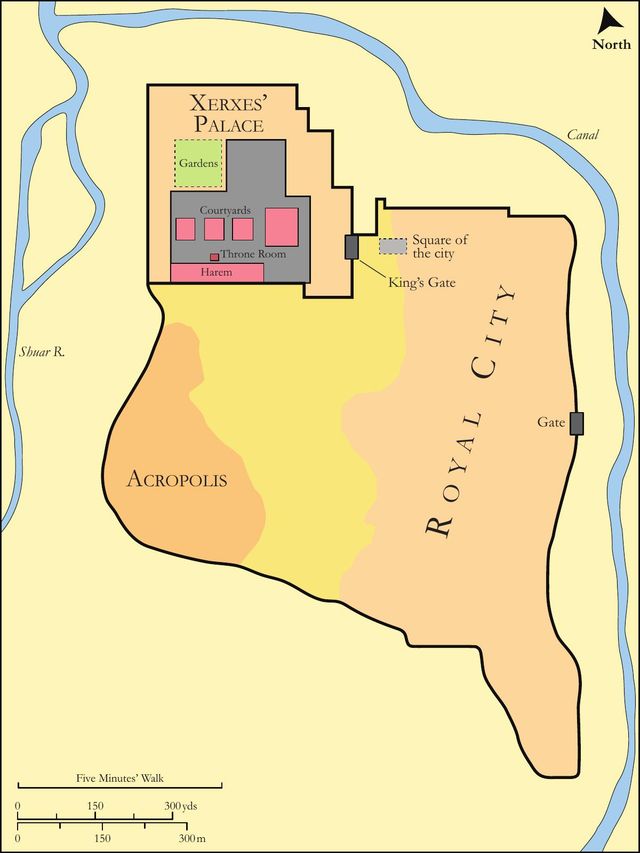
The Persian Empire was renowned for its sophisticated administrative system and meticulous record-keeping. The "chronicles of the kings of Media and Persia," also referenced in Esther 10:2, were official royal annals that meticulously documented significant events, decrees, and acts of service or disservice to the crown. These records were considered authoritative and irrefutable, serving as a historical and legal reference. The "chamberlains" (Hebrew: saris), often translated as eunuchs, were high-ranking and trusted officials in the Persian court, serving in various capacities, including guarding the king's private chambers. Bigthana and Teresh, as "keepers of the door," held positions of intimate proximity and profound responsibility for the king's personal security, making their conspiracy a severe breach of trust and an act of high treason. In such a monarchical system, unrewarded loyal service was an anomaly, and the king's immediate inquiry about Mordecai's lack of recompense underscores the cultural expectation that such deeds would be promptly acknowledged and generously rewarded.
Key Themes
ShowHideThis verse powerfully illuminates several central themes within the book of Esther. Divine Providence is paramount, even though God is never explicitly named. The king's insomnia, his specific request for the chronicles, and the precise timing of the reading all point to an unseen, sovereign hand orchestrating events for His purposes. This highlights that God works through seemingly ordinary circumstances and human decisions to bring about His will, often in ways imperceptible to human eyes. Justice and Reward are also central; Mordecai's long-overlooked faithfulness is finally remembered, setting the stage for his elevation and Haman's dramatic downfall. This underscores the biblical principle that good deeds, though sometimes unacknowledged by humans, are never forgotten by God. The stark contrast between Mordecai's Loyalty and the Treachery of Bigthana and Teresh further emphasizes the value of faithful service and the insidious danger of internal threats, a theme echoed in other biblical narratives concerning royal courts, such as David's experiences with betrayal in 2 Samuel 15.
Exposition and Analysis
ShowHideKey Word Analysis
ShowHideThis term (H4672) signifies "to come forth to, i.e. appear or exist; transitively, to attain, i.e. find or acquire; figuratively, to occur, meet or be present." In this context, it emphasizes that the information was discovered, not actively sought out, highlighting the element of providential timing. It implies a serendipitous, rather than intentional, retrieval of the record, underscoring the divine orchestration of the event.
This word (H3789) means "to grave, by implication, to write (describe, inscribe, prescribe, subscribe)." Its use here confirms the official, documented, and verifiable nature of Mordecai's deed. The fact that it was "found written" in the royal chronicles lends irrefutable authority to the discovery, confirming that Mordecai's act was a matter of public record and not merely a rumor or forgotten memory.
This verb (H1245) means "to search out (by any method, specifically in worship or prayer); by implication, to strive after; ask, beg, beseech, desire, enquire, get, make inquisition, procure, (make) request, require, seek (for)." Here, it describes the deliberate and malicious intent of Bigthana and Teresh. They "sought" to lay hands on the king, indicating a premeditated and determined effort to assassinate him, thereby emphasizing the gravity of their treason and the life-saving nature of Mordecai's intervention.
Verse Breakdown
ShowHide"And it was found written,"
This opening clause immediately establishes the authoritative and factual nature of the information. The passive voice emphasizes that the discovery was not a result of active searching by the king, but rather a providential unveiling of a pre-existing, documented truth within the meticulously kept royal chronicles, which were considered irrefutable evidence in the Persian court.
"that Mordecai had told of Bigthana and Teresh, two of the king's chamberlains,"
This specifies the precise content of the official record: Mordecai's loyal act of reporting a conspiracy. Bigthana and Teresh are identified by name and by their high-ranking positions, emphasizing the gravity of their betrayal and the significance of Mordecai's intervention in exposing such prominent figures.
"the keepers of the door,"
This phrase further defines the specific and highly sensitive role of Bigthana and Teresh, highlighting their intimate proximity to the king and their direct responsibility for his personal security. Their position as "keepers of the door" means they had privileged access and were entrusted with protecting the monarch, making their plot an even more heinous act of treachery and a profound breach of sacred duty.
"who sought to lay hand on the king Ahasuerus."
This clearly states the nature of the conspiracy: an assassination attempt. The idiom "to lay hand on" is a common biblical expression for inflicting harm or violence, often with lethal intent. This clause underscores the mortal danger the king was in and the life-saving nature of Mordecai's timely intervention, which had gone unrewarded until this pivotal moment.
Literary Devices
ShowHideEsther 6:2 is replete with powerful literary devices that amplify its dramatic and theological impact. The most prominent is Dramatic Irony, as the king's discovery of Mordecai's past loyalty occurs at the precise moment Haman is arriving at the palace to request Mordecai's execution. The reader is acutely aware of Haman's malicious intent, creating a profound sense of anticipation and a stark contrast between Haman's villainy and Mordecai's virtue. This verse also functions as a crucial moment of Anagnorisis, or recognition, where a previously unacknowledged truth (Mordecai's life-saving deed) is revealed, fundamentally shifting the narrative's direction and setting the stage for the dramatic reversal of fortunes. Furthermore, the seemingly random act of the king's insomnia and his choice to have the chronicles read, coupled with the precise timing of the discovery, strongly implies Divine Providence, even without explicit mention of God. This subtle yet powerful literary technique underscores the theological message that God is sovereignly at work behind the scenes, orchestrating seemingly coincidental events for His purposes and the ultimate deliverance of His people.
Theological and Thematic Connections
ShowHideEsther 6:2 stands as a profound testament to the biblical principle of divine remembrance and perfect timing, even in narratives where God's name is conspicuously absent. While the book of Esther never explicitly mentions God, His providential hand is undeniably evident in the king's sleepless night, his specific request for the royal chronicles, and the subsequent discovery of Mordecai's loyal deed. This narrative powerfully demonstrates that God never forgets the faithful service of His people, even when their good deeds go unrewarded or unacknowledged by human authorities. It reinforces the truth that God is actively involved in the affairs of humanity, orchestrating seemingly random events and human decisions to bring about His righteous purposes, often turning the schemes of the wicked against themselves and exalting the humble at the most opportune moment.
Reflection and Application
ShowHideEsther 6:2 offers profound encouragement for believers navigating a world where faithfulness often goes unnoticed and justice seems delayed. This verse powerfully reminds us that our diligent service, integrity, and acts of righteousness, no matter how small, hidden, or unacknowledged by human eyes, are eternally recorded in God's memory. We are called to unwavering faithfulness in our daily responsibilities, trusting that God's timing is perfect and His justice is absolutely sure. Just as Mordecai's loyalty was eventually brought to light and abundantly rewarded, so too will God, in His perfect timing, acknowledge and recompense the faithfulness of His children. This should inspire us to persevere in doing good, not for human applause or immediate gratification, but out of sincere devotion to God, knowing with certainty that He sees, He remembers, and He acts on behalf of those who trust in Him. Our ultimate reward is not found in earthly recognition, but in the eternal affirmation of our heavenly King.
Questions for Reflection
ShowHideFAQ
ShowHideWhy was Mordecai not rewarded immediately after exposing the plot in Esther 2?
ShowHideThe biblical text does not explicitly state why Mordecai was not immediately rewarded after exposing the plot in Esther 2:21-23. However, several factors could be at play. First, while his deed was indeed recorded in the royal chronicles, it might have been a routine administrative entry rather than something that immediately warranted the king's direct attention or a public reward in the vast and complex Persian bureaucracy. Second, the narrative's emphasis is not on an oversight or failure to reward, but rather on the timing of the discovery in Esther 6:1. The delay serves a crucial literary and theological purpose: it heightens the dramatic irony and profoundly underscores the providential nature of God's work. By delaying the reward, God ensures that Mordecai's vindication and Haman's downfall occur at the most opportune moment, not merely as a correction of an administrative oversight, but as the divinely orchestrated means to save the entire Jewish people from annihilation.
Does this verse imply God's direct intervention, even though He is not mentioned in the book of Esther?
ShowHideYes, while the book of Esther is unique among biblical books for its complete absence of God's explicit name, the events of Esther 6:2 and the surrounding narrative are widely interpreted by scholars and theologians as a powerful and undeniable demonstration of God's divine providence and unseen, yet active, intervention. The confluence of seemingly random events—the king's insomnia, his specific request for the royal chronicles, and the precise timing of the reading to reveal Mordecai's forgotten good deed, all while Haman is approaching with murderous intent—is far too coincidental to be attributed to mere chance. This intricate sequence of events strongly implies a sovereign hand orchestrating circumstances behind the scenes to protect His people and fulfill His covenant purposes, showcasing that God works through seemingly ordinary human actions and decisions to accomplish His extraordinary will.
Christ-Centered Fulfillment
ShowHideEsther 6:2, with its powerful theme of a righteous deed forgotten yet providentially remembered and ultimately rewarded, serves as a profound foreshadowing of the ultimate divine remembrance and vindication found in Jesus Christ. Mordecai's act of saving the king, though initially unacknowledged, eventually leads to his exaltation and the deliverance of his people from certain destruction. This narrative mirrors the redemptive work of Jesus Christ, whose ultimate act of perfect obedience and sacrificial death on the cross, though seemingly a defeat and a forgotten moment by the world, was eternally remembered and honored by God the Father. Through His resurrection, Christ not only saved humanity from the ultimate "plot" of sin and death but was also supremely exalted, receiving "the name which is above every name" (Philippians 2:9). Just as Mordecai's loyalty was brought to light at the perfect moment to reverse the fortunes of his people, so too was Christ's redemptive work accomplished at the "fullness of time" (Galatians 4:4), securing eternal salvation, a glorious inheritance (Ephesians 1:11), and ultimate victory for all who believe in Him. The divine timing and meticulous orchestration seen in Esther 6:2 find their most glorious and complete fulfillment in God's sovereign plan of salvation through His Son, Jesus Christ, who is the true and ultimate deliverer, whose righteous deeds are eternally remembered and whose reward is everlasting.