


Deuteronomy 33:21
Bible text: King James Version (1769 Blayney text) · Public domain
Bible text: King James Version with Strong's numbers · Public domain
Bible text: Berean Standard Bible · Public domain
Bible text: American Standard Version (1901) · Public domain
Bible text: World English Bible, Messianic edition · Public domain
Bible text: Geneva Bible (1599) · Public domain
Bible text: Young's Literal Translation · Public domain
- וַיַּרְאvai·Yar'and he sawH7200Conj-w ¦ V-Qal-ConsecImperf-3msVerb Qal Consecutive Imperfect 3rd Singular Masculineוַandיַּרְאhe saw
- רֵאשִׁיתre·Shit[the] choicestH7225N-fsNoun Singular Feminine Absolute
- לוֹlofor <the> himselfPrep-l ¦ 3msSuffix Personal 3rd Singular Masculineלfor <the>וֹhimself
- כִּיkiforH3588PrtParticle Conditional
- שָׁםshamthereH8033AdvAdverb
- חֶלְקַתchel·Kat[the] portion ofH2513N-fscNoun Singular Feminine Construct
- מְחֹקֵקme·cho·Keka commanderH2710V-Piel-Prtcpl-msVerb Piel Participle Singular Masculine Absolute
- סָפוּןsa·Fun[was] reservedH5603V-Qal-PassPrtcpl-msVerb Qal Participle Passive Singular Masculine Absolute
- וַיֵּתֵאvai·ye·Te'and he cameH857Conj-w ¦ V-Qal-ConsecImperf-3msVerb Qal Consecutive Imperfect 3rd Singular Masculineוַandיֵּתֵאhe came
- רָאשֵׁיRa·shei[the] chiefs ofH7218N-mpcNoun Plural Masculine Construct
- עָם'Am[the] peopleH5971N-msNoun Singular Masculine Absolute
- צִדְקַתtzid·Kat[the] righteousness ofH6666N-fscNoun Singular Feminine Construct
- יְהוָהYah·wehYahwehH3068N-properNoun Proper Title
- עָשָׂה'a·Sahhe executedH6213V-Qal-Perf-3msVerb Qal Perfect 3rd Singular Masculine
- וּמִשְׁפָּטָיוu·mish·pa·Tavand his judgmentsH4941Conj-w ¦ N-mpc ¦ 3msNoun Plural Masculine Constructוּandמִשְׁפָּטָיjudgmentsוhis
- עִם'imwithH5973PrepPreposition
- יִשְׂרָאֵלYis·ra·'ElIsraelH3478N-properNoun Proper Location
English is a literal word-by-word gloss of the Hebrew, not the KJV's wording. Why?
This is the original text the KJV's translators worked from — each Hebrew word with its own literal English meaning in this verse, prepared by scholars at Tyndale House, Cambridge. The KJV translates whole sentences, not word by word, so its wording differs: one Hebrew word can become several English words, and the KJV may choose “the LORD” where the gloss reads “Yahweh”. Both are faithful — they answer different questions. For the KJV's own rendering, switch to the KJV text.
Details
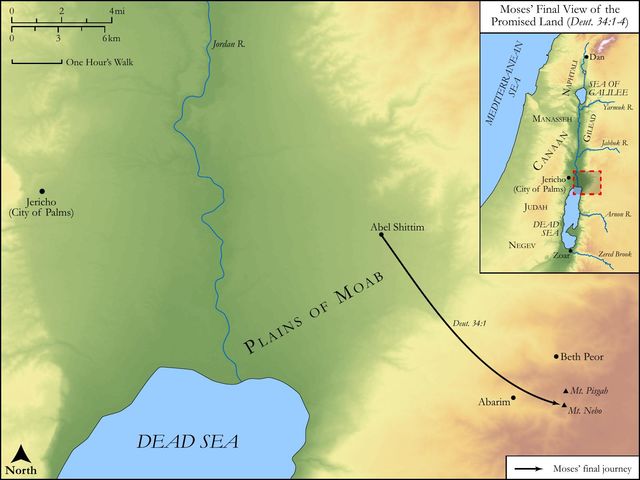
See on the biblical-era map
Study this verse
Public-domain commentary
Matthew Henry
From his Commentary on the Whole Bible. Henry comments on passages, not single verses — this entry covers Deuteronomy 33:18–21. His four-level outline is real structure in the source text, so it is rendered as structure.
Here we have, I. The blessings of Zebulun and Issachar put together, for they were both the sons of Jacob by Leah, and by their lot in Canaan they were neighbours; it is foretold,
1.That they should both have a comfortable settlement and employment, Deu 33:18. Zebulun must rejoice, for he shall have cause to rejoice; and Moses prays that he may have cause in his going out, either to war (for Zebulun jeoparded their lives in the high places of the field, Jdg 5:18), or rather to sea, for Zebulun was a haven of ships, Gen 49:13. And Issachar must rejoice in his tents, that is, in his business at home, his husbandry, to which the men of that tribe generally confined themselves, because they saw that rest was good, and when the sea was rough the land was pleasant, Gen 49:14, Gen 49:15. Observe here,
(1.)That the providence of God, as it variously appoints the bounds of men's habitation, some in the city and some in the country, some in the seaports and some in the inland towns, so it wisely disposes men's inclinations to different employments for the good of the public, as each member of the body is situated and qualified for the service of the whole. The genius of some men leads them to a book, of others to the sea, of others to the sword; some are inclined to rural affairs, others to trade, and some have a turn for mechanics; and it is well it is so. If the whole body were an eye, where were the hearing? Co1 12:17. It was for the common good of Israel that the men of Zebulun were merchants and that the men of Issachar were husbandmen.
(2.)That whatever our place and business are it is our wisdom and duty to accommodate ourselves to them, and it is a great happiness to be well pleased with them. Let Zebulun rejoice in his going out; let him thank God for the gains and make the best of the losses and inconveniences of his merchandise, and not despise the meanness, nor envy the quietness, of Issachar's tents. Let Issachar rejoice in his tents, let him be well pleased with the retirements and content with the small profits of his country seats, and not grudge that he has not Zebulun's pleasure of travelling and profit of trading. Every business has both its conveniences and inconveniences, and therefore whatever Providence has made our business we ought to bring our minds to it; and it is really a great happiness, whatever our lot is, to be easy with it. This is the gift of God, Ecc 5:19.
2.That they should both be serviceable in their places to the honour of God and the interests of religion in the nation (Deu 33:19): They shall call the people to the mountain, that is, to the temple, which Moses foresaw should be built upon a mountain. I see not why this should be confined (as it is by most interpreters) to Zebulun; if both Zebulun and Issachar received the comforts of their respective employments, why may we not suppose that they both took care to give God the glory of them? Two things they shall do for God: -
(1.)They shall invite others to his service. Call the people to the mountain.
[1.]Zebulun shall improve his acquaintance and commerce with the neighbouring nations, to whom he goes out, for this noble purpose, to propagate religion among them, and to invite them into the service of the God of Israel. Note, Men of great business, or large conversation, should wisely and zealously endeavour to recommend the practice of serious godliness to those with whom they converse and among whom their business lies. Such are blessed, for they are blessings. It were well if the enlargement of trade with foreign countries might be made to contribute to the spreading of the gospel. This prophecy concerning Zebulun perhaps looks as far as the preaching of Christ and his apostles, which began in the land of Zebulun (Mat 4:14, Mat 4:15); then they called the people to the mountain, that is, to the kingdom of the Messiah, which is called the mountain of the Lord's house, Isa 2:2.
[2.]Issachar that tarries at home, and dwells in tents, shall call upon his neighbours to go up to the sanctuary at the times appointed for their solemn feasts, either because they should be more zealous and forward than their neighbours (and it has been often observed that though those that with Zebulun dwell in the haven of ships, which are places of concourse, have commonly more of the light of religion, those that with Issachar dwell in tents in the country have more of the life and heat of it), and may therefore with their zeal provoke those to a holy emulation that have more knowledge (Psa 122:1); or because they were more observant of the times appointed for their feasts than others were. One of the Chaldee paraphrasts reads the foregoing verse, Rejoice, Issachar, in the tents of thy schools, supposing they would many of them be scholars, and would use their learning for that purpose, according to the revolutions of the year, to give notice of the times of the feasts; for almanacs were not then so common as they are now. And Onkelos more particularly, Rejoice, Issachar, when thou goest to compute the times of the solemnities at Jerusalem; for then the tribes of Israel shall be gathered to the mountain of the house of the sanctuary. So he reads the beginning of this verse; and many think this is the meaning of that character of the men of Issachar in David's time, That they had understanding of the times to know what Israel ought to do, Ch1 12:32. And the character which follows (v. 33) of the men of Zebulun, that they were such as went forth to battle, expert in war, perhaps may explain the blessing of that tribe here. Note, Those that have not opportunity as Zebulun had of bringing into the church those that are without may yet be very serviceable to its interest by helping to quicken, encourage, and build up, those that are within. And it is good work to call people to God's ordinances, to put those in remembrance that are forgetful, and to stir up those that are slothful, who will follow, but care not to lead.
(2.)They shall not only invite others to the service of God, but they shall abound in it themselves: There they shall offer sacrifices of righteousness. They shall not send others to the temple and stay at home themselves, under pretence that they cannot leave their business; but, when they stir up others to go speedily to pray before the Lord, they shall say, We will go also, as it is Zac 8:21. Note, The good we exhort others to we should ourselves be examples of. And, when they come to the temple, they shall not appear before the Lord empty, but shall bring for the honour and service of God according as he has prospered them, Co1 16:2.
[1.]It is here foretold that both these tribes should grow rich. Zebulun that goes abroad shall suck of the abundance of the seas, which are full breasts to the merchants, while Issachar, that tarries at home, shall enrich himself with treasures hid in the sands, either the fruits of the earth or the underground treasures of metals and minerals, or (because the word for sand here signifies properly the sand of the sea) the rich things thrown up by the sea, for the lot of Issachar reached to the sea-side. Perhaps their success in calling the people to the mount is intimated by their sucking of the abundance of the seas, for we have a like phrase used for the bringing in of the nations to the church (Isa 60:5), The abundance of the sea shall be converted unto thee, and (Deu 33:16), Thou shalt suck the milk of the Gentiles. It is foretold,
[2.]That these tribes, being thus enriched, should consecrate their gain unto the Lord, and their substance unto the Lord of the whole earth, Mic 4:13. The merchandise of Zebulun, and the hire of Issachar, shall be holiness to the Lord (Isa 23:18), for thereof they shall offer sacrifices of righteousness, that is, sacrifices according to the law. Note, We must serve and honour God with what we have; and where he sows plentifully he expects to reap accordingly. Those that suck of the abundance of the seas, and of the treasures hid in the sand, ought to offer sacrifices of righteousness proportionable.
II.The blessing of the tribe of Gad comes next, Deu 33:20, Deu 33:21.
This was one of the tribes that was already seated on that side Jordan where Moses now was. Now,
1.He foretels what this tribe would be, Deu 33:20.
(1.)That it would be enlarged, as at present it had a spacious allotment; and he gives God the glory both of its present and of its future extent: Blessed be he that enlargeth Gad. We find how this tribe was enlarged by their success in a war which it seems they carried on very religiously against the Hagarites, Ch1 5:19, Ch1 5:20, Ch1 5:22. Note, God is to have the glory of all our enlargements.
(2.)That it would be a valiant and victorious tribe, would, if let alone, dwell secure and fearless as a lion; but, if provoked, would, like a lion, tear the arm with the crown of the head; that is, would pull in pieces all that stood in his way, both the arm (that is, the strength) and the crown of the head (that is, the policy and authority) of his enemies. In David's time there were Gadites whose faces were as the faces of lions, Ch1 12:8. Some reckon Jehu to be of this tribe, because the first mention we have of him is at Ramoth Gilead, which belonged to Gad, and they think this may refer to his valiant acts.
2.He commends this tribe for what they had done and were now doing, Deu 33:21.
(1.)They had done very wisely for themselves, when they chose their lot with the first, in a country already conquered: He provided the first part for himself; though he had a concern for his brethren, yet his charity began at home, and he was willing to see himself first served, first settled. The Gadites were the first and most active movers for an allotment on that side Jordan, and therefore are still mentioned before the Reubenites in the history of that affair, Num 32:2. And thus, while the other tribes had their portion assigned them by Joshua the conqueror, Gad and his companions had theirs from Moses the law-giver, and in it they were seated by law; or (as the word is) covered or protected by a special providence which watched over those that were left behind, while the men of war went forward with their brethren. Note, Men will praise thee when thou doest well for thyself (when thou providest first for thyself, as Gad did), Psa 49:18. And God will praise thee when thou doest well for thy soul, which is indeed thyself, and providest the first part for that in a portion from the law-giver.
(2.)They were now doing honestly and bravely for their brethren; for they came with the heads of the people, before whom they went armed over Jordan, to execute the justice of the Lord upon the Canaanites, under the conduct of Joshua, to whom we afterwards find they solemnly vowed obedience, Jos 1:12, Jos 1:16. This was what they undertook to do when they had their lot assigned them, Num 32:27. This they did, Jos 4:12. And, when the wars of Canaan were ended, Joshua dismissed them with a blessing, Jos 22:7. Note, It is a blessed and honourable thing to be helpful to our brethren in their affairs, and particularly to assist in executing the justice of the Lord by suppressing that which is provoking to him: it was this that was counted to Phinehas for righteousness.
Historical interpretation
Historical reception
1 surviving comment on this verse from the historical church.
He saw: The pre-eminence of the tribe of Gad, to which this alludeth, was their having the lawgiver Moses buried in their borders; though the particular place was not known.
Continue studying Deuteronomy 33:21 across the web’s major study libraries — every link below opens this exact verse, chapter, or book on the destination site.
Read & Compare
 BibleGatewayThis verse in more than 200 translations and 70 languages.
 Bible.comThe YouVersion reader — hundreds of translations, reading plans, and highlights.
 ESV.orgCrossway's official English Standard Version reader.
 NET BibleThe NET translation with 60,000+ translators' notes on every rendering decision.
 STEP BibleTyndale House's free study tool — original text, vocabulary, and scholarly resources.
 BibliaLogos Bible Software's free web reader.
 USCCBThe New American Bible (Revised Edition) with the U.S. bishops' study notes.
Commentaries
 BibleHub CommentariesDozens of classic commentaries on this verse, gathered on one page.
 StudyLightMore than 100 commentary sets — the largest collection on the web.
 BibleRefPlain-English commentary on what this verse means, verse by verse.
 Enduring WordDavid Guzik's free commentary on this chapter, widely used by Bible teachers.
 Bible Study ToolsVerse commentary alongside Greek and Hebrew study aids.
Original Language & Research
- BibleHub InterlinearThe verse word by word — original language, transliteration, and English.
- BibleHub LexiconEvery word's original-language definition and Strong's entry.
 Blue Letter BibleDeep-study tools — Strong's numbers, concordance, and word studies.
 SefariaThe Hebrew text with Rashi and centuries of Jewish commentary.
Sermons, Hymns & Audio


TrulyRandomVerse is not affiliated with these sites and doesn’t control their content. They’re linked because they’re genuinely useful.
Summary
Deuteronomy 33:21 stands as a profound commendation within Moses' farewell blessing to the tribe of Gad, celebrating their exemplary faithfulness and unique position. This verse highlights Gad's proactive securing of their divinely appointed inheritance east of the Jordan, while simultaneously lauding their unwavering commitment to fulfill their covenant obligation. By assisting the other tribes in conquering their land west of the Jordan, Gad actively participated in the unified mission to execute God's justice and judgments for all Israel, demonstrating a powerful blend of individual blessing and corporate responsibility.
Context
ShowHideLiterary Context
This verse is intricately woven into Moses' final prophetic blessings upon the twelve tribes of Israel, delivered just prior to his death, as recorded in Deuteronomy 33. Following blessings for Reuben and Judah, Moses turns his attention to Gad, a tribe that, alongside Reuben and half of Manasseh, had requested and received permission to settle in the fertile lands east of the Jordan River. Their request, meticulously detailed in Numbers 32, was granted on the condition of a solemn pledge: their armed men would cross the Jordan first, fighting alongside the other tribes until all of Israel's inheritance was secured, before returning to their own territories. Moses' blessing here serves not only as an acknowledgment of Gad's unique choice but, more significantly, as a prophetic affirmation and commendation of their anticipated faithfulness in upholding this critical promise. This commitment was indeed fulfilled, as later historical accounts in Joshua 1:12-18 and Joshua 22:1-6 attest, underscoring the integrity of Gad.
Historical & Cultural Context
The historical backdrop for this blessing is the critical juncture of Israel's transition from four decades of wilderness wandering to the imminent entry into the Promised Land. The allocation of tribal lands was not merely a logistical exercise but a foundational act for Israel's identity as a settled nation under God's covenant. The decision by Gad (along with Reuben and half-Manasseh) to settle east of the Jordan was culturally significant, as it placed them outside the primary land of Canaan, which God had specifically promised to Abraham's descendants. This choice carried potential risks of geographical and cultural isolation, and a possible fragmentation of tribal unity. Consequently, their unwavering commitment to cross the Jordan and fight alongside their brethren was a profound act of corporate solidarity and covenant fidelity. In ancient Israelite society, covenant faithfulness and tribal unity were paramount, reflecting their collective identity as God's chosen people. The "justice of the LORD" referenced in the verse pertains to the divinely commanded conquest and dispossessing of the Canaanite nations, which was understood as a righteous act of divine judgment against the pervasive wickedness and idolatry of those inhabitants, as explicitly outlined in passages such as Deuteronomy 7:1-5.
Key Themes
ShowHideDeuteronomy 33:21 powerfully illuminates several core theological and narrative themes. Foremost among these is Faithfulness and Promise-Keeping, as Gad's actions exemplify unwavering integrity in honoring their word, even after securing their own portion. This commitment to the collective good of Israel, prioritizing communal welfare over individual self-interest, stands out as a model of covenant fidelity. Second, Divine Provision and Authority are profoundly underscored by the phrase "a portion of the lawgiver." This signifies that Gad's land was not merely acquired through human negotiation or military might, but was a divinely sanctioned inheritance, specifically designated by God's chosen leader, Moses, who served as the great lawgiver of Israel. Third, Participation in God's Justice is prominently emphasized, as Gad is lauded for coming "with the heads of the people" to actively execute "the justice of the LORD, and his judgments with Israel." This highlights their crucial role in the unified mission to establish God's righteous rule in the Promised Land, carrying out divine judgment against the wicked inhabitants in accordance with God's explicit commands to dispossess the nations of Canaan. Finally, Unity and Corporate Responsibility are implicitly yet powerfully praised, with Gad playing their indispensable part in the larger national endeavor, rather than acting in isolation, thereby serving as an enduring example of shared responsibility in the unfolding of God's sovereign plan for Israel.
Exposition and Analysis
ShowHideKey Word Analysis
ShowHideThis feminine noun, derived from a root meaning "smoothness," refers to an allotment or a designated parcel of land. In this context, it signifies the specific territory or inheritance granted to the tribe of Gad. The use of "portion" emphasizes that their land was a distinct allocation, not merely a territory they seized, reinforcing the idea of a divinely sanctioned inheritance.
This primitive root means "to hack" or "engrave," and by implication, "to enact" laws (as laws were cut into stone or metal tablets). It refers to one who decrees, governs, or rules. Here, it unequivocally points to Moses, God's chosen instrument, who delivered the Law and was responsible for the authoritative allocation of land according to God's divine will. The phrase "portion of the lawgiver" therefore underscores that Gad's inheritance was a divinely authorized decree, not merely a human acquisition.
This term refers to rightness in an abstract sense, encompassing rectitude (subjective), justice (objective), virtue (moral), or even prosperity (figurative). When paired with "of the LORD" (H3068, Yᵉhôvâh), it refers to God's righteous decrees, His divine standards of justice, and the execution of His sovereign will. In the context of the conquest, it signifies God's righteous judgment against the depraved inhabitants of Canaan and the establishment of His righteous order through Israel's actions. Gad's participation was thus an act of cooperation with God's divine program of justice.
Verse Breakdown
ShowHide"And he provided the first part for himself"
This clause refers to the tribe of Gad, who, through a specific arrangement with Moses, secured their inheritance of fertile land east of the Jordan River before the main conquest of Canaan commenced. This "first part" denotes not only the initial portion but also suggests a strategic or advantageous territory, indicative of a significant blessing and a proactive choice on their part.
"because there, [in] a portion of the lawgiver, [was he] seated"
This phrase provides the theological justification and divine legitimacy for Gad's inheritance. Their settlement was not merely a human choice but a designated "portion" given by Moses, the "lawgiver," acting under God's supreme authority. This emphasizes that their unique settlement was part of God's sovereign plan, a divinely sanctioned allotment, rather than a deviation from it.
"and he came with the heads of the people"
This highlights Gad's faithful fulfillment of their solemn pledge. Despite having already secured their own land, the armed men of Gad, under the leadership of their tribal chiefs ("heads of the people"), crossed the Jordan with the other Israelite tribes to actively assist in the arduous conquest of Canaan. This demonstrates their profound commitment to corporate unity, shared responsibility, and covenant integrity.
"he executed the justice of the LORD, and his judgments with Israel."
This concluding phrase encapsulates the profound theological significance of Gad's participation. Their active involvement in the military campaigns alongside the other tribes was not merely a secular military endeavor but a direct and active role in carrying out God's divine judgments against the wicked inhabitants of Canaan. It signifies their alignment with God's righteous purposes and their instrumental role in establishing His just order within the Promised Land.
Literary Devices
ShowHideDeuteronomy 33:21 masterfully employs several literary devices to convey its powerful message and commendation. The entire passage functions as a Eulogy or Blessing, characteristic of Moses' final prophetic address, bestowing honor, affirmation, and prophetic insight upon the tribe of Gad. There is a clear use of Metonymy in the phrase "a portion of the lawgiver," where "lawgiver" (Moses) stands for the divine authority and decree he embodies, signifying that Gad's land was granted by divine right through Moses' authoritative word. The phrase "heads of the people" is an example of Synecdoche, where a part (the leaders and their armed contingents) represents the whole (the entire tribe of Gad's commitment and participation). The verse also employs Emphasis through its structure and content, highlighting Gad's unique position and, more importantly, their exemplary faithfulness and commitment to the larger Israelite community and God's overarching plan for justice. This emphasis sets them apart for special commendation within the tribal blessings.
Theological and Thematic Connections
ShowHideDeuteronomy 33:21 offers profound theological insights into God's character, His covenant faithfulness, and His expectations for His people. It powerfully underscores the importance of covenant fidelity, not merely in receiving divine blessings, but crucially, in fulfilling the accompanying obligations. Gad's willingness to participate in the arduous and dangerous task of conquest, even after having secured their own "first part," beautifully illustrates that divine provision is often intertwined with a call to corporate responsibility and active participation in God's redemptive purposes. Their actions reflect a deep understanding that individual blessings are not ends in themselves but are intended to serve the communal good and contribute to the broader establishment of God's righteous rule. This passage serves as a timeless reminder that God's justice is not an abstract concept but a dynamic reality to be executed, and His people are called to be willing instruments in its unfolding, demonstrating unity and shared purpose.
Reflection and Application
ShowHideDeuteronomy 33:21 provides a timeless and powerful model for believers today, challenging us to deeply consider how we respond to the manifold blessings God bestows upon our lives. It prompts us to ask: Have we, like Gad, received our "first part"—our spiritual gifts, unique talents, material resources, or privileged opportunities—and then retreated into a comfortable, individualistic faith? Or are we, in the spirit of Gad, willing to "come with the heads of the people" and actively participate in the larger, often demanding, work of God's kingdom, even when it requires significant personal sacrifice, unwavering commitment, and engagement with difficult or uncomfortable tasks? This verse calls us to transcend a purely personal faith and embrace our corporate responsibility within the body of Christ and in the broader world. Our faithfulness is not solely about our individual walk with God, but profoundly about actively contributing to the establishment of His justice and judgments in a broken and hurting world, standing in solidarity with our spiritual family, and honoring the commitments we have made to God and to one another.
Questions for Reflection
ShowHideFAQ
ShowHideWhy is Gad singled out for this particular praise, especially since Reuben and half-Manasseh also settled east of the Jordan and made the same pledge?
ShowHideWhile Reuben and half-Manasseh indeed made the same pledge and also settled east of the Jordan, the blessing for Gad in Deuteronomy 33:20-21 is particularly effusive and detailed, highlighting their proactive and exemplary fulfillment of their commitment. The text emphasizes that Gad "provided the first part for himself" but then immediately and decisively "came with the heads of the people," signifying not just mere compliance but an enthusiastic, leading, and full participation in the corporate mission. Historically, the tribe of Gad was known for its fierce warriors and strategic location, making their contribution to the conquest particularly significant and impactful. This specific blessing serves as a unique commendation for their integrity, leadership, and unwavering commitment in fulfilling their corporate responsibility, setting them apart as a powerful model of faithfulness and solidarity within the Israelite confederation.
What does the phrase "a portion of the lawgiver" specifically imply about Gad's land and its significance?
ShowHideThe phrase "a portion of the lawgiver" (referring to Moses) is profoundly significant because it unequivocally legitimizes Gad's inheritance. It implies that their land, although chosen by the tribe of Gad, was ultimately sanctioned, designated, and distributed by Moses, who acted as God's authoritative representative and the divinely appointed dispenser of the covenant land. This was not merely a land grab or a human negotiation, but a divinely approved allocation, underscoring that even their unique settlement east of the Jordan was an integral part of God's overarching and sovereign plan for Israel's inheritance. This divine sanction would have provided immense assurance, security, and legitimacy to the tribe of Gad regarding their land rights and their place within the covenant community.
Christ-Centered Fulfillment
ShowHideDeuteronomy 33:21, while powerfully commending the faithfulness of the tribe of Gad, finds its ultimate and most profound fulfillment in the person and work of Jesus Christ. He is not merely a "lawgiver" in the sense of one who delivers laws, but He is the very embodiment of God's righteous decrees, the living Word through whom all creation and all inheritance are established and sustained (John 1:3 and Colossians 1:16-17). Unlike Gad, who received a "first part" of an earthly inheritance, Christ, as the divine Son, inherently possesses all things as His rightful inheritance from eternity (Hebrews 1:2). Yet, He did not cling to His divine prerogatives or His heavenly "portion" but willingly "came with the heads of the people"—identifying fully with humanity in our brokenness, even to the point of humbling Himself and dying a shameful death on a cross (Philippians 2:6-8). Through His perfect life of obedience, His atoning death, and His glorious resurrection, Jesus perfectly "executed the justice of the LORD" in its fullest and most complete sense, satisfying divine wrath against sin and establishing God's righteous judgments in a way that Gad's military actions could only ever dimly foreshadow (Romans 3:25-26). As believers, we are the new Israel, receiving our "first part"—the spiritual inheritance of salvation, adoption, and every spiritual blessing in Christ—not by our own merit or effort but solely by His boundless grace (Ephesians 1:3-14). This glorious inheritance then empowers us to live out the "judgments with Israel," meaning to participate in God's ongoing mission of justice, righteousness, and the advancement of His kingdom in the world, fueled by the ultimate faithfulness of our divine Lawgiver, Jesus Christ, who perfectly fulfilled all righteousness for us and now works through us (Matthew 5:17).