


Deuteronomy 33:22
Bible text: King James Version (1769 Blayney text) · Public domain
Bible text: Berean Standard Bible · Public domain
Bible text: American Standard Version (1901) · Public domain
Bible text: World English Bible, Messianic edition · Public domain
Bible text: Geneva Bible (1599) · Public domain
Bible text: Young's Literal Translation · Public domain
- וּלְדָןu·le·Danand of DanH1835Conj-w ¦ Prep-l ¦ N-properNoun Proper LocationוּandלְofדָןDan
- אָמַר'a·Marhe saidH559V-Qal-Perf-3msVerb Qal Perfect 3rd Singular Masculine
- דָּןdanDanH1835N-properNoun Proper Location
- גּוּרgur[is] a cub ofH1482N-mscNoun Singular Masculine Construct
- אַרְיֵה'ar·Yeha lionH738N-msNoun Singular Masculine Absolute
- יְזַנֵּקye·za·Nekhe leaps forthH2187V-Piel-Imperf-3msVerb Piel Imperfect 3rd Singular Masculine
- מִןminfromH4480PrepPreposition
- הַבָּשָׁןha·ba·Shan<the> BashanH1316Art ¦ N-properNoun Proper Locationהַ<the>בָּשָׁןBashan
English is a literal word-by-word gloss of the Hebrew, not the KJV's wording. Why?
This is the original text the KJV's translators worked from — each Hebrew word with its own literal English meaning in this verse, prepared by scholars at Tyndale House, Cambridge. The KJV translates whole sentences, not word by word, so its wording differs: one Hebrew word can become several English words, and the KJV may choose “the LORD” where the gloss reads “Yahweh”. Both are faithful — they answer different questions. For the KJV's own rendering, switch to the KJV text.
Details
See on the biblical-era map
Study this verse
Public-domain commentary
Matthew Henry
From his Commentary on the Whole Bible. Henry comments on passages, not single verses — this entry covers Deuteronomy 33:22–25. His three-level outline is real structure in the source text, so it is rendered as structure.
Here is, I. The blessing of Dan, Deu 33:22. Jacob in his blessing had compared him to a serpent for subtlety; Moses compares him to a lion for courage and resolution: and what could stand before those that had the head of a serpent and the heart of a lion? He is compared to the lions that leaped from Bashan, a mountain noted for fierce lions, whence they came down to leap upon their prey in the plains. This may refer either, 1. To the particular victories obtained by Samson (who was of this tribe) over the Philistines. The Spirit of the Lord began to move him in the camp of Dan when he was very young, as a lion's whelp, so that in his attacks upon the Philistines he surprised them, and overpowered them by main strength, as a lion does his prey; and one of his first exploits was the rending of a lion. Or, 2. To a more general achievement of that tribe, when a party of them, upon information brought them of the security of Laish, which lay in the furthest part of the land of Canaan from them, surprised it, and soon made themselves masters of it. See Jdg 18:27. And, the mountains of Bashan lying not far from that city, probably thence they made their descent upon it; and therefore are here said to leap from Bashan.
II.The blessing of Naphtali, Deu 33:23.
He looks upon this tribe with wonder, and applauds it: "O Naphtali, thou art happy, thou shalt be so, mayest thou be ever so!" Three things make up the happiness of this tribe: - 1. Be thou satisfied with favour. Some understand it of the favour of men, their good-will and good word. Jacob had described this tribe to be, generally, courteous obliging people, giving goodly words, as the loving hind, Gen 49:21. Now what should they get by being so? Moses here tells them they should have an interest in the affections of their neighbours, and be satisfied with favour. Those that are loving shall be beloved. But others understand it of the favour of God, and with good reason; for that only is the favour that is satisfying to the soul and puts true gladness into the heart. Those are happy indeed that have the favour of God; and those shall have it that place their satisfaction in it, and reckon that, in having that, they have enough and desire no more. 2. Be thou full with the blessing of the Lord, that is, not only with those good things that are the fruits of the blessing (corn, and wine, and oil), but with the blessing itself; that is, the grace of God, according to his promise and covenant. Those who have that blessing may well reckon themselves full: they need nothing else to make them happy. "The portion of the tribe of Naphtali" (the Jews say) "was so fruitful, and the productions so forward, though it lay north, that those of that tribe were generally the first that brought their first-fruits to the temple; and so they had first the blessing from the priest, which was the blessing of the Lord." Capernaum, in which Christ chiefly resided, lay in this tribe. 3. Be thou in possession of the sea and the south; so it may be read, that is, of that sea which shall lie south of thy lot, that was the sea of Galilee, which we so often read of in the gospels, directly north of which the lot of this tribe lay, and which was of great advantage to this tribe, witness the wealth of Capernaum and Bethsaida, which lay within this tribe, and upon the shore of that sea. See how Moses was guided by a spirit of prophesy in these blessings; for before the lot was cast into the lap he foresaw and foretold how the disposal of it would be.
III.The blessing of Asher, Deu 33:24, Deu 33:25.
Four things he prays for and prophecies concerning this tribe, which carries blessedness in its name; for Leah called the father of it Asher, saying Happy am I, Gen 30:13.
1.The increase of their numbers. They were now a numerous tribe, Num 26:47. "Let it be more so: Let Asher be blessed with children." Note, Children, especially children of the covenant, are blessings, not burdens.
2.Their interest in their neighbours: Let him be acceptable to his brethren. Note, It is a very desirable thing to have the love and good-will of those we live among: it is what we should pray to God for, who has all hearts in his hand; and what we should endeavour to gain by meekness and humility, and a readiness, as we have ability and opportunity, to do good to all men.
3.The richness of their land.
(1.)Above ground: Let him dip his foot in oil, that is, "Let him have such plenty of it in his lot that he may not only anoint his head with it, but, if he please, wash his feet in it," which was not commonly done; yet we find our blessed Saviour so acceptable to his brethren that his feet were anointed with the most precious ointment, Luk 7:46.
(2.)Under ground: Thy shoes shall be iron and brass, that is, "Thou shalt have great plenty of these metals (mines of them) in thy own ground, which by an uncommon blessing shall have both its surface and its bowels rich:" or, if they had them not as the productions of their own country, they should have them imported from abroad; for the lot of this tribe lay on the sea-coast. The Chaldee paraphrasts understand this figuratively: "Thou shalt be strong and bright, as iron and brass." 4. The continuance of their strength and vigour: As thy days, so shall thy strength be. Many paraphrase it thus, "The strength of thy old age shall be like that of thy youth; thou shalt not feel a decay, nor be the worse for the wearing, but shalt renew thy youth; as if not thy shoes only, but thy bones, were iron and brass." The day is often in scripture put for the events of the day; and, taking it so here, it is a promise that God would graciously support them under their trials and troubles, whatever they were. And so it is a promise sure to all the spiritual seed of Abraham, that God will wisely proportion their graces and comforts to the services and sufferings he calls them out to. Have they work appointed them? They shall have strength to do it. Have they burdens appointed them? They shall have strength to bear them; and never be tempted above that they are able. Faithful is he that has thus promised, and hath caused us to hope in this promise.
Historical interpretation
Historical reception
1 surviving comment on this verse from the historical church.
Moses blessed this tribe, saying: Dan is a lion's cub that shall leap forth from Bashan (Deut. XXXII, 22), that is, from confusion. Hence, according to the Greek translation, we should understand that Dan himself became a serpent sitting on the way. Dan means judgement. And therefore, this tribe underwent a grave risk of judgement, as the serpent, Antichrist, slipped in and wounded it with his venoms.
Continue studying Deuteronomy 33:22 across the web’s major study libraries — every link below opens this exact verse, chapter, or book on the destination site.
Read & Compare
 BibleGatewayThis verse in more than 200 translations and 70 languages.
 Bible.comThe YouVersion reader — hundreds of translations, reading plans, and highlights.
 ESV.orgCrossway's official English Standard Version reader.
 NET BibleThe NET translation with 60,000+ translators' notes on every rendering decision.
 STEP BibleTyndale House's free study tool — original text, vocabulary, and scholarly resources.
 BibliaLogos Bible Software's free web reader.
 USCCBThe New American Bible (Revised Edition) with the U.S. bishops' study notes.
Commentaries
 BibleHub CommentariesDozens of classic commentaries on this verse, gathered on one page.
 StudyLightMore than 100 commentary sets — the largest collection on the web.
 BibleRefPlain-English commentary on what this verse means, verse by verse.
 Enduring WordDavid Guzik's free commentary on this chapter, widely used by Bible teachers.
 Bible Study ToolsVerse commentary alongside Greek and Hebrew study aids.
Original Language & Research
- BibleHub InterlinearThe verse word by word — original language, transliteration, and English.
- BibleHub LexiconEvery word's original-language definition and Strong's entry.
 Blue Letter BibleDeep-study tools — Strong's numbers, concordance, and word studies.
 SefariaThe Hebrew text with Rashi and centuries of Jewish commentary.
Sermons, Hymns & Audio


TrulyRandomVerse is not affiliated with these sites and doesn’t control their content. They’re linked because they’re genuinely useful.
Summary
Deuteronomy 33:22 presents Moses' prophetic blessing upon the tribe of Dan, portraying them as a "lion's whelp" poised to "leap from Bashan." This vivid imagery encapsulates Dan's inherent strength, youthful vigor, and a future marked by dynamic, decisive action, potentially alluding to their later territorial expansion and military prowess. The blessing is part of Moses' final, divinely inspired pronouncements over the twelve tribes, underscoring God's specific design and destiny for each segment of Israel as they prepared to enter the Promised Land.
Context
ShowHideLiterary Context
This verse is embedded within the final chapter of Deuteronomy, specifically in Moses' farewell blessing to the tribes of Israel (Deuteronomy 33). This chapter serves as a poetic and prophetic summary of God's covenant faithfulness to Israel, delivered just before Moses' death and Israel's entry into Canaan. It parallels, yet distinctively complements, Jacob's earlier blessings in Genesis 49, offering a fresh, divinely inspired perspective on each tribe's character, role, and future destiny in the Promised Land. The blessings are not merely descriptive but prescriptive, shaping the tribes' understanding of their identity and purpose within the larger nation.
Historical & Cultural Context
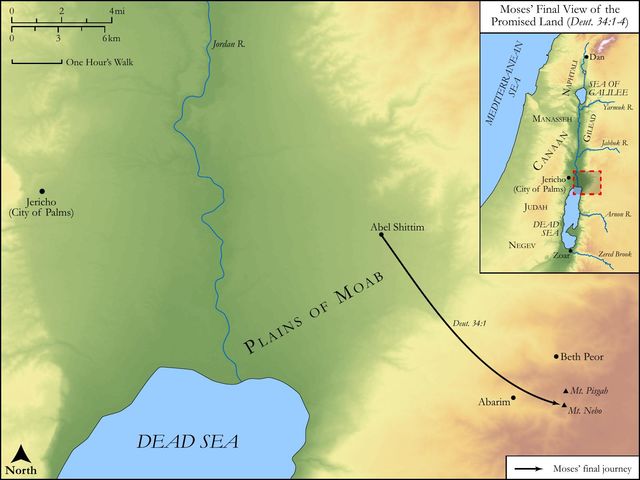
Moses delivered these blessings on the plains of Moab, with the Promised Land in sight, around 1400 BC. The tribes were on the cusp of transitioning from nomadic wilderness wanderers to settled inhabitants of Canaan. Tribal identity was paramount, defining social structure, military organization, and land inheritance. The imagery of a "lion's whelp" would have resonated deeply in an agrarian society familiar with the power and predatory nature of lions, symbolizing formidable strength and aggressive potential. Bashan, located east of the Jordan River, was renowned for its fertile pastures, strong cattle, and robust inhabitants (Psalm 22:12). Its association with strength and formidable presence makes it a fitting springboard for Dan's "leap," even though Dan's initial inheritance was in the west.
Key Themes
ShowHideThe primary themes in this verse and chapter include divine blessing and prophecy, highlighting God's sovereign plan for each tribe. Moses' words reveal God's intimate knowledge of their inherent characteristics and future trajectory, emphasizing their unique contributions to the nation of Israel. The imagery of the "lion's whelp" and the "leap from Bashan" underscore themes of strength, dynamism, and territorial expansion, foreshadowing the tribe of Dan's later history, particularly their northward migration and conquest of Laish, as detailed in Judges 18. This act of aggressive expansion, driven by a need for a more secure and fertile inheritance, directly reflects the prophetic vigor embedded in Moses' blessing.
Exposition and Analysis
ShowHideKey Word Analysis
ShowHideThis term specifically refers to a cub (as still abiding in the lair), especially of the lion. While young, it embodies the full potential, inherent power, and predatory instincts of its species. The choice of "whelp" over "lion" suggests not yet fully mature strength, but a dynamic, burgeoning power, emphasizing Dan's potential and readiness for action rather than established might. It speaks to an innate, developing ferocity.
Derived from a primitive root, this verb properly signifies to draw together the feet (as an animal about to dart upon its prey), i.e., to spring forward. It implies a sudden, forceful, and dynamic jump, spring, or darting movement. The word conveys an energetic burst of movement, suggesting that Dan's actions would be characterized by vigor and immediacy, perhaps in conquest or defense.
This refers to a specific region East of the Jordan, of uncertain derivation. It was known for its fertility and strong inhabitants. In this context, Bashan serves as a symbolic launching point, a place of strength and vigor from which Dan's dynamic action would originate or be characterized.
Verse Breakdown
ShowHide"And of Dan he said"
This introductory phrase establishes Moses as the speaker, setting the stage for a specific prophetic utterance concerning the tribe of Dan. It highlights the individual attention given to each tribe within the collective blessing, underscoring the divine particularity of God's plan for each segment of Israel.
"Dan [is] a lion's whelp"
This is a powerful metaphorical declaration. By comparing Dan to a young lion, Moses attributes to the tribe characteristics of strength, courage, ferocity, and predatory instinct. It suggests an innate, formidable nature, full of potential and ready to assert itself. This imagery aligns Dan with other powerful tribes like Judah, also described with lion imagery in Genesis 49:9.
"he shall leap from Bashan"
This phrase describes the dynamic action of the "lion's whelp" and connects it to a specific geographical region. Bashan, known for its strength and fertile land, serves as a powerful symbol of origin or launching point. The "leap" signifies a sudden, decisive, and perhaps aggressive movement or expansion. While Dan's initial inheritance was on the western coast, this prophecy is widely understood to foreshadow their later historical migration northward to conquer Laish (renaming it Dan) as recorded in Judges 18. This "leap from Bashan" thus symbolizes their energetic pursuit of a more suitable territory, demonstrating their inherent vigor and determination.
Literary Devices
ShowHideDeuteronomy 33:22 masterfully employs several literary devices to convey its prophetic message. Metaphor is central, comparing the tribe of Dan to a "lion's whelp," immediately imbuing them with attributes of strength, ferocity, and potential. This vivid animal imagery is a common biblical technique to characterize individuals or groups. The phrase "he shall leap from Bashan" utilizes Symbolism, where Bashan, a region known for its strength and fertility, symbolizes a powerful launching ground or a source of vigor, even if not Dan's direct territory. The "leap" itself is a Dynamic Image, suggesting sudden, decisive, and forceful action. Furthermore, the entire verse functions as Prophecy, a divinely inspired declaration about future events or characteristics, revealing God's foreknowledge and sovereign plan for the tribe of Dan, which was indeed fulfilled in their later history.
Theological and Thematic Connections
ShowHideThis blessing for Dan underscores the theme of God's specific design and calling for each part of His people. Just as God endowed Dan with a particular character and destiny, He sovereignly orchestrates the unique gifts, strengths, and purposes of every individual and community within His kingdom. It speaks to the idea that divine potential is often seen and declared by God even before it fully manifests, encouraging faith in His promises despite present circumstances. The "leap" symbolizes the necessity of decisive action and courage in fulfilling God's purposes, often requiring movement beyond comfort zones or initial expectations.
Reflection and Application
ShowHideDeuteronomy 33:22 invites us to consider the unique potential and calling God has placed within each of us. Just as Dan was blessed with the imagery of a powerful, dynamic "lion's whelp," we too are endowed with spiritual gifts, talents, and a divine purpose. This verse encourages us not to shrink from challenges but to embrace the "leap" of faith required to step into God's intended path. It reminds us that our strength comes from Him, enabling us to act with courage and decisiveness, even when it means venturing into new or challenging territories. Recognizing our God-given identity and potential empowers us to fulfill our unique role in His grand narrative, trusting that He provides the strength for every necessary "leap."
Questions for Reflection
ShowHideFAQ
ShowHideHow does Dan's historical trajectory align with this prophecy?
ShowHideThe prophecy of Dan as a "lion's whelp" that "leaps from Bashan" finds a striking fulfillment in the tribe's later history, particularly as recounted in Judges 18. Despite being allotted territory in central Israel, the Danites struggled to secure their inheritance against the Philistines and Amorites (Judges 1:34). This led them to seek new territory. A contingent of 600 armed Danites "leaped" northward, conquering the peaceful and unsuspecting city of Laish (far from their original inheritance, but embodying the dynamic, aggressive spirit of the prophecy) and renaming it Dan. This decisive, forceful action, though morally ambiguous in its execution, perfectly illustrates the "leap" of a "lion's whelp" seeking its domain, demonstrating the tribe's inherent vigor and determination to establish itself.
Christ-Centered Fulfillment
ShowHideWhile Deuteronomy 33:22 directly blesses the tribe of Dan, its underlying themes of divine strength, prophetic destiny, and dynamic action find their ultimate and perfect fulfillment in Jesus Christ. Christ is the quintessential "Lion of the tribe of Judah" (Revelation 5:5), embodying supreme power, authority, and kingship. Unlike Dan's earthly "leap" for territory, Christ's "leap" was from the glory of heaven into human history, a decisive and unparalleled act of divine condescension to accomplish salvation (Philippians 2:6-8). His life, death, and resurrection represent the ultimate "leap" of faith and obedience, conquering sin and death and establishing an eternal kingdom. Furthermore, just as Dan was called to a specific role within Israel, Christ fulfills the entire purpose of Israel, becoming the true Israelite who perfectly embodies God's will and brings blessing to all nations (Galatians 3:16). In Him, all the prophetic blessings find their "Yes" and "Amen" (2 Corinthians 1:20), transforming the earthly strength of a tribe into the spiritual power available to all who believe.