


Acts 13:49
- διεφέρετοdiepheretoWas carriedG1308V-IPI-3SVerb Imperfect Passive Indicative 3rd Singular
- δὲdethenG1161CONJConjunction
- ὁhotheG3588T-NSMDefinite article Nominative Singular Masculine
- λόγοςlogoswordG3056N-NSMNoun Nominative Singular Masculine
- τοῦtouof theG3588T-GSMDefinite article Genitive Singular Masculine
- κυρίουkuriouLordG2962N-GSM-TNoun Genitive Singular Masculine Title
- δι᾽di᾽throughG1223PREPPreposition
- ὅληςholēsallG3650A-GSFAdjective Genitive Singular Feminine
- τῆςtēstheG3588T-GSFDefinite article Genitive Singular Feminine
- χώραςchōrasregionG5561N-GSFNoun Genitive Singular Feminine
English is a literal word-by-word gloss of the Greek, not the KJV's wording. Why?
This is the original text the KJV's translators worked from — each Greek word with its own literal English meaning in this verse, prepared by scholars at Tyndale House, Cambridge. The KJV translates whole sentences, not word by word, so its wording differs: one Greek word can become several English words, and the KJV may choose “charity” where the gloss reads “love”. Both are faithful — they answer different questions. For the KJV's own rendering, switch to the KJV text.
Details
See on the biblical-era map
Study this verse
Public-domain commentary
Matthew Henry
From his Commentary on the Whole Bible. Henry comments on passages, not single verses — this entry covers Acts 13:42–52. His three-level outline is real structure in the source text, so it is rendered as structure.
The design of this story being to vindicate the apostles, especially Paul (as he doth himself at large, Rom. 11), from the reflections of the Jews upon him for preaching the gospel to the Gentiles, it is here observed that he proceeded therein with all the caution imaginable, and upon due consideration, of which we have here an instance.
I.There were some of the Jews that were so incensed against the preaching of the gospel, not to the Gentiles, but to themselves, that they would not bear to hear it, but went out of the synagogue while Paul was preaching (Act 13:42), in contempt of him and his doctrine, and to the disturbance of the congregation. It is probable they whispered among themselves, exciting one another to it, and did it by consent. Now this bespoke,
1.An open infidelity, as plain a profession of unbelief as coming to hear the gospel is of faith. They thus publicly avowed their contempt of Christ and of his doctrine and law, were not ashamed, neither could they blush; and they thus endeavoured to beget prejudices in the minds of others against the gospel; they went out to draw others to follow their pernicious ways.
2.An obstinate infidelity. They went out of the synagogue, not only to show that they did not believe the gospel, but because they were resolved they would not, and therefore got out of the hearing of those things that had a tendency to convince them. They stopped their ears like the deaf adder. Justly therefore was the gospel taken from them, when they first took themselves from it, and turned themselves out of the church before they were turned out of it. For it is certainly true that God never leaves any till they first leave him.
II.The Gentiles were as willing to hear the gospel as those rude and ill-conditioned Jews were to get out of the hearing of it:
They besought that these words, or words to this effect, might be preached to them the next sabbath; in the week between, so some take it; on the second and fifth days of the week, which in some synagogues were their lecture days. But it appears (Act 13:44) that it was the next sabbath day that they came together. They begged,
1.That the same offer might be made to them that was made to the Jews. Paul in this sermon had brought the word of salvation to the Jews and proselytes, but had taken no notice of the Gentiles; and therefore they begged that forgiveness of sins through Christ might be preached to them, as it was to the Jews. The Jews' leavings, nay, loathings, were their longings. This justifies Paul in his preaching to them, that he was invited to it, as Peter was sent for to Cornelius. Who could refuse to break the bread of life to those who begged so hard for it, and to give that to the poor at the door which the children at the table threw under their feet?
2.That the same instructions might be given to them. They had heard the doctrine of Christ, but did not understand it at the first hearing, nor could they remember all that they had heard, and therefore they begged it might be preached to them again. Note, It is good to have the word of Christ repeated to us. What we have heard we should desire to hear again, that it may take deep root in us, and the nail that is driven may be clenched and be as a nail in a sure place. To hear the same things should not be grievous, because it is safe, Phi 3:1. It aggravates the bad disposition of the Jews that the Gentiles desired to hear that often which they were not willing to hear once; and commends the good disposition of the Gentiles that they did not follow the bad example which the Jews set them.
III.There were some, nay, there were many, both of Jews and proselytes, that were wrought upon by the preaching of the gospel.
Those who aggravated the matter of the Jews' rejection by the preaching of the gospel, cried out, as is usual in such cases, "They have cast away, and cast off, all the people of God." "Nay," says Paul, "it is not so; for abundance of the Jews have embraced Christ, and are taken in;" himself for one, Rom 11:1, Rom 11:5. So it was here: Many of the Jews and religious proselytes followed Paul and Barnabas, and received further instructions and encouragement from them.
1.They submitted to the grace of God, and were admitted to the benefit and comfort of it, which is implied in their being exhorted to continue in it. They followed Paul and Barnabas; they became their disciples, or rather the disciples of Christ, whose agents they were. Those that join themselves to Christ will join themselves to his ministers, and follow them. And Paul and Barnabas, though they were sent to the Gentiles, yet bade those of the Jews welcome that were willing to come under their instructions, such hearty well-wishers were they to all the Jews and their friends, if they pleased.
2.They were exhorted and encouraged to persevere herein: Paul and Barnabas, speaking to them with all the freedom and friendship imaginable, persuaded them to continue in the grace of God, to hold fast that which they had received, to continue in their belief of the gospel of grace, their dependence upon the Spirit of grace, and their attendance upon the means of grace. And the grace of God shall not be wanting to those who thus continue in it.
IV.There was a cheerful attendance upon the preaching of the gospel the next sabbath day (Act 13:44):
Almost the whole city (the generality of whom were Gentiles) came together to hear the word of God.
1.It is probable that Paul and Barnabas were not idle in the week-days, but took all opportunities in the week between (as some think the Gentiles desired) to bring them acquainted with Christ, and to raise their expectations from him. They did a great deal of service to the gospel in private discourse and conversation, as well as in their public sermons. Wisdom cried in the chief places of concourse, and the opening of the gates, as well as in the synagogues, Pro 1:20, Pro 1:21.
2.This brought a vast concourse of people to the synagogue on the sabbath day. Some came out of curiosity, the thing being new; others longing to see what the Jews would do upon the second tender of the gospel to them; and many who had heard something of the word of God came to hear more, and to hear it, not as the word of men but as the word of God, by which we must be ruled and judged. Now this justified Paul in preaching to the Gentiles, that he met with the most encouraging auditors among them. There the fields were white to the harvest, and therefore why should he not there put in his sickle?
V.The Jews were enraged at this; and not only would not receive the gospel themselves, but were filled with indignation at those that crowded after it (Act 13:45): When the Jews saw the multitudes, and considered what an encouragement it was to Paul to go on in his work when he saw the people thus flying like doves to their windows, and what probability there was that among these multitudes some would be, without doubt, wrought upon, and probably the greater part, to embrace Christ - this filled them with envy.
1.They grudged the interest the apostles had in the people, were vexed to see the synagogue so full when they were going to preach. This was the same spirit that worked in the Pharisees towards Christ; they were cut to the heart when they saw the whole world go after him. When the kingdom of heaven was opened they not only would not go in themselves, but were angry with those that did.
2.They opposed the doctrine the apostles preached: They spoke against those things that were spoken by Paul, cavilled at them, started objections against them, finding some fault or other with every thing he said, contradicting and blaspheming; antelegon antilegontes - contradicting, they contradicted. They did it with the utmost spite and rage imaginable: they persisted in their contradiction, and nothing would silence them, they contradicted for contradiction-sake, and denied that which was most evident; and, when they could find no colour of objection, they broke out into ill language against Christ and his gospel, blaspheming him and it. From the language of the carnal man that receives not the things of the Spirit of God, and therefore contradicts them, they proceed to the language of incarnate devils, and blaspheme them. Commonly those who begin with contradicting end with blaspheming.
VI.The apostles hereupon solemnly and openly declare themselves discharged from their obligations to the Jews, and at liberty to bring the word of salvation to the Gentiles, even by the tacit consent of the Jews themselves. Never let the Jew lay the fault of the carrying of the kingdom of God to the Gentiles upon the apostles, for that complaint of theirs is for ever silenced by their own act and deed, for what they did here is for ever a bar to it. "Tender and refusal (we say) are good payment in law." The Jews had the tender of the gospel, and did refuse it, and therefore ought not to say any thing against the Gentiles having it. In declaring this, it is said (Act 13:46), Paul and Barnabas waxed bold, more bold than they had been while they were shy of looking favourably upon the Gentiles, for fear of giving offence to the Jews, and laying a stumbling-block in their way. Note, There is a time for the preachers of the gospel to show as much of the boldness of the lion as of the wisdom of the serpent and the harmlessness of the dove. When the adversaries of Christ's cause begin to be daring, it is not for its advocates to be timid. While there is any hope of working upon those that oppose themselves they must be instructed with meekness (Ti2 2:25); but, when that method has long been tried in vain, we must wax bold, and tell them what will be the issue of their opposition. The impudence of the enemies of the gospel, instead of frightening, should rather embolden its friends; for they are sure that they have a good cause, and they know in whom they have trusted to bear them out. Now Paul and Barnabas, having made the Jews a fair offer of gospel grace, here give them fair notice of their bringing it to the Gentiles, if by any means (as Paul says Rom 11:14) they might provoke them to emulation.
1.They own that the Jews were entitled to the first offer: "It was necessary that the word of God should first have been spoken to you, to whom the promise was made, to you of the lost sheep of the house of Israel, to whom Christ reckoned himself first sent." And his charge to the preachers of his gospel to begin at Jerusalem (Luk 24:47) was a tacit direction to all that went into other countries to begin with the Jews, to whom pertained the giving of the law, and therefore the preaching of the gospel. Let the children first be served, Mar 7:27.
2.They charge them with the refusal of it: "You put it from you; you will not accept of it; nay, you will not so much as bear the offer of it, but take it as an affront to you." If men put the gospel from them, God justly takes it from them; why should manna be given to those that loathe it and call it light bread, or the privileges of the gospel forced on those that put them away, and say, We have no part in David? Herein they judge themselves unworthy of everlasting life. In one sense we must all judge ourselves unworthy of everlasting life, for there is nothing in us, nor done by us, by which we can pretend to merit it, and we must be made sensible of this; but here the meaning is, "You discover, or make it to appear, that you are not meet for eternal life; you throw away all your claims and give up your pretensions to it; since you will not take it from his hands, into whose hand the Father has given it, krinete, you do, in effect, pass this judgment upon yourselves, and out of your own mouth you shall be judged; you will not have it by Christ, by whom alone it is to be had, and so shall your doom be, you shall not have it at all." 3. Upon this they ground their preaching the gospel to the uncircumcised: "Since you will not accept eternal life as it is offered, our way is plain, Lo, we turn to the Gentiles. If one will not, another will. If those that were first invited to the wedding-feast will not come, we must invite out of the highways and hedges those that will, for the wedding must be furnished with guests. If he that is next of kin will not do the kinsman's part, he must not complain that another will," Rut 4:4. 4. They justify themselves in this by a divine warrant (Act 13:47): "For so hath the Lord commanded us; the Lord Jesus gave us directions to witness to him in Jerusalem and Judea first, and after that to the utmost part of the earth, to preach the gospel to every creature, to disciple all nations." This is according to what was foretold in the Old Testament. When the Messiah, in the prospect of the Jews' infidelity, was ready to say, I have laboured in vain, he was told, to his satisfaction, that though Israel were not gathered, yet he should be glorious, that his blood should not be shed in vain, nor his purchase made in vain, nor his doctrine preached in vain, nor his Spirit sent in vain - "For I have set thee, not only raised thee up, but established thee, to be a light of the Gentiles, not only a shining light for a time, but a standing light, set thee for a light, that thou shouldst be for salvation unto the ends of the earth." Note,
(1.)Christ is not only the Saviour, but the salvation, is himself our righteousness, and life, and strength.
(2.)Wherever Christ is designed to be salvation, he is set up to be a light; he enlightens the understanding, and so saves the soul.
(3.)He is, and is to be, light and salvation to the Gentiles, to the ends of the earth. Those of every nation shall be welcome to him, some of every nation have heard of him (Rom 10:18), and all nations shall at length become his kingdom. This prophecy has had its accomplishment in part in the setting up of the kingdom of Christ in this island of ours, which lies, as it were, in the ends of the earth, a corner of the world, and shall be accomplished more and more when the time comes for the bringing in of the fulness of the Gentiles.
VII.The Gentiles cheerfully embraced that which the Jews scornfully rejected, Act 13:48, Act 13:49.
Never was land lost for want of heirs; through the fall of the Jews, salvation is come to the Gentiles: the casting off of them was the reconciling of the world, and the diminishing of them the riches of the Gentiles; so the apostle shows at large, Rom 11:11, Rom 11:12, Rom 11:15. The Jews, the natural branches, were broken off, and the Gentiles, that were branches of the wild olive, were thereupon grafted in, Rom 11:17, Rom 11:19. Now here we are told how the Gentiles welcomed this happy turn in their favour.
1.They took the comfort of it: When they heard this they were glad. It was good news to them that they might have admission into covenant and communion with God by a clearer, nearer, and better way than submitting to the ceremonial law, and being proselyted to the Jewish religion - that the partition-wall was taken down and they were as welcome to the benefits of the Messiah's kingdom as the Jews themselves, and might share in their promise, without coming under their yoke. This was indeed glad tidings of great joy to all people. Note, Our being put into a possibility of salvation, and a capacity for it, ought to be the matter of our rejoicing; when the Gentiles did but hear that the offers of grace should be made them, the word of grace preached to them, and the means of grace afforded them, they were glad. "Now there is some hope for us." Many grieve under doubts whether they have an interest in Christ or no, when they should be rejoicing that they have an interest in him; the golden sceptre is held out to them, and they are invited to come and touch the top of it.
2.They gave God the praise of it: They glorified the word of the Lord; that is, Christ (so some), the essential Word; they entertained a profound veneration for him, and expressed the high thoughts they had of him. Or, rather, the gospel; the more they knew of it, the more they admired it. Oh! what a light, what a power, what a treasure, does this gospel bring along with it! How excellent are its truths, its precepts, its promises! How far transcending all other institutions! How plainly divine and heavenly is its origin! Thus they glorified the word of the Lord, and it is this which he has himself magnified above all his name (Psa 138:2), and will magnify and make honourable, Isa 42:21. They glorified the word of the Lord,
(1.)Because now the knowledge of it was diffused and not confined to the Jews only. Note, It is the glory of the word of the Lord that the further it spreads the brighter it shines, which shows it to be not like the light of the candle, but like that of the sun when he goes forth in his strength.
(2.)Because now the knowledge of it was brought to them. Note, Those speak best of the honour of the word of the Lord that speak experimentally, that have themselves been subdued by its power, and comforted by its sweetness.
3.Many of them became, not only professors of the Christian faith, but sincerely obedient to the faith: As many as were ordained to eternal life believed. God by his Spirit wrought true faith in those for whom he had in his councils from everlasting designed a happiness to everlasting.
(1.)Those believed to whom God gave grace to believe, whom by a secret and mighty operation he brought into subjection to the gospel of Christ, and made willing in the day of his power. Those came to Christ whom the Father drew, and to whom the Spirit made the gospel call effectual. It is called the faith of the operation of God (Col 2:12), and is said to be wrought by the same power that raised up Christ, Eph 1:19, Eph 1:20.
(2.)God gave this grace to believe to all those among them who were ordained to eternal life (for whom he had predestinated, them he also called, Rom 8:30); or, as many as were disposed to eternal life, as many as had a concern about their eternal state, and aimed to make sure of eternal life, believed in Christ, in whom God hath treasured up that life (Jo1 5:11), and who is the only way to it; and it was the grace of God that wrought it in them. Thus all those captives, and those only, took the benefit of Cyrus's proclamation, whose spirit God had raised up to build the house of the Lord which is in Jerusalem, Ezr 1:5. Those will be brought to believe in Christ that by his grace are well disposed to eternal life, and make this their aim.
4.When they believed they did what they could to spread the knowledge of Christ and his gospel among their neighbours (Act 13:49): And the word of the Lord was published throughout all the region. When it was received with so much satisfaction in the chief city, it soon spread into all parts of the country. Those new converts were themselves ready to communicate to others that which they were so full of themselves. The Lord gave the word, and then great was the company of those that published it, Psa 68:11. Those that have become acquainted with Christ themselves will do what they can to bring others acquainted with him. Those in great and rich cities that have received the gospel should not think to engross it, as if, like learning and philosophy, it were only to be the entertainment of the more polite and elevated part of mankind, but should do what they can to get it published in the country among the ordinary sort of people, the poor and unlearned, who have souls to be saved as well as they.
VIII.Paul and Barnabas, having sown the seeds of a Christian church there, quitted the place, and went to do the like else-where.
We read not any thing of their working miracles here, to confirm their doctrine, and to convince people of the truth of it; for, though God then did ordinarily make use of that method of conviction, yet he could, when he pleased, do his work without it; and begetting faith by the immediate influence of his Spirit was itself the greatest miracle to those in whom it was wrought. Yet, it is probable that they did work miracles, for we find they did in the next place they came to, Act 14:3. Now here we are told,
1.How the unbelieving Jews expelled the apostles out of that country. They first turned their back upon them, and then lifted up the heel against them (Act 13:50): They raised persecution against Paul and Barnabas, excited the mob to persecute them in their way by insulting their persons as they went along the streets; excited the magistrates to persecute them in their way, by imprisoning and punishing them. When they could not resist the wisdom and spirit wherewith they spoke, they had recourse to these brutish methods, the last refuge of an obstinate infidelity. Satan and his agents are most exasperated against the preachers of the gospel when they see them go on successfully, and therefore then will be sure to raise persecution against them. Thus it has been the common lot of the best men in the world to suffer ill for doing well, to be persecuted instead of being preferred for the good services they have done to mankind. Observe,
(1.)What method the Jews took to give them trouble: They stirred up the devout and honourable women against them. They could not make any considerable interest themselves, but they applied to some ladies of quality in the city, that were well affected to the Jewish religion, and were proselytes of the gate, therefore called devout women. These, according to the genius of their sex, were zealous in their way, and bigoted; and it was easy, by false stories and misrepresentations, to incense them against the gospel of Christ, as if it had been destructive of all religion, of which really it is perfective. It is good to see honourable women devout, and well affected to religious worship: The less they have to do in the world, the more they should do for their souls, and the more time they should spend in communion with God; but it is sad when, under colour of devotion to God, they conceive an enmity to Christ, as those here mentioned. What! women persecutors! Can they forget the tenderness and compassion of their sex? What! honourable women! Can they thus stain their honour, and disgrace themselves, and do so mean a thing? But, which is strangest of all, devout women! Will they kill Christ's servants, and think therein they do God service? Let those therefore that have zeal see that it be according to knowledge. By these devout and honourable women they stirred up likewise the chief men of the city, the magistrates and the rulers, who had power in their hands and set them against the apostles, and they had so little consideration as to suffer themselves to be made the tools of this ill-natured party, who would neither go into the kingdom of heaven themselves nor suffer those who were entering to go in.
(2.)How far they carried it, so far that they expelled them out of their coasts; they banished them, ordered them to be carried, as we say, from constable to constable, till they were forced out of their jurisdiction; so that it was not by fear, but downright violence, that they were driven out. This was one method which the overruling providence of God took to keep the first planters of the church from staying too long at a place; as Mat 10:23, When they persecute you in one city flee to another, that thus you may the sooner go over the cities of Israel. This was likewise a method God took to make those that were well disposed the more warmly affected towards the apostles; for it is natural to us to pity those that are persecuted, to think the better of those that suffer when we know they suffer unjustly, and to be the more ready to help them. The expelling of the apostles out of their coasts made people inquisitive what evil they had done, and perhaps raised them more friends than conniving at them in their coasts would have done.
2.How the apostles abandoned and rejected the unbelieving Jews (Act 13:51): They shook off the dust of their feet against them. When they went out of the city they used this ceremony in the sight of those that sat in the gate; or, when they went out of the borders of their country, in the sight of those that were sent to see the country rid of them. Hereby,
(1.)They declared that they would have no more to do with them, would take nothing that was theirs; for they sought not theirs, but them. Dust they are, and let them keep their dust to themselves, it shall not cleave to them.
(2.)They expressed their detestation of their infidelity, and that, though they were Jews by birth, yet, having rejected the gospel of Christ, they were in their eyes no better than heathen and profane. As Jews and Gentiles, if they believe, are equally acceptable to God and good men; so, if they do not, they are equally abominable.
(3.)Thus they set them at defiance, and expressed their contempt of them and their malice, which they looked upon as impotent. It was as much as to say, "Do your worst, we do not fear you; we know whom we serve and whom we have trusted." (4.) Thus they left a testimony behind them that they had had a fair offer made them of the grace of the gospel, which shall be proved against them in the day of judgment. This dust will prove that the preachers of the gospel had been among them, but were expelled by them. Thus Christ had ordered them to do, and for this reason, Mat 10:14; Luk 9:5. When they left them, they came to Iconium, not so much for safety, as for work.
3.What frame they left the new converts in at Antioch (Act 13:52): The disciples, when they saw with what courage and cheerfulness Paul and Barnabas not only bore the indignities that were done them, but went on with their work notwithstanding, they were in like manner inspirited.
(1.)They were very cheerful. One would have expected that when Paul and Barnabas were expelled out of their coasts, and perhaps forbidden to return upon pain of death, the disciples would have been full of grief and full of fear, looking for no other than that, if the planters of Christianity go, the plantation would soon come to nothing; or that it would be their turn next to be banished the country, and to them it would be more grievous, for it was their own. But no; they were filled with joy in Christ, had such a satisfactory assurance of Christ's carrying on and perfecting his own work in them and among them, and that either he would screen them from trouble or bear them up under it, that all their fears were swallowed up in their believing joys.
(2.)They were courageous, wonderfully animated with a holy resolution to cleave to Christ, whatever difficulties they met with. This seems especially to be meant by their being filled with the Holy Ghost, for the same expression is used of Peter's boldness (Act 4:8), and Stephen's (Act 7:55), and Paul's, Act 13:9. The more we relish the comforts and encouragements we meet with in the power of godliness, and the fuller our hearts are of them, the better prepared we are to face the difficulties we meet with in the profession of godliness.
Historical interpretation
Historical reception
1 surviving comment on this verse from the historical church.
"And the word of the Lord was borne through all the region." No longer in the city only were their doctrines disseminated, but also in the whole region. For when they of the Gentiles had heard it, they also after a little while came over.
Continue studying Acts 13:49 across the web’s major study libraries — every link below opens this exact verse, chapter, or book on the destination site.
Read & Compare
 BibleGatewayThis verse in more than 200 translations and 70 languages.
 Bible.comThe YouVersion reader — hundreds of translations, reading plans, and highlights.
 ESV.orgCrossway's official English Standard Version reader.
 NET BibleThe NET translation with 60,000+ translators' notes on every rendering decision.
 STEP BibleTyndale House's free study tool — original text, vocabulary, and scholarly resources.
 BibliaLogos Bible Software's free web reader.
 USCCBThe New American Bible (Revised Edition) with the U.S. bishops' study notes.
Commentaries
 BibleHub CommentariesDozens of classic commentaries on this verse, gathered on one page.
 StudyLightMore than 100 commentary sets — the largest collection on the web.
 BibleRefPlain-English commentary on what this verse means, verse by verse.
 Enduring WordDavid Guzik's free commentary on this chapter, widely used by Bible teachers.
 Bible Study ToolsVerse commentary alongside Greek and Hebrew study aids.
Original Language & Research
- BibleHub InterlinearThe verse word by word — original language, transliteration, and English.
- BibleHub LexiconEvery word's original-language definition and Strong's entry.
 Blue Letter BibleDeep-study tools — Strong's numbers, concordance, and word studies.
 CNTR CollationThe earliest Greek manuscripts of this verse, collated letter by letter.
Sermons, Hymns & Audio


TrulyRandomVerse is not affiliated with these sites and doesn’t control their content. They’re linked because they’re genuinely useful.
Summary
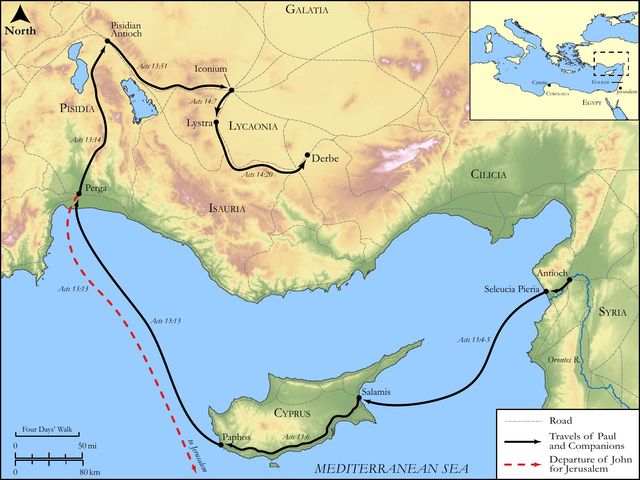
Acts 13:49 succinctly captures the extraordinary and rapid dissemination of the Gospel message throughout the region of Pisidian Antioch during Paul and Barnabas's first missionary journey. Following their declaration to turn from resistant Jewish audiences to receptive Gentiles, this verse highlights the immediate and powerful impact of their divinely empowered ministry, demonstrating the unstoppable nature of God's saving word as it spread far beyond the city's confines.
Context
ShowHideLiterary Context
This verse is a direct consequence and summary statement of the events immediately preceding it. Paul's powerful sermon in the synagogue of Pisidian Antioch initially drew significant interest from both Jews and "devout proselytes" Acts 13:43. However, the following Sabbath, the massive crowd that gathered to hear the word provoked intense envy and opposition from some Jewish leaders Acts 13:45. In a pivotal moment, Paul and Barnabas boldly declared their intention to turn to the Gentiles, affirming their role as a "light for the Gentiles, that you may bring salvation to the ends of the earth" by quoting Isaiah 49:6 Acts 13:46-47. The Gentiles, upon hearing this, rejoiced and glorified the word of the Lord, and "as many as were appointed to eternal life believed" Acts 13:48. Acts 13:49 then serves as a triumphant summary of the Gospel's immediate and expansive reach, despite the mounting opposition that would soon lead to the apostles' expulsion from the city Acts 13:50.
Historical & Cultural Context
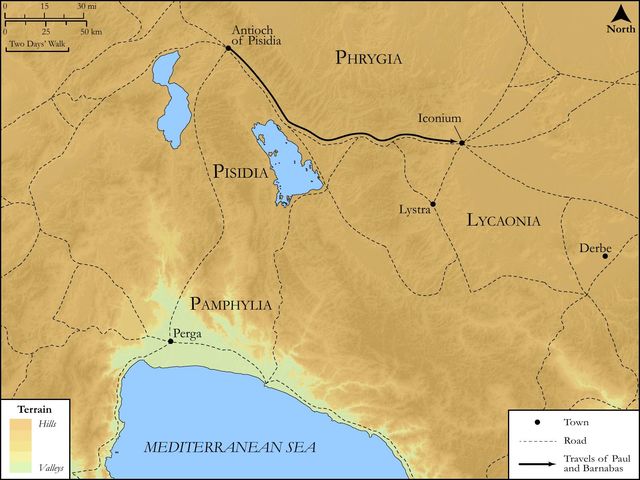
Pisidian Antioch was a significant Roman colony in the province of Galatia, strategically located on a major trade route. As a Roman colony, it had a mixed population of Romans, Greeks, and Jews, the latter often having established synagogues. The city served as an administrative and cultural hub, making it an ideal place for the Gospel to spread. The Jewish community, while influential, was also diverse in its reception of the new message about Jesus. The "devout proselytes" and "God-fearers" mentioned earlier in Acts 13 were Gentiles who worshipped the God of Israel but had not fully converted to Judaism. Their presence in the synagogue indicates a spiritual hunger that the Gospel uniquely satisfied. The rapid spread "throughout all the region" suggests that the message was not confined to the urban center but radiated outwards into the surrounding rural areas and smaller towns, likely facilitated by trade routes and personal networks.
Key Themes
ShowHideThis verse powerfully illustrates several key themes prevalent in the book of Acts and broader biblical theology. Firstly, it underscores the Gospel's unstoppable advance and its inherent power to spread, even in the face of opposition, fulfilling the commission given in Acts 1:8. Secondly, it highlights divine agency in the propagation of the word; it is "the word of the Lord," signifying that its dissemination is not merely a human endeavor but is sovereignly directed and empowered by God Himself, echoing the promise that God's word will accomplish its purpose Isaiah 55:11. Thirdly, the verse emphasizes the inclusion of the Gentiles as a central aspect of God's redemptive plan, a theme that gains significant momentum in Acts 13 and continues throughout the rest of the book as the Gospel expands beyond its Jewish origins. Finally, it demonstrates the dynamic nature of evangelism, where the message is actively "published" or "carried through" by human agents empowered by the Holy Spirit.
Exposition and Analysis
ShowHideKey Word Analysis
ShowHideFrom λέγω (legō), meaning "to speak." This term is profoundly significant, referring to "something said (including the thought)," a "topic," "reasoning," or "utterance." In a theological context, especially as "the word of the Lord," it refers to the divine message, the Gospel of Jesus Christ, which encompasses the good news of salvation, God's plan, and His revealed truth. It is not merely information but a living, active, and powerful communication from God.
From (supremacy), meaning "supreme in authority," "controller," or "Master." When applied to God, as here, it signifies His absolute sovereignty and divine authority. "The word of the Lord" thus emphasizes that the message originates from God, carries His authority, and is under His control, ensuring its power and ultimate success.
From διά (dia, "through") and φέρω (pherō, "to bear"). This verb literally means "to bear through" or "to carry apart." It conveys the idea of active transport and widespread dissemination. It implies that the message was not passively received but actively carried, spread, or reported across the region, suggesting a dynamic and energetic process of proclamation and reception. It can also imply "to differ" or "to be excellent," subtly hinting at the superior quality and impact of the Gospel message.
Feminine of a derivative of the base of χάσμα (chasma, "chasm") through the idea of "empty expanse." It denotes "room," "a space of territory," or "land." Here, it refers to the surrounding geographical area or countryside beyond the city limits of Pisidian Antioch, indicating that the Gospel's reach was extensive and not confined to urban centers.
Verse Breakdown
ShowHide"And the word of the Lord"
This phrase identifies the subject of the verse: the divine message, the Gospel of Jesus Christ, which is not a human invention but originates from God Himself. The "word" (lógos) here refers to the entire message of salvation through Christ, as proclaimed by Paul and Barnabas. Its divine origin ("of the Lord") underscores its authority, power, and inherent efficacy.
"was published"
This passive construction (from diaphérō) indicates that the spread of the word was not solely due to human effort but was divinely facilitated and empowered. It conveys the sense of the message being "carried through" or "spread abroad" dynamically and widely. It implies an active, energetic dissemination, suggesting that the Gospel was proclaimed, discussed, and shared extensively.
"throughout all the region"
This specifies the geographical extent of the Gospel's spread. "All the region" (chṓra) refers to the entire surrounding territory of Pisidian Antioch, not just the city itself. This emphasizes the widespread and comprehensive nature of the Gospel's penetration, reaching beyond the urban center into the surrounding rural areas and communities.
Literary Devices
ShowHideThe verse employs several literary devices to convey its powerful message. The use of Divine Agency is prominent, particularly through the phrase "the word of the Lord" and the passive voice "was published." This structure implicitly attributes the success and spread of the Gospel not primarily to human effort, but to God's sovereign power and initiative. The phrase "throughout all the region" functions as Hyperbole or Generalization, emphasizing the extensive and pervasive reach of the message, suggesting a rapid and comprehensive dissemination that might not have literally covered every single square inch but certainly conveyed a widespread impact. The "word" itself is treated almost as an entity with agency, capable of being "published," which is a form of Personification or Metonymy, where the abstract message is given a concrete action, highlighting its dynamic and active nature.
Theological and Thematic Connections
ShowHideActs 13:49 stands as a powerful testament to the inherent, unstoppable power of God's word and His sovereign plan for global redemption. It illustrates that the Gospel's advance is not dependent on human acceptance or favorable circumstances, but on the divine will and power that propels it forward. This verse directly follows the pivotal moment when the apostles turned to the Gentiles, confirming that God's saving message was indeed intended for all nations, fulfilling ancient prophecies and expanding the scope of His kingdom beyond ethnic boundaries. The rapid and widespread dissemination, even amidst nascent opposition, foreshadows the continued growth of the early church described throughout Acts, demonstrating God's faithfulness to His mission.
Reflection and Application
ShowHideActs 13:49 offers profound encouragement and clear direction for believers today. It reminds us that the Gospel message, "the word of the Lord," possesses an inherent, divine power to spread and transform lives, independent of our limitations or the obstacles we face. This should fill us with both humility and confidence: humility, knowing that the ultimate success of evangelism rests with God, and confidence, knowing that when we faithfully proclaim His word, it will accomplish His purposes. Even when faced with resistance or apathy, as Paul and Barnabas experienced, the call to share the good news remains paramount. Our role is to be faithful conduits, allowing the powerful word to be "published" through our lives and testimonies. This verse challenges us to consider how we are actively participating in the dissemination of God's word in our own "region," whether that's our local community, workplace, or global sphere of influence, trusting that God will bring the increase.
Questions for Reflection
ShowHideFAQ
ShowHideWhat does "the word of the Lord" specifically refer to in this context?
ShowHideIn Acts 13:49, "the word of the Lord" refers specifically to the Gospel message that Paul and Barnabas were proclaiming. This encompasses the good news about Jesus Christ—His life, death, resurrection, and the salvation offered through faith in Him. It's the divine revelation of God's plan for humanity's redemption, delivered through the apostles' preaching. It's not just a set of facts, but a powerful, living message that carries God's authority and transformative power, as seen in the immediate response of those who believed in Acts 13:48.
Why was the word "published" so quickly and widely in Pisidian Antioch?
ShowHideThe rapid and widespread publication of the word can be attributed to several factors. Firstly, it was divinely empowered; the phrase "the word of the Lord was published" implies God's active hand in its dissemination, fulfilling His commission for the Gospel to spread to the ends of the earth Acts 1:8. Secondly, the apostles, particularly Paul, were zealous and effective communicators. Thirdly, Pisidian Antioch was a significant Roman city on major trade routes, facilitating the movement of people and ideas. Finally, the receptivity of the Gentiles, who "were glad, and glorified the word of the Lord" Acts 13:48, created a fertile ground for the message to take root and spread rapidly through personal networks and testimonies.
What was the significance of the apostles turning to the Gentiles, as mentioned just before this verse?
ShowHideThe apostles' declaration to turn to the Gentiles in Acts 13:46-47 was a pivotal moment in the early church's mission. While the Gospel was initially offered to the Jews, their widespread rejection in Pisidian Antioch prompted Paul and Barnabas to formally pivot their primary focus to the non-Jewish population. This was a fulfillment of Old Testament prophecy, particularly Isaiah 49:6, which indicated that God's salvation would extend to the Gentiles. This turn marked a significant expansion of the Gospel's reach and reinforced the universal nature of God's redemptive plan, setting the trajectory for much of the rest of the book of Acts.
Christ-Centered Fulfillment
ShowHideActs 13:49, describing the widespread publication of "the word of the Lord," finds its ultimate Christ-centered fulfillment in the person and work of Jesus Christ Himself. Jesus is not merely the subject of the "word of the Lord" but is, in fact, the living "Word" (Greek, Logos) made flesh, as declared in John 1:1 and John 1:14. The dissemination of the Gospel message is, therefore, the spread of the knowledge of Christ—His redemptive life, atoning death, and triumphant resurrection—which alone brings salvation. The power inherent in "the word of the Lord" to be "published throughout all the region" is a reflection of Christ's own authority and His commission to His disciples to "go and make disciples of all nations" Matthew 28:19. The rapid expansion of the Gospel among the Gentiles, as seen here, directly fulfills Christ's promise that He would draw all people to Himself John 12:32 and that His kingdom would extend to the "ends of the earth" Acts 1:8. Thus, Acts 13:49 is not just a historical account of missionary success, but a vibrant testimony to the ongoing, irresistible advance of Christ's kingdom through the power of His living Word.