


2 Samuel 8:15
Bible text: King James Version (1769 Blayney text) · Public domain
Bible text: Berean Standard Bible · Public domain
Bible text: American Standard Version (1901) · Public domain
Bible text: World English Bible, Messianic edition · Public domain
Bible text: Geneva Bible (1599) · Public domain
Bible text: Young's Literal Translation · Public domain
- וַיִּמְלֹךְvai·yim·Lokhand he reignedH4427Conj-w ¦ V-Qal-ConsecImperf-3msVerb Qal Consecutive Imperfect 3rd Singular Masculineוַandיִּמְלֹךְhe reigned
- דָּוִדda·VidDavidH1732N-proper-mNoun Proper Masculine
- עַל'aloverH5921PrepPreposition
- כָּלkolallH3605N-mscNoun Singular Masculine Construct
- יִשְׂרָאֵלYis·ra·'ElIsraelH3478N-properNoun Proper Location
- וַיְהִיvay·Hiand he wasH1961Conj-w ¦ V-Qal-ConsecImperf-3msVerb Qal Consecutive Imperfect 3rd Singular Masculineוַandיְהִיhe was
- דָוִדda·VidDavidH1732N-proper-mNoun Proper Masculine
- עֹשֶׂה'o·SehdoingH6213V-Qal-Prtcpl-msVerb Qal Participle Singular Masculine Absolute
- מִשְׁפָּטmish·PatjusticeH4941N-msNoun Singular Masculine Absolute
- וּצְדָקָהu·tze·da·Kahand righteousnessH6666Conj-w ¦ N-fsNoun Singular Feminine Absoluteוּandצְדָקָהrighteousness
- לְכָלle·kholfor allH3605Prep-l ¦ N-mscNoun Singular Masculine Constructלְforכָלall
- עַמּוֹa·Mohis peopleH5971N-msc ¦ 3msNoun Singular Masculine Constructעַמּpeopleוֹhis
English is a literal word-by-word gloss of the Hebrew, not the KJV's wording. Why?
This is the original text the KJV's translators worked from — each Hebrew word with its own literal English meaning in this verse, prepared by scholars at Tyndale House, Cambridge. The KJV translates whole sentences, not word by word, so its wording differs: one Hebrew word can become several English words, and the KJV may choose “the LORD” where the gloss reads “Yahweh”. Both are faithful — they answer different questions. For the KJV's own rendering, switch to the KJV text.
Details
See on the biblical-era maps

Study this verse
Public-domain commentary
Matthew Henry
From his Commentary on the Whole Bible. Henry comments on passages, not single verses — this entry covers 2 Samuel 8:15–18. His two-level outline is real structure in the source text, so it is rendered as structure.
David was not so engaged in his wars abroad as to neglect the administration of the government at home.
I.His care extended itself to all the parts of his dominion:
He reigned over all Israel (Sa2 8:15); not only he had a right to reign over all the tribes, but he did so; they were all safe under his protection, and shared in the fruits of his good government.
II.He did justice with an unbiased unshaken hand:
He executed judgment unto all his people, neither did wrong nor denied or delayed right to any. This intimates,
1.His industry and close application to business, his easiness of access and readiness to admit all addresses and appeals made to him. All his people, even the meanest, and those too of the meanest tribes, were welcome to his council-board.
2.His impartiality and the equity of his proceedings, in administering justice. He never perverted justice through favour or affection, nor had respect of persons in judgment. Herein he was a type of Christ, who was faithful and true, and who doth in righteousness both judge and make war, Rev 19:11. See Psa 72:1, Psa 72:2.
III.He kept good order and good officers in his court.
David being the first king that had an established government (for Saul's reign was short and unsettled) he had the modelling of the administration. In Saul's time we read of no other great officer than Abner, that was captain of the host. But David appointed more officers: Joab that was general of the forces in the field, and Banaiah that was over the Cherethites and Pelethites, who were either the city train-bands (archers and slingers, so the Chaldee), or rather the life-guards, or standing force, that attended the king's person, the pretorian band, the militia. They were ready to do service at home, to assist in the administering of justice, and to preserve the public peace. We find them employed in proclaiming Solomon, Kg1 1:38. 2. Two ecclesiastical officers: Zadok and Ahimelech were priests, that is, they were most employed in the priests' work under Abiathar, the high priest. 3. Two civil officers: one that was recorder, or remembrancer, to put the king in mind of business in its season (he was prime minister of state, yet not entrusted with the custody of the king's conscience, as they say of our lord chancellor, but only of the king's memory; let the king be put in mind of business and he would do it himself); another that was scribe, or secretary of state, that drew up public orders and despatches, and recorded judgments given. 4. David's sons, as they grew up to be fit for business, were made chief rulers; they had places of honour and trust assigned them, in the household, or in the camp, or in the courts of justice, according as their genius led them. They were chief about the king (so it is explained, Ch1 18:17), employed near him, that they might be under his eye. Our Lord Jesus has appointed officers in his kingdom, for his honour and the good of the community; when he ascended on high he gave these gifts (Eph 4:8-11), to every man his work, Mar 13:34. David made his sons chief rulers; but all believers, Christ's spiritual seed, are better preferred, for they are made to our God kings and priests, Rev 1:6.
Continue studying 2 Samuel 8:15 across the web’s major study libraries — every link below opens this exact verse, chapter, or book on the destination site.
Read & Compare
 BibleGatewayThis verse in more than 200 translations and 70 languages.
 Bible.comThe YouVersion reader — hundreds of translations, reading plans, and highlights.
 ESV.orgCrossway's official English Standard Version reader.
 NET BibleThe NET translation with 60,000+ translators' notes on every rendering decision.
 STEP BibleTyndale House's free study tool — original text, vocabulary, and scholarly resources.
 BibliaLogos Bible Software's free web reader.
 USCCBThe New American Bible (Revised Edition) with the U.S. bishops' study notes.
Commentaries
 BibleHub CommentariesDozens of classic commentaries on this verse, gathered on one page.
 StudyLightMore than 100 commentary sets — the largest collection on the web.
 BibleRefPlain-English commentary on what this verse means, verse by verse.
 Enduring WordDavid Guzik's free commentary on this chapter, widely used by Bible teachers.
 Bible Study ToolsVerse commentary alongside Greek and Hebrew study aids.
Original Language & Research
- BibleHub InterlinearThe verse word by word — original language, transliteration, and English.
- BibleHub LexiconEvery word's original-language definition and Strong's entry.
 Blue Letter BibleDeep-study tools — Strong's numbers, concordance, and word studies.
 SefariaThe Hebrew text with Rashi and centuries of Jewish commentary.
Sermons, Hymns & Audio


TrulyRandomVerse is not affiliated with these sites and doesn’t control their content. They’re linked because they’re genuinely useful.
Summary
Second Samuel 8:15 serves as a profound summary statement regarding the character and conduct of King David's reign, marking a pivotal era of stability, unity, and righteous governance for the nascent kingdom of Israel. Following a period of extensive military consolidation and the establishment of a secure throne, this verse underscores that David's divinely sanctioned authority was consistently applied for the equitable and just administration of all his subjects, reflecting the ideal of a monarch who ruled according to God's heart.
Context
ShowHideLiterary Context
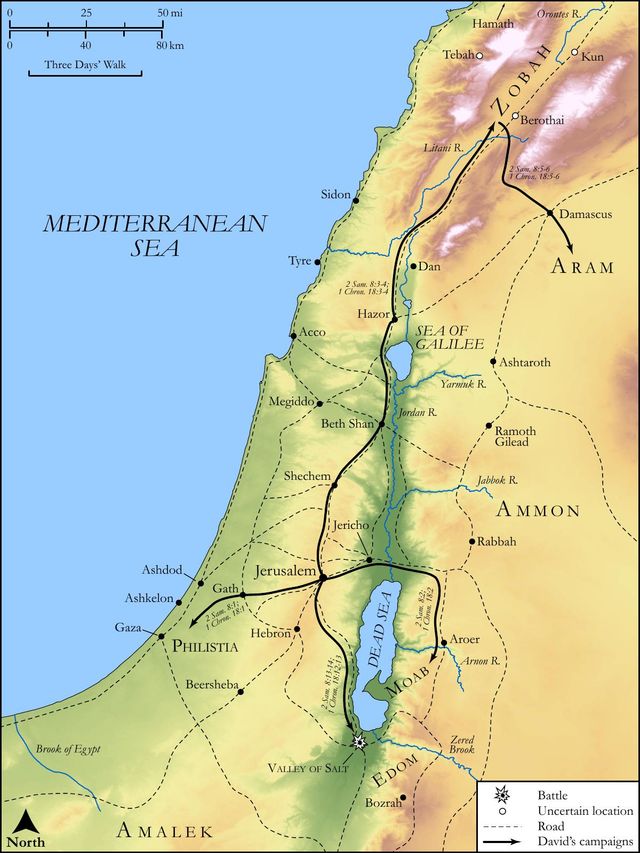
This verse opens the closing section of a significant chapter that meticulously details David's military campaigns and administrative successes. 2 Samuel 8 recounts David's decisive victories over the Philistines, Moabites, Syrians, Edomites, and Ammonites, effectively securing Israel's borders and expanding its influence. These conquests brought substantial tribute and solidified Israel's position as a regional power. Preceding this chapter, 2 Samuel 7 records God's unconditional covenant with David, promising an enduring dynasty and a secure kingdom. Thus, 2 Samuel 8:15 acts as a theological and narrative capstone to these achievements, shifting focus from military might to the moral essence of David's rule. It sets the stage for subsequent chapters that will explore the complexities and challenges within David's household and administration, even amidst his overall righteous reign.
Historical & Cultural Context
David's reign occurred during the transition from a tribal confederacy to a centralized monarchy in ancient Israel, a period roughly spanning the late 11th to mid-10th centuries BCE. The consolidation of "all Israel" under one king was a monumental achievement, overcoming centuries of tribal independence and intermittent Philistine oppression. Among the nations, kings were often seen as representatives of their gods, tasked with maintaining order and dispensing justice. However, Israelite kingship, as defined by the Mosaic Law, held unique expectations: the king was to be a servant of Yahweh, upholding the covenant and administering justice impartially, unlike many despotic rulers of surrounding nations. David's commitment to "judgment and justice" would have been a significant cultural marker, distinguishing his rule as divinely ordained and morally superior in the eyes of his people and, ideally, the surrounding nations.
Key Themes
ShowHide2 Samuel 8:15 encapsulates several overarching themes central to the Books of Samuel and the broader Old Testament narrative. Firstly, it highlights the theme of God's faithfulness to His covenant promises, particularly the establishment of a unified kingdom under David, as promised in 2 Samuel 7. Secondly, it underscores the ideal of righteous kingship, presenting David as a monarch who, despite his personal failings, largely sought to govern according to divine principles. This ideal is contrasted with the flawed reign of Saul and sets a standard for future kings of Israel and Judah. Thirdly, the verse emphasizes justice and equity as foundational pillars of a godly society, reflecting the Mosaic Law's repeated commands for impartial judgment and care for the vulnerable, as seen in passages like Deuteronomy 16:18-20. This theme resonates throughout the prophetic literature, where the absence of justice is often condemned as a sign of national apostasy.
Exposition and Analysis
ShowHideKey Word Analysis
ShowHideThis term (H4941) refers to a verdict pronounced judicially, a sentence, or a formal decree. It encompasses the practical application of law, the enforcement of order, and the upholding of legal rights. In a royal context, mishpâṭ describes the king's role as the supreme judge, ensuring that disputes are settled fairly and that the vulnerable are protected from oppression. It speaks to the king's active role in maintaining social order and equity within the kingdom, embodying the very act of governing justly.
This word (H6666) denotes rightness, rectitude, and moral integrity. While mishpâṭ is the act of judging, tsᵉdâqâh is the standard or quality by which that judgment is made. It describes the inherent uprightness of character and action, aligning with God's own righteous nature. When paired with mishpâṭ, as it often is in Scripture, tsᵉdâqâh indicates that David's administration of law was not arbitrary or self-serving, but grounded in a deep commitment to moral rectitude and divine standards, ensuring that his rule was truly righteous.
Verse Breakdown
ShowHide"And David reigned over all Israel;"
This clause signifies the complete consolidation of the twelve tribes under David's leadership. It emphasizes the political unity and stability achieved under his rule, marking the zenith of Israel's national strength and territorial control. It is a statement of established authority and widespread recognition, fulfilling God's promise to make David king over all His people, uniting a previously fragmented nation.
"and David executed judgment and justice"
This is the core declaration of the verse, highlighting the ethical and moral character of David's reign. The repetition of "David" underscores his personal responsibility and active role in upholding these principles. "Executed" (Hebrew: ʻâsâh, H6213, "to do" or "to make") implies a consistent and deliberate practice, not merely an aspiration. As discussed in Key Word Analysis, "judgment" (mishpâṭ) refers to the practical administration of law and equitable decisions, while "justice" (tsᵉdâqâh) refers to the moral integrity and righteousness underlying those decisions. Together, they describe a comprehensive system of governance that was both legally sound and morally upright.
"unto all his people."
This concluding phrase emphasizes the universal application of David's just rule. It signifies impartiality, meaning that his decisions and policies were administered without favoritism or prejudice, ensuring that every citizen, regardless of tribal affiliation, social status, or personal influence, received fair treatment and protection under the law. This impartiality was a hallmark of a leader who genuinely served the well-being of his entire populace, reflecting the divine expectation for leaders to care for all, especially the vulnerable.
Literary Devices
ShowHideThe verse employs several literary devices to convey its powerful message. The most prominent is Summary Statement, as 2 Samuel 8:15 functions as a concise summation of the character of David's reign following a chapter detailing his military and administrative achievements. It shifts the reader's focus from external conquests to internal governance. There is also a subtle use of Repetition ("And David reigned... and David executed..."), which serves to emphasize David's central and active role in both establishing and maintaining the kingdom's order and righteousness. Furthermore, the pairing of "judgment and justice" (mishpâṭ and tsᵉdâqâh) can be seen as a Hendiadys, where two distinct words are used to express a single, comprehensive concept—in this case, righteous and equitable governance. This combined phrase highlights the holistic nature of David's rule, which was both legally sound and morally upright.
Theological and Thematic Connections
ShowHideThis verse stands as a foundational statement about the nature of ideal kingship in Israel, reflecting God's own character as the ultimate Judge and source of righteousness. David's commitment to "judgment and justice" was not merely a good political practice but a reflection of the divine mandate for rulers to govern justly, echoing the very attributes of God. This ideal reign foreshadows the coming of a perfect King whose kingdom would be established and upheld with righteousness and justice forever. It underscores the biblical truth that true power is found not in might alone, but in the moral integrity and equitable administration that flows from a heart aligned with God's will.
Reflection and Application
ShowHide2 Samuel 8:15 offers profound lessons for all forms of leadership and for individual conduct within any community. It reminds us that true authority, whether in government, the church, a family, or a workplace, is most effective and God-honoring when it is rooted in fairness, impartiality, and an unwavering commitment to what is right. For leaders, this verse serves as a powerful call to steward power not for personal gain or preference, but for the equitable well-being of all those under their charge, actively seeking justice for the vulnerable and upholding ethical standards. For individuals, it encourages us to be seeks justice in our spheres of influence, to challenge injustice, and to embody principles of righteousness in our daily interactions. By doing so, we reflect the character of God, who is the ultimate source of all judgment and justice, and contribute to the flourishing of our communities.
Questions for Reflection
ShowHideFAQ
ShowHideWhat is the significance of "all Israel" in this verse?
ShowHideThe phrase "all Israel" is highly significant because it signifies the complete political and spiritual unity of the twelve tribes under David's single, centralized monarchy. Prior to David, Israel had existed as a loose confederacy of tribes, often plagued by internal strife and external threats. Saul's reign attempted to unify them but ultimately failed to secure lasting peace and full allegiance. David's successful campaigns and just administration, as summarized in 2 Samuel 8:15, brought about an unprecedented era of national cohesion and strength, fulfilling the long-held aspiration for a unified people under God's chosen king. This unity was crucial for Israel's identity and its role as God's covenant nation.
Christ-Centered Fulfillment
ShowHideWhile 2 Samuel 8:15 describes the peak of David's earthly reign, it ultimately points forward to the perfect and eternal reign of Jesus Christ, the true Son of David. David's execution of "judgment and justice" among "all his people" serves as a powerful foreshadowing of the Messiah's kingdom, which will be characterized by absolute righteousness and perfect equity. Unlike David, who was a flawed human king, Jesus reigns with unblemished holiness and unwavering justice, as prophesied in Isaiah 11:3-5 where it says He "will not judge by what he sees with his eyes, or decide by what he hears with his ears; but with righteousness he will judge the needy, with equity he will give decisions for the poor of the earth." His kingdom, unlike David's, is not bound by geographical borders or temporal limits, but extends over all creation, bringing ultimate peace and order to those who belong to Him. The New Testament affirms that Jesus is the one who "will judge the living and the dead" (2 Timothy 4:1), and His return will usher in a new heaven and new earth where "righteousness dwells" (2 Peter 3:13). Thus, David's just reign, though significant, was merely a shadow of the perfect, everlasting justice and righteousness that Christ embodies and will fully establish.