


2 Samuel 23:38
Bible text: King James Version (1769 Blayney text) · Public domain
Bible text: Berean Standard Bible · Public domain
Bible text: American Standard Version (1901) · Public domain
Bible text: World English Bible, Messianic edition · Public domain
Bible text: Geneva Bible (1599) · Public domain
Bible text: Young's Literal Translation · Public domain
- עִירָא'i·Ra'IraH5896N-proper-mNoun Proper Masculine
- הַיִּתְרִיhai·yit·Rithe IthriteH3505Art ¦ N-msNoun Gentilic Singular Masculine AbsoluteהַtheיִּתְרִיIthrite
- גָּרֵבga·RevGarebH1619N-proper-mNoun Proper Masculine
- הַיִּתְרִיhai·yit·Rithe IthriteH3505Art ¦ N-msNoun Gentilic Singular Masculine AbsoluteהַtheיִּתְרִיIthrite
English is a literal word-by-word gloss of the Hebrew, not the KJV's wording. Why?
This is the original text the KJV's translators worked from — each Hebrew word with its own literal English meaning in this verse, prepared by scholars at Tyndale House, Cambridge. The KJV translates whole sentences, not word by word, so its wording differs: one Hebrew word can become several English words, and the KJV may choose “the LORD” where the gloss reads “Yahweh”. Both are faithful — they answer different questions. For the KJV's own rendering, switch to the KJV text.
Details
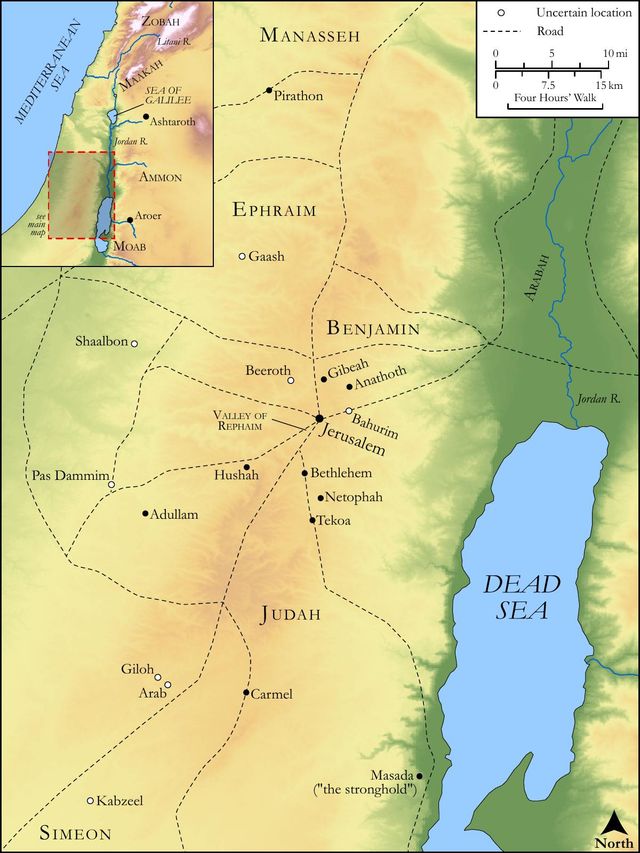
See on the biblical-era maps

Study this verse
Continue studying 2 Samuel 23:38 across the web’s major study libraries — every link below opens this exact verse, chapter, or book on the destination site.
Read & Compare
 BibleGatewayThis verse in more than 200 translations and 70 languages.
 Bible.comThe YouVersion reader — hundreds of translations, reading plans, and highlights.
 ESV.orgCrossway's official English Standard Version reader.
 NET BibleThe NET translation with 60,000+ translators' notes on every rendering decision.
 STEP BibleTyndale House's free study tool — original text, vocabulary, and scholarly resources.
 BibliaLogos Bible Software's free web reader.
 USCCBThe New American Bible (Revised Edition) with the U.S. bishops' study notes.
Commentaries
 BibleHub CommentariesDozens of classic commentaries on this verse, gathered on one page.
 StudyLightMore than 100 commentary sets — the largest collection on the web.
 BibleRefPlain-English commentary on what this verse means, verse by verse.
 Enduring WordDavid Guzik's free commentary on this chapter, widely used by Bible teachers.
 Bible Study ToolsVerse commentary alongside Greek and Hebrew study aids.
Original Language & Research
- BibleHub InterlinearThe verse word by word — original language, transliteration, and English.
- BibleHub LexiconEvery word's original-language definition and Strong's entry.
 Blue Letter BibleDeep-study tools — Strong's numbers, concordance, and word studies.
 SefariaThe Hebrew text with Rashi and centuries of Jewish commentary.
Sermons, Hymns & Audio


TrulyRandomVerse is not affiliated with these sites and doesn’t control their content. They’re linked because they’re genuinely useful.
Summary
2 Samuel 23:38 stands near the close of the illustrious roster of King David's elite warriors, specifically naming Ira an Ithrite and Gareb an Ithrite. These two individuals, though not associated with detailed heroic exploits in this passage, represent the faithful, loyal, and diverse cadre of men who dedicated themselves to David's reign. Their inclusion underscores the comprehensive nature of the biblical record, highlighting the divine recognition of all who faithfully serve God's purposes, whether in prominent or less conspicuous roles, contributing significantly to the establishment and security of the Davidic kingdom.
Context
ShowHideLiterary Context
This verse stands near the close of the detailed catalog of David's elite warriors, often referred to as his "Mighty Men," which begins in 2 Samuel 23:8. This section immediately follows David's poignant "last words" in 2 Samuel 23:1-7, where he reflects on righteous governance and God's enduring covenant with his house. The enumeration of these valiant individuals, therefore, functions as a tangible testament to the human instruments through whom God faithfully fulfilled His promises to David, showcasing the unwavering loyalty and valor that formed the bedrock of his successful reign. A parallel, though slightly variant, account of these indispensable warriors is also preserved in 1 Chronicles 11:10-47, further emphasizing the profound historical and theological importance of this military elite to the stability and prosperity of the Davidic monarchy. The meticulous recording of each name, even those without specific deeds recounted, demonstrates the biblical author's intent to provide a comprehensive and authoritative chronicle of David's most trusted and dedicated companions.
Historical & Cultural Context
Among the kings of that day, a king's strength, legitimacy, and the overall stability of his kingdom were inextricably linked to the loyalty and prowess of his military forces. David's "Mighty Men" were far more than mere soldiers; they constituted a highly trained, professional fighting force, a personal guard, and a powerful symbol of his divinely sanctioned authority. Their diverse origins, encompassing various tribal elements from across Israel, reflect David's remarkable ability to unite disparate factions under his singular leadership, forging a cohesive national identity. The designation "Ithrite" is a gentilic term, precisely indicating their origin from Jattir (sometimes spelled Yattir), a town nestled within the hill country of Judah, which also held significance as a Levitical city (Joshua 21:14). This specific geographical identifier firmly anchors these individuals within the tangible historical and cultural tapestry of ancient Israel, vividly demonstrating the broad and deep base of support David commanded throughout his kingdom. The very existence of such a detailed and honorific list profoundly underscores the prevailing cultural practice of honoring, remembering, and immortalizing those who rendered significant and faithful service to the king and the burgeoning kingdom.
Key Themes
ShowHideThe overarching themes powerfully conveyed in this passage, particularly through the inclusion of Ira and Gareb, revolve around unwavering loyalty and dedicated service. These men embody an exemplary commitment to King David and, by extension, to God's chosen king and His divine purposes for Israel. Their deliberate inclusion, even in the absence of specific heroic narratives, speaks volumes to the profound theme of divine remembrance and the inherent value of every contributor to God's kingdom. It communicates a powerful theological truth: God meticulously sees, knows, and records the faithful service of all who contribute to His grand redemptive plan, regardless of their human prominence or visibility. This comprehensive list also significantly contributes to the broader theme of kingdom establishment and maintenance, vividly illustrating the collective human effort, sacrifice, and unwavering dedication necessary to secure, expand, and sustain the realm that God had solemnly promised to David. The detailed catalog reinforces the profound idea that the enduring success of David's reign was not solely attributable to his individual prowess or charisma, but was rather a collective, divinely blessed endeavor, built upon the faithfulness of many.
Exposition and Analysis
ShowHideKey Word Analysis
ShowHideDerived from the Hebrew root עוּר (ʿûr), meaning "to wake" or "to be awake," this name signifies "wakefulness" or "vigilance." In the context of David's elite warriors, the name subtly suggests a quality befitting a "Mighty Man"—one who is ever watchful, alert, and ready for duty. While the name itself does not recount a specific heroic act, its inherent meaning aligns perfectly with the characteristics expected of a loyal, dependable, and effective warrior in the king's service, implying a readiness to act on behalf of the kingdom.
This name is derived from a root (גָּרָב) meaning "scabby" or "leprous," which might initially seem an unusual or even unflattering designation for an honored warrior. However, names in ancient Israel often had diverse origins, sometimes descriptive of physical appearance, circumstances of birth, or even possessing ironic connotations. Despite its literal etymology, Gareb's inclusion in this esteemed list of David's most valiant men unequivocally overrides any potentially negative or literal interpretation of his name, emphasizing his valor, unwavering loyalty, and significant contribution to David's forces. His presence here underscores that his character and service were paramount, far outweighing any potentially unflattering namesake.
This gentilic term is a patronymic from יֶתֶר (Yether), identifying Ira and Gareb as originating from Jattir (also spelled Yattir), a town located in the hill country of Judah. Notably, Jattir was one of the cities specifically allotted to the priests, the sons of Aaron, from the tribe of Judah (Joshua 21:14). The repetition of "an Ithrite" for both Ira and Gareb not only precisely specifies their shared geographical background but also strongly suggests a familial relationship, a common military unit hailing from that specific locality, or perhaps that they were known together as an inseparable pair within David's formidable forces. This designation firmly grounds them historically and culturally within the diverse and unified composition of David's loyal and effective military.
Verse Breakdown
ShowHide"Ira an Ithrite"
This clause introduces Ira, identifying him by his personal name and then immediately by his geographical origin, "an Ithrite." While the biblical text does not attribute any specific heroic deed to Ira in this particular passage, his inclusion among the "Mighty Men" unequivocally signifies his elevated status as an elite warrior and a steadfast, loyal servant of King David. His presence in this esteemed and comprehensive list, alongside more famously recounted figures, powerfully underscores the meticulous nature of the biblical record and the profound value placed on all individuals who served the king faithfully, regardless of their individual renown.
"Gareb an Ithrite"
Following the introduction of Ira, Gareb is named, also identified with the identical gentilic "an Ithrite." The parallel grammatical structure and the identical geographical designation strongly suggest a close association between Ira and Gareb, possibly indicating that they were comrades from the same hometown, members of the same military contingent, or even brothers. Like Ira, Gareb's inclusion in this verse near the close of the illustrious list, without further elaboration on his specific exploits, powerfully emphasizes his unwavering loyalty, consistent dedication, and significant contribution to David's military strength and the security of his kingdom. His name stands near the end of the roster of the "Thirty" (or the full complement of David's most trusted and valiant warriors), lending a sense of finality and completeness to the account.
Literary Devices
ShowHideThe verse primarily employs Catalog/List as a foundational literary device, as it forms a late entry in a larger, meticulously compiled enumeration of David's elite warriors. This comprehensive catalog serves the dual purpose of documenting and honoring the specific individuals who were absolutely instrumental in David's military successes and the establishment of his kingdom, thereby emphasizing their collective and indispensable contribution. The device of Repetition is prominently evident in the phrase "an Ithrite" being applied identically to both Ira and Gareb. This repetition not only clearly establishes their shared geographical origin but also creates a subtle sense of symmetry and finality, bringing the entire list toward a harmonious close with two individuals linked by their common background and perhaps their shared service. Furthermore, the deliberate inclusion of these two names so near the close of the list, even without the recounting of detailed exploits, powerfully demonstrates the literary device of Inclusion, highlighting the profound theological principle that every loyal and faithful contributor, regardless of their individual fame or the prominence of their deeds, was deemed worthy of meticulous remembrance and honor within the sacred record of God's work through His chosen king.
Theological and Thematic Connections
ShowHideThe meticulous recording of Ira and Gareb's names, even in the absence of detailed heroic deeds, carries profound and enduring theological weight. It speaks eloquently to God's comprehensive knowledge, unwavering attention, and eternal remembrance of all who faithfully serve His divine purposes, regardless of how prominent or significant their contributions may appear to human eyes. Just as David, a king described as being "after God's own heart," valued and honored every single member of his loyal retinue, so too does God meticulously account for and cherish the faithfulness of all His servants. This passage serves as a powerful and comforting reminder that all labor, every act of obedience, and every quiet sacrifice undertaken in the service of God's kingdom holds eternal significance and is never overlooked by the Divine King. It profoundly encourages believers to find intrinsic value not merely in grand exploits or visible achievements, but in consistent, faithful, and often unseen service, knowing with certainty that their names are known, their efforts are seen, and their contributions are cherished by the Almighty.
Reflection and Application
ShowHideThe inclusion of Ira and Gareb in the esteemed list of David's Mighty Men offers a powerful, often overlooked, and deeply encouraging lesson for contemporary believers. In a world that frequently celebrates only the highly visible, the exceptionally gifted, or those who achieve dramatic, public accomplishments, this verse profoundly reminds us of the immense and eternal value God places on quiet faithfulness, consistent loyalty, and humble service. Ira and Gareb represent the countless individuals throughout salvation history and in our own communities who faithfully serve in less prominent, often unseen roles, whose names may not be widely known or celebrated, but whose contributions are absolutely indispensable to the flourishing and advancement of God's kingdom. Their story challenges us to critically re-evaluate our own definitions of success and significance, calling us to embrace faithfulness in our everyday callings, vocations, and relationships. It assures us that every act of service, every heartfelt prayer, every word of encouragement, and every consistent effort, no matter how small or unseen by human eyes, is meticulously noted, deeply cherished, and eternally rewarded by God. This truth fosters a spirit of profound humility, reminding us that true, lasting impact is often the cumulative result of collective, dedicated effort, and that God's economy of value differs radically from the world's. We are called to be faithful stewards of the gifts, talents, and opportunities He has graciously given us, trusting implicitly that He sees, He remembers, and He will ultimately commend all who have served Him with a loyal heart.
Questions for Reflection
ShowHideFAQ
ShowHideWho were Ira and Gareb, and why are they mentioned in the Bible?
ShowHideIra and Gareb were two of King David's "Mighty Men," an elite and highly loyal group of warriors who served him throughout his reign. They are specifically identified as "Ithrites," indicating their origin from Jattir, a town located in the hill country of Judah. Their names are mentioned in 2 Samuel 23:38 as two of the closing names in the comprehensive and esteemed list of David's most valiant and dedicated companions. While the Bible does not record specific heroic deeds for them in this particular passage, their inclusion is profoundly significant. It highlights their unwavering loyalty and steadfast commitment to David and, by extension, to God's chosen king and His purposes. Their presence in the sacred text powerfully emphasizes that God remembers and values the faithful service of all His people, even those whose contributions might not be widely celebrated or detailed in grand, dramatic narratives. Their listing brings a sense of completeness to the roster, underscoring the collective effort and diverse contributions that underpinned David's successful and divinely blessed reign.
Christ-Centered Fulfillment
ShowHideThe meticulous list of David's Mighty Men, nearing its close with the inclusion of Ira and Gareb, serves as a powerful and poignant foreshadowing of the ultimate King and His loyal followers. David, as a preeminent type of Christ, gathered around him a company of devoted warriors who willingly risked their lives and poured out their strength for the establishment and security of his earthly kingdom. In a far greater, eternal, and spiritual sense, Jesus Christ, the true Son of David and the King of an everlasting spiritual kingdom, likewise gathers His own "mighty men and women"—those who are supremely loyal, utterly dedicated, and willing to lay down their lives for Him and His divine purposes (John 15:13). Just as David's men were united in their singular service to him, believers from every tribe and nation are united in their unwavering allegiance to Christ, becoming an integral part of His spiritual body, the Church (Ephesians 2:19-22). The quiet faithfulness of Ira and Gareb, though unheralded by specific exploits, beautifully points to the consistent, humble, and often unseen obedience and service that Christ supremely values in His disciples. The ultimate "Lamb of God" did not come to be served by human hands, but rather to serve others, and to self-sacrificially give His life as a ransom for the many (Mark 10:45). His followers are therefore called to emulate His profound self-sacrificial love, radical humility, and unwavering obedience (Philippians 2:5-8), knowing with absolute certainty that every act of faithful service, whether seen or unseen by the world, contributes directly to the building of His eternal kingdom and is eternally remembered and rewarded by the King of kings and Lord of lords.