


2 Samuel 23:36
Bible text: King James Version (1769 Blayney text) · Public domain
Bible text: Berean Standard Bible · Public domain
Bible text: American Standard Version (1901) · Public domain
Bible text: World English Bible, Messianic edition · Public domain
Bible text: Geneva Bible (1599) · Public domain
Bible text: Young's Literal Translation · Public domain
- יִגְאָלyig·'AlIgalH3008N-proper-mNoun Proper Masculine
- בֶּןben[the] son ofH1121N-mscNoun Singular Masculine Construct
- נָתָןna·TanNathanH5416N-proper-mNoun Proper Masculine
- מִצֹּבָהmi·tzo·Vahfrom ZobahH6678Prep-m ¦ N-properNoun Proper LocationמִfromצֹּבָהZobah
- בָּנִיba·NiBaniH1137N-proper-mNoun Proper Masculine
- הַגָּדִיha·ga·Dithe GaditeH1425Art ¦ N-msNoun Gentilic Singular Masculine AbsoluteהַtheגָּדִיGadite
English is a literal word-by-word gloss of the Hebrew, not the KJV's wording. Why?
This is the original text the KJV's translators worked from — each Hebrew word with its own literal English meaning in this verse, prepared by scholars at Tyndale House, Cambridge. The KJV translates whole sentences, not word by word, so its wording differs: one Hebrew word can become several English words, and the KJV may choose “the LORD” where the gloss reads “Yahweh”. Both are faithful — they answer different questions. For the KJV's own rendering, switch to the KJV text.
Details
See on the biblical-era maps
Study this verse
Continue studying 2 Samuel 23:36 across the web’s major study libraries — every link below opens this exact verse, chapter, or book on the destination site.
Read & Compare
 BibleGatewayThis verse in more than 200 translations and 70 languages.
 Bible.comThe YouVersion reader — hundreds of translations, reading plans, and highlights.
 ESV.orgCrossway's official English Standard Version reader.
 NET BibleThe NET translation with 60,000+ translators' notes on every rendering decision.
 STEP BibleTyndale House's free study tool — original text, vocabulary, and scholarly resources.
 BibliaLogos Bible Software's free web reader.
 USCCBThe New American Bible (Revised Edition) with the U.S. bishops' study notes.
Commentaries
 BibleHub CommentariesDozens of classic commentaries on this verse, gathered on one page.
 StudyLightMore than 100 commentary sets — the largest collection on the web.
 BibleRefPlain-English commentary on what this verse means, verse by verse.
 Enduring WordDavid Guzik's free commentary on this chapter, widely used by Bible teachers.
 Bible Study ToolsVerse commentary alongside Greek and Hebrew study aids.
Original Language & Research
- BibleHub InterlinearThe verse word by word — original language, transliteration, and English.
- BibleHub LexiconEvery word's original-language definition and Strong's entry.
 Blue Letter BibleDeep-study tools — Strong's numbers, concordance, and word studies.
 SefariaThe Hebrew text with Rashi and centuries of Jewish commentary.
Sermons, Hymns & Audio


TrulyRandomVerse is not affiliated with these sites and doesn’t control their content. They’re linked because they’re genuinely useful.
Summary
2 Samuel 23:36 meticulously lists two additional names, Igal the son of Nathan of Zobah and Bani the Gadite, as integral members of King David's renowned elite fighting force, commonly known as "David's Mighty Men." This verse, embedded within a comprehensive roster (2 Samuel 23:8-39), serves as a vital historical and theological testament, honoring individuals whose unwavering loyalty, dedicated service, and martial prowess were foundational to the stability and success of David's divinely established kingdom, thereby underscoring the collective strength and diverse contributions that underpinned God's anointed leader.
Context
ShowHideLiterary Context
This verse is a precise component of the appendix to the book of 2 Samuel, specifically the esteemed roster of David's "Mighty Men," detailed in 2 Samuel 23:8-39. This section immediately follows David's poignant "last words" in 2 Samuel 23:1-7, which reflect on his covenant relationship with God and the essential nature of righteous leadership. Consequently, the ensuing list of warriors functions as a tangible demonstration of the divine blessing and human faithfulness that were indispensable for sustaining David's reign. The list is typically segmented into "The Three" (the most distinguished and heroic figures) and "The Thirty" (a larger, yet still exceptionally elite, group). Igal and Bani are situated within this latter category, vividly illustrating the profound depth and broad scope of the loyal support that David commanded throughout his reign. A parallel, though not entirely identical, account of these formidable men is also meticulously preserved in 1 Chronicles 11:26-47.
Historical & Cultural Context
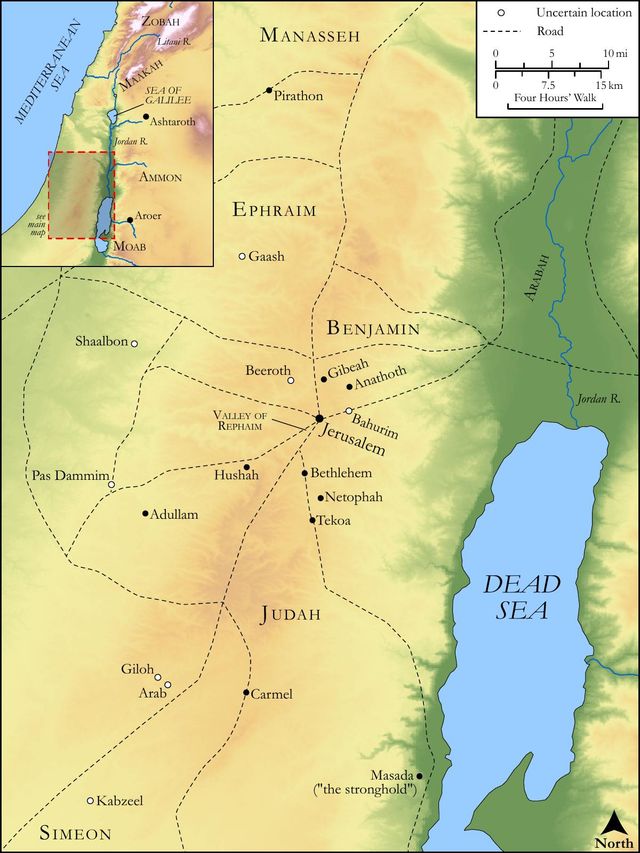
Among the kings of that day, the king's authority, security, and overall stability were inextricably linked to the formidable strength and unwavering loyalty of his military forces. An elite personal guard, such as David's Mighty Men, was absolutely crucial for both ensuring internal security within the kingdom and prosecuting successful external conquests against adversaries. The specific mention of "Zobah" points to an Aramean kingdom, located in what is modern-day Syria, which frequently engaged in conflict with Israel. This geographical detail highlights the remarkably diverse origins of David's loyalists, potentially including individuals who had joined him during his arduous period as a fugitive, through conquest, or perhaps from Israelite families who had settled in that region. The designation "Gadite" precisely identifies Bani's tribal affiliation with the tribe of Gad, a tribe renowned for its fierce and exceptionally capable warriors, as powerfully exemplified in 1 Chronicles 12:8. This specific detail emphatically underscores the martial prowess and the significant tribal contributions that collectively bolstered David's forces, showcasing a truly united Israel under his inspired leadership.
Key Themes
ShowHideThe deliberate inclusion of Igal and Bani, alongside the other mighty men, serves to underscore several profound and enduring biblical themes. Foremost among these is Loyalty and Selfless Service, as these individuals unreservedly dedicated their lives, skills, and very existence to David, God's chosen king. Their names are meticulously preserved within the sacred text, powerfully highlighting the biblical value of Recognition of Contribution, ensuring that even those who might not have performed the most spectacular or widely celebrated deeds are nonetheless remembered for their faithful and indispensable participation. This comprehensive list also powerfully illustrates the theme of Strength in Unity, demonstrating with clarity that David's remarkable success was not merely his own individual achievement but a profound collective accomplishment, meticulously built upon the combined might, specialized skill, and unwavering commitment of his devoted warriors. It profoundly underscores the timeless principle that God frequently works through the faithful, coordinated, and often unheralded efforts of many individuals to accomplish His overarching divine purposes.
Exposition and Analysis
ShowHideKey Word Analysis
ShowHideDerived from a root meaning "to redeem" or "to avenge," this name carries a subtle but significant resonance within the context of David's kingdom. While the etymology of names in biblical lists does not always directly inform the individual's specific actions, "Igal" here might implicitly point to the broader theme of God's redemptive work unfolding through David's reign, or perhaps the warrior's inherent role in avenging wrongs and liberating the nation from its adversaries. It suggests a character aligned with the kingdom's purpose of establishing justice and security.
Originating from the Hebrew verb "to build," the name Bani literally means "built" or "builder." In the context of a warrior list, this etymology subtly suggests a person of strength, stability, and perhaps one who contributed to the "building up" or consolidation of David's kingdom. It implies a foundational quality, a man whose presence and service were integral to the structure and resilience of David's military and, by extension, his kingdom.
This patronymic term precisely identifies Bani as a descendant of Gad, one of the twelve sons of Jacob, whose lineage formed the tribe of Gad. The tribe of Gad was historically known for its formidable martial prowess, its readiness for battle, and its strategic location east of the Jordan River. Identifying Bani as a "Gadite" immediately evokes the image of a hardy, formidable, and battle-ready warrior, perfectly aligning with the high caliber of men included in David's elite fighting force. This designation speaks volumes about his inherent character and capabilities to the original audience.
Verse Breakdown
ShowHide"Igal the son of Nathan of Zobah"
This clause meticulously identifies one of the distinguished members of David's mighty men. "Igal" is the individual's proper name, signifying his unique identity. "The son of Nathan" provides his patronymic, establishing his lineage and connecting him to his paternal heritage, a common and crucial practice in ancient record-keeping for clear identification. "Of Zobah" indicates his geographical origin. Zobah was a significant Aramean kingdom, often in conflict with Israel, suggesting that Igal might have been a convert, a mercenary, or an individual from an Israelite family who had settled in or near that region. This detail powerfully highlights the remarkably diverse composition of David's elite forces, drawing strength from various backgrounds and regions.
"Bani the Gadite"
This clause introduces another formidable warrior. "Bani" serves as his personal name. "The Gadite" specifies his tribal affiliation. As previously noted, the tribe of Gad possessed a well-established reputation for military strength and valor, making Bani's inclusion entirely consistent with the exceptional caliber of men comprising David's elite corps. The succinctness of this description implies that his tribal identity alone conveyed substantial information about his character, martial capabilities, and loyalty to the original audience, signifying a man of proven strength and dedication.
Literary Devices
ShowHideThe primary literary device prominently at play in 2 Samuel 23:36, and indeed throughout the entire comprehensive list of David's Mighty Men, is Enumeration. This involves the systematic listing of names and, in some instances, concise descriptions of their notable deeds. This device meticulously serves to create a Historical Record, ensuring the preservation of the memory and honoring the significant contributions of these specific individuals for all posterity. The consistent use of Patronymic Designation ("the son of Nathan") is a pervasive convention of Scripture employed for precisely identifying individuals through their lineage, thereby reinforcing their familial and tribal identity. Similarly, both Geographical Designation ("of Zobah") and Tribal Designation ("the Gadite") function to precisely locate these individuals within the broader socio-political and geographical landscape of David's burgeoning kingdom, powerfully highlighting the diverse origins and varied tribal contributions that coalesced into his unified and formidable force. The very act of listing these names, even those without extensive narrative accounts of their exploits, profoundly underscores the enduring biblical value of recognizing, remembering, and honoring every faithful contributor to God's unfolding purposes.
Theological and Thematic Connections
ShowHideThe deliberate inclusion of individuals like Igal and Bani in the sacred text, even without detailed accounts of their specific heroic deeds, carries profound and enduring theological weight. It serves as a powerful testament to God's meticulous attention to and profound valuation of every individual's faithful service within His grand, overarching redemptive plan. Just as David's earthly kingdom was meticulously built upon the collective loyalty, diverse skills, and combined strength of many, both prominent leaders and less visible contributors, so too is God's divine work in the world continually advanced by the dedicated and often unseen contributions of all His people. This passage serves as a poignant reminder that no act of service, however seemingly small, mundane, or unheralded by human standards, ever goes unnoticed or unvalued by God. He is a God who profoundly remembers and eternally honors the faithfulness of His servants, ensuring their legacy is preserved, not merely in fleeting earthly records, but eternally within His divine memory and purpose.
Reflection and Application
ShowHideIn a contemporary world that often disproportionately celebrates only the highly visible, publicly acclaimed, and sensationally heroic figures, 2 Samuel 23:36 offers a profoundly counter-cultural and deeply spiritual narrative. It serves as a potent reminder that true impact, lasting faithfulness, and genuine significance are not solely measured by grand exploits, widespread public recognition, or prominent positions, but rather by consistent, unwavering, and loyal service rendered faithfully in one's appointed place. Igal and Bani, though perhaps not as widely celebrated or as famous as David's "Three" most distinguished warriors, were nonetheless indispensable to the stability and success of David's kingdom. This truth profoundly challenges us to cultivate a deeper appreciation for and to value every contributor within our own communities, our local churches, our workplaces, and our families, recognizing that the collective strength, resilience, and flourishing of any endeavor fundamentally relies on the diligent, often quiet, efforts of many—some seen, some unseen. It powerfully encourages us to cultivate a heart of faithful, humble service, understanding that our dedication, even in seemingly mundane or unglamorous tasks, contributes significantly to a larger, divine purpose. Our ultimate audience is God Himself, who meticulously sees and eternally rewards all sincere efforts, urging us to work heartily, with all our might, as for the Lord, and not merely for fleeting human praise or recognition.
Questions for Reflection
ShowHideFAQ
ShowHideWhy are these specific names included in the biblical text?
ShowHideThe inclusion of names like Igal and Bani serves multiple crucial purposes within the biblical narrative. Primarily, it functions as a meticulous historical record, precisely documenting the individuals who played a vital and often indispensable role in establishing and maintaining the stability of David's kingdom. Beyond mere historical accuracy, their presence is an intentional act of honoring and remembering their profound loyalty, unwavering bravery, and dedicated service to God's anointed king. Their inclusion in the sacred text powerfully underscores the biblical principle that all faithful contributions, regardless of their public prominence or the scale of their actions, are deeply valued and eternally remembered by God. It also vividly demonstrates the breadth and diversity of support David commanded, drawing loyalists from various tribes and geographical regions, thereby illustrating the remarkable unity and collective strength of his kingdom. This detailed enumeration reinforces the idea that every part, no matter how seemingly small, contributes to the whole.
Are there discrepancies between this list and other biblical accounts?
ShowHideYes, it is important to note that there are some variations between the list of David's mighty men presented in 2 Samuel 23 and the parallel account found in 1 Chronicles 11. Such discrepancies are not uncommon in parallel records of the same events and can typically be attributed to several factors: the use of different source materials by the biblical compilers, minor scribal variations that occurred over centuries of copying, or the dynamic and evolving nature of such military rosters as men joined, left, or were promoted within David's service. For instance, some names might be listed with slightly different spellings, or certain individuals might appear in one list but not the other, reflecting perhaps different periods of compilation or different emphases. These variations, however, do not undermine the overall historical truth or the profound theological message conveyed by these lists; rather, they provide complementary perspectives and serve as a valuable reminder of the organic and dynamic nature of ancient record-keeping.
Christ-Centered Fulfillment
ShowHideWhile 2 Samuel 23:36 directly speaks of the loyal and dedicated service rendered to King David, it finds its ultimate and most profound Christ-centered fulfillment in the New Covenant community—the church—which serves the true, eternal, and sovereign King, Jesus Christ. David, as an anointed earthly king, functioned as a significant type and foreshadowing of Christ, the ultimate "Son of David," who establishes an everlasting and unshakable kingdom. Just as David's earthly reign was powerfully supported by a diverse and faithful group of men, so too is Christ's spiritual kingdom continually built upon the collective, Spirit-empowered service of His devoted followers, who together comprise the living Body of Christ. Every believer, whether a prominent public leader or a quiet, diligent servant "behind the scenes," is an indispensable member, contributing uniquely and vitally to the advance of God's redemptive purposes in the world (1 Corinthians 12:12-27). The unwavering loyalty and profound dedication of David's mighty men powerfully point to the unwavering commitment and sacrificial love required of those who follow Christ, who calls His disciples not merely to military service but to a life of radical obedience, sacrificial love, and spiritual warfare against the forces of darkness (Ephesians 6:10-18). Ultimately, the recognition and honor these men received from King David beautifully foreshadow the eternal commendation, unfading crown, and divine reward that gloriously await all who faithfully serve the Lamb of God, the King of kings and Lord of lords, for He is perfectly just and will never forget their work and the love they have shown for His name (Hebrews 6:10).