


1 Chronicles 12:8
Bible text: King James Version (1769 Blayney text) · Public domain
Bible text: King James Version with Strong's numbers · Public domain
Bible text: Berean Standard Bible · Public domain
Bible text: American Standard Version (1901) · Public domain
Bible text: World English Bible, Messianic edition · Public domain
Bible text: Geneva Bible (1599) · Public domain
Bible text: Young's Literal Translation · Public domain
- וּמִןu·minand some ofH4480Conj-w ¦ PrepPrepositionוּandמִןsome of
- הַגָּדִיha·ga·Dithe Gadite[s]H1425Art ¦ N-msNoun Gentilic Singular Masculine AbsoluteהַtheגָּדִיGadite[s]
- נִבְדְּלוּniv·de·Luthey separated themselvesH914V-Niphal-Perf-3cpVerb Niphal Perfect 3rd Plural common gender
- אֶל'eltoH413PrepPreposition
- דָּוִידda·VidDavidH1732N-proper-mNoun Proper Masculine
- לַמְצַדlam·Tzadto the fortressH4679Prep-l ¦ N-fscNoun Singular Feminine Constructלַto theמְצַדfortress
- מִדְבָּרָהmid·Ba·rah[the] wilderness towardsH4057N-ms ¦ SfxNoun Singular Masculine Absoluteמִדְבָּרָ[the] wildernessהtowards
- גִּבֹּרֵיgi·bo·Rei[the] mighty [men] ofH1368N-mpcNoun Plural Masculine Construct
- הַחַיִלha·Cha·yil<the> strengthH2428Art ¦ N-msNoun Singular Masculine Absoluteהַ<the>חַיִלstrength
- אַנְשֵׁי'an·Sheimen ofH582N-mpcNoun Plural Masculine Construct
- צָבָאtza·Va'warH6635N-msNoun Singular Masculine Absolute
- לַמִּלְחָמָהla·mil·cha·Mahfor <the> battleH4421Prep-l ¦ N-fsNoun Singular Feminine Absoluteלַfor <the>מִּלְחָמָהbattle
- עֹרְכֵי'o·re·Kheipreparing ofH6186V-Qal-Prtcpl-mpVerb Qal Participle Plural Masculine Construct
- צִנָּהtzi·NahshieldH6793N-fsNoun Singular Feminine Absolute
- וָרֹמַחva·Ro·machand spearH7420Conj-w ¦ N-msNoun Singular Masculine Absoluteוָandרֹמַחspear
- וּפְנֵיu·fe·Neiand [were] faces ofH6440Conj-w ¦ N-mpcNoun Plural Masculine Constructוּandפְנֵי[were] faces of
- אַרְיֵה'ar·Yeha lionH738N-msNoun Singular Masculine Absolute
- פְּנֵיהֶםpe·nei·Hemtheir facesH6440N-mpc ¦ 3mpNoun Plural Masculine Constructפְּנֵיfacesהֶםtheir
- וְכִצְבָאיִםve·khitz·va·Yimand like gazellesH6643Conj-w ¦ Prep-k ¦ N-mpNoun Plural Masculine Absoluteוְandכִlikeצְבָאיִםgazelles
- עַל'alonH5921PrepPreposition
- הֶהָרִיםhe·ha·Rimthe mountainsH2022Art ¦ N-mpNoun Plural Masculine Absoluteהֶtheהָרִיםmountains
- לְמַהֵרle·ma·Herto hasteningH4116Prep-l ¦ V-Piel-InfVerb Piel Infinitive Constructלְtoמַהֵרhastening
English is a literal word-by-word gloss of the Hebrew, not the KJV's wording. Why?
This is the original text the KJV's translators worked from — each Hebrew word with its own literal English meaning in this verse, prepared by scholars at Tyndale House, Cambridge. The KJV translates whole sentences, not word by word, so its wording differs: one Hebrew word can become several English words, and the KJV may choose “the LORD” where the gloss reads “Yahweh”. Both are faithful — they answer different questions. For the KJV's own rendering, switch to the KJV text.
Details
See on the biblical-era maps
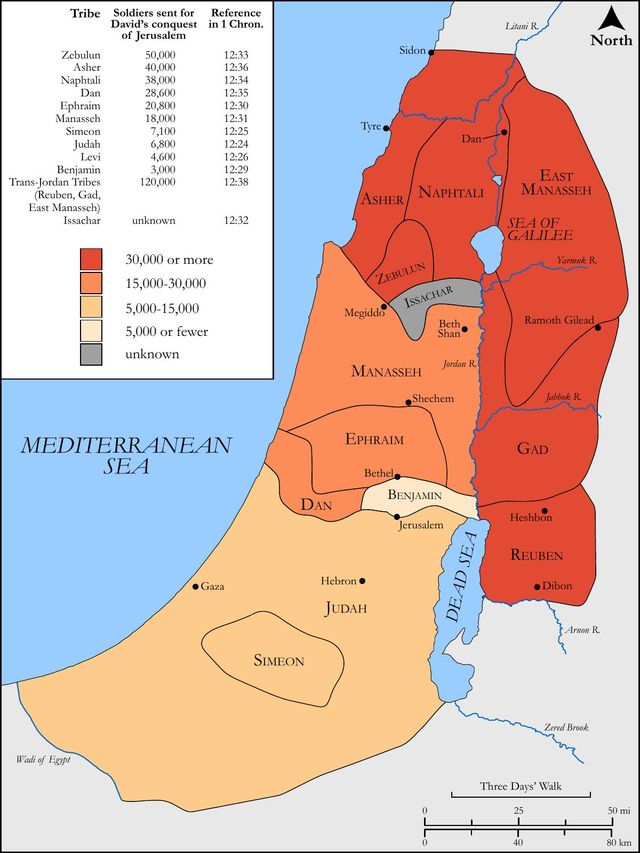
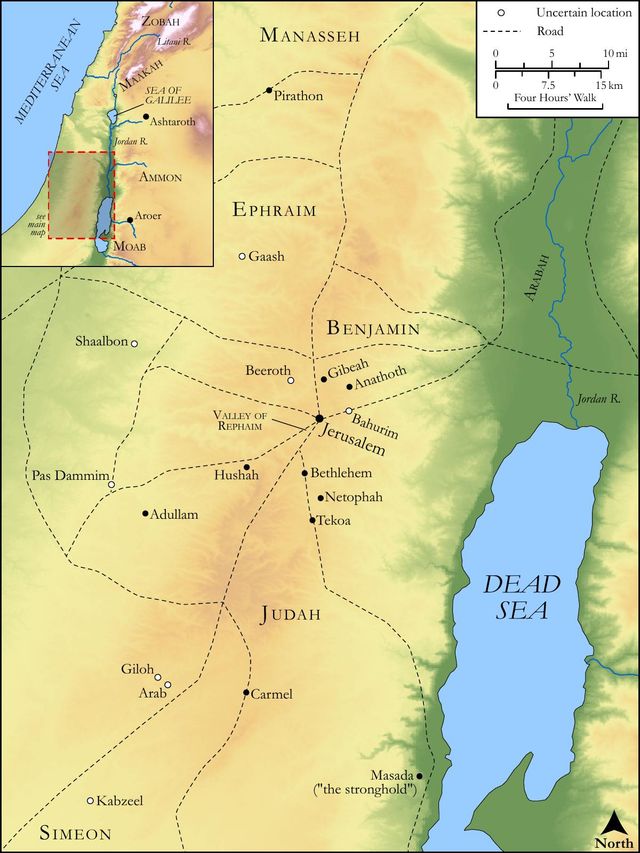
Study this verse
Public-domain commentary
Matthew Henry
From his Commentary on the Whole Bible. Henry comments on passages, not single verses — this entry covers 1 Chronicles 12:1–22. His four-level outline is real structure in the source text, so it is rendered as structure.
We have here an account of those that appeared and acted as David's friends, upon the death of Saul, to bring about the revolution. All the forces he had, while he was persecuted, was but 600 men, who served for his guards; but, when the time had come that he must begin to act offensively, Providence brought in more to his assistance. Even while he kept himself close, because of Saul (Ch1 12:1), while he did not appear, to invite or encourage his friends and well-wishers to come in to him (not foreseeing that the death of Saul was so near), God was inclining and preparing them to come over to him with seasonable succours. Those that trust God to do his work for them in his own way and time shall find his providence outdoing all their forecast and contrivance. The war was God's, and he found out helpers of the war, whose forwardness to act for the man God designed for the government is here recorded to their honour.
I.Some, even of Saul's brethren, of the tribe of Benjamin, and a-kin to him, came over to David, Ch1 12:2.
What moved them to it we are not told. Probably a generous indignation at the base treatment which Saul, one of their tribe, gave him, animated them to appear the more vigorously for him, that the guilt and reproach of it might not lie upon them. These Benjamites are described to be men of great dexterity, that were trained up in shooting and slinging, and used both hands alike - ingenious active men; a few of these might do David a great deal of service. Several of the leading men of them are here named. See Jdg 20:16.
II.Some of the tribe of Gad, though seated on the other side Jordan, had such a conviction of David's title to the government, and fitness for it, that they separated themselves from their brethren (a laudable separation it was) to go to David, though he was in the hold in the wilderness (Ch1 12:8), probably some of his strong holds in the wilderness of Engedi. They were but few, eleven in all, here named, but they added much to David's strength. Those that had hitherto come in to his assistance were most of them men of broken fortunes, distressed, discontented, and soldiers of fortune, that came to him rather for protection than to do him any service, Sa1 22:2. But these Gadites were brave men, men of war, and fit for the battle, Ch1 12:8. For,
1.They were able-bodied men, men of incredible swiftness, not to fly from, but to fly upon, the enemy, and to pursue the scattered forces. In this they were as swift as the roes upon the mountains, so that no man could escape from them; and yet they had faces like the faces of lions, so that no man could out-fight them.
2.They were disciplined men, trained up to military exercises; they could handle shield and buckler, use both offensive and defensive weapons.
3.They were officers of the militia in their own tribe (Ch1 12:14), so that though they did not bring soldiers with them they had them at command, hundreds, thousands.
4.They were daring men, that could break through the greatest difficulties. Upon some expedition or other, perhaps this to David, they swam over the Jordan, when it overflowed all its banks, Ch1 12:15. Those are fit to be employed in the cause of God that can venture thus in a dependence upon the divine protection.
5.They were men that would go through with the business they engaged in. What enemies those were that they met with in the valleys, when they had passed Jordan, does not appear; but they put them to flight with their lion-like faces, and pursued them with matchless fury, both towards the east and towards the west; which way soever they turned, they followed their blow, and did not do their work by halves.
III.Some of Judah and Benjamin came to him, Ch1 12:16.
Their leader was Amasai, whether the same with that Amasa that afterwards sided with Absalom (Sa2 17:25) or no does not appear. Now here we have,
1.David's prudent treaty with them, Ch1 12:17. He was surprised to see them, and could not but conceive some jealousy of the intentions of their coming, having been so often in danger by the treachery of the men of Ziph and the men of Keilah, who yet were all men of Judah. He might well be timorous whose life was so much struck at; he might well be suspicious who had been deceived in so many that he said, in his haste, All men are liars. No marvel that he meets these men of Judah with caution. Observe,
(1.)How he puts the matter to themselves, how fairly he deals with them. As they are, they shall find him; so shall all that deal with the Son of David.
[1.]If they be faithful and honourable, he will be their rewarder: "If you have come peaceably unto me, to help me, though you have come late and have left me exposed a great while, though you bring no great strength with you to turn the scale for me, yet I will thankfully accept your good-will, and my heart shall be knit unto you; I will love you and honour you, and do you all the kindness I can." Affection, respect, and service, that are cordial and sincere, will find favour with a good man, as they do with a good God, though clogged with infirmities, and turning to no great account. But,
[2.]If they be false, and come to betray him into the hands of Saul, under colour of friendship, he leaves them to God to be their avenger, as he is, and will be, of every thing that is treacherous and perfidious. Never was man more violently run upon, and run down, than David was (except the Son of David himself), and yet he had the testimony of his conscience that there was no wrong in his hands. He meant no harm to any man, which was his rejoicing in the day of evil, and enabled him, when he feared treachery, to commit his cause to him that judges righteously. He will not be judge in his own cause, though a wise man, nor avenge himself, though a man of valour; but let the righteous God, who hath said, Vengeance is mine, do both. The God of our fathers look thereon and rebuke it.
(2.)In this appeal observe,
[1.]He calls God the God of our fathers, both his fathers and theirs. Thus he reminded them not to deal ill with him; for they were both descendants from the same patriarchs, and both dependents on the same God. Thus he encouraged himself to believe that God would right him if he should be abused; for he was the God of his fathers and therefore a blessing was entailed on him, and a God to all Israel and therefore not only a Judge to all the earth, but particularly concerned in determining controversies between contesting Israelites.
[2.]He does not imprecate any fearful judgement upon them, though they should deal treacherously, but very modestly refers his cause to the divine wisdom and justice: The Lord look thereon, and judge as he sees (for he sees men's hearts), and rebuke it. It becomes those that appeal to God to express themselves with great temper and moderation; for the wrath of man works not the righteousness of God.
2.Their hearty closure with him, Ch1 12:18. Amasai was their spokesman, on whom the Spirit of the Lord came, not a spirit of prophecy, but a spirit of wisdom and resolution, according to the occasion, putting words into his mouth, unpremeditated, which were proper both to give David satisfaction and to animate those that accompanied him. Nothing could be said finer, more lively, or more pertinent to the occasion. For himself and all his associates,
(1.)He professed a very cordial adherence to David, and his interest, against all that opposed him, and a resolution to stand by him with the hazard of all that was dear to him: Thine are we, David, and on thy side, thou son of Jesse. In calling him son of Jesse they reminded themselves that he was lineally descended from Nahshon and Salmon, who in their days were princes of the tribe of Judah. Saul called him so in disdain (Sa1 20:27; Sa1 22:7), but they looked upon it as his honour. They were convinced that God was on his side; and therefore, Thine are we, David, and on thy side. It is good, if we must side, to side with those that side with God and have God with them.
(2.)He wished prosperity to David and his cause, not drinking a health, but praying for peace to him and all his friends and well-wishers: "Peace, peace, be unto thee, all the good thy heart desires, and peace be to thy helpers, among whom we desire to be reckoned, that peace may be on us." (3.) He assured him of help from heaven: "For thy God helpeth thee; therefore we wish peace may be, and therefore we doubt not but peace shall be, to thee and thy helpers. God is thy God, and those that have him for their God no doubt have him for their helper in every time of need and danger." From these expressions of Amasai we may take instruction how to testify our affection and allegiance to the Lord Jesus. His we must be without reservation or power of revocation. On his side we must be forward to appear and act. To his interest we must be hearty well-wishers: "Hosanna! prosperity to his gospel and kingdom;" for his God helpeth him, and will till he shall have put down all opposing rule, principality, and power.
3.David's cheerful acceptance of them into his interest and friendship. Charity and honour teach us to let fall our jealousies as soon as satisfaction is given us: David received them, and preferred them to be captains of the band.
IV.Some of Manasseh likewise joined with him, v.
19. Providence gave them a fair opportunity to do so when he and his men marched through their country upon this occasion. Achish took David with him when he went out to fight with Saul; but the lords of the Philistines obliged him to withdraw. We have the story, Sa1 29:4, etc. In his return some great men of Manasseh, who had no heart to join with Saul against the Philistines struck in with David, and very seasonably, to help him against the band of Amelekites who plundered Ziklag; they were not many, but they were all mighty men and did David good service upon that occasion, 1 Sa. 30. See how Providence provides. David's interest grew strangely just when he had occasion to make use of it, Ch1 12:22. Auxiliary forces flocked in daily, till he had a great host. When the promise comes to the birth, leave it to God to find strength to bring forth.
Continue studying 1 Chronicles 12:8 across the web’s major study libraries — every link below opens this exact verse, chapter, or book on the destination site.
Read & Compare
 BibleGatewayThis verse in more than 200 translations and 70 languages.
 Bible.comThe YouVersion reader — hundreds of translations, reading plans, and highlights.
 ESV.orgCrossway's official English Standard Version reader.
 NET BibleThe NET translation with 60,000+ translators' notes on every rendering decision.
 STEP BibleTyndale House's free study tool — original text, vocabulary, and scholarly resources.
 BibliaLogos Bible Software's free web reader.
 USCCBThe New American Bible (Revised Edition) with the U.S. bishops' study notes.
Commentaries
 BibleHub CommentariesDozens of classic commentaries on this verse, gathered on one page.
 StudyLightMore than 100 commentary sets — the largest collection on the web.
 BibleRefPlain-English commentary on what this verse means, verse by verse.
 Enduring WordDavid Guzik's free commentary on this chapter, widely used by Bible teachers.
 Bible Study ToolsVerse commentary alongside Greek and Hebrew study aids.
Original Language & Research
- BibleHub InterlinearThe verse word by word — original language, transliteration, and English.
- BibleHub LexiconEvery word's original-language definition and Strong's entry.
 Blue Letter BibleDeep-study tools — Strong's numbers, concordance, and word studies.
 SefariaThe Hebrew text with Rashi and centuries of Jewish commentary.
Sermons, Hymns & Audio


TrulyRandomVerse is not affiliated with these sites and doesn’t control their content. They’re linked because they’re genuinely useful.
Summary
1 Chronicles 12:8 offers a vivid and powerful description of the elite Gadite warriors who courageously separated themselves from their tribe to join David in his wilderness stronghold. This verse highlights their exceptional physical strength, martial skill, and readiness for battle, portraying them as formidable fighters adept with both offensive and defensive weaponry. Their intimidating presence is likened to the fierce countenance of lions, while their remarkable speed and agility are compared to the swiftness of roes navigating mountainous terrain, underscoring their invaluable contribution to David's burgeoning army and his divinely ordained ascent to kingship.
Context
ShowHideLiterary Context
This verse is situated within 1 Chronicles 12, a chapter meticulously detailing the various contingents of warriors from different Israelite tribes who pledged their allegiance to David during his period of exile and later at his anointing as king. The Chronicler's primary purpose is to legitimize David's kingship by showcasing the broad and high-quality support he garnered, emphasizing God's hand in gathering these mighty men. The chapter begins with those who joined David at Ziklag, then transitions to those who came to him in the "hold" or stronghold (likely Adullam or similar fortified desert locations), and finally to the massive gathering at Hebron. Verses 8-15 specifically focus on the Gadites, presenting them as an exceptionally fierce and capable fighting force, distinguished by their unique attributes. Their inclusion here serves to demonstrate the divine favor upon David, as God orchestrated the assembly of such formidable individuals to establish His chosen king and kingdom, even during times of vulnerability and uncertainty.
Historical & Cultural Context
At the time these Gadite warriors joined David, he was a fugitive from King Saul, operating from fortified "holds" (מְצֻדָה, metzudah) in the wilderness of Judah, such as the cave of Adullam. This was a precarious period for David, marked by constant threat and a nomadic existence. The Gadites, a Transjordanian tribe, were renowned for their martial prowess, having historically faced numerous conflicts with their eastern neighbors. Their rugged environment fostered a culture of resilience and combat readiness. Their decision to "separate themselves" to David was a profound act of loyalty and faith, as it meant abandoning tribal security to align with an outlaw who, though anointed, held no immediate political power. This act underscores their deep conviction in David's destiny and their willingness to endure hardship for a greater cause. The animalistic comparisons—lion-like faces and roe-like swiftness—were not mere poetic embellishments but culturally significant descriptors of highly valued military attributes in Israel: an intimidating visage that instilled fear in enemies, and exceptional speed and maneuverability crucial for effective warfare across varied and often challenging terrains.
Key Themes
ShowHideThe arrival and description of the Gadite warriors powerfully underscore several central themes within 1 Chronicles and the broader biblical narrative. Firstly, it highlights Divine Sovereignty and Providence, demonstrating how God actively gathered and equipped David's forces, even in his weakest moments, to fulfill His promise of establishing David's kingdom. This resonates with the divine covenant made with David, assuring him of a lasting dynasty, as detailed in 2 Samuel 7:12-16. Secondly, the Gadites exemplify Unwavering Loyalty and Commitment, choosing to align with God's anointed leader despite the personal risk and hardship involved. Their dedication serves as a model for faithfulness to divine calling and leadership, a recurring motif throughout the historical books. Thirdly, their detailed description emphasizes the theme of Exceptional Strength and Readiness for God's Service. Their unique physical and martial attributes were not accidental but divinely purposed, showcasing the kind of formidable individuals God uses to advance His kingdom. This theme parallels the spiritual readiness and strength required of believers, who are called to put on the full armor of God for spiritual warfare, as exhorted in Ephesians 6:10-18.
Exposition and Analysis
ShowHideKey Word Analysis
ShowHide(gibbôwr), this term signifies a powerful, valiant, or heroic individual, often with military connotations. In this context, it denotes not merely physical strength but also courage, valor, and proven ability in battle. These were not ordinary soldiers but elite warriors, often leaders or champions, whose reputation for prowess preceded them, immediately elevating the status and capability of the Gadite contingent.
(pânîym), this word refers to the countenance or appearance. When described as "like the faces of lions," it powerfully conveys their formidable, intimidating, and fearless demeanor. It suggests an outward manifestation of inner ferocity and resolve that would strike terror into the hearts of their adversaries, reflecting their readiness for intense combat.
(mâhar), this primitive root means "to hurry" or "to be quick." Applied to the Gadites, it highlights their incredible speed, agility, and promptness in movement. This attribute was crucial for rapid maneuvers, pursuit, and evasion in the rugged, mountainous terrain of ancient Israel, making them exceptionally effective and difficult to counter in battle.
Verse Breakdown
ShowHide"And of the Gadites there separated themselves unto David into the hold to the wilderness"
This opening clause identifies the origin of these warriors as the tribe of Gad and their decisive action to "separate themselves" (Hebrew: נִבְדְּלוּ, nivd'lu). This implies a deliberate, conscious, and potentially risky choice to break away from their established tribal life and allegiances to join David. Their destination, "the hold to the wilderness," underscores David's precarious position as a fugitive and the harsh, challenging environment in which he operated, further emphasizing the courage and conviction required for such a commitment.
"men of might, [and] men of war [fit] for the battle, that could handle shield and buckler"
This segment details the formidable identity and professional skills of these Gadite warriors. "Men of might" (Hebrew: gibbôrîm) points to their inherent strength, valor, and heroic stature. "Men of war fit for the battle" (Hebrew: אַנְשֵׁי צָבָא לַמִּלְחָמָה, anshei tzava lamilchamah) emphasizes their professional military training, experience, and readiness for active combat. Their proficiency in handling "shield and buckler" (Hebrew: צִנָּה וָרֹמַח, tzinnah varomach) signifies their mastery of both defensive and offensive weaponry. The tzinnah was a large, full-body shield, offering extensive protection, while the romach was a spear or lance, indicating their skill in both close-quarters and ranged combat, showcasing comprehensive martial expertise.
"whose faces [were like] the faces of lions, and [were] as swift as the roes upon the mountains;"
This final clause employs powerful similes to describe their exceptional attributes. "Whose faces were like the faces of lions" vividly conveys their fierce, intimidating, and fearless demeanor in battle. The lion, a symbol of strength, courage, and ferocity in Scripture, as in Jacob's blessing of Judah, suggests that these warriors struck terror into the hearts of their enemies. "And were as swift as the roes upon the mountains" highlights their incredible speed, agility, and endurance, particularly in rugged, difficult terrain. Roes (or gazelles) are known for their swiftness and ability to navigate challenging landscapes with ease, making this a fitting metaphor for warriors who could move rapidly and effectively in battle, demonstrating superior maneuverability.
Literary Devices
ShowHideThe verse is notably rich in Simile, a literary device that draws a comparison between two unlike things using "like" or "as." The two prominent examples are "whose faces [were like] the faces of lions" and "[were] as swift as the roes upon the mountains." These similes are not merely decorative; they serve to powerfully convey the exceptional, almost superhuman, qualities of the Gadite warriors. The lion simile emphasizes their ferocity, courage, and intimidating presence, suggesting they were fearless and aggressive in combat, striking terror into their adversaries. This evokes a sense of raw, untamed power and an unwavering resolve. The roe (gazelle) simile highlights their extraordinary speed, agility, and maneuverability, particularly crucial for warfare in the rugged, mountainous terrain of ancient Israel. It suggests they were nimble, could cover ground quickly, and were difficult to catch or outmaneuver. Together, these similes create a vivid, memorable, and highly effective portrait of elite warriors possessing both formidable power and remarkable swiftness, making them an unparalleled asset to David's nascent army and underscoring the divine provision for his future kingdom.
Theological and Thematic Connections
ShowHideThe description of the Gadite warriors in 1 Chronicles 12:8 transcends mere military reportage, offering profound theological insights. Their willingness to "separate themselves" to David, an anointed but exiled king, speaks to the theme of discerning and aligning with God's chosen leadership even when circumstances are challenging, unpopular, or seemingly unpromising. Their formidable qualities—strength, courage, and agility—can be seen as divinely bestowed gifts, consecrated for God's purposes in establishing His kingdom through David. This highlights that God equips His people with specific abilities, not for self-glory, but for the advancement of His divine plan. The fearlessness of the lion and the swiftness of the roe become powerful metaphors for the spiritual boldness, responsive obedience, and unwavering commitment required of those who truly serve the King, whether an earthly one like David or the ultimate King, God Himself. Their dedication to David, even in his weakness, foreshadows the spiritual allegiance required of all who would follow God's chosen path.
Reflection and Application
ShowHideThe Gadite warriors serve as a powerful archetype for believers today, illustrating the qualities necessary for effective spiritual service and unwavering faithfulness to God's kingdom. Their courageous decision to align with David when he was an outcast and fugitive speaks to the radical commitment required to follow God's call, even when it leads to unpopular, difficult, or personally costly paths. As spiritual warriors, we are called to be "men and women of might"—not in physical combat, but in spiritual strength, equipped with the full armor of God to stand firm against spiritual adversaries and to contend for truth. Our "faces like lions" can represent a holy boldness and unwavering conviction in proclaiming the Gospel and standing for righteousness, unafraid of worldly opposition or ridicule. Similarly, being "swift as roes" speaks to our readiness, agility, and promptness in responding to God's leading, moving quickly and decisively in obedience to His will and seizing opportunities for His kingdom. This verse challenges us to deeply assess our own commitment: are we truly separating ourselves to Christ, even when it means leaving behind comfort, worldly security, or popular opinion? Are we diligently cultivating spiritual strength, courage, and responsiveness to be effective instruments in God's service and to advance His purposes in our generation?
Questions for Reflection
ShowHideFAQ
ShowHideWhat does "the hold to the wilderness" refer to in this verse?
ShowHide"The hold" (Hebrew: מְצֻדָה, metzudah) refers to a fortified place, stronghold, or mountain fortress. In the context of David's life during this period, it most likely refers to locations like the cave of Adullam (as mentioned in 1 Samuel 22:1) or other secure, defensible positions in the wilderness of Judah where David and his growing band of followers sought refuge from King Saul. These were often remote, rugged, and difficult-to-access areas, providing natural protection for David's nascent army and serving as strategic bases for his operations against Saul.
Why are the Gadites described with such vivid animal imagery?
ShowHideThe vivid animal imagery—"whose faces were like the faces of lions" and "as swift as the roes upon the mountains"—are powerful similes used to emphasize the extraordinary military qualities of these Gadite warriors. The lion symbolizes ferocity, courage, and an intimidating presence in battle, suggesting they were fearless, aggressive, and struck terror into their enemies. The roe (or gazelle) symbolizes incredible speed, agility, and the ability to navigate rugged terrain with ease. Together, these descriptions paint a picture of an elite fighting force that was both terrifyingly powerful and remarkably nimble, making them exceptionally effective in ancient warfare. This kind of descriptive language was common in Scripture to laud heroic figures and convey their exceptional attributes in a memorable way, as in David's lament over Saul and Jonathan, who were swifter than eagles and stronger than lions.
Christ-Centered Fulfillment
ShowHideWhile 1 Chronicles 12:8 describes literal warriors joining an earthly king, it profoundly foreshadows the spiritual army that willingly gathers around the true King, Jesus Christ. Just as the Gadites "separated themselves" to David, believers are called to separate themselves from the values and ways of the world to follow Christ, the anointed Son of God, even when His path leads through suffering, unpopularity, or self-denial, as echoed in 2 Corinthians 6:17. The "men of might" and "men of war" who could handle weaponry point to the spiritual strength and readiness required of Christ's disciples, who are called to put on the full armor of God to stand firm against the schemes of the devil and engage in spiritual warfare, as powerfully detailed in Ephesians 6:10-18. The lion-like faces of the Gadites, signifying fearlessness and boldness, find their ultimate fulfillment in the Lion of the Tribe of Judah, Jesus Christ Himself, who conquered sin and death with divine authority and unyielding courage (Revelation 5:5). Moreover, believers are empowered by the Holy Spirit to exhibit a similar spiritual boldness in proclaiming the Gospel and standing for truth, as demonstrated by the early apostles (Acts 4:31). The swiftness of the roes upon the mountains can be seen as a metaphor for the eager, agile, and enduring obedience of those who follow Christ, swiftly responding to His call and running the race set before them with perseverance (Hebrews 12:1-2), demonstrating a readiness to advance His kingdom with zeal and promptness. Ultimately, these Gadite warriors, though serving an earthly king, prefigure the qualities of those who faithfully serve the King of kings, Jesus Christ, in the spiritual battles of His eternal kingdom, reflecting His character and advancing His purposes on earth.