


2 Samuel 2:18
Bible text: King James Version (1769 Blayney text) · Public domain
Bible text: Berean Standard Bible · Public domain
Bible text: American Standard Version (1901) · Public domain
Bible text: World English Bible, Messianic edition · Public domain
Bible text: Geneva Bible (1599) · Public domain
Bible text: Young's Literal Translation · Public domain
- וַיִּהְיוּvai·yih·yuand they wereH1961Conj-w ¦ V-Qal-ConsecImperf-3mpVerb Qal Consecutive Imperfect 3rd Plural Masculineוַandיִּהְיוּthey were
- שָׁםShamthereH8033AdvAdverb
- שְׁלֹשָׁהshe·lo·ShahthreeH7969N-csNoun Singular common gender Absolute
- בְּנֵיbe·Nei[the] sons ofH1121N-mpcNoun Plural Masculine Construct
- צְרוּיָהtze·ru·YahZeruiahH6870N-proper-fNoun Proper Feminine
- יוֹאָבyo·'AvJoabH3097N-proper-mNoun Proper Masculine
- וַאֲבִישַׁיva·'a·vi·Shaiand AbishaiH52Conj-w ¦ N-proper-mNoun Proper MasculineוַandאֲבִישַׁיAbishai
- וַעֲשָׂהאֵלva·'a·sa·h·'Eland AsahelH6214Conj-w ¦ N-proper-mNoun Proper MasculineוַandעֲשָׂהאֵלAsahel
- וַעֲשָׂהאֵלva·'a·sa·h·'Eland AsahelH6214Conj-w ¦ N-proper-mNoun Proper MasculineוַandעֲשָׂהאֵלAsahel
- קַלkal[was] swiftH7031Adj-msAdjective Singular Masculine Absolute
- בְּרַגְלָיוbe·rag·Lavon his feetH7272Prep-b ¦ N-fdc ¦ 3msNoun Dual Feminine Constructבְּonרַגְלָיfeetוhis
- כְּאַחַדke·'a·Chadlike one ofH259Prep-k ¦ N-fscNoun Singular Feminine Constructכְּlikeאַחַדone of
- הַצְּבָיִםha·tze·va·Yimthe gazellesH6643Art ¦ N-mpNoun Plural Masculine Absoluteהַtheצְּבָיִםgazelles
- אֲשֶׁר'a·SherwhichH834RelParticle Relative
- בַּשָּׂדֶהba·sa·Deh[are] in the open countryH7704Prep-b ¦ N-msNoun Singular Masculine Absoluteבַּ[are] in theשָּׂדֶהopen country
English is a literal word-by-word gloss of the Hebrew, not the KJV's wording. Why?
This is the original text the KJV's translators worked from — each Hebrew word with its own literal English meaning in this verse, prepared by scholars at Tyndale House, Cambridge. The KJV translates whole sentences, not word by word, so its wording differs: one Hebrew word can become several English words, and the KJV may choose “the LORD” where the gloss reads “Yahweh”. Both are faithful — they answer different questions. For the KJV's own rendering, switch to the KJV text.
Details
See on the biblical-era maps
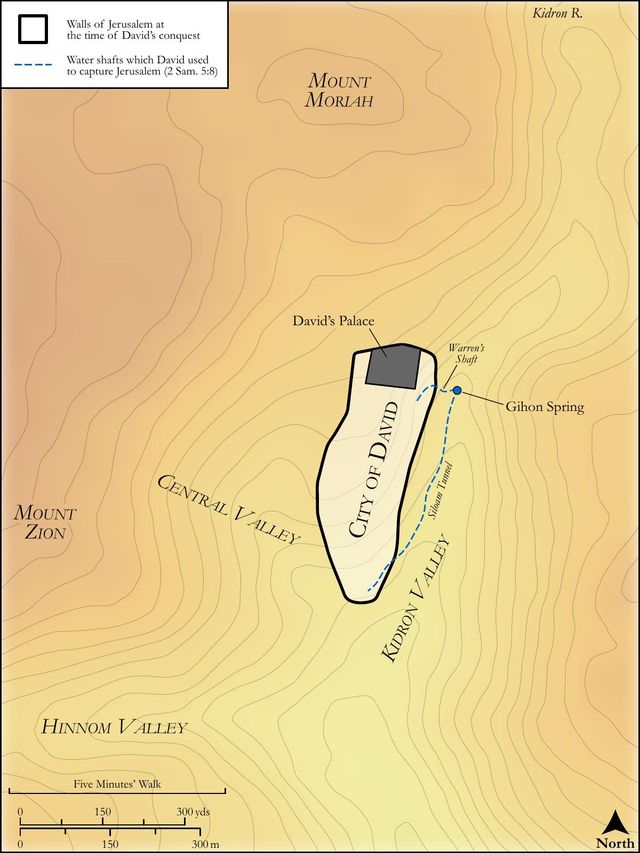
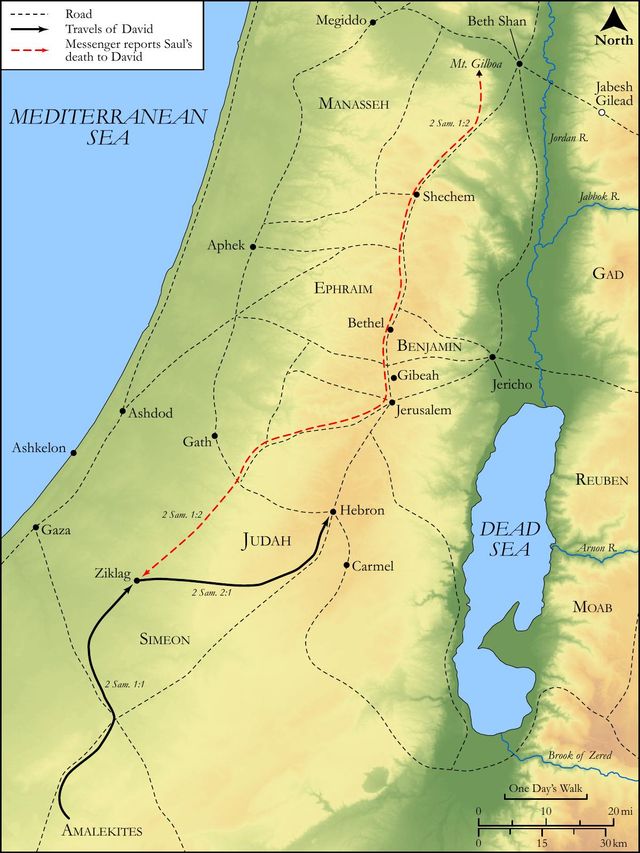
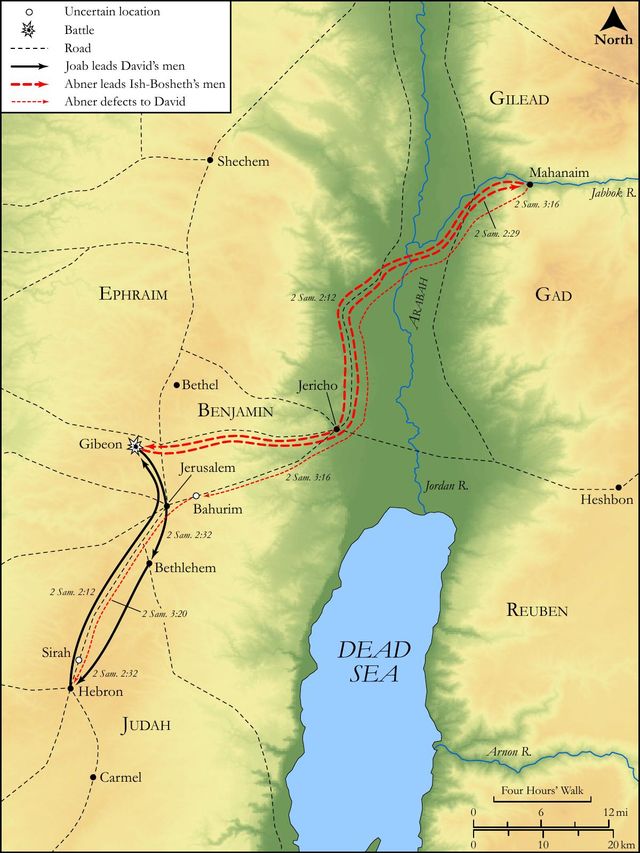
Study this verse
Public-domain commentary
Matthew Henry
From his Commentary on the Whole Bible. Henry comments on passages, not single verses — this entry covers 2 Samuel 2:18–24. His two-level outline is real structure in the source text, so it is rendered as structure.
We have here the contest between Abner and Asahel. Asahel, the brother of Joab and cousin-german to David, was one of the principal commanders of David's forces, and was famous for swiftness in running: he was as light of foot as a wild roe (Sa2 2:18); this he got the name of by swift pursuing, not swift flying. Yet, we may suppose, he was not comparable to Abner as a skilful experienced soldier; we must therefore observe,
I.How rash he was in aiming to make Abner his prisoner.
He pursued after him, and no other, Sa2 2:19. Proud of his relation to David and Joab, his own swiftness, and the success of his party, no less a trophy of victory would now serve the young warrior than Abner himself, either slain or bound, which he thought would put an end to the war and effectually open David's way to the throne. This made him very eager in the pursuit, and careless of the opportunities he had of seizing others in his way, on his right hand and on his left; his eye was on Abner only. The design was brave, had he been par negotio - equal to its accomplishment: but let not the swift man glory in his swiftness, any more than the strong man in his strength; magnis excidit ausis - he perished in an attempt too vast for him.
II.How generous Abner was in giving him notice of the danger he exposed himself to, and advising him not to meddle to his own hurt, Ch2 25:19.
1.He bade him content himself with a less prey (Sa2 2:21): "Lay hold of one of the young men, plunder him and make him thy prisoner, meddle with thy match, but pretend not to one who is so much superior to thee." It is wisdom in all contests to compare our own strength with that of our adversaries, and to take heed of being partial to ourselves in making the comparison, lest we prove in the issue enemies to ourselves, Luk 14:31.
2.He begged of him not to put him upon the necessity of slaying him in his own defence, which he was very loth to do, but must do rather than be slain by him, Sa2 2:22. Abner, it seems, either loved Joab or feared him; for he was very loth to incur his displeasure, which he would certainly do if he slew Asahel. It is commendable for enemies to be thus respectful one to another. Abner's care how he should lift up his face to Joab gives cause to suspect that he really believed David would have the kingdom at last, according to the divine designation, and then, in opposing him, he acted against his conscience.
III.How fatal Asahel's rashness was to him.
He refused to turn aside, thinking that Abner spoke so courteously because he feared him; but what came of it? Abner, as soon as he came up to him, gave him his death's wound with a back stroke (Sa2 2:23): He smote him with the hinder end of his spear, from which he feared no danger. This was a pass which Asahel was not acquainted with, nor had learned to stand upon his guard against; but Abner, perhaps, had formerly used it, and done execution with it; and here it did effectual execution. Asahel died immediately of the wound. See here,
1.How death often comes upon us by ways that we least suspect. Who would fear the hand of a flying enemy or the butt-end of a spear? yet from these Asahel receives his death's wound.
2.How we are often betrayed by the accomplishments we are proud of. Asahel's swiftness, which he presumed so much upon, did him no kindness, but forwarded his fate, and with it he ran upon his death, instead of running from it. Asahel's fall was not only Abner's security from him, but put a full stop to the conqueror's pursuit and gave Abner time to rally again; for all that came to the place stood still, only Joab and Abishai, instead of being disheartened, were exasperated by it, pursued Abner with so much the more fury (Sa2 2:24), and overtook him at last about sunset, when the approaching night would oblige them to retire.
Continue studying 2 Samuel 2:18 across the web’s major study libraries — every link below opens this exact verse, chapter, or book on the destination site.
Read & Compare
 BibleGatewayThis verse in more than 200 translations and 70 languages.
 Bible.comThe YouVersion reader — hundreds of translations, reading plans, and highlights.
 ESV.orgCrossway's official English Standard Version reader.
 NET BibleThe NET translation with 60,000+ translators' notes on every rendering decision.
 STEP BibleTyndale House's free study tool — original text, vocabulary, and scholarly resources.
 BibliaLogos Bible Software's free web reader.
 USCCBThe New American Bible (Revised Edition) with the U.S. bishops' study notes.
Commentaries
 BibleHub CommentariesDozens of classic commentaries on this verse, gathered on one page.
 StudyLightMore than 100 commentary sets — the largest collection on the web.
 BibleRefPlain-English commentary on what this verse means, verse by verse.
 Enduring WordDavid Guzik's free commentary on this chapter, widely used by Bible teachers.
 Bible Study ToolsVerse commentary alongside Greek and Hebrew study aids.
Original Language & Research
- BibleHub InterlinearThe verse word by word — original language, transliteration, and English.
- BibleHub LexiconEvery word's original-language definition and Strong's entry.
 Blue Letter BibleDeep-study tools — Strong's numbers, concordance, and word studies.
 SefariaThe Hebrew text with Rashi and centuries of Jewish commentary.
Sermons, Hymns & Audio


TrulyRandomVerse is not affiliated with these sites and doesn’t control their content. They’re linked because they’re genuinely useful.
Summary
2 Samuel 2:18 introduces three pivotal figures in the nascent stages of David's reign: Joab, Abishai, and Asahel, all sons of Zeruiah, David's sister. This verse specifically highlights Asahel's extraordinary speed, vividly comparing him to a wild roe, an attribute that sets him apart and foreshadows his significant, albeit ultimately tragic, role in the unfolding narrative of the civil war between the house of David and the house of Saul.
Context
ShowHideLiterary Context
This verse is strategically placed in the immediate aftermath of momentous events: the death of King Saul and his son Jonathan, and David's anointing as king over Judah in Hebron. The narrative is shifting from the united kingdom under Saul to a period of civil war as Abner, Saul's former commander, seeks to establish Ish-bosheth (Saul's son) as king over Israel. The introduction of the sons of Zeruiah—David's nephews—at this juncture underscores their immediate and crucial involvement in David's burgeoning kingdom and the impending military confrontations, particularly the skirmish at the Pool of Gibeon, which this verse directly precedes. Their familial connection to David highlights their natural prominence and loyalty in a time of political instability, signaling their foundational role in the unfolding drama of David's ascent to the throne of all Israel.
Historical & Cultural Context
Following the death of a king, especially one who died tragically and without a clear successor from his direct line, a power vacuum often ensued among the kingdoms of that day. This period was characterized by intense tribal loyalties and military maneuvering. David's anointing in Hebron by the tribe of Judah was a significant step, but it did not immediately grant him control over all Israel. The emergence of strong military leaders, often from the king's own family (like his nephews), was critical for consolidating power and prosecuting war. Physical prowess, particularly speed and strength, was highly valued in ancient warfare for pursuit, evasion, and strategic advantage. The comparison to a "wild roe" (gazelle) would have immediately evoked an image of unparalleled swiftness and agility to the ancient Israelite audience, signaling Asahel's exceptional skill in a warrior culture.
Key Themes
ShowHideThis verse contributes to several key themes within 2 Samuel and the broader Deuteronomistic History. Firstly, it serves as a crucial introduction of key figures who will play indelible roles throughout David's reign, especially Joab, who becomes David's chief military commander. Secondly, it highlights the emphasis on physical prowess as a significant attribute in biblical narratives, often linked to a person's destiny or role; Asahel's speed is not merely descriptive but is presented as his defining characteristic, much like other biblical heroes whose physical attributes are emphasized, such as the mighty men of David introduced later in 2 Samuel 23. Thirdly, and most poignantly, the verse employs foreshadowing: Asahel's extraordinary speed, presented as a great strength, ironically becomes the very attribute that leads to his tragic downfall and death in the subsequent verses. This thematic thread explores the complex relationship between human gifts, their responsible stewardship, and the often unpredictable consequences of their application, particularly when coupled with recklessness or pride, a theme echoed in the wisdom literature warning against the dangers of pride found in Proverbs 16:18.
Exposition and Analysis
ShowHideKey Word Analysis
ShowHideMeaning "God has made" or "God has acted." This name is particularly poignant given Asahel's remarkable, God-given physical ability. The irony lies in how this divine gift, though impressive, ultimately leads to his demise, highlighting the human responsibility in stewarding such endowments. His name suggests a divine hand in his unique swiftness, setting him apart.
Meaning "light" and by implication "rapid" or "swift." When combined with "of foot" (Hebrew, regel, H7272), it forms an idiomatic expression denoting exceptional agility and speed. This attribute was highly prized in ancient warfare for messengers, scouts, and warriors engaged in pursuit or evasion, signifying a natural, almost supernatural, athletic ability.
Meaning "splendor" or "gazelle." This refers to a gazelle or antelope, an animal renowned in the land of Israel for its incredible speed, grace, and agility. The simile is vivid and immediately conveys the extent of Asahel's swiftness, placing him in a category of elite runners. This imagery is also used elsewhere in the Bible to describe the swiftness of warriors, such as the Gadite warriors who were "swift as the roes upon the mountains" in 1 Chronicles 12:8.
Verse Breakdown
ShowHide"And there were three sons of Zeruiah there, Joab, and Abishai, and Asahel:"
This initial clause introduces three highly prominent figures who are not just present but are implicitly positioned as key players in the unfolding conflict. Their familial relationship to David (as his nephews through his sister Zeruiah) immediately establishes their importance and loyalty within David's inner circle and military command. Joab, in particular, will become David's most enduring and powerful, albeit controversial, general, while Abishai also serves as a loyal and capable commander.
"and Asahel [was as] light of foot as a wild roe."
This second clause singles out Asahel, highlighting his unique and exceptional physical attribute—his speed. The simile "as a wild roe" is a powerful descriptor, immediately painting a picture of unparalleled swiftness and agility. This emphasis serves not only to characterize Asahel but also to set the stage for the dramatic events that will unfold, where this very strength will play a critical role in his tragic end, making his defining trait a focal point for the reader.
Literary Devices
ShowHideThe verse effectively employs several literary devices. The most prominent is Simile, comparing Asahel's speed directly to that of a "wild roe." This vivid comparison immediately conjures an image of incredible swiftness and agility, making Asahel's defining characteristic tangible and memorable for the reader. Furthermore, the verse utilizes Foreshadowing. By specifically highlighting Asahel's extraordinary speed, the narrator subtly prepares the audience for his future actions and ultimate fate. This seemingly positive attribute will, ironically, lead directly to his demise in the subsequent narrative, creating a sense of tragic irony. The verse also functions as a powerful piece of Character Introduction, efficiently presenting three significant individuals and immediately distinguishing one of them with a singular, remarkable trait, thereby setting the stage for their roles in the unfolding drama of David's reign.
Theological and Thematic Connections
ShowHideThe introduction of Asahel with his remarkable speed serves as a powerful theological and thematic illustration of God-given gifts and the human responsibility in their stewardship. While Asahel's swiftness was an undeniable talent, the narrative quickly demonstrates that even extraordinary abilities, when coupled with a lack of wisdom, discernment, or humility, can lead to tragic consequences. His relentless pursuit of Abner, despite warnings, highlights the danger of allowing a strength to become a weakness through recklessness or overconfidence. This narrative thread invites reflection on how individuals are called to use their unique endowments, not for personal glory or impulsive ambition, but in alignment with divine wisdom and purpose, recognizing that true strength lies in God's guidance rather than mere human capability and that even the most impressive gifts require spiritual maturity for their proper application.
Reflection and Application
ShowHideAsahel's story, introduced by his defining speed, offers a profound opportunity for personal reflection on the gifts and talents with which we have been endowed. We are all given unique strengths, whether intellectual, physical, spiritual, or relational. The question for us is not merely what our gifts are, but how we steward them. Are we using our strengths wisely, with humility and discernment, seeking to honor God and serve others? Or do we, like Asahel, allow our strengths to become liabilities through pride, impulsiveness, or a lack of self-control? The narrative challenges us to consider that true effectiveness and spiritual maturity are not measured by the magnitude of our gifts, but by the character with which we employ them. It calls us to cultivate wisdom alongside our abilities, ensuring that our talents are channeled for constructive, God-honoring purposes, rather than leading us down paths of destruction or self-serving ambition.
Questions for Reflection
ShowHideFAQ
ShowHideWho were the sons of Zeruiah and what was their relationship to David?
ShowHideThe sons of Zeruiah were Joab, Abishai, and Asahel. Zeruiah was David's sister, making these three men David's nephews. This familial relationship was crucial in ancient Israelite society, as it meant they were part of David's inner circle and naturally rose to prominent positions within his military and administration. Joab, in particular, became David's chief commander for many years, playing a significant, albeit sometimes controversial, role throughout David's reign, demonstrating unwavering loyalty but also a fierce independence.
How does Asahel's speed contribute to the narrative later on?
ShowHideAsahel's extraordinary speed, highlighted in this verse, becomes central to his tragic fate just a few verses later. During the battle at the Pool of Gibeon between David's forces and Abner's, Asahel relentlessly pursued Abner, Saul's former commander. Despite Abner's repeated warnings to turn back, Asahel's swiftness and determination propelled him forward, driven by a desire for personal glory or a significant capture. This ultimately led to Abner, in self-defense, killing Asahel with a backward thrust of his spear, as detailed in 2 Samuel 2:23. Thus, Asahel's defining strength ironically became the direct cause of his death, setting in motion a blood feud that would have lasting and devastating repercussions for Joab and Abner, profoundly shaping the early years of David's reign.
Christ-Centered Fulfillment
ShowHideWhile Asahel's exceptional speed ultimately led to his tragic demise due to a lack of discernment and an unyielding, perhaps prideful, pursuit, the narrative subtly points us to the perfect example of Christ. Unlike Asahel, whose strength was a human gift that, when misused, led to a fatal flaw, Jesus Christ perfectly embodied and stewarded all His divine and human attributes. His "swiftness" was not merely physical, but spiritual and redemptive: He was swift to obey the Father's will, even to the point of death on a cross, as described in Philippians 2:8. He was swift to come into the world to accomplish salvation, and swift to lay down His life for His sheep, declaring "No one takes it from me, but I lay it down of my own accord," in John 10:18. Where Asahel's strength led to death, Christ's perceived "weakness" on the cross became the ultimate display of divine power, conquering sin and death and bringing eternal life, fulfilling the prophecy of Isaiah 53:5. He is the true "Roe of God," beautiful in holiness, perfectly swift in His mission of redemption, and the author and perfecter of our faith, who for the joy set before Him endured the cross, despising its shame, as highlighted in Hebrews 12:2, demonstrating that true strength and perfect stewardship are found only in Him.