


Zechariah 12:13
Bible text: King James Version (1769 Blayney text) · Public domain
Bible text: Berean Standard Bible · Public domain
Bible text: American Standard Version (1901) · Public domain
Bible text: World English Bible, Messianic edition · Public domain
Bible text: Geneva Bible (1599) · Public domain
Bible text: Young's Literal Translation · Public domain
- מִשְׁפַּחַתmish·Pa·chat[the] clan ofH4940N-fscNoun Singular Feminine Construct
- בֵּיתbeit[the] house ofH1004N-mscNoun Singular Masculine Construct
- לֵוִיle·ViLeviH3878N-proper-mNoun Proper Masculine
- לְבָדle·Vad<to> aloneH905Prep-l ¦ N-msNoun Singular Masculine Absoluteלְ<to>בָדalone
- וּנְשֵׁיהֶםu·ne·shei·Hemand their wivesH802Conj-w ¦ N-mpc ¦ 3mpNoun Plural Masculine Constructוּandנְשֵׁיwivesהֶםtheir
- לְבָדle·Vad<to> aloneH905Prep-l ¦ N-msNoun Singular Masculine Absoluteלְ<to>בָדalone
- מִשְׁפַּחַתmish·Pa·chat[the] clan ofH4940N-fscNoun Singular Feminine Construct
- הַשִּׁמְעִיha·shim·'Ithe Shimeite[s]H8097Art ¦ N-msNoun Gentilic Singular Masculine AbsoluteהַtheשִּׁמְעִיShimeite[s]
- לְבָדle·Vad<to> aloneH905Prep-l ¦ N-msNoun Singular Masculine Absoluteלְ<to>בָדalone
- וּנְשֵׁיהֶםu·ne·shei·Hemand their wivesH802Conj-w ¦ N-mpc ¦ 3mpNoun Plural Masculine Constructוּandנְשֵׁיwivesהֶםtheir
- לְבָדle·Vad<to> aloneH905Prep-l ¦ N-msNoun Singular Masculine Absoluteלְ<to>בָדalone
English is a literal word-by-word gloss of the Hebrew, not the KJV's wording. Why?
This is the original text the KJV's translators worked from — each Hebrew word with its own literal English meaning in this verse, prepared by scholars at Tyndale House, Cambridge. The KJV translates whole sentences, not word by word, so its wording differs: one Hebrew word can become several English words, and the KJV may choose “the LORD” where the gloss reads “Yahweh”. Both are faithful — they answer different questions. For the KJV's own rendering, switch to the KJV text.
Details
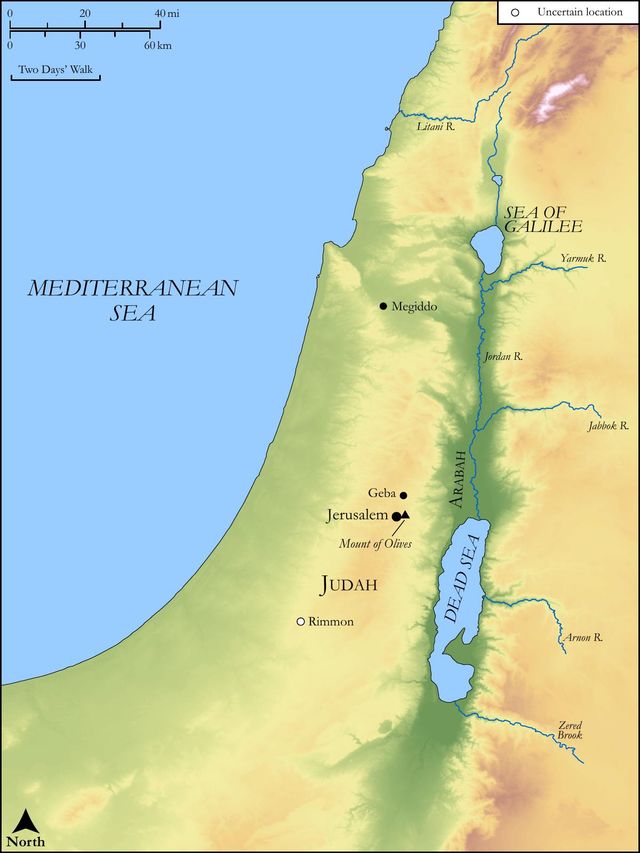
See on the biblical-era map
Study this verse
Public-domain commentary
Matthew Henry
From his Commentary on the Whole Bible. Henry comments on passages, not single verses — this entry covers Zechariah 12:9–14. His four-level outline is real structure in the source text, so it is rendered as structure.
The day here spoken of is the day of Jerusalem's defence and deliverance, that glorious day when God will appear for the salvation of his people, which, if it do refer to the successes which the Jews had against their enemies in the time of the Maccabees, yet certainly looks further, to the gospel-day, to Christ's victories over the powers of darkness and the great salvation he has wrought for his chosen. Now we have here an account of two remarkable works designed in that day.
I.A glorious work of God to be wrought for his people:
"I will seek to destroy all the nations that come against Jerusalem, Zac 12:9. Nations come against Jerusalem, many and mighty nations; but they shall all be destroyed, their power shall be broken, and their attempts baffled; the mischief they intend shall return upon their own head." God will seek to destroy them, not as if he were at a loss for ways and means to bring it about (Infinite Wisdom was never nonplussed), but his seeking to do it intimates that he is very earnest and intent upon it (he is jealous for Zion with great jealousy, and has the day of vengeance in his heart) and that he overrules means and instruments, and all the motions and operations of second causes, in order to it. He is framing evil against them; when he seems to be setting them up he is seeking to destroy them. In Christ's first coming, he sought to destroy him that had the power of death, and did destroy him, bruised the serpent's head, and broke all the powers of darkness that fought against God's kingdom among men and against the faithful friends and subjects of that kingdom; he spoiled them, and made a show of them openly. In his second coming, he will complete their destruction, when he shall put down all opposing rule, principality, and power, and death itself shall be swallowed up in that victory. The last enemy shall be destroyed of all that fought against Jerusalem.
II.A gracious work of God to be wrought in his people, in order to the work that is to be wrought for them.
When he seeks to destroy their enemies he will pour upon them the Spirit of grace and supplication. Note, When God intends great mercy for his people the first thing he does is to set them a praying; thus he seeks to destroy their enemies by stirring them up to seek to him that he would do it for them; because, though he has proposed it and promised it, and it is for his own glory to do it, yet he will for this be enquired of by the house of Israel, Eze 36:37. Ask, and it shall be given. This honour will he have to himself, and this honour will he put upon prayer and upon praying people. And it is a happy presage to the distressed church of deliverance approaching, and is, as it were, the dawning of its day, when his people are stirred up to cry mightily to him for it. But this promise has reference to, and is performed in, the graces of the Spirit given to all believers, as that Isa 44:3, I will pour my Spirit upon thy seed, which was fulfilled when Jesus was glorified, Joh 7:39. It is a promise of the Spirit, and with him of all spiritual blessings in heavenly things by Christ. Now observe here,
1.On whom these blessings are poured out.
(1.)On the house of David, on the great men; for they are no more, and no better, than the grace of God makes them. It was promised (Zac 12:8) that the house of David should be as the angel of the Lord. Now, in order to that, the Spirit of grace is poured upon them; for the more the saints have of the Spirit of grace the more like they are to the holy angels. When God was about to appear for the land, he poured his Spirit of grace upon the house of David, the leading men of the land. It bodes well to a people when princes and great men go before the rest in that which is good, as Ch2 20:5. The house of David is all summed up in Jesus Christ, the Son of David; and upon him, as the head, the Spirit of grace is poured out, from him to be diffused to all his members; from his fulness we receive, and grace for grace.
(2.)On the inhabitants of Jerusalem, the common people; for the operations of the Spirit are the same upon the mean and weak Christians that they are upon the strong and more grown. The inhabitants of Jerusalem cannot influence public affairs by their powers and policies, as the great men of the house of David may, yet they may do good service by their prayers, and therefore upon them the Spirit shall be poured out. The church is Jerusalem, the heavenly Jerusalem; all true believers, that have their conversation in the heaven, are inhabitants of this Jerusalem, and to them this promise belongs. God will pour his Spirit upon them. This is the earnest which all that believe in Christ shall receive; thus they are sanctified; thus they are sealed.
2.What these blessings are: I will pour upon them the Spirit. That includes all good things, as it qualifies us for the favour of God, and all his other gifts. He will pour out the Spirit,
(1.)As a Spirit of grace, to sanctify us and to make us gracious.
(2.)As a Spirit of supplications, inclining us to, instructing and assisting us in, the duty of prayer. Note, Wherever the Spirit is given as a Spirit of grace, he is given as a Spirit of sanctification. Wherever he is a Spirit of adoption, he teaches to cry, Abba, Father. As soon as ever Paul was converted, Behold, he prays, Act 9:11. You may as soon find a living man without breath as a living saint without prayer. There is a more plentiful effusion of the Spirit of prayer now under the gospel than was under the law; and the further the work of sanctification is carried in us the better is the work of supplication carried on by us.
3.What the effect of them will be: I will pour upon them the Spirit of grace. One would think that it should follow, "And they shall look on him whom they have believed, and shall rejoice" (and it is true that that is one of the fruits of the pouring out of the Spirit, whence we read of the joy of the Holy ghost), but it follows, They shall mourn; for there is a holy mourning, that is the effect of the pouring out of the Spirit, a mourning for sin, which is of use to quicken faith in Christ and qualify for joy in God. It is here made the matter of a promise that they shall mourn, for there is a mourning that will end in rejoicing and has a blessing entailed upon it. This mourning is a fruit of the Spirit of grace, an evidence of a work of grace in the soul, and a companion of the Spirit of supplication, as it expresses lively affections working in prayer; hence prayers and tears are often put together, Kg2 20:5. Jacob, that wrestler with God, wept and made supplication. But here it is a mourning for sin that is the effect of the pouring out of the Spirit.
(1.)It is a mourning grounded upon a sight of Christ: They shall look on me whom they have pierced, and shall mourn for him. Here,
[1.]It is foretold that Christ should be pierced, and this scripture is quoted as that which was fulfilled when Christ's side was pierced upon the cross; see Joh 19:37.
[2.]He is spoken of as one whom we have pierced; it is spoken primarily of the Jews, who persecuted him to death (and we find that those who pierced him are distinguished from the other kindreds of the earth that shall wail because of him, Rev 1:7); yet it is true of us all as sinners, we have pierced Christ, inasmuch as our sins were the cause of his death, for he was wounded for our transgressions, and they are the grief of his soul; he is broken with the whorish heart of sinners, who therefore are said to crucify him afresh and put him to open shame.
[3.]Those that truly repent of sin look upon Christ as one whom they have pierced, who was pierced for their sins and is pierced by them; and this engages them to look unto him, as those that are deeply concerned for him.
[4.]This is the effect of their looking to Christ; it makes them mourn. This was particularly fulfilled in those to whom Peter preached Christ crucified; when they heard it those who had had a hand in piercing him were pricked to the heart, and cried out, What shall we do? It is fulfilled in all those who sorrow for sin after a godly sort; they look to Christ, and mourn for him, not so much for his sufferings as for their own sins that procured them. Note, The genuine sorrows of a penitent soul flow from the believing sight of a pierced Saviour. Looking by faith upon the cross of Christ will set us a mourning for sin after a godly sort.
(2.)It is a great mourning. [1.] it is like the mourning of a parent for the death of a beloved child. They shall mourn for sin as one mourns for an only son, in whose grave the hopes of his family are buried, and shall be inwardly in bitterness as one that is in bitterness for his first-born, as the Egyptians were when there was a cry throughout all their land for the death of their first-born. The sorrow of children for the death of their parents is sometimes counterfeited, is often small, and soon wears off and is forgotten; but the sorrow of parents for a child, for a son, for an only son, for a first-born, is natural, sincere, unforced, and unaffected, it is secret and lasting; such are the sorrows of a true penitent, flowing purely from love to Christ above any other. [2.] It is like the mourning of a people for the death of a wise and good prince. It shall be like the mourning of Hadadrimmon in the valley of Megiddon, where good king Josiah was slain, for whom there was a general lamentation (Zac 12:11), and perhaps the greater because they were told that it was their sin that provoked God to deprive them of so great a blessing; therefore they cried out, The crown has fallen from our head. Woe unto us, for we have sinned! Lam 5:16. Christ is our King; our sins were his death, and, for that reason, ought to be our grief.
(3.)It is a general universal mourning (Zac 12:12): The land shall mourn. The land itself put on mourning at the death of Christ, for there was then darkness over all the land, and the earth trembled; but this is a promise that, in consideration of the death of Christ, multitudes shall be effectually brought to sorrow for sin and turn to God; it shall be such a universal gracious mourning as was when all the house of Israel lamented after the Lord, Sa1 7:2. Some think this is yet to have its complete accomplishment in the general conversion of the Jewish nation.
(4.)It is also a private particular mourning. There shall be not only a mourning of the land, by its representatives in a general assembly (as Jdg 2:5, when the place was called Bochim - A place of weepers), but it shall spread itself into all corners of the land: Every family apart shall mourn (Zac 12:12), all the families that remain, Zac 12:14. All have contributed to the guilt, and therefore all shall share in the grief. Note, The exercises of devotion should be performed by private families among themselves, besides their joining in public assemblies for religious worship. National fasts must be observed, not only in our synagogues, but in our houses. In the mourning here foretold the wives mourn apart by themselves, in their own apartment, as Esther and her maids. And some think it intimates their denying themselves the use even of lawful delights in a time of general humiliation Co1 7:5. Four several families are here specified as examples to others in this mourning: - [1.] Two of them are royal families: the house of David, in Solomon, and the house of Nathan, another son of David, brother to Solomon, from whom Zerubbabel descended, as appears by Christ's genealogy, Luk 3:27-31. The house of David, particularly that of Nathan, which is now the chief branch of that house, shall go before in this good work. The greatest princes must not think themselves exempted from the law of repentance, but rather obliged most solemnly to express it, for the exciting of others, as Hezekiah humbled himself (Ch2 32:26), the princes and the king (Ch2 12:6), and the king of Nineveh, Jon 3:6. [2.] Two of them are sacred families (Zac 12:13), the family of the house of Levi, which was God's tribe, and in it particularly the family of Shimei, which was a branch of the tribe of Levi (Ch1 6:17), and probably some of the descendants of that family were now of note for preachers to the people or ministers to the altar. As the princes must mourn for the sins of the magistracy, so must the priests for the iniquity of the holy things. In times of general tribulation and humiliation the Lord's ministers are concerned to weep between the porch and the altar (Joe 2:17), and not only there, but in their houses apart; for in what families should godliness, both in the form and in the power of it, be found, if not in ministers' families?
Continue studying Zechariah 12:13 across the web’s major study libraries — every link below opens this exact verse, chapter, or book on the destination site.
Read & Compare
 BibleGatewayThis verse in more than 200 translations and 70 languages.
 Bible.comThe YouVersion reader — hundreds of translations, reading plans, and highlights.
 ESV.orgCrossway's official English Standard Version reader.
 NET BibleThe NET translation with 60,000+ translators' notes on every rendering decision.
 STEP BibleTyndale House's free study tool — original text, vocabulary, and scholarly resources.
 BibliaLogos Bible Software's free web reader.
 USCCBThe New American Bible (Revised Edition) with the U.S. bishops' study notes.
Commentaries
 BibleHub CommentariesDozens of classic commentaries on this verse, gathered on one page.
 StudyLightMore than 100 commentary sets — the largest collection on the web.
 BibleRefPlain-English commentary on what this verse means, verse by verse.
 Enduring WordDavid Guzik's free commentary on this chapter, widely used by Bible teachers.
 Bible Study ToolsVerse commentary alongside Greek and Hebrew study aids.
Original Language & Research
- BibleHub InterlinearThe verse word by word — original language, transliteration, and English.
- BibleHub LexiconEvery word's original-language definition and Strong's entry.
 Blue Letter BibleDeep-study tools — Strong's numbers, concordance, and word studies.
 SefariaThe Hebrew text with Rashi and centuries of Jewish commentary.
Sermons, Hymns & Audio


TrulyRandomVerse is not affiliated with these sites and doesn’t control their content. They’re linked because they’re genuinely useful.
Summary
Zechariah 12:13 describes a profound and deeply personal national mourning that will sweep through the house of Judah and the inhabitants of Jerusalem. Following the outpouring of the Spirit of grace and supplications, this verse details the comprehensive nature of this lamentation, reaching specific family lines such as Levi and Shimei, emphasizing that the grief will be so intense and individual that men and women will mourn separately, signifying a pervasive and intimate repentance before the Lord.
Context
ShowHideLiterary Context
Zechariah 12:13 is situated within a pivotal prophetic passage (Zechariah 12-14) that foretells a future siege of Jerusalem by all nations, followed by God's miraculous intervention and the spiritual transformation of His people. The immediate context of this verse is the description of a national outpouring of grief and repentance, initiated by God's Spirit. Zechariah 12:10 explicitly states that the "spirit of grace and of supplications" will be poured out upon the house of David and the inhabitants of Jerusalem, leading them to look upon "him whom they have pierced" and mourn for him. Verses 11-14 then elaborate on the scale and character of this mourning, comparing it to the great lamentation for Hadadrimmon in the valley of Megiddon, and specifying that it will extend to every family and even within families, with men and women mourning in private. This verse, therefore, underscores the depth and universality of this future national repentance.
Historical & Cultural Context
The mention of "the house of Levi" and "the family of Shimei" grounds this prophetic vision in the historical and social structures of ancient Israel. The Levites were the priestly tribe, set apart for service in the tabernacle and later the temple, responsible for religious instruction and ceremonies. Their inclusion signifies that this national repentance will encompass even those in spiritual leadership. Shimei refers to a specific family line within the tribe of Levi, descended from Gershon, one of Levi's sons (Numbers 3:18 and Numbers 3:21). By naming both the broader tribal group (Levi) and a specific family within it (Shimei), the prophecy emphasizes the comprehensive nature of this mourning, reaching all segments of society, from prominent religious figures to specific, perhaps less prominent, but still significant, family units. The cultural practice of mourning often involved public displays, but the repeated phrase "apart, and their wives apart" highlights an intensely personal and private aspect of this particular lamentation, suggesting a deep, individual conviction of sin.
Key Themes
ShowHideThis verse powerfully contributes to several key themes within Zechariah and broader biblical prophecy. Firstly, it highlights the theme of National Repentance and Contrition, portraying a future, widespread turning of the Jewish people to God, marked by profound sorrow for their past rejection of their Messiah, the "pierced one" of Zechariah 12:10. Secondly, the repeated phrase "apart, and their wives apart" underscores the theme of Profound, Personal Grief, emphasizing that this will not be a mere collective ritual but an intensely individual and private experience of sorrow and conviction, even within family units. This points to a deep, internal transformation rather than an outward display. Lastly, the specific mention of "the family of the house of Levi" and "the family of Shimei" reinforces the theme of Comprehensive Scope of Repentance, indicating that this spiritual awakening will permeate all levels and segments of Israelite society, from the religious leadership to every household.
Exposition and Analysis
ShowHideKey Word Analysis
ShowHideThis term (H4940) denotes a circle of relatives, a clan, or by extension, a tribe or people. Its use here emphasizes that the mourning will occur along familial lines, indicating a deep, inherent connection to one's lineage and community, yet experienced individually within that structure. The scope is both collective and personal.
The name (H3878) means "attached" and refers to Levi, one of Jacob's sons, whose descendants formed the priestly tribe. The mention of Levi signifies the inclusion of the religious and spiritual leadership in this national mourning. It implies that even those traditionally set apart for sacred service will participate in this profound repentance.
This word (H802) is the feminine form of "man" and refers to a woman or wife. The explicit separation of "their wives apart" highlights the intensely personal and gender-specific nature of the mourning. It suggests that the grief is so profound that even within the closest familial bonds, individuals will retreat to mourn privately, emphasizing individual accountability and sorrow before God.
Verse Breakdown
ShowHide"The family of the house of Levi apart,"
This clause specifies that the mourning will begin with or include the entire lineage of Levi, the tribe historically responsible for priestly and temple service. The word "apart" (לְבָד, levad) signifies a separation, indicating that this family unit will engage in a distinct, isolated form of lamentation, perhaps retreating to private spaces.
"and their wives apart;"
This phrase immediately follows, emphasizing that within the Levitical families, the women will also mourn separately from the men. This reinforces the intensely personal and gender-segregated nature of the grief, highlighting that each individual, male and female, will experience a private, profound sorrow before God.
"the family of Shimei apart,"
This clause extends the scope of mourning to a specific family within the tribe of Levi, the descendants of Shimei (a son of Gershon, Levi's son). By naming a particular branch of the Levites, the prophecy underscores the comprehensive reach of this repentance, affecting not just the general tribe but specific, identifiable family units. The repetition of "apart" reinforces the private and distinct nature of their lament.
"and their wives apart;"
Once again, this concluding phrase reiterates that within the family of Shimei, the wives will mourn separately from their husbands. This final repetition powerfully emphasizes the pervasive, deeply personal, and individual character of the national repentance described in this passage, where even the closest human bonds yield to solitary communion with God in grief.
Literary Devices
ShowHideThe primary literary device at play in Zechariah 12:13 is Repetition, specifically of the phrase "apart, and their wives apart." This repetition serves to intensely emphasize the deeply personal, individual, and pervasive nature of the mourning. It is not merely a collective, public lament, but a profound, private sorrow that touches every individual within the family unit, regardless of gender. This highlights the depth of conviction and the intimate relationship each person will have with their grief and repentance. Additionally, the use of Specificity in naming "the family of the house of Levi" and "the family of Shimei" grounds the prophecy in concrete, identifiable social structures, making the scope of the mourning tangible and comprehensive. This detailing underscores that no segment of society, from religious leaders to ordinary families, will be untouched by this spiritual awakening.
Theological and Thematic Connections
ShowHideZechariah 12:13 vividly portrays a future moment of profound national repentance, a turning point for Israel rooted in a deep, personal recognition of sin and sorrow. This mourning is not merely an emotional outburst but a divinely initiated response to the outpouring of God's Spirit, leading to a genuine turning of the heart. The separation of men and women in their mourning underscores that true repentance is ultimately an individual act before God, even within a corporate context. It speaks to the necessity of personal conviction and a solitary reckoning with one's transgressions, emphasizing that while sin may have communal consequences, its remedy begins with individual brokenness and contrition. This prophetic picture offers a timeless theological truth: genuine spiritual revival is marked by deep humility and a heartfelt sorrow for sin, leading to a transformed relationship with God.
Reflection and Application
ShowHideZechariah 12:13, while describing a future prophetic event for Israel, offers profound insights into the nature of true repentance and spiritual awakening for believers today. The image of men and women mourning "apart" reminds us that while we are part of a community of faith, our relationship with God, and especially our repentance, must be deeply personal and individual. It calls us to move beyond superficial confessions to a place of genuine, heartfelt sorrow for our sins, a sorrow that leads to true change. This verse challenges us to examine our hearts for areas where we might be holding back from complete surrender and to cultivate a sensitivity to the Holy Spirit's conviction, allowing Him to lead us into a deeper, more intimate walk with Christ. It encourages us to seek moments of quiet reflection and personal prayer, where we can honestly confront our shortcomings and experience the transformative power of God's grace, knowing that genuine sorrow for sin is a pathway to profound spiritual renewal and closer communion with our Savior.
Questions for Reflection
ShowHideFAQ
ShowHideWhy are specific families like Levi and Shimei mentioned in this prophecy?
ShowHideThe mention of "the family of the house of Levi" and "the family of Shimei" serves to emphasize the comprehensive and pervasive nature of the national mourning and repentance described in Zechariah 12. Levi represents the priestly and religious leadership, indicating that even those most dedicated to spiritual service will participate in this profound turning to God. Shimei was a specific family line within the tribe of Levi, descended from Gershon (Numbers 3:18). By naming both the broader tribe and a specific family within it, the prophecy highlights that this spiritual awakening will encompass all levels of society, from the most prominent to the more specific family units, ensuring that no segment of the nation is untouched by this deep, personal contrition.
What is the significance of men and women mourning "apart"?
ShowHideThe repeated phrase "apart, and their wives apart" (Hebrew: levad v'nasheihem levad) powerfully underscores the intensely personal and individual nature of the mourning described in Zechariah 12:10-14. In Israel, mourning often involved public displays and communal lamentation. However, this prophecy emphasizes that the grief will be so profound and deeply felt that even within the closest familial bonds, individuals will retreat to mourn in private, separated by gender. This signifies that the repentance is not merely a collective ritual or social custom, but a deeply intimate, individual conviction of sin and sorrow before God, highlighting personal accountability and a solitary reckoning with the Lord.
Christ-Centered Fulfillment
ShowHideZechariah 12:13 finds its ultimate Christ-centered fulfillment in the future spiritual awakening of Israel, directly tied to their recognition of Jesus Christ as their long-awaited Messiah. The preceding verse, Zechariah 12:10, prophesies that the house of David and the inhabitants of Jerusalem will "look on me whom they have pierced, and they shall mourn for him." This is a direct prophetic reference to the crucifixion of Jesus, as confirmed in the New Testament (John 19:37 and Revelation 1:7). The profound, individual mourning described in Zechariah 12:13, extending to specific families and involving men and women mourning separately, depicts the deep sorrow and repentance that will sweep through Israel when they collectively recognize Jesus as the one they rejected and pierced. This future event, often associated with the end times and the second coming of Christ, signifies a national turning to their Messiah, leading to their spiritual restoration and salvation (Romans 11:25-27). Thus, Zechariah 12:13 is a powerful prophetic picture of Israel's future repentance and acceptance of Christ, a sorrow that leads to life.