


Revelation 18:12
Bible text: King James Version (1769 Blayney text) · Public domain
Bible text: King James Version with Strong's numbers · Public domain
Bible text: Berean Standard Bible · Public domain
Bible text: American Standard Version (1901) · Public domain
Bible text: World English Bible, Messianic edition · Public domain
Bible text: Geneva Bible (1599) · Public domain
Bible text: Young's Literal Translation · Public domain
- γόμονgomoncargoG1117N-ASMNoun Accusative Singular Masculine
- χρυσοῦchrusouof goldG5557N-GSMNoun Genitive Singular Masculine
- καὶkaiandG2532CONJConjunction
- ἀργύρουargurouof silverG696N-GSMNoun Genitive Singular Masculine
- καὶkaiandG2532CONJConjunction
- λίθουlithouof stoneG3037N-GSMNoun Genitive Singular Masculine
- τιμίουtimioupreciousG5093A-GSMAdjective Genitive Singular Masculine
- καὶkaiandG2532CONJConjunction
- μαργαριτῶνmargaritōnof pearlsG3135N-GPMNoun Genitive Plural Masculine
- καὶkaiandG2532CONJConjunction
- βυσσίνουbussinouof fine linen [things]G1039A-GSNAdjective Genitive Singular Neuter
- καὶkaiandG2532CONJConjunction
- πορφύραςporphurasof purple clothG4209N-GSFNoun Genitive Singular Feminine
- καὶkaiandG2532CONJConjunction
- σιρικοῦsirikouof silkG4596A-GSNAdjective Genitive Singular Neuter
- καὶkaiandG2532CONJConjunction
- κοκκίνουkokkinouof scarletG2847A-GSNAdjective Genitive Singular Neuter
- καὶkaiandG2532CONJConjunction
- πᾶνpanallG3956A-ASNAdjective Accusative Singular Neuter
- ξύλονxulonwoodG3586N-ASNNoun Accusative Singular Neuter
- θύϊνονthuinoncitronG2367A-ASNAdjective Accusative Singular Neuter
- καὶkaiandG2532CONJConjunction
- πᾶνpaneveryG3956A-ASNAdjective Accusative Singular Neuter
- σκεῦοςskeuosarticleG4632N-ASNNoun Accusative Singular Neuter
- ἐλεφάντινονelephantinonof ivoryG1661A-ASNAdjective Accusative Singular Neuter
- καὶkaiandG2532CONJConjunction
- πᾶνpaneveryG3956A-ASNAdjective Accusative Singular Neuter
- σκεῦοςskeuosarticleG4632N-ASNNoun Accusative Singular Neuter
- ἐκekofG1537PREPPreposition
- ξύλουxulouwoodG3586N-GSNNoun Genitive Singular Neuter
- τιμιωτάτουtimiōtatoumost preciousG5093A-GSNAdjective Genitive Singular Neuter
- καὶkaiandG2532CONJConjunction
- χαλκοῦchalkouof bronzeG5475N-GSMNoun Genitive Singular Masculine
- καὶkaiandG2532CONJConjunction
- σιδήρουsidērouof ironG4604N-GSMNoun Genitive Singular Masculine
- καὶkaiandG2532CONJConjunction
- μαρμάρουmarmarouof marbleG3139N-GSMNoun Genitive Singular Masculine
English is a literal word-by-word gloss of the Greek, not the KJV's wording. Why?
This is the original text the KJV's translators worked from — each Greek word with its own literal English meaning in this verse, prepared by scholars at Tyndale House, Cambridge. The KJV translates whole sentences, not word by word, so its wording differs: one Greek word can become several English words, and the KJV may choose “charity” where the gloss reads “love”. Both are faithful — they answer different questions. For the KJV's own rendering, switch to the KJV text.
Details
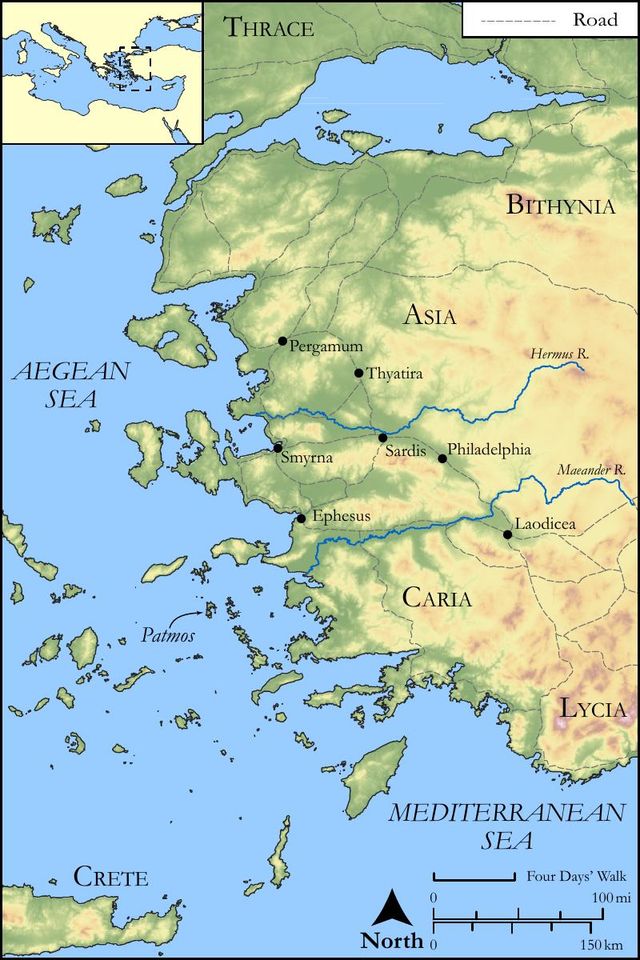
See on the biblical-era maps

Study this verse
Public-domain commentary
Matthew Henry
From his Commentary on the Whole Bible. Henry comments on passages, not single verses — this entry covers Revelation 18:9–24. His three-level outline is real structure in the source text, so it is rendered as structure.
Here we have,
I.A doleful lamentation made by Babylon's friends for her fall; and here observe,
1.Who are the mourners, namely, those who had been bewitched by her fornication, those who had been sharers in her sensual pleasures, and those who had been gainers by her wealth and trade - the kings and the merchants of the earth: the kings of the earth, whom she had flattered into idolatry by allowing them to be arbitrary and tyrannical over their subjects, while they were obsequious to her; and the merchants, that is, those who trafficked with her for indulgences, pardons, dispensations, and preferments; these will mourn, because by this craft they got their wealth.
2.What was the manner of their mourning.
(1.)They stood afar off, they durst not come nigh her. Even Babylon's friends will stand at a distance from her fall. Though they had been partakers with her in her sins, and in her sinful pleasures and profits, they were not willing to bear a share in her plagues.
(2.)They made a grievous outcry: Alas! alas! that great city, Babylon, that mighty city!
(3.)They wept, and cast dust upon their heads, Rev 18:19. The pleasures of sin are but for a season, and they will end in dismal sorrow. All those who rejoice in the success of the church's enemies will share with them in their downfall; and those who have most indulged themselves in pride and pleasure are the least able to bear calamities; their sorrows will be as excessive as their pleasure and jollity were before.
3.What was the cause of their mourning; not their sin, but their punishment. They did not lament their fall into idolatry, and luxury, and persecution, but their fall into ruin - the loss of their traffic and of their wealth and power. The spirit of antichrist is a worldly spirit, and their sorrow is a mere worldly sorrow; they did not lament for the anger of God, that had now fallen upon them, but for the loss of their outward comfort. We have a large schedule and inventory of the wealth and merchandise of this city, all which was suddenly lost (Rev 18:12, Rev 18:13), and lost irrecoverably (Rev 18:14): All things which were dainty and goodly have departed from thee, and thou shalt find them no more at all. The church of God may fall for a time, but she shall rise again; but the fall of Babylon will be an utter overthrow, like that of Sodom and Gomorrah. Godly sorrow is some support under affliction, but mere worldly sorrow adds to the calamity.
II.An account of the joy and triumph there was both in heaven and earth at the irrecoverable fall of Babylon:
while her own people were bewailing her, the servants of God were called to rejoice over her, Rev 18:20. Here observe,
1.How universal this joy would be: heaven and earth, angels and saints, would join in it; that which is matter of rejoicing to the servants of God in this world is matter of rejoicing to the angels in heaven.
2.How just and reasonable; and that,
(1.)Because the fall of Babylon was an act of God's vindictive justice. God was then avenging his people's cause. They had committed their cause to him to whom vengeance belongs, and now the year of recompence had come for the controversies of Zion; and, though they did not take pleasure in the miseries of any, yet they had reason to rejoice in the discoveries of the glorious justice of God.
(2.)Because it was an irrecoverable ruin. This enemy should never molest them any more, and of this they were assured by a remarkable token (Rev 18:21): An angel from heaven took up a stone like a great millstone, and cast it into the sea, saying, "Thus shall Babylon be thrown down with violence, and be found no more at all; the place shall be no longer habitable by man, no work shall be done there, no comfort enjoyed, no light seen there, but utter darkness and desolation, as the reward of her great wickedness, first in deceiving the nations with her sorceries, and secondly in destroying and murdering those whom she could not deceive," Rev 18:24. Such abominable sins deserved so great a ruin.
Continue studying Revelation 18:12 across the web’s major study libraries — every link below opens this exact verse, chapter, or book on the destination site.
Read & Compare
 BibleGatewayThis verse in more than 200 translations and 70 languages.
 Bible.comThe YouVersion reader — hundreds of translations, reading plans, and highlights.
 ESV.orgCrossway's official English Standard Version reader.
 NET BibleThe NET translation with 60,000+ translators' notes on every rendering decision.
 STEP BibleTyndale House's free study tool — original text, vocabulary, and scholarly resources.
 BibliaLogos Bible Software's free web reader.
 USCCBThe New American Bible (Revised Edition) with the U.S. bishops' study notes.
Commentaries
 BibleHub CommentariesDozens of classic commentaries on this verse, gathered on one page.
 StudyLightMore than 100 commentary sets — the largest collection on the web.
 BibleRefPlain-English commentary on what this verse means, verse by verse.
 Enduring WordDavid Guzik's free commentary on this chapter, widely used by Bible teachers.
 Bible Study ToolsVerse commentary alongside Greek and Hebrew study aids.
Original Language & Research
- BibleHub InterlinearThe verse word by word — original language, transliteration, and English.
- BibleHub LexiconEvery word's original-language definition and Strong's entry.
 Blue Letter BibleDeep-study tools — Strong's numbers, concordance, and word studies.
 CNTR CollationThe earliest Greek manuscripts of this verse, collated letter by letter.
Sermons, Hymns & Audio


TrulyRandomVerse is not affiliated with these sites and doesn’t control their content. They’re linked because they’re genuinely useful.
Summary
Revelation 18:12 presents a detailed inventory of the lavish commodities that constituted the vast commercial empire of "Babylon the Great," a symbolic entity representing the world's corrupt systems in opposition to God. This verse, part of a lament by global merchants and rulers over Babylon's sudden collapse, vividly illustrates the extent of her materialistic wealth and the deep economic ties she forged, underscoring the profound loss experienced by those who profited from her opulence and highlighting the transient nature of earthly riches in the face of divine judgment.
Context
ShowHideLiterary Context
Revelation 18:12 is embedded within a prophetic lament over the fall of Babylon, which is declared in Revelation 18:2. Following this declaration, verses 9-19 detail the sorrow of the "kings of the earth" and the "merchants of the earth" who had grown rich through their illicit dealings with Babylon. The preceding verses (Revelation 18:4-8) issue a call for God's people to separate themselves from Babylon and describe the swift and comprehensive judgment that will befall her. Verse 12 specifically initiates a lengthy catalog of goods, continuing through Revelation 18:13, which serves to emphasize the sheer scale of Babylon's economic power and the depth of the world's entanglement with her materialistic system. This list is a crucial element in portraying the devastating economic impact of her destruction.
Historical & Cultural Context
The imagery of Babylon in Revelation draws heavily on Old Testament prophecies against historical Babylon and Tyre, renowned ancient commercial centers known for their wealth, idolatry, and oppressive trade practices (e.g., Isaiah 23 and Ezekiel 27). In the Roman imperial context of John's writing, "Babylon" was widely understood as a veiled reference to Rome, the dominant global power whose vast network of trade routes brought immense wealth and luxury goods from across the empire. Rome's economic might was built on extensive commerce, often involving exploitation and a pervasive culture of idolatry and self-indulgence. The specific items listed in Revelation 18:12-13, such as gold, precious stones, fine linen, purple, silk, and exotic woods like thyine, were highly prized luxury items in the Roman world, signifying extreme wealth, status, and often, an association with imperial power and pagan rituals. The lament of merchants over lost trade would have resonated deeply with the economic realities of the time.
Key Themes
ShowHideThis verse, within the broader context of Revelation 18, contributes significantly to several key themes. It powerfully illustrates Materialism and Idolatry, showcasing the world's insatiable appetite for luxury and the way in which wealth can become an object of worship, distracting from allegiance to God. The extensive list of goods underscores the theme of Global Economic Dependence and Corruption, revealing how the world's systems are interconnected through trade, often built on greed and injustice, which ultimately leads to their downfall. Furthermore, the destruction of this vast merchandise highlights the theme of Divine Judgment on Worldly Systems. God's judgment is not merely spiritual but also extends to the economic and political structures that oppose His righteous rule. Finally, the detailed inventory serves to emphasize the Vanity and Transience of Earthly Riches, echoing the wisdom found in passages like Matthew 6:19-21 and Proverbs 23:5, reminding believers that true and lasting treasure is not found in perishable goods.
Exposition and Analysis
ShowHideKey Word Analysis
ShowHideFrom the root meaning "to fill," this term refers to a load, cargo, or wares. In this context, it specifically denotes the goods and commodities that are bought and sold, emphasizing the commercial nature of Babylon's wealth. It highlights the vast quantity and variety of items that were traded, forming the economic backbone of her power.
Of Hebrew origin, this word describes white linen, a highly valued and expensive fabric in that day. It was often associated with royalty, wealth, and purity, but here it signifies the luxurious and extravagant nature of Babylon's material possessions, contrasting sharply with the spiritual purity God desires.
This refers to a specific type of fragrant and highly prized wood, likely from the African cypress (Tetraclinis articulata), known for its beauty, durability, and aromatic qualities when burned. Its inclusion emphasizes the exotic, rare, and ultimate luxury goods that Babylon traded, often used for expensive furniture, incense, and possibly even pagan idols or temple furnishings, further underscoring the depth of her material and spiritual corruption.
Verse Breakdown
ShowHide"The merchandise of gold, and silver, and precious stones, and of pearls,"
This opening phrase immediately establishes the immense value and opulence of Babylon's trade. Gold and silver were universal standards of wealth, while precious stones and pearls represented extreme luxury, rarity, and high status. This part of the list signifies the most concentrated forms of material wealth, indicating the vast financial power accrued by Babylon.
"and fine linen, and purple, and silk, and scarlet,"
This segment shifts to valuable textiles, each carrying significant cultural and economic weight. Fine linen was a symbol of purity and wealth; purple dye was exceedingly expensive and reserved for royalty and the elite; silk was a rare import from the East, signifying ultimate luxury; and scarlet, another costly dye, often denoted power and illicit indulgence. Together, these items paint a picture of extravagant display and a society deeply invested in outward show and sensory pleasure.
"and all thyine wood, and all manner vessels of ivory,"
Here, the focus moves to rare and exotic materials. Thyine wood, a fragrant and durable timber, was highly sought after for fine craftsmanship. Vessels of ivory, derived from elephant tusks, were exquisite and costly, representing sophisticated artistry and immense wealth. The use of "all manner" (Greek: pâs) emphasizes the comprehensive nature of these luxury goods, indicating that no valuable material was beyond Babylon's grasp.
"and all manner vessels of most precious wood, and of brass, and iron, and marble,"
This final part of the list broadens the scope to include other valuable materials used in construction, art, and daily life. "Most precious wood" reiterates the value of timber beyond just thyine. Brass and iron, while more common than gold or silver, were essential for tools, weapons, and decorative items, and marble was crucial for grand architecture and sculpture. Their inclusion completes the picture of a vast economic system that encompassed both the extremely rare and the foundational materials of a powerful, materialistic civilization.
Literary Devices
ShowHideRevelation 18:12 employs several potent literary devices to convey its message. The most prominent is Catalog or Inventory, where a long, detailed list of items is presented. This exhaustive enumeration of luxury goods—gold, silver, precious stones, pearls, fine textiles, rare woods, and various vessels—serves to overwhelm the reader with the sheer scale of Babylon's wealth and excess. The cumulative effect underscores the depth of her materialism and the extent of her economic entanglement with the world. Closely related is Polysyndeton, the repetitive use of the conjunction "and" (Greek: kai) before each item in the list. This stylistic choice creates a sense of overwhelming abundance and relentless accumulation, emphasizing the seemingly endless nature of Babylon's merchandise. It also slows the pace of the text, allowing the reader to fully absorb the weight of each item and the vastness of the commercial enterprise being described. Finally, the entire list functions as Symbolism, where these material goods represent not just economic power but also the spiritual idolatry and moral corruption inherent in a system that prioritizes worldly gain over divine righteousness. The lament over their loss symbolizes the ultimate collapse of all human systems built on greed and rebellion against God.
Theological and Thematic Connections
ShowHideRevelation 18:12 vividly portrays the allure and ultimate emptiness of worldly wealth, a recurring theme throughout Scripture. The detailed inventory of luxury goods serves as a stark warning against materialism and the idolatry of riches, demonstrating how human systems, when detached from God, inevitably become consumed by greed and self-indulgence. This passage underscores the biblical truth that earthly treasures are fleeting and subject to decay, contrasting sharply with the enduring nature of spiritual riches. The judgment upon Babylon's merchandise highlights God's sovereignty over all human endeavors, including economic empires, and His unwavering commitment to justice. It reminds us that true security and lasting value are found not in accumulating perishable goods but in a relationship with the eternal God and His kingdom.
Reflection and Application
ShowHideRevelation 18:12 serves as a profound call to introspection for believers in every age. In a world still captivated by consumerism and the pursuit of material gain, this passage challenges us to critically examine our own hearts: Where do we place our trust? What do we truly value? The detailed list of Babylon's lost merchandise is a powerful reminder that all earthly possessions are temporary and will ultimately perish. This should compel us to cultivate a posture of detachment from the fleeting allure of wealth and status, recognizing that true security and lasting joy are found only in God. We are called to discern the spirit of the age, resisting the temptation to conform to worldly systems that prioritize profit over people, and accumulation over compassion. Instead, we are invited to invest in eternal treasures, to live with open hands, and to use our resources for God's glory and the good of others, understanding that our citizenship is in heaven and our ultimate hope rests in the coming kingdom of God, which is not built on perishable goods.
Questions for Reflection
ShowHideFAQ
ShowHideWhat is the significance of the specific items listed in Revelation 18:12?
ShowHideThe specific items listed in Revelation 18:12 (gold, silver, precious stones, pearls, fine linen, purple, silk, scarlet, thyine wood, ivory, precious wood, brass, iron, and marble) are not arbitrary. They represent the epitome of ancient luxury, wealth, and global trade. Each item was highly valued, often rare, and sourced from distant lands, signifying immense economic power, extravagant living, and the ability to command resources from across the known world. The list emphasizes the comprehensive nature of Babylon's material opulence and the depth of the world's entanglement with her system of commerce and self-indulgence. The inclusion of items like thyine wood also hints at the exotic and perhaps even idolatrous uses of such materials in a culture steeped in paganism.
Does this passage condemn all wealth or commerce?
ShowHideNo, this passage does not inherently condemn all wealth or commerce. Instead, it condemns the spirit of Babylon, which represents a system characterized by excessive materialism, greed, exploitation, and spiritual rebellion against God. The issue is not wealth itself, but the idolatrous pursuit of it, the unjust means by which it is acquired, and the self-sufficient pride it fosters, leading to a neglect of God and His righteous ways. The Bible often portrays righteous figures who were wealthy (e.g., Abraham, Job), but their wealth was stewarded for God's purposes and did not become an idol. The judgment in Revelation 18 is against a system that has become an end in itself, fostering injustice and drawing people away from God, rather than a blanket condemnation of economic activity.
Christ-Centered Fulfillment
ShowHideRevelation 18:12, with its vivid depiction of Babylon's opulent yet ultimately perishable merchandise, stands in stark contrast to the eternal, spiritual riches found in Christ. While Babylon's glory is measured in gold, silver, and precious stones that will vanish, the true wealth of God's kingdom is revealed in the person and work of Jesus Christ. He, "though he was rich, yet for your sakes he became poor, so that you through his poverty might become rich" (2 Corinthians 8:9). The earthly treasures listed here are fleeting, but Christ offers an inheritance that is "imperishable, undefiled, and unfading, kept in heaven for you" (1 Peter 1:4). The lament over lost merchandise underscores the vanity of a kingdom built on material possessions, while Jesus declared, "My kingdom is not of this world" (John 18:36), offering a spiritual reign that transcends earthly economies. Ultimately, the fall of Babylon's commercial empire foreshadows the triumph of God's eternal kingdom, whose foundations are not brass and marble, but the glory of God and the Lamb, where the city itself is adorned with true, spiritual preciousness, far surpassing any earthly commodity (Revelation 21:18-21). In Christ, believers find true and lasting treasure, a divine exchange where the perishable is traded for the eternal, and the fleeting allure of worldly goods gives way to the enduring glory of God.