TRV
TRV
- English
- King James KJV
- Complete Jewish CJB
- World English WEBM
- Berean Standard BSB
- American Standard ASV
- Geneva GNV
- Young's Literal YLT
- Douay-Rheims DRC
- International
- Shqip ALB
- العربية SVD
- বাংলা BN-IRV
- မြန်မာ Judson
- 简体文 CUV-S
- 繁體中文 CUV-T
- Čeština BKR
- Nederlands STVE
- Français LSG
- Deutsch SCH
- Ελληνικά Vamvas
- ગુજરાતી GU-IRV
- Hausa HCB
- עברית Hebrew
- हिन्दी HCV
- Magyar KAROLI
- Bahasa Indonesia INDO-TB
- Italiano Diodati
- 日本語 Kougo
- 한국어 Korean
- മലയാളം MAL
- मराठी MRCV
- Norsk DNB
- فارسی OPV
- Polski BG
- Português Almeida
- Română Cornilescu
- Русский Synodal
- Español RVG
- Kiswahili Neno
- Svenska SV1917
- Tagalog TAG-ADB
- தமிழ் TCV
- తెలుగు TSA
- ภาษาไทย THAI-KJV
- Українська Ohienko
- Tiếng Việt CADMAN
- Yorùbá YCB
The Tent of Meeting Established
The Tent of Meeting Established
Study this passage
Commentary written on this passage, not on a single verse.
- Who
- Where
- When
- About
Where else Scripture says this.
Numbers 12:8
With him, I will speak mouth to mouth, even plainly, and not in riddles; and he shall see the LORD’s form. Why then were you not afraid to speak against my servant, against Moses?”from verse 11Deuteronomy 34:10
Since then, there has not arisen a prophet in Israel like Moses, whom the LORD knew face to face,from verse 11Exodus 24:13
Moses rose up with Joshua, his servant, and Moses went up onto God’s Mountain.from verse 11Exodus 33:9
When Moses entered into the Tent, the pillar of cloud descended, stood at the door of the Tent, and spoke with Moses.from verse 11Deuteronomy 5:4
The LORD spoke with you face to face on the mountain out of the midst of the fire,from verse 11Genesis 32:30
Jacob called the name of the place Peniel: for, he said, “I have seen God face to face, and my life is preserved.”from verse 11John 15:14
You are my friends, if you do whatever I command you.from verse 11John 15:15
No longer do I call you servants, for the servant doesn’t know what his lord does. But I have called you friends, for everything that I heard from my Father, I have made known to you.from verse 11Isaiah 55:6
Seek the LORD while he may be found; call you on him while he is near:from verse 7Isaiah 55:7
let the wicked forsake his way, and the unrighteous man his thoughts; and let him return to the LORD, and he will have mercy on him; and to our God, for he will abundantly pardon.from verse 7James 2:23
and the Scripture was fulfilled which says, “Abraham believed God, and it was accounted to him as righteousness”; and he was called the friend of God.from verse 11John 11:11
He said these things, and after that, he said to them, “Our friend, Lazarus, has fallen asleep, but I am going so that I may awake him out of sleep.”from verse 11
Public-domain commentary
Matthew Henry
From his Commentary on the Whole Bible. Henry comments on passages, not single verses — this entry covers Exodus 33:7–11. His four-level outline is real structure in the source text, so it is rendered as structure.
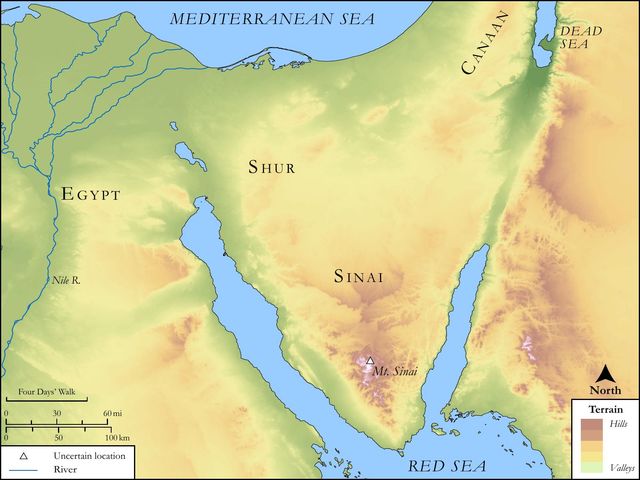
Here is, I. One mark of displeasure put upon them for their further humiliation: Moses took the tabernacle, not his own tent for his family, but the tent wherein he gave audience, heard causes, and enquired of God, the guild-hall (as it were) of their camp, and pitched it without, afar off from the camp (Exo 33:7), to signify to them that they had rendered themselves unworthy of it, and that, unless peace was made, it would return to them no more. God would thus let them know that he was at variance with them: The Lord is far from the wicked. Thus the glory of the Lord departed from the temple when it was polluted with sin, Eze 10:4, Eze 11:23. Note, It is a sign that God is angry when he removes his tabernacle, for his ordinances are fruits of his favour and tokens of his presence; while we have them with us we have him with us. Perhaps this tabernacle was a plan, or model rather, of the tabernacle that was afterwards to be erected, a hasty draught from the pattern shown him in the mount, designed for direction to the workmen, and used, in the mean time, as a tabernacle of meeting between God and Moses about public affairs. This was set up at a distance, to affect the people with the loss of that glorious structure which, if they had not forsaken their own mercies for lying vanities, was to have been set up in the midst of them. Let them see what they had forfeited.
II.Many encouragements give them, notwithstanding, to hope that God would yet be reconciled to them.
1.Though the tabernacle was removed, yet every one that was disposed to seek the Lord was welcome to follow it, Exo 33:7. Private persons, as well as Moses, were invited and encouraged to apply to God, as intercessors upon this occasion. A place was appointed for them to go to without the camp, to solicit God's return to them. Thus when Ezra (a second Moses) interceded for Israel there were assembled to him many that trembled at God's word, Ezr 9:4. When God designs mercy, he stirs up prayer. He will be sought unto (Eze 36:37); and, thanks be to his name, he may be sought unto, and will not reject the intercession of the poorest. Every Israelite that sought the Lord was welcome to this tabernacle, as well as Moses the man of God.
2.Moses undertook to mediate between God and Israel. He went out to the tabernacle, the place of treaty, probably pitched between them and the mount (Exo 33:8), and he entered into the tabernacle, Exo 33:9. That cause could not but speed well which had so good a manager; when their judge (under God) becomes their advocate, and he who was appointed to be their law-giver is an intercessor for them, there is hope in Israel concerning this thing.
3.The people seemed to be in a very good mind and well disposed towards a reconciliation.
(1.)When Moses went out to go to the tabernacle, the people looked after him (Exo 33:8), in token of their respect to him whom before they had slighted, and their entire dependence upon his mediation. By this it appeared that they were very solicitous about this matter, desirous to be at peace with God and concerned to know what would be the issue. Thus the disciples looked after our Lord Jesus, when he ascended on high to enter into the holy place not made with hands, till a cloud received him out of their sight, as Moses here. And we must with an eye of faith follow him likewise thither, where he is appearing in the presence of God for us; then shall we have the benefit of his mediation.
(2.)When they saw the cloudy pillar, that symbol of God's presence, give Moses the meeting, they all worshipped, every man at his tent door, Exo 33:10. Thereby they signified,
[1.]Their humble adoration of the divine Majesty, which they will ever worship, and not gods of gold any more.
[2.]Their joyful thankfulness to God that he was pleased to show them this token for good, and give them hopes of a reconciliation; for, if he had been pleased to kill them, he would not have shown them such things as these, would not have raised them up such a mediator, nor given him such countenance.
[3.]Their hearty concurrence with Moses as their advocate in every thing he should promise for them, and their expectation of a comfortable and happy issue of this treaty. Thus must we worship God in our tents with an eye to Christ as the Mediator. Their worshipping in their tent doors declared plainly that they were not ashamed publicly to own their respect to God and Moses, as they had publicly worshipped the calf.
4.God was, in Moses, reconciling Israel to himself, and manifested himself very willing to be at peace.
(1.)God met Moses at the place of treaty, Exo 33:9. The cloudy pillar, which had withdrawn itself from the camp when it was polluted with idolatry, now returned to this tabernacle at some distance, coming back gradually. If our hearts go forth towards God to meet him he will graciously come down to meet us.
(2.)God talked with Moses (Exo 33:9), spoke to him face to face, as a man speaks to his friend (Exo 33:11), which intimates that God revealed himself to Moses, not only with greater clearness and evidence of divine light than to any other of the prophets, but also with greater expressions of particular kindness and grace. He spoke, not as a prince to a subject, but as a man to his friend, whom he loves, and with whom he takes sweet counsel. This was great encouragement to Israel, to see their advocate so great a favourite; and, that they might be encouraged by it, Moses turned again into the camp, to tell the people what hopes he had of bringing this business to a good issue, and that they might not despair if he should be long absent. But, because he intended speedily to return to the tabernacle of the congregation, he left Joshua there, for it was not fit that the place should be empty, so long as the cloud of glory stood at the door (v. 9); but, if God had any thing to say out of that cloud while Moses was absent, Joshua was there, ready to hear it.
Historical interpretation
Historical Reception
4 surviving comments on this passage. Each one is dated, so this reads as a timeline rather than a list.
Select a marker to jump to its quote. Markers stagger vertically where authors wrote within a few decades of each other.
The whole life of the saints and of the blessed, the example of the Lord himself while he was with us in the flesh, are aids to us in this matter. Moses, through long perseverance in fasting and prayer, received the law and heard the words of God, “as a man is inclined to speak to his friend.”
Therefore did Jesus go forth out of the city, that you going out of this world may be above the world. Moses alone, who saw God, had his tabernacle without the camp when he talked with God; and the blood indeed of the victims which were offered for sin, was brought to the altar, but the bodies were burnt without the camp; for no one placed amidst the evil of this world can lay aside sin, nor is his blood accepted of God, except he go forth from the defilement of this body.
[Daniel 2:22] "It is He who reveals deep and hidden things, and He knows what is placed in the darkness, and with Him is the light." A man to whom God makes profound revelations and who can say, "O the depth of the riches of the knowledge and wisdom of God!" (Romans 11:33), he it is who by the indwelling Spirit probes even into the deep things of God, and digs the deepest of wells in the depths of his soul. He is a man who has stirred up the whole earth, which is wont to conceal the deep waters, and he observes the command of God, saying: "Drink water from thy vessels and from the spring of thy wells" (Proverbs 5:15). As for the words which follow, "He knows what is placed in the darkness, and with Him is the light," the darkness signifies ignorance, and the light signifies knowledge and learning. Therefore as wrong cannot hide God away, so right encompasses and surrounds Him. Or else we should interpret the words to mean all the dark mysteries and deep things (concerning God), according to what we read in Proverbs: "He understands also the parable and the dark saying." (Proverbs 1:6, LXX) This in turn is equivalent to what we read in the Psalms: "Dark waters in the clouds of the sky" (Psalm 18:11). For one who ascends to the heights and forsakes the things of earth, and like the birds themselves seeks after the most rarified atmosphere and everything ethereal, he becomes like a cloud to which the truth of God penetrates and which habitually showers rain upon the saints. Replete with a plenitude of knowledge, he contains in his breast many dark waters enveloped with deep darkness, a darkness which only Moses can penetrate and speak with God face to face (Exodus 33:11), of Whom the Scripture says: "He hath made darkness His hiding-place" (Psalm 18:11).
Fasting these forty days and nights holy Moses too merited to speak with God, to stand and stay with him and to receive the precepts of the law from his hand. For although this human condition prevented him from seeing God, yet the grace of his fasting drew him into close contact with the Divinity. For to fast frequently is a portion of God’s virtues in ourselves, since God himself always fasts. He is more familiar, intimate and friendly with the person in whom he sees more of his works, as Scripture says: “And Moses spoke with God face to face like one speaking with his friend.”