


Numbers 32:31
Bible text: King James Version (1769 Blayney text) · Public domain
Bible text: Berean Standard Bible · Public domain
Bible text: American Standard Version (1901) · Public domain
Bible text: World English Bible, Messianic edition · Public domain
Bible text: Geneva Bible (1599) · Public domain
Bible text: Young's Literal Translation · Public domain
- וַיַּעֲנוּvai·ya·'a·Nuand they answeredH6030Conj-w ¦ V-Qal-ConsecImperf-3mpVerb Qal Consecutive Imperfect 3rd Plural Masculineוַandיַּעֲנוּthey answered
- בְנֵיve·nei[the] descendants ofH1121N-mpcNoun Plural Masculine Construct
- גָדgadGadH1410N-proper-mNoun Proper Masculine
- וּבְנֵיu·ve·Neiand [the] descendants ofH1121Conj-w ¦ N-mpcNoun Plural Masculine Constructוּandבְנֵי[the] descendants of
- רְאוּבֵןre·'u·VenReubenH7205N-proper-mNoun Proper Masculine
- לֵאמֹרle·Mor<to> sayingH559Prep-l ¦ V-Qal-InfVerb Qal Infinitive Constructלֵ<to>אמֹרsaying
- אֵת'et<obj.>H853DirObjMParticle Object Indicator
- אֲשֶׁר'a·Sher[that] whichH834RelParticle Relative
- דִּבֶּרdi·Berhe has spokenH1696V-Piel-Perf-3msVerb Piel Perfect 3rd Singular Masculine
- יְהוָהYah·wehYahwehH3068N-properNoun Proper Title
- אֶל'eltoH413PrepPreposition
- עֲבָדֶיךָ'a·va·Dei·khayour servantsH5650N-mpc ¦ 2msNoun Plural Masculine Constructעֲבָדֶיservantsךָyour
- כֵּןkenthusH3651AdvAdverb
- נַעֲשֶׂהna·'a·Sehwe will doH6213V-Qal-Imperf-1cpVerb Qal Imperfect 1st Plural common gender
English is a literal word-by-word gloss of the Hebrew, not the KJV's wording. Why?
This is the original text the KJV's translators worked from — each Hebrew word with its own literal English meaning in this verse, prepared by scholars at Tyndale House, Cambridge. The KJV translates whole sentences, not word by word, so its wording differs: one Hebrew word can become several English words, and the KJV may choose “the LORD” where the gloss reads “Yahweh”. Both are faithful — they answer different questions. For the KJV's own rendering, switch to the KJV text.
Details
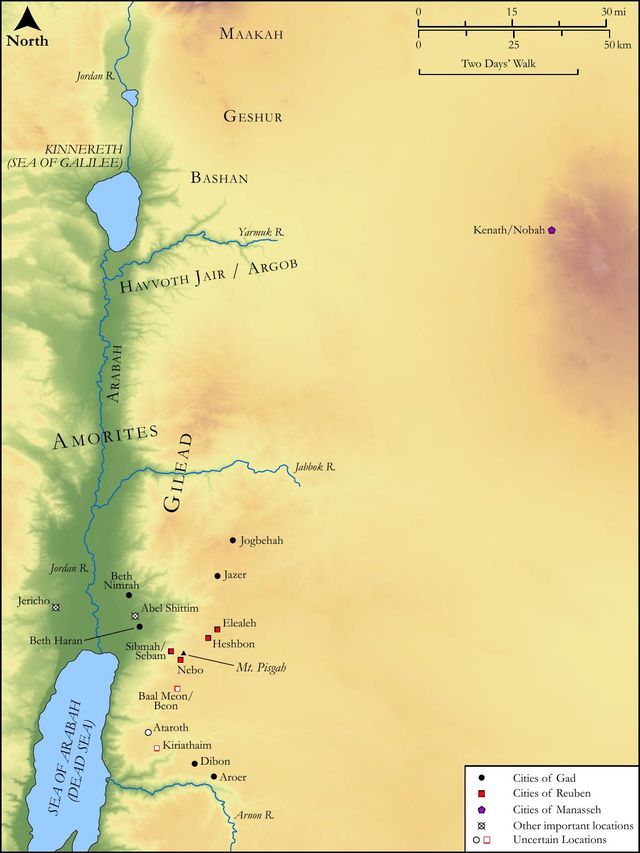
See on the biblical-era map
Study this verse
Continue studying Numbers 32:31 across the web’s major study libraries — every link below opens this exact verse, chapter, or book on the destination site.
Read & Compare
 BibleGatewayThis verse in more than 200 translations and 70 languages.
 Bible.comThe YouVersion reader — hundreds of translations, reading plans, and highlights.
 ESV.orgCrossway's official English Standard Version reader.
 NET BibleThe NET translation with 60,000+ translators' notes on every rendering decision.
 STEP BibleTyndale House's free study tool — original text, vocabulary, and scholarly resources.
 BibliaLogos Bible Software's free web reader.
 USCCBThe New American Bible (Revised Edition) with the U.S. bishops' study notes.
Commentaries
 BibleHub CommentariesDozens of classic commentaries on this verse, gathered on one page.
 StudyLightMore than 100 commentary sets — the largest collection on the web.
 BibleRefPlain-English commentary on what this verse means, verse by verse.
 Enduring WordDavid Guzik's free commentary on this chapter, widely used by Bible teachers.
 Bible Study ToolsVerse commentary alongside Greek and Hebrew study aids.
Original Language & Research
- BibleHub InterlinearThe verse word by word — original language, transliteration, and English.
- BibleHub LexiconEvery word's original-language definition and Strong's entry.
 Blue Letter BibleDeep-study tools — Strong's numbers, concordance, and word studies.
 SefariaThe Hebrew text with Rashi and centuries of Jewish commentary.
Sermons, Hymns & Audio


TrulyRandomVerse is not affiliated with these sites and doesn’t control their content. They’re linked because they’re genuinely useful.
Summary
Numbers 32:31 records the solemn and unified declaration of the tribes of Gad and Reuben to Moses, affirming their commitment to the terms set for their inheritance on the east side of the Jordan. This pivotal verse signifies their willing submission to divine authority, as expressed through Moses, and their binding pledge to participate fully in the conquest of Canaan alongside the other Israelite tribes before returning to claim their allotted land. It underscores profound themes of corporate responsibility, unwavering integrity, and faithful obedience crucial for the nation's unity and successful entry into the Promised Land.
Context
ShowHideLiterary Context
Numbers 32:31 serves as the climactic and definitive response within a crucial negotiation that commences at Numbers 32:1. The tribes of Gad and Reuben, observing the fertile pasturelands of Gilead and Jazer, approach Moses with a request to settle there due to their abundant livestock. Moses initially reacts with strong disapproval, fearing their desire to settle prematurely would discourage the other tribes from entering Canaan, echoing the disastrous rebellion and lack of faith at Kadesh-Barnea. However, Gad and Reuben swiftly clarify their intent: they would first build fortified cities for their families and folds for their flocks, but critically, they would then arm themselves and fight on the front lines with their brethren until the entire land of Canaan was subdued and all tribes had received their inheritance. Only after the conquest would they return to their eastern territories. Moses accepts their terms, laying out specific conditions in Numbers 32:20-23, warning them of severe consequences if they failed to fulfill their pledge. Verse 31 is their unequivocal, binding affirmation of these conditions, solidifying the agreement and ensuring tribal unity for the impending military campaign.
Historical & Cultural Context
In Israel, land was not merely property but a divine gift, intrinsically linked to identity, security, and sustenance. For a people like the Israelites, transitioning from nomadic wandering to settled life, securing permanent dwelling places was a paramount objective. The Jordan River functioned as a significant geographical and symbolic boundary, marking the threshold of the promised land of Canaan. Within this cultural framework, a spoken word, particularly a solemn oath or promise, carried immense weight and was considered legally and morally binding, often invoked before divine witnesses. Failure to uphold such a pledge could result in severe social ostracism and divine repercussions, as evidenced in various covenant contexts throughout the Old Testament. Furthermore, the concept of corporate responsibility was foundational; the actions of a few could profoundly impact the entire community, and the well-being of the nation often superseded individual desires, especially in a divinely sanctioned military campaign of this magnitude.
Key Themes
ShowHideThis verse powerfully encapsulates several key themes prevalent throughout the book of Numbers and the broader Pentateuch. Firstly, Corporate Responsibility and Unity is central, as the individual desires of Gad and Reuben are subordinated to the collective mission of conquering the Promised Land for all Israel. Their willingness to fight alongside their brethren before securing their own inheritance demonstrates a mature understanding of shared destiny and mutual obligation, echoing the call for unity in the face of a common goal found in Psalm 133:1. Secondly, Obedience to Divine Authority is highlighted by their phrase "As the LORD hath said unto thy servants, so will we do." This acknowledges Moses' role as God's appointed messenger and implies that their agreement is not merely a human negotiation but a sacred vow before God, a principle consistently emphasized in passages like Deuteronomy 11:27. Thirdly, the Integrity of Promise and Covenant Faithfulness is evident in their straightforward and unwavering declaration. Their word is their bond, laying the groundwork for trust among the tribes and setting a precedent for future interactions, aligning with the importance of truthfulness and promise-keeping articulated in Psalm 15:4.
Exposition and Analysis
ShowHideKey Word Analysis
ShowHideThis verb signifies a formal, often solemn, response or declaration. It's not merely a casual reply but a considered, authoritative statement, indicating that the tribes of Gad and Reuben are speaking with one voice, collectively and decisively, in response to Moses' conditions. This emphasizes the binding nature of their commitment and their readiness to heed the terms.
In the phrase "As the LORD hath said," this verb denotes a divine utterance or command. When used in conjunction with "the LORD" (YHWH, H3068), it elevates Moses' preceding conditions from human negotiation to divinely inspired directives. The tribes recognize that Moses' words carry the authority of God Himself, making their subsequent pledge a sacred vow and an act of obedience to divine will.
This first-person plural imperfect verb expresses a firm intention and commitment to action. It's not a passive acceptance but an active resolve to perform precisely what has been agreed upon. "So will we do" is a powerful declaration of their readiness to fulfill their part of the covenant, demonstrating their integrity and determination to carry out the necessary tasks.
Verse Breakdown
ShowHide"And the children of Gad and the children of Reuben answered, saying"
This opening clause highlights the unified and formal nature of the tribes' response. It emphasizes that this is not a dissenting voice or a hesitant agreement, but a collective and decisive affirmation from both tribal groups, indicating their solidarity and shared commitment. Their "answering" is a direct and responsible engagement with Moses' conditions, signaling their readiness to proceed.
"As the LORD hath said unto thy servants"
This is the theological lynchpin of the verse. Gad and Reuben explicitly acknowledge that the terms laid out by Moses are not arbitrary human demands but divinely ordained instructions. By referring to themselves as "thy servants," they humble themselves before Moses as God's representative, recognizing the ultimate authority behind the command. This transforms their promise into a sacred vow made before God, binding them to a higher standard of faithfulness.
"so will we do"
This concluding phrase is a concise yet powerful declaration of commitment and obedience. It signifies their unwavering resolve to fulfill every aspect of the agreement. It is a pledge of action, demonstrating their integrity and readiness to prioritize the corporate mission of Israel over their immediate personal comfort or gain, reinforcing their trustworthiness and setting a precedent for future interactions within the Israelite community.
Literary Devices
ShowHideThe verse primarily employs Direct Discourse, presenting the exact words of the tribes of Gad and Reuben. This technique lends immediacy and authenticity to their solemn pledge, allowing the reader to directly apprehend their commitment and the weight of their declaration. The phrase "As the LORD hath said... so will we do" functions as a Formulaic Affirmation, a concise and binding declaration that echoes the language of covenant and obedience found throughout the Pentateuch. It serves as a Pledge or Vow, formally sealing the agreement between the tribes and Moses (and by extension, God), highlighting the sacred nature of their word. Furthermore, the verse implicitly uses Antithesis by contrasting Moses' initial fear of disunity and self-interest (expressed earlier in the chapter) with the tribes' demonstrated willingness to prioritize corporate responsibility and national unity. This contrast effectively highlights the positive resolution of the conflict and the tribes' commendable integrity.
Theological and Thematic Connections
ShowHideNumbers 32:31 serves as a profound illustration of covenant faithfulness and the nature of divine leadership within the Israelite community. The tribes' acknowledgment that Moses' words were "as the LORD hath said" underscores the principle that obedience to God's appointed leaders is tantamount to obedience to God Himself, particularly when those leaders faithfully convey divine commands. This verse highlights the critical balance between individual tribal needs and the overarching divine plan for the nation, emphasizing that the corporate mission of God's people takes precedence. Their solemn pledge to participate in the conquest before settling their inheritance reflects the biblical emphasis on integrity, the binding nature of promises, and the call to selfless service for the greater good of the community of faith. This commitment to shared responsibility and the fulfillment of a divinely sanctioned task foreshadows the collective effort required to inherit God's promises and achieve His purposes.
Reflection and Application
ShowHideThe unwavering commitment of Gad and Reuben in Numbers 32:31 offers a powerful model for believers today. In a world often characterized by self-interest, broken promises, and fragmented communities, this verse calls us to cultivate profound integrity, ensuring that our "yes" truly means yes and our "no" means no, not only in our spoken words but in our consistent actions. It challenges us to consider how our personal desires and immediate comforts align with the greater mission of God's kingdom and the holistic well-being of the church community. Are we willing to defer personal gratification or comfort for the sake of corporate spiritual advancement, the spread of the Gospel, or the pressing needs of our brethren? Just as these tribes recognized divine authority in Moses' words, we are called to discern and obey God's will as revealed in Scripture and through the guidance of His Holy Spirit, trusting that His plans are always for our ultimate good and the flourishing of His people. This requires a spirit of humility, a willingness to serve, and a deep-seated commitment to the promises we make, both to God and to one another in the covenant community.
Questions for Reflection
ShowHideFAQ
ShowHideWhy were Gad and Reuben allowed to settle east of the Jordan, and did they fulfill their promise?
ShowHideThe tribes of Gad and Reuben were allowed to settle east of the Jordan because they possessed large herds and found the fertile lands of Gilead and Jazer suitable for their livestock. Moses initially hesitated, fearing it would discourage the other tribes from entering Canaan, but they clarified their intent: they would first build cities for their families and folds for their flocks, then arm themselves and lead the charge into Canaan, fighting alongside the other tribes until the entire land was subdued and all had received their inheritance. Only then would they return to their eastern lands. Yes, they did fulfill their promise. Joshua 4:12-13 records them crossing the Jordan fully armed, and Joshua 22:1-6 recounts Joshua commending them for their faithfulness and sending them back to their inheritance after the conquest was complete.
What is the significance of the phrase "As the LORD hath said"?
ShowHideThe phrase "As the LORD hath said" (KJV) or "as the LORD commanded" (NIV) is profoundly significant because it elevates the terms of the agreement from a mere human negotiation to a divinely sanctioned command. By using this language, the tribes of Gad and Reuben acknowledge that Moses is acting as God's mouthpiece, and therefore, obeying Moses' conditions is equivalent to obeying the Lord Himself. This recognition imbues their promise with sacred weight, transforming it into a solemn vow before God. It underscores the divine authority behind the leadership of Moses and the paramount importance of adhering to God's revealed will for the nation of Israel, a theme central to the Pentateuch (e.g., Deuteronomy 5:32-33).
Christ-Centered Fulfillment
ShowHideNumbers 32:31, with its emphasis on a solemn pledge, corporate responsibility, and unwavering obedience to divine will, finds its ultimate and perfect fulfillment in Jesus Christ. The tribes' declaration, "As the LORD hath said unto thy servants, so will we do," powerfully foreshadows the perfect obedience of the Son of God. Jesus consistently declared that His mission was to do the will of His Father, stating, "My food is to do the will of Him who sent Me, and to finish His work" (John 4:34). Unlike any human promise, Christ's commitment to the Father's will was absolute and unwavering, even to the point of death on the cross (Philippians 2:8). He perfectly fulfilled every promise and every aspect of God's covenant plan, not for His own inheritance, but for the inheritance of His people, the Church. He is the true leader who goes before His people, not just into a physical land, but into the spiritual reality of reconciliation with God and the promise of eternal life (Hebrews 10:7). The corporate responsibility seen in Gad and Reuben's commitment is fully realized in the body of Christ, the Church, where believers are called to unity and selfless service under the headship of Christ, working together to advance God's kingdom and inherit the ultimate "Promised Land" of new heavens and a new earth (Ephesians 4:15-16 and Revelation 21:1-4).