


Numbers 31:18
- וְכֹלve·Kholand allH3605Conj-w ¦ N-mscNoun Singular Masculine Constructוְandכֹלall
- הַטַּףha·Tafthe little one[s]H2945Art ¦ N-msNoun Singular Masculine Absoluteהַtheטַּףlittle one[s]
- בַּנָּשִׁיםba·na·Shimamong the womenH802Prep-b ¦ N-mpNoun Plural Masculine Absoluteבַּamong theנָּשִׁיםwomen
- אֲשֶׁר'a·SherwhoH834RelParticle Relative
- לֹאlo'notH3808NegParticle Negative
- יָדְעוּya·de·'Uthey have knownH3045V-Qal-Perf-3cpVerb Qal Perfect 3rd Plural common gender
- מִשְׁכַּבmish·Kavlying ofH4904N-mscNoun Singular Masculine Construct
- זָכָרza·Khara maleH2145Adj-msAdjective Singular Masculine Absolute
- הַחֲיוּha·cha·Yupreserve aliveH2421V-Hiphil-Imp-2mpVerb Hiphil Imperative 2nd Plural Masculine
- לָכֶםla·Khemfor <the> yourselvesPrep-l ¦ 2mpSuffix Personal 2nd Plural Masculineלָfor <the>כֶםyourselves
English is a literal word-by-word gloss of the Hebrew, not the KJV's wording. Why?
This is the original text the KJV's translators worked from — each Hebrew word with its own literal English meaning in this verse, prepared by scholars at Tyndale House, Cambridge. The KJV translates whole sentences, not word by word, so its wording differs: one Hebrew word can become several English words, and the KJV may choose “the LORD” where the gloss reads “Yahweh”. Both are faithful — they answer different questions. For the KJV's own rendering, switch to the KJV text.
Details
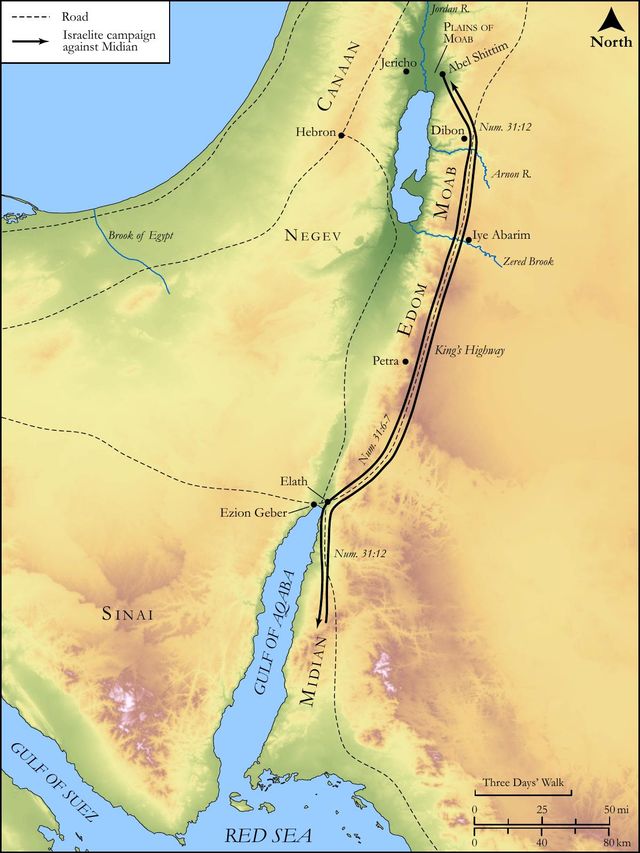
See on the biblical-era map
Study this verse
Historical interpretation
Historical reception
1 surviving comment on this verse from the historical church.
The same angel, however, said to the Virgin Mary, “Hail, full of grace, the Lord is with you”; the one who will be in you is already with you. “Blessed are you among women.” Holy Scripture bears witness to the fact that in the proper usage of the Hebrew language all females are habitually called women; in case some of you perhaps may be astonished and scandalized, if you are not used to hearing the Scriptures. There’s a place in the Scriptures where the Lord says openly, “Set apart the women who have not known man.” In any case, call to mind those origins of ours; when Eve was made from the man’s side, what does Scripture say? “He removed a rib from him and built it into a woman.” She is already called a woman, taken indeed from the man but not yet united to the man. So now, when you hear from the angel, “Blessed are you among women,” take it in such a way, as if it were saying, in our usage, Blessed are you among females.
Continue studying Numbers 31:18 across the web’s major study libraries — every link below opens this exact verse, chapter, or book on the destination site.
Read & Compare
 BibleGatewayThis verse in more than 200 translations and 70 languages.
 Bible.comThe YouVersion reader — hundreds of translations, reading plans, and highlights.
 ESV.orgCrossway's official English Standard Version reader.
 NET BibleThe NET translation with 60,000+ translators' notes on every rendering decision.
 STEP BibleTyndale House's free study tool — original text, vocabulary, and scholarly resources.
 BibliaLogos Bible Software's free web reader.
 USCCBThe New American Bible (Revised Edition) with the U.S. bishops' study notes.
Commentaries
 BibleHub CommentariesDozens of classic commentaries on this verse, gathered on one page.
 StudyLightMore than 100 commentary sets — the largest collection on the web.
 BibleRefPlain-English commentary on what this verse means, verse by verse.
 Enduring WordDavid Guzik's free commentary on this chapter, widely used by Bible teachers.
 Bible Study ToolsVerse commentary alongside Greek and Hebrew study aids.
Original Language & Research
- BibleHub InterlinearThe verse word by word — original language, transliteration, and English.
- BibleHub LexiconEvery word's original-language definition and Strong's entry.
 Blue Letter BibleDeep-study tools — Strong's numbers, concordance, and word studies.
 SefariaThe Hebrew text with Rashi and centuries of Jewish commentary.
Sermons, Hymns & Audio


TrulyRandomVerse is not affiliated with these sites and doesn’t control their content. They’re linked because they’re genuinely useful.
Summary
Numbers 31:18 presents a specific directive from Moses to the Israelite army following their decisive victory over the Midianites. This command, an exception to the broader instruction for total annihilation, permits the preservation of young Midianite females who had not experienced sexual intercourse. This distinction was crucial for maintaining the ritual and spiritual purity of the Israelite camp, preventing further contamination from the idolatrous practices associated with Midian, and potentially serving pragmatic purposes for the Israelite community as they prepared to enter the Promised Land.
Context
ShowHideLiterary Context
Numbers 31:18 is embedded within the narrative of Israel's divinely commanded war against Midian, detailed in Numbers 31. This war is presented as an act of divine retribution for Midian's role in leading Israel into idolatry and sexual immorality at Baal Peor, as recorded in Numbers 25. The preceding verses, specifically Numbers 31:1-17, describe the execution of the war and Moses' initial, severe command to kill all adult Midianite women and male children due to their direct or indirect involvement in the Peor apostasy. Verse 18 then introduces a critical caveat, distinguishing between those women who were sexually active (and thus potentially complicit in the cultic prostitution or old enough to have participated in the idolatry) and those who were virgins. This distinction is pivotal for understanding the rationale behind the seemingly harsh judgment, emphasizing the targeted nature of the divine wrath against specific forms of sin that threatened Israel's covenant purity.
Historical & Cultural Context
The command in Numbers 31:18 must be understood within the brutal realities of ancient Near Eastern warfare, where the complete annihilation of conquered populations (herem or "devotion to destruction") was not uncommon, especially when dealing with nations perceived as existential threats to a people's religious or cultural identity. Midian, in particular, had proven to be a profound spiritual danger to Israel, having actively lured them into idolatry and immorality. The preservation of virgin girls, while jarring to modern sensibilities, was a common practice in ancient conquests, often for integration into the conquering society as servants or wives. For Israel, however, this act was not merely pragmatic; it also carried significant ritual and theological implications. The emphasis on virginity was likely tied to concerns about ritual purity and the prevention of further spiritual defilement within the Israelite camp, ensuring that those integrated into the community had not participated in the abhorrent practices that had brought divine judgment upon Israel in Numbers 25:1-9. This context highlights the unique nature of Israel's holy war, driven by divine command and concerns for covenant fidelity.
Key Themes
ShowHideThis verse contributes significantly to several key themes within the book of Numbers and the broader Pentateuch. Firstly, it powerfully underscores the theme of Divine Judgment and Holiness. God's absolute intolerance for idolatry and spiritual compromise is evident in the severe consequences meted out to Midian, a nation that directly threatened Israel's covenant relationship with Yahweh. Secondly, the distinction made in Numbers 31:18 highlights the theme of Purity and Separation. Israel, as God's chosen people, was called to be holy and set apart from the surrounding nations and their corrupt practices, as explicitly commanded in Leviticus 18:24-30. The command to preserve only the virgins reflects a deep concern for preventing spiritual contamination and maintaining the integrity of the Israelite community, ensuring that the new generation would not be tainted by the idolatrous influences that had plagued the previous one. Finally, it touches upon the theme of Consequences of Sin, demonstrating that actions have severe repercussions, both for individuals and for entire nations, particularly when those actions involve leading God's people into apostasy.
Exposition and Analysis
ShowHideKey Word Analysis
ShowHideThis term refers to a family, mostly used collectively in the singular, denoting "little ones" or "children." In the context of Numbers 31:18, it specifically refers to young dependents, emphasizing their age and presumed innocence. This distinguishes them from adult women who might have been complicit in the idolatrous practices at Baal Peor, suggesting they were not yet capable of independent decision-making or active participation in the cultic activities that characterized the Midianite sin.
This primitive root means "to know," often implying an ascertainment by seeing, but used in a great variety of senses, including figuratively, literally, euphemistically, and inferentially. In the phrase "have not known a man by lying with him," yâdaʻ is used euphemistically to signify intimate, sexual knowledge. Its presence here unequivocally identifies those who had not engaged in sexual intercourse, thereby implying their non-participation in the sexual immorality often associated with the Baal Peor cult. Their virginity, indicated by this word, served as a proxy for their innocence concerning the specific sins that brought God's judgment upon Midian.
This primitive root means "to live," whether literally or figuratively, and causatively, "to revive" or "to preserve." The command "keep alive" directly instructs the Israelite soldiers to spare the lives of these specific young women. The root emphasizes the act of granting or maintaining life, contrasting sharply with the general command for destruction. This preservation was not an act of unconditional mercy in the modern sense but a deliberate choice to allow a specific group to survive, based on the criteria of their innocence from the primary offense.
Verse Breakdown
ShowHide"But all the women children"
This clause introduces a crucial exception to the preceding command in Numbers 31:17, which mandated the killing of all adult Midianite women and male children. The phrase "women children" specifically refers to young, pre-pubescent or adolescent females, distinguishing them based on age and a presumed lack of direct culpability in the Midianite apostasy. This highlights a discerning aspect of God's judgment, targeting those deemed responsible for leading Israel astray while making a distinction for the very young.
"that have not known a man by lying with him"
This is the defining criterion for preservation. Their virginity served as the legal and ritualistic basis for their exemption from the general decree of destruction. This condition was paramount, as it directly addressed the issue of sexual immorality and cultic prostitution that had led to the plague in Numbers 25. By preserving only those who were virgins, Israel was safeguarded from further spiritual contamination, as these individuals were considered untainted by the specific sexual sins associated with Midianite idolatry.
"keep alive for yourselves"
This final directive instructs the Israelite soldiers to spare these specific young women and integrate them into their own households or communities. The phrase "for yourselves" indicates that these individuals would become property or dependents of the Israelites, serving various roles within the community, such as servants, concubines, or potential wives. This pragmatic outcome of warfare was permitted, but only under the strict condition of their virginity, ensuring that the spiritual integrity and ritual purity of Israel were not compromised by the spoils of war, while also providing a means to replenish the population or workforce for the conquering nation.
Literary Devices
ShowHideThe verse employs several literary devices to convey its precise meaning and implications. Distinction and Categorization are central, as the text meticulously separates the Midianite population into categories based on age and sexual experience, thereby determining their fate. This precise categorization highlights the specific nature of God's judgment, which was not indiscriminate but targeted based on culpability and potential for spiritual defilement. Furthermore, the phrase "have not known a man by lying with him" functions as a Euphemism for virginity or lack of sexual experience, a common linguistic feature in biblical Hebrew to discuss sensitive topics indirectly. This euphemistic language maintains a certain decorum while clearly communicating the critical criterion for exemption. Finally, the verse presents a stark Contrast between the general command for annihilation in Numbers 31:17 and the specific exception provided here, drawing the reader's attention to the nuanced application of divine justice and the paramount importance of ritual purity within the Israelite community.
Theological and Thematic Connections
ShowHideNumbers 31:18, while challenging to modern sensibilities, serves as a profound theological statement about God's holiness, His intolerance for idolatry, and His zeal for the purity of His covenant people. The severity of the judgment against Midian underscores the gravity of spiritual apostasy and the defilement that results from intermingling with pagan practices. The distinction made in this verse reflects a divine concern for preventing the perpetuation of spiritual corruption within Israel, emphasizing that even in the context of war, God's standards of purity and separation were paramount. It highlights the principle that sin, particularly that which leads God's people astray, incurs severe divine wrath, yet there is a precise and discerning nature to this judgment, distinguishing between those deemed culpable and those who are not, based on their participation in the specific sins that provoked divine judgment.
Reflection and Application
ShowHideNumbers 31:18 forces us to grapple with the complex nature of God's justice in the Old Testament and the unique historical context of ancient Israel. While we do not apply these commands literally today, the underlying spiritual principles remain powerfully relevant. This passage serves as a stark reminder of the seriousness with which God views spiritual defilement and idolatry. For believers, it calls us to a radical commitment to holiness and purity, urging us to guard against any influence or compromise that could lead us away from our devotion to Christ. It challenges us to discern and resist the "spiritual Midianites" of our age—the cultural pressures, false ideologies, and temptations that seek to corrupt our faith and lead us into spiritual adultery. The emphasis on purity, even in a physical sense in the Old Testament, points to the spiritual purity God desires for His people today—a purity of heart, mind, and action, set apart for His purposes, reflecting the transformative work of the Holy Spirit within us.
Questions for Reflection
ShowHideFAQ
ShowHideHow do we reconcile this verse with modern ethical sensibilities, particularly regarding the treatment of women and children in warfare?
ShowHideReconciling Numbers 31:18 with modern ethical sensibilities requires careful theological and historical contextualization, recognizing that this command is a specific divine judgment within a unique redemptive-historical context, not a universal moral guideline for all time. Firstly, it's crucial to understand the sui generis nature of this event: it was a divinely commanded act of judgment against a nation (Midian) that had actively sought to corrupt God's covenant people and lead them into idolatry and sexual immorality, actions that had already resulted in a devastating plague on Israel (Numbers 25). This was not a general blueprint for warfare but a targeted, judicial decree. Secondly, the distinction made in the verse (preserving only virgin females) was rooted in ancient Israelite concerns for ritual purity and preventing further spiritual contamination, as those who had participated in or were old enough to have been complicit in the cultic practices were deemed a continuing threat to Israel's holiness. While the literal application of such a command is abhorrent to modern ethical frameworks, the underlying principles of God's absolute holiness, His intolerance for sin, and His zeal for the purity of His people remain. The New Testament calls believers to a spiritual warfare against sin and evil (Ephesians 6:12), emphasizing spiritual purity and separation from the world's corrupting influences (2 Corinthians 6:14-18).
Christ-Centered Fulfillment
ShowHideWhile Numbers 31:18 describes a specific act of physical judgment and the preservation of a remnant based on physical purity, its deepest fulfillment is found in Christ, who perfectly embodies God's holiness and provides the ultimate means of spiritual purity and separation for His people. The judgment against Midian foreshadows Christ's ultimate victory over sin, death, and all spiritual forces that seek to corrupt humanity. He is the one who, through His atoning sacrifice, deals definitively with the defilement of sin, making His followers truly pure before God (Hebrews 9:14). Unlike the physical distinctions made in Numbers, Christ's work creates a new "pure remnant" drawn from every nation, tribe, and tongue, whose purity is not based on physical status but on faith in Him and the cleansing power of His blood (Revelation 7:9-10). He calls His followers to a radical spiritual purity of heart (Matthew 5:8) and presents the Church as His bride, whom He sanctifies and cleanses "that He might present her to Himself a glorious church, not having spot or wrinkle or any such thing, but that she should be holy and without blemish" (Ephesians 5:25-27). Thus, the Old Testament's concern for a physically pure people, set apart from corrupting influences, finds its ultimate and spiritual reality in Christ, who establishes a people purified by grace, devoted to God, and prepared for His eternal kingdom.