


Numbers 15:21
Bible text: King James Version (1769 Blayney text) · Public domain
Bible text: Berean Standard Bible · Public domain
Bible text: American Standard Version (1901) · Public domain
Bible text: World English Bible, Messianic edition · Public domain
Bible text: Geneva Bible (1599) · Public domain
Bible text: Young's Literal Translation · Public domain
- מֵרֵאשִׁיתme·re·Shitsome of [the] first ofH7225Prep-m ¦ N-fscNoun Singular Feminine Constructמֵsome ofרֵאשִׁית[the] first of
- עֲרִסֹתֵיכֶם'a·ri·So·tei·Khemyour dough<s>H6182N-fpc ¦ 2mpNoun Plural Feminine Constructעֲרִסֹתֵיdough<s>כֶםyour
- תִּתְּנוּti·te·Nuyou will giveH5414V-Qal-Imperf-2mpVerb Qal Imperfect 2nd Plural Masculine
- לַיהוָהla·Yah·wehto YahwehH3068Prep-l ¦ N-properNoun Proper TitleלַtoיהוָהYahweh
- תְּרוּמָהte·ru·Maha contributionH8641N-fsNoun Singular Feminine Absolute
- לְדֹרֹתֵיכֶםle·do·Ro·tei·Khemto your generationsH1755Prep-l ¦ N-fpc ¦ 2mpNoun Plural Feminine Constructלְtoדֹרֹתֵיgenerationsכֶםyour
English is a literal word-by-word gloss of the Hebrew, not the KJV's wording. Why?
This is the original text the KJV's translators worked from — each Hebrew word with its own literal English meaning in this verse, prepared by scholars at Tyndale House, Cambridge. The KJV translates whole sentences, not word by word, so its wording differs: one Hebrew word can become several English words, and the KJV may choose “the LORD” where the gloss reads “Yahweh”. Both are faithful — they answer different questions. For the KJV's own rendering, switch to the KJV text.
Details
See on the biblical-era map
Study this verse
Public-domain commentary
Matthew Henry
From his Commentary on the Whole Bible. Henry comments on passages, not single verses — this entry covers Numbers 15:1–21. His two-level outline is real structure in the source text, so it is rendered as structure.
Here we have,
I.Full instructions given concerning the meat-offerings and drink-offerings, which were appendages to all the sacrifices of animals.
The beginning of this law is very encouraging: When you come into the land of your habitation which I give unto you, they you shall do so and so, Num 15:2. This was a plain intimation, not only that God was reconciled to them notwithstanding the sentence he had passed upon them, but that he would secure the promised land to their seed notwithstanding their proneness to rebel against him. They might think some time or other they should be guilty of a misdemeanour that would be fatal to them, and would exclude them for ever, as the last had done for one generation; but this intimates an assurance that they should be kept from provoking God to such a degree as would amount to a forfeiture; for this statute takes it for granted that there were some of them that should in due time come into Canaan. The meat-offerings were of two sorts; some were offered alone, and we have the law concerning those, Lev 2:1, etc. Others were added to the burnt-offerings and peace-offerings, and constantly attended them, and about these direction is here given. It was requisite, since the sacrifices of acknowledgment (specified in Lev 2:3) were intended as the food of God's table, that there should be a constant provision of bread, oil, and wine, whatever the flesh-meat was. The caterers or purveyors for Solomon's temple provided fine flour, Kg1 4:22. And it was fit that God should keep a good house, that his table should be furnished with bread as well as flesh, and that his cup should run over. In my Father's house there is bread enough. Now the intent of this law is to direct what proportion the meat-offering and drink-offering should bear to several sacrifices to which they were annexed. If the sacrifice was a lamb or a kid, then the meat-offering must be a tenth-deal of flour, that is, an omer, which contained about five pints; this must be mingled with oil, the fourth part of a hin (a hin contained about five quarts), and the drink-offering must be the same quantity of wine, about a quart and half a pint, Num 15:3-5. If it was a ram, the meat-offering was doubled, two tenth-deals of flour, about five quarts, and a third part of a hin of oil (which was to them as butter is to us) mingled with it; and the same quantity of wine for a drink-offering, Num 15:6, Num 15:7. If the sacrifice was a bullock, the meat-offering was to be trebled, three omers, with five pints of oil, and the same quantity of wine for a drink-offering, Num 15:8-10. And thus for each sacrifice, whether offered by a particular person or at the common charge. Note, Our religious services should be governed, as by other rules, so by the rule of proportion.
II.Natives and strangers are here set upon a level, in this as in other matters (Num 15:13-16):
"One law shall be for you and for the stranger that is proselyted to the Jewish religion." Now,
1.This was an invitation to the Gentiles to become proselytes, and to embrace the faith and worship of the true God. In civil things there was a difference between strangers and true-born Israelites, but not in the things of God; as you are, so shall the stranger be before the Lord, for with him there is no respect of persons. See Isa 56:3.
2.This was an obligation upon the Jews to be kind to strangers, and not to oppress them, because they saw them owned and accepted of God. Communion in religion is a great engagement to mutual affection, and should slay all enmities.
3.It was a mortification to the pride of the Jews, who are apt to be puffed up with their birthright privileges. "We are Abraham's seed." God let them know that the sons of the stranger were as welcome to him as the sons of Jacob; no man's birth or parentage shall turn either to his advantage or his prejudice in his acceptance with God. This likewise intimated that, as believing strangers should be accounted Israelites, so unbelieving Israelites should be accounted strangers.
4.It was a happy presage of the calling of the Gentiles, and of their admission into the church. If the law made so little difference between Jew and Gentile, much less would the gospel make, which broke down the partition-wall, and reconciled both to God in one sacrifice, without the observance of the legal ceremonies.
III.A law for the offering of the first of their dough unto the Lord.
This, as the former, goes upon the comfortable supposition of their having come into the promised land, Num 15:18. Now that they lived upon manna they needed not such an express acknowledgment of God's title to their daily bread, and their dependence upon him for it, the thing spoke for itself; but in Canaan, where they should eat the fruit of their own industry, God required that he should be owned as their landlord and their great benefactor. They must not only offer him the first-fruits and tenths of the corn in their fields (these had already been reserved); but when they had it in their houses, in their kneading trough, when it was almost ready to be set upon their tables, God must have a further tribute of acknowledgment, part of their dough (the Jews say a fortieth part, at least, of the whole lump) must be heaved or offered up to God (Num 15:20, Num 15:21), and the priest must have it for the use of his family. Thus they must own their dependence upon God for their daily bread, even when they had it in the house with them; they must then wait on God for the comfortable use of it; for we read of that which was brought home, and yet God did blow upon it, and it came to little, Hag 1:9. Christ has taught us to pray not, Give us this year our yearly harvest, but Give us this day our daily bread. God by this law said to the people, as the prophet long afterwards said to the widow of Sarepta (Kg1 17:13), Only make me thereof a little cake first. This offering was expressly kept up by the laws of Ezekiel's visionary temple, and it is a commandment with promise of family-mercies (Eze 44:30): You shall give unto the priest the first of your dough, that he may cause the blessing to rest in thy house; for, when God has had his dues out of our estates, we may expect the comfort of what falls to our share.
Continue studying Numbers 15:21 across the web’s major study libraries — every link below opens this exact verse, chapter, or book on the destination site.
Read & Compare
 BibleGatewayThis verse in more than 200 translations and 70 languages.
 Bible.comThe YouVersion reader — hundreds of translations, reading plans, and highlights.
 ESV.orgCrossway's official English Standard Version reader.
 NET BibleThe NET translation with 60,000+ translators' notes on every rendering decision.
 STEP BibleTyndale House's free study tool — original text, vocabulary, and scholarly resources.
 BibliaLogos Bible Software's free web reader.
 USCCBThe New American Bible (Revised Edition) with the U.S. bishops' study notes.
Commentaries
 BibleHub CommentariesDozens of classic commentaries on this verse, gathered on one page.
 StudyLightMore than 100 commentary sets — the largest collection on the web.
 BibleRefPlain-English commentary on what this verse means, verse by verse.
 Enduring WordDavid Guzik's free commentary on this chapter, widely used by Bible teachers.
 Bible Study ToolsVerse commentary alongside Greek and Hebrew study aids.
Original Language & Research
- BibleHub InterlinearThe verse word by word — original language, transliteration, and English.
- BibleHub LexiconEvery word's original-language definition and Strong's entry.
 Blue Letter BibleDeep-study tools — Strong's numbers, concordance, and word studies.
 SefariaThe Hebrew text with Rashi and centuries of Jewish commentary.
Sermons, Hymns & Audio


TrulyRandomVerse is not affiliated with these sites and doesn’t control their content. They’re linked because they’re genuinely useful.
Summary
Numbers 15:21 institutes a perpetual divine command for the Israelites to consecrate the initial portion of their dough as a heave offering to the Lord. This statute, given as they prepared to enter the Promised Land, served as a foundational expression of gratitude and an acknowledgment of God's sovereignty as the ultimate provider of sustenance and blessing. It instilled a principle of prioritizing God with the first and best of their produce, fostering a spirit of dependence, obedience, and generational faithfulness within the covenant community.
Context
ShowHideLiterary Context
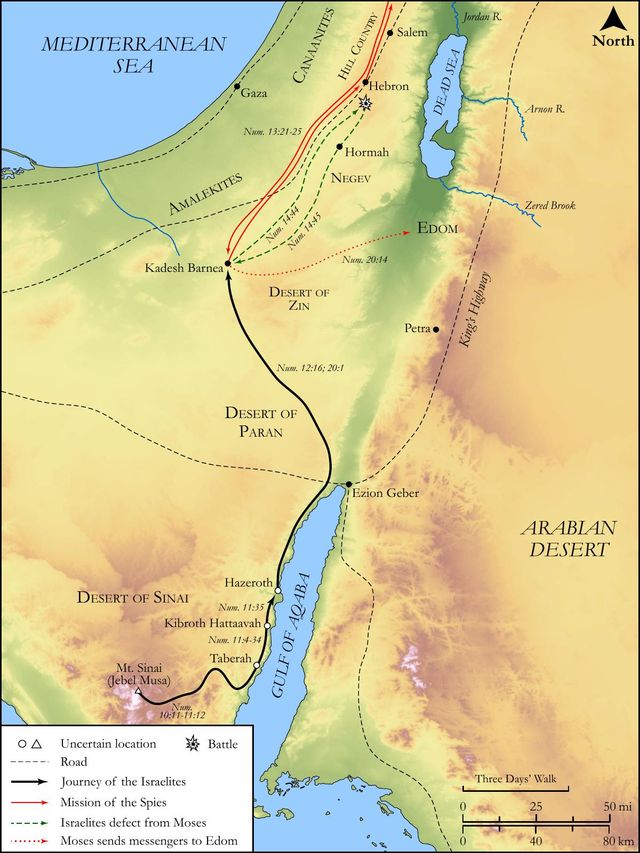
Numbers 15 marks a pivotal transition in the book, shifting from the narrative of Israel's rebellion and divine judgment at Kadesh-barnea (culminating in the condemnation of the Exodus generation to wilderness wandering, as seen in Numbers 14:34-35) to a series of prescriptive laws. These laws are not for the generation that failed, but for the new generation poised to inherit the Promised Land. The chapter meticulously outlines various offerings—burnt, grain, drink, sin, and trespass offerings—along with regulations for vows and unintentional sins, all designed to prepare the people for settled life in Canaan. These statutes underscore the enduring importance of maintaining a holy and orderly society and reaffirm the ongoing covenant relationship with Yahweh, even in the wake of significant national failures. The command regarding the heave offering of dough fits seamlessly into this broader framework, establishing proper worship and acknowledging divine provision as they transition from miraculous wilderness manna to agricultural abundance in a land of their own.
Historical & Cultural Context
The command in Numbers 15:21 was issued to a people on the verge of transforming from a nomadic existence, sustained by the miraculous provision of manna, into an agrarian society within the fertile land of Canaan. In that day, agricultural produce was the very foundation of life, and the practice of offering firstfruits was widespread among the nations, often directed towards their gods to ensure continued fertility and successful harvests. However, Israel's practice was uniquely distinct: their offerings were exclusively directed to Yahweh, the one true God, who had miraculously delivered them from Egyptian bondage and was now bringing them into a land renowned for its abundance, "a land flowing with milk and honey" (Exodus 3:8). The "heave offering" (Hebrew: terumah) was a specific type of contribution, often ceremonially "lifted up" to signify its dedication to God. Crucially, these offerings were typically designated for the support of the priests and Levites, who, unlike the other tribes, received no tribal land inheritance (Numbers 18:8). This system ensured the sustenance of those dedicated to the tabernacle service, reinforcing the community's collective responsibility to support their spiritual leaders and the ongoing worship system.
Key Themes
ShowHideThis verse significantly contributes to several overarching themes permeating the book of Numbers and the wider Pentateuch. Firstly, it powerfully reinforces the theme of Divine Provision and Human Dependence, serving as a tangible reminder that Israel's sustenance and prosperity flow directly from God's hand, not solely from their labor. Secondly, the concept of Firstfruits is central, emphasizing the foundational principle of honoring God with the very best and initial portion of one's increase, a recurring motif throughout the biblical narrative, as seen in Proverbs 3:9-10. Thirdly, it highlights Covenant Faithfulness and Obedience, as the offering is a concrete act of adherence to God's commands, demonstrating trust in His continued blessing and reinforcing their commitment to the covenant. Fourthly, the phrase "in your generations" underscores the vital theme of Generational Continuity and Perpetuation of Faith, ensuring that these foundational principles of worship, gratitude, and acknowledgment of divine sovereignty would be faithfully passed down and observed by successive generations of Israelites throughout their history in the promised land, thereby preserving the integrity of their relationship with Yahweh.
Exposition and Analysis
ShowHideKey Word Analysis
ShowHideThis term, derived from the same root as "head," signifies the beginning, the chief, or the principal part. In the context of Numbers 15:21, it emphasizes that the offering was to be made from the very initial product of the harvest, specifically the first processing of the grain into dough. This highlights the principle of prioritizing God by giving Him the "first" and "best," rather than what is leftover or convenient, demonstrating a posture of trust and honor.
This word refers to the kneaded meal, the raw, unbaked mixture of flour and water. The specificity of "dough" (rather than baked bread or raw grain) indicates that the offering was to be made at an early stage of preparation, before it became a finished product ready for consumption. This underscores the idea of consecrating the initial form of their sustenance, symbolizing God's claim over the very source of their provision.
Derived from the verb meaning "to lift up" or "to raise," a terumah was a sacred contribution or offering that was "lifted up" or "set apart" for God. While some heave offerings involved a literal lifting motion, the term primarily denotes a portion consecrated to the Lord, often designated for the support of the priests and Levites. It was a mandatory contribution, signifying a recognition of God's ownership over all things and the community's responsibility to support His sanctuary and its ministers.
This plural noun, meaning "a revolution of time, i.e., an age or generation," emphasizes the perpetual and enduring nature of the command. It signifies that this statute was not a temporary regulation but a foundational ordinance to be observed by all future generations of Israelites. This ensures that the principles of gratitude, acknowledgment of divine provision, and support for the priesthood would be ingrained in the national consciousness and practice throughout their history in the land.
Verse Breakdown
ShowHide"Of the first of your dough"
This clause precisely defines the source and quality of the offering. It mandates that the contribution must come from the initial processing of the newly harvested grain, embodying the "firstfruits" principle. This signifies that God is to be honored with the very beginning of one's increase, before any personal consumption or benefit, demonstrating a posture of profound trust and priority in the divine order.
"ye shall give unto the LORD"
This is a direct, imperative command, underscoring the mandatory nature of the offering and unequivocally identifying its ultimate recipient: Yahweh. The offering is not for human benefit or a mere religious formality, but a direct act of dedication and worship directed towards God, acknowledging His supreme sovereignty and ownership over the land and its produce.
"an heave offering"
This phrase specifies the exact type of offering required. As a terumah, it was a consecrated portion, ceremonially "lifted up" and set apart for sacred use, primarily for the sustenance of the priests and Levites. This highlights the communal aspect of the offering, as it supported the religious infrastructure vital for the nation's spiritual life and ongoing worship.
"in your generations"
This crucial phrase emphasizes the timeless and perpetual nature of this commandment. It was not a temporary regulation for the wilderness period or for a single generation, but a foundational statute to be observed consistently by all future generations of Israelites once they settled in the Promised Land, ensuring the continuity of this essential act of worship and dependence on God.
Literary Devices
ShowHideNumbers 15:21 employs several significant literary devices to convey its authoritative and enduring message. The direct, imperative, and precise language is a prime example of Legal Code, which is characteristic of the Pentateuch's presentation of divine law, emphasizing clarity, divine authority, and the binding nature of the command. The instruction itself functions as profound Symbolism: the offering of the "first of your dough" symbolizes the dedication of one's entire life, labor, and livelihood to God, acknowledging His ultimate ownership and benevolent provision over all things. It also operates as a Metonymy, where a specific part (the first dough) stands for the whole (all agricultural produce and, by extension, all blessings and prosperity derived from the land). Furthermore, the phrase "in your generations" serves as a powerful instance of Repetition of a common legal and covenantal formula found throughout the Pentateuch, reinforcing the enduring, perpetual, and inter-generational nature of the command, thereby emphasizing the vital importance of generational faithfulness and the continuity of covenant obligations.
Theological and Thematic Connections
ShowHideNumbers 15:21 articulates a profound theological principle: God's absolute claim over all creation and His people's corresponding responsibility to acknowledge His sovereignty through tangible acts of worship and obedience. The offering of the first dough is far more than a mere tax or a ritualistic formality; it is a declaration of profound dependence and heartfelt gratitude, recognizing that every blessing, especially sustenance derived from the land, originates from the benevolent and sustaining hand of Yahweh. This practice cultivates a heart of profound trust, compelling the Israelites to give their best to God even before their own needs are fully met, demonstrating unwavering faith in His continued provision. It also underscores the communal responsibility to support those dedicated to the Lord's service, fostering a holistic approach to worship that seamlessly integrates daily life and economic activity with spiritual devotion and covenant fidelity.
Reflection and Application
ShowHideWhile the specific ritual of the heave offering from dough is part of the Old Covenant ceremonial law, the underlying principles of Numbers 15:21 remain profoundly relevant and transformative for believers today. This verse challenges us to deeply examine our priorities and practices, calling us to cultivate a life of intentional gratitude and unwavering trust in God as our ultimate Provider. It powerfully encourages us to give our "firstfruits"—the very best of our time, our unique talents, and our financial resources—to the Lord, rather than offering Him what is merely left over after our own desires are met. This posture reflects a heart that truly acknowledges His supreme lordship and earnestly seeks to honor Him above all else. Living out this principle fosters a deep and abiding sense of dependence on God, constantly reminding us that our blessings are not solely the result of our own efforts or ingenuity, but flow directly and generously from His abundant hand. It invites us into a consistent, lifelong pattern of radical generosity and dedicated service, cultivating a spirit of cheerful and sacrificial giving that profoundly reflects our love for God and our unwavering commitment to His kingdom purposes in the world.
Questions for Reflection
ShowHideFAQ
ShowHideWhat was the purpose of the heave offering, and who received it?
ShowHideThe heave offering (terumah) was a specific type of sacred contribution, often involving a ceremonial "lifting up" to signify its dedication to God. Its primary purpose was to acknowledge God as the ultimate provider of all blessings, particularly agricultural bounty. This offering, though given to the Lord, was designated for the sustenance of the priests and Levites who served in the tabernacle (and later the temple). Since the priestly tribe of Levi did not receive a territorial inheritance like the other tribes, their livelihood was dependent on the tithes and offerings of the other Israelites, as detailed in Numbers 18:8-12. This system ensured that those dedicated to the spiritual service of the nation were adequately supported by the community, allowing them to focus on their sacred duties without needing to engage in agricultural labor.
Does this command apply to Christians today?
ShowHideWhile the specific ritual of offering the "first of your dough" as a heave offering is part of the Old Covenant ceremonial law and is not directly commanded for New Covenant believers, the underlying principles are profoundly applicable and eternally relevant. The command embodies the timeless truths of prioritizing God, expressing deep gratitude for His provision, and trusting Him with our resources. New Testament believers are called to give generously, cheerfully, and sacrificially, recognizing that all we have comes from God and belongs to Him (2 Corinthians 9:7). The principle of giving our "firstfruits" translates into dedicating our best time, our unique talents, and our financial resources to God's kingdom work. This acknowledges His lordship over every aspect of our lives and demonstrates our unwavering faith in His continued faithfulness to provide for all our needs according to His riches in glory.
Christ-Centered Fulfillment
ShowHideNumbers 15:21, with its command to offer the first of the dough as a heave offering, finds its ultimate and most profound fulfillment in the person and work of Jesus Christ. The Old Testament heave offering was a powerful shadow, pointing forward to the glorious reality of God's perfect provision and the ultimate "firstfruits" offering. Jesus himself is declared the "firstfruits of those who have fallen asleep" (1 Corinthians 15:20), signifying His resurrection as the irrefutable guarantee and glorious pattern for the resurrection of all believers. He is the preeminent offering, not merely a portion of human produce, but God's own beloved Son, given as the perfect, once-for-all, and final sacrifice for sin (Hebrews 10:10). Through His sinless life, sacrificial death on the cross, and victorious resurrection, Jesus became the ultimate "heave offering," lifted up for all humanity (John 3:14) and then supremely exalted to the right hand of God (Acts 2:33). He consecrated not just a portion of our livelihood, but our very lives to God. In Christ, we are now called to offer ourselves as living sacrifices, holy and pleasing to God (Romans 12:1), recognizing that He has already given His "first and best" for us. This ultimate act of divine generosity enables us, by His grace, to live lives of profound gratitude, joyful dedication, and worship "in our generations" until His glorious return.