


Matthew 4:14
Bible text: King James Version (1769 Blayney text) · Public domain
Bible text: Berean Standard Bible · Public domain
Bible text: American Standard Version (1901) · Public domain
Bible text: World English Bible, Messianic edition · Public domain
Bible text: Geneva Bible (1599) · Public domain
Bible text: Young's Literal Translation · Public domain
- ἵναinathatG2443CONJConjunction
- πληρωθῇplērōthēait may be fulfilledG4137V-APS-3SVerb Aorist Passive Subjunctive 3rd Singular
- τὸtothatG3588T-NSNDefinite article Nominative Singular Neuter
- ῥηθὲνrhēthenhaving been spokenG2046V-APP-NSNVerb Aorist Passive Participle Nominative Singular Neuter
- διὰdiathroughG1223PREPPreposition
- ἨσαΐουĒsaiouIsaiahG2268N-GSM-PNoun Genitive Singular Masculine Individual
- τοῦtoutheG3588T-GSMDefinite article Genitive Singular Masculine
- προφήτουprophētouprophetG4396N-GSMNoun Genitive Singular Masculine
- λέγοντος·legontossayingG3004V-PAP-GSMVerb Present Active Participle Genitive Singular Masculine
English is a literal word-by-word gloss of the Greek, not the KJV's wording. Why?
This is the original text the KJV's translators worked from — each Greek word with its own literal English meaning in this verse, prepared by scholars at Tyndale House, Cambridge. The KJV translates whole sentences, not word by word, so its wording differs: one Greek word can become several English words, and the KJV may choose “charity” where the gloss reads “love”. Both are faithful — they answer different questions. For the KJV's own rendering, switch to the KJV text.
Details
See on the biblical-era maps
Study this verse
Public-domain commentary
Matthew Henry
From his Commentary on the Whole Bible. Henry comments on passages, not single verses — this entry covers Matthew 4:12–17. His two-level outline is real structure in the source text, so it is rendered as structure.
We have here an account of Christ's preaching in the synagogues of Galilee, for he came into the world to be a Preacher; the great salvation which he wrought out, he himself began to publish (Heb 2:3) to show how much his heart was upon it, and ours should be.
Several passages in the other gospels, especially in that of St. John, are supposed, in the order of the story of Christ's life, to intervene between his temptation and his preaching in Galilee. His first appearance after his temptation, was when John Baptist pointed to him, saying, Behold the Lamb of God, Joh 1:29. After that, he went up to Jerusalem, to the passover (Jn. 2), discoursed with Nicodemus (Jn. 3), with the woman of Samaria (Jn. 4), and then returned into Galilee, and preached there. But Matthew, having had his residence in Galilee, begins his story of Christ's public ministry with his preaching there, which here we have an account of. Observe,
I.The time; When Jesus had heard that John was cast into prison, then he went into Galilee, Mat 4:12.
Note, The cry of the saints' sufferings comes up into the ears of the Lord Jesus. If John be cast into prison, Jesus hears it, takes cognizance of it, and steers his course accordingly: he remembers the bonds and afflictions that abide his people. Observe,
1.Christ did not go into the country, till he heard of John's imprisonment; for he must have time given him to prepare the way of the Lord, before the Lord himself appear. Providence wisely ordered it, that John should be eclipsed before Christ shone forth; otherwise the minds of people would have been distracted between the two; one would have said, I am of John, and another, I am of Jesus. John must be Christ's harbinger, but not his rival. The moon and stars are lost when the sun rises. John had done his work by the baptism of repentance, and then he was laid aside. The witnesses were slain when they had finished their testimony, and not before, Rev 11:7.
2.He did go into the country as soon as he heard of John's imprisonment; not only to provide for his own safety, knowing that the Pharisees in Judea were as much enemies to him as Herod was to John, but to supply the want of John Baptist, and to build upon the good foundation he had laid. Note, God will not leave himself without witness, nor his church without guides; when he removes one useful instrument, he can raise up another, for he has the residue of the Spirit, and he will do it, if he has work to do. Moses my servant is dead, John is cast into prison; now, therefore, Joshua, arise; Jesus, arise.
II.The place where he preached; in Galilee, a remote part of the country, that lay furthest from Jerusalem, as was there looked upon with contempt, as rude and boorish. The inhabitants of that country were reckoned stout men, fit for soldiers, but not polite men, or fit for scholars. Thither Christ went, there he set up the standard of his gospel; and in this, as in other things, he humbled himself. Observe,
1.The particular city he chose for his residence; not Nazareth, where he had been bred up; no, he left Nazareth; particular notice is taken of that, Mat 4:13. And with good reason did he leave Nazareth; for the men of that city thrust him out from among them, Luk 4:29. He made them his first, and a very fair, offer of his service, but they rejected him and his doctrine, and were filled with indignation at him and it; and therefore he left Nazareth, and shook off the dust of his feet for a testimony against those there, who would not have him to teach them. Nazareth was the first place that refused Christ, and was therefore refused by him. Note, It is just with God, to take the gospel and the means of grace from those that slight them, and thrust them away. Christ will not stay long where he is not welcome. Unhappy Nazareth! If thou hadst known in this thy day the things that belong to thy peace, how well had it been for thee! But now they are hid from thine eyes.
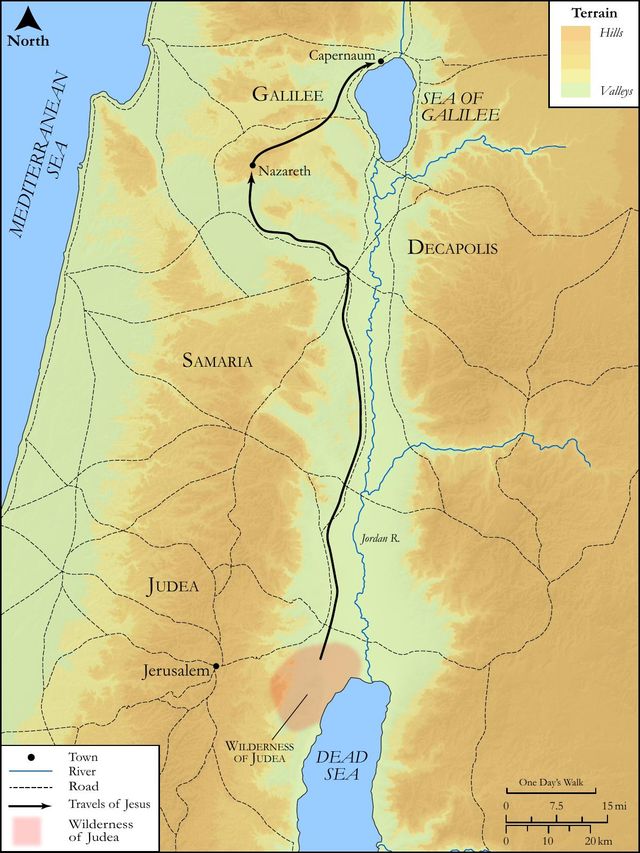
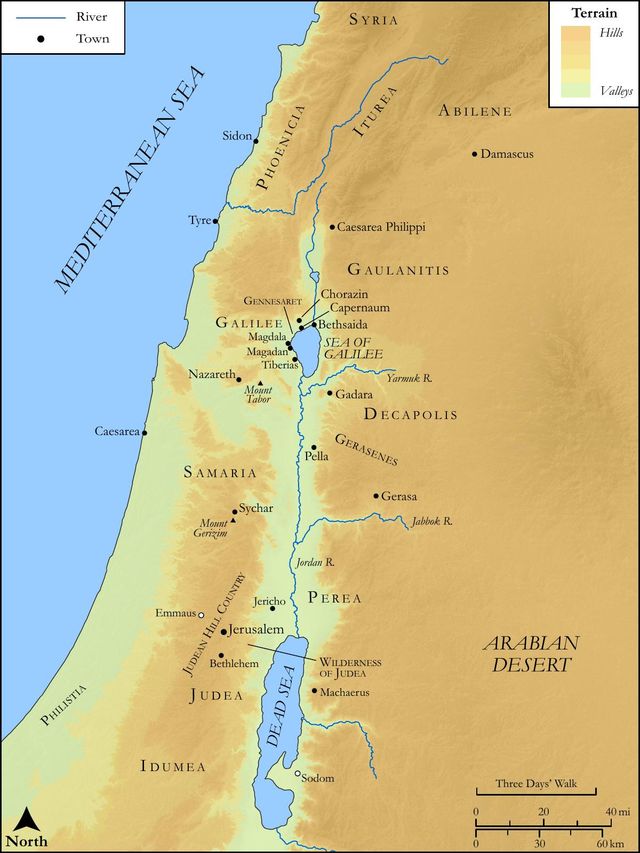
But he came and dwelt in Capernaum, which was a city of Galilee, but many miles distant from Nazareth, a great city and of much resort. It is said here to be on the sea coast, not the great sea, but the sea of Tiberias, an inland water, called also the lake of Gennesaret. Close by the falling of Jordan into the sea stood Capernaum, in the tribe of Naphtali, but bordering upon Zebulun; hither Christ came, and here he dwelt. Some think that his father Joseph had a habitation here, others that he took a house or lodgings at least; and some think it more than probable, that he dwelt in the house of Simon Peter; however, here he fixed not constantly, for he went about doing good; but this was for some time his head quarters: what little rest he had, was here; here he had a place, though not a place of his own, to lay his head on. And at Capernaum, it should seem, he was welcome, and met with better entertainment than he had at Nazareth. Note, If some reject Christ, yet others will receive him, and bid him welcome. Capernaum is glad of Nazareth's leavings. If Christ's own countrymen be not gathered, yet he will be glorious. "And thou, Capernaum, has now a day of it; thou art now lifted up to heaven; be wise for thyself, and know the time of thy visitation."
2.The prophecy that was fulfilled is this, Mat 4:14-16. It is quoted from Isa 9:1, Isa 9:2, but with some variation. The prophet in that place is foretelling a greater darkness of affliction to befall the contemners of Immanuel, than befell the countries there mentioned, either in their first captivity under Benhadad, which was but light (Kg1 15:20), or in their second captivity under the Assyrian, which was much heavier, Kg2 15:29. The punishment of the Jewish nation for rejecting the gospel should be sorer than either (see Isa 8:21, Isa 8:22); for those captivated places had some reviving in their bondage, and saw a great light again, Isa 9:2. This is Isaiah's sense; but the Scripture has many fulfillings; and the evangelist here takes only the latter clause, which speaks of the return of the light of liberty and prosperity to those countries that had been in the darkness of captivity, and applies it to the appearing of the gospel among them.
The places are spoken of, Mat 4:15. The land of Zebulun is rightly said to be by the sea coast, for Zebulun was a haven of ships, and rejoiced in her going out, Gen 49:13; Deu 33:18. Of Naphtali, it had been said, that he should give goodly words (Gen 49:21), and should be satisfied with favour (Deu 33:23), for from him began the gospel; goodly words indeed, and such as bring to a soul God's satisfying favour. The country beyond Jordan is mentioned likewise, for there we sometimes find Christ preaching, and Galilee of the Gentiles, the upper Galilee to which the Gentiles resorted for traffic, and where they were mingled with the Jews; which intimates a kindness in reserve for the poor Gentiles. When Christ came to Capernaum, the gospel came to all those places round about; such diffusive influences did the Sun of righteousness cast.
Now, concerning the inhabitants of these places, observe, (1.) The posture they were in before the gospel came among them (Mat 4:16); they were in darkness. Note, Those that are without Christ, are in the dark, nay, they are darkness itself; as the darkness that was upon the face of the deep. Nay, they were in the region and shadow of death; which denotes not only great darkness, as the grave is a land of darkness, but great danger. A man that is desperately sick, and not likely to recover, is in the valley of the shadow of death, though not quite dead; so the poor people were on the borders of damnation, though not yet damned-dead in law. And, which is worst of all, they were sitting in this condition. Sitting in a continuing posture; where we sit, we mean to stay; they were in the dark, and likely to be so, despairing to find the way out. And it is a contented posture; they were in the dark, and they loved darkness, they chose it rather than light; they were willingly ignorant. Their condition was sad; it is still the condition of many great and mighty nations, which are to be thought of, and prayed for, with pity. But their condition is more sad, who sit in darkness in the midst of gospel-light. He that is in the dark because it is night, may be sure that the sun will shortly arise; but he that is in the dark because he is blind, will not so soon have his eyes opened. We have the light, but what will that avail us, if we be not the light in the Lord? (2.) The privilege they enjoyed, when Christ and his gospel came among them; it was as great a reviving as ever light was to a benighted traveller. Note, When the gospel comes, light comes; when it comes to any place, when it comes to any soul, it makes day there, Joh 3:19; Luk 1:78, Luk 1:79. Light is discovering, it is directing; so is the gospel.
It is a great light; denoting the clearness and evidence of gospel-revelations; not like the light of a candle, but the light of the sun when he goes forth in his strength. Great in comparison with the light of the law, the shadows of which were now done away. It is a great light, for it discovers great things and of vast consequence; it will last long, and spread far. And it is a growing light, intimated in that word, It is sprung up. It was but spring of day with them; now the day dawned, which afterward shone more and more. The gospel-kingdom, like a grain of mustard-seed or the morning light, was small in its beginnings, gradual in its growth, but great in its perfection.
Observe, the light sprang up to them; they did not go to seek it, but were prevented with the blessings of this goodness. It came upon them ere they were aware, at the time appointed, by the disposal of him who commandeth the morning, and causes the day-spring to know its place, that it may take hold of the ends of the earth, Job 38:12, Job 38:13.
III.The text he preached upon (Mat 4:17):
From that time, that is, from the time of his coming into Galilee, into the land of Zebulun and Naphtali, from that time, he began to preach. He had been preaching, before this, in Judea, and had made and baptized many disciples (Joh 4:1); but his preaching was no so public and constant as now it began to be. The work of the ministry is so great and awful, that it is fit to be entered upon by steps and gradual advances.
The subject which Christ dwelt upon now in his preaching (and it was indeed the sum and substance of all his preaching), was the very same John has preached upon (Mat 3:2); Repent, for the kingdom of heaven is at hand; for the gospel is the same for substance under various dispensations; the commands the same, and the reasons to enforce them the same; an angel from heaven dares not preach any other gospel (Gal 1:8), and will preach this, for it is the everlasting gospel. Fear God, and, by repentance, give honour to him, Rev 14:6, Rev 14:7. Christ put a great respect upon John's ministry, when he preached to the same purport that John had preached before him. By this he showed that John was his messenger and ambassador; for when he brought the errand himself, it was the same that he had sent by him. Thus did God confirm the word of his messenger, Isa 44:26. The Son came on the same errand that the servants came on (Mat 21:37), to seek fruit, fruits meet for repentance. Christ had lain in the bosom of the Father, and could have preached sublime notions of divine and heavenly things, that should have alarmed and amused the learned world, but he pitches upon this old, plain text, Repent, for the kingdom of heaven is at hand. [1.] This he preached first upon; he began with this. Ministers must not be ambitious of broaching new opinions, framing new schemes, or coining new expressions, but must content themselves with plain, practical things, with the word that is nigh us, even in our mouth, and in our heart. We need not go up to heaven, nor down to the deep, for matter or language in our preaching. As John prepared Christ's way, so Christ prepared his own, and made way for the further discoveries he designed, with the doctrine of repentance. If any man will do this part of his will, he shall know more of his doctrine, Joh 7:17. [2.] This is preached often upon; wherever he went, this was his subject, and neither he nor his followers ever reckoned it worn threadbare, as those would have done, that have itching ears, and are fond of novelty and variety more than that which is truly edifying. Note, That which has been preached and heard before, may yet very profitably be preached and heard again; but then it should be preached and heard better, and with new affections; what Paul had said before, he said again, weeping, Phi 3:1, Phi 3:18. [3.] This he preached as gospel; "Repent, review your ways, and return to yourselves." Note, The doctrine of repentance is right gospel-doctrine. Not only the austere Baptist, who was looked upon as a melancholy, morose man, but the sweet and gracious Jesus, whose lips dropped as a honey-comb, preached repentance; for it is an unspeakable privilege that room is left for repentance. [4.] The reason is still the same; The kingdom of heaven is at hand; for it was not reckoned to be fully come, till that pouring out of the Spirit after Christ's ascension. John had preached the kingdom of heaven at hand above a year before this; but now it was so much the stronger; now is the salvation nearer, Rom 13:11. We should be so much the more quickened to our duty, as we see the day approaching, Heb 10:25.
Historical interpretation
Eleven Centuries of Reception
9 surviving comments on this verse. Each one is dated, so this reads as a timeline rather than a list.
Select a marker to jump to its quote. Markers stagger vertically where authors wrote within a few decades of each other.
It is, in short, too bad that Romulus should have had in Proculus an avoucher of his ascent to heaven, when the Christ of (this) god could not find any one to announce his descent from heaven; just as if the ascent of the one and the descent of the other were not effected on one and the same ladder of falsehood! Then, what had he to do with Galilee, if he did not belong to the Creator by whom that region was destined (for His Christ) when about to enter on His ministry? As Isaiah says: "Drink in this first, and be prompt, O region of Zabulon and land of Nephthalim, and ye others who (inhabit) the sea-coast, and that of Jordan, Galilee of the nations, ye people who sit in darkness, behold a great light; upon you, who inhabit (that) land, sitting in the shadow of death, the light hath arisen." It is, however, well that Marcion's god does claim to be the enlightener of the nations, that so he might have the better reason for coming down from heaven; only, if it must needs be, he should rather have made Pontus his place of descent than Galilee.
(H. E. iii. 24.) It is related that John preached the Gospel almost up to the close of his life without setting forth any thing in writing, and at length came to write for this reason. The three first written Gospels having come to his knowledge, he confirmed the truth of their history by his own testimony; but there were yet some things wanting, especially an account of what the Lord had done at the first beginning of His preaching. And it is true that the other three Gospels seem to contain only those things which were done in that year in which John the Baptist was put into prison, or executed. For Matthew, after the temptation, proceeds immediately, Hearing that John was delivered up; and Mark in like manner. Luke again, even before relating one of Christ's actions, tells that Herod had shut up John in prison. The Apostle John then was requested to put into writing what the preceding Evangelists had left out before the imprisonment of John; hence he says in his Gospel, this beginning of miracles did Jesus.
Wherefore doth He depart? Again instructing us not to go to meet temptations, but to give place and withdraw ourselves. For it is no reproach, the not casting one's self into danger, but the falling to stand manfully when fallen into it. To teach us this accordingly, and to soothe the envy of the Jews, He retires to Capernaum; at once fulfilling the prophecy, and making haste to catch the teachers of the world: for they, as you know, were abiding there, following their craft.
But mark, I pray thee, how in every case when He is about to depart unto the Gentiles, He hath the occasion given Him by Jews. For so in this instance, by plotting against His forerunner, and casting him into prison, they thrust out Christ into the Galilee of the Gentiles. For to show that He neither speaks of the Jewish nation by a part of it, nor signifies obscurely all the tribes; mark how the Prophet distinguishes that place, saying "The land of Nephthalim, by the way of the sea, beyond Jordan, Galilee of the Gentiles, the people which sat in darkness, saw great light:" by darkness here not meaning that which is sensible, but men's errors and ungodliness. Wherefore he also added, "They which sat in the region and shadow of death, to them light is sprung up." For that thou mightest learn that neither the light nor the darkness which he speaks of are sensible, in discoursing of the light, he called it not merely light, but "a great light" which elsewhere he expresses by the word, True: and in describing the darkness, he termed it, "a shadow of death."
Then implying that they did not of themselves seek and find, but that God showed Himself to them from above, he saith to them, "Light is sprung up;" that is, the light of itself sprang up and shone forth: it was not that they first ran to the light. For in truth the condition of men was at the worst before Christ's coming. Since they more than "walked in darkness;" they "sat in darkness;" a kind of sign that they did not even hope to be delivered. For as persons not even knowing where to put a step forward, so they sat, overtaken by the darkness, not being able so much as to stand any more.
(Hom. xiv.) It is not blameworthy not to throw one's self into peril, but when one has fallen into it, not to endure manfully. He departed from Judæa both to soften Jewish animosity, and to fulfil a prophecy, seeking moreover to fish for those masters of the world who dwelt in Galilee. Note also how when He would depart to the Gentiles, He received good cause from the Jews; His forerunner was thrown into prison, which compelled Jesus to pass into Galilee of the Gentiles.
But that you may learn that he speaks not of natural day and night, he calls the light, a great light, which is in other places called the true light; and he adds, the shadow of death, to explain what he means by darkness. The words arose, and shined, show, that they found it not of their own seeking, but God Himself appeared to them, they did not first run to the light; for men were in the greatest miseries before Christ's coming; they did not walk but sate in darkness; which was a sign that they hoped for deliverance; for as not knowing what way they should go, shut in by darkness they sate down, having now no power to stand. By darkness he means here, error and ungodliness.
(in Esai. c. 9. 1.) They are said at the first time to be lightened from the burden of sin, because in the country of these two tribes, the Saviour first preached the Gospel; at the last time their faith was increased, most of the Jews remaining in error. By the sea here is meant the Lake of Gennesaret, a lake formed by the waters of the Jordan, on its shores are the towns of Capernaum, Tiberias, Bethsaida, and Corozaim, in which district principally Christ preached. Or, according to the interpretation of those Hebrews who believe in Christ, the two tribes Zabulon and Naphtali were taken captive by the Assyrians, and Galilee was left desert; and the prophet therefore says that it was lightened, because it had before suffered the sins of the people; but afterwards the remaining tribes who dwelt beyond Jordan and in Samaria were led into captivity; and Scripture here means that the region which had been the first to suffer captivity, now was the first to see the light of Christ's preaching. The Nazarenes again interpret that this was the first part of the country that, on the coming of Christ, was freed from the errors of the Pharisees, and after by the Gospel of the Apostle Paul, the preaching was increased or multiplied throughout all the countries of the Gentiles.
(ubi sup.) Or we must read, beyond Jordan, of Galilee of the Gentiles; so, I mean, that the people who either sat, or walked in darkness, have seen light and that not a faint light, as the light of the Prophets, but a great light, as of Him who in the Gospel speaks thus, I am the light, of the world. Between death and the shadow of death I suppose this difference; death is said of such as have gone down to the grave with the works of death; the shadow of such as live in sin, and have not yet departed from this world; these may, if they will, yet turn to repentance.
By God without doubt, for none can effect any thing against a holy man, unless God deliver him up. He withdrew into Galilee, that is, out of Judæa; both that He might reserve His passion to the fit time, and that He might set us an example of flying from danger.
Otherwise, the Gentiles who worshipped idols, and dæmons, were they who sat in the region of the shadow of death; the Jews, who did the works of the Law, were in darkness, because the righteousness of God was not yet manifested to them.
He left one, viz. Nazareth, that He might enlighten more by His preaching and miracles. Thus leaving an example to all preachers that they should preach at a time and in places where they may do good, to as many as possible. In the prophecy, the words are these, At that first time the land of Zabulon and the land of Naphtali was lightened, and at the last time was increased the way of the sea beyond Jordan, Galilee of the Gentiles. (Is. 9:1.)
But this should be considered with more care, viz. that John says that the Lord went into Galilee, before John the Baptist was thrown into prison. According to John's Gospel after the water turned into wine, and his going down to Capernaum, and after his going up to Jerusalem, he returned into Judæa and baptized, and John was not yet cast into prison. But here it is after John's imprisonment that He retires into Galilee, and with this Mark agrees. But we need not suppose any contradiction here. John speaks of the Lord's first coming into Galilee, which was before the imprisonment of John. (John 4:3.) He speaks in another place of His second coming, into Galilee, and the other Evangelists mention only this second coming into Galilee which was after John's imprisonment.
Matthew having related the forty days' fast, the temptation of Christ, and the ministry of Angels, proceeds, Jesus having heard that John was cast into prison.
(ap. Anserm.) In allegory, John and the rest of the Prophets were the voice going before the Word. When prophecy ceased and was fettered, then came the Word, fulfilling what the Prophet had spoken of it, He departed into Galilee, i. e. from figure to verity. Or, into the Church, which is a passing from vice to virtue. Nazareth is interpreted 'a flower,' Capernaum, 'the beautiful village;' He left therefore the flower of figure, (in which was mystically intended the fruit of the Gospel,) and came into the Church, which was beautiful with Christ's virtues. It is by the sea-coast, because placed near the waves of this world, it is daily beaten by the storms of persecution. It is situated between Zabulon and Naphtali, i. e. common to Jews and Gentiles. Zabulon is interpreted, 'the abode of strength;' because the Apostles, who were chosen from Judæa, were strong. Nephtali, 'extension,' because the Church of the Gentiles was extended through the world.
(ap. Anselm.) Though Luke's order seems the more historical; Matthew relates the temptations as they were done to Adam.
(ap. Anselm.) He came as Luke writes to Nazareth, where He had been brought up, and there entering into the synagogue, He read and spoke many things, for which they sought to throw Him down from the rock, and thence He went to Capernaum; for which Matthew has only, And leaving the town of Nazareth, He came and dwelt at Capernaum.
(ord.) Nazareth is a village in Galilee near Mount Tabor; Capernaum a town in Galilee of the Gentiles near the Lake of Gennesaret; and this is the meaning of the word, on the sea coast. He adds further in the borders of Zabulon and Naphtali, where was the first captivity of the Jews by the Assyrians. Thus where the Law was first forgotten, there the Gospel was first preached; and from a place as it were between the two it was spread both to Jews and Gentiles.
(ap. Anselm.) But Matthew here so quotes the passage as to make them all nominative cases referring to one verb. The land of Zabulon, and the land of Naphtali, which is the way of the sea, and which is beyond Jordan, viz. the people of Galilee of the Gentiles, the people which walked in darkness.
(ord.) Note that there are two Galilees; one of the Jews, the other of the Gentiles. This division of Galilee had existed from Solomon's time, who gave twenty cities in Galilee to Hyram, King of Tyre; this part was afterwards called Galilee of the Gentiles; the remainder, of the Jews.
Continue studying Matthew 4:14 across the web’s major study libraries — every link below opens this exact verse, chapter, or book on the destination site.
Read & Compare
 BibleGatewayThis verse in more than 200 translations and 70 languages.
 Bible.comThe YouVersion reader — hundreds of translations, reading plans, and highlights.
 ESV.orgCrossway's official English Standard Version reader.
 NET BibleThe NET translation with 60,000+ translators' notes on every rendering decision.
 STEP BibleTyndale House's free study tool — original text, vocabulary, and scholarly resources.
 BibliaLogos Bible Software's free web reader.
 USCCBThe New American Bible (Revised Edition) with the U.S. bishops' study notes.
Commentaries
 BibleHub CommentariesDozens of classic commentaries on this verse, gathered on one page.
 StudyLightMore than 100 commentary sets — the largest collection on the web.
 BibleRefPlain-English commentary on what this verse means, verse by verse.
 Enduring WordDavid Guzik's free commentary on this chapter, widely used by Bible teachers.
 Bible Study ToolsVerse commentary alongside Greek and Hebrew study aids.
Original Language & Research
- BibleHub InterlinearThe verse word by word — original language, transliteration, and English.
- BibleHub LexiconEvery word's original-language definition and Strong's entry.
 Blue Letter BibleDeep-study tools — Strong's numbers, concordance, and word studies.
 CNTR CollationThe earliest Greek manuscripts of this verse, collated letter by letter.
Sermons, Hymns & Audio


TrulyRandomVerse is not affiliated with these sites and doesn’t control their content. They’re linked because they’re genuinely useful.
Summary
Matthew 4:14 serves as a pivotal transitional statement in the Gospel, asserting that Jesus' relocation to Capernaum and the commencement of His public ministry in Galilee directly fulfill an ancient prophecy from Isaiah. This verse underscores Matthew's central theological conviction that Jesus Christ is the promised Messiah, whose life and actions are not coincidental but are the precise and divinely orchestrated culmination of God's redemptive plan revealed through His prophets in the Old Testament.
Context
ShowHideLiterary Context
This verse immediately precedes Matthew's direct quotation of Isaiah 9:1-2, which speaks of a great light shining in "Galilee of the Gentiles." Matthew strategically places this fulfillment formula after describing Jesus' move from Nazareth to Capernaum, a city located by the Sea of Galilee, following the imprisonment of John the Baptist. This geographical shift marks the formal beginning of Jesus' public ministry, setting the stage for His teaching, healing, and calling of disciples in a region often considered religiously overlooked. The "fulfillment formula" ("that it might be fulfilled which was spoken by...") is a hallmark of Matthew's Gospel, appearing frequently to demonstrate Jesus' messianic credentials to his primarily Jewish audience.
Historical & Cultural Context
Galilee, particularly "Galilee of the Gentiles" (which included areas populated by non-Jews), was often looked down upon by the Judean religious elite. It was a region of mixed populations, diverse cultural influences, and was geographically distant from the religious center of Jerusalem. The prophecy in Isaiah 9:1-2 originally referred to the northern territories of Israel, specifically Zebulun and Naphtali, which had suffered greatly during the Assyrian invasions. Isaiah's prophecy offered a message of hope and restoration, promising that a great light would appear in this very region that had "walked in darkness." Matthew's application of this prophecy to Jesus' ministry in Galilee highlights God's unexpected choice of a humble, peripheral region as the starting point for the Messiah's public work, challenging conventional expectations of where the Messiah would begin His kingdom proclamation.
Key Themes
ShowHideMatthew 4:14 powerfully reinforces several pervasive themes within the Gospel. The most prominent is Prophetic Fulfillment, which is central to Matthew's Christology. By repeatedly linking Jesus' life events to Old Testament prophecies (e.g., His birth to Isaiah 7:14 in Matthew 1:22-23, His return from Egypt to Hosea 11:1 in Matthew 2:15), Matthew establishes Jesus' identity as the long-awaited Messiah. This verse also highlights Divine Sovereignty, demonstrating that God's plan for salvation history is meticulously unfolding according to His predetermined will, with Jesus' every action serving as a deliberate step in that plan. Finally, it subtly introduces the theme of Light and Darkness, as Jesus' ministry in Galilee, a region previously in "darkness," signifies the dawning of God's salvific light, foreshadowing the universal reach of the Gospel.
Exposition and Analysis
ShowHideKey Word Analysis
ShowHideThis verb means "to make replete, i.e. (literally) to cram... or (figuratively) to furnish... satisfy, execute... finish... verify (or coincide with a prediction)." In the context of prophecy, it signifies that Jesus' actions did not merely resemble or align with Isaiah's words, but rather brought them to their complete and intended realization. It implies a divine culmination, where the prophecy finds its perfect embodiment in the person and work of Christ.
This verb means "to utter, i.e. speak or say." While similar to légō (G3004), rhéō often emphasizes the act of breaking silence or the simple utterance of words, particularly divine pronouncements. Here, it underscores that the prophecy was a direct, authoritative word from God, delivered through His chosen instrument, Esaias.
This noun denotes "a foreteller" or "an inspired speaker." A prophet was not merely one who predicted the future, but primarily one who spoke on behalf of God, conveying His will and truth to humanity. The designation of Esaias as "the prophet" emphasizes the divine origin and authority of the words being fulfilled by Jesus.
Verse Breakdown
ShowHide"That it might be fulfilled"
This opening clause, introduced by the conjunction "That" (Greek, hína - G2443, denoting purpose or result), clearly states the divine intention behind Jesus' actions. His move to Capernaum and the start of His ministry there were not accidental but were specifically purposed by God to bring about the complete realization of prophecy. This highlights God's sovereign control over history and His meticulous plan for the Messiah.
"which was spoken by Esaias the prophet,"
This phrase identifies the specific source of the prophecy being fulfilled. "Esaias" (Greek, Hēsaḯas - G2268) is the Greek form of the Hebrew name "Isaiah," one of the most significant Old Testament prophets. By naming Isaiah, Matthew grounds Jesus' ministry firmly in the Hebrew Scriptures, signaling to his Jewish audience the continuity between God's ancient promises and their contemporary fulfillment in Christ. The inclusion of "the prophet" further emphasizes the divine authority behind Isaiah's words.
"saying,"
This simple participle (Greek, légō - G3004) acts as a direct introduction to the prophetic quotation that immediately follows in Matthew 4:15-16. It signals that the exact words of Isaiah are about to be presented, reinforcing the precise nature of the fulfillment.
Literary Devices
ShowHideMatthew 4:14 primarily employs Fulfillment Citation, a hallmark literary device throughout Matthew's Gospel. This technique involves explicitly stating that an event in Jesus' life occurs "that it might be fulfilled" what was spoken by a prophet. This device serves to underscore the divine orchestration of Jesus' life and ministry, presenting Him as the culmination of God's redemptive plan. It functions as a powerful apologetic tool for Matthew's Jewish audience, demonstrating Jesus' legitimate claim to Messiahship by aligning His actions with their revered scriptures. The verse also utilizes Allusion by referencing "Esaias the prophet," immediately bringing to mind the extensive prophetic corpus of Isaiah and its messianic implications, thereby enriching the narrative with layers of Old Testament theology.
Theological and Thematic Connections
ShowHideMatthew 4:14 stands as a profound theological statement, asserting that the entirety of Jesus' life and ministry is a direct outworking of God's eternal plan, meticulously revealed through the Old Testament prophets. It underscores the reliability and truthfulness of God's word, demonstrating His faithfulness in bringing His promises to fruition in the person of Jesus Christ. This verse reinforces the concept of progressive revelation, where the shadows and types of the Old Testament find their substance and ultimate meaning in the New. It also highlights the divine authority of Jesus, whose every step is validated by ancient, divinely inspired pronouncements, thereby solidifying His identity as the long-awaited Messiah and the very embodiment of God's redemptive purpose for humanity.
Reflection and Application
ShowHideMatthew 4:14 offers profound reassurance and a call to deeper trust in God's sovereign plan. In a world often characterized by chaos and uncertainty, this verse reminds us that God is actively at work, orchestrating events according to His perfect will, just as He meticulously fulfilled prophecies concerning His Son. For believers, this means we can rest in the knowledge that our lives, too, are part of a larger divine narrative, even when circumstances seem unclear. It encourages us to diligently study Scripture, recognizing that the Old Testament is not merely ancient history but a vibrant tapestry woven with promises that find their ultimate meaning and fulfillment in Christ. Understanding this continuity deepens our appreciation for Jesus' unique authority and His rightful claim as Lord and Savior, compelling us to live lives that reflect His light in a world still longing for true illumination.
Questions for Reflection
ShowHideFAQ
ShowHideWhy does Matthew emphasize prophetic fulfillment so much?
ShowHideMatthew's Gospel was primarily written for a Jewish audience, and for them, the fulfillment of Old Testament prophecy was the ultimate proof of Messiahship. By repeatedly showing how Jesus' life, ministry, death, and resurrection directly fulfilled specific prophecies, Matthew aimed to convince his readers that Jesus was indeed the long-awaited Christ. This emphasis also highlights God's faithfulness and the divine orchestration of salvation history, demonstrating that Jesus' coming was not random but part of God's meticulously planned redemptive work from eternity past, as seen in passages like Matthew 1:22-23 and Matthew 2:15.
What is the significance of "Galilee of the Gentiles" in this context?
ShowHideThe prophecy in Isaiah 9:1-2 speaks of light coming to a region that had been in "darkness," specifically mentioning Zebulun and Naphtali, which were northern territories in Galilee. This area was historically overlooked, often looked down upon by the religious elite in Jerusalem, and had a significant Gentile population. By beginning His ministry in "Galilee of the Gentiles," Jesus fulfills Isaiah's prophecy, demonstrating that God's light and salvation would not be confined to the religious establishment or a specific geographical center, but would extend to those on the periphery, foreshadowing the universal reach of the Gospel to both Jews and Gentiles.
Christ-Centered Fulfillment
ShowHideMatthew 4:14, by declaring the fulfillment of Isaiah's prophecy, powerfully points to Jesus Christ as the ultimate embodiment of God's redemptive promises. The "great light" prophesied by Isaiah in Isaiah 9:2 is none other than Jesus Himself, who later declares, "I am the light of the world" (John 8:12). His ministry in Galilee, a region previously shrouded in spiritual darkness, signifies the dawning of God's kingdom and the breaking forth of divine truth and grace. This fulfillment is not merely a historical correlation but a profound theological reality: Jesus, the Son of God, perfectly fulfills the Old Testament's messianic expectations, bringing salvation not just to Israel but to all who dwell in darkness. His coming marks the turning point in salvation history, where the prophetic word becomes flesh (John 1:14), and the long-awaited King begins His reign, ushering in an era of light, hope, and spiritual liberation for all peoples, echoing the universal scope of the Gospel found in passages like Acts 13:47.