


Matthew 19:18
Bible text: King James Version (1769 Blayney text) · Public domain
Bible text: King James Version with Strong's numbers · Public domain
Bible text: Berean Standard Bible · Public domain
Bible text: American Standard Version (1901) · Public domain
Bible text: World English Bible, Messianic edition · Public domain
Bible text: Geneva Bible (1599) · Public domain
Bible text: Young's Literal Translation · Public domain
- ΛέγειLegeiHe saysG3004V-PAI-3SVerb Present Active Indicative 3rd Singular
- αὐτῷ·autōto himG846P-DSMPersonal pronoun Dative Singular Masculine
- ποίας;poiasWhich [commandments]?G4169I-APFInterrogative pronoun Accusative Plural Feminine
- ὁho<the>G3588T-NSMDefinite article Nominative Singular Masculine
- δὲdeAndG1161CONJConjunction
- ἸησοῦςIēsousJesusG2424N-NSM-PNoun Nominative Singular Masculine Individual
- εἶπεν·eipenwas speakingG2036V-2AAI-3SVerb 2nd Aorist Active Indicative 3rd Singular
- τὸto<the>G3588T-ASNDefinite article Accusative Singular Neuter
- οὐouNotG3756PRT-NNegative Particle Negative
- φονεύσειςphoneuseiswill you murderG5407V-FAI-2SVerb Future Active Indicative 2nd Singular
- οὐounotG3756PRT-NNegative Particle Negative
- μοιχεύσειςmoicheuseiswill you commit adulteryG3431V-FAI-2SVerb Future Active Indicative 2nd Singular
- οὐounotG3756PRT-NNegative Particle Negative
- κλέψειςklepseiswill you stealG2813V-FAI-2SVerb Future Active Indicative 2nd Singular
- οὐounotG3756PRT-NNegative Particle Negative
- ψευδομαρτυρήσειςpseudomarturēseiswill you bear false witnessG5576V-FAI-2SVerb Future Active Indicative 2nd Singular
English is a literal word-by-word gloss of the Greek, not the KJV's wording. Why?
This is the original text the KJV's translators worked from — each Greek word with its own literal English meaning in this verse, prepared by scholars at Tyndale House, Cambridge. The KJV translates whole sentences, not word by word, so its wording differs: one Greek word can become several English words, and the KJV may choose “charity” where the gloss reads “love”. Both are faithful — they answer different questions. For the KJV's own rendering, switch to the KJV text.
Details
See on the biblical-era maps

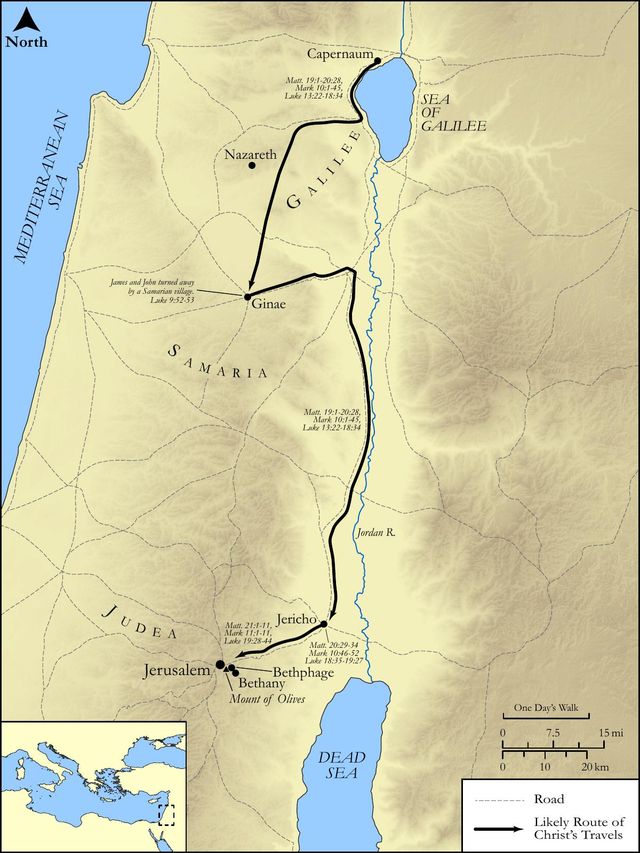
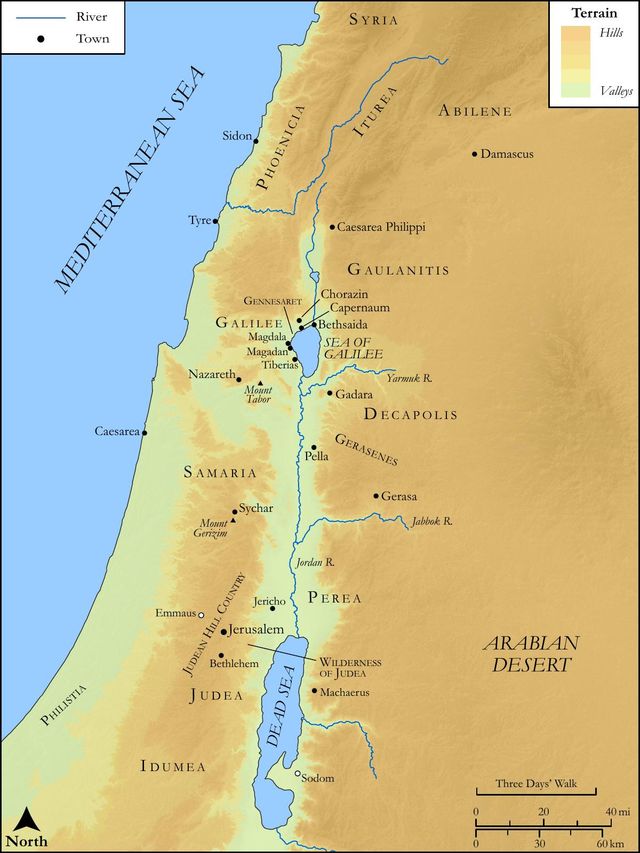
Study this verse
Historical interpretation
Six Centuries of Reception
11 surviving comments on this verse. Each one is dated, so this reads as a timeline rather than a list.
Select a marker to jump to its quote. Markers stagger vertically where authors wrote within a few decades of each other.
These commandments are sufficient for someone entering on the ground level of the path of eternal life. But they are not sufficient to lead one to the higher life, and certainly not to perfection. One who fails in just one of these commandments cannot even enter the beginnings of life. Anyone who wishes to enter the early stages of the path of life must be free from adultery and murder and any kind of theft. For just as the adulterer and murderer will not enter into life, so neither will the thief. Many of those who are said to believe in Christ are guilty of this sin. Just look at their daily business and the way money is entrusted to them and the crafts they practice.
The infants are a type of the Gentiles, to whom salvation is rendered by faith and hearing. But the disciples, in their first zeal for the salvation of Israel, forbid them to approach, but the Lord declares that they are not to be forbidden. For the gift of the Holy Ghost was to be conferred upon the Gentiles by laying on of hands, as soon as the Law had ceased.
This young man has grown impudent from studying the law. He is worried about his salvation. Jesus sends him back to the law so that he might understand that, in the very thing in which he takes pride, he has as yet done no righteous work. For the Lord answered him with the words of the law. But the young man, like the boastful and impudent people of whom he is a type, put his trust in the law, but he did not really comply with it at all. For they had been ordered not to kill, yet they had killed the prophets. They knew they were not to commit adultery, yet they had brought corruption on the faith and adultery on the law and had worshiped other gods. They knew not to steal, yet by stealth they had dissolved the commandments of the law, before Christ restored the freedom of believing in the faith. They knew not to bear false witness, yet they denied that Christ rose from the dead. They were ordered to honor father and mother, yet they had separated themselves from the family of God the Father and their mother the church. They were ordered to love their neighbor as themselves, yet they persecuted Christ, who had assumed the body of us all and had become neighbor to each one of us by the condition of the assumed body; they persecuted him to the punishment of the cross. So the young man was ordered to cast off and cut out all these vices and to return to the law.
(Hom. lxiii.) But I for my part, though I deny not that he was a lover of money, because Christ convicts him as such, cannot consider him to have been a hypocrite, because it is unsafe to decide in uncertain cases, and especially in making charges against any. Moreover Mark removes all suspicion of this kind, for he says that he came to Him, and knelt before Him; (Mark 10:17.) and that Jesus when He looked on him, loved him. And if he had come to tempt Him, the Evangelist would have signified as much, as he has done in other places. Or if he had said nothing thereof, Christ would not have suffered him to be hid, but would either have convicted him openly, or have covertly suggested it. But He does not this; for it follows, He saith unto him, Why askest thou me concerning good?
Wherein then was the profit that He answered thus? He leads him by degrees, and teaches him to lay aside false flattery, and rising above the things which are upon earth to cleave to God, to seek things to come, and to know Him that is truly good, the root and source of every good.
This he said not to tempt Him, but because he supposed that they were other than the commandments of the Law, which should be the means of life to him.
But because all the commandments that the Lord had recounted were contained in the Law, The young man saith unto him. All these have I kept from my youth up. And did not even rest there, but asked further, What lack I yet? which alone is a mark of his intense desire.
And because He spake of riches warning us to strip ourselves of them, He promises to repay things greater, by how much heaven is greater than earth, and therefore He says, And thou shalt have treasure in heaven. By the word treasure He denotes the abundance and endurance of the reward.
For they that have little, and they that abound, are not in like measure encumbered. For the acquisition of riches raises a greater flame, and desire is more violently kindled.
Therefore when Christ said, "If thou wilt enter into life, keep the commandments," he saith, "Which?" Not tempting, far from it, but supposing there were some others besides those of the law that should procure him life, which was like one who was very desirous. Then since Jesus mentioned those out of the law, he saith, "All these things have I kept from my youth up." And neither at this did he stop, but again asks, "What lack I yet?" which itself again was a sign of his very earnest desire.
He that asks this question is both young, rich, and proud, and he asks not as one that desires to learn, but as tempting Him. This we can prove by this, that when the Lord had said unto him, If thou wilt enter into life, keep the commandments, he further insidiously asks, which are the commandments? as if he could not read them for himself, or as if the Lord could command any thing contrary to them.
But because he had styled Him Good Master, and had not confessed Him as God, or as the Son of God, He tells him, that in comparison of God there is no saint to be called good, of whom it is said, Confess unto the Lord, for he is good; (Ps. 118:1.) and therefore He says, There is one good, that is, God. But that none should suppose that by this the Son of God is excluded from being good, we read in another place, The good Shepherd layeth down his life for his sheep. (John 10:11.)
For Our Saviour does not reject this witness to His goodness, but corrected the error of calling Him Good Master apart from God.
(cont. Vigilant. 15.) That Vigilantius asserts that they who retain the use of their property, and from time to time divide their incomes among the poor, do better than they who sell their possessions and lavish them in one act of charity, to him, not I, but God shall make answer, If thou wilt be perfect, Go and sell. That which you so extol, is but the second or third grade; which we indeed admit, only remembering that what is first is to be set before what is third or second.
For many who leave their riches do not therefore follow the Lord; and it is not sufficient for perfection that they despise money, unless they also follow the Saviour, that unless having forsaken evil, they also do what is good. For it is easier to contemn the hoard than quit the propensityb; therefore it follows, And come and follow me; for he follows the Lord who is his imitator, and who walks in his steps. It follows, And when the young man had heard these words, he went away sorrowful. This is the sorrow that leads to death. And the cause of his sorrow is added, for he had great possessions, thorns, that is, and briars, which choked the holy leaven.
(Verse 18, 19.) But if you want to enter life, keep the commandments. He said to him, 'Which ones?' Jesus replied, 'You shall not murder. You shall not commit adultery. You shall not steal. You shall not give false testimony. Honor your father and mother, and love your neighbor as yourself.' This young man is tempting, and from this we can prove that when the Lord tells him, 'If you want to enter life, keep the commandments,' he deceitfully asks what those commandments are: as if he himself had not read them, or as if the Lord could command something contrary to God.
When Christ says to him, “If you would enter life, keep the commandments,” the man expects him to add immediately, “my commandments.” “Which ones?” he asks. He was quite deceived in his expectation. For Christ did not answer him as he expected but simply pointed him to the law. This is not because the law is perfection, for “no one is justified by the law,” as it is written, but because the life lived according to law is a kind of introduction to the eternal life, briefly acquainting trainees to the things above. “For the law was put in charge to lead us to Christ.” The law is the starting point for social justice. Christ is the perfection. For the beginning of good is to act justly, he says. Just action then is shown by the law, but goodness is shown by Christ. The law taught us to repay those who wish to harm us, as in “eye for eye, tooth for tooth.” But Christ taught us to let go such balanced vengeance with a view to the greater good, teaching that “if anyone strikes you on the right cheek, turn to him the other also; and if anyone would sue you and take your coat, let him have your cloak as well.”
(Gennadius, de Eccles. Dogm. 36.) It is good to distribute with discrimination to the poor; it is better, with resolve of following the Lord, to strip one's self of all at once, and freed from anxiety to suffer want with Christ.
These words prove that the Law gave to such as kept it not only temporal promises, but also life eternal. And because the hearing these things made him thoughtful, He saith unto him, Which?
And Jesus, condescending as to a weak one, most graciously set out to him the precepts of the Law; Jesus said, Thou shalt do no murder; and of all these precepts follows the exposition, And thou shalt love thy neighbour as thyself. For the Apostle says, Whoso loveth his neighbour has fulfilled the Law? (Prov. 13:10.) But it should be enquired, why the Lord has enumerated only the precepts of the Second Table? Perhaps because this young man was zealous in the love of God, or because love of our neighbour is the step by which we ascend to the love of God.
But to those who would be perfect in grace, He shows how they may come to perfection, Jesus saith unto him, If thou wilt be perfect, go, and sell all that thou hast, and give to the poor. Mark the words; He said not, Go, and consume all thou hast; but Go, and sell; and not some, as did Ananias and Sapphira, but All. And well He added, that thou hast, for what we have are our lawful possessions. Those therefore that he justly possessed were to be sold; what had been gained unjustly were to be restored to those from whom they had been taken. And He said not, Give to thy neighbours, nor to the rich, but to the poor.
(e Bed. in Luc. Mat. 18:3.) This man had, it may be, heard of the Lord, that only they who were like to little children were worthy to enter into the heavenly kingdom; but desiring to know more certainly, he asks to have it declared to him not in parables, but expressly, by what merits he might attain eternal life. Therefore it is said And, behold, one came and said unto him, Good Master, what good thing shall I do that I may have eternal life?
See two kinds of life which we have heard set before men; the Active, to which pertains, Thou shalt not kill, and the rest of the Law; and the Contemplative, to which pertains this, If thou wilt be perfect. The active pertains to the Law, the contemplative to the Gospel; for as the Old Testament went before the New, so good action goes before contemplation.
Continue studying Matthew 19:18 across the web’s major study libraries — every link below opens this exact verse, chapter, or book on the destination site.
Read & Compare
 BibleGatewayThis verse in more than 200 translations and 70 languages.
 Bible.comThe YouVersion reader — hundreds of translations, reading plans, and highlights.
 ESV.orgCrossway's official English Standard Version reader.
 NET BibleThe NET translation with 60,000+ translators' notes on every rendering decision.
 STEP BibleTyndale House's free study tool — original text, vocabulary, and scholarly resources.
 BibliaLogos Bible Software's free web reader.
 USCCBThe New American Bible (Revised Edition) with the U.S. bishops' study notes.
Commentaries
 BibleHub CommentariesDozens of classic commentaries on this verse, gathered on one page.
 StudyLightMore than 100 commentary sets — the largest collection on the web.
 BibleRefPlain-English commentary on what this verse means, verse by verse.
 Enduring WordDavid Guzik's free commentary on this chapter, widely used by Bible teachers.
 Bible Study ToolsVerse commentary alongside Greek and Hebrew study aids.
Original Language & Research
- BibleHub InterlinearThe verse word by word — original language, transliteration, and English.
- BibleHub LexiconEvery word's original-language definition and Strong's entry.
 Blue Letter BibleDeep-study tools — Strong's numbers, concordance, and word studies.
 CNTR CollationThe earliest Greek manuscripts of this verse, collated letter by letter.
Sermons, Hymns & Audio


TrulyRandomVerse is not affiliated with these sites and doesn’t control their content. They’re linked because they’re genuinely useful.
Summary
Matthew 19:18 captures a pivotal moment in Jesus' interaction with a rich young man who seeks to inherit eternal life. In response to the man's inquiry about which commandments he must keep, Jesus begins to enumerate several specific prohibitions from the Decalogue, focusing on those related to ethical conduct towards one's neighbor: murder, adultery, theft, and false witness. This initial listing serves as a foundational reference point, setting the stage for Jesus to reveal the deeper, more radical demands of true discipleship and the limitations of mere outward obedience to the Law.
Context
ShowHideLiterary Context
This verse is situated within the broader narrative of Jesus' journey towards Jerusalem, where he increasingly teaches about the nature of the Kingdom of Heaven and the demands of discipleship. Immediately preceding this exchange, Jesus has been discussing the sanctity of marriage and divorce in Matthew 19:1-12, followed by the blessing of the children in Matthew 19:13-15. The encounter with the rich young ruler, beginning in Matthew 19:16, transitions the focus to the practical implications of seeking eternal life. Jesus' initial response to "keep the commandments" (Matthew 19:17) leads directly to the young man's follow-up question in verse 18, prompting Jesus to list specific commandments that highlight relational ethics before revealing the ultimate test of the young man's heart.
Historical & Cultural Context
During the time of Jesus, the Mosaic Law, particularly the Ten Commandments (Decalogue), formed the bedrock of Jewish religious and ethical life. Observance of these commandments was understood as a path to righteousness and a demonstration of faithfulness to God's covenant with Israel. The Jewish society of the first century placed significant emphasis on external adherence to the Law, often believing that diligent obedience could merit divine favor and eternal life. The rich young ruler's question, "What good thing shall I do, that I may have eternal life?" (Matthew 19:16), reflects this cultural understanding that eternal life was something to be earned through meritorious works. Jesus' selection of commandments in Matthew 19:18-19 specifically draws from the "second table" of the Decalogue, which outlines duties to one's neighbor, indicating that a right relationship with God is inextricably linked to right relationships with humanity.
Key Themes
ShowHideThe interaction in Matthew 19:16-22 brings several key themes to the forefront. Firstly, it underscores the Law's role in revealing human sinfulness and the inadequacy of self-righteousness. Jesus' listing of commandments, particularly those concerning interpersonal ethics, serves as a mirror, reflecting the young man's perceived blamelessness while simultaneously preparing him for a deeper challenge. Secondly, the passage highlights the nature of true discipleship, moving beyond mere external obedience to a radical, internal commitment that prioritizes God's kingdom above all earthly possessions. This is powerfully illustrated by Jesus' subsequent command to sell all possessions and follow Him, found in Matthew 19:21. Finally, the narrative touches upon the peril of wealth and the difficulty it poses for entering the Kingdom of Heaven, a theme Jesus explicitly addresses in Matthew 19:23-26.
Exposition and Analysis
ShowHideKey Word Analysis
ShowHideMeaning "to be a murderer (of)," "kill," "do murder," or "slay." This term directly translates the Hebrew word for "murder" (רָצַח, ratsach) from the sixth commandment in the Decalogue. It refers to the unlawful taking of a human life, emphasizing the sanctity of life as ordained by God. Jesus' inclusion of this commandment underscores the foundational ethical principle of respecting human life.
Meaning "to filch" or "steal." This word corresponds to the eighth commandment. It denotes the act of taking another person's property without permission, highlighting the importance of respecting private property and the rights of others. This command is fundamental to maintaining trust and order within a community.
Meaning "to be an untrue testifier" or "offer falsehood in evidence." This term directly relates to the ninth commandment. It prohibits lying, especially in a legal context, which could unjustly harm another's reputation, property, or life. This command emphasizes the value of truthfulness and integrity in all interpersonal dealings.
Verse Breakdown
ShowHide"He saith unto him, Which?"
This clause captures the rich young ruler's immediate response to Jesus' general instruction to "keep the commandments" (Matthew 19:17). His question "Which?" indicates a desire for specificity, perhaps believing he had already fulfilled the general requirements or seeking a definitive list of actions that would guarantee eternal life. It reveals a mindset focused on a checklist approach to righteousness.
"Jesus said, "Thou shalt do no murder, Thou shalt not commit adultery, Thou shalt not steal, Thou shalt not bear false witness,"
Jesus' direct response begins to enumerate specific prohibitions from the "second table" of the Ten Commandments (Exodus 20:13-16; Deuteronomy 5:17-20). By listing "murder" (the sixth commandment), "adultery" (the seventh), "steal" (the eighth), and "bear false witness" (the ninth), Jesus focuses on the ethical duties owed to one's fellow human beings. These commands are universally recognized moral principles that underpin societal order and reflect a basic level of human decency and respect. Jesus' selection is strategic, setting the stage for the subsequent discussion about the deeper, internal demands of the Law and the ultimate test of the young man's heart.
Literary Devices
ShowHideThe passage employs Enumeration as Jesus lists specific commandments, providing a clear and direct response to the young man's query. This technique serves to highlight the foundational moral principles that Jesus is referencing from the Old Testament Law. Furthermore, there is a subtle use of Irony in the young man's question "Which?", as he seemingly seeks a shortcut or a specific "good thing" to do, only to be met with a list of commandments he likely believed he had already perfectly kept. This sets up the dramatic irony of the subsequent verses where his self-righteousness is exposed by Jesus' radical demand. The commandments themselves function as Metonymy, where the specific prohibitions stand in for the broader ethical framework of the Law, particularly the principle of loving one's neighbor.
Theological and Thematic Connections
ShowHideMatthew 19:18 serves as a crucial bridge, connecting the Old Testament Law to New Testament ethics and the radical demands of the Kingdom. While Jesus affirms the validity of the commandments, His interaction with the rich young ruler demonstrates that mere external adherence is insufficient for true righteousness or eternal life. The commandments listed—those pertaining to one's neighbor—underscore the inseparable link between loving God and loving humanity, a principle Jesus would later summarize as the "second great commandment." This passage implicitly teaches that the Law's purpose is not merely to provide a path to earning salvation, but to expose the depth of human sin and the need for a righteousness that transcends outward performance, ultimately pointing to Christ as the fulfillment of the Law.
Reflection and Application
ShowHideMatthew 19:18 challenges us to look beyond a superficial understanding of righteousness and to examine the true condition of our hearts. The rich young ruler, confident in his outward obedience, represents many who believe that good deeds or adherence to rules are sufficient for gaining God's favor. However, Jesus' subsequent interaction reveals that true discipleship demands a radical, internal transformation and an unreserved commitment to Him, often requiring us to surrender our most cherished possessions or self-perceptions. This passage calls us to humility, recognizing that while God's moral law is timeless and good, our ability to perfectly fulfill it is flawed, highlighting our need for grace. It prompts us to consider whether our obedience stems from a genuine love for God and neighbor, or from a desire to earn something.
Questions for Reflection
ShowHideFAQ
ShowHideWhy did Jesus only list some of the Ten Commandments, and not all of them?
ShowHideJesus' selection of commandments in Matthew 19:18-19 is strategic. He focuses on the "second table" of the Decalogue—those commandments that govern human relationships and duties to one's neighbor (murder, adultery, theft, false witness, honoring parents, and loving your neighbor as yourself). By doing so, Jesus was likely probing the young man's heart, starting with the areas where he felt most confident in his obedience. This emphasis on horizontal relationships (human to human) serves to set up the ultimate challenge of the "first table" (human to God) in the form of the radical command to sell his possessions and follow Jesus, which tests his love for God above all else. Jesus' aim was not to give an exhaustive list of rules but to expose the young man's true spiritual condition and his ultimate idol.
Christ-Centered Fulfillment
ShowHideWhile Matthew 19:18 initially presents Jesus affirming the Old Testament Law, its deeper Christ-centered fulfillment lies in demonstrating the Law's inability to grant eternal life and its ultimate purpose in pointing to the need for Christ. The rich young ruler's confidence in his outward obedience to these commandments highlights humanity's inherent inability to achieve perfect righteousness through works, a theme powerfully articulated by Paul in Romans 3:20. Jesus, as the perfect embodiment of the Law, not only kept every commandment flawlessly (unlike the young ruler, who failed the ultimate test of selfless love in Matthew 19:21-22), but He also fulfilled its righteous demands on behalf of all who believe (Romans 10:4). The commandments Jesus lists here, which are about loving one's neighbor, are ultimately summarized and perfectly exemplified in Christ's sacrificial love on the cross (John 15:13). Thus, this passage, far from promoting legalism, subtly underscores the necessity of a righteousness that comes through faith in Christ, who is the end of the Law for righteousness to everyone who believes.