


Mark 3:8
Bible text: King James Version (1769 Blayney text) · Public domain
Bible text: King James Version with Strong's numbers · Public domain
Bible text: Berean Standard Bible · Public domain
Bible text: American Standard Version (1901) · Public domain
Bible text: World English Bible, Messianic edition · Public domain
Bible text: Geneva Bible (1599) · Public domain
Bible text: Young's Literal Translation · Public domain
- καὶkaiandG2532CONJConjunction
- ἀπὸapofromG575PREPPreposition
- ἹεροσολύμωνHi'erosolumōnJerusalemG2414N-GPN-LNoun Genitive Plural Neuter Location
- καὶkaiandG2532CONJConjunction
- ἀπὸapofromG575PREPPreposition
- τῆςtēs<the>G3588T-GSFDefinite article Genitive Singular Feminine
- ἸδουμαίαςIdoumaiasIdumeaG2401N-GSF-LNoun Genitive Singular Feminine Location
- καὶkaiandG2532CONJConjunction
- πέρανperanbeyondG4008PREPPreposition
- τοῦtoutheG3588T-GSMDefinite article Genitive Singular Masculine
- ἸορδάνουIordanouJordanG2446N-GSM-LNoun Genitive Singular Masculine Location
- καὶkaiandG2532CONJConjunction
- οἱhoi<the>G3588T-NPMDefinite article Nominative Plural Masculine
- περὶperiaroundG4012PREPPreposition
- ΤύρονTuronTyreG5184N-ASF-LNoun Accusative Singular Feminine Location
- καὶkaiandG2532CONJConjunction
- ΣιδῶναSidōnaSidonG4605N-ASF-LNoun Accusative Singular Feminine Location
- πλῆθοςplēthosA multitudeG4128N-NSNNoun Nominative Singular Neuter
- πολὺpolugreatG4183A-NSNAdjective Nominative Singular Neuter
- ἀκούοντεςakouonteshaving heardG191V-PAP-NPMVerb Present Active Participle Nominative Plural Masculine
- ὅσαhosaas much asG3745K-APNCorrelative pronoun Accusative Plural Neuter
- ἐποίειepoieiHe was doingG4160V-IAI-3SVerb Imperfect Active Indicative 3rd Singular
- ἦλθονēlthoncameG2064V-2AAI-3PVerb 2nd Aorist Active Indicative 3rd Plural
- πρὸςprostoG4314PREPPreposition
- αὐτόνautonHimG846P-ASMPersonal pronoun Accusative Singular Masculine
English is a literal word-by-word gloss of the Greek, not the KJV's wording. Why?
This is the original text the KJV's translators worked from — each Greek word with its own literal English meaning in this verse, prepared by scholars at Tyndale House, Cambridge. The KJV translates whole sentences, not word by word, so its wording differs: one Greek word can become several English words, and the KJV may choose “charity” where the gloss reads “love”. Both are faithful — they answer different questions. For the KJV's own rendering, switch to the KJV text.
Details
See on the biblical-era maps
Study this verse
Public-domain commentary
Matthew Henry
From his Commentary on the Whole Bible. Henry comments on passages, not single verses — this entry covers Mark 3:1–12. His four-level outline is real structure in the source text, so it is rendered as structure.
Here, as before, we have our Lord Jesus busy at work in the synagogue first, and then by the sea side; to teach us that his presence should not be confined either to the one or to the other, but, wherever any are gathered together in his name, whether in the synagogue or any where else, there is he in the midst of them. In every place where he records his name, he will meet his people, and bless them; it is his will that men pray every where. Now here we have some account of what he did.
I.When he entered again into the synagogue, he improved the opportunity he had there, of doing good, and having, no doubt, preached a sermon there, he wrought a miracle for the confirmation of it, or at least for the confirmation of this truth - that it is lawful to do good on the sabbath day. We had the narrative, Mat 12:9.
1.The patient's case was piteous; he had a withered hand, by which he was disabled to work for his living; and those that are so, are the most proper objects of charity; let those be helped that cannot help themselves.
2.The spectators were very unkind, both to the patient and to the Physician; instead of interceding for a poor neighbour, they did what they could to hinder his cure: for they intimated that if Christ cured him now on the sabbath day, they would accuse him as a Sabbath breaker. It had been very unreasonable, if they should have opposed a physician or surgeon in helping any poor body in misery, by ordinary methods; but much more absurd was it to oppose him that cured without any labour, but by a word's speaking.
3.Christ dealt very fairly with the spectators, and dealt with them first, if possible to prevent the offence.
(1.)He laboured to convince their judgment. He bade the man stand forth (Mar 3:3), that by the sight of him they might be moved with compassion toward him, and might not, for shame, account his cure a crime. And then he appeals to their own consciences; though the thing speaks itself, yet he is pleased to speak it; "Is it lawful to do good on the sabbath days, as I design to do, or to do evil, as you design to do? Whether is better, to save life or to kill?" What fairer question could be put? And yet, because they saw it would turn against them, they held their peace. Note, Those are obstinate indeed in their infidelity, who, when they can say nothing against a truth, will say nothing to it; and, when they cannot resist, yet will not yield.
(2.)When they rebelled against the light, he lamented their stubbornness (Mar 3:5); He looked round about on them with anger, being grieved for the hardness of their hearts. The sin he had an eye to, was, the hardness of their hearts, their insensibleness of the evidence of his miracles, and their inflexible resolution to persist in unbelief. We hear what is said amiss, and see what is done amiss; but Christ looks at the root of bitterness in the heart, the blindness and hardness of that. Observe,
[1.]How he was provoked by the sin; he looked round upon them; for they were so many, and had so placed themselves, that they surrounded him: and he looked with anger; his anger, it is probable, appeared in his countenance; his anger was, like God's, without the least perturbation to himself, but not without great provocation from us. Note, The sin of sinners is very displeasing to Jesus Christ; and the way to be angry, and not to sin, is it be angry, as Christ was, at nothing but sin. Let hard-hearted sinners tremble to think of the anger with which he will look round upon them shortly, when the great day of his wrath comes.
[2.]How he pitied the sinners; he was grieved for the hardness of their hearts; as God was grieved forty years for the hardness of the hearts of their fathers in the wilderness. Note, It is a great grief to our Lord Jesus, to see sinners bent upon their own ruin, and obstinately set against the methods of their conviction and recovery, for he would not that any should perish. This is a good reason why the hardness of our own hearts and of the hearts of others, should be a grief to us.
4.Christ dealt very kindly with the patient; he bade him stretch forth his hand, and it was immediately restored. Now,
(1.)Christ has hereby taught us to go on with resolution in the way of our duty, how violent soever the opposition is, that we meet with in it. We must deny ourselves sometimes in our ease, pleasure, and convenience, rather than give offence even to those who causelessly take it; but we must not deny ourselves the satisfaction of serving God, and doing good, though offence may unjustly be taken at it. None could be more tender of giving offence than Christ; yet, rather than send this poor man away uncured, he would venture offending all the scribes and Pharisees that compassed him about.
(2.)He hath hereby given us a specimen of the cures wrought by his grace upon poor souls; our hands are spiritually withered, the powers of our souls weakened by sin, and disabled for that which is good. The great healing day is the sabbath, and the healing place the synagogue; the healing power is that of Christ. The gospel command is like this recorded here; and the command is rational and just; though our hands are withered, and we cannot of ourselves stretch them forth, we must attempt it, must, as well as we can, lift them up to God in prayer, lay hold on Christ and eternal life, and employ them in good works; and if we do our endeavour, power goes along with the word of Christ, he effects the cure. Though our hands be withered, yet, if we will not offer to stretch them out, it is our own fault that we are not healed; but if we do, and are healed, Christ and his power and grace must have all the glory.
5.The enemies of Christ dealt very barbarously with him. Such a work of mercy should have engaged their love to him, and such a work of wonder their faith in him. But, instead of that, the Pharisees, who pretended to be oracles in the church, and the Herodians, who pretended to be the supporters of the state, though of opposite interests one to another, took counsel together against him, how they might destroy him. Note, They that suffer for doing good, do but suffer as their Master did.
II.When he withdrew to the sea, he did good there.
While his enemies sought to destroy him, he quitted the place; to teach us in troublous times to shift for our own safety; but see here,
1.How he was followed into his retirement. When some had such an enmity to him, that they drove him out of their country, others had such a value for him, that they followed him wherever he went; and the enmity of their leaders to Christ did not cool their respect to him. Great multitudes followed him from all parts of the nation; as far north, as from Galilee; as far south, as from Judea and Jerusalem; nay, and from Idumea; as far east, as from beyond Jordan; and west, as from about Tyre and Sidon, Mar 3:7, Mar 3:8. Observe,
(1.)What induced them to follow him; it was the report they heard of the great things he did for all that applied themselves to him; some wished to see one that had done such great things, and others hoped he would do great things for them. Note, The consideration of the great things Christ has done, should engage us to come to him.
(2.)What they followed him for (Mar 3:10); They pressed upon him, to touch him, as many as had plagues. Diseases are here called plagues, mastigas - corrections, chastisements; so they are designed to be, to make us smart for our sins, that thereby we may be made sorry for them, and may be warned not to return to them. Those that were under these scourgings came to Jesus; this is the errand on which sickness is sent, to quicken us to enquire after Christ, and apply ourselves to him as our Physician. They pressed upon him, each striving which should get nearest to him, and which should be first served. They fell down before him (so Dr. Hammond), as petitioners for his favour; they desired leave but to touch him, having faith to be healed, not only by his touching them, but by their touching him; which no doubt they had many instances of.
(3.)What provision he made to be ready to attend them (Mar 3:9); He spoke to his disciples, who were fishermen, and had fisher-boats at command, that a small ship should constantly wait on him, to carry him from place to place on the same coast; that, when he had despatched the necessary business he had to do in one place, he might easily remove to another, where his presence was requisite, without pressing through the crowds of people that followed him for curiosity. Wise men, as much as they can, decline a crowd.
2.What abundance of good he did in his retirement. He did not withdraw to be idle, nor did he send back those who rudely crowded after him when he withdrew, but took it kindly, and gave them what they came for; for he never said to any that sought him diligently, Seek ye me in vain.
(1.)Diseases were effectually cured; He healed many; divers sorts of patients, ill of divers sorts of diseases; though numerous, though various, he healed them.
(2.)Devils were effectually conquered; those whom unclean spirits had got possession of, when they saw him, trembled at his presence, and they also fell down before him, not to supplicate his favour, but to deprecate his wrath, and by their own terrors were compelled to own that he was the Son of God, Mar 3:11. It is sad that this great truth should be denied by any of the children of men, who may have the benefit of it, when a confession of it has so often been extorted from devils, who are excluded from having benefit by it.
(3.)Christ sought not applause to himself in doing those great things, for he strictly charged those for whom he did them, that they should not make him known (Mar 3:12); that they should not be industrious to spread the notice of his cures, as it were by advertisements in the newspapers, but let them leave his own works to praise him, and let the report of them diffuse itself, and make its own way. Let not those that are cured, be forward to divulge it, lest it should feed their pride who are so highly favoured; but let the standers-by carry away the intelligence of it. When we do that which is praiseworthy, and yet covet not to be praised of men for it, then the same mind is in us, which was in Christ Jesus.
Historical interpretation
Four Centuries of Reception
2 surviving comments on this verse. Each one is dated, so this reads as a timeline rather than a list.
Select a marker to jump to its quote. Markers stagger vertically where authors wrote within a few decades of each other.
(in Marc. i. 15) The Pharisees, thinking it a crime that at the word of the Lord the hand which was diseased was restored to a sound state, agreed to make a pretext of the words spoken by our Saviour; wherefore it is said, And the Pharisees went forth, and straightway took counsel with the Herodians against him, how they might destroy him. As if every one amongst them did not greater things on the sabbath day, carrying food, reaching forth a cup, and whatever else is necessary for meals. Neither could He, Who said and it was done, be convicted of toiling on the sabbath day.
(ubi sup.) Or else he calls Herodians the servants of Herod the Tetrarch, who on account of the hatred which their lord had for John, pursued with treachery and hate the Saviour also, Whom John preached. It goes on, But Jesus withdrew himself with his disciples to the sea; He fled from their treachery, because the hour of His passion had not yet come, and no place away from Jerusalem was proper for His Passion. By which also He gave an example to His disciples, when they suffer persecution in one city, to flee to another.
(ubi sup.) For the strangers followed Him, because they saw the works of His powers, and in order to hear the words or His teaching. But the Jews, induced solely by their opinion of His powers, in a vast multitude come to hear Him, and to beg for His aiding health; wherefore there follows, And he spake to his disciples, that they should wait, &c.
(ubi sup.) Both therefore fell down before the Lord, those who had the plagues of bodily diseases, and those who were vexed by unclean spirits. The sick did this simply with the intention of obtaining health, but the demoniacs, or rather the devils within them, because under the mastery of a fear of God they were compelled not only to fall down before Him, but also to praise His majesty; wherefore it goes on, And they cried out, saying, Thou art the Son of God. And here we must wonder at the blindness of the Arians, who, after the glory of His resurrection, deny the Son of God, Whom the devils confess to be the Son of God, though still clothed with human flesh. There follows, And he straitly charged them, that they should not make him known. (Ps. 50:16) For God said to the sinner, Why dost thou preach my laws? A sinner is forbidden to preach the Lord, lest any one listening to his preaching should follow him in his error, for the devil is an evil master, who always mingles false things with true, that the semblance of truth may cover the witness of fraud. But not only devils, but persons healed by Christ, and even Apostles, are ordered to be silent concerning Him before the Passion, lest by the preaching of the majesty of His Divinity, the economy of His Passion should be retarded. But allegorically, in the Lord's coming out of the synagogue, and then retiring to the sea, He prefigured the salvation of the Gentiles, to whom He deigned to come through their faith, having quitted the Jews on account of their perfidy. For the nations, driven about in divers by-paths of error, are fitly compared to the unstable sea. (v. Cyprian. Ep. lxiii. Aug. de Civ. Dei, 20, 16.) Again, a great crowd from various provinces followed Him, because He has received with kindness many nations, who came to Him through the preaching of the Apostles. But the ship waiting upon the Lord in the sea is the Church, collected from amongst the nations; and He goes into it lest the crowd should throng Him, because flying from the troubled minds of carnal persons, He delights to come to those who despise the glory of this world, and to dwell within them. Further, there is a difference between thronging the Lord, and touching Him; for they throng Him, when by carnal thoughts and deeds they trouble peace, in which truth dwells; but he touches Him, who by faith and love has received Him into his heart; wherefore those who touched Him are said to have been saved.
But the soldiers of Herod the king are called Herodians, because a certain new heresy had sprung up, which asserted that Herod was the Christ. For the prophecy of Jacob intimated, that when the princes of Judah failed, then Christ should come; because therefore in the time of Herod none of the Jewish princes remained, and he, an alien, was the sole ruler, some thought that he was the Christ, and set on foot this heresy. These, therefore, were with the Pharisees trying to kill Christ.
At the same time again, He goes away, that by quitting the ungrateful He might do good to more, for many followed him, and he healed them. For there follows, And a great multitude from Galilee, &c. Syrians and Sidonians, being foreigners, receive benefit from Christ; but His kindred the Jews persecute Him: thus there is no profit in relationship, if there be not a similarity in goodness.
Consider then how He hid His glory, for He begs for a little ship, lest the crowd should hurt Him, so that entering into it, He might remain unharmed. It follows, As many as had scourges, &c. But he means by scourges, diseases, for God scourges us, as a father does His children.
Morally again, the Herodians, that is, persons who love the lusts of the flesh, wish to slay Christ. For the meaning of Herod is, 'of skin.' (pelliceus. v. Hier. de Nom. Hebr) But those who quit their country, that is, a carnal mode of living, follow Christ, and their plagues are healed, that is, the sins which wound their conscience. But Jesus in us is our reason, which commands that our vessel, that is, our body, should serve Him, lest the troubles of worldly affairs should press upon our reason.
Continue studying Mark 3:8 across the web’s major study libraries — every link below opens this exact verse, chapter, or book on the destination site.
Read & Compare
 BibleGatewayThis verse in more than 200 translations and 70 languages.
 Bible.comThe YouVersion reader — hundreds of translations, reading plans, and highlights.
 ESV.orgCrossway's official English Standard Version reader.
 NET BibleThe NET translation with 60,000+ translators' notes on every rendering decision.
 STEP BibleTyndale House's free study tool — original text, vocabulary, and scholarly resources.
 BibliaLogos Bible Software's free web reader.
 USCCBThe New American Bible (Revised Edition) with the U.S. bishops' study notes.
Commentaries
 BibleHub CommentariesDozens of classic commentaries on this verse, gathered on one page.
 StudyLightMore than 100 commentary sets — the largest collection on the web.
 BibleRefPlain-English commentary on what this verse means, verse by verse.
 Enduring WordDavid Guzik's free commentary on this chapter, widely used by Bible teachers.
 Bible Study ToolsVerse commentary alongside Greek and Hebrew study aids.
Original Language & Research
- BibleHub InterlinearThe verse word by word — original language, transliteration, and English.
- BibleHub LexiconEvery word's original-language definition and Strong's entry.
 Blue Letter BibleDeep-study tools — Strong's numbers, concordance, and word studies.
 CNTR CollationThe earliest Greek manuscripts of this verse, collated letter by letter.
Sermons, Hymns & Audio


TrulyRandomVerse is not affiliated with these sites and doesn’t control their content. They’re linked because they’re genuinely useful.
Summary
Mark 3:8 powerfully illustrates the burgeoning fame and widespread impact of Jesus' ministry, demonstrating that despite escalating opposition from religious authorities, the compelling nature of His miraculous works and authoritative teaching drew immense crowds from diverse and distant regions across Jewish and Gentile territories, all eager to witness and experience His transformative power firsthand.
Context
ShowHideLiterary Context
This verse is strategically placed within Mark's Gospel, immediately following a period of intense ministry in Galilee where Jesus performed numerous healings and exorcisms, often challenging established religious norms. Crucially, it comes right after Jesus' healing of a man with a withered hand on the Sabbath in the synagogue. This act, a direct confrontation with Pharisaic legalism, provoked a severe reaction: the Pharisees immediately conspired with the Herodians to destroy Jesus (Mark 3:1-6). Despite this intensifying hostility and the clear danger to His life, Jesus withdrew to the sea with His disciples (Mark 3:7), and rather than diminishing, the crowds continued to swell, underscoring the undeniable appeal and divine authority of His ministry even in the face of mortal threats.
Historical & Cultural Context
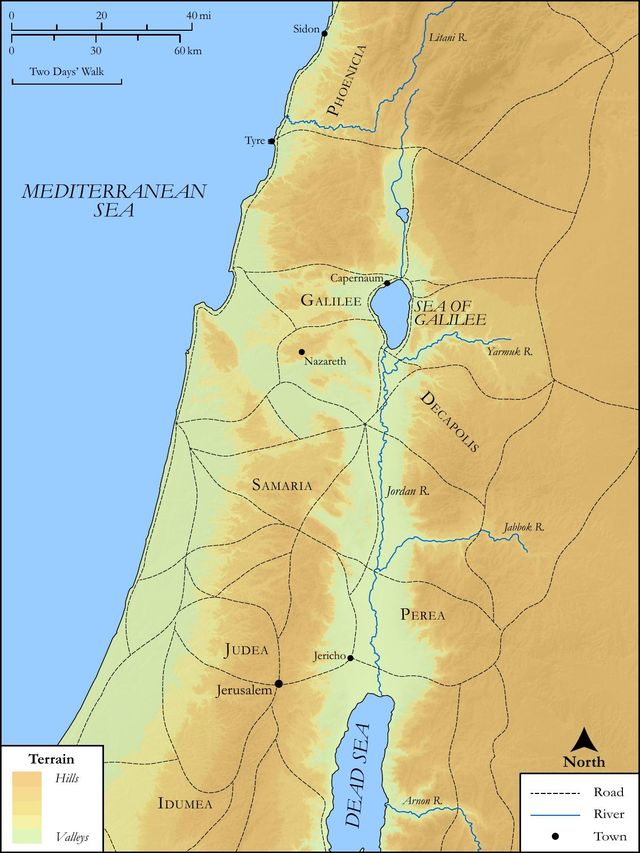
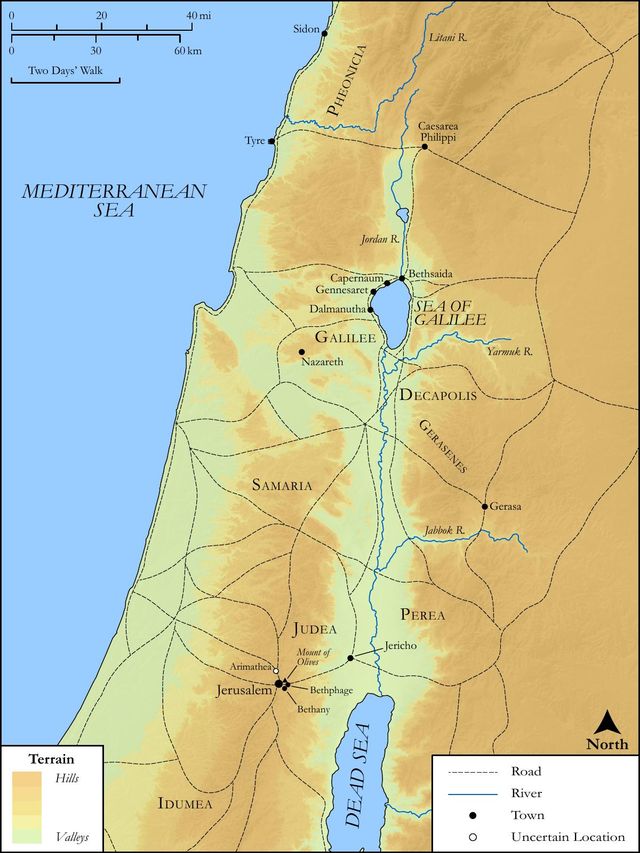
The geographical locations listed in Mark 3:8—Jerusalem, Idumaea, beyond Jordan, and Tyre and Sidon—represent a vast and diverse catchment area, highlighting the unprecedented reach of Jesus' influence. Jerusalem was the religious and political capital of Judea, symbolizing the heart of Jewish life. Idumaea, south of Judea, was the ancient land of Edom, inhabited by people who had been forcibly converted to Judaism. "Beyond Jordan" refers to Perea, a region east of the Jordan River with a mixed Jewish and Gentile population. Tyre and Sidon were prominent Phoenician (Gentile) cities on the Mediterranean coast to the northwest. The fact that people from such varied and distant regions, including Gentile areas, traveled to see Jesus speaks volumes about the desperation for healing and hope, and the extraordinary nature of the reports about Him. Travel was arduous in this era, making the gathering of "a great multitude" from these places a testament to the profound impact Jesus was having.
Key Themes
ShowHideMark 3:8 contributes significantly to several key themes in the Gospel. Firstly, it emphasizes the extensive reach of Jesus' fame, showing that His influence was not confined to Galilee but extended across Jewish and even Gentile territories, drawing a truly "great multitude" from all directions. This foreshadows the universal scope of the Gospel message. Secondly, it highlights the compelling power of Jesus' ministry, as people were drawn to Him because they "had heard what great things he did." These "great things" refer to His numerous miracles, healings, and authoritative teachings, which confirmed His divine authority and compassion, making Him a beacon of hope for many who were suffering or seeking truth, as seen in earlier accounts like the healing of many sick and demon-possessed (Mark 1:32-34). Finally, the eagerness of these vast crowds to travel long distances underscores a deep human hunger for divine encounter and a recognition of something profoundly different and powerful in Jesus, a hunger that Jesus consistently met with compassion and authority (Mark 1:40-42).
Exposition and Analysis
ShowHideKey Word Analysis
ShowHideA large number of people, a throng, or populace. In this context, it emphasizes the sheer volume and diversity of people gathering, indicating the widespread impact of Jesus' ministry beyond local confines. It signifies not just a crowd, but a significant, almost overwhelming, assembly.
To perceive by ear, to give audience to, or to understand. This highlights that the crowds were drawn not by random chance, but by specific reports and testimonies of Jesus' actions. It implies an active reception of information that compelled them to seek Him out, signifying the power of His reputation.
To make or do, in a very wide application. Here, it refers specifically to Jesus' miraculous works—healings, exorcisms, and authoritative teachings—which served as powerful demonstrations of His divine authority and compassion, compelling people to seek Him out. It underscores the active, powerful nature of His ministry.
Verse Breakdown
ShowHide"And from Jerusalem, and from Idumaea, and [from] beyond Jordan;"
This clause establishes the broad geographical scope of Jesus' influence within Jewish territories. Jerusalem represents the religious and political heartland, Idumaea (ancient Edom) signifies the southern reach, and "beyond Jordan" (Perea) indicates the eastern extent. This tripartite listing emphasizes that people were coming from all directions within the broader Judean and surrounding Jewish regions.
"and they about Tyre and Sidon, a great multitude,"
This expands the geographical reach even further, including Gentile regions to the northwest. Tyre and Sidon were major Phoenician cities, and their inclusion signifies that Jesus' fame transcended ethnic and religious boundaries, drawing even non-Jews. The phrase "a great multitude" underscores the sheer volume of people, emphasizing the overwhelming response to Jesus' ministry.
"when they had heard what great things he did,"
This clause provides the primary motivation for the crowds' journey. Their coming was not random but a direct response to credible reports of Jesus' extraordinary actions. "What great things he did" refers to His miracles, healings, and authoritative teaching, which were powerful demonstrations of His divine power and compassion.
"came unto him."
This final clause succinctly states the outcome: despite the distances and difficulties, these vast and diverse crowds actively sought out Jesus. It signifies their intentional pursuit of Him, driven by hope and the compelling evidence of His power.
Literary Devices
ShowHideMark 3:8 employs several literary devices to convey the impact of Jesus' ministry. The most prominent is Geographical Listing, where specific regions (Jerusalem, Idumaea, beyond Jordan, Tyre, Sidon) are enumerated. This device effectively communicates the vast and diverse origins of the crowds, emphasizing the widespread and unprecedented reach of Jesus' fame. The phrase "a great multitude" functions as Hyperbole, or at least a strong emphasis, to underscore the overwhelming number of people drawn to Him, suggesting a nearly universal attraction. This is further reinforced by the Cause and Effect structure: the cause being "when they had heard what great things he did," and the effect being that they "came unto him." This highlights that Jesus' actions were the direct catalyst for this massive gathering, demonstrating the compelling nature of His power and compassion.
Theological and Thematic Connections
ShowHideMark 3:8 is a powerful testament to the inherent attractiveness of Jesus' person and ministry, even in the face of growing opposition. Theologically, it underscores God's sovereign plan to draw people from all nations to Himself, foreshadowing the universal scope of the Gospel. The "great things" Jesus did were not mere parlor tricks but divine acts that authenticated His identity as the Son of God and demonstrated the dawning of God's kingdom. The willingness of people from diverse backgrounds, including Gentiles, to travel great distances highlights a deep spiritual hunger for truth, healing, and deliverance that only Jesus could satisfy. This verse serves as a reminder that the power of the Gospel is not limited by geographical or cultural boundaries, but resonates with the deepest needs of humanity.
Reflection and Application
ShowHideMark 3:8 calls us to reflect on the magnetic power of Jesus Christ and the profound human need that draws people to Him. In a world still marked by suffering, brokenness, and spiritual searching, the "great things" Jesus did—and continues to do through His Spirit—remain the ultimate source of hope and transformation. This verse challenges us to consider our own response to Jesus: are we among those who, having heard of His power and grace, actively "come unto Him" with faith and expectation? Furthermore, it encourages us to be instruments through whom His fame can spread. Just as the crowds were drawn by what they "had heard," our testimonies and lives, transformed by Jesus, can be powerful catalysts for others to seek Him. We are called to share the good news of His healing, deliverance, and salvation, trusting that His inherent attractiveness will continue to draw people from every corner of the earth into His loving embrace, fulfilling His global mission.
Questions for Reflection
ShowHideFAQ
ShowHideWhy did people from Gentile areas like Tyre and Sidon come to Jesus, given His primary ministry was to Israel?
ShowHideWhile Jesus' earthly ministry was primarily directed toward "the lost sheep of Israel" (Matthew 15:24), His fame and the reports of His miraculous "great things" (Mark 3:8) transcended ethnic and religious boundaries. People from Gentile regions like Tyre and Sidon were likely drawn by the desperate need for healing and deliverance, as well as the sheer wonder of His power. Jesus did engage with Gentiles on occasion, such as the Syrophoenician woman (Mark 7:24-30), demonstrating that His compassion and power were not exclusively for Jews, foreshadowing the universal scope of the Gospel message that would fully unfold after His resurrection.
Christ-Centered Fulfillment
ShowHideMark 3:8, with its vivid depiction of diverse multitudes flocking to Jesus from far-flung regions, powerfully foreshadows the ultimate Christ-centered fulfillment of God's redemptive plan. The "great things he did" were not just isolated miracles but tangible demonstrations of the Kingdom of God breaking into the world, authenticating Jesus as the promised Messiah. These initial gatherings of Jews and Gentiles from Jerusalem, Idumaea, beyond Jordan, and Tyre and Sidon prefigure the universal call of the Gospel, where Jesus, as the resurrected Lord, commissions His followers to make disciples of "all nations" (Matthew 28:19). He is the true "light of the Gentiles" (Isaiah 49:6) and the "Lamb of God who takes away the sin of the world" (John 1:29), whose drawing power extends to every tribe, tongue, people, and nation (Revelation 7:9-10). Thus, the crowds in Mark 3:8 are a microcosm of the global Church, gathered by the compelling power of Christ's saving work, demonstrating that His fame and transformative power are meant to reach the uttermost parts of the earth, drawing all humanity to Himself.