


Luke 6:25
Bible text: King James Version (1769 Blayney text) · Public domain
Bible text: Berean Standard Bible · Public domain
Bible text: American Standard Version (1901) · Public domain
Bible text: World English Bible, Messianic edition · Public domain
Bible text: Geneva Bible (1599) · Public domain
Bible text: Young's Literal Translation · Public domain
- ΟὐαὶOuaiWoeG3759INJInterjection
- ὑμῖνhuminto youG4771P-2DPPersonal pronoun Dative 2nd Plural
- οἱhoiwho [are]G3588T-VPMDefinite article Vocative Plural Masculine
- ἐμπεπλησμένοιempeplēsmenoifilledG1705V-RPP-VPMVerb Perfect Passive Participle Vocative Plural Masculine
- ὅτιhotiforG3754CONJConjunction
- πεινάσετεpeinaseteyou will hungerG3983V-FAI-2PVerb Future Active Indicative 2nd Plural
- ΟὐαὶOuaiWoe toG3759INJInterjection
- ὑμῖνhuminto youG4771P-2DPPersonal pronoun Dative 2nd Plural
- οἱhoiwho [are]G3588T-VPMDefinite article Vocative Plural Masculine
- γελῶντεςgelōnteslaughingG1070V-PAP-VPMVerb Present Active Participle Vocative Plural Masculine
- νῦνnunnowG3568ADVAdverb
- ὅτιhotiforG3754CONJConjunction
- πενθήσετεpenthēseteyou will mournG3996V-FAI-2PVerb Future Active Indicative 2nd Plural
- καὶkaiandG2532CONJConjunction
- κλαύσετεklausetewill weepG2799V-FAI-2PVerb Future Active Indicative 2nd Plural
English is a literal word-by-word gloss of the Greek, not the KJV's wording. Why?
This is the original text the KJV's translators worked from — each Greek word with its own literal English meaning in this verse, prepared by scholars at Tyndale House, Cambridge. The KJV translates whole sentences, not word by word, so its wording differs: one Greek word can become several English words, and the KJV may choose “charity” where the gloss reads “love”. Both are faithful — they answer different questions. For the KJV's own rendering, switch to the KJV text.
Details
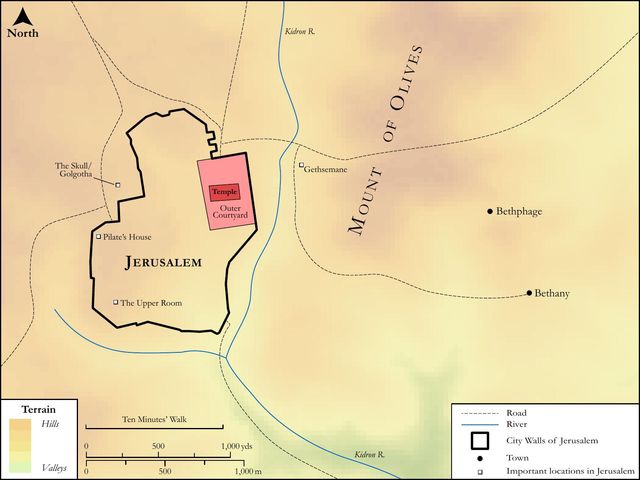
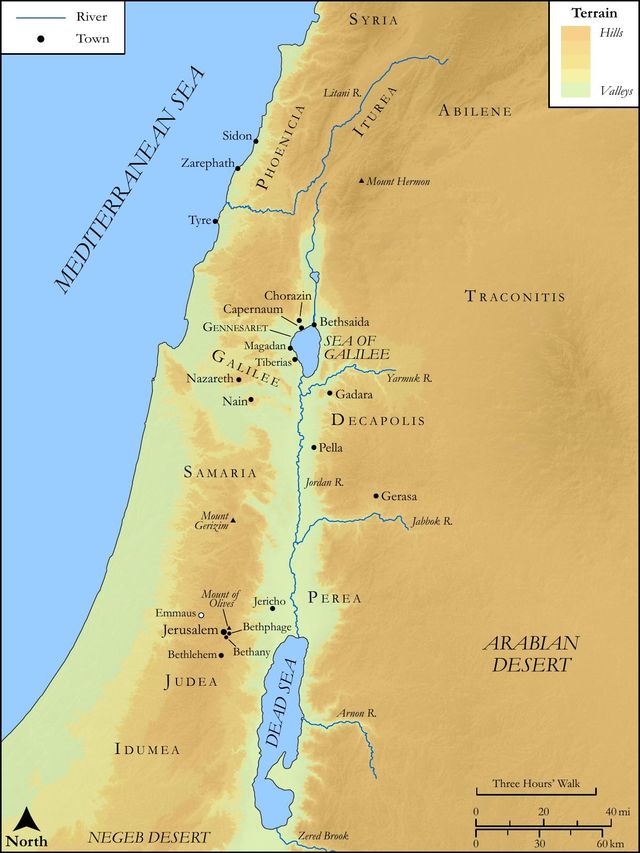
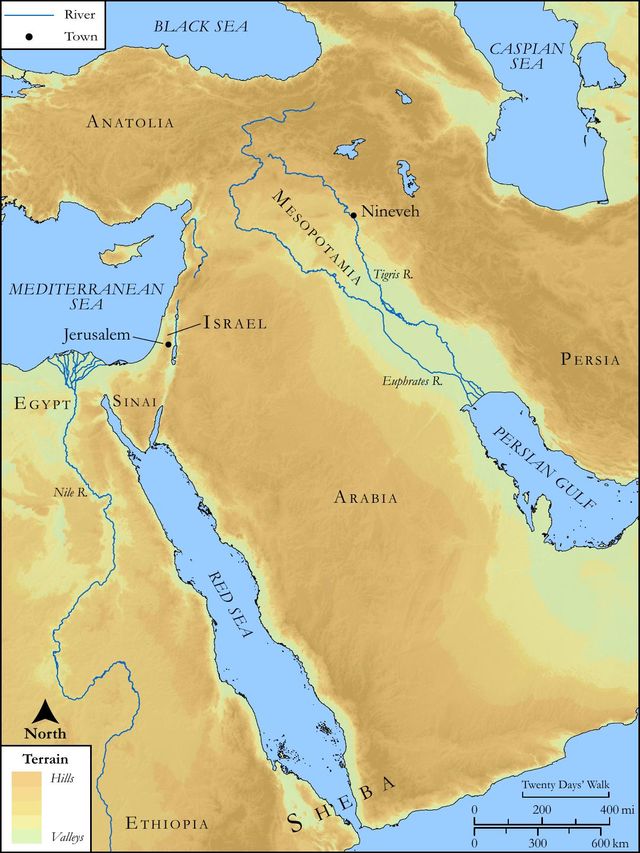
See on the biblical-era maps
Study this verse
Public-domain commentary
Matthew Henry
From his Commentary on the Whole Bible. Henry comments on passages, not single verses — this entry covers Luke 6:20–26. His two-level outline is real structure in the source text, so it is rendered as structure.
Here begins a practical discourse of Christ, which is continued to the end of the chapter, most of which is found in the sermon upon the mount, Mt. 5 and 7. Some think that this was preached at some other time and place, and there are other instances of Christ's preaching the same things, or to the same purport, at different times; but it is probable that this is only the evangelist's abridgment of that sermon, and perhaps that in Matthew too is but an abridgment; the beginning and the conclusion are much the same; and the story of the cure of the centurion's servant follows presently upon it, both there and here, but it is not material. In these verses, we have,
I.Blessings pronounced upon suffering saints, as happy people, though the world pities them (Luk 6:20):
He lifted up his eyes upon his disciples, not only the twelve, but the whole company of them (Luk 6:17), and directed his discourse to them; for, when he had healed the sick in the plain, he went up again to the mountain, to preach. There he sat, as one having authority; thither they come to him (Mat 5:1), and to them he directed his discourse, to them he applied it, and taught them to apply it to themselves. When he had laid it down for a truth, Blessed are the poor in spirit, he added, Blessed are ye poor. All believers, that take the precepts of the gospel to themselves, and live by them may take the promises of the gospel to themselves and live upon them. And the application, as it is here, seems especially designed to encourage the disciples, with reference to the hardships and difficulties they were likely to meet with, in following Christ.
1."You are poor, you have left all to follow me, are content to live upon alms with me, are never to expect any worldly preferment in my service. You must work hard, and fare hard, as poor people do; but you are blessed in your poverty, it shall be no prejudice at all to your happiness; nay, you are blessed for it, all your losses shall be abundantly made up to you, for yours is the kingdom of God, all the comforts and graces of his kingdom here and all the glories and joys of his kingdom hereafter; yours it shall be, nay, yours it is." Christ's poor are rich in faith, Jam 2:5.
2."You hunger now (Luk 6:21), you are not fed to the full as others are, you often rise hungry, your commons are so short; or you are so intent upon your work that you have not time to eat bread, you are glad of a few ears of corn for a meal's meat; thus you hunger now in this world, but in the other world you shall be filled, shall hunger no more, nor thirst any more."
3."You weep now, are often in tears, tears of repentance, tears of sympathy; you are of them that mourn in Zion. But blessed are you; your present sorrows are no prejudices to your future joy, but preparatories for it: You shall laugh. You have triumphs in reserve; you are but sowing in tears, and shall shortly reap in joy," Psa 126:5, Psa 126:6. They that now sorrow after a godly sort are treasuring up comforts for themselves, or, rather, God is treasuring up comforts for them; and the day is coming when their mouth shall be filled with laughing and their lips with rejoicing, Job 8:21.
4."You now undergo the world's ill will. You must expect all the base treatment that a spiteful world can give you for Christ's sake, because you serve him and his interests; you must expect that wicked men will hate you, because your doctrine and life convict and condemn them; and those that have church-power in their hands will separate you, will force you to separate yourselves, and then excommunicate you for so doing, and lay you under the most ignominious censures. They will pronounce anathemas against you, as scandalous and incorrigible offenders. They will do this with all possible gravity and solemnity, and pomp and pageantry of appeals to Heaven, to make the world believe, and almost you yourselves too, that it is ratified in heaven. Thus will they endeavour to make you odious to others and a terror to yourselves." This is supposed to be the proper notion of aphorisōsin humas - they shall cast you out of their synagogues. "And they that have not this power will not fail to show their malice, to the utmost of their power; for they will reproach you, will charge you with the blackest crimes, which you are perfectly innocent of, will fasten upon you the blackest characters, which you do not deserve; they will cast out your name as evil, your name as Christians, as apostles; they will do all they can to render these names odious." This is the application of the eighth beatitude, Mat 5:10-12.
"Such usage as this seems hard; but blessed are you when you are so used. It is so far from depriving you of your happiness that it will greatly add to it. It is an honour to you, as it is to a brave hero to be employed in the wars, in the service of his prince; and therefore rejoice you in that day, and leap for joy, Luk 6:23. Do not only bear it, but triumph in it. For," (1.) "You are hereby highly dignified in the kingdom of grace, for you are treated as the prophets were before you, and therefore not only need not be ashamed of it, but may justly rejoice in it, for it will be an evidence for you that you walk in the same spirit, and in the same steps, are engaged in the same cause, and employed in the same service, with them." (2.) "You will for this be abundantly recompensed in the kingdom of glory; not only your services for Christ, but your sufferings will come into the account: Your reward is great in heaven. Venture upon your sufferings, in a full belief that the glory of heaven will abundantly countervail all these hardships; so that, though you may be losers for Christ, you shall not be losers by him in the end."
II.Woes denounced against prospering sinners as miserable people, though the world envies them.
These we had not in Matthew. It should seem, the best exposition of these woes, compared with the foregoing blessings, is the parable of the rich man and Lazarus. Lazarus had the blessedness of those that are poor, and hunger, and weep, now, for in Abraham's bosom all the promises made to them who did so were made good to him; but the rich man had the woes that follow here, as he had the character of those on whom these woes are entailed.
1.Here is a woe to them that are rich, that is, that trust in riches, that have abundance of this world's wealth, and, instead of serving God with it, serve their lusts with it; woe to them, for they have received their consolation, that which they placed their happiness in, and were willing to take up with for a portion, Luk 6:24. They in their life-time received their good things, which, in their account, were the best things, and all the good things they are ever likely to receive from God. "You that are rich are in temptation to set your hearts upon a smiling world, and to say, Soul, take thine ease in the embraces of it, This is my rest for ever, here will I dwell; and then woe unto you." (1.) It is the folly of carnal worldlings that they make the things of this world their consolation, which were intended only for their convenience. They please themselves with them, pride themselves in them, and make them their heaven upon earth; and to them the consolations of God are small, and of no account. (2.) It is their misery that they are put off with them as their consolation. Let them know it, to their terror, when they are parted from these things, there is an end of all their comfort, a final end of it, and nothing remains to them but everlasting misery and torment.
2.Here is a woe to them that are full (Luk 6:25), that are fed to the full, and have more than heart could wish (Psa 73:7), that have their bellies filled with the hid treasures of this world (Psa 17:14), that, when they have abundance of these, are full, and think they have enough, they need no more, they desire no more, Rev 3:17. Now ye are full, now ye are rich, Co1 4:8. They are full of themselves, without God and Christ. Woe to such, for they shall hunger, they shall shortly be stripped and emptied of all the things they are so proud of; and, when they shall have left behind them in the world all those things which are their fulness, they shall carry away with them such appetites and desires as the world they remove to will afford them no gratifications of; for all the delights of sense, which they are now so full of, will in hell be denied, and in heaven superseded.
3.Here is a woe to them that laugh now, that have always a disposition to be merry, and always something to make merry with; that know no other joy than that which is carnal and sensual, and know no other use of this world's good than purely to indulge that carnal sensual joy that banishes sorrow, even godly sorrow, from their minds, and are always entertaining themselves with the laughter of the fool. Woe unto such, for it is but now, for a little time, that they laugh; they shall mourn and weep shortly, shall mourn and weep eternally, in a world where there is nothing but weeping and wailing, endless, easeless, and remediless sorrow.
4.Here is a woe to them whom all men speak well of, that is, who make it their great and only care to gain the praise and applause of men, who value themselves upon that more than upon the favour of God and his acceptance (Luk 6:26): "Woe unto you; that is, it would be a bad sign that you were not faithful to your trust, and to the souls of men, if you preached so as that nobody would be disgusted; for your business is to tell people of their faults, and, if you do that as you ought, you will get that ill will which never speaks well. The false prophets indeed, that flattered your father in their wicked ways, that prophesied smooth things to them, were caressed and spoken well of; and, if you be in like manner cried up, you will be justly suspected to deal deceitfully as they did." We should desire to have the approbation of those that are wise and good, and not be indifferent to what people say of us; but, as we should despise the reproaches, so we should also despise the praises, of the fools in Israel.
Historical interpretation
Six Centuries of Reception
14 surviving comments on this verse. Each one is dated, so this reads as a timeline rather than a list.
Select a marker to jump to its quote. Markers stagger vertically where authors wrote within a few decades of each other.
There are two ways, one of life and one of death; but a great difference between the two ways. The way of life, then, is this: First, thou shalt love God who made thee; second, thy neighbour as thyself; and all things whatsoever thou wouldst should not occur to thee, thou also to another do not do. And of these sayings the teaching is this: Bless them that curse you, and pray for your enemies, and fast for them that persecute you. For what thank is there, if ye love them that love you? Do not also the Gentiles do the same? But do ye love them that hate you; and ye shall not have an enemy. Abstain thou from fleshly and worldly lusts. If one give thee a blow upon thy right cheek, turn to him the other also; and thou shalt be perfect. If one impress thee for one mile, go with him two. If one take away thy cloak, give him also thy coat. If one take from thee thine own, ask it not back for indeed thou art not able. Give to every one that asketh thee, and ask it not back; for the Father willeth that to all should be given of our own blessings (free gifts).
He inflicts a woe also on "the full, because they shall hunger; on those too which laugh now, because they shall mourn." To these will correspond these opposites which occur, as we have seen above, in the benedictions of the Creator: "Behold, my servants shall be full, but ye shall be hungry "-even because ye have been filled; "behold, my servants shall rejoice, but ye shall be ashamed" -even ye who shall mourn, who now are laughing.
(Reg. fus. tract. 16-19.) Now it is plain that the rule of abstinence is necessary, because the Apostle mentions it among the fruits of the Spirit. (Gal. 5:23.) For the subjection of the body is by nothing so obtained as by abstinence, whereby, as it were a bridle, it becomes us to keep in check the fervour of youth. Abstinence then is the putting to death of sin, the extirpation of passions, the beginning of the spiritual life, blunting in itself the sting of temptations. But lest there should be any agreement with the enemies of God, we must accept every thing as the occasion requires, to show, that to the pure all things are pure (Tit. 1:15.), by coming indeed to the necessaries of life, but abstaining altogether from those which conduce to pleasure. But since it is not possible that all should keep the same hours, or the same manner, or the same proportion, still let there be one purpose, never to wait to be filled, for fulness of stomach makes the body itself also unfit for its proper functions, sleepy, and inclined to what is hurtful.
(ut sup.) Whereas the Lord reproves those who laugh now, it is plain that there will never be a house of laughter to the faithful, especially since there is so great a multitude of those who die in sin for whom we must mourn. Excessive laughter is a sign of want of moderation, and the motion of an unrestrained spirit; but ever to express the feelings of our heart with a pleasantness of countenance is not unseemly.
The Christian who has advanced by means of good discipline and the gift of the Spirit to the measure of the age of reason experiences glory and pleasure and enjoyment that is greater than any human pleasure. These come to one after grace is given to him, after being hated because of Christ, being driven, and enduring every insult and shame in behalf of his faith in God. For such a person, whose entire life centers on the resurrection and future blessings, every insult and scourging and persecution and the other sufferings leading up to the cross are all pleasure and refreshment and surety of heavenly treasures. For Jesus says, “Blessed are you when men reproach you and persecute you and, speaking falsely, say all manner of evil against you; for my sake rejoice and exult because your reward is great in heaven.”
Purify yourself with your tears. Wash yourselves with mourning. If you weep for yourself, another will not weep for you.… One who is a sinner weeps for himself and rebukes himself, that he may become righteous, for just people accuse themselves of sin. Let us pursue order, because it is written, “Set in order love in me.” I have laid down sin. I have tempered my conduct. I have wept for my transgressions. I begin to hunger. I hunger for righteousness. The sick, when he is seriously ill, does not hunger, because the pain of the illness excludes hunger. What is the hunger for righteousness? What is the bread of which it is said, “I have been young and am old, and I have not seen the righteous man forsaken, nor his seed begging bread”? Surely one who is hungry seeks increase of strength. What greater increase of virtue is there than the rule of righteousness?
In that He says, Blessed are the poor, thou hast temperance; which abstains from sin, tramples upon the world, seeks not vain delights. In Blessed are they that hunger, thou hast righteousness; for he who hungers suffers together with the hungry, and by suffering together with him gives to him, by giving becomes righteous, and his righteousness abideth for ever. In Blessed are they that weep now (Ps. 112:9.), thou hast prudence; which is to weep for the things of time, and to seek those which are eternal. In Blessed are ye when men hate you, thou hast fortitude; not that which deserves hatred for crime, but which suffers persecution for faith. For so thou wilt attain to the crown of suffering, if thou slightest the favour of men, and seekest that which is from God.
Temperance therefore brings with it a pure heart; righteousness, mercy; prudence, peace; fortitude, meekness. The virtues are so joined and linked to one another, that he who has one seems to have many; and the Saints have each one especial virtue, but the more abundant virtue has the richer reward. What hospitality in Abraham, what humility, but because he excelled in faith, he gained the preeminence above all others. To every one there are many rewards because many incentives to virtue, but that which is most abundant in a good action, has the most exceeding reward.
But although in the abundance of wealth many are the allurements to crime, yet many also are the incitements to virtue. Although virtue requires no support, and the offering of the poor man is more commendable than the liberality of the rich, still it is not those who possess riches, but those who know not how to use them, that are condemned by the authority of the heavenly sentence. For as that poor man is more praiseworthy who gives without grudging, so is the rich man more guilty, who ought to return thanks for what he has received, and not to hide without using it the sum which was given him for the common good. It is not therefore the money, but the heart of the possessor which is in fault. And though there be no heavier punishment than to be preserving with anxious fear what is to serve for the advantage of successors, yet since the covetous desires are fed by a certain pleasure of amassing, they who have had their consolation in the present life, have lost an eternal reward. We may here however understand by the rich man the Jewish people, or the heretics, or at least the Pharisees, who, rejoicing in an abundance of words, and a kind of hereditary pride of eloquence, have overstepped the simplicity of true faith, and gained to themselves useless treasures.
And mark, that Matthew by rewards called the people to virtue and faith, but Luke also frightened them from their sins and iniquities by the denunciation of future punishment.
“Blessed,” it says, “are the poor.” Not all the poor are blessed, for poverty is neutral. The poor can be either good or evil, unless, perhaps, the blessed pauper is to be understood as he whom the prophet described, saying, “A righteous poor man is better than a rich liar.” Blessed is the poor man who cried and whom the Lord heard. Blessed is the man poor in offense. Blessed is the man poor in vices. Blessed is the poor man in whom the prince of this world finds nothing. Blessed is the poor man who is like that poor Man who, although he was rich, became poor for our sake. Matthew fully revealed this when he said, “Blessed are the poor in spirit.” One poor in spirit is not puffed up, is not exalted in the mind of his own flesh. This beatitude is first, when I have laid aside every sin, and I have taken off all malice, and I am content with simplicity, destitute of evils. All that remains is that I regulate my conduct. For what good does it do me to lack worldly goods, unless I am meek and gentle?
Let us see how St. Luke encompassed the eight blessings in the four. We know that there are four cardinal virtues: temperance, justice, prudence and fortitude. One who is poor in spirit is not greedy. One who weeps is not proud but is submissive and tranquil. One who mourns is humble. One who is just does not deny what he knows is given jointly to all for us. One who is merciful gives away his own goods. One who bestows his own goods does not seek another’s, nor does he contrive a trap for his neighbor. These virtues are interwoven and interlinked, so that one who has one may be seen to have several, and a single virtue befits the saints. Where virtue abounds, the reward too abounds.… Thus temperance has purity of heart and spirit, justice has compassion, patience has peace, and endurance has gentleness.
Although there are many charms of delights in riches, yet there are more incentives to practice virtues. Although virtue does not require assistance and the contribution of the poor person is more commended than the generosity of the rich, yet with the authority of the heavenly saying, he condemns not those who have riches but those who do not know how to use them. The pauper is more praiseworthy who gives with eager compassion and is not restrained by the bolts of looming scarcity. He thinks that he who has enough for nature does not lack. So the rich person is the more guilty who does not give thanks to God for what he has received, but vainly hides wealth given for the common use and conceals it in buried treasures. Then the offense consists not in the wealth but in the attitude.
For this expression, woe, is always said in the Scriptures to those who cannot escape from future punishment.
(Hom. 6. in Matt.) But tell me, why art thou distracting and wasting thyself away with pleasures, who must stand before the awful judgment, and give account of all things done here?
What is said here is not opposed to what our Lord says elsewhere, Let your light shine before men; (Matt. 5:16.) that is, that we should be eager to do good for the glory of God, not our own. For vain-glory is a baneful thing, and from hence springs iniquity, and despair, and avarice, the mother of evil. But if thou seekest to turn away from this, ever raise thy eyes to God, and be content with that glory which is from Him. For if in all things we must choose the more learned for judges, how dost thou trust to the many the decision of virtue, and not rather to Him, who before all others knoweth it, and can give and reward it, whose glory therefore if thou desirest, avoid the praise of men. For no one more excites our admiration than he who rejects glory. And if we do this, much more does the God of all. Be mindful then, that the glory of men quickly faileth, seeing in the course of time it is past into oblivion. It follows, For so did their fathers to the false prophets.
Let us therefore call back before our eyes the sins we have committed; let us consider how terrible is the judge who comes to punish these things; let us form our mind for lamentation; let our life become bitter for a time in repentance, lest it feel eternal bitterness in punishment. For through weeping we are led to eternal joys, as Truth promises when it says: "Blessed are those who mourn, for they shall be comforted." But through joys one arrives at weeping, as this same Truth attests when it says: "Woe to you who laugh now, for you shall mourn and weep." If therefore we seek the joy of reward at our arrival, let us hold to the bitterness of repentance on the way.
Woe to you who are full now, for you shall hunger (Luke 6:25). The rich man clothed in purple was full when he feasted sumptuously every day, but he endured a dire woe when he was hungry and sought a drop of water from the finger of Lazarus, whom he had despised. Another interpretation is that if those who hunger always for the works of justice are blessed, in contrast, those who are pleased with their own desires, suffering no hunger for the true and steadfast good, must be considered unfortunate, thinking themselves blessed if they are not deprived of their pleasure for the moment.
Woe to you that are full, for ye shall be hungry. That rich man clothed in purple was full, feasting sumptuously every day, but endured in hunger that dreadful "woe," when from the finger of Lazarus, whom he had despised, he begged a drop of water.
In another way. If those are happy who always hunger after the works of righteousness, they on the other hand are counted to be unhappy, who, pleasing themselves in their own desires, suffer no hunger after the true good. It follows, Woe to you who laugh, &c.
But because flattery being the very nurse of sin, like oil to the flames, is wont to minister fuel to those who are on fire with sin, he adds, Woe unto you when all men shall speak well of you.
By the false prophets are meant those, who to gain the favour of the multitude attempt to predict future events. The Lord on the mountain pronounces only the blessings of the good, but on the plain he describes also the "woe" of the wicked, because the yet uninstructed hearers must first be brought by terrors to good works, but the perfect need but be invited by rewards.
Woe to you who laugh now, for you shall mourn and weep. And Solomon says: "Laughter will be mixed with pain, and the end of joy is sorrow" (Prov. 14). And again: "The heart of the wise is in the house of mourning, but the heart of fools is in the house of mirth" (Eccl. 7). Clearly teaching that foolishness is to be assigned to those laughing, and wisdom, as we have taught above, to those who are always weeping.
Continue studying Luke 6:25 across the web’s major study libraries — every link below opens this exact verse, chapter, or book on the destination site.
Read & Compare
 BibleGatewayThis verse in more than 200 translations and 70 languages.
 Bible.comThe YouVersion reader — hundreds of translations, reading plans, and highlights.
 ESV.orgCrossway's official English Standard Version reader.
 NET BibleThe NET translation with 60,000+ translators' notes on every rendering decision.
 STEP BibleTyndale House's free study tool — original text, vocabulary, and scholarly resources.
 BibliaLogos Bible Software's free web reader.
 USCCBThe New American Bible (Revised Edition) with the U.S. bishops' study notes.
Commentaries
 BibleHub CommentariesDozens of classic commentaries on this verse, gathered on one page.
 StudyLightMore than 100 commentary sets — the largest collection on the web.
 BibleRefPlain-English commentary on what this verse means, verse by verse.
 Enduring WordDavid Guzik's free commentary on this chapter, widely used by Bible teachers.
 Bible Study ToolsVerse commentary alongside Greek and Hebrew study aids.
Original Language & Research
- BibleHub InterlinearThe verse word by word — original language, transliteration, and English.
- BibleHub LexiconEvery word's original-language definition and Strong's entry.
 Blue Letter BibleDeep-study tools — Strong's numbers, concordance, and word studies.
 CNTR CollationThe earliest Greek manuscripts of this verse, collated letter by letter.
Sermons, Hymns & Audio


TrulyRandomVerse is not affiliated with these sites and doesn’t control their content. They’re linked because they’re genuinely useful.
Summary
Luke 6:25 delivers a powerful and sobering warning within Jesus' Sermon on the Plain, directly contrasting the fleeting satisfaction of present worldly comfort with the inevitable spiritual deprivation and profound sorrow awaiting those who prioritize earthly pleasures over kingdom values. This "woe" serves as a stark counterpoint to the preceding Beatitudes, underscoring the radical inversion of human expectations and divine realities inherent in God's kingdom, where current prosperity can lead to future destitution, and present joy rooted in self-sufficiency will culminate in lament.
Context
ShowHideLiterary Context
This verse is an integral part of Jesus' "Sermon on the Plain" in Luke 6, following immediately after the four Beatitudes (blessings) pronounced upon the poor, hungry, weeping, and persecuted in Luke 6:20-23. It initiates a series of four corresponding "woes" (or pronouncements of judgment) directed at those who are presently rich, full, laughing, and well-regarded by the world. This structural parallelism highlights a deliberate contrast, emphasizing the radical nature of God's kingdom, which often reverses conventional human values and expectations regarding prosperity and suffering. The "woes" clarify that the blessings are not merely for the downtrodden, but that there is a spiritual danger in worldly comfort that distracts from God.
Historical & Cultural Context
Jesus' ministry took place in a society marked by significant disparity between rich and poor, with a small elite enjoying wealth and comfort while the majority lived in poverty, often under Roman occupation. Among the Greeks and Romans, prosperity was frequently seen as a sign of divine favor, and suffering as a mark of disfavor. However, within Jewish prophetic tradition, "woe" pronouncements were common, often directed at those who oppressed the poor or neglected justice, warning of impending judgment (e.g., Isaiah 5:8-23). Jesus, in this context, challenges the prevailing cultural assumptions by asserting that true blessedness is not found in earthly abundance, but in a spiritual posture of dependence on God, often accompanied by present hardship. His words would have been particularly challenging to those who were comfortable and complacent in their material well-being.
Key Themes
ShowHideThe central theme underscored by Luke 6:25 is the reversal of fortunes between the present age and the coming kingdom of God. This verse vividly portrays the danger of worldly comfort and self-satisfaction, suggesting that an exclusive focus on earthly fullness and fleeting joy can lead to spiritual emptiness and future sorrow. It serves as a profound warning against misplaced priorities, cautioning against finding ultimate security and happiness in material possessions or social approval, which are temporary and ultimately unsatisfying. This "woe" also reinforces the broader Lukan emphasis on justice and care for the poor, contrasting the values of God's kingdom with the values of the world, much like the parable of the rich man and Lazarus later in Luke's Gospel.
Exposition and Analysis
ShowHideKey Word Analysis
ShowHideThis is a powerful exclamation of grief, lament, or impending judgment. It is not merely a statement of misfortune but carries the weight of divine disapproval and the certainty of future negative consequences. It functions as a prophetic warning, signaling a coming reversal of circumstances that will bring sorrow and distress.
Derived from a word meaning "to fill in (up)," this term implies being completely satisfied or satiated, whether literally with food or figuratively with material possessions, comfort, or worldly success. Jesus is not condemning physical fullness itself, but the spiritual complacency and self-sufficiency that can arise from it, leading one to believe they have no need of God.
This refers to laughter as a sign of joy or satisfaction. In this context, it speaks to a present state of carefree happiness or amusement, potentially stemming from worldly ease or indifference to spiritual realities. Jesus warns that this laughter, if it signifies a heart content with earthly pleasures and unconcerned with spiritual or eternal matters, will be tragically transformed into mourning.
Verse Breakdown
ShowHide"Woe unto you that are full!"
This clause initiates the first of two parallel pronouncements of judgment. The "full" are those who are materially prosperous, comfortable, and self-sufficient, finding their satisfaction in their present circumstances. The "woe" indicates a divine lament over their spiritual state and a warning of impending negative consequences.
"for ye shall hunger."
This is the direct consequence for those who are "full" in a worldly sense. The hunger here is not merely physical, but a profound spiritual emptiness and dissatisfaction that will inevitably follow their present satiety. It signifies a reversal where their current abundance will give way to a future state of desperate need and lack.
"Woe unto you that laugh now!"
The second parallel pronouncement, targeting those whose present is characterized by carefree joy, amusement, or perhaps even a celebratory attitude about their worldly success. The "now" emphasizes the temporal nature of their current happiness, contrasting it with an eternal reality.
"for ye shall mourn and weep."
This is the consequence for those who "laugh now." Their present mirth will be replaced by profound sorrow and lamentation. "Mourn" (penthéō) implies deep grief, while "weep" (klaíō) suggests audible, outward expression of sorrow, indicating a complete and painful reversal of their current emotional state.
Literary Devices
ShowHideLuke 6:25 employs several powerful literary devices to convey its stark message. The most prominent is Antithesis, or direct contrast, setting up opposing pairs: "full" versus "hunger," and "laugh" versus "mourn and weep." This creates a dramatic tension and highlights the radical inversion of fortunes in God's kingdom. There is also clear Parallelism in the structure of the two "woe" statements, each beginning with "Woe unto you that..." and followed by a "for ye shall..." consequence. This repetitive structure emphasizes the certainty and universality of the warning. The "Woe" itself functions as a Prophetic Utterance, carrying the weight of divine judgment and a foretelling of future events. Furthermore, the language is highly Symbolic, where "fullness" represents worldly satisfaction and "hunger," "mourning," and "weeping" represent spiritual destitution and eternal sorrow, transcending mere physical states.
Theological and Thematic Connections
ShowHideLuke 6:25 profoundly articulates a core theological truth about the nature of God's kingdom: its values are often diametrically opposed to those of the world. It reveals God's concern for the lowly and His judgment on those who find their ultimate satisfaction in fleeting earthly comforts, neglecting spiritual realities. This verse underscores the eschatological reversal, where present suffering for righteousness' sake leads to future blessing, and present worldly ease, if it fosters spiritual complacency, leads to future lament. It challenges believers to align their priorities with God's eternal perspective, recognizing that true and lasting fulfillment is found not in what one possesses or enjoys in this life, but in a humble dependence on God and a pursuit of His righteousness. The "woes" are not condemnations of wealth or happiness in themselves, but warnings against the spiritual dangers of these things when they become idols or lead to a neglect of one's need for God and compassion for others.
Reflection and Application
ShowHideLuke 6:25 serves as a powerful mirror, inviting us to deeply examine the sources of our satisfaction and security. Are we, in a spiritual sense, "full"—content with our material possessions, social status, or worldly achievements, to the point where we feel no pressing need for God or for the spiritual sustenance He offers? Do we "laugh now" in a way that signifies a carefree indifference to the suffering of others, the brokenness of the world, or the eternal consequences of our choices? Jesus' warning is not against joy or provision itself, but against the spiritual complacency that can accompany them, leading to a false sense of security and a neglect of our eternal souls. This verse calls us to cultivate a posture of spiritual hunger and humility, recognizing that true and lasting fulfillment is found only in Christ. It compels us to re-evaluate our priorities, to invest in eternal treasures rather than fleeting earthly ones, and to embrace a compassionate heart that mourns with those who mourn, rather than being solely preoccupied with personal comfort.
Questions for Reflection
ShowHideFAQ
ShowHideWhat does "Woe" truly mean in this context?
ShowHideIn Luke 6:25, "Woe" (Greek: ouaí) is far more than a simple expression of pity or misfortune. It is a solemn, prophetic declaration of impending judgment and lament. It signifies a deep sorrow on God's part over the spiritual state of those addressed, coupled with a certain pronouncement of negative consequences that will inevitably follow their current choices. It's a warning that their present comfort and joy, if they lead to spiritual neglect or self-sufficiency, will tragically reverse into future suffering and grief. It implies a divine disapproval of their misplaced priorities and a foretelling of the spiritual hunger, mourning, and weeping that awaits them.
Is Jesus condemning wealth or happiness in this verse?
ShowHideNo, Jesus is not condemning wealth or happiness in themselves, but rather the spiritual dangers and misplaced priorities that can accompany them. The "woe" is directed at those who are "full" and "laugh now" in a way that implies a complete satisfaction with earthly things, leading to a spiritual complacency and a lack of dependence on God. It's a warning against finding ultimate security and joy in fleeting material possessions or worldly pleasures, to the exclusion of eternal realities and a relationship with God. The danger lies in allowing present comfort to blind one to spiritual needs, to neglect compassion for others, or to become indifferent to God's kingdom values. The parable of the rich man and Lazarus in Luke's Gospel further illustrates this, showing that it was not the rich man's wealth itself, but his self-centeredness and neglect of the poor, that led to his dire fate.
Christ-Centered Fulfillment
ShowHideLuke 6:25, while a stern warning, finds its ultimate fulfillment and redemptive answer in Jesus Christ. He is the one who perfectly embodies the reversal of fortunes, not as a consequence of sin, but as a voluntary act of love. Though He was "rich, yet for your sakes he became poor" (2 Corinthians 8:9), experiencing hunger (Matthew 4:2), mourning (John 11:35), and weeping (Luke 19:41) during His earthly ministry. He willingly embraced the "woes" of humanity, bearing the spiritual hunger, mourning, and weeping that our sin deserved, so that we might be truly satisfied. Through His sacrifice, He offers the bread of life that satisfies all spiritual hunger (John 6:35), turns our mourning into dancing (Psalm 30:11), and promises that those who mourn will be comforted (Matthew 5:4). In Christ, the stark warnings of Luke 6:25 are transformed into an invitation to find true and lasting fulfillment, joy, and comfort that the world cannot provide or take away, by placing our trust not in fleeting earthly abundance, but in the eternal riches of His grace.