


Luke 4:38
Bible text: King James Version (1769 Blayney text) · Public domain
Bible text: King James Version with Strong's numbers · Public domain
Bible text: Berean Standard Bible · Public domain
Bible text: American Standard Version (1901) · Public domain
Bible text: World English Bible, Messianic edition · Public domain
Bible text: Geneva Bible (1599) · Public domain
Bible text: Young's Literal Translation · Public domain
- ἈναστὰςAnastasHaving risen upG450V-2AAP-NSMVerb 2nd Aorist Active Participle Nominative Singular Masculine
- δὲdethenG1161CONJConjunction
- ἀπὸapoout ofG575PREPPreposition
- τῆςtēstheG3588T-GSFDefinite article Genitive Singular Feminine
- συναγωγῆςsunagōgēssynagogueG4864N-GSFNoun Genitive Singular Feminine
- εἰσῆλθενeisēlthenHe enteredG1525V-2AAI-3SVerb 2nd Aorist Active Indicative 3rd Singular
- εἰςeisintoG1519PREPPreposition
- τὴνtēntheG3588T-ASFDefinite article Accusative Singular Feminine
- οἰκίανoikianhouseG3614N-ASFNoun Accusative Singular Feminine
- ΣίμωνοςSimōnosof SimonG4613N-GSM-PNoun Genitive Singular Masculine Individual
- ἡhēTheG3588T-NSFDefinite article Nominative Singular Feminine
- πενθερὰpentheramother-in-lawG3994N-NSFNoun Nominative Singular Feminine
- δὲdethenG1161CONJConjunction
- τοῦtou<the>G3588T-GSMDefinite article Genitive Singular Masculine
- ΣίμωνοςSimōnosof SimonG4613N-GSM-PNoun Genitive Singular Masculine Individual
- ἦνēnwasG1510V-IAI-3SVerb Imperfect Active Indicative 3rd Singular
- συνεχομένηsunechomenēoppressed withG4912V-PPP-NSFVerb Present Passive Participle Nominative Singular Feminine
- πυρετῷpuretōa feverG4446N-DSMNoun Dative Singular Masculine
- μεγάλῳmegalōgreatG3173A-DSMAdjective Dative Singular Masculine
- καὶkaiandG2532CONJConjunction
- ἠρώτησανērōtēsanthey appealedG2065V-AAI-3PVerb Aorist Active Indicative 3rd Plural
- αὐτὸνautonto HimG846P-ASMPersonal pronoun Accusative Singular Masculine
- περὶperiforG4012PREPPreposition
- αὐτῆςautēsherG846P-GSFPersonal pronoun Genitive Singular Feminine
English is a literal word-by-word gloss of the Greek, not the KJV's wording. Why?
This is the original text the KJV's translators worked from — each Greek word with its own literal English meaning in this verse, prepared by scholars at Tyndale House, Cambridge. The KJV translates whole sentences, not word by word, so its wording differs: one Greek word can become several English words, and the KJV may choose “charity” where the gloss reads “love”. Both are faithful — they answer different questions. For the KJV's own rendering, switch to the KJV text.
Details
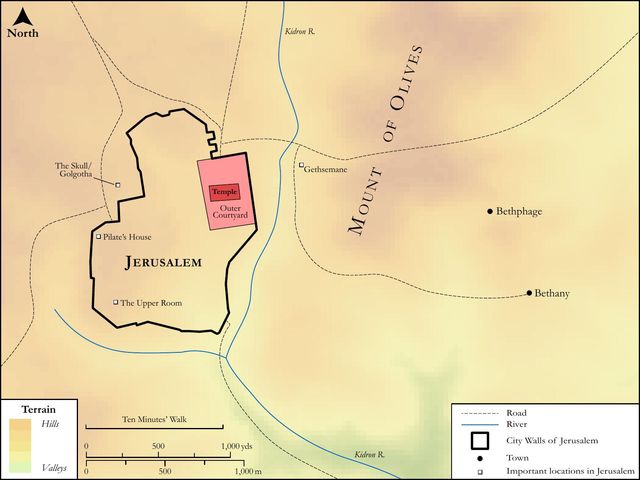
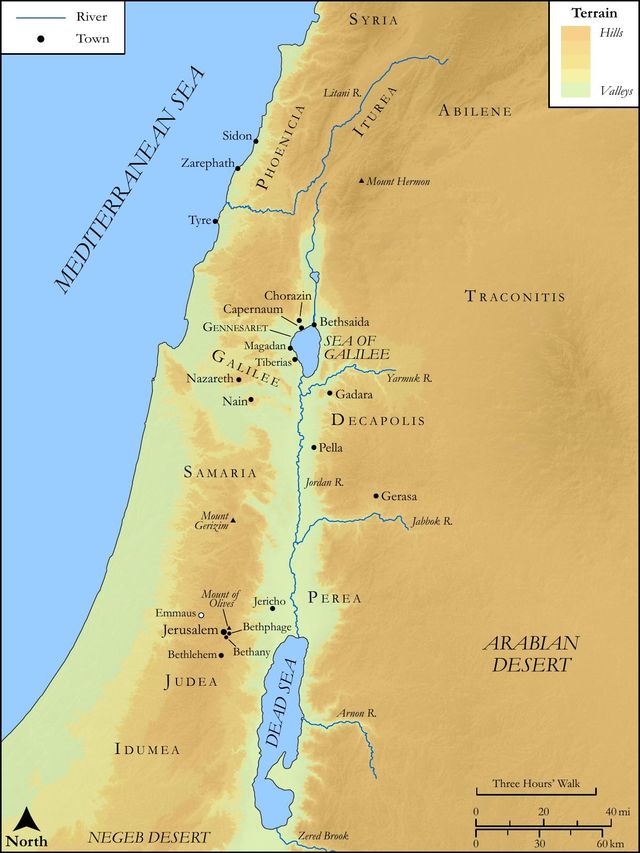
See on the biblical-era maps

Study this verse
Public-domain commentary
Matthew Henry
From his Commentary on the Whole Bible. Henry comments on passages, not single verses — this entry covers Luke 4:31–44. His four-level outline is real structure in the source text, so it is rendered as structure.
When Christ was expelled Nazareth, he came to Capernaum, another city of Galilee. The account we have in these verses of his preaching and miracles there we had before, Mar 1:21, etc. Observe,
I.His preaching:
He taught them on the sabbath days, Luk 4:31. In hearing the word preached, as an ordinance of God, we worship God, and it is a proper work for sabbath days. Christ's preaching much affected the people (Luk 4:32); they were astonished at his doctrine, there was weight in every word he said, and admirable discoveries were made to them by it. The doctrine itself was astonishing, and not only as it came from one that had not had a liberal education. His word was with power; there was a commanding force in it, and a working power went along with it to the conscience of men. The doctrine Paul preached hereby proved itself to be of God, that it came in demonstration of the Spirit and of power.
II.His miracles. Of these we have here,
1.Two particularly specified, showing Christ to be,
(1.)A controller and conqueror of Satan, in the world of mankind, and in the souls of people, by his power to cast him out of the bodies of those he had taken possession of; for for this purpose was he manifested, that he might destroy the works of the devil.
Observe, [1.] The devil is an unclean spirit, his nature directly contrary to that of the pure and holy God, and degenerated from what it was at first. [2.] This unclean spirit works in the children of men; in the souls of many, as then in men's bodies. [3.] It is possible that those who are very much under the power and working of Satan may yet be found in the synagogue, among the worshippers of God. [4.] Even the devils know and believe that Jesus Christ is the Holy One of God, is sent of God, and is a Holy One. [5.] They believe and tremble. This unclean spirit cried out with a loud voice, under a certain fearful looking for of judgment, and apprehensive that Christ was now come to destroy him. Unclean spirits are subject to continual frights. [6.] The devils have nothing to do with Jesus Christ, nor desire to have any thing to do with him; for he took not on him the nature of angels. [7.] Christ has the devil under check: He rebuked him, saying, Hold thy peace; and this word he spoke with power; phimōthēti - Be muzzled, Christ did not only enjoin him silence, but stopped his mouth, and forced him to be silent against his will. [8.] In the breaking of Satan's power, both the enemy that is conquered shows his malice, and Christ, the conqueror, shows his over-ruling grace. Here, First, The devil showed what he would have done, when he threw the man in the midst, with force and fury, as if he would have dashed him to pieces. But, Secondly, Christ showed what a power he had over him, in that he not only forced him to leave him, but to leave him without so much as hurting him, without giving him a parting blow, a parting gripe. Whom Satan cannot destroy, he will do all the hurt he can to; but this is a comfort, he can harm them no further than Christ permits; nay, he shall not do them any real harm. He came out, and hurt him not; that is, the poor man was perfectly well in an instant, though the devil left him with so much rage that all that were present thought he had torn him to pieces. [9.] Christ's power over devils was universally acknowledged and adored, Luk 4:36. No one doubted the truth of the miracle; it was evident beyond contradiction, nor was any thing suggested to diminish the glory of it, for they were all amazed, saying, What a word is this! They that pretended to cast out devils did it with abundance of charms and spells, to pacify the devil, and lull him asleep, as it were; but Christ commanded them with authority and power, which they could not gainsay or resist. Even the prince of the power of the air is his vassal, and trembles before him. [10.] This, as much as any thing, gained Christ a reputation, and spread his fame. This instance of his power, which many now-a-days make light of, was then, by them that were eye-witnesses of it (and those no fools either, but men of penetration), magnified, and was looked upon as greatly magnifying him (Luk 4:37); upon the account of this, the fame of him went out, more than ever, into every place of the country round about. Our Lord Jesus, when he set out at first in his public ministry, was greatly talked of, more than afterwards, when people's admiration wore off with the novelty of the thing.
(2.)Christ showed himself to be a healer of diseases. In the former, he struck at the root of man's misery, which was Satan's enmity, the origin of all the mischief: in this, he strikes at one of the most spreading branches of it, one of the most common calamities of human life, and that is bodily diseases, which came in with sin, are the most common and sensible corrections for it in this life, and contribute as much as any thing towards the making of our few days full of trouble. These our Lord Jesus came to take away the sting of, and, as an indication of that intention, when he was on earth, chose to confirm his doctrine by such miracles, mostly, as took away the diseases themselves. Of all bodily diseases none are more common or fatal to grown people than fevers; these come suddenly, and suddenly cut off the number of men's months in the midst; they are sometimes epidemical, and slay their thousands in a little time. Now here we have Christ's curing a fever with a word's speaking; the place was in Simon's house, his patient was Simon's wife's mother, Luk 4:38, Luk 4:39. Observe,
[1.]Christ is a guest that will pay well for his entertainment; those that bid him welcome into their hearts and houses shall be no losers by him; he comes with healing.
[2.]Even families that Christ visits may be visited with sickness. Houses that are blessed with his distinguishing favours are liable to the common calamities of this life. Simon's wife's mother was ill of a fever. Lord, behold, he whom thou lovest is sick.
[3.]Even good people may sometimes be exercised with the sharpest afflictions, more grievous than others: She was taken with a great fever, very acute, and high, and threatening; perhaps it seized her head, and made her delirious. The most gentle fevers may by degrees prove dangerous; but this was at first a great fever.
[4.]No age can exempt from diseases. It is probable that Peter's mother-in-law was in years, and yet in a fever.
[5.]When our relations are sick, we ought to apply ourselves to Christ, by faith and prayer, on their account: They besought him for her; and there is a particular promise that the prayer of faith shall benefit the sick.
[6.]Christ has a tender concern for his people when they are in sickness and distress: He stood over her, as one concerned for her, and compassionating her case.
[7.]Christ had, and still has, a sovereign power over bodily diseases: He rebuked the fever, and with a word's speaking commanded it away, and it left her. He saith to diseases, Go, and they go; Come, and they come; and can still rebuke fevers, even great fevers.
[8.]This proves Christ's cures to be miraculous, that they were done in an instant: Immediately she arose.
[9.]Where Christ gives a new life, in recovery from sickness, he designs and expects that it should be a new life indeed, spent more than ever in his service, to his glory. If distempers be rebuked, and we arise from a bed of sickness, we must set ourselves to minister to Jesus Christ.
[10.]Those that minister to Christ must be ready to minister to all that are his for his sake: She ministered to them, not only to him that had cured her, but to them that had besought him for her. We must study to be grateful to those that have prayed for us.
2.A general account given by wholesale of many other miracles of the same kind, which Christ did.
(1.)He cured many that were diseased, even all without exception that made their application to him, and it was when the sun was setting (Luk 4:40); in the evening of that sabbath day which he had spent in the synagogue. Note, It is good to do a full sabbath day's work, to abound in the work of the day, in some good work or other, even till sun-set; as those that call the sabbath, and the business of it, a delight. Observe, He cured all that were sick, poor as well as rich, and though they were sick of divers diseases; so that there was no room to suspect that he had only a specific for some one disease. He had a remedy for every malady. The sign he used in healing was laying his hands on the sick; not lifting up his hands for them, for he healed as having authority. He healed by his own power. And thus he would put honour upon that sign which was afterwards used in conferring the Holy Ghost.
(2.)He cast the devil out of many that were possessed, Luk 4:41. Confessions were extorted from the demoniacs. They said, Thou art Christ the Son of God, but they said it crying with rage and indignation; it was a confession upon the rack, and therefore was not admitted in evidence. Christ rebuked them, and did not suffer them to say that they knew him to be the Christ, that it might appear, beyond all contradiction, that he had obtained a conquest over them, and not made a compact with them.
3.Here is his removal from Capernaum, Luk 4:42, Luk 4:43.
(1.)He retired for awhile into a place of solitude. It was but a little while that he allowed himself for sleep; not only because a little served him, but because he was content with a little, and never indulged himself in ease; but, when it was day, he went into a desert place, not to live constantly like a hermit, but to be sometimes alone with God, as even those should be, and contrive to be, that are most engaged in public work, or else their work will go on but poorly, and they will find themselves never less alone than when thus alone.
(2.)He returned again to the places of concourse and to the work he had to do there. Though a desert place may be a convenient retreat, yet it is not a convenient residence, because we were not sent into this world to live to ourselves, no, not to the best part of ourselves only, but to glorify God and do good in our generation.
[1.]He was earnestly solicited to stay at Capernaum. The people were exceedingly fond of him; I doubt, more because he had healed their sick than because he had preached repentance to them. They sought him, enquired which way he went; and, though it was in a desert place, they came unto him. A desert is no desert if we be with Christ there. They detained him that he should not depart from them, so that if he would go it should not be for want of invitation. His old neighbours at Nazareth had driven him from them, but his new acquaintances at Capernaum were very importunate for his continuance with them. Note, It ought not to discourage the ministers of Christ that some reject them, for they will meet with others that will welcome them and their message.
[2.]He chose rather to diffuse the light of his gospel to many places than to fix it to one, that no one might pretend to be a mother-church to the rest. Though he was welcome at Capernaum, and had done abundance of good there, yet he is sent to preach the gospel to other cities also; and Capernaum must not insist upon his stay there. They that enjoy the benefit of the gospel must be willing that others also should share in that benefit, and not covet the monopoly of it; and those ministers who are not driven from one place may yet be drawn to another by a prospect of greater usefulness. Christ, though he preached not in vain in the synagogue at Capernaum, yet would not be tied to that, but preached in the synagogues of Galilee, Luk 4:44. Bonum est sui diffusivum - What is good is self-diffusive. It is well for us that our Lord Jesus has not tied himself to any one place or people, but, wherever two or three are gathered in his name, he will be in the midst of them: and even in Galilee of the Gentiles his special presence is in the Christian synagogues.
Historical interpretation
Seven Centuries of Reception
13 surviving comments on this verse. Each one is dated, so this reads as a timeline rather than a list.
Select a marker to jump to its quote. Markers stagger vertically where authors wrote within a few decades of each other.
What irreverent men do not believe, the spirits see—that he is God. So they flee and fall down at his feet, saying just what they uttered when he was in the body.
Even when the demons spoke the truth, for they spoke the truth when they said, “Thou are the Son of God,” the Lord himself silenced them and forbade them to speak. He did this to keep them from sowing their own wickedness in the midst of the truth. He also wished us to get used to never listening to them even though they seem to speak the truth. LIFE OF ST.
He describes the works of divine healing begun on the sabbath day, to show from the outset that the new creation began where the old creation ceased. He showed us that the Son of God is not under the law but above the law, and that the law will not be destroyed but fulfilled. For the world was not made through the law but by the Word, as we read: “By the Word of the Lord were the heavens established.” Thus the law is not destroyed but fulfilled, so that the renewal of humankind, already in error, may occur. The apostle too says, “Stripping yourselves of the old man, put on the new, who was created according to Christ.” He fittingly began on the sabbath, that he may show himself as Creator. He completed the work that he had already begun by weaving together works with works.
St. Luke did well to first set before us the man freed from a spirit of wickedness, then substituted the healing of a woman. The Lord had come to heal both sexes, and man must first be cured because he was created first. But woman, who had sinned by an uncertain mind rather than depravity, must not be overlooked.
Luke having first introduced a man delivered from an evil spirit, goes on to relate the healing of a woman. For our Lord had come to heal each sex, and he ought first to be healed who was first created. Hence it is said, And he arose out of the synagogue, and entered into Simon's house.
But if we weigh these things with deeper thoughts, we shall consider the health of the mind as well as the body; that the mind which was assailed by the wiles of the devil may be released first. Eve was not a hungered before the serpent beguiled her, and therefore against the author of evil himself ought the medicine of salvation first to operate. Perhaps also in that woman as in a type our flesh languished under the various fevers of crimes, nor should I say that the fever of love was less than that of bodily heat.
(Hom. 27. in Matt.) For He honoured His disciples by dwelling among them, and so making them the more zealous.
(ut sup.) Because Matthew is silent on the point of asking Him, he does not differ from Luke, or it matters not, for one Gospel had brevity in view, the other accurate research. It follows: And he stood over her, &c.
(ut sup.) For since the disease was curable, He showed His power by the manner of the cure, doing what art could never do. For after the allaying of the fever, the patient needs much time ere he be restored to his former health, but at this time all took place at once.
“Now Simon’s mother-in-law was kept in her bed sick with a fever.” May Christ come to our house and enter in and by his command cure the fever of our sins. Each one of us is sick with a fever. When-ever I give way to anger, I have a fever. There are as many fevers as there are faults and vices. Let us beg the apostles to intercede for us with Jesus, that he may come to us and touch our hand. If he does so, at once our fever is gone. He is an excellent physician and truly the chief Physician. Moses is a physician. Isaiah is a physician. All the saints are physicians, but he is the chief Physician.
Now see how Christ abides in the house of a poor man, suffering poverty of His own will for our sakes, that we might learn to visit the poor, and despise not the destitute and needy. It follows: And Simon's wife's mother was taken with a great fever: and they besought him for her.
Let us therefore receive Jesus. For when He has visited us, we carry Him in our heart and mind; He will then extinguish the flames of our unlicensed pleasures, and will make us whole, so that we minister unto Him, that is, do things well-pleasing to Him.
Jesus arrived at Simon's house and found Simon's mother-in-law sick of a fever. He stood and rebuked the fever, and it left her. Matthew and Mark say that the fever left her. There is no hint of any living thing as the active cause of the fever. But Luke's phrase says that he stood over her, and rebuked the fever, and it left her. I do not know whether we are not compelled to say that that which was rebuked was some living thing unable to sustain the influence of him who rebuked it. It is not reasonable to rebuke a thing without life, and unconscious of the rebuke.
And they asked him concerning her. Standing over her, he rebuked the fever, and it left her. Now the Savior, being asked, sometimes cures the sick voluntarily, showing that he always responds to the faithful for the passions of sins by prayers, and grants understanding in things they least comprehend in themselves, or even absolves the things not understood. As the Psalmist requests: “Who can understand his errors? Cleanse me from secret faults” (Ps. XVIII).
At one time at the request of others, at another of his own accord, our Saviour cures the sick, showing that He is far aloof from the passions of sinners, and ever grants the prayer of the faithful, and what they in themselves little understand He either makes intelligible, or forgives their not understanding it. As, Who understands his errors? Lord, cleanse me from my secret faults. (Ps. 19:12.)
For if we say that a man released from the devil represents morally the mind cleansed from unclean thoughts, consequently a woman vexed by fever, but cured at our Lord's command, represents the flesh controlled by the rules of continence in the fury of its own lust.
Rising from the synagogue, he entered Simon’s house. Now Simon’s mother-in-law was suffering from a severe fever. If we say that a man delivered from a demon signifies a mind morally cleansed from unclean thoughts, it follows that the woman afflicted with a fever, but cured by the command of the Lord, represents the flesh restrained from the fervor of its own desires by the precepts of continence. For all bitterness, wrath, anger, clamor, and blasphemy are the fury of unclean spirits. And fornication, impurity, passion, evil desire, and covetousness, which is idolatry (Eph. IV), represent the fever of enticing flesh.
We must know also that many now have devils, namely, such as fulfil the desires of devils, as the furious have the dæmon of anger; and so of the rest. But the Lord came into the synagogue when the thoughts of the man were collected, and then says to the dæmon that dwelt there, Hold thy peace, and immediately throwing him into the middle he departs out of him. For it becomes not a man always to be angry, (that is, like the brutes,) nor always to be without anger, (for that is want of feeling,) but he must take the middle path, and have anger against what is evil; and so the man is thrown into the midst when the unclean spirit departs from him.
Continue studying Luke 4:38 across the web’s major study libraries — every link below opens this exact verse, chapter, or book on the destination site.
Read & Compare
 BibleGatewayThis verse in more than 200 translations and 70 languages.
 Bible.comThe YouVersion reader — hundreds of translations, reading plans, and highlights.
 ESV.orgCrossway's official English Standard Version reader.
 NET BibleThe NET translation with 60,000+ translators' notes on every rendering decision.
 STEP BibleTyndale House's free study tool — original text, vocabulary, and scholarly resources.
 BibliaLogos Bible Software's free web reader.
 USCCBThe New American Bible (Revised Edition) with the U.S. bishops' study notes.
Commentaries
 BibleHub CommentariesDozens of classic commentaries on this verse, gathered on one page.
 StudyLightMore than 100 commentary sets — the largest collection on the web.
 BibleRefPlain-English commentary on what this verse means, verse by verse.
 Enduring WordDavid Guzik's free commentary on this chapter, widely used by Bible teachers.
 Bible Study ToolsVerse commentary alongside Greek and Hebrew study aids.
Original Language & Research
- BibleHub InterlinearThe verse word by word — original language, transliteration, and English.
- BibleHub LexiconEvery word's original-language definition and Strong's entry.
 Blue Letter BibleDeep-study tools — Strong's numbers, concordance, and word studies.
 CNTR CollationThe earliest Greek manuscripts of this verse, collated letter by letter.
Sermons, Hymns & Audio


TrulyRandomVerse is not affiliated with these sites and doesn’t control their content. They’re linked because they’re genuinely useful.
Summary
Luke 4:38 marks a significant transition in Jesus' early Galilean ministry, moving from a public display of authority in the synagogue to a more intimate demonstration of compassion within the domestic sphere. Immediately following His powerful teaching and exorcism in Capernaum, Jesus enters the home of Simon Peter, where He is met with a plea for healing for Simon's mother-in-law, who is suffering from a severe fever. This verse sets the stage for Jesus' immediate and compassionate response, underscoring His holistic concern for human suffering, both spiritual and physical.
Context
ShowHideLiterary Context
This verse directly follows Jesus' impactful day in the synagogue of Capernaum, as detailed in Luke 4:31-37. There, Jesus taught with unparalleled authority, distinct from the scribes, and demonstrated His power over demonic forces by casting out an unclean spirit, leaving the crowds astonished. The transition from the public setting of the synagogue to the private home of Simon Peter highlights a crucial aspect of Jesus' ministry: His willingness to engage with human need wherever it presents itself, whether in a large public gathering or a quiet domestic crisis. This seamless shift emphasizes that His authority and compassion are not confined to formal religious spaces but extend to the everyday realities of life and suffering.
Historical & Cultural Context
Capernaum, located on the northwestern shore of the Sea of Galilee, served as a primary base for Jesus' Galilean ministry, making Simon Peter's home a central hub for His activities. Fevers were a common and often life-threatening ailment in that day, with limited medical understanding or effective treatments. A "great fever" (Greek: pyretos megas) would have indicated a severe, possibly debilitating, and potentially fatal condition, far beyond a minor discomfort. The act of "beseeching" Jesus for healing reflects the common practice of seeking out healers for various maladies, but in this case, it carries the weight of desperate hope placed upon a recognized spiritual authority. Hospitality was also a deeply ingrained cultural value, and opening one's home to a revered teacher like Jesus was an honor, even if it meant bringing personal burdens to His attention.
Key Themes
ShowHideLuke 4:38 contributes significantly to several overarching themes in Luke's Gospel. It powerfully illustrates Jesus' unwavering compassion and availability, showing that even after a demanding public ministry, He readily attends to individual needs. This verse also reinforces the theme of Jesus' divine authority over all forms of suffering, extending His dominion from spiritual forces (as seen in Luke 4:33-36) to physical ailments. The act of "they besought him for her" introduces the theme of intercession and communal faith, demonstrating how the needs of one individual are brought to Jesus through the concern of others. Furthermore, this incident underscores Jesus' holistic ministry, which encompasses not only teaching and spiritual deliverance but also tangible physical healing, demonstrating His comprehensive care for human well-being, a theme consistently woven throughout Luke's account.
Exposition and Analysis
ShowHideKey Word Analysis
ShowHideThis verb, meaning "to stand up" or "to arise," signifies Jesus' active and immediate movement. It conveys a sense of purpose and readiness, indicating that He did not linger but promptly transitioned from one act of ministry to the next. It underscores His dynamic engagement with the needs around Him, rather than a passive or delayed response.
Composed of "eis" (into) and "erchomai" (to come), this word denotes a purposeful entry. It highlights Jesus' deliberate step from the public synagogue into the private, intimate space of Simon's home. This movement symbolizes His accessibility and willingness to bring His healing presence directly into the personal lives and domestic struggles of individuals, bridging the gap between sacred and secular spaces.
This verb means "to hold together," "to compress," or "to be seized by." In the context of illness, it powerfully describes the severe grip the fever had on Simon's mother-in-law. It implies a condition that was overwhelming, debilitating, and consuming her, emphasizing the gravity of her sickness and, by extension, the remarkable nature of Jesus' subsequent healing.
Verse Breakdown
ShowHide"And he arose out of the synagogue,"
This clause marks Jesus' departure from the public teaching and healing setting. Having just demonstrated His authority and power in a formal religious space, Jesus now shifts His location, indicating a continuous and active ministry that transcends specific venues.
"and entered into Simon's house."
This phrase signifies Jesus' transition to a private, domestic setting. His entry into Simon Peter's home highlights His personal relationships with His disciples and His willingness to bring His ministry into the intimate sphere of daily life, demonstrating His accessibility and the personal nature of His care.
"And Simon's wife's mother was taken with a great fever;"
This clause introduces the immediate need that Jesus encounters. The description of a "great fever" emphasizes the severity and potentially life-threatening nature of the illness, setting the stage for a significant miracle and underscoring the urgency of the situation.
"and they besought him for her."
This final clause reveals the communal act of intercession. The "they" refers to those present in the house, likely Simon Peter and other disciples or family members. Their act of "beseeching" (Greek: erōtáō, to request or entreat) demonstrates their faith in Jesus' power and their compassionate concern for the sick woman, bringing her plight directly to the Lord.
Literary Devices
ShowHideLuke 4:38 employs several literary devices to convey its profound message. The most prominent is Transition, as the narrative seamlessly shifts Jesus' ministry from the public, formal setting of the synagogue to the private, informal space of Simon's home. This movement creates a powerful Contrast between Jesus' authoritative teaching and exorcism witnessed by crowds and His compassionate, personal healing within a family unit. This highlights the comprehensive nature of His mission. The mention of "Simon's wife's mother" and the collective "they besought him" emphasizes the theme of Intercession, where the community acts as a conduit for bringing individual suffering to Christ. This collective plea also serves as a form of Foreshadowing, hinting at the numerous instances throughout the Gospels where Jesus responds to the needs brought to Him by others, demonstrating His constant availability and willingness to heal.
Theological and Thematic Connections
ShowHideLuke 4:38 powerfully illustrates the compassionate and comprehensive nature of Jesus' ministry, demonstrating that His authority extends beyond spiritual deliverance to encompass physical healing. It shows that Jesus is not only concerned with the public proclamation of the Kingdom but also with the intimate, personal suffering of individuals. The act of "beseeching" Him underscores the importance of intercessory prayer and the communal aspect of faith, where believers bring the needs of others before the Lord. This incident serves as a foundational example of Jesus' willingness to enter into human suffering and provide tangible relief, revealing His divine power and profound empathy for the sick and afflicted.
Reflection and Application
ShowHideLuke 4:38 offers profound insights for believers today, inviting us to reflect on Jesus' character and our own response to suffering. Jesus' immediate transition from public ministry to a private act of compassion teaches us that genuine faith is not confined to formal settings but extends to the intimate spaces of our lives and relationships. His willingness to enter Simon's home, despite having just completed a demanding day, demonstrates His boundless availability and deep empathy for human need. This challenges us to cultivate a similar posture of readiness and compassion, to be attentive to the struggles of those around us, and to extend practical help and spiritual support. The act of "they besought him for her" is a powerful reminder of the importance of intercession. We are called to be people who actively bring the needs of others—our family, friends, neighbors, and even strangers—before the Lord in prayer, trusting in His power and willingness to intervene. This verse also encourages us to open our "homes" and lives to Jesus, allowing His presence to transform our personal spaces and relationships into arenas where His healing and grace can be manifested.
Questions for Reflection
ShowHideFAQ
ShowHideWhy did Jesus go to Simon's house immediately after leaving the synagogue?
ShowHideJesus' immediate departure from the synagogue and entry into Simon's house highlights His continuous and holistic ministry. Having just demonstrated His authority publicly through teaching and exorcism, Jesus seamlessly transitioned to address a private, domestic need. This shows that His compassion and power were not limited to formal religious settings but extended to the everyday realities of human suffering. It also underscores His close relationship with His disciples, particularly Simon Peter, and His willingness to engage with their personal lives. The narrative flow emphasizes Jesus' tireless dedication to healing and serving, regardless of the setting or the nature of the need.
Christ-Centered Fulfillment
ShowHideLuke 4:38, though a simple narrative of healing, profoundly points to the person and work of Jesus Christ as the ultimate Healer and compassionate Savior. His willingness to "arise out of the synagogue" and "enter into Simon's house" foreshadows His divine condescension in leaving His heavenly glory to "dwell among us" (John 1:14). Just as He entered a physical home to address a physical ailment, He entered the human condition to bear the weight of our spiritual sickness and sin. The "great fever" afflicting Simon's mother-in-law is a microcosm of the greater human condition, "taken with" the fever of sin and its consequences, which leads to spiritual death. Jesus, the Great Physician, comes not only to heal physical infirmities but, more profoundly, to offer liberation from the spiritual sickness that plagues humanity. His subsequent healing act, though not explicitly detailed in this verse, points to His ultimate work on the cross, where He "himself bore our sins in his body on the tree" (1 Peter 2:24), and by "his wounds you have been healed" (Isaiah 53:5). This verse, therefore, is a beautiful illustration of Christ's holistic redemptive work, addressing both the immediate physical suffering and pointing to the deeper spiritual healing He offers to all who "beseech him" in faith.