


Matthew 8:15
Bible text: King James Version (1769 Blayney text) · Public domain
Bible text: Berean Standard Bible · Public domain
Bible text: American Standard Version (1901) · Public domain
Bible text: World English Bible, Messianic edition · Public domain
Bible text: Geneva Bible (1599) · Public domain
Bible text: Young's Literal Translation · Public domain
- καὶkaiAndG2532CONJConjunction
- ἥψατοhēpsatoHe touchedG681V-ADI-3SVerb Aorist Middle Deponent Indicative 3rd Singular
- τῆςtēstheG3588T-GSFDefinite article Genitive Singular Feminine
- χειρὸςcheiroshandG5495N-GSFNoun Genitive Singular Feminine
- αὐτῆςautēsof herG846P-GSFPersonal pronoun Genitive Singular Feminine
- καὶkaiandG2532CONJConjunction
- ἀφῆκενaphēkenleftG863V-AAI-3SVerb Aorist Active Indicative 3rd Singular
- αὐτὴνautēnherG846P-ASFPersonal pronoun Accusative Singular Feminine
- ὁhotheG3588T-NSMDefinite article Nominative Singular Masculine
- πυρετόςpuretosfeverG4446N-NSMNoun Nominative Singular Masculine
- καὶkaiandG2532CONJConjunction
- ἠγέρθηēgerthēshe aroseG1453V-API-3SVerb Aorist Passive Indicative 3rd Singular
- καὶkaiandG2532CONJConjunction
- διηκόνειdiēkoneiwas ministeringG1247V-IAI-3SVerb Imperfect Active Indicative 3rd Singular
- αὐτῷautōto himG846P-DSMPersonal pronoun Dative Singular Masculine
English is a literal word-by-word gloss of the Greek, not the KJV's wording. Why?
This is the original text the KJV's translators worked from — each Greek word with its own literal English meaning in this verse, prepared by scholars at Tyndale House, Cambridge. The KJV translates whole sentences, not word by word, so its wording differs: one Greek word can become several English words, and the KJV may choose “charity” where the gloss reads “love”. Both are faithful — they answer different questions. For the KJV's own rendering, switch to the KJV text.
Details
See on the biblical-era maps

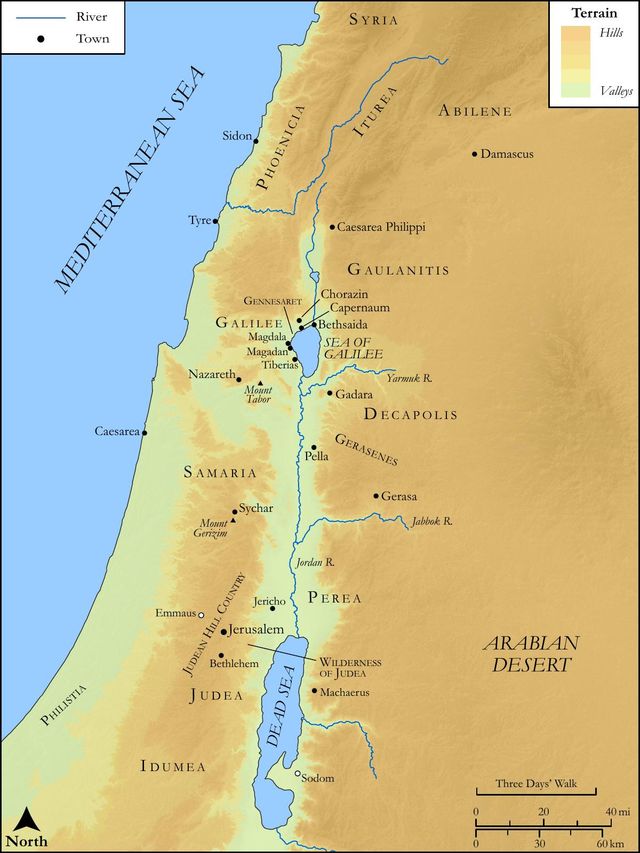

Study this verse
Public-domain commentary
Matthew Henry
From his Commentary on the Whole Bible. Henry comments on passages, not single verses — this entry covers Matthew 8:14–17. His four-level outline is real structure in the source text, so it is rendered as structure.
They who pretend to be critical in the Harmony of the evangelists, place this passage, and all that follows to the end of ch. 9 before the sermon on the mount, according to the order which Mark and Luke observe in placing it. Dr. Lightfoot places only this passage before the sermon on the mount, and Mat 8:18, etc. after. Here we have,
I.A particular account of the cure of Peter's wife's mother, who was ill of a fever; in which observe,
1.The case, which was nothing extraordinary; fevers are the most common distempers; but, the patient being a near relation of Peter's, it is recorded as an instance of Christ's peculiar care of, and kindness to, the families of his disciples. Here we find,
(1.)That Peter had a wife, and yet was called to be an apostle of Christ; and Christ countenanced the marriage state, by being thus kind to his wife's relations. The church of Rome, therefore, which forbids ministers to marry, goes contrary to that apostle from whom they pretend to derive an infallibility.
(2.)That Peter had a house, though Christ had not, Mat 8:20. Thus was the disciple better provided for than his Lord.
(3.)That he had a house at Capernaum, though he was originally of Bethsaida; it is probably, he removed to Capernaum, when Christ removed thither, and made that his principal residence. Note, It is worth while to change our quarters, that we may be near to Christ, and have opportunities of converse with him. When the ark removes, Israel must remove and go after it.
(4.)That he had his wife's mother with him in his family, which is an example to yoke-fellows to be kind to one another's relations as their own. Probably, this good woman was old, and yet was respected and taken care of, as old people ought to be, with all possible tenderness.
(5.)That she lay ill of a fever. Neither the strength of youth, nor the weakness and coldness of age, will be a fence against diseases of this kind. The palsy was a chronical disease, the fever an acute disease, but both were brought to Christ.
2.The cure, Mat 8:15.
(1.)How it was effected; He touched her hand; not to know the disease, as the physicians do, by the pulse, but to heal it. This was an intimation of his kindness and tenderness; he is himself touched with the feeling of our infirmities; it likewise shows the way of spiritual healing, by the exerting of the power of Christ with his word, and the application of Christ to ourselves. The scripture speaks the word, the Spirit gives the touch, touches the heart, touches the hand.
(2.)How it was evidenced: this showed that the fever left her, she arose, and ministered to them. By this it appears,
[1.]That the mercy was perfected. They that recover from fevers by the power of nature are commonly weak and feeble, and unfit for business a great while after; to show therefore that this cure was above the power of nature, she was immediately so well as to go about the business of the house.
[2.]That the mercy was sanctified; and the mercies that are so are indeed perfected. Though she was thus dignified by a peculiar favour, yet she does not assume importance, but is as ready to wait at table, if there be occasion, as any servant. They must be humble whom Christ has honoured; being thus delivered, she studies what she shall render. It is very fit that they whom Christ hath healed should minister unto him, as his humble servants, all their days.
II.Here is a general account of the many cures that Christ wrought.
This cure of Peter's mother-in-law brought him abundance of patients. "He healed such a one; why not me? Such a one's friend, why not mine?" Now we are here told,
1.What he did, Mat 8:16.
(1.)He cast out devils; cast out the evil spirits with his word. There may be much of Satan's agency, by the divine permission, in those diseases of which natural causes may be assigned, as in Job's boils, especially in the diseases of the mind; but, about the time of Christ's being in the world, there seems to have been more than ordinary letting loose of the devil, to possess and vex the bodies of people; he came, having great wrath, for he knew that his time was short; and God wisely ordered it so, that Christ might have the fairer and more frequent opportunities of showing his power over Satan, and the purpose and design of his coming into the world, which was to disarm and dispossess Satan, to break his power, and to destroy his works; and his success was as glorious as his design was gracious.
(2.)He healed all that were sick; all without exception, though the patient was ever so mean, and the case ever so bad.
2.How the scripture was herein fulfilled, v. 17. The accomplishment of the Old Testament prophecies was the great thing Christ had in his eye, and the great proof of his being the Messiah: among other things, it was written of him (Isa 53:4), Surely he hath borne our griefs, and carried our sorrows: it is referred to, Pe1 2:24, and there it is construed, he hath borne our sins; here it is referred to, and is construed, he hath borne our sicknesses; our sins make our sicknesses our griefs; Christ bore away sin by the merit of his death, and bore away sickness by the miracles of his life; nay, though those miracles are ceased, we may say, that he bore our sicknesses then, when he bore our sins in his own body upon the tree; for sin is both the cause and the sting of sickness. Many are the diseases and calamities to which we are liable in the body: and there is more, in this one line of the gospels, to support and comfort us under them, than in all the writings of the philosophers - that Jesus Christ bore our sicknesses, and carried our sorrows; he bore them before us; though he was never sick, yet he was hungry, and thirsty, and weary, and troubled in spirit, sorrowful and very heavy; he bore them for us in his passion, and bears them with us in compassion, being touched with the feeling of our infirmities: and thus he bears them off from us, and makes them sit light, if it be not our own fault. Observe how emphatically it is expressed here: Himself took our infirmities, and bare our sicknesses; he was both able and willing to interpose in that matter, and concerned to deal with our infirmities and sicknesses, as our Physician; that part of the calamity of the human nature was his particular care, which he evidenced by his great readiness to cure diseases; and he is no less powerful, no less tender now, for we are sure that never were any the worse for going to heaven.
Historical interpretation
Eleven Centuries of Reception
13 surviving comments on this verse. Each one is dated, so this reads as a timeline rather than a list.
Select a marker to jump to its quote. Markers stagger vertically where authors wrote within a few decades of each other.
We may not, I say, we may not call into question the truth of the (poor vilified) senses, lest we should even in Christ Himself, bring doubt upon the truth of their sensation; lest perchance it should be said that He did not really "behold Satan as lightning fall from heaven; " that He did not really hear the Father's voice testifying of Himself; or that He was deceived in touching Peter's wife's mother; or that the fragrance of the ointment which He afterwards smelled was different from that which He accepted for His burial; and that the taste of the wine was different from that which He consecrated in memory of His blood.
Or; In Peter's wife's mother is shown the sickly condition of infidelity, to which freedom of will is near akin, being united by the bonds as it were of wedlock. By the Lord's entrance into Peter's house, that is into the body, unbelief is cured, which was before sick of the fever of sin, and ministers in duties of righteousness to the Saviour.
But for what intent did He go into Peter's house? As it seems to me, to take food. This at least is declared when it is said, "She arose and ministered unto Him." For He used to visit His disciples (as Matthew likewise, when He had called him), so honoring them and making them more zealous.
But do thou mark, I pray thee, herein also Peter's reverence towards Him. For though he had his wife's mother at home lying ill, and very sick of a fever, he drew Him not into his house, but waited first for the teaching to be finished, then for all the others to be healed; and then when He had come in, besought Him. Thus from the beginning was he instructed to prefer the things of all others to his own.
Therefore neither doth he himself bring Him in, but He entered of His own accord (after the centurion had said, "I am not worthy that Thou shouldest come under my roof"): to show how much favor He bestowed on His disciple. And yet consider of what sort were the houses of these fishermen; but for all that, He disdained not to enter into their mean huts, teaching thee by all means to trample under foot human pride.
And sometimes He heals by words only, sometimes He even stretches forth His hand, sometimes He doeth both these things, to bring into sight His way of healing. For it was not His will always to work miracles in the more surpassing manner: it being needful for Him to be concealed awhile, and especially as concerned His disciples; since they out of their great delight would have proclaimed everything.
Having therefore touched her body, He not only quenched the fever, but also gave her back perfect health. Thus, the disease being an ordinary one, He displayed His power by the manner of healing; a thing which no physician's art could have wrought. For ye know that even after the departing of fevers, the patients yet need much time to return to their former health. But then all took place at once.
And not in this case only, but also in that of the sea. For neither there did He quiet the winds only and the storm, but He also stayed at once the swelling of the waves; and this also was a strange thing. For even if the tempest should cease, the waves continue to swell for a long time.
But with Christ it was not so, but all at once was ended: and so it befell this woman also. Wherefore also the evangelist, to declare this, said, "She arose and ministered unto Him;" which was a sign both of Christ's power, and of the disposition of the woman, which she showed towards Christ.
And another thing together with these we may hence observe, that Christ grants the healing of some to the faith even of others. Since in this case too, others besought Him, as also in the instance of the centurion's servant. And this grant He makes, when there is no unbelief in him that is to be healed, but either through disease he cannot come unto Him, or through ignorance imagines nothing great of Him, or because of His immature age.
(Hom. xxvii.) Why did He enter into Peter's house? I think to take food; for it follows, And she arose, and ministered to them. For He abode with His disciples to do them honour, and to make them more zealous. Observe Peter's reverence towards Christ; though his mother-in-law lay at home sick of a fever, yet he did not force Him thither at once, but waited till His teaching should be completed, and others healed. For from the beginning he was instructed to prefer others to himself. Wherefore he did not even bring Him thither, but Christ went in of Himself; purposing, because the centurion had said, I am not worthy that thou shouldest come under my roof, to show what He granted to a disciple. And He did not scorn to enter the humble hut of a fisherman, instructing us in every thing to trample upon human pride. Sometimes He heals by a word, sometimes He reaches forth His hand; as here, He touched her hand, and the fever left her. For He would not always work miracles with display of surpassing power, but would sometimes be hid. By touching her body He not only banished the fever, but restored her to perfect health. Because her sickness was such as art could cure, He showed his power to heal, in doing what medicine could not do, giving her back perfect health and strength at once; which is intimated in what the Evangelist adds, And she arose, and ministered to them.
This, she arose and ministered unto them, shows at once the Lord's power, and the woman's feeling towards Christ.
For naturally the greatest weakness follows fever, and the evils of sickness begin to be felt as the patient begins to recover; but that health which is given by the Lord's power is complete at once.
(Verse 15) And he rose up and served them. That hand which had been touched was also healed.
(De Cons. Ev. ii. 21.) When this miracle was done, that is, after what, or before what, Matthew has not said. For we need not understand that it took place just after that which it follows in the relation; he may be returning here to what he had omitted above. For Mark relates this after the cleansing of the leper, (Mark 1:30.) which should seem to follow the sermon on the mount, concerning which Mark is silent. Luke also follows the same order in relating this concerning Peter's mother-in-law as Mark; also inserting it before that long sermon which seems to be the same with Matthew's sermon on the mount. But what matters it in what order the events are told, whether something omitted before is brought in after, or what was done after is told earlier, so long as in the same story he does not contradict either another or himself? For as it is in no man's power to choose in what order he shall recollect the things he has once known, it is likely enough that each of the Evangelists thought himself obliged to relate all in that order in which it pleased God to bring to his memory the various events. Therefore when the order of time is not clear, it cannot import to us what order of relation any one of them may have followed.
Or by Peter's mother-in-law may be understood the Law, which according to the Apostle was made weak through the flesh, i. e. the carnal understanding. But when the Lord through the mystery of the Incarnation appeared visibly in the synagogue, and fulfilled the Law in action, and taught that it was to be understood spiritually; straightway it thus allied with the grace of the Gospel received such strength, that what had been the minister of death and punishment, became the minister of life and glory.
(in loc.) Figuratively; Peter's house is the Law, or the circumcision, his mother-in-law the synagogue, which is as it were the mother of the Church committed to Peter. She is in a fever, that is, she is sick of zealous hate, and persecutes the Church. The Lord touches her hand, when He turns her carnal works to spiritual uses.
(e Bed.) Or, every soul that struggles with fleshly lusts is sick of a fever, but touched with the hand of Divine mercy, it recovers health, and restrains the concupiscence of the flesh by the bridle of continence, and with those limbs with which it had served uncleanness, it now ministers to righteousness.
Jesus entered Peter’s house so that they could eat. And when He touched the woman’s hand, not only did He quench her fever but He restored her to perfect health, so that her strength returned and she was able to serve. Yet we know that it takes a considerable time for the sick to recover their strength. The other evangelists say that first they besought Him and then Jesus healed the woman (Mk. 1:29-31 and Lk. 4:38-39); but Matthew does not say this, for reasons of brevity. For I told you at the beginning that what one evangelist leaves out, the other mentions. Learn also that marriage does not impede virtue: the chief of the apostles had a mother-in-law.
Matthew having in the leper shown the healing of the whole human race, and in the centurion's servant that of the Gentiles, now figures the healing of the synagogue in Peter's mother-in-law. He relates the case of the servant, first, because it was the greater miracle, and the grace was greater in the conversion of the Gentile; or because the synagogue should not be fully converted till the end of the age when the fulness of the Gentiles should have entered in. Peter's house was in Bethsaida.
(non occ.) And it is not enough that she is cured, but strength is given her besides, for she arose and ministered unto them.
Continue studying Matthew 8:15 across the web’s major study libraries — every link below opens this exact verse, chapter, or book on the destination site.
Read & Compare
 BibleGatewayThis verse in more than 200 translations and 70 languages.
 Bible.comThe YouVersion reader — hundreds of translations, reading plans, and highlights.
 ESV.orgCrossway's official English Standard Version reader.
 NET BibleThe NET translation with 60,000+ translators' notes on every rendering decision.
 STEP BibleTyndale House's free study tool — original text, vocabulary, and scholarly resources.
 BibliaLogos Bible Software's free web reader.
 USCCBThe New American Bible (Revised Edition) with the U.S. bishops' study notes.
Commentaries
 BibleHub CommentariesDozens of classic commentaries on this verse, gathered on one page.
 StudyLightMore than 100 commentary sets — the largest collection on the web.
 BibleRefPlain-English commentary on what this verse means, verse by verse.
 Enduring WordDavid Guzik's free commentary on this chapter, widely used by Bible teachers.
 Bible Study ToolsVerse commentary alongside Greek and Hebrew study aids.
Original Language & Research
- BibleHub InterlinearThe verse word by word — original language, transliteration, and English.
- BibleHub LexiconEvery word's original-language definition and Strong's entry.
 Blue Letter BibleDeep-study tools — Strong's numbers, concordance, and word studies.
 CNTR CollationThe earliest Greek manuscripts of this verse, collated letter by letter.
Sermons, Hymns & Audio


TrulyRandomVerse is not affiliated with these sites and doesn’t control their content. They’re linked because they’re genuinely useful.
Summary
Matthew 8:15 powerfully illustrates Jesus' divine authority over sickness and His compassionate engagement with human suffering, depicting the instantaneous healing of Peter's mother-in-law from a severe fever, which immediately leads to her grateful and active service to Jesus and His disciples.
Context
ShowHideLiterary Context
This healing narrative is strategically placed by Matthew immediately following Jesus' descent from the mountain where He delivered the profound teachings of the Sermon on the Mount. It is part of a series of miracles in Matthew 8 that demonstrate Jesus' authority over disease, nature, and demons, serving as practical illustrations of the power inherent in the words He just spoke. Preceding this event are the cleansing of a leper (Matthew 8:1-4) and the remarkable healing of the centurion's servant from a distance (Matthew 8:5-13), both showcasing His unparalleled power and compassion. The entry into Peter's house in Capernaum thus shifts the scene from public demonstration to an intimate, domestic setting, further emphasizing the personal and accessible nature of Jesus' healing ministry.
Historical & Cultural Context
First-century Jewish society had limited medical understanding and resources, making fevers a common and often debilitating ailment. While not always life-threatening, a severe fever could incapacitate a person, disrupting household functions. Hospitality was a cornerstone of Jewish culture, and the inability of a hostess to serve guests due to illness would have been a significant concern. Capernaum, a bustling fishing village on the Sea of Galilee, served as Jesus' primary base of operations during His Galilean ministry, making Peter's home a natural gathering place for Jesus and His disciples. The act of Jesus touching her hand was culturally significant; while a rabbi might typically avoid touching a sick person (especially one with a contagious illness like leprosy, as seen earlier in Matthew 8:1-4), Jesus consistently defied such conventions to demonstrate His power and compassion, often making direct physical contact with the afflicted.
Key Themes
ShowHideThis verse contributes significantly to several overarching themes in Matthew's Gospel. Foremost is the theme of Jesus' Authority and Power, demonstrating His complete dominion over sickness and physical ailments, fulfilling Old Testament prophecies about the Messiah's healing ministry (e.g., Isaiah 53:4). Another crucial theme is Compassion and Accessibility, as Jesus extends His healing touch not only to public figures or those who seek Him out, but also to a family member within the intimate setting of Peter's home, highlighting His personal care for individuals. Finally, the immediate response of service ("ministered unto them") introduces the theme of Gratitude Leading to Discipleship and Service. The healing is not merely an end in itself but empowers the recipient to actively participate in the kingdom's work, mirroring the call to follow Jesus and serve others that is central to the life of a disciple (e.g., Matthew 20:28).
Exposition and Analysis
ShowHideKey Word Analysis
ShowHideThis word signifies a deliberate act of contact, often implying a personal, direct engagement. Unlike a command from a distance, Jesus' touch here conveys intimacy, compassion, and the direct transmission of His healing power, demonstrating His willingness to physically engage with human suffering.
This term refers to an inflamed, feverish condition. Its presence indicates a common, debilitating illness that would have rendered Peter's mother-in-law weak and unable to function. The immediate departure of the fever underscores the completeness and instantaneous nature of Jesus' healing.
This word implies being roused or awakened, not just from sleep but from a state of inactivity, illness, or even death. In this context, it emphasizes the complete restoration of strength and vitality, enabling her to immediately resume normal activities, contrasting sharply with the typical recovery period after a severe illness.
This verb means to serve, attend, or wait upon, often in a practical, humble capacity, like waiting on tables. Her immediate action of ministering signifies not only her full recovery but also her grateful response, transforming her restored health into active service for her guests, including Jesus and His disciples.
Verse Breakdown
ShowHide"And he touched her hand"
This clause highlights Jesus' direct, personal, and compassionate engagement with Peter's mother-in-law. His physical touch is the conduit of divine power, demonstrating His willingness to draw near to the afflicted and act decisively.
"and the fever left her"
This signifies the instantaneous and complete nature of the healing. The departure of the fever is immediate and absolute, requiring no process or recovery period, showcasing Jesus' supreme authority over sickness.
"and she arose"
This phrase emphasizes the full restoration of her strength and vitality. She was not merely healed but empowered to stand up and function normally, indicating a miraculous return to full health from a debilitating state.
"and ministered unto them"
This final clause reveals her immediate and grateful response to the healing. Her act of serving, or "diakonéō," demonstrates her restored capacity and willingness to use her newfound strength for the benefit of others, particularly her guests, including Jesus and His disciples, embodying a spirit of humble gratitude and service.
Literary Devices
ShowHideMatthew employs several literary devices in this concise verse. The primary device is Narrative Economy, where a significant event is conveyed with remarkable brevity, highlighting the efficiency and power of Jesus' actions. The sequence of events—touch, healing, rising, ministering—is presented in rapid succession, creating a sense of Immediacy and Direct Causation, emphasizing that Jesus' touch directly and instantly led to her complete recovery and subsequent service. The contrast between her initial state of incapacitation by fever and her immediate, active service also functions as a subtle form of Juxtaposition, underscoring the dramatic transformative power of Jesus' intervention. Furthermore, her immediate act of "ministering" serves as a Symbol of true gratitude and the proper response to divine grace, where blessing leads to service rather than self-indulgence.
Theological and Thematic Connections
ShowHideMatthew 8:15 powerfully illustrates Jesus' compassionate authority over all forms of human suffering, affirming His identity as the Messiah who heals both body and soul. The instantaneous nature of the healing underscores His divine power, requiring no elaborate rituals or time for recovery, while the immediate response of service highlights a core theological principle: divine grace empowers and obligates believers to serve others. This passage connects the physical healing to a spiritual truth: true restoration leads to active, grateful discipleship, demonstrating that God's blessings are often intended to equip us for Kingdom work. It foreshadows the New Testament emphasis on using one's gifts and renewed strength for the benefit of the community and the glory of God.
Reflection and Application
ShowHideMatthew 8:15 offers profound insights for contemporary believers. It reminds us that Jesus' compassion extends not only to dramatic, life-threatening illnesses but also to the mundane, debilitating ailments that disrupt our daily lives. Just as He touched Peter's mother-in-law and restored her, He is intimately concerned with our physical, emotional, and spiritual well-being. This passage challenges us to consider our own responses to God's grace and healing in our lives. When God intervenes, whether through miraculous healing, answered prayer, or simply sustaining us through trials, do we immediately turn inward, or do we, like Peter's mother-in-law, arise and use our renewed strength and capacity to serve Him and others? Her immediate act of "ministering" serves as a powerful model of gratitude expressed through practical service, reminding us that true thankfulness is active and outward-focused, transforming our blessings into opportunities to bless.
Questions for Reflection
ShowHideFAQ
ShowHideWas Peter's mother-in-law's fever a serious illness, and why is its healing significant?
ShowHideWhile the text simply states "fever" (pyretós), the fact that she was bedridden and unable to fulfill her role as hostess suggests it was a debilitating, though perhaps not immediately life-threatening, illness. Its healing is significant because it demonstrates Jesus' complete authority over all forms of sickness, from the dramatic (like leprosy or paralysis) to the common and debilitating. It highlights His compassion for everyday suffering and His power to restore individuals to full functionality, enabling them to resume their lives and responsibilities. This healing, like others in Matthew 8, serves as a powerful testament to His messianic identity and divine power.
What is the significance of Peter's mother-in-law "ministering unto them" immediately after being healed?
ShowHideHer immediate act of "ministering" (Greek: diakonéō) is profoundly significant. Firstly, it confirms the completeness and instantaneous nature of her healing; she was not merely better but fully restored to strength. Secondly, it serves as a powerful demonstration of gratitude. Instead of resting or seeking comfort, she immediately used her renewed health to serve her guests, including Jesus and His disciples. This act models the ideal response to divine grace: a life empowered by God's blessing should lead to active, humble service to others. It foreshadows the Christian call to discipleship, where those who receive God's grace are then equipped and compelled to serve others, as seen in passages like Galatians 5:13 and 1 Peter 4:10.
Christ-Centered Fulfillment
ShowHideMatthew 8:15, while a direct account of Jesus' healing power, points profoundly to His ultimate redemptive work as the Christ. Jesus' compassionate touch and the immediate departure of the fever foreshadow His greater mission to conquer the ultimate sickness of sin and death. Just as He restored physical health, He came to bring spiritual restoration, enabling humanity to "arise" from spiritual death and "minister" in newness of life. His power over physical ailments is a tangible sign of His authority over all creation and His capacity to bring about a new creation. The healing of Peter's mother-in-law, leading to her service, perfectly illustrates the pattern of the Gospel: Christ's grace frees us from bondage (whether to sin, sickness, or death), not for our own comfort, but to empower us for active, grateful service in His kingdom. This echoes the New Testament's teaching that we are saved by grace through faith and then created in Christ Jesus for good works, which God prepared beforehand. Ultimately, Jesus' healing touch in Matthew 8:15 is a microcosm of His entire ministry: He touches broken humanity, removes the malady of sin, raises us to new life, and empowers us to serve Him and one another, reflecting the very heart of the Son of Man, who came not to be served but to serve.