


Luke 1:58
Bible text: King James Version (1769 Blayney text) · Public domain
Bible text: Berean Standard Bible · Public domain
Bible text: American Standard Version (1901) · Public domain
Bible text: World English Bible, Messianic edition · Public domain
Bible text: Geneva Bible (1599) · Public domain
Bible text: Young's Literal Translation · Public domain
- καὶkaiAndG2532CONJConjunction
- ἤκουσανēkousanheardG191V-AAI-3PVerb Aorist Active Indicative 3rd Plural
- οἱhoitheG3588T-NPMDefinite article Nominative Plural Masculine
- περίοικοιperioikoineighboursG4040A-NPMAdjective Nominative Plural Masculine
- καὶkaiandG2532CONJConjunction
- οἱhoitheG3588T-NPMDefinite article Nominative Plural Masculine
- συγγενεῖςsungeneisrelativesG4773A-NPMAdjective Nominative Plural Masculine
- αὐτῆςautēsof herG846P-GSFPersonal pronoun Genitive Singular Feminine
- ὅτιhotithatG3754CONJConjunction
- ἐμεγάλυνενemegalunenmagnifiedG3170V-AAI-3SVerb Aorist Active Indicative 3rd Singular
- κύριοςkurios[the] LordG2962N-NSM-TNoun Nominative Singular Masculine Title
- τὸtotheG3588T-ASNDefinite article Accusative Singular Neuter
- ἔλεοςeleosmercyG1656N-ASNNoun Accusative Singular Neuter
- αὐτοῦautouof HimG846P-GSMPersonal pronoun Genitive Singular Masculine
- μετ᾽met᾽withG3326PREPPreposition
- αὐτῆςautēsherG846P-GSFPersonal pronoun Genitive Singular Feminine
- καὶkaiandG2532CONJConjunction
- συνέχαιρονsunechaironthey were rejoicing withG4796V-IAI-3PVerb Imperfect Active Indicative 3rd Plural
- αὐτῇautēaherG846P-DSFPersonal pronoun Dative Singular Feminine
English is a literal word-by-word gloss of the Greek, not the KJV's wording. Why?
This is the original text the KJV's translators worked from — each Greek word with its own literal English meaning in this verse, prepared by scholars at Tyndale House, Cambridge. The KJV translates whole sentences, not word by word, so its wording differs: one Greek word can become several English words, and the KJV may choose “charity” where the gloss reads “love”. Both are faithful — they answer different questions. For the KJV's own rendering, switch to the KJV text.
Details
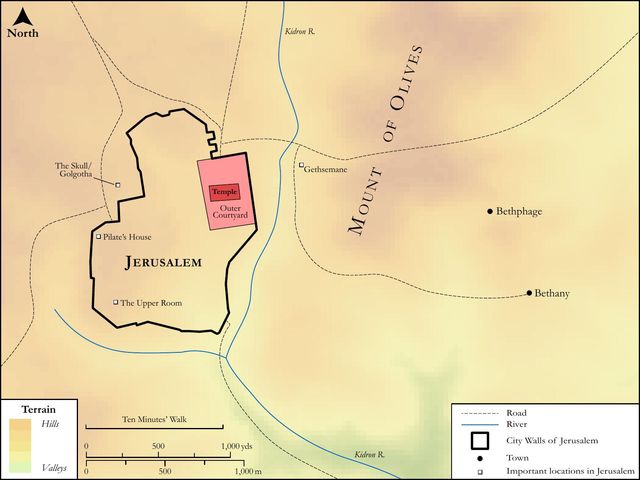
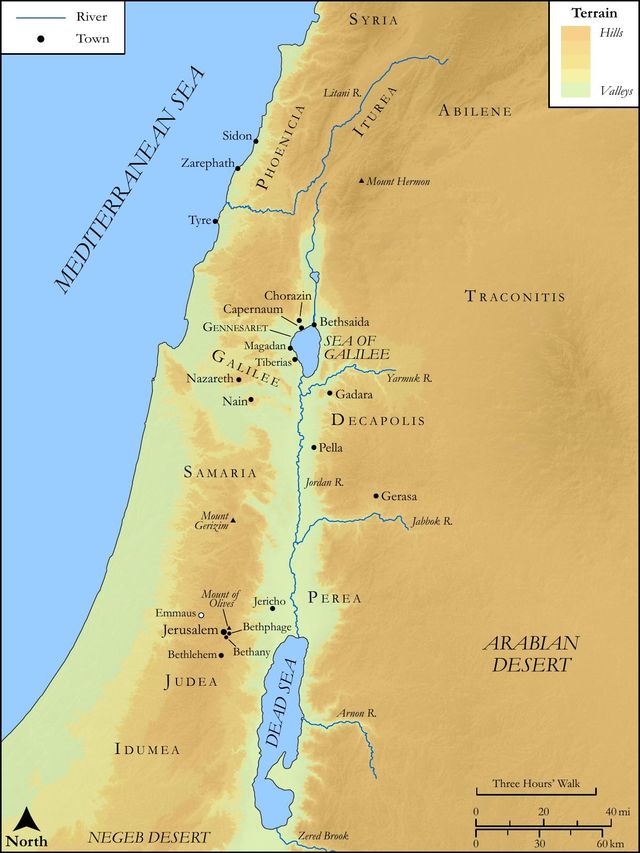
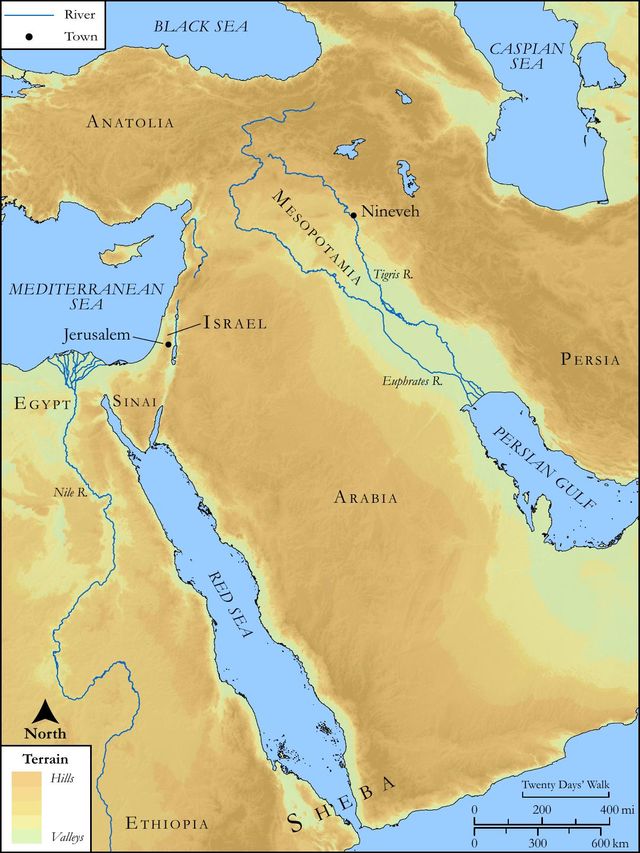
See on the biblical-era maps
Study this verse
Public-domain commentary
Matthew Henry
From his Commentary on the Whole Bible. Henry comments on passages, not single verses — this entry covers Luke 1:57–66. His three-level outline is real structure in the source text, so it is rendered as structure.
In these verses, we have,
I.The birth of John Baptist, Luk 1:57.
Though he was conceived in the womb by miracle, he continued in the womb according to the ordinary course of nature (so did our Saviour): Elisabeth's full time came, that she should be delivered, and then she brought forth a son. Promised mercies are to be expected when the full time for them is come, and not before.
II.The great joy that was among all the relations of the family, upon this extraordinary occasion (Luk 1:58):
Her neighbours and her cousins heard of it; for it would be in every body's mouth, as next to miraculous. Dr. Lightfoot observes that Hebron was inhabited by priests of the family of Aaron, and that those were the cousins here spoken of; but the fields and villages about, by the children of Judah, and that those were the neighbours. Now these here discovered,
1.A pious regard to God. They acknowledged that the Lord had magnified his mercy to her, so the word is. It was a mercy to have her reproach taken away, a mercy to have her family built up, and the more being a family of priests, devoted to God, and employed for him. Many things concurred to make the mercy great - that she had been long barren, was now old, but especially that the child should be great in the sight of the Lord.
2.A friendly regard to Elisabeth. When she rejoiced, they rejoiced with her. We ought to take pleasure in the prosperity of our neighbours and friends, and to be thankful to God for their comforts as for our own.
III.The dispute that was among them concerning the naming him (Luk 1:59):
On the eighth day, as God has appointed, they came together, to circumcise the child; it was here, in Hebron, that circumcision was first instituted; and Isaac, who, like John Baptist, was born by promise, was one of the first that was submitted to it, at least the chief eyed in the institution of it. They that rejoiced in the birth of the child came together to the circumcising of him. Note, The greatest comfort we can take in our children is in giving them up to God, and recognizing their covenant-relation to him. The baptism of our children should be more our joy than their birth.
Now it was the custom, when they circumcised their children, to name them, because, when Abram was circumcised God gave him a new name, and called him Abraham; and it is not unfit that they should be left nameless till they are by name given up to God. Now,
1.Some proposed that he should be called by his father's name, Zacharias. We have not any instance in scripture that the child should bear the father's name; but perhaps it was of late come into use among the Jews, at it is with us, and they intended hereby to do honour to the father, who was not likely to have another child.
2.The mother opposed it, and would have called him John; having learned, either by inspiration of the Holy Ghost (as is most probable), or by information in writing from her husband, that God appointed this to be his name (Luk 1:60); He shall be called Johanan - Gracious, because he shall introduce the gospel of Christ, wherein God's grace shines more brightly than ever.
3.The relations objected against that (Luk 1:61): "There is none of thy kindred, none of the relations of thy family, that is called by that name; and therefore, if he may not have his father's name, yet let him have the name of some of his kindred, who will take it as a piece of respect to have such a child of wonders as this named from them." Note, As those that have friends must show themselves friendly, so those that have relations must be obliging to them in all the usual regards that are paid to kindred.
4.They appealed to the father, and would try if they could possibly get to know his mind; for it was his office to name the child, Luk 1:62. They made signs to him, by which it appears that he was deaf as well as dumb; nay, it should seem, mindless of any thing, else one would think they should at first have desired him to write down his child's name, if he had ever communicated any thing by writing since he was struck. However, they would carry the matter as far as they could, and therefore gave him to understand what the dispute was which he only could determine; whereupon he made signs to them to give him a table-book, such as they then used, and with the pencil he wrote these words, His name is John, Luk 1:63. Note, "It shall be so," or, "I would have it so," but "It is so." The matter is determined already; the angel had given him that name. Observe, When Zacharias could not speak, he wrote. When ministers have their mouths stopped, that they cannot preach, yet they may be doing good as long as they have not their hands tied, that they cannot write. Many of the martyrs in prison wrote letters to their friends, which were of great use; blessed Paul himself did so. Zacharias's pitching upon the same name that Elisabeth had chosen was a great surprise to the company: They marvelled all; for they knew not that, though by reason of his deafness and dumbness they could not converse together, yet they were both guided by one and the same Spirit: or perhaps they marvelled that he wrote so distinctly and intelligently, which (the stroke he was under being somewhat like that of a palsy) he had not done before.
5.He thereupon recovered the use of his speech (Luk 1:64): His mouth was opened immediately. The time prefixed for his being silenced was till the day that these blessed things shall be fulfilled (Luk 1:20); not all the things going before concerning John's ministry, but those which relate to his birth and name (Luk 1:13). That time was now expired, whereupon the restraint was taken off, and God gave him the opening of the mouth again, as he did to Ezekiel, Eze 3:27. Dr. Lightfoot compares this case of Zacharias with that of Moses, Exo 4:24-26. Moses, for distrust, is in danger of his life, as Zacharias, for the same fault, is struck dumb; but, upon the circumcision of his child, and recovery of his faith, there, as here, the danger is removed. Infidelity closed his mouth, and now believing opens it again; he believes, therefore he speaks. David lay under guilt from the conception of his child till a few days after its birth; then the Lord takes away his sin: upon his repentance, he shall not die. So here he shall be no longer dumb; his mouth was opened, and he spoke, and praised God. Note, When God opens our lips, our mouths must show forth his praise. As good be without our speech as not use it in praising God; for then our tongue is most our glory when it is employed for God's glory.
6.These things were told all the country over, to the great amazement of all that heard them, Luk 1:65, Luk 1:66. The sentiments of the people are not to be slighted, but taken notice of. We are here told,
(1.)That these sayings were discoursed of, and were the common talk all about the hill-country of Judea. It is a pity but a narrative of them had been drawn up, and published in the world, immediately.
(2.)That most people who heard of these things were put into consternation by them: Fear came on all them that dwell round about there. If we have not a good hope, as we ought to have, built upon the gospel, we may expect that the tidings of it will fill us with fear. They believed and trembled, whereas they should have believed and triumphed.
(3.)It raised the expectations of people concerning this child, and obliged them to have their eye upon him, to see what he would come to. They laid up these presages in their hearts, treasured them up in mind and memory, as foreseeing they should hereafter have occasion to recollect them. Note, What we hear, that may be of use to us, we should treasure up, that we may be able to bring forth, for the benefit of others, things new and old, and, when things come to perfection, may be able to look back upon the presages thereof, and to say, "It was what we might expect." They said within themselves, and said among themselves, "What manner of child shall this be? What will be the fruit when these are the buds, or rather when the root is out of such a dry ground?" Note, When children are born into the world, it is very uncertain what they will prove; yet sometimes there have been early indications of something great, as in the birth of Moses, Samson, Samuel, and here of John. And we have reason to think that there were some of those living at the time when John began his public ministry who could, and did, remember these things, and relate them to others, which contributed as much as any thing to the great flocking there was after him.
Lastly, It is said, The hand of the Lord was with him; that is, he was taken under the special protection of the Almighty, from his birth, as one designed for something great and considerable, and there were many instances of it. It appeared likewise that the Spirit was at work upon his soul very early. As soon as he began to speak or go, you might perceive something in him very extraordinary. Note, God has ways of operating upon children in their infancy, which we cannot account for. God never made a soul but he knew how to sanctify it.
Historical interpretation
Nine Centuries of Reception
5 surviving comments on this verse. Each one is dated, so this reads as a timeline rather than a list.
Select a marker to jump to its quote. Markers stagger vertically where authors wrote within a few decades of each other.
The elderly Elizabeth gave birth to the last of the prophets, and Mary, a young girl, to the Lord of the angels. The daughter of Aaron gave birth to the voice in the desert, but the daughter of David to the strong God of the earth. The barren one gave birth to him who remits sins, but the Virgin gave birth to him who takes them away. Elizabeth gave birth to him who reconciled people through repentance, but Mary gave birth to him who purified the lands of uncleanness. The elder one lit a lamp in the house of Jacob, his father, for this lamp itself was John, while the younger one lit the Sun of Justice for all the nations. The angel announced to Zechariah, so that the slain one would proclaim the crucified one and that the hated one would proclaim the envied one. He who was to baptize with water would proclaim him who would baptize with fire and with the Holy Spirit. The light, which was not obscure, would proclaim the Sun of Justice. The one filled with the Spirit would proclaim concerning him who gives the Spirit. The priest calling with the trumpet would proclaim concerning the one who is to come at the sound of the trumpet at the end. The voice would proclaim concerning the Word, and the one who saw the dove would proclaim concerning him upon whom the dove rested, like the lightning before the thunder.
If you carefully observe, you will find that the word signifying fulness is no where used except at the birth of the righteous. Hence it is said, Now Elisabeth's full time came. For the life of the righteous hath fulness, but the days of the wicked are empty.
For the bringing forth of saints causes the rejoicing of many; it is a common blessing; for justice is a public virtue, and therefore at the birth of a just man a sign of his future life is sent beforehand, and the grace of the virtue which is to follow is represented, being foreshadowed by the rejoicing of the neighbours.
And for that reason the Lord kept back the delivery of Elisabeth, that her joy might be increased, and her fame the greater. Hence it follows, And her neighbours and cousins heard, &c. For they who had known her barrenness were made the witnesses of the Divine grace, and no one seeing the child departed in silence, but gave praise to God, Who had vouchsafed him beyond their expectation.
And her neighbors and relatives heard that the Lord had shown great mercy toward her, and they rejoiced with her. The birth of the saints brings joy to many because it is a common good. For justice is a communal virtue. Therefore, at the birth of a just person, a sign of future life is foretold, and the grace of the forthcoming virtue is prefigured with the joyful exultation of neighbors.
(Metaphrastes.) For it is the custom for virgins to go away when the pregnant woman brings forth. But when she reached her own home, she went to no other place, but abode there until she knew the time of her delivery was at hand. And Joseph doubting, is instructed by an Angel.
Continue studying Luke 1:58 across the web’s major study libraries — every link below opens this exact verse, chapter, or book on the destination site.
Read & Compare
 BibleGatewayThis verse in more than 200 translations and 70 languages.
 Bible.comThe YouVersion reader — hundreds of translations, reading plans, and highlights.
 ESV.orgCrossway's official English Standard Version reader.
 NET BibleThe NET translation with 60,000+ translators' notes on every rendering decision.
 STEP BibleTyndale House's free study tool — original text, vocabulary, and scholarly resources.
 BibliaLogos Bible Software's free web reader.
 USCCBThe New American Bible (Revised Edition) with the U.S. bishops' study notes.
Commentaries
 BibleHub CommentariesDozens of classic commentaries on this verse, gathered on one page.
 StudyLightMore than 100 commentary sets — the largest collection on the web.
 BibleRefPlain-English commentary on what this verse means, verse by verse.
 Enduring WordDavid Guzik's free commentary on this chapter, widely used by Bible teachers.
 Bible Study ToolsVerse commentary alongside Greek and Hebrew study aids.
Original Language & Research
- BibleHub InterlinearThe verse word by word — original language, transliteration, and English.
- BibleHub LexiconEvery word's original-language definition and Strong's entry.
 Blue Letter BibleDeep-study tools — Strong's numbers, concordance, and word studies.
 CNTR CollationThe earliest Greek manuscripts of this verse, collated letter by letter.
Sermons, Hymns & Audio


TrulyRandomVerse is not affiliated with these sites and doesn’t control their content. They’re linked because they’re genuinely useful.
Summary
Luke 1:58 vividly portrays the communal joy and recognition of God's miraculous intervention in the life of Elizabeth. Following the extraordinary birth of John the Baptist, her neighbors and relatives, having witnessed the Lord's profound and active compassion, responded with heartfelt celebration, underscoring the public acknowledgement of divine favor and the shared nature of blessing within the community.
Context
ShowHideLiterary Context
This verse immediately follows the birth of John the Baptist to Elizabeth and Zacharias, an elderly and previously barren couple, as described in Luke 1:57. The narrative in Luke's Gospel meticulously details the miraculous circumstances surrounding John's conception and birth, setting the stage for the even more profound birth of Jesus. The preceding verses emphasize the long-awaited fulfillment of God's promise, not only to Zacharias and Elizabeth but also as a prelude to the coming Messiah. The communal reaction in Luke 1:58 serves as the immediate social validation and celebration of this divine act, leading directly into the events of John's circumcision and naming in Luke 1:59-66, where Zacharias's voice is restored, and he prophesies about his son's prophetic role.
Historical & Cultural Context
In ancient Israelite society, barrenness was often viewed as a source of shame and a sign of divine disfavor (though this was not necessarily God's perspective, as seen in many biblical narratives). Conversely, the birth of a child, especially after a long period of barrenness, was a cause for immense celebration and was universally recognized as a direct blessing from God. Family and community ties were exceptionally strong, and significant life events like births were communal affairs. Neighbors and extended family ("cousins" or "relatives") played an integral role in social life, sharing in both sorrows and joys. The news of Elizabeth's pregnancy and subsequent birth would have spread quickly, particularly given her advanced age and the long-standing knowledge of her barrenness. This public rejoicing was not merely social custom but a profound theological affirmation of God's active presence and faithfulness within their midst.
Key Themes
ShowHideLuke 1:58 powerfully contributes to several key themes within Luke's Gospel and the broader biblical narrative. Firstly, it highlights God's great mercy and faithfulness (Luke 1:50). The miraculous birth of John to an elderly, barren couple is a clear demonstration of God's compassion and His ability to intervene in human impossibilities, fulfilling His promises. Secondly, the verse emphasizes communal joy and witness. The shared rejoicing of the community signifies the public acknowledgment of God's work and serves as an early witness to the extraordinary nature of John's birth, preparing the way for his future ministry. This communal response echoes the joy seen in other miraculous births in the Old Testament, such as the birth of Isaac to Sarah (Genesis 21:6). Finally, it underscores the theme of overcoming barrenness as a sign of divine power. Elizabeth's story is part of a biblical pattern where God opens the womb of previously barren women (e.g., Sarah, Rebekah, Rachel, Hannah), demonstrating His sovereign power over life and His ability to bring forth life where it seems impossible, often for a specific redemptive purpose.
Exposition and Analysis
ShowHideKey Word Analysis
ShowHideThis verb signifies not merely the physical act of hearing, but often implies understanding, heeding, or perceiving. In this context, it suggests that Elizabeth's neighbors and cousins not only received the information about the birth but also grasped its significance—that it was a direct manifestation of divine intervention and mercy, not just a natural occurrence. Their hearing led to a specific, appropriate response: rejoicing.
This term denotes compassion, particularly active compassion that results in practical help or deliverance. It refers to God's benevolent kindness and pity, especially as it is shown in His saving acts. Here, it highlights that God's action in granting Elizabeth a child was not an obligation but a gracious, compassionate, and unmerited favor, demonstrating His character as a God who is rich in compassion towards His people.
This compound verb literally means "to rejoice with" or "to sympathize in gladness." It conveys a deep, shared joy, indicating that the community genuinely celebrated Elizabeth's blessing as if it were their own. This is more than mere congratulation; it is an empathetic participation in her joy, affirming the communal bond and the collective recognition of God's goodness.
Verse Breakdown
ShowHide"And her neighbours and her cousins heard"
This opening clause establishes the immediate audience and their reception of the news. "Neighbours" (G4040, períoikos) refers to those living nearby, while "cousins" (G4773, syngenḗs) indicates extended family, highlighting the close-knit nature of the community. Their hearing is crucial, as it sets the stage for their understanding and response.
"how the Lord had shewed great mercy upon her"
This is the content of what was heard and understood. The phrase "shewed great mercy" (G3170 megalýnō and G1656 éleos) emphasizes the extraordinary nature of God's compassion. It wasn't just mercy, but mercy "magnified" or made "great" and evident for all to see. The recognition that "the Lord" (G2962, kýrios) was the agent behind this act transforms it from a personal event into a divine revelation.
"and they rejoiced with her"
This final clause describes the communal response. Their "rejoicing with her" (G4796, synchaírō) signifies a shared, empathetic joy, demonstrating that Elizabeth's blessing was not isolated but celebrated by her community. This collective celebration validates the divine nature of the event and underscores the theme of shared blessing and solidarity.
Literary Devices
ShowHideLuke 1:58 employs several literary devices to convey its message effectively. The most prominent is Communal Response, where the actions of "her neighbours and her cousins" are central to the verse's meaning. Their collective "hearing" and "rejoicing" emphasize the public and widely acknowledged nature of God's intervention, validating the miracle beyond Elizabeth and Zacharias themselves. There is also an element of Emphasis through the phrase "shewed great mercy." The use of "great" (G3170, megalýnō, "magnified") highlights the extraordinary and abundant nature of God's compassion, indicating that this was no ordinary blessing but a profound act of divine grace. Furthermore, the verse functions as Narrative Progression, moving the story from the private miracle of birth to its public reception, setting the stage for the subsequent events of John's naming and Zacharias's prophecy, which further unfold the divine plan.
Theological and Thematic Connections
ShowHideLuke 1:58 beautifully illustrates the profound theological truth that God's redemptive acts are often met with communal recognition and joy. The "great mercy" shown to Elizabeth is a specific manifestation of God's covenant faithfulness, echoing His character as revealed throughout the Old Testament. This mercy is not merely passive pity but an active, benevolent intervention that transforms barrenness into fruitfulness, sorrow into joy. The community's response of shared rejoicing underscores the biblical principle that blessings from God are often meant to be witnessed and celebrated collectively, serving as a testimony to His power and goodness. This communal affirmation also foreshadows the broader, universal joy that would accompany the advent of the Messiah, whose coming would be the ultimate expression of God's mercy to all humanity.
Reflection and Application
ShowHideLuke 1:58 offers a timeless lesson on the power of shared joy and the importance of recognizing God's hand in the lives of others. In a world often marked by self-centeredness or even envy, this verse calls believers to cultivate a spirit of genuine empathy and celebration. When we witness God's goodness, His "great mercy," manifested in the lives of our brothers and sisters—whether it's a long-awaited answer to prayer, a miraculous healing, or simply a season of abundant blessing—our natural, Christ-like response should be to "rejoice with them." This communal celebration not only strengthens the bonds of fellowship within the body of Christ but also serves as a powerful collective witness to the world of God's active presence and ongoing work. It reminds us that God's blessings are not just for the individual but often for the community, fostering a culture of gratitude and mutual encouragement, where God receives the glory for His magnificent deeds.
Questions for Reflection
ShowHideFAQ
ShowHideWhy was it significant that Elizabeth's neighbors and cousins heard and rejoiced?
ShowHideThe significance lies in the communal validation and witness of God's miraculous work. In Israel, family and community were central, and events like births were public affairs. Elizabeth and Zacharias had been barren for many years, a fact known to their community. Therefore, the birth of John was not just a private joy but a public demonstration of God's power and faithfulness. Their hearing and rejoicing signified that the community recognized this event as divine intervention, not merely a natural occurrence. This shared joy served to confirm the miracle and pave the way for understanding John's unique, divinely appointed role, as it was a testimony to God's "great mercy" extended to them all.
What does "shewed great mercy" specifically imply in this context?
ShowHideThe phrase "shewed great mercy" (Greek: emegalynen eleos) goes beyond simple compassion. The verb megalýnō means "to magnify" or "to make great." So, it implies that the Lord's mercy was not just present, but it was made abundantly clear, evident, and extraordinary for all to see. It speaks to the magnitude of God's compassionate action in overcoming Elizabeth's long-standing barrenness and granting her a child in her old age. This was a powerful, undeniable display of God's active benevolence, demonstrating His faithfulness to His promises and His ability to do the impossible, as He had done for Sarah and Hannah before her (see Genesis 21:1-7 and 1 Samuel 1:19-20).
Christ-Centered Fulfillment
ShowHideWhile Luke 1:58 celebrates the "great mercy" shown to Elizabeth in the birth of John the Baptist, its ultimate fulfillment and deeper significance are found in the coming of Jesus Christ. John's birth was a miraculous prelude, preparing the way for the true Lamb of God, who would take away the sin of the world (John 1:29). The mercy shown to Elizabeth, though profound, pales in comparison to the boundless mercy God extends to all humanity through His Son. In Christ, God "shewed great mercy" not just by overcoming barrenness, but by overcoming the spiritual barrenness of sin and death, offering eternal life to all who believe (Ephesians 2:4-5). The communal rejoicing at John's birth foreshadows the universal joy that accompanies the good news of salvation in Jesus Christ, where angels proclaim "good news of great joy that will be for all the people" (Luke 2:10). Through Christ, the ultimate display of God's compassion and faithfulness is revealed, inviting not just neighbors and cousins, but all nations to "rejoice with" Him in the new life and hope found in His redemptive work (Revelation 7:9-10).