


Judges 9:2
Bible text: King James Version (1769 Blayney text) · Public domain
Bible text: King James Version with Strong's numbers · Public domain
Bible text: Berean Standard Bible · Public domain
Bible text: American Standard Version (1901) · Public domain
Bible text: World English Bible, Messianic edition · Public domain
Bible text: Geneva Bible (1599) · Public domain
Bible text: Young's Literal Translation · Public domain
- דַּבְּרוּda·be·ruspeakH1696V-Piel-Imp-2mpVerb Piel Imperative 2nd Plural Masculine
- נָאna'pleaseH4994PrtParticle Interjection
- בְּאָזְנֵיbe·'a·ze·Neiin [the] ears ofH241Prep-b ¦ N-fdcNoun Dual Feminine Constructבְּinאָזְנֵי[the] ears of
- כָלkholallH3605N-mscNoun Singular Masculine Construct
- בַּעֲלֵיba·'a·Lei[the] citizens ofH1167N-mpcNoun Plural Masculine Construct
- שְׁכֶםshe·KhemShechemH7927N-properNoun Proper Location
- מַהmahwhat?H4100InterrogPronoun Interrogative
- טּוֹבTov[is] goodH2896Adj-msAdjective Singular Masculine Absolute
- לָכֶםla·Khemfor <the> youPrep-l ¦ 2mpSuffix Personal 2nd Plural Masculineלָfor <the>כֶםyou
- הַמְשֹׁלham·Shol¿ to ruleH4910Interrog ¦ V-Qal-InfVerb Qal Infinitive Constructהַ¿מְשֹׁלto rule
- בָּכֶםba·Khemover <the> youPrep-b ¦ 2mpSuffix Personal 2nd Plural Masculineבָּover <the>כֶםyou
- שִׁבְעִיםshiv·'ImseventyH7657N-mpNoun Plural Masculine Absolute
- אִישׁ'IshmanH376N-msNoun Singular Masculine Absolute
- כֹּלkolallH3605N-mscNoun Singular Masculine Construct
- בְּנֵיbe·Nei[the] sons ofH1121N-mpcNoun Plural Masculine Construct
- יְרֻבַּעַלye·ru·Ba·'alJerub-BaalH3378N-proper-mNoun Proper Masculine
- אִם'imor?H518PrtParticle Conditional
- מְשֹׁלme·Sholto ruleH4910V-Qal-InfVerb Qal Infinitive Construct
- בָּכֶםba·Khemover <the> youPrep-b ¦ 2mpSuffix Personal 2nd Plural Masculineבָּover <the>כֶםyou
- אִישׁ'isha manH376N-msNoun Singular Masculine Absolute
- אֶחָד'e·ChadoneH259N-fsNoun Singular Feminine Absolute
- וּזְכַרְתֶּםu·ze·khar·Temand you will rememberH2142Conj-w ¦ V-Qal-ConsecPerf-2mpVerb Qal Consecutive Perfect 2nd Plural Masculineוּandזְכַרְתֶּםyou will remember
- כִּיkithatH3588PrtParticle Conditional
- עַצְמֵכֶם'atz·me·Khem[am] your boneH6106N-fsc ¦ 2mpNoun Singular Feminine Constructעַצְמֵ[am] boneכֶםyour
- וּבְשַׂרְכֶםu·ve·sar·Khemand your fleshH1320Conj-w ¦ N-msc ¦ 2mpNoun Singular Masculine Constructוּandבְשַׂרְfleshכֶםyour
- אָנִי'a·NiIH589Pro-1csPronoun Personal 1st Singular common gender
English is a literal word-by-word gloss of the Hebrew, not the KJV's wording. Why?
This is the original text the KJV's translators worked from — each Hebrew word with its own literal English meaning in this verse, prepared by scholars at Tyndale House, Cambridge. The KJV translates whole sentences, not word by word, so its wording differs: one Hebrew word can become several English words, and the KJV may choose “the LORD” where the gloss reads “Yahweh”. Both are faithful — they answer different questions. For the KJV's own rendering, switch to the KJV text.
Details
See on the biblical-era maps
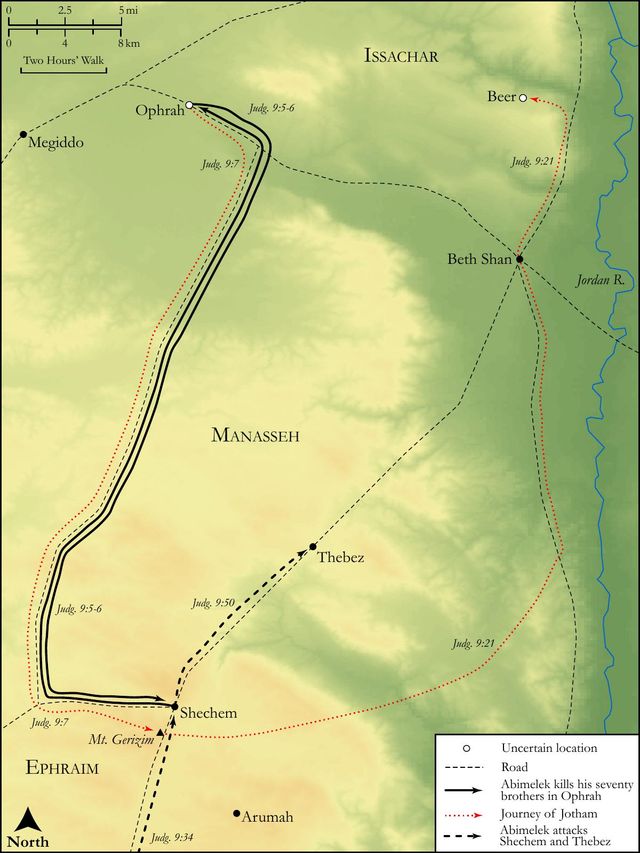
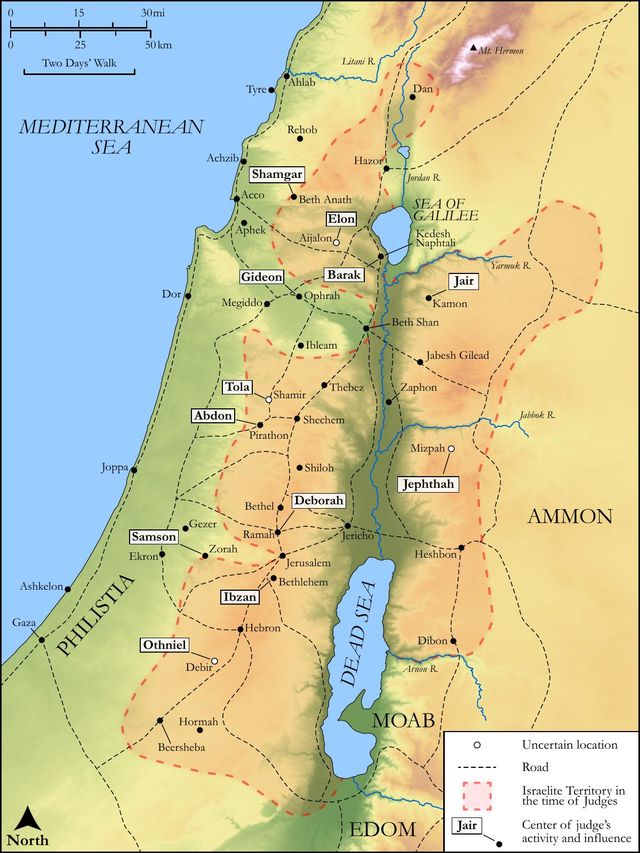
Study this verse
Public-domain commentary
Matthew Henry
From his Commentary on the Whole Bible. Henry comments on passages, not single verses — this entry covers Judges 9:1–6. His three-level outline is real structure in the source text, so it is rendered as structure.
We are here told by what arts Abimelech got into authority, and made himself great. His mother perhaps had instilled into his mind some towering ambitious thoughts, and the name his father gave him, carrying royalty in it, might help to blow up these sparks; and now that he has buried his father nothing will serve his proud spirit but he will succeed him in the government of Israel, directly contrary to his father's will, for he had declared no son of his should rule over them. He had no call from God to this honour as his father had, nor was there any present occasion for a judge to deliver Israel as there was when his father was advanced; but his own ambition must be gratified, and its gratification is all he aims at. Now observe here,
I.How craftily he got his mother's relations into his interests.
Shechem was a city in the tribe of Ephraim, of great note. Joshua had held his last assembly there. If that city would but appear for him, and set him up, he thought it would go far in his favour. There he had an interest in the family of which his mother was, and by them he made an interest in the leading men of the city. It does not appear that any of them had an eye to him as a man of merit, who had any thing to recommend him to such a choice, but the motion came first from himself. None would have dreamed of making such a one king, if he had not dreamed of it himself. And see here, 1. How he wheedled them into the choice, Jdg 9:2, Jdg 9:3. He basely suggested that Gideon having left seventy sons, who made a good figure and had a good interest, they were designing to keep the power which their father had in their hands, and by a joint-influence to reign over Israel. "Now," says he, "you had better have one king than more, than many, than so many. Affairs of state are best managed by a single person," Jdg 9:2. We have no reason to think that all or any of Gideon's sons had the least intention to reign over Israel (they were of their father's mind, that the Lord should reign over them, and they were not called of him), yet this he insinuates to pave the way to his own pretensions. Note, Those who design ill themselves are commonly most apt to suspect that others design ill. As for himself, he only puts them in mind of his relation to them (verbum sapienti - A word to the wise is sufficient): Remember that I am your bone and your flesh. The plot took wonderfully. The magistrates of Shechem were pleased to think of their city being a royal city and the metropolis of Israel, and therefore they inclined to follow him; for they said, "He is our brother, and his advancement will be our advantage." 2. How he got money from them to bear the charges of his pretensions (Jdg 9:4): They gave him seventy pieces of silver; it is not said what the value of these pieces was; so many shekels are less, and so many talents more, than we can well imagine; therefore it is supposed they were each a pound weight: but they gave this money out of the house of Baal-berith, that is, out of the public treasury, which, out of respect to their idol, they deposited in his temple to be protected by him; or out of the offerings that had been made to that idol, which they hoped would prosper the better in his hands for its having been consecrated to their god. How unfit was he to reign over Israel, because unlikely to defend them, who, instead of restraining and punishing idolatry, thus early made himself a pensioner to an idol! 3. What soldiers he enlisted. He hired into his service vain and light persons, the scum and scoundrels of the country, men of broken fortunes, giddy heads, and profligate lives; none but such would own him, and they were fittest to serve his purpose. Like leader like followers.
II.How cruelly he got his father's sons out of the way.
1.The first thing he did with the rabble he headed was to kill all his brethren at once, publicly and in cold blood, threescore and ten men, one only escaping, all slain upon one stone. See in this bloody tragedy,
(1.)The power of ambition what beasts it will turn men into, how it will break through all the ties of natural affection and natural conscience, and sacrifice that which is most sacred, dear, and valuable, to its designs. Strange that ever it should enter into the heart of a man to be so very barbarous!
(2.)The peril of honour and high birth. Their being the sons of so great a man as Gideon exposed them thus and made Abimelech jealous of them. We find just the same number of Ahab's sons slain together at Samaria, Kg2 10:1, Kg2 10:7. The grand seigniors have seldom thought themselves safe while any of their brethren have been unstrangled. Let none then envy those of high extraction, or complain of their own meanness and obscurity. The lower the safer.
2.Way being thus made for Abimelech's election, the men of Shechem proceeded to choose him king, Jdg 9:6. God was not consulted whether they should have any king at all, much less who it should be; here is no advising with the priest or with their brethren of any other city or tribe, though it was designed that he should reign over Israel, Jdg 9:22. But,
(1.)The Shechemites, as if they were the people and wisdom must die with them, did all; they aided and abetted him in the murder of his brethren (Jdg 9:24), and then they made him king. The men of Shechem (that is, the great men, the chief magistrates of the city), and the house of Millo (that is, the common-council, the full house or house of fulness, as the word signifies), those that met in their guildhall (we read often of the house of Millo, or state-house in Jerusalem, or the city of David, Sa2 5:9; Kg2 12:20), these gathered together, not to prosecute and punish Abimelech for this barbarous murder, as they ought to have done, he being one of their citizens, but to make him king. Pretium sceleris tulit hic diadema - His wickedness was rewarded with a diadem. What could they promise themselves from a king that laid the foundation of his kingdom in blood?
(2.)The rest of the Israelites were so very sottish as to sit by unconcerned. They took no care to give check to this usurpation, to protect the sons of Gideon, or to avenge their death, but tamely submitted to the bloody tyrant, as men who with their religion had lost their reason, and all sense of honour and liberty, justice and gratitude. How vigorously had their fathers appeared to avenge the death of the Levite's concubine, and yet so wretchedly degenerate are they now as not to attempt the avenging of the death of Gideon's sons; it is for this that they are charged with ingratitude (Jdg 8:35): Neither showed they kindness to the house of Jerubbaal.
Continue studying Judges 9:2 across the web’s major study libraries — every link below opens this exact verse, chapter, or book on the destination site.
Read & Compare
 BibleGatewayThis verse in more than 200 translations and 70 languages.
 Bible.comThe YouVersion reader — hundreds of translations, reading plans, and highlights.
 ESV.orgCrossway's official English Standard Version reader.
 NET BibleThe NET translation with 60,000+ translators' notes on every rendering decision.
 STEP BibleTyndale House's free study tool — original text, vocabulary, and scholarly resources.
 BibliaLogos Bible Software's free web reader.
 USCCBThe New American Bible (Revised Edition) with the U.S. bishops' study notes.
Commentaries
 BibleHub CommentariesDozens of classic commentaries on this verse, gathered on one page.
 StudyLightMore than 100 commentary sets — the largest collection on the web.
 BibleRefPlain-English commentary on what this verse means, verse by verse.
 Enduring WordDavid Guzik's free commentary on this chapter, widely used by Bible teachers.
 Bible Study ToolsVerse commentary alongside Greek and Hebrew study aids.
Original Language & Research
- BibleHub InterlinearThe verse word by word — original language, transliteration, and English.
- BibleHub LexiconEvery word's original-language definition and Strong's entry.
 Blue Letter BibleDeep-study tools — Strong's numbers, concordance, and word studies.
 SefariaThe Hebrew text with Rashi and centuries of Jewish commentary.
Sermons, Hymns & Audio


TrulyRandomVerse is not affiliated with these sites and doesn’t control their content. They’re linked because they’re genuinely useful.
Summary
Judges 9:2 captures the insidious opening of Abimelech's manipulative appeal to the leaders of Shechem, laying the groundwork for his audacious usurpation of power. As the illegitimate son of Gideon (Jerubbaal), Abimelech strategically presents a false dilemma, questioning whether it is better for Shechem to be ruled by Gideon's seventy legitimate sons or by a single individual, namely himself. He then seals his argument with a potent appeal to kinship, reminding them of his familial ties to the city through his mother, thereby leveraging ancient tribal loyalties to secure his tyrannical ambition.
Context
ShowHideLiterary Context
Judges 9:2 immediately follows the death of Gideon, whose unique leadership concluded with a clear refusal to establish a dynastic monarchy over Israel, stating that "the Lord shall rule over you". This verse marks a stark and tragic departure from Gideon's principled stance. Abimelech, a son of Gideon by a concubine from Shechem, emerges as a figure driven by ruthless ambition, contrasting sharply with the previous judges who were raised up by God. The narrative quickly shifts from a period of relative peace under Gideon to one of internal strife and bloodshed initiated by Abimelech's quest for power, setting the stage for Jotham's prophetic fable and the subsequent downfall of both Abimelech and Shechem. This chapter serves as a dark mirror to the earlier, more righteous leadership found in the book.
Historical & Cultural Context
Shechem was a prominent city in central Canaan, strategically located and historically significant as a place where Abraham built an altar (Genesis 12:6-7), Jacob settled (Genesis 33:18-20), and where Joshua renewed the covenant with Israel (Joshua 24). It was a city with a mixed population, likely including both Israelites and indigenous Canaanites, which might explain its susceptibility to Abimelech's political maneuvering. The appeal to "bone and your flesh" was a powerful idiom in Israel, signifying deep familial and tribal loyalty, often used to establish or reinforce claims to leadership or solidarity, as seen in 2 Samuel 5:1. The concept of a single king was not yet fully embraced by Israel, making Abimelech's proposition a radical departure from the divinely appointed, charismatic leadership of the judges.
Key Themes
ShowHideThis verse introduces and develops several critical themes within the book of Judges and beyond. It highlights the dangers of unchecked ambition and the usurpation of power when human desire overrides divine will. Abimelech's manipulation through a false dilemma and an appeal to kinship loyalty underscores the theme of deceptive rhetoric and the vulnerability of a people to cunning persuasion. Furthermore, it implicitly raises questions about the nature of true leadership—contrasting Abimelech's self-serving rule with the divinely appointed judges and foreshadowing the later, often problematic, establishment of monarchy in Israel, as seen in 1 Samuel 8. The tragic consequences that unfold in Judges 9 serve as a stark warning against choosing human expediency over righteous governance.
Exposition and Analysis
ShowHideKey Word Analysis
ShowHideThis primitive root means "to arrange" but is used figuratively "to speak." It can also imply "to subdue" in a destructive sense. Here, it signifies Abimelech's deliberate and calculated articulation of his plan, not merely casual conversation. He is arranging his words to manipulate, setting a destructive course for Shechem.
This word literally means "a bone (as strong)" and by extension, "the body." Figuratively, it denotes the "substance" or "selfsame." When paired with "flesh," it forms a powerful idiom for profound kinship, emphasizing a shared, intrinsic identity. Abimelech uses this to assert his undeniable blood relation to the Shechemites through his mother, making a compelling, albeit manipulative, claim on their loyalty.
This refers to "flesh (from its freshness)," and by extension, "body, person." As part of the idiom "bone and your flesh," it reinforces the concept of shared humanity and deep familial ties. Abimelech's appeal to being "your bone and your flesh" is a masterstroke of rhetoric, tapping into Israel's understanding of tribal solidarity and the powerful bonds of kinship, making his claim seem natural and compelling to the Shechemites.
Verse Breakdown
ShowHide"Speak, I pray you, in the ears of all the men of Shechem,"
This opening phrase reveals Abimelech's strategic and manipulative approach. He doesn't merely state his case but requests that his words be "spoken in the ears" – a direct, personal, and persuasive address to the influential leaders and citizens of Shechem. This indicates a deliberate campaign of influence, targeting the very core of the city's decision-makers, ensuring his message is heard and considered by those with power.
"Whether [is] better for you, either that all the sons of Jerubbaal, [which are] threescore and ten persons, reign over you, or that one reign over you?"
This is a classic rhetorical question designed to create a false dilemma. Abimelech presents two options, one seemingly chaotic (seventy rulers, implying disunity and potential conflict) and the other seemingly stable (a single ruler). He does not offer a third, more righteous option (e.g., God's continued rule through judges) nor does he acknowledge the inherent dangers of his own ambition. The number "threescore and ten" (seventy) emphasizes the perceived unwieldiness of multiple rulers, making his proposal of a single ruler seem like the only rational choice for stability.
"remember also that I [am] your bone and your flesh."
This is the emotional and cultural linchpin of Abimelech's argument. By appealing to his kinship through his Shechemite mother, he establishes a deep, undeniable familial bond. This declaration is meant to evoke loyalty, trust, and a sense of shared identity, making his proposition seem not just logical but also personally advantageous for the Shechemites. It positions him as their rightful, natural leader, unlike his half-brothers who lacked such direct ties to their city, thereby leveraging their tribal allegiances.
Literary Devices
ShowHideJudges 9:2 is rich in literary devices that underscore Abimelech's manipulative character and the tragic trajectory of the narrative. The most prominent is the Rhetorical Question, "Whether [is] better for you, either that all the sons of Jerubbaal... reign over you, or that one reign over you?" This question is not posed to elicit genuine deliberation but to guide the audience to a predetermined conclusion, creating a False Dilemma where only two undesirable options are presented, making Abimelech's proposition appear as the sole logical choice. There is profound Irony in Abimelech's actions; his father Gideon explicitly refused kingship, yet Abimelech ruthlessly pursues it, setting up a tragic contrast between father and son. The phrase "bone and your flesh" serves as a powerful Idiom, a culturally specific expression that conveys a deep sense of kinship and shared identity, effectively leveraging the Shechemites' tribal loyalties. Finally, this verse functions as Foreshadowing, signaling the beginning of a period of violence, treachery, and divine retribution that will engulf both Abimelech and the men of Shechem, culminating in the fulfillment of Jotham's curse.
Theological and Thematic Connections
ShowHideJudges 9:2 stands as a stark testament to the dangers of human ambition divorced from divine guidance, a recurring theme throughout the book of Judges. Abimelech's self-appointed quest for power directly contravenes Gideon's earlier declaration that "the Lord shall rule over you" (Judges 8:23). This verse highlights the shift from God-appointed, charismatic leaders to self-serving, tyrannical figures, reflecting Israel's spiritual decline and their increasing desire to be "like all the nations" (1 Samuel 8:5). Abimelech's manipulation of kinship ties and his presentation of a false choice underscore the importance of discerning true leadership, which is characterized by service and righteousness, not by self-promotion and violence. The subsequent narrative of Abimelech's reign and downfall serves as a cautionary tale about the consequences of rejecting God's sovereignty and embracing ungodly rule.
Reflection and Application
ShowHideAbimelech's manipulative appeal in Judges 9:2 offers profound lessons for contemporary believers. It challenges us to critically examine the motives behind those who seek leadership, whether in the church, community, or political sphere. Are they driven by a genuine desire to serve and a commitment to truth, or by self-interest and a hunger for power? The Shechemites were swayed by a clever rhetorical question and an appeal to tribal loyalty, failing to discern the malice and destructive potential beneath Abimelech's words. This reminds us of the importance of spiritual discernment, to "test the spirits whether they are of God" (1 John 4:1), and to not be easily swayed by smooth talk or appeals to carnal loyalties. Our ultimate allegiance must be to God and His truth, not to human charisma or perceived convenience. The tragic outcome for Shechem underscores that choosing ungodly leadership, even if seemingly advantageous in the short term, inevitably leads to ruin and can have devastating long-term consequences for a community or nation.
Questions for Reflection
ShowHideFAQ
ShowHideWhat was Gideon's stance on kingship, and how does Abimelech's action contrast with it?
ShowHideGideon, after his victory over Midian, explicitly refused the offer of kingship from the Israelites, stating, "I will not rule over you, neither shall my son rule over you: the Lord shall rule over you". This demonstrated his understanding that Israel's true king was Yahweh. Abimelech's actions in Judges 9:2 stand in stark contrast; he actively seeks to establish himself as king through manipulation and violence, utterly disregarding his father's principled rejection of human monarchy and God's unique sovereignty over Israel.
Why was the phrase "bone and your flesh" so powerful in ancient Israelite society?
ShowHideThe phrase "bone and your flesh" (Hebrew: 'etsem u'basar') was a potent idiom signifying the closest possible blood relationship and shared identity. It was a declaration of deep familial connection, implying an unbreakable bond and a natural claim to loyalty and solidarity. For example, Adam uses it to describe Eve in Genesis 2:23, and the tribes of Israel use it to acknowledge David's kinship when making him king in 2 Samuel 5:1. Abimelech's use of this phrase was a strategic appeal to the Shechemites' tribal and familial loyalties, reminding them that he was "one of them" through his mother, unlike his seventy half-brothers.
Christ-Centered Fulfillment
ShowHideAbimelech's self-serving ambition and manipulative quest for power in Judges 9:2 stand in stark contrast to the true and benevolent King, Jesus Christ. Abimelech appealed to carnal kinship and presented a false dilemma to seize an earthly throne, leading to bloodshed and destruction. In contrast, Jesus, though truly "bone of our bone and flesh of our flesh" through His incarnation (Hebrews 2:14), did not grasp for power but emptied Himself, taking the form of a servant (Philippians 2:7). He did not manipulate His followers but spoke truth, even when it was difficult (John 6:60-69). While Abimelech offered a choice between seventy chaotic rulers and one tyrannical one, Jesus offers Himself as the singular, righteous Shepherd and King, whose reign brings peace, justice, and eternal life (John 10:11; Revelation 19:16). His kingdom is not of this world, established by force, but is spiritual and eternal, built on sacrifice and love (John 18:36). Abimelech's story serves as a dark shadow, highlighting the desperate human need for the perfect, divine King who rules with perfect wisdom and unfailing love, offering true security and salvation.