


Judges 9:15
Bible text: King James Version (1769 Blayney text) · Public domain
Bible text: King James Version with Strong's numbers · Public domain
Bible text: Berean Standard Bible · Public domain
Bible text: American Standard Version (1901) · Public domain
Bible text: World English Bible, Messianic edition · Public domain
Bible text: Geneva Bible (1599) · Public domain
Bible text: Young's Literal Translation · Public domain
- וַיֹּאמֶרvai·Yo·merand it saidH559Conj-w ¦ V-Qal-ConsecImperf-3msVerb Qal Consecutive Imperfect 3rd Singular Masculineוַandיֹּאמֶרit said
- הָאָטָדha·'a·Tadthe thorn bushH329Art ¦ N-msNoun Singular Masculine Absoluteהָtheאָטָדthorn bush
- אֶל'eltoH413PrepPreposition
- הָעֵצִיםha·'e·Tzimthe treesH6086Art ¦ N-mpNoun Plural Masculine Absoluteהָtheעֵצִיםtrees
- אִם'imifH518PrtParticle Conditional
- בֶּאֱמֶתbe·'e·Metin truthH571Prep-b ¦ N-fsNoun Singular Feminine Absoluteבֶּinאֱמֶתtruth
- אַתֶּם'a·TemyouH859Pro-2mpPronoun Personal 2nd Plural Masculine
- מֹשְׁחִיםmo·she·Chim[are] anointingH4886V-Qal-Prtcpl-mpVerb Qal Participle Plural Masculine Absolute
- אֹתִי'o·Ti<obj.> meH853DirObjM ¦ 1csParticle Object Indicatorאֹתִ<obj.>יme
- לְמֶלֶךְle·Me·lekhto kingH4428Prep-l ¦ N-msNoun Singular Masculine Absoluteלְtoמֶלֶךְking
- עֲלֵיכֶם'a·lei·Khemover youH5921Prep ¦ 2mpPreposition Definiteעֲלֵיoverכֶםyou
- בֹּאוּBo·'ucomeH935V-Qal-Imp-2mpVerb Qal Imperative 2nd Plural Masculine
- חֲסוּcha·Sutake refugeH2620V-Qal-Imp-2mpVerb Qal Imperative 2nd Plural Masculine
- בְצִלִּיve·tzi·Liin my shadeH6738Prep-b ¦ N-msc ¦ 1csNoun Singular Masculine Constructבְinצִלִּshadeיmy
- וְאִםve·'imand ifH518Conj-w ¦ PrtParticle Conditionalוְandאִםif
- אַיִן'A·yinnotH369N-msNoun Singular Masculine Absolute
- תֵּצֵאTe·tze'let it go outH3318V-Qal-Imperf-3fsVerb Qal Imperfect 3rd Singular Feminine
- אֵשׁ'esha fireH784N-csNoun Singular common gender Absolute
- מִןminfromH4480PrepPreposition
- הָאָטָדha·'a·Tadthe thorn bushH329Art ¦ N-msNoun Singular Masculine Absoluteהָtheאָטָדthorn bush
- וְתֹאכַלve·to·Khaland let it consumeH398Conj-w ¦ V-Qal-ConjImperf-3fsVerb Qal Conjunction+Imperfect 3rd Singular Feminineוְandתֹאכַלlet it consume
- אֶת'et<obj.>H853DirObjMParticle Object Indicator
- אַרְזֵי'ar·Zei[the] cedars ofH730N-mpcNoun Plural Masculine Construct
- הַלְּבָנוֹןha·le·va·Non<the> LebanonH3844Art ¦ N-properNoun Proper Locationהַ<the>לְּבָנוֹןLebanon
English is a literal word-by-word gloss of the Hebrew, not the KJV's wording. Why?
This is the original text the KJV's translators worked from — each Hebrew word with its own literal English meaning in this verse, prepared by scholars at Tyndale House, Cambridge. The KJV translates whole sentences, not word by word, so its wording differs: one Hebrew word can become several English words, and the KJV may choose “the LORD” where the gloss reads “Yahweh”. Both are faithful — they answer different questions. For the KJV's own rendering, switch to the KJV text.
Details
See on the biblical-era maps
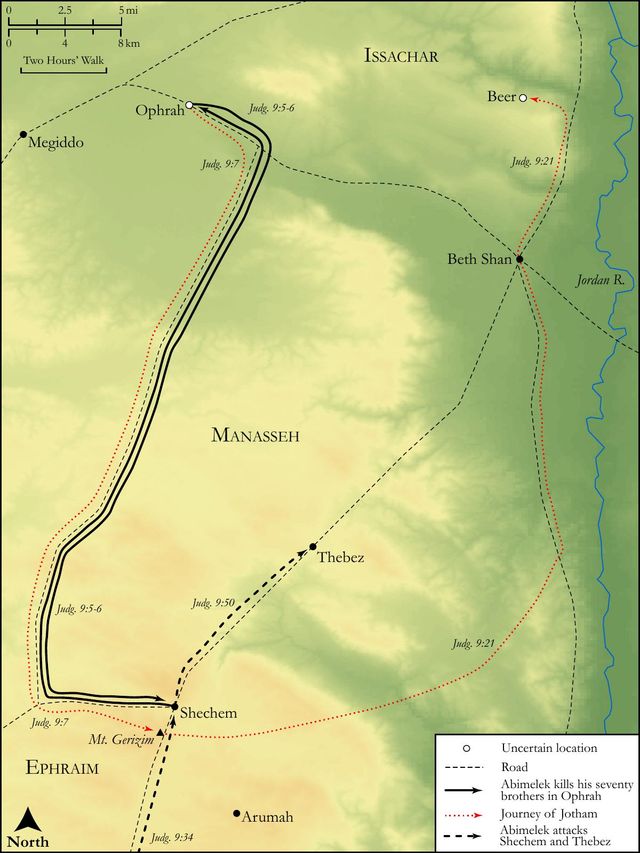
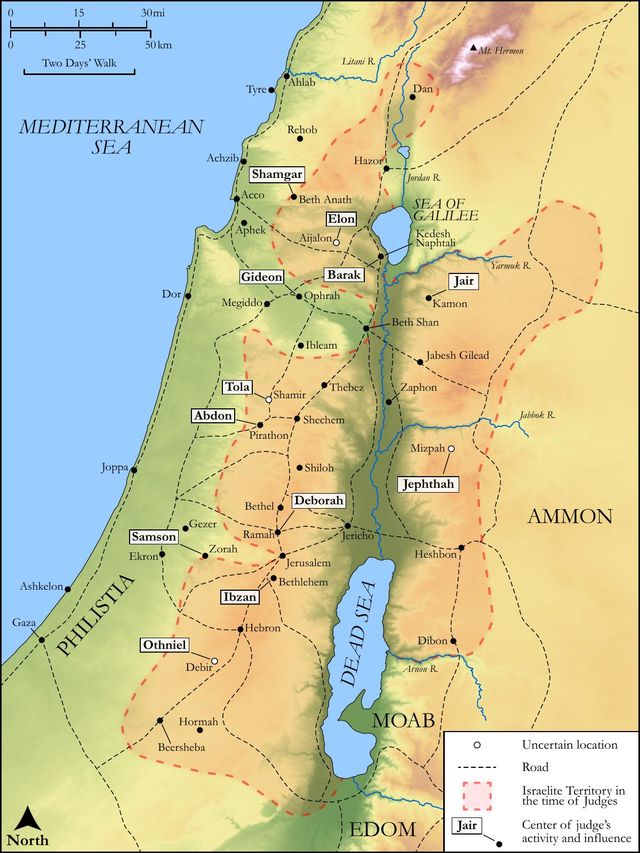
Study this verse
Public-domain commentary
Matthew Henry
From his Commentary on the Whole Bible. Henry comments on passages, not single verses — this entry covers Judges 9:7–21. His four-level outline is real structure in the source text, so it is rendered as structure.
We have here the only testimony that appears to have been borne against the wicked confederacy of Abimelech and the men of Shechem. It was a sign they had provoked God to depart from them that neither any prophet was sent nor any remarkable judgment, to awaken this stupid people, and to stop the progress of this threatening mischief. Only Jotham, the youngest son of Gideon, who by a special providence escaped the common ruin of his family (Jdg 9:5), dealt plainly with the Shechemites, and his speech, which is here recorded, shows him to have been a man of such great ingenuity and wisdom, and really such an accomplished gentleman, that we cannot but the more lament the fall of Gideon's sons. Jotham did not go about to raise an army out of the other cities of Israel (in which, one would think, he might have made a good interest for his father's sake), to avenge his brethren's death, much less to set up himself in competition with Abimelech, so groundless was the usurper's suggestion that the sons of Gideon aimed at dominion (Jdg 9:2); but he contents himself with giving a faithful reproof to the Shechemites, and fair warning of the fatal consequences. He got an opportunity of speaking to them from the top of Mount Gerizim, the mount of blessings, at the foot of which probably the Shechemites were, upon some occasion or other, gathered together (Josephus says, solemnizing a festival), and it seems they were willing to hear what he had to say.
I.His preface is very serious:
"Hearken unto me, you men of Shechem, that God may hearken unto you, Jdg 9:7. As ever you hope to obtain God's favour, and to be accepted of him, give me a patient and impartial hearing." Note, Those who expect God to hear their prayers must be willing to hear reason, to hear a faithful reproof, and to hear the complaints and appeals of wronged innocency. If we turn away our ear from hearing the law, our prayer will be an abomination, Pro 28:9.
II.His parable is very ingenious - that when the trees were disposed to choose a king the government was offered to those valuable trees the olive, the fig-tree, and the vine, but they refused it, choosing rather to serve than rule, to do good than bear sway. But the same tender being made to the bramble he accepted it with vain-glorious exultation. The way of instruction by parables is an ancient way, and very useful, especially to give reproofs by.
1.He hereby applauds the generous modesty of Gideon, and the other judges who were before him, and perhaps of the sons of Gideon, who had declined accepting the state and power of kings when they might have had them, and likewise shows that it is in general the temper of all wise and good men to decline preferment and to choose rather to be useful than to be great.
(1.)There was no occasion at all for the trees to choose a king; they are all the trees of the Lord which he has planted (Psa 104:16) and which therefore he will protect. Nor was there any occasion for Israel to talk of setting a king over them; for the Lord was their king.
(2.)When they had it in their thoughts to choose a king they did not offer the government to the stately cedar, or the lofty pine, which are only for show and shade, and not otherwise useful till they are cut down, but to the fruit-trees, the vine and the olive. Those that bear fruit for the public good are justly respected and honoured by all that are wise more than those that affect to make a figure. For a good useful man some would even dare to die.
(3.)The reason which all these fruit-trees gave for their refusal was much the same. The olive pleads (Jdg 9:9), Should I leave my wine, wherewith both God and man are served and honoured? for oil and wine were used both at God's altars and at men's tables. And shall I leave my sweetness, saith the fig-tree, and my good fruit (Jdg 9:11), and go to be promoted over the trees? or, as the margin reads it, go up and down for the trees? It is intimated,
[1.]That government involves a man in a great deal both of toil and care; he that is promoted over the trees must go up and down for them, and make himself a perfect drudge to business.
[2.]That those who are preferred to places of public trust and power must resolve to forego all their private interests and advantages, and sacrifice them to the good of the community. The fig-tree must lose its sweetness, its sweet retirement, sweet repose, and sweet conversation and contemplation, if it go to be promoted over the trees, and must undergo a constant fatigue.
[3.]That those who are advanced to honour and dignity are in great danger of losing their fatness and fruitfulness. Preferment is apt to make men proud and slothful, and thus spoil their usefulness, with which in a lower sphere they honoured God and man, for which reason those that desire to do good are afraid of being too great.
2.He hereby exposes the ridiculous ambition of Abimelech, whom he compares to the bramble or thistle, Jdg 9:14. He supposes the trees to make their court to him: Come thou and reign over us, perhaps because he knew not that the first motion of Abimelech's preferment came from himself (as we found, Jdg 9:2), but thought the Shechemites had proposed it to him; however, supposing it so, his folly in accepting it deserved to be chastised. The bramble is a worthless plant, not to be numbered among the trees, useless and fruitless, nay, hurtful and vexatious, scratching and tearing, and doing mischief; it began with the curse, and its end is to be burned. Such a one was Abimelech, and yet chosen to the government by the trees, by all the trees; this election seems to have been more unanimous than any of the others. Let us not think it strange if we see folly set in great dignity (Ecc 10:6), and the vilest men exalted (Psa 12:8), and men blind to their own interest in the choice of their guides. The bramble, being chosen to the government, takes no time to consider whether he should accept it or no, but immediately, as if he had been born and bred to dominion, hectors, and assures them they shall find him as he found them. See what great swelling words of vanity he speaks (Jdg 9:15), what promises he makes to his faithful subjects: Let them come and trust in my shadow: a goodly shadow to trust in! How unlike to the shadow of a great rock in a weary land, which a good magistrate is compared to! Isa 32:2. Trust in his shadow! - more likely to be scratched if they came near him - more likely to be injured by him than benefited. Thus men boast of a false gift. Yet he threatens with as much confidence as he promises: If you be not faithful, let fire come out of the bramble (a very unlikely thing to emit fire) and devour the cedars of Lebanon - more likely to catch fire, and be itself devoured.
III.His application is very close and plain. In it,
1.He reminds them of the many good services his father had done for them, Jdg 9:17. He fought their battles, at the hazard of his own life, and to their unspeakable advantage. It was a shame that they needed to be put in mind of this.
2.He aggravates their unkindness to his father's family. They had not done to him according to the deserving of his hands, Jdg 9:16. Great merits often meet with very ill returns. especially to posterity, when the benefactor if forgotten, as Joseph was among the Egyptians. Gideon had left many sons that were an honour to his name and family, and these they had barbarously murdered; one son he had left that was the blemish of his name and family, for he was the son of his maid-servant, whom all that had any respect to Gideon's honour would endeavour to conceal, yet him they made their king. In both they put the utmost contempt imaginable upon Gideon.
3.He leaves it to the event to determine whether they had done well, whereby he lodges the appeal with the divine providence.
(1.)If they prospered long in this villany, he would give them leave to say they had done well, Jdg 9:19. "If your conduct towards the house of Gideon be such as can be justified at any bar of justice, honour, or conscience, much good may it do you with your new king." But,
(2.)If they had, as he was sure they had, dealt basely and wickedly in this matter, let them never expect to prosper, Jdg 9:20. Abimelech and the Shechemites, that had strengthened one another's hands in this villany, would certainly be a plague and ruin one to another. Let none expect to do ill and fare well.
Jotham, having given them this admonition, made a shift to escape with his life, Jdg 9:21. Either they could not reach him or they were so far convinced that they would not add the guilt of his blood to all the rest. But, for fear of Abimelech, he lived in exile, in some remote obscure place. Those whose extraction and education are ever so high know not to what difficulties and straits they may be reduced.
Historical interpretation
Historical reception
2 surviving comments on this verse. Each one is dated, so this reads as a timeline rather than a list.
Select a marker to jump to its quote. Markers stagger vertically where authors wrote within a few decades of each other.
But lest I should appear to some to be sophistical, and to conjecture these things from mere probabilities, and to babble, I will bring forward to you, O virgins, from the Old Testament, written prophecy from the book of Judges, to show that I speak the truth, where the future reign of chastity was already clearly foretold.…Now it is clear that these things are not said of trees growing out of the earth. Inanimate trees cannot be assembled in council to choose a king since they are firmly fixed to the earth by deep roots. But on the whole these things are narrated concerning souls that—before the incarnation of Christ—luxuriated too deeply in transgressions, who approach God as beggars asking for mercy so that they may be governed by his pity and compassion. This mercy is what Scripture expresses by the figure of the olive, because oil is of great advantage to our bodies: it takes away our fatigue and ailments and offers light. For all lamplight increases when nourished by oil. So also God’s mercies entirely dispel death, assist the human race and nourish the light of the heart. Consider the laws [which were in effect] from the first created man successively on to Christ. Weren’t they imaginatively set forth in these words by the Scripture, in opposition to which the devil has deceived humanity? In it the fig tree has been associated with the command given to the man in paradise, because, when he was deceived, he covered his nakedness with the leaves of a fig tree; and the vine [has been related] to the instruction given to Noah at the time of the deluge, because he was mocked when overpowered by wine. The olive signifies the law given to Moses in the desert, because the prophetic grace, the holy oil, had failed from their inheritance when they broke the law. Lastly, the bramble aptly refers to the law that was given to the apostles for the salvation of the world: by their instruction we have been taught virginity, which is the only figure that the devil has not been able to make into a deceptive image. For this reason, also, the four Gospels have been given, because God has four times given the gospel to the human race and has instructed them by four laws, the times of which are clearly known by the diversity of the fruits. For the fig tree, on account of its sweetness and richness, represents the delights of man, which he had in paradise before the fall. Indeed, as we shall afterwards show, the Holy Spirit frequently takes the fruit of the fig tree as an emblem of goodness. But the vine, on account of the gladness produced by wine and the joy of those who were saved from wrath and from the deluge, signifies the change produced from fear and anxiety into joy. Moreover, the olive, on account of the oil that it produces, indicates the compassion of God, who again, after the deluge, bore patiently when people turned aside to ungodliness, so that he gave them the law and manifested himself to some, and nourished by oil the light of virtue, which is now almost extinguished.
And no one has been so illiterate as to think that similar fables of Aesop, related for the same purpose, ought to be called lies. But also in the sacred writings such passages are found, as in the book of Judges the trees look for a king to rule over them and speak to the olive and the fig and the vine and the bramble. Surely, all this is invented in order that we may reach the matter intended by means of a narrative [that is] fictitious, to be sure, but bearing a true and not a false signification.
Continue studying Judges 9:15 across the web’s major study libraries — every link below opens this exact verse, chapter, or book on the destination site.
Read & Compare
 BibleGatewayThis verse in more than 200 translations and 70 languages.
 Bible.comThe YouVersion reader — hundreds of translations, reading plans, and highlights.
 ESV.orgCrossway's official English Standard Version reader.
 NET BibleThe NET translation with 60,000+ translators' notes on every rendering decision.
 STEP BibleTyndale House's free study tool — original text, vocabulary, and scholarly resources.
 BibliaLogos Bible Software's free web reader.
 USCCBThe New American Bible (Revised Edition) with the U.S. bishops' study notes.
Commentaries
 BibleHub CommentariesDozens of classic commentaries on this verse, gathered on one page.
 StudyLightMore than 100 commentary sets — the largest collection on the web.
 BibleRefPlain-English commentary on what this verse means, verse by verse.
 Enduring WordDavid Guzik's free commentary on this chapter, widely used by Bible teachers.
 Bible Study ToolsVerse commentary alongside Greek and Hebrew study aids.
Original Language & Research
- BibleHub InterlinearThe verse word by word — original language, transliteration, and English.
- BibleHub LexiconEvery word's original-language definition and Strong's entry.
 Blue Letter BibleDeep-study tools — Strong's numbers, concordance, and word studies.
 SefariaThe Hebrew text with Rashi and centuries of Jewish commentary.
Sermons, Hymns & Audio


TrulyRandomVerse is not affiliated with these sites and doesn’t control their content. They’re linked because they’re genuinely useful.
Summary
Judges 9:15 serves as the dramatic and prophetic climax of Jotham's parable, delivered from Mount Gerizim as a scathing indictment against the men of Shechem. It depicts the worthless bramble, representing the murderous Abimelech, arrogantly accepting kingship over the noble trees, symbolizing the people of Shechem, under a conditional and self-serving covenant. The bramble's demand for trust in its non-existent "shadow" and its immediate threat of destructive "fire" against the majestic "cedars of Lebanon" (the Shechemite elite) encapsulates the profound folly of their choice and chillingly foreshadows the violent, self-consuming reign of Abimelech and the divine retribution that would follow.
Context
ShowHideLiterary Context
Judges 9:15 is the culminating declaration of Jotham's unique and pointed parable, delivered from the strategic vantage point of Mount Gerizim. This speech immediately follows the brutal massacre of Jotham's seventy half-brothers by Abimelech, his illegitimate sibling, as recounted in Judges 9:5. The parable itself is a direct, albeit allegorical, response to the men of Shechem and Beth-millo anointing Abimelech as their king. Jotham's words, particularly this verse, function as a prophetic curse and a moral indictment, not merely a narrative device. It sets the stage for the unfolding of Abimelech's tyrannical reign and the subsequent divine retribution that ultimately consumes both Abimelech and the people of Shechem, as explicitly detailed in Judges 9:56-57. This parable marks a pivotal transition in the narrative, moving from the initial crime to its inevitable and tragic consequences.
Historical & Cultural Context
The era of the Judges was characterized by a decentralized tribal structure, marked by a pervasive lack of stable leadership and a recurring cycle of apostasy, foreign oppression, and temporary deliverance by divinely raised judges. Within this context, the concept of a permanent, hereditary monarchy was largely nascent and often viewed with suspicion, as it potentially challenged God's direct rule over Israel. Shechem itself held immense historical and religious significance, serving as a site for crucial covenant renewals (e.g., Joshua 24). The anointing of Abimelech, a self-appointed and murderous "king," represented a dangerous deviation from Israel's divinely ordained structure and covenantal relationship with God. Culturally, a king was expected to provide protection, stability, and shade (figuratively, shelter). The bramble's ironic offer of "shadow" would have been deeply insulting and a clear sign of Abimelech's unsuitability and destructive nature to the original audience.
Key Themes
ShowHideThis verse powerfully contributes to several overarching themes prevalent in the book of Judges and the broader biblical narrative. Firstly, it vividly illustrates the dangers of illegitimate and self-serving leadership, contrasting the noble, productive trees (olive, fig, vine) with the worthless, destructive bramble. This highlights the perversion of true leadership. Secondly, it underscores the theme of consequences for poor choices and covenant infidelity. The men of Shechem chose a leader based on expediency and familial ties rather than character, competence, or divine appointment, leading directly to their eventual demise. This choice stands in stark contrast to the ideal of righteous governance. Thirdly, the verse foreshadows divine retribution; the "fire" emanating from the bramble, though initially a human threat, ultimately becomes the instrument of God's judgment against both Abimelech and Shechem, as dramatically fulfilled in Judges 9:45. The parable serves as a stark and enduring warning against aligning with those who promise false security but deliver utter destruction.
Exposition and Analysis
ShowHideKey Word Analysis
ShowHideThis word (H329) refers to a thorny, unproductive shrub, specifically the buckthorn, often used for kindling due to its dry, flammable nature. Its selection as "king" is deeply ironic and symbolic of Abimelech's character: worthless, offering no true benefit or protection, yet capable of inflicting pain and widespread destruction. It stands in stark contrast to the noble, fruit-bearing trees (olive, fig, vine) that humbly refused kingship, highlighting Abimelech's unsuitability and destructive potential.
The verb "put your trust" (H2620) means to flee for protection or, figuratively, to confide in, to have hope, or to make refuge. The bramble's demand for the trees to "put your trust in my shadow" is a profound and bitter irony. A bramble offers no genuine shade or protection; instead, it offers only thorns and the potential for fire. This highlights Abimelech's inability to provide true security and his deceptive promises of benefit, exposing the foolishness of those who would confide in him.
These trees (H730), particularly the "cedars of Lebanon" (H3844), were renowned for their majestic size, strength, durability, and immense value. They symbolize the most prominent, powerful, and respected members of society, often representing kings, leaders, or the elite. The threat that fire from the lowly bramble would "devour the cedars of Lebanon" is a shocking inversion of the natural order, emphasizing the destructive power of an ignoble ruler over the very people he is meant to protect, particularly the elite who supported him.
Verse Breakdown
ShowHide"And the bramble said unto the trees, If in truth ye anoint me king over you"
This clause reveals the bramble's arrogant and conditional acceptance of the kingship. Unlike the other trees who humbly refused the burden of leadership, the bramble, representing Abimelech, eagerly grasps for power, but only on its own terms. This immediate conditionality exposes his self-serving ambition and tyrannical nature from the very outset.
"then come and put your trust in my shadow"
This is the bramble's audacious demand for absolute allegiance and submission, deceptively cloaked in a promise of protection. The irony is palpable and devastating: a bramble provides no protective shade, only thorns and a fire hazard. This statement prophetically foreshadows Abimelech's reign, which offered no true security or benefit but instead brought oppression, violence, and ultimately destruction to those who foolishly placed their trust in him.
"and if not, let fire come out of the bramble, and devour the cedars of Lebanon"
This is a direct, violent threat that starkly reveals the bramble's true, destructive nature. It is a declaration of tyrannical rule: absolute submission or utter annihilation. This chilling prophetic warning explicitly foretells the civil war and mutual destruction between Abimelech and Shechem, where fire (both literal and figurative) would consume the powerful leaders and people of Shechem, and ultimately, Abimelech himself, fulfilling the curse.
Literary Devices
ShowHideJotham's parable, culminating in the powerful declaration of Judges 9:15, is rich with profound literary techniques. Symbolism is central, with the various trees representing different aspects of Israelite society and leadership: the productive olive, fig, and vine symbolize worthy, humble leaders who prioritize service and fruitfulness over power, while the bramble powerfully symbolizes Abimelech—worthless, destructive, and entirely self-serving. The "cedars of Lebanon" symbolize the most prominent and powerful among the Shechemites who would tragically be consumed by the very "king" they chose. Irony pervades the bramble's offer of "shadow," as a thorny, dry shrub offers no true protection but rather the threat of harm and fire, highlighting the deceptive and destructive nature of Abimelech's promises. The entire parable functions as potent Foreshadowing, predicting the tragic and fiery end of both Abimelech and the men of Shechem, thus fulfilling the curse implicitly contained within the bramble's words. The use of a Parable allows Jotham to deliver a sharp, condemnatory message indirectly, compelling his audience to confront the truth of their actions through an allegorical narrative that resonates deeply.
Theological and Thematic Connections
ShowHideJudges 9:15 profoundly illustrates the theological consequences of rejecting God's wisdom and established order in favor of human ambition and expediency. The choice of the bramble as king, a symbol of worthlessness and destruction, underscores the spiritual blindness and moral decay of the Shechemites and their departure from the principles of righteous, God-ordained leadership. It highlights that true authority, protection, and lasting security come from God alone, not from self-appointed tyrants who promise false refuge. The "fire" emanating from the bramble is not merely a human threat but becomes an instrument of divine judgment, demonstrating that God holds nations and their leaders accountable for their choices and injustices. This passage serves as a powerful reminder that aligning with ungodly power and compromising divine principles will inevitably lead to self-destruction and that divine justice will ultimately prevail, even through the very means chosen by the wicked.
Reflection and Application
ShowHideJudges 9:15 offers timeless wisdom for discerning leadership and understanding the profound consequences of our choices, both individually and communally. It challenges us to look beyond superficial charisma, perceived strength, or expedient alliances, and instead, to critically evaluate the true character, motives, and long-term fruit of those who seek authority over us. A leader's promise of "shadow" or protection must be weighed against their actual capacity for good, their commitment to justice, and their willingness to genuinely serve rather than dominate. This passage serves as a sobering warning against the seductive allure of self-serving ambition and the inherent dangers of compromising godly principles for temporary security or worldly power. It calls us to cultivate profound discernment, recognizing that those who offer false promises or rule by threat will ultimately bring destruction upon themselves and those they govern. Our ultimate trust and refuge must be placed in the One who truly provides enduring shelter and protection, not in the fleeting and destructive "shadow" of human power or self-appointed kings.
Questions for Reflection
ShowHideFAQ
ShowHideWhy did Jotham use a parable instead of a direct accusation?
ShowHideJotham employed a parable for several strategic and rhetorical reasons. Firstly, it allowed him to deliver a scathing indictment and prophetic warning without directly exposing himself to immediate danger from Abimelech or his ruthless supporters. He had just escaped their murderous plot, as recounted in Judges 9:21. Secondly, parables are powerful rhetorical devices that engage the listener's imagination and intellect, often leading them to condemn the allegorical situation before realizing its direct application to their own lives. This method is famously seen in Nathan's parable to King David in 2 Samuel 12:1-7. By allowing the Shechemites to implicitly agree with the parable's condemnation of the bramble, Jotham masterfully set the stage for them to recognize their own folly and guilt in choosing Abimelech as their king.
What is the significance of the "cedars of Lebanon" being devoured by fire from the bramble?
ShowHideThe "cedars of Lebanon" symbolize the most noble, powerful, and respected members of society, frequently used in Scripture to represent strength, majesty, and enduring quality (e.g., Psalm 92:12). Their destruction by fire emanating from a lowly, worthless bramble is highly significant. It emphasizes the unnatural, destructive inversion of authority that Abimelech represents. It prophesies that even the most prominent and powerful among the Shechemites, who chose and supported Abimelech, would not be spared from his destructive reign. This chillingly foreshadows the actual historical events where Abimelech turned against Shechem, destroying its tower and killing its leaders, as vividly recorded in Judges 9:45-49. It underscores the biblical principle that a corrupt and self-serving leader will ultimately consume even those who elevated him, bringing ruin upon all.
Christ-Centered Fulfillment
ShowHideJotham's parable, culminating in the bramble's destructive reign, powerfully foreshadows the profound need for a true and righteous King, contrasting sharply with the tragic failure of human leadership exemplified by Abimelech. The bramble's arrogant demand for trust in its non-existent "shadow" highlights the futility and danger of human attempts at self-salvation and false security. It exposes the emptiness of worldly power that promises protection but delivers destruction. In stark contrast, Jesus Christ is the ultimate King, not one who seizes power through violence or self-promotion, but one who humbly serves and gives His life as a ransom for many, as He Himself declared in Mark 10:45. Unlike the bramble, Jesus offers true and enduring "shadow"—a spiritual refuge and perfect protection for all who come to Him, inviting those who are weary and burdened to find rest in Him (see Matthew 11:28). His kingdom is "not of this world" (John 18:36), but a spiritual reign of peace, righteousness, and eternal life that truly shelters His people under the "shadow of the Almighty" (Psalm 91:1). The destructive fire of the bramble ultimately consumes itself and those who trusted it, but Christ's reign brings eternal life, true security, and perfect justice, fulfilling the deepest longing for a perfect King that Abimelech so tragically failed to be.