


Judges 12:3
- וָאֶרְאֶהva·'er·'Ehand I sawH7200Conj-w ¦ V-Qal-ConsecImperf-1csVerb Qal Consecutive Imperfect 1st Singular common genderוָandאֶרְאֶהI saw
- כִּיkithatH3588PrtParticle Conditional
- אֵינְךָ'ei·ne·Khanot youH369N-msc ¦ 2msNoun Singular Masculine Constructאֵינְnotךָyou
- מוֹשִׁיעmo·Shi·a'[were] a delivererH3467V-Hiphil-Prtcpl-msVerb Hiphil Participle Singular Masculine Absolute
- וָאָשִׂימָהva·'a·Si·mahand I put !H7760Conj-w ¦ V-Qal-ConsecImperf-1cs ¦ SfxVerb Qal Consecutive Imperfect 1st Singular common genderוָandאָשִׂימָI putה!
- נַפְשִׁיnaf·Shimy lifeH5315N-fsc ¦ 1csNoun Singular Feminine Constructנַפְשִׁlifeיmy
- בְכַפִּיve·kha·Piin my palmH3709Prep-b ¦ N-fsc ¦ 1csNoun Singular Feminine Constructבְinכַפִּpalmיmy
- וָאֶעְבְּרָהva·'e'·be·Rahand I passed over !H5674Conj-w ¦ V-Qal-ConsecImperf-1cs ¦ SfxVerb Qal Consecutive Imperfect 1st Singular common genderוָandאֶעְבְּרָI passed overה!
- אֶל'elagainstH413PrepPreposition
- בְּנֵיbe·Nei[the] people ofH1121N-mpcNoun Plural Masculine Construct
- עַמּוֹןa·MonAmmonH5983N-proper-mNoun Proper Masculine
- וַיִּתְּנֵםvai·yi·te·Nemand he gave themH5414Conj-w ¦ V-Qal-ConsecImperf-3ms ¦ 3mpVerb Qal Consecutive Imperfect 3rd Singular Masculineוַandיִּתְּנֵhe gaveםthem
- יְהוָהYah·wehYahwehH3068N-properNoun Proper Title
- בְּיָדִיbe·ya·Diin my handH3027Prep-b ¦ N-csc ¦ 1csNoun Singular common gender Constructבְּinיָדִhandיmy
- וְלָמָהve·la·Mahand <to> why?H4100Conj-w ¦ Prep-l ¦ InterrogPronoun Interrogativeוְandלָ<to>מָהwhy?
- עֲלִיתֶם'a·li·Temhave you come upH5927V-Qal-Perf-2mpVerb Qal Perfect 2nd Plural Masculine
- אֵלַי'e·Laiagainst meH413Prep ¦ 1csPreposition Definiteאֵלַagainstיme
- הַיּוֹםhai·Yomthe dayH3117Art ¦ N-msNoun Singular Masculine Absoluteהַtheיּוֹםday
- הַזֶּהha·Zeh<the> thisH2088Art ¦ PrtParticle Demonstrativeהַ<the>זֶּהthis
- לְהִלָּחֶםle·hi·La·chemto fightH3898Prep-l ¦ V-Niphal-InfVerb Niphal Infinitive Constructלְtoהִלָּחֶםfight
- בִּיBiagainst <the> mePrep-b ¦ 1csSuffix Personal 1st Singular common genderבִּagainst <the>יme
English is a literal word-by-word gloss of the Hebrew, not the KJV's wording. Why?
This is the original text the KJV's translators worked from — each Hebrew word with its own literal English meaning in this verse, prepared by scholars at Tyndale House, Cambridge. The KJV translates whole sentences, not word by word, so its wording differs: one Hebrew word can become several English words, and the KJV may choose “the LORD” where the gloss reads “Yahweh”. Both are faithful — they answer different questions. For the KJV's own rendering, switch to the KJV text.
Details
See on the biblical-era map
Study this verse
Public-domain commentary
Matthew Henry
From his Commentary on the Whole Bible. Henry comments on passages, not single verses — this entry covers Judges 12:1–7. His four-level outline is real structure in the source text, so it is rendered as structure.
Here Is, I. The unreasonable displeasure of the men of Ephraim against Jephthah, because he had not called them in to his assistance against the Ammonites, that they might share in the triumphs and spoils, Jdg 12:1. Pride was at the bottom of the quarrel. Only by that comes contention. Proud men think all the honours lost that go beside themselves, and then who can stand before envy? The Ephraimites had the same quarrel with Gideon (Jdg 8:1), who was of Manasseh on their side Jordan, as Jephthah was of Manasseh on the other side Jordan. Ephraim and Manasseh were hearer akin than any other of the tribes, being both the sons of Joseph, and yet they were more jealous one of another than any other of the tribes. Jacob having crossed hands, and given Ephraim the preference, looking as far forward as the kingdom of the ten tribes, which Ephraim was the head of, after the revolt from the house of David, that tribe, not content with that honour in the promise, was displeased if Manasseh had any honour done it in the mean time. It is a pity that kindred or relationship, which should be an inducement to love and peace, should be ever an occasion (as it often proves) of strife and discord. A brother offended is harder to be won than a strong city, and contentions among brethren are as the bars of a castle. The anger of the Ephraimites at Jephthah was, 1. Causeless and unjust. Why didst thou not call us to go with thee? For a good reason. Because it was the men of Gilead that had made him their captain, not the men of Ephraim, so that he had no authority to call them. Had his attempt miscarried for want of their help, they might justly have blamed him for not desiring it. But when the work was done, and done effectually, the Ammonites being subdued and Israel delivered, there was no harm done, though their hands were not employed in it. 2. It was cruel and outrageous. They get together in a tumultuous manner, pass over Jordan as far as Mizpeh in Gilead, where Jephthah lived, and no less will satisfy their fury but they will burn his house and him in it. Cursed be their anger, for it was fierce. Those resentments that have the least reason for them have commonly the most rage in them. Jephthah was now a conqueror over the common enemies of Israel, and they should have come to congratulate him, and return him the thanks of their tribe for the good services he had done; but we must not think it strange if we receive ill from those from whom we deserve well. Jephthah was now a mourner for the calamity of his family upon his daughter's account, and they should have come to condole with him and comfort him; but barbarous men take a pleasure in adding affliction to the afflicted. In this world, the end of one trouble often proves the beginning of another; nor must we ever boast as though we had put off the harness.
II.Jephthah's warm vindication of himself.
He did not endeavour to pacify them, as Gideon had done in the like case; the Ephraimites were now more outrageous than they were them, and Jephthah had not so much of a meek and quiet spirit as Gideon had. Whether they would be pacified or no, Jephthah takes care,
1.To justify himself, Jdg 12:2, Jdg 12:3. He makes it out that they had no cause at all to quarrel with him, for,
(1.)It was not in pursuit of glory that he had engaged in this war, but for the necessary defence of his country, with which the children of Ammon greatly strove.
(2.)He had invited the Ephraimites to come and join with him, though he neither needed them nor was under any obligation to pay that respect to them, but they had declined the service: I called you, and you delivered me not out of their hands. Had that been true which they charged him with, yet it would not have been a just ground of quarrel; but it seems it was false, and, as the matter of fact now appears, he had more cause to quarrel with them for deserting the common interests of Israel in a time of need. It is no new thing for those who are themselves most culpable to be most clamorous in accusing the innocent.
(3.)The enterprise was very hazardous, and they had more reason to pity him than to be angry with him: I put my life in my hands, that is, "exposed myself to the utmost peril in what I did, having so small an army," The honour they envied was bought dearly enough; they needed not to grudge it to him; few of them would have ventured so far for it.
(4.)He does not take the glory of the success to himself (that would have been invidious), but gives it all to God: "The Lord delivered them into my hands. If God was pleased so far to make use of me for his glory, why should you be offended at that? Have you any reason to fight against me? Is not that in effect to fight against God, in whose hand I have been only an unworthy instrument?"
2.When this just answer (though not so soft an answer as Gideon's) did not prevail to turn away their wrath, he took care both to defend himself from their fury and to chastise their insolence with the sword, by virtue of his authority as Israel's judge.
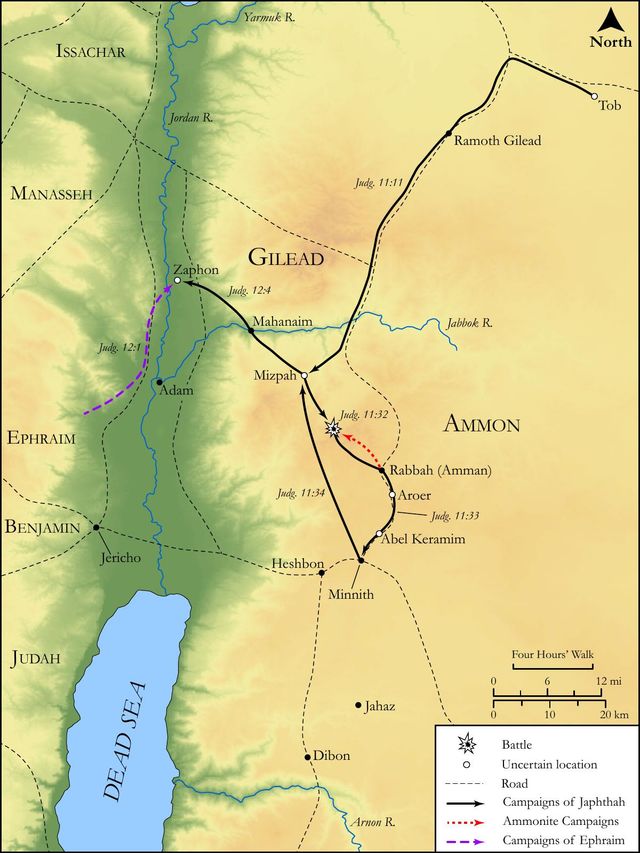
(1.)The Ephraimites had not only quarrelled with Jephthah, but, when his neighbours and friends appeared to take his part, they had abused them, and given them foul language; for I adhere to our translation, and so take it, Jdg 12:4. They said in scorn, "You Gileadites that dwell here on the other side Jordan are but fugitives of Ephraim, the scum and dregs of the tribes of Joseph, of which Ephraim is the chief, the refuse of the family, and are so accounted among the Ephraimites and among the Manassites. Who cares for you? All your neighbours know what you are, no better than fugitives and vagabonds, separated from your brethren, and driven hither into a corner." The Gileadites were as true Israelites as any other, and at this time had signalized themselves, both in the choice of Jephthah and in the war with Ammon, above all the families of Israel, and yet are most basely and unjustly called fugitives. It is an ill thing to fasten names or characters of reproach upon persons or countries, as is common, especially upon those that lie under outward disadvantages: it often occasions quarrels that prove of ill consequence, as it did here. See likewise what a mischievous thing an abusive tongue is, that calls ill names, and gives scurrilous language: it sets on fire the course of nature, and is set on fire of hell (Jam 3:6), and many a time cuts the throat of him that uses it, as it did here, Psa 64:8. If these Ephraimites could have denied themselves the poor satisfaction of calling the Gileadites fugitives, they might have prevented a great deal of bloodshed; for grievous words stir up anger, and who knows how great a matter a little of that fire may kindle?
(2.)This affront raises the Gileadites' blood, and the indignity done to themselves, as well as to their captain, must be revenged.
[1.]They routed them in the field, Jdg 12:4. They fought with Ephraim, and, Ephraim being but a rude unheaded rabble, smote Ephraim, and put them to flight.
[2.]They cut off their retreat, and so completed their revenge, Jdg 12:5, Jdg 12:6. The Gileadites, who perhaps were better acquainted with the passages of Jordan than the Ephraimites were, secured them with strong guards, who were ordered to slay every Ephraimite that offered to pass the river. Here was, First, Cruelty enough in the destruction of them. Sufficient surely was the punishment which was inflicted by many; when they were routed in the field, there needed not this severity to cut off all that escaped. Shall the sword devour for ever? Whether Jephthah is to be praised for this I know not; perhaps he saw it to be a piece of necessary justice. Secondly, Cunning enough in the discovery of them. It seems the Ephraimites, though they spoke the same language with other Israelites, yet had got a custom in the dialect of their country to pronounce the Hebrew letter Shin like Samech, and they had so strangely used themselves to it that they could not do otherwise, no, not to save their lives. We learn to speak by imitation; those that first used s for sh, did it either because it was shorter or because it was finer, and their children learnt to speak like them, so that you might know an Ephraimite by it; as in England we know a west-country man or a north-country man, nay, perhaps a Shropshire man, and a Cheshire man, by his pronunciation. Thou art a Galilean, and thy speech betrays thee. By this the Ephraimites were discovered. If they took a man that they suspected to be an Ephraimite, but he denied it, they bade him say Shibboleth; but either he could not, as our translation reads it, or he did not heed, or frame, or direct himself, as some read, to pronounce it aright, but said Sibboleth, and so was known to be an Ephraimite, and was slain immediately. Shibboleth signifies a river or stream: "Ask leave to go over Shibboleth, the river." Those that were thus cut off made up the whole number of slaughtered Ephraimites forty-two thousand, Jdg 12:6. Thus another mutiny of that angry tribe was prevented.
3.Now let us observe the righteousness of God in the punishment of these proud and passionate Ephraimites, which in several instances answered to their sin.
(1.)They were proud of the honour of their tribe, gloried in this, that they were Ephraimites; but how soon were they brought to be ashamed or afraid to own their country! Art thou an Ephraimite? No, now rather of any tribe than that.
(2.)They had gone in a rage over Jordan to burn Jephthah's house with fire, but now they came back to Jordan as sneakingly as they had passed it furiously, and were cut off from ever returning to their own houses.
(3.)They had upbraided the Gileadites with the infelicity of their country, lying at such a distance, and now they suffered by an infirmity peculiar to their own country, in not being able to pronounce Shibboleth.
(4.)They had called the Gileadites, unjustly, fugitives, and now they really and in good earnest became fugitives themselves; and in the Hebrew the same word (Jdg 12:5) is used of the Ephraimites that escaped, or that fled, which they had used in scorn of the Gileadites, calling them fugitives. He that rolls the stone of reproach unjustly upon another, let him expect that it will justly return upon himself.
III.Here is the end of Jephthah's government.
He judged Israel but six years, and then died, Jdg 12:7. Perhaps the death of his daughter sunk him so that he never looked up afterwards, but it shortened his days, and he went to his grave mourning.
Continue studying Judges 12:3 across the web’s major study libraries — every link below opens this exact verse, chapter, or book on the destination site.
Read & Compare
 BibleGatewayThis verse in more than 200 translations and 70 languages.
 Bible.comThe YouVersion reader — hundreds of translations, reading plans, and highlights.
 ESV.orgCrossway's official English Standard Version reader.
 NET BibleThe NET translation with 60,000+ translators' notes on every rendering decision.
 STEP BibleTyndale House's free study tool — original text, vocabulary, and scholarly resources.
 BibliaLogos Bible Software's free web reader.
 USCCBThe New American Bible (Revised Edition) with the U.S. bishops' study notes.
Commentaries
 BibleHub CommentariesDozens of classic commentaries on this verse, gathered on one page.
 StudyLightMore than 100 commentary sets — the largest collection on the web.
 BibleRefPlain-English commentary on what this verse means, verse by verse.
 Enduring WordDavid Guzik's free commentary on this chapter, widely used by Bible teachers.
 Bible Study ToolsVerse commentary alongside Greek and Hebrew study aids.
Original Language & Research
- BibleHub InterlinearThe verse word by word — original language, transliteration, and English.
- BibleHub LexiconEvery word's original-language definition and Strong's entry.
 Blue Letter BibleDeep-study tools — Strong's numbers, concordance, and word studies.
 SefariaThe Hebrew text with Rashi and centuries of Jewish commentary.
Sermons, Hymns & Audio


TrulyRandomVerse is not affiliated with these sites and doesn’t control their content. They’re linked because they’re genuinely useful.
Summary
Judges 12:3 encapsulates Jephthah's forceful and righteous indignation towards the Ephraimites, who challenged his authority and questioned his actions following his decisive victory over the Ammonites. He meticulously details their prior abandonment of Gilead during a desperate war, starkly contrasting it with his own willingness to risk his very life for the nation's deliverance. Crucially, he attributes his triumph not to human strength but to the Lord's direct intervention. His culminating rhetorical question serves as a powerful indictment, exposing the profound hypocrisy of their current belligerent posture after their conspicuous absence in the hour of need.
Context
ShowHideLiterary Context
This verse is strategically placed within the dramatic and tragic narrative of Judges 12, serving as Jephthah's direct and indignant response to the Ephraimites' aggressive confrontation (Judges 12:1-2). Having just secured a significant victory that delivered Israel from eighteen years of Ammonite oppression, Jephthah is met not with gratitude or unity, but with accusations of disrespect and threats of violence from a powerful Israelite tribe. Jephthah's detailed reply in Judges 12:3-6 recounts the dire circumstances that necessitated his solo action and highlights Ephraim's complete failure to provide aid. This verbal exchange quickly escalates into a brutal inter-tribal conflict, culminating in the Gileadites' decisive defeat of the Ephraimites, famously identified by their inability to pronounce "Shibboleth." This tragic episode profoundly underscores the internal disunity, moral decay, and lack of central authority that characterized the period of the Judges, where the recurring refrain, "everyone did what was right in his own eyes," vividly describes the prevailing spiritual and social chaos found throughout the book of Judges.
Historical & Cultural Context
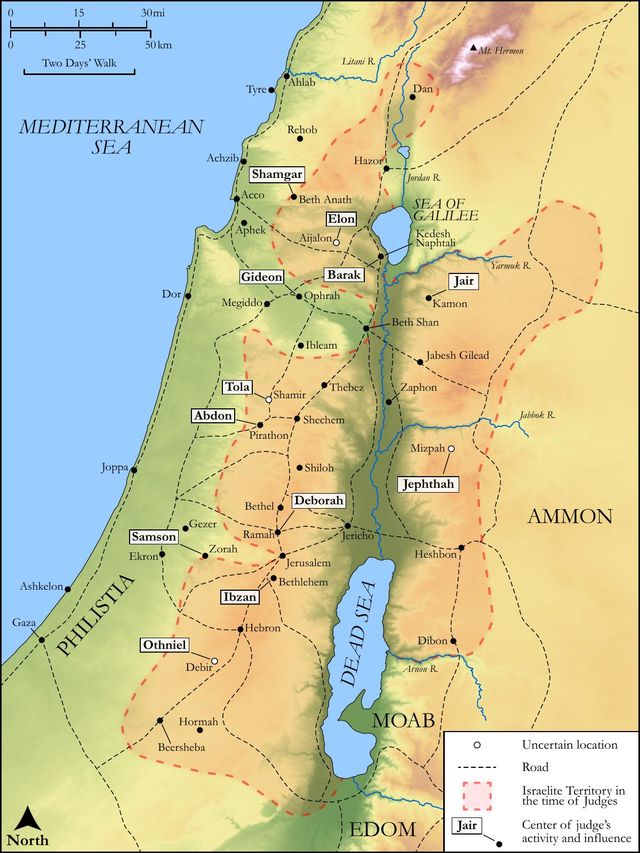
The era of the Judges (approximately 1200-1000 BC) was a turbulent transitional period for Israel, marked by a decentralized tribal confederacy, cycles of foreign oppression, and pervasive internal strife. Without a king, leadership often emerged spontaneously in response to specific crises. Inter-tribal jealousy and rivalry were rampant, particularly between the more established, centrally located tribes like Ephraim, and the peripheral tribes, such as Gilead, situated east of the Jordan River. Ephraim, as a dominant tribe in the central hill country, frequently asserted its perceived superiority and felt entitled to be consulted or to lead in military campaigns, a sentiment also evident in their earlier complaint to Gideon in Judges 8:1. Jephthah, a Gileadite, was an outsider, an outcast from his own family who was only called upon out of sheer desperation when no one else would lead against the Ammonites (Judges 11:4-11). This historical backdrop illuminates the deep-seated tribal pride, the absence of genuine national unity, and the fragmented nature of Israelite society, rendering them vulnerable to both external enemies and internal conflicts.
Key Themes
ShowHideJudges 12:3 powerfully contributes to several overarching themes within the Book of Judges and the broader biblical narrative. Firstly, it emphatically highlights Divine Deliverance, as Jephthah explicitly attributes his victory to "the LORD," reinforcing the consistent biblical truth that Israel's ultimate strength and salvation derive from God alone, not from human might or tribal alliances (compare Psalm 3:8). Secondly, the verse underscores the theme of Risk and Sacrifice, portraying Jephthah's extraordinary personal courage and his willingness to undertake a perilous mission when others, specifically Ephraim, refused to act. This contrasts sharply with Ephraim's self-serving inaction. Thirdly, Judges 12:3 vividly illustrates Inter-tribal Strife and Pride, showcasing the destructive consequences of jealousy, wounded pride, and a profound lack of humility within the covenant community. Ephraim's belligerence is rooted in their injured ego rather than any genuine concern for Israel's collective welfare. Finally, it addresses Accountability and Injustice, as Jephthah's piercing rhetorical question forces Ephraim to confront their blatant failure to act when needed and the profound injustice of their current aggression against the very deliverer God used. This mirrors the broader theme of Israel's recurring cycle of disobedience and God's just judgment throughout the book of Judges.
Exposition and Analysis
ShowHideKey Word Analysis
ShowHideThis word refers to a breathing creature, vitality, or soul. In the idiom "I put my life in my hands," it denotes Jephthah's very being, his existence, emphasizing the totality of what he risked. It highlights the preciousness and vulnerability of his existence, which he willingly placed in extreme peril.
This word specifically refers to the hollow hand or palm. When used in the idiom "I put my life in my hands," it emphasizes the precariousness of Jephthah's situation, as if his life were a fragile object held loosely in an open palm, easily dropped or crushed. It underscores the profound personal risk and the voluntary nature of his self-exposure to danger.
This is the Jewish national name of God, signifying "the Self-Existent or Eternal." Jephthah's explicit declaration that "the LORD delivered them into my hand" is a crucial theological statement. It attributes the victory not to his own military prowess or the strength of his men, but to the sovereign power and faithfulness of the covenant God of Israel, acknowledging Him as the ultimate source of salvation and deliverance.
Verse Breakdown
ShowHide"And when I saw that ye delivered [me] not"
Jephthah begins by directly confronting Ephraim's culpable inaction. He observed and was acutely aware of their failure to come to the aid of Gilead when they were under severe oppression from the Ammonites. This highlights a critical breach of inter-tribal solidarity and a profound failure to uphold their covenant responsibilities to fellow Israelites in their time of desperate need.
"I put my life in my hands"
This powerful and vivid Hebrew idiom describes Jephthah's personal courage, desperation, and the immense, existential risk he willingly undertook. When no other tribe, particularly the powerful Ephraim, would step forward to defend Gilead, Jephthah, despite his outcast status, chose to face mortal danger directly, taking upon himself the responsibility of leading the fight against the Ammonites.
"and passed over against the children of Ammon"
This clause details Jephthah's decisive and proactive engagement with the enemy. He did not hesitate, wait for external support, or seek permission from other tribes, but actively moved to confront the Ammonites, demonstrating his unwavering commitment to the deliverance of his people from oppression.
"and the LORD delivered them into my hand"
This is the theological lynchpin of Jephthah's defense. He unequivocally attributes the victory not to his own strategic genius, military might, or the bravery of his Gileadite forces, but to the sovereign intervention of Yahweh. This acknowledgment underscores God's faithfulness in empowering His chosen deliverer, even a flawed one, to achieve victory for Israel.
"wherefore then are ye come up unto me this day, to fight against me?"
This is a potent rhetorical question that serves as Jephthah's indignant and unanswerable challenge to Ephraim. It brutally exposes the hypocrisy and profound injustice of their complaint. Having failed to provide any assistance when Gilead was in dire straits, they now appear, not to celebrate the deliverance, but to threaten and fight the very one whom God used to secure that deliverance. It underscores the absurdity and moral bankruptcy of their position.
Literary Devices
ShowHideJudges 12:3 is rich in literary devices that amplify its dramatic impact and thematic significance, effectively conveying Jephthah's indignation and the absurdity of Ephraim's position. The most prominent is the Rhetorical Question ("wherefore then are ye come up unto me this day, to fight against me?"), which is posed not to elicit an answer, but to powerfully underscore the illogicality, injustice, and hypocrisy of Ephraim's actions, challenging their motives and exposing their moral bankruptcy. The phrase "I put my life in my hands" is a vivid Idiom, a culturally specific expression that powerfully conveys Jephthah's extreme personal risk, courage, and the desperation of the situation. This verse also employs strong Contrast by juxtaposing Ephraim's culpable inaction ("ye delivered [me] not") with Jephthah's decisive and self-sacrificial action ("I put my life in my hands") and, most significantly, with the Lord's ultimate and sovereign deliverance ("the LORD delivered them into my hand"). This highlights the stark difference between human failure and divine faithfulness. Furthermore, there is a profound element of Irony in Ephraim's complaint; they accuse Jephthah of slighting them by not calling them to battle, yet they were conspicuously absent and unwilling to engage when the need was greatest, only appearing after the victory had been secured, seeking to claim credit or assert dominance.
Theological and Thematic Connections
ShowHideJudges 12:3 offers profound theological insights into God's unwavering sovereignty, human responsibility, and the essential nature of community within the covenant. Jephthah's explicit acknowledgment that "the LORD delivered them into my hand" underscores the consistent biblical truth that ultimate victory and salvation belong to God alone. Even amidst human failings, deep-seated tribal conflicts, and the flawed leadership characteristic of the Judges period, God remains faithful to His covenant promises and works through imperfect vessels to accomplish His divine purposes. The verse also starkly highlights the destructive power of pride, jealousy, and self-centeredness within God's people, demonstrating how internal divisions can severely undermine unity, obscure God's work, and lead to tragic outcomes. Ephraim's self-centeredness and wounded pride prevented them from participating in a crucial national deliverance, only to emerge later with a contentious and belligerent spirit. This serves as a timeless warning against prioritizing personal glory or tribal prestige over the collective good, the divine will, and the unity of the body of believers.
Reflection and Application
ShowHideJephthah's courageous stance and indignant challenge in Judges 12:3 offer profound and challenging lessons for contemporary believers and communities. It calls us to courageous, self-sacrificial leadership, urging us to step forward and take risks for the common good when others hesitate, retreat, or prioritize their own comfort. True leadership often involves personal sacrifice and a willingness to "put one's life in one's hands" for the sake of others, rather than waiting for perfect conditions, popular acclaim, or a guarantee of safety. The tragic conflict with Ephraim also serves as a poignant and sobering reminder of the insidious dangers of pride, jealousy, and internal strife within any community, particularly the church. We are called to cultivate unity, humility, and mutual support, celebrating God's work through others rather than seeking personal credit, allowing envy to fester, or permitting tribalism to sow division. Furthermore, Jephthah's clear acknowledgment of God's hand in his victory reminds us to always attribute our successes, deliverances, and breakthroughs to divine grace, recognizing that our ultimate strength and salvation come from the Lord. This fosters a spirit of profound gratitude, humility, and dependence rather than self-reliance or boasting.
Questions for Reflection
ShowHideFAQ
ShowHideWhat does the idiom "I put my life in my hands" truly mean in this context?
ShowHideThe phrase "I put my life in my hands" (Hebrew: nātan nap̄šî bəḵap̄pî) is a powerful and vivid idiom that profoundly portrays Jephthah's extreme personal risk and courage. It literally means to place one's soul or very existence into one's open palm, signifying a state of profound vulnerability and imminent danger. In this context, it conveys Jephthah's desperate and selfless act of leading the Gileadites against the formidable Ammonites when no one else, particularly the powerful tribe of Ephraim, would step forward. He willingly exposed himself to mortal peril, fully aware that he might die in the effort. This idiom sharply contrasts with Ephraim's unwillingness to engage in the conflict until after the victory was secured, emphasizing the immense personal cost and bravery involved in Jephthah's leadership and his unwavering commitment to his people's deliverance.
Why was the tribe of Ephraim so angry with Jephthah, and why did they threaten him?
ShowHideThe tribe of Ephraim was consumed with anger and felt deeply slighted and disrespected by Jephthah. As a prominent and powerful tribe within Israel, they believed they held a preeminent position and should have been consulted or invited to lead the war effort against the Ammonites (Judges 12:1). Their complaint stemmed primarily from wounded tribal pride and a deeply ingrained sense of entitlement, rather than a genuine desire to participate in the initial, dangerous conflict. They had a historical precedent for such complaints, as seen in their earlier confrontation with Gideon (Judges 8:1). Their threat to burn Jephthah's house over his head was a severe expression of their indignation and a blatant attempt to assert their dominance and control over the situation, even though they had conspicuously failed to provide any assistance when it was desperately needed. This incident tragically underscores the deep inter-tribal rivalries and the pervasive lack of national unity that plagued Israel during the period of the Judges, where tribal prestige often overshadowed genuine solidarity and the collective good.
How does this event fit into the broader narrative of the Book of Judges?
ShowHideThis event is a tragic yet characteristic episode within the broader narrative of the Book of Judges, which repeatedly illustrates Israel's cyclical pattern of apostasy, divine judgment through oppression, their cry for help, and God's merciful deliverance through a chosen judge. The bitter conflict between Jephthah and Ephraim highlights the profound internal disunity and moral decay that plagued Israel during this era, where "everyone did what was right in his own eyes" (Judges 21:25). It demonstrates that even after God provides deliverance from external enemies, Israel often succumbs to internal strife, pride, and a severe lack of true national cohesion. The brutal outcome of this conflict, including the infamous "Shibboleth" test and the devastating loss of 42,000 Ephraimites (Judges 12:6), serves as a stark and sobering warning about the destructive consequences of unchecked tribal jealousy, ungodly ambition, and a lack of humility within God's covenant people. Ultimately, such episodes underscore the desperate need for a righteous king to unite and lead God's people in true faithfulness.
Christ-Centered Fulfillment
ShowHideJephthah's willingness to "put his life in his hands" for the deliverance of his people, and his ultimate success attributed to the Lord's power, powerfully foreshadows the ultimate and perfect Deliverer, Jesus Christ. While Jephthah was a flawed human leader, called upon in desperation, Jesus, the Son of God, truly laid down His life, not merely risking it, but willingly offering it as the perfect, unblemished sacrifice for the sin of humanity. Unlike Jephthah, who was called upon to deliver Israel from a physical enemy, Jesus came to deliver humanity from the spiritual bondage of sin and death (John 3:16). He did not wait for others to act, nor did He seek glory from men; rather, He "emptied himself, by taking the form of a servant, being born in the likeness of men" and "humbled himself by becoming obedient to the point of death, even death on a cross" (Philippians 2:7-8). His victory on the cross was not merely a tribal triumph, but a cosmic and eternal one, disarming the powers and authorities and putting them to open shame by triumphing over them in Him (Colossians 2:15). Where Jephthah's deliverance led to further internal strife and bloodshed, Christ's sacrifice brings true and lasting peace, breaking down the dividing wall of hostility and uniting all who believe into one body, reconciled to God (Ephesians 2:14). He is the one who, "for the joy that was set before him endured the cross, despising the shame, and is seated at the right hand of the throne of God" (Hebrews 12:2), perfectly fulfilling the archetype of the deliverer who willingly sacrifices all, and through whom the Lord truly delivers humanity from its greatest enemy.