


Joshua 18:23
- וְהָעַוִּיםve·ha·'a·Vimand <the> AvvitesH5761Conj-w ¦ Art ¦ N-properNoun Proper Locationוְandהָ<the>עַוִּיםAvvites
- וְהַפָּרָהve·ha·pa·Rahand <the> ParahH6511Conj-w ¦ Art ¦ N-properNoun Proper Locationוְandהַ<the>פָּרָהParah
- וְעָפְרָהve·'a·fe·Rahand OphrahH6084Conj-w ¦ N-properNoun Proper LocationוְandעָפְרָהOphrah
English is a literal word-by-word gloss of the Hebrew, not the KJV's wording. Why?
This is the original text the KJV's translators worked from — each Hebrew word with its own literal English meaning in this verse, prepared by scholars at Tyndale House, Cambridge. The KJV translates whole sentences, not word by word, so its wording differs: one Hebrew word can become several English words, and the KJV may choose “the LORD” where the gloss reads “Yahweh”. Both are faithful — they answer different questions. For the KJV's own rendering, switch to the KJV text.
Details
See on the biblical-era map
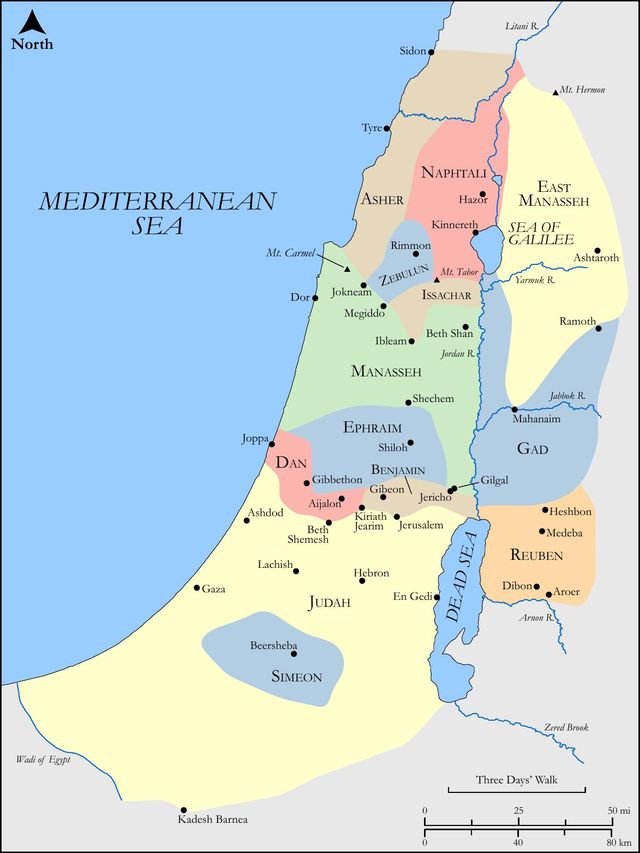
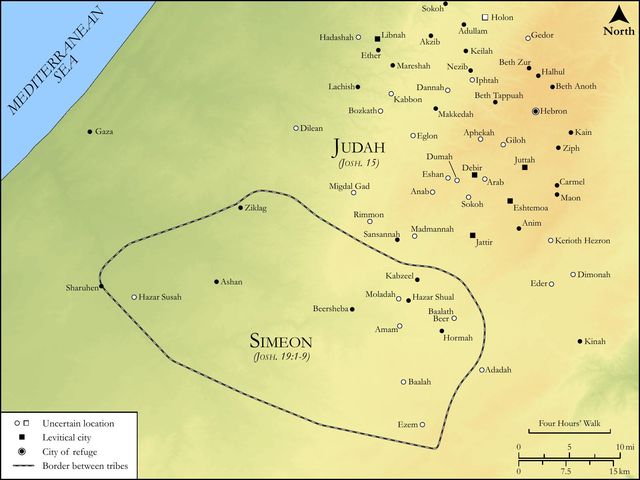
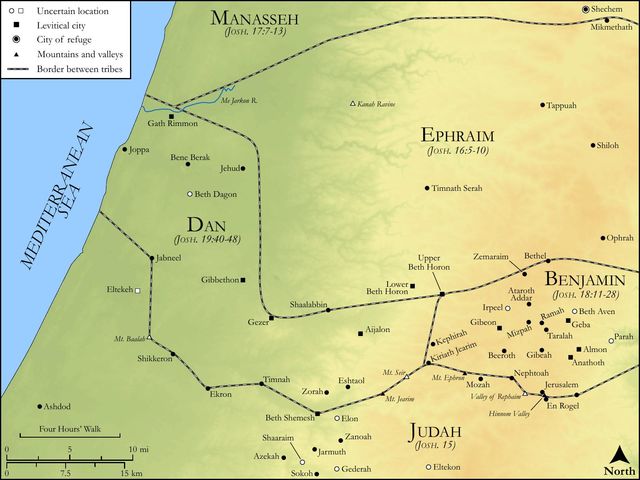
Study this verse
Public-domain commentary
Matthew Henry
From his Commentary on the Whole Bible. Henry comments on passages, not single verses — this entry covers Joshua 18:11–28.
We have here the lot of the tribe of Benjamin, which Providence cast next to Joseph on the one hand, because Benjamin was own and only brother to Joseph, and was little Benjamin (Psa 68:27), that needed the protection of great Joseph, and yet had a better protector, for the Lord shall cover him all the day long, Deu 33:12. And it was next to Judah on the other hand, that this tribe might hereafter unite with Judah in an adherence to the throne of David and the temple at Jerusalem. Here we have, 1. The exact borders and limits of this tribe, which we need not be exact in the explication of. As it had Judah on the south and Joseph on the north, so it had Jordan on the east and Dan on the west. The western border is said to compass the corner of the sea southward (Jos 18:14), whereas no part of the lot of this tribe came near to the great sea. Bishop Patrick thinks the meaning is that it ran along in a parallel line to the great sea, though at a distance. Dr. Fuller suggests that since it is not called the great sea, but only the sea, which often signifies any lake or mere, it may be meant of the pool of Gibeon, which may be called a corner or canton of the sea; it is called the great waters of Gibeon (Jer 41:12), and it is compassed by the western border of this tribe. 2. The particular cities in this tribe, not all, but the most considerable. Twenty-six are here named. Jericho is put first, though dismantled, and forbidden to be rebuilt as a city with gates and walls, because it might be built and inhabited as a country village, and so was not useless to this tribe. Gilgal, where Israel first encamped when Saul was made king (Sa1 11:15), was in this tribe. It was afterwards a very profane place. Hos 9:15, All their wickedness is in Gilgal. Beth-el was in this tribe, a famous place. Though Benjamin adhered to the house of David, yet Beth-el, it seems, was in the possession of the house of Joseph (Jdg 1:23-25), and there Jeroboam set up one of his calves. In this tribe was Gibeon, where the altar was in the beginning of Solomon's time, Ch2 1:3. Gibeah likewise, that infamous place where the Levite's concubine was abused. Mizpeh, and near it Samuel's Ebenezer, and also Anathoth, Jeremiah's city, were in this tribe, as was the northern part of Jerusalem. Paul was the honour of this tribe (Rom 11:1; Phi 3:5); but where his land lay we know not: he sought the better country.
Continue studying Joshua 18:23 across the web’s major study libraries — every link below opens this exact verse, chapter, or book on the destination site.
Read & Compare
 BibleGatewayThis verse in more than 200 translations and 70 languages.
 Bible.comThe YouVersion reader — hundreds of translations, reading plans, and highlights.
 ESV.orgCrossway's official English Standard Version reader.
 NET BibleThe NET translation with 60,000+ translators' notes on every rendering decision.
 STEP BibleTyndale House's free study tool — original text, vocabulary, and scholarly resources.
 BibliaLogos Bible Software's free web reader.
 USCCBThe New American Bible (Revised Edition) with the U.S. bishops' study notes.
Commentaries
 BibleHub CommentariesDozens of classic commentaries on this verse, gathered on one page.
 StudyLightMore than 100 commentary sets — the largest collection on the web.
 BibleRefPlain-English commentary on what this verse means, verse by verse.
 Enduring WordDavid Guzik's free commentary on this chapter, widely used by Bible teachers.
 Bible Study ToolsVerse commentary alongside Greek and Hebrew study aids.
Original Language & Research
- BibleHub InterlinearThe verse word by word — original language, transliteration, and English.
- BibleHub LexiconEvery word's original-language definition and Strong's entry.
 Blue Letter BibleDeep-study tools — Strong's numbers, concordance, and word studies.
 SefariaThe Hebrew text with Rashi and centuries of Jewish commentary.
Sermons, Hymns & Audio


TrulyRandomVerse is not affiliated with these sites and doesn’t control their content. They’re linked because they’re genuinely useful.
Summary
Joshua 18:23, a concise enumeration of three specific cities—Avim, Parah, and Ophrah—serves as a pivotal detail within the broader account of the land's division among the tribes of Israel, specifically delineating a portion of the inheritance allotted to the tribe of Benjamin. Far from being a mere geographical roster, this verse underscores God's meticulous faithfulness in fulfilling His ancient covenant promises to His people, establishing their identity and secure place within the Promised Land.
Context
ShowHideLiterary Context
Joshua 18:23 is situated within the lengthy and detailed narrative of the division of the land of Canaan, following Israel's conquest. Chapters 13-19 meticulously record the allocation of territories to each of the twelve tribes. Specifically, Joshua 18 focuses on the seven tribes who had not yet received their inheritance, after Judah and the house of Joseph (Ephraim and Manasseh) had been settled. Joshua, at Shiloh, sent out a survey team to map the remaining land, which was then divided by lot before the Lord, as described in Joshua 18:10. Verses 21-28 provide a comprehensive list of the cities belonging to the tribe of Benjamin, a strategically important territory situated between the powerful tribes of Judah to the south and Ephraim to the north. These detailed lists are not incidental but are foundational to the legal and social structure of early Israel, defining tribal boundaries and identity for generations.
Historical & Cultural Context
The division of the land was a monumental undertaking, marking the transition from a nomadic, conquering people to a settled nation. The process of casting lots, as seen in Joshua 18:10, was understood as a divinely guided method for determining God's will and ensuring equitable distribution, thereby preventing inter-tribal disputes. Land ownership was central to Israelite identity, social structure, and economic stability. Each family's inheritance was considered permanent and inalienable, a direct fulfillment of God's promise to Abraham, as recorded in Genesis 12:7. The cities listed, including Avim, Parah, and Ophrah, were not merely dots on a map but represented tangible assets—agricultural lands, water sources, and strategic points—that formed the bedrock of tribal life and national security, ensuring the sustenance and defense of the nascent nation.
Key Themes
ShowHideThe detailed enumeration of cities and boundaries in Joshua 18 contributes significantly to several overarching themes in the book of Joshua and the Pentateuch. Foremost is the Fulfillment of God's Promise, demonstrating God's unwavering faithfulness to His covenant with Abraham, Isaac, and Jacob to give their descendants the land of Canaan, a promise first articulated in Genesis 15:18. The meticulous record-keeping reflects Divine Order and Administration, showcasing God's character as a God of precision and justice, ensuring each tribe received its rightful portion without favoritism or chaos. This process also solidified Tribal Identity and Inheritance, providing a clear sense of belonging and purpose for each clan and family within the larger nation of Israel, establishing the socio-political framework that would endure for centuries and underpin their national existence.
Exposition and Analysis
ShowHideKey Word Analysis
ShowHideThis city name is often associated with the Avvites, a pre-Israelite people mentioned in Deuteronomy 2:23. As a plural form, it may suggest a settlement that was once inhabited by this group or a place characterized by "ruins." Its inclusion signifies the complete transfer of control and ownership from previous inhabitants to the tribe of Benjamin, marking a tangible aspect of the conquest and the secure inheritance of the Promised Land.
This name is directly related to the Hebrew word for "heifer" or "cow." This etymology strongly suggests a fertile region suitable for pasturage and livestock, indicating agricultural richness. Such names were common in ancient times, reflecting the primary economic activity or distinguishing natural feature of a location. For the tribe of Benjamin, a territory known for its agricultural potential would have been a valuable and life-sustaining part of their divinely allotted inheritance.
This name, derived from a word meaning "fawn" or "dusty place," carries a dual potential meaning. While an Ophrah is famously mentioned as Gideon's hometown in Judges 6:11, the Ophrah in Joshua 18:23 refers to a distinct geographical location within Benjamin's territory. The dual meaning suggests either a place known for its wildlife (fawns) or its arid, dusty terrain, providing another specific geographical marker for Benjamin's boundaries and highlighting the diverse landscape within their inheritance.
Verse Breakdown
ShowHide"And Avim"
This introductory phrase, common in these detailed land allotment lists, simply presents the first of three specific locations. Its inclusion signifies a distinct and identifiable settlement within the tribal allotment, a tangible piece of the promised land now under Israelite control, underscoring the precision of the divine distribution.
"and Parah"
Following the established pattern, "and Parah" introduces the second city. The conjunction "and" emphasizes the sequential and cumulative nature of the list, indicating that these cities collectively form part of the designated territory, each contributing to the overall boundary and internal composition of Benjamin's inheritance, ensuring no part of the promise was overlooked.
"and Ophrah"
The final city in this specific triplet, "and Ophrah," completes the enumeration for this particular segment of Benjamin's territory. The simplicity of the listing belies its profound theological significance, as each name represents a divine promise meticulously fulfilled and a secure possession granted to God's people, solidifying their identity and future within the land.
Literary Devices
ShowHideJoshua 18:23 primarily employs Enumeration and Topographical Listing. The verse is part of a longer list of cities, a common feature in ancient Near Eastern land grants and administrative documents. This Enumeration serves to provide a precise and exhaustive account of Benjamin's inheritance, leaving no ambiguity regarding their divinely appointed boundaries. The Topographical Listing itself functions as a legal and historical record, validating the tribe's claim to the land and serving as a testament to God's faithfulness. While seemingly dry, this detailed cataloging underscores the meticulousness of God's fulfillment of His promises. The very act of naming each city, however small or obscure, imbues the text with a sense of divine intentionality and thoroughness, emphasizing that every detail of God's overarching plan is brought to fruition with divine precision.
Theological and Thematic Connections
ShowHideJoshua 18:23, though a mere list of names, profoundly reinforces the overarching biblical theme of God's meticulous faithfulness to His covenant promises. The precise enumeration of cities within Benjamin's territory serves as a tangible testament to the fulfillment of the land promise made to Abraham centuries earlier. This level of detail demonstrates that God's promises are not vague generalities but specific, concrete realities that unfold in history. It highlights the divine order in the establishment of the nation of Israel, where every tribe and family had a designated place and inheritance, reflecting God's providential care for His people. This historical fulfillment provides a powerful foundation for understanding God's reliability in all His promises, both for ancient Israel and for believers today, assuring us of His unwavering commitment.
Reflection and Application
ShowHideThe seemingly mundane list of cities in Joshua 18:23 holds profound implications for our faith and daily lives. It reminds us that God is a God of intricate detail and unwavering faithfulness. Just as He meticulously ensured every promise concerning the land was fulfilled for Israel, down to specific city names, we can trust His providence in the intricate details of our own lives. He is not a God who makes vague promises but one who works with precision and purpose, overseeing even the seemingly small aspects of our existence. This passage encourages us to look for God's faithfulness in the "small print" of our lives, to recognize His hand in the specific circumstances and provisions He grants. It invites us to rest in the certainty of His character, knowing that if He was so diligent in fulfilling a physical inheritance, He is infinitely more committed to our spiritual well-being and eternal destiny, ensuring every promise He has made to us will be perfectly fulfilled.
Questions for Reflection
ShowHideFAQ
ShowHideWhy are these detailed lists of cities so important in the book of Joshua?
ShowHideThese detailed lists, like the one in Joshua 18:23, are critically important for several reasons. First, they serve as a legal and historical record, documenting the precise fulfillment of God's ancient covenant promise to give the land of Canaan to Abraham's descendants, as initially promised in Genesis 15:18. Second, they define the specific boundaries and internal composition of each tribal inheritance, establishing the socio-political and economic framework for the nation of Israel. This meticulous detail prevented disputes among tribes and ensured a clear sense of identity and belonging for each family within their designated territory. Third, they highlight God's character as a God of order, precision, and faithfulness, demonstrating that His promises are not vague but concrete and meticulously executed, transforming abstract promises into tangible realities for His people.
Christ-Centered Fulfillment
ShowHideThe detailed land inheritance of Joshua 18:23, though seemingly a mere geographical list, finds its ultimate Christ-centered fulfillment in the spiritual inheritance promised to believers in the New Covenant. Just as the land of Canaan was a physical, tangible promise fulfilled for Israel, Christ is the ultimate fulfillment of God's promises, providing a spiritual inheritance that is far more glorious and enduring. The meticulous division of the land foreshadows the precise and certain nature of our spiritual blessings in Christ, secured not by human conquest or lots, but by His perfect sacrifice on the cross. Through faith in Him, believers are granted an "inheritance that is imperishable, undefiled, and unfading, kept in heaven for you," as eloquently stated in 1 Peter 1:4. Furthermore, the concept of a secure "place" for each tribe in the Promised Land points to the ultimate "place" prepared for us in the Father's house, a truth Jesus Himself proclaimed in John 14:2-3. Jesus, as the true Joshua, leads His people not into a temporal land, but into an eternal rest and an everlasting kingdom, where we are co-heirs with Him, as affirmed in Romans 8:17, receiving the "fullness of the blessing of Christ" through His finished work on the cross, as Paul describes in Romans 15:29.