


John 12:43
Bible text: King James Version (1769 Blayney text) · Public domain
Bible text: Berean Standard Bible · Public domain
Bible text: American Standard Version (1901) · Public domain
Bible text: World English Bible, Messianic edition · Public domain
Bible text: Geneva Bible (1599) · Public domain
Bible text: Young's Literal Translation · Public domain
- ἠγάπησανēgapēsanthey lovedG25V-AAI-3PVerb Aorist Active Indicative 3rd Plural
- γὰρgarforG1063CONJConjunction
- τὴνtēntheG3588T-ASFDefinite article Accusative Singular Feminine
- δόξανdoxangloryG1391N-ASFNoun Accusative Singular Feminine
- τῶνtōn<the>G3588T-GPMDefinite article Genitive Plural Masculine
- ἀνθρώπωνanthrōpōnof menG444N-GPMNoun Genitive Plural Masculine
- μᾶλλονmallonmoreG3123ADVAdverb
- ἤπερēperthanG2260CONJConjunction
- τὴνtēntheG3588T-ASFDefinite article Accusative Singular Feminine
- δόξανdoxangloryG1391N-ASFNoun Accusative Singular Feminine
- τοῦtou<the>G3588T-GSMDefinite article Genitive Singular Masculine
- θεοῦtheouof GodG2316N-GSM-TNoun Genitive Singular Masculine Title
English is a literal word-by-word gloss of the Greek, not the KJV's wording. Why?
This is the original text the KJV's translators worked from — each Greek word with its own literal English meaning in this verse, prepared by scholars at Tyndale House, Cambridge. The KJV translates whole sentences, not word by word, so its wording differs: one Greek word can become several English words, and the KJV may choose “charity” where the gloss reads “love”. Both are faithful — they answer different questions. For the KJV's own rendering, switch to the KJV text.
Details
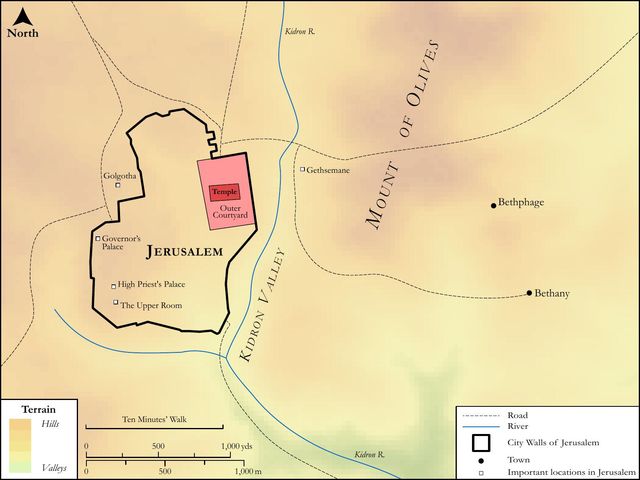
See on the biblical-era maps


Study this verse
Public-domain commentary
Matthew Henry
From his Commentary on the Whole Bible. Henry comments on passages, not single verses — this entry covers John 12:42–43. His three-level outline is real structure in the source text, so it is rendered as structure.
Some honour was done to Christ by these rulers: for they believed on him, were convinced that he was sent of God, and received his doctrine as divine; but they did not do him honour enough, for they had not courage to own their faith in him. Many professed more kindness for Christ than really they had; these had more kindness for him than they were willing to profess. See here what a struggle was in these rulers between their convictions and their corruptions.
I.See the power of the word in the convictions that many of them were under, who did not wilfully shut their eyes against the light.
They believed on him as Nicodemus, received him as a teacher come from God. Note, The truth of the gospel has perhaps a better interest in the consciences of men than we are aware of. Many cannot but approve of that in their hearts which yet outwardly they are shy of. Perhaps these chief rulers were true believers, though very weak, and their faith like smoking flax. Note, It may be, there are more good people than we think there are. Elijah thought he was left alone, when God had seven thousand faithful worshippers in Israel. Some are really better than they seem to be. Their faults are known, but their repentance is not; a man's goodness may be concealed by a culpable yet pardonable weakness, which he himself truly repents of. The kingdom of God comes not in all with a like observation; nor have all who are good the same faculty of appearing to be so.
II.See the power of the world in the smothering of these convictions.
They believed in Christ, but because of the Pharisees, who had it in their power to do them a diskindness, they durst not confess him for fear of being excommunicated. Observe here,
1.Wherein they failed and were defective; They did not confess Christ. Note, There is cause to question the sincerity of that faith which is either afraid or ashamed to show itself; for those who believe with the heart ought to confess with the mouth, Rom 10:9.
2.What they feared: being put out of the synagogue, which they thought would be a disgrace and damage to them; as if it would do them any harm to be expelled from a synagogue that had made itself a synagogue of Satan, and from which God was departing.
3.What was at the bottom of this fear: They loved the praise of men, chose it as a more valuable good, and pursued it as a more desirable end, than the praise of God; which was an implicit idolatry, like that (Rom 1:25) of worshipping and serving the creature more than the Creator. They set these two in the scale one against the other, and, having weighed them, they proceeded accordingly.
(1.)They set the praise of men in one scale, and considered how good it was to give praise to men, and to pay a deference to the opinion of the Pharisees, and receive praise from men, to be commended by the chief priests and applauded by the people as good sons of the church, the Jewish church; and they would not confess Christ, lest they should thereby derogate from the reputation of the Pharisees, and forfeit their own, and thus hinder their own preferment. And, besides, the followers of Christ were put into an ill name, and were looked upon with contempt, which those who had been used to honour could not bear. Yet perhaps if they had known one another's minds they would have had more courage; but each one thought that if he should declare himself in favour of Christ he should stand alone, and have nobody to back him; whereas, if any one had had resolution to break the ice, he would have had more seconds than he thought of.
(2.)They put the praise of God in the other scale. They were sensible that by confessing Christ they should both give praise to God, and have praise from God, that he would be pleased with them, and say, Well done; but,
(3.)They gave the preference to the praise of men, and this turned the scale; sense prevailed above faith, and represented it as more desirable to stand right in the opinion of the Pharisees than to be accepted of God. Note, Love of the praise of men is a very great prejudice to the power and practice of religion and godliness. Many come short of the glory of God by having a regard to the applause of men, and a value for that. Love of the praise of men, as a by-end in that which is good, will make a man a hypocrite when religion is in fashion and credit is to be got by it; and love of the praise of men, as a base principle in that which is evil, will make a man an apostate when religion is in disgrace, and credit is to be lost for it, as here. See Rom 2:29.
Historical interpretation
Four Centuries of Reception
5 surviving comments on this verse. Each one is dated, so this reads as a timeline rather than a list.
Select a marker to jump to its quote. Markers stagger vertically where authors wrote within a few decades of each other.
When we are persecuted, let us not think it strange; let us not love the present world, nor the praises which come from men, nor the glory and honour of rulers, according as some of the Jews wondered at the mighty works of our Lord, yet did not believe on Him, for fear of the high priests and the rest of the rulers: "For they loved the praise of men more than the praise of God."
It is necessary for us to avoid alike all the passions which corrupt the soul, but most especially those, which from themselves generate numerous sins. I mean such as the love of money. It is in truth of itself a dreadful malady, but it becomes much more grievous, because it is the root and mother of all mischiefs. Such also is vainglory. See, for instance, how these men were broken off from the faith through their love of honor. "Many," it saith, "of the chief rulers also believed on Him, but because of the Jews they did not confess Him, lest they should be put out of the synagogue." As He said also to them before, "How can ye believe which receive honor one of another, and seek not the honor that cometh from God only?" (c. v. 44.) So then they were not rulers, but slaves in the utmost slavery. However, this fear was afterwards done away, for nowhere during the time of the Apostles do we find them possessed by this feeling, since in their time both rulers and priests believed. The grace of the Spirit having come, made them all firmer than adamant.
"Nevertheless among the chief rulers also many believed on Him; but, because of the Pharisees, they did not confess Him, lest they should be put out of the synagogue: for they loved the glory of men more than the glory of God." See how the evangelist marked and disapproved of some, who yet, he said, believed on Him: who, if ever they did advance through this gateway of faith, would thereby also overcome that love of human glory which had been overcome by the apostle, when he said, "God forbid that I should glory, save in the cross of our Lord Jesus Christ, by whom the world is crucified unto me, and I unto the world." For to this end also did the Lord Himself, when derided by the madness of human pride and impiety, fix His cross on the foreheads of those who believed on Him, on that which is in a manner the abode of modesty, that faith may learn not to blush at His name, and love the glory of God more than the glory of men.
(Tr. liii. 13) As their faith grew, their love of human praise grew still more, and outstripped it.
Nevertheless, among the chief rulers also many believed on Him; but because of the Pharisees they did not confess Him, lest they should be put out of the synagogue. For they loved the praise of men more than the praise of God. The praise of God is publicly to confess Christ: the praise of men is to glory in earthly things.
Continue studying John 12:43 across the web’s major study libraries — every link below opens this exact verse, chapter, or book on the destination site.
Read & Compare
 BibleGatewayThis verse in more than 200 translations and 70 languages.
 Bible.comThe YouVersion reader — hundreds of translations, reading plans, and highlights.
 ESV.orgCrossway's official English Standard Version reader.
 NET BibleThe NET translation with 60,000+ translators' notes on every rendering decision.
 STEP BibleTyndale House's free study tool — original text, vocabulary, and scholarly resources.
 BibliaLogos Bible Software's free web reader.
 USCCBThe New American Bible (Revised Edition) with the U.S. bishops' study notes.
Commentaries
 BibleHub CommentariesDozens of classic commentaries on this verse, gathered on one page.
 StudyLightMore than 100 commentary sets — the largest collection on the web.
 BibleRefPlain-English commentary on what this verse means, verse by verse.
 Enduring WordDavid Guzik's free commentary on this chapter, widely used by Bible teachers.
 Bible Study ToolsVerse commentary alongside Greek and Hebrew study aids.
Original Language & Research
- BibleHub InterlinearThe verse word by word — original language, transliteration, and English.
- BibleHub LexiconEvery word's original-language definition and Strong's entry.
 Blue Letter BibleDeep-study tools — Strong's numbers, concordance, and word studies.
 CNTR CollationThe earliest Greek manuscripts of this verse, collated letter by letter.
Sermons, Hymns & Audio


TrulyRandomVerse is not affiliated with these sites and doesn’t control their content. They’re linked because they’re genuinely useful.
Summary
John 12:43 offers a penetrating diagnosis of spiritual compromise, explaining why some individuals, despite intellectual belief in Jesus, refused to publicly acknowledge Him. It reveals a profound internal conflict where the desire for human affirmation and social standing superseded their allegiance to divine truth, leading to a tragic prioritization of worldly praise over the eternal commendation of God.
Context
ShowHideLiterary Context
This verse serves as the concluding summary of Jesus' public ministry in John's Gospel, immediately following a poignant observation in John 12:42 that "many of the chief rulers also believed on him; but because of the Pharisees they did not confess him, lest they should be put out of the synagogue." Verse 43 provides the underlying theological and psychological reason for this suppressed faith. It transitions from a descriptive account of their actions to an interpretive explanation of their motivations, setting the stage for Jesus' final discourse to His disciples in the chapters that follow, which will emphasize radical commitment and divine approval.
Historical & Cultural Context
First-century Jewish society, particularly within the religious leadership, placed immense value on social honor, reputation, and communal acceptance. Being "put out of the synagogue" (ἀποσυνάγωγος γένηται, John 9:22) was not merely a religious excommunication but a severe social and economic ostracism. It meant losing one's community, livelihood, and standing. The Pharisees, as a dominant religious and social force, wielded significant power in enforcing this social code. Thus, the "praise of men" was deeply intertwined with one's very existence and identity within that cultural framework, making the choice between human approval and divine truth a stark and perilous one.
Key Themes
ShowHideThis verse powerfully encapsulates several recurring themes in John's Gospel and broader biblical theology. It highlights the conflict of loyalties, forcing a choice between the world's values and God's kingdom, a theme echoed in Matthew 6:24. It underscores the danger of the fear of man, which, as Proverbs 29:25 warns, "brings a snare." Furthermore, it speaks to the nature of true belief and discipleship, suggesting that genuine faith must culminate in open confession and obedience, even at personal cost, a concept Jesus Himself emphasized in Matthew 10:32-33. The verse also subtly introduces the theme of divine judgment, as those who seek human glory above God's will ultimately face His disapproval, as implied in John 5:44.
Exposition and Analysis
ShowHideKey Word Analysis
ShowHideThis verb signifies a profound, intentional, and often volitional affection or preference. It's not a fleeting emotion but a deep-seated commitment or cherishing. Here, it indicates that the preference for human praise was not accidental or passive, but an active, chosen, and cherished desire that shaped their decisions and priorities. It suggests a deliberate orientation of the heart.
While often translated as "glory" or "honor," in this context, dóxa refers specifically to the commendation, approval, good reputation, and esteem received from others. It encompasses the public recognition and social validation that these individuals sought. The repetition of "praise" (dóxa) in relation to both "men" and "God" creates a striking contrast, highlighting the two competing sources of honor.
This adverb is a comparative, indicating a greater degree or preference. It emphasizes the qualitative and quantitative superiority of their love for human praise over divine praise. It reveals a hierarchy of values in their hearts, where the former outweighed the latter, leading to their decisive inaction regarding public confession.
Verse Breakdown
ShowHide"For they loved the praise of men"
This clause provides the foundational reason for the unconfessed belief mentioned in the preceding verse. It highlights a core human inclination: the desire for affirmation and acceptance from one's peers and society. For the Jewish rulers, this "praise of men" encompassed their social standing, their authority within the religious hierarchy, their reputation, and their continued acceptance within the synagogue and community. Their "love" for this praise indicates a deep, cherished desire that dictated their behavior.
"more than the praise of God"
This contrasting clause reveals the tragic spiritual imbalance. It's not that they entirely dismissed God's praise, but that their affection for human approval was stronger, outweighing their desire for divine commendation. The "praise of God" refers to God's approval, honor, and commendation, which comes from obedience and faithfulness to Him. This phrase underscores a fundamental misplacement of ultimate value, where temporal, human-derived glory superseded eternal, divine-derived glory.
Literary Devices
ShowHideThe primary literary device at play in John 12:43 is Antithesis or Contrast. The verse starkly juxtaposes "the praise of men" with "the praise of God," creating a direct opposition that highlights a fundamental spiritual dilemma. This contrast is further emphasized by the comparative "more than," which quantifies the misplaced affection. There is also an element of Irony, as those who held positions of religious authority, ostensibly dedicated to God, were ultimately more concerned with human approval than divine affirmation. This exposes a deep hypocrisy and spiritual blindness, where external appearances and social standing superseded genuine internal conviction and loyalty to truth.
Theological and Thematic Connections
ShowHideJohn 12:43 serves as a profound theological statement on the nature of true discipleship and the dangers of spiritual compromise. It reveals that intellectual assent to truth is insufficient if it is not accompanied by a willingness to prioritize God's glory above all human accolades. The verse underscores the biblical principle that genuine faith demands a radical reorientation of one's affections, shifting the ultimate source of validation from temporal human opinion to eternal divine approval. This choice has profound implications for one's actions, witness, and ultimate spiritual destiny, demonstrating that the pursuit of worldly honor can subtly, yet powerfully, undermine one's commitment to Christ.
Reflection and Application
ShowHideJohn 12:43 remains profoundly relevant for believers today, challenging us to honestly examine the motivations behind our actions and the ultimate source of our validation. In a culture increasingly driven by social media, public opinion, and the pursuit of popularity, the temptation to seek the "praise of men" can be overwhelming. This verse calls us to a radical self-assessment: Are we more concerned with appearing righteous, popular, or acceptable in the eyes of others, or with living in humble obedience and seeking the approval of God alone? True spiritual freedom and integrity emerge when we release the need for human commendation and anchor our identity and worth in God's unwavering love and approval. It is a call to courageous faith, willing to stand for truth even when it means facing disapproval, criticism, or rejection from the world, knowing that God's "well done" is the only praise that truly matters and endures forever.
Questions for Reflection
ShowHideFAQ
ShowHideWhat is the "praise of men" and why is it problematic?
ShowHideThe "praise of men" refers to the commendation, approval, honor, and good reputation that one receives from other human beings. While not inherently evil to be respected, it becomes problematic when the desire for it outweighs or replaces the desire for God's approval. John 12:43 highlights that this misplaced affection can lead to spiritual compromise, preventing individuals from openly confessing their faith or living in accordance with divine truth, as seen with the rulers who believed but feared being expelled from the synagogue (John 9:22). It shifts one's ultimate allegiance from God to human opinion, which is fleeting and often misguided.
How does "the praise of God" differ from "the praise of men"?
ShowHide"The praise of God" refers to God's approval, commendation, and honor bestowed upon those who are faithful to Him. Unlike human praise, which is often based on external appearances, social status, or conformity to worldly standards, God's praise is based on the sincerity of one's heart, obedience to His will, and genuine faith in Christ. It is an eternal and unfading commendation that carries ultimate weight and significance. Jesus Himself warned against seeking human glory over divine glory in John 5:44, emphasizing that only God's approval truly matters.
Christ-Centered Fulfillment
ShowHideJohn 12:43, while exposing the human tendency to prioritize worldly approval, simultaneously points to the radical counter-example and ultimate solution found in Christ. Jesus consistently lived for the "praise of God" alone, utterly unconcerned with human commendation or condemnation. His entire life, from His humble birth to His agonizing death, was an act of perfect obedience to the Father, seeking only His Father's glory. He did not shrink from public confession, even when it led to rejection, suffering, and crucifixion, because His ultimate validation came from God (Philippians 2:8). In His resurrection and ascension, God publicly vindicated and glorified Him, demonstrating that true honor comes from divine approval, not human acclaim (Philippians 2:9-11). For believers, our fulfillment of this verse's challenge is found in union with Christ: as we die to self and live in Him, we are freed from the bondage of human opinion and empowered by the Spirit to live solely for God's praise, knowing that our true identity and worth are found in being children of God and heirs with Christ.